Car Ramps vs Jack Stands in 2026: What Fits Your Garage
Car ramps vs jack stands in 2026: how ground clearance, ramp angle, curb weight and ceiling height decide which lift setup actually works in your garage.
Reader-supported: we may earn a commission from links on this page, at no extra cost to you. It never affects our picks. Learn more.
Every DIY oil change starts with the same argument: drive up on ramps, or jack it and put it on stands? The honest answer is that they solve different problems, and the right call depends on three numbers most people never check — your car's front approach clearance, its curb weight per axle, and how much flat concrete you actually have to work with.
This guide breaks down car ramps vs jack stands for 2026, then gets specific about which gear to buy for low cars, heavy trucks, and tight garages. GarageProof researches and compares products using manufacturer specs, independent testing and verified owner feedback — we don't physically test units ourselves, and we'll tell you plainly where the published specs end and the guesswork begins.
The short version
- Best ramps overall: Race Ramps RR-56 — 56-inch two-piece ramps with a shallow angle that clears low front bumpers.
- Best budget ramps: RhinoGear RhinoRamps MAX — lightweight composite ramps with a published per-pair capacity that covers most sedans and crossovers.
- Best jack stands: Torin Big Red T43002A — classic ratcheting steel stands, the default for wheels-off work.
- Best low-profile floor jack: Arcan ALJ3T — aluminum, low entry height, rated for most passenger cars and light trucks.
- Best safety add-on: ESCO 20463 wheel chocks — the piece almost everyone skips and shouldn't.
 Best jack stands · Torin Big Red T43002A Jack Stands — Check price on Amazon →
Ramps vs jack stands: what actually separates them
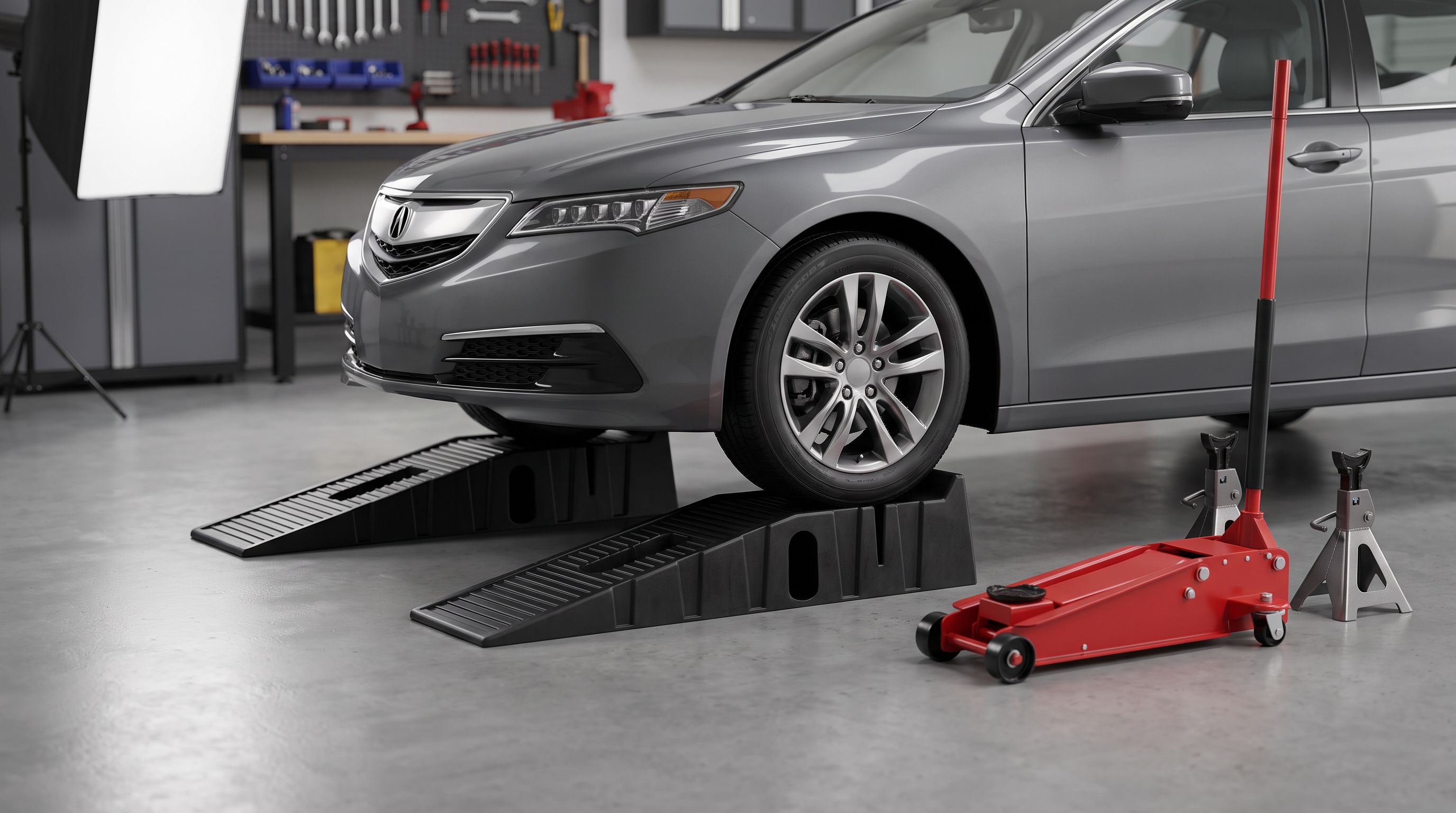
Ramps lift the car with the wheels still on. You drive up, chock the rear wheels, set the parking brake, and the load path goes tire → ramp → concrete. That's a huge contact patch, and it's why multiple shop guides and veteran DIYers consider a properly chocked ramp setup among the most stable ways to get under a car at home. Setup takes under a minute.
Jack stands lift the car with the wheels off the ground. The load goes through a small saddle into a pinch weld or frame rail. That's inherently a smaller, more precise contact area — which is fine when you place them correctly, and dangerous when you don't. The trade-off is access: you simply cannot rotate tires, do brakes, or pull a wheel bearing on ramps.
There's also a middle path people forget. A low-profile floor jack plus stands is the flexible option, but ramps and stands aren't mutually exclusive — plenty of home mechanics drive the front onto ramps for an oil change and keep stands on the shelf for brake weekends. If you only buy one, buy for the job you do most.
The clearance problem
This is where vehicle-specific reality bites. A set of ramps with a 17-degree incline will scrape the front lip of a lowered Golf, a C8 Corvette, a Model 3 with aftermarket springs, or honestly a lot of stock sport sedans. Ramps marketed as "low profile" typically sit in the 10–11 degree range and run longer — that's the whole reason Race Ramps builds 56-inch and 67-inch models instead of the stubby 30-inch economy shape.
Before you buy, measure two things on your car: the height of the lowest point of the front fascia above the floor, and how far back from the front of the tire that point sits. Compare those against the ramp's published incline angle and length. Most manufacturers publish both. If yours doesn't, treat that as a warning.
The weight problem
Ramp and stand ratings are published in two different ways and people mix them up constantly. Some brands list capacity per pair, others per stand or ramp. A pair of ramps rated 12,000 lb gross vehicle weight is not the same as two ramps rated 12,000 lb each.
The practical rule: ramps and stands only ever carry one axle at a time, so you need roughly 60% of curb weight for the front axle of most front-engine cars — but buy to full curb weight anyway for margin. Find your curb weight on the driver's door jamb sticker, not from a forum post. A half-ton pickup in 2026 trim can easily exceed 5,500 lb, and a three-row EV can push past 6,000 lb with a very different weight distribution.
Floor and ceiling
Ramps need a flat, hard, level surface. On a sloped driveway they can slide out from under the tire as you climb — the classic failure mode, and the reason rubberized or textured bases matter. Asphalt in summer heat is another bad bet.
Ceiling height matters less for ramps and stands than it does for a two-post lift, but it still matters if you're considering anything taller. A conventional ramp lifts a car roughly 6–9 inches depending on model; that's nowhere near enough to need clearance planning. If you've been eyeing a QuickJack-style portable lift instead, you're into a different budget tier and you need to verify your garage's slab thickness and door track clearance first.
Comparison table
| Ramps | Jack stands + floor jack | Portable scissor lift | |
|---|---|---|---|
| Setup time | Under a minute | 5–10 minutes per axle | 10–15 minutes |
| Wheels off? | No | Yes | Yes |
| Typical lift height | ~6–9 in | Varies by jack/stand | 12–21 in |
| Works on low cars? | Only with long, shallow-angle ramps | Yes, with a low-profile jack | Usually yes |
| Storage footprint | Bulky but light (composite) | Compact | Bulky, heavy |
| Needs level concrete | Critical | Critical | Critical |
| Best for | Oil, exhaust, underbody inspection | Brakes, tires, suspension | Everything, if budget allows |
| Main risk | Driving off the end; sliding on slope | Wrong lift point; stand tip-over | Hydraulic creep; slab requirements |
The picks
Race Ramps RR-56 — best ramps overall
Prices last checked October 3, 2026. Amazon prices change frequently, so treat these as a guide and check the live price before you buy.
Race Ramps RR-56 56" Car Service Ramps
Long, shallow-angle two-piece foam ramps that clear low front bumpers other ramps scrape.
The RR-56 is a two-piece, 56-inch solid-foam design that solves the low-car problem the right way: a shallow incline over a long run, rather than a steep climb over a short one. Because they're solid core rather than hollow plastic, they don't flex underfoot, and the material is light enough to carry one-handed — a real advantage when you store them vertically in a corner. Race Ramps publishes per-pair weight capacity and incline angle, so you can check your fitment properly.
What you give up: these are a premium buy, and foam ramps can scuff and compress at the edges over years of use. They're also longer than most garages have spare floor for in front of the car. Measure from your bumper to the garage wall before ordering.
RhinoGear RhinoRamps MAX — best budget ramps
RhinoGear RhinoRamps MAX Vehicle Ramps
Light composite ramps with a grippy base and a published per-pair GVW rating for most cars.
RhinoRamps MAX are the composite ramps you see in half the garages in North America, and for good reason: they're light, they stack, they're cheap to replace, and the textured base grips concrete well. RhinoGear publishes a gross vehicle weight rating for the pair, which comfortably covers most sedans, crossovers and minivans. For a Civic or a RAV4 getting an annual oil change, this is all the ramp anyone needs.
What you give up: the incline is steeper and the ramp shorter than a dedicated low-profile design, so anything with an aggressive front lip may contact before the tire climbs. They also must be used on flat, hard, level ground — on a sloped driveway, skip them.
Torin Big Red T43002A — best jack stands
Torin Big Red T43002A Jack Stands
Double-locking ratcheting steel stands — the default when the wheels have to come off.
When the wheels have to come off, ramps are out and stands are in. The Big Red T43002A is the archetype: a ratcheting steel double-locking stand with a wide cast base and a saddle that fits most pinch welds and frame rails. Torin publishes a per-pair rating, and this capacity class covers typical passenger cars and light SUVs. Buy four, not two — working under a car supported on one axle only is a habit worth breaking.
What you give up: ratcheting stands rely on a pawl rather than a through-pin, so some purists prefer pin-type stands. Inspect the ratchet teeth for wear annually, use a rubber pinch-weld pad to protect seams, and never, ever trust the jack alone.
Arcan ALJ3T — best low-profile floor jack
Arcan ALJ3T 3-Ton Aluminum Floor Jack
Low saddle height and light aluminum build for cars that can't climb a ramp.
If your car can't climb a ramp, a low-profile jack is the fix. The Arcan ALJ3T is aluminum, so one person can wrestle it in and out of a car's trunk or across a garage, and the low minimum saddle height lets it slide under sports cars and lowered sedans that stop a steel service jack cold. The dual-pump design gets the saddle to the lift point in fewer strokes, which matters more than you'd think on a four-corner job.
What you give up: aluminum jacks cost more than equivalent steel ones and their maximum lift height is often shorter, which can be limiting on trucks and lifted SUVs. Check the published min and max saddle heights against your vehicle's lift point height before buying.
ESCO 20463 wheel chocks — best safety add-on
ESCO 20463 Rubber Wheel Chock
Deep-V rubber chock that bites the tire instead of sliding — cheapest insurance you'll buy.
Chocks are the cheapest insurance in the garage and the item people most often improvise with a brick. The ESCO 20463 is a proper rubber chock with a textured face and a deep V that bites the tire instead of sliding. Whether you're on ramps or stands, chock both sides of the axle that's still on the ground, and chock the ramp-side tires too if you've driven up.
What you give up: almost nothing except shelf space. Rubber chocks are heavier than plastic ones and can mark light-colored concrete over time. That's a worthwhile trade for a part whose entire job is to not move.
How to choose
1. Match the ramp angle to your lowest point
Measure the clearance under your front bumper or air dam and compare it to the ramp's published incline. Under roughly 5 inches of front clearance, assume you need a long, shallow ramp or a low-profile jack instead. A quick field test: lay a straight board from the floor to your bumper at the ramp's angle and see what touches first.
2. Buy capacity by axle, not by hope
Pull your curb weight from the door jamb sticker. Confirm whether the product's rating is per pair or per unit — manufacturers are inconsistent about this. For trucks, three-row SUVs and EVs, look specifically for heavy-duty rated versions; a standard passenger-car ramp is not a half-ton-pickup ramp.
3. Decide whether wheels come off
Oil, transmission fluid, exhaust, skid plate, underbody inspection: ramps win, every time, on speed. Brakes, tires, rotations, wheel bearings, suspension: stands only. If you do both regularly, own both — a budget set of ramps plus four stands costs less than most single lift solutions.
4. Check your floor before you check the product
Level, clean, dry concrete is non-negotiable. Oil film, gravel dust and sloped driveways are the three conditions behind most ramp slip incidents. If your only working surface is a slope, use stands on a level pad or get a sheet of plywood under everything to spread the load and standardize the surface.
5. Plan for storage
Composite ramps stack and weigh little; steel stands are compact but heavy; foam ramps are bulky but light. Think about where they live when you're not using them, because gear that's annoying to retrieve is gear you stop using.
FAQ
Are car ramps safer than jack stands? Generally, yes, for jobs that don't require removing wheels — the tire sits flat on a broad surface instead of balancing on a small saddle. But ramps are only safe when used on level, hard ground with the parking brake set and the opposite axle chocked. A correctly placed jack stand on good concrete is also very safe. Most failures in either case are setup errors, not product failures.
Can I use ramps on a sloped driveway? Don't. The ramp can slide forward as the tire climbs, or the car can creep once it's up there. Find level concrete, or use a floor jack and stands on a flat pad instead.
Do I need to put stands under the car when it's on ramps? Not strictly, since the tires are still carrying the load. Many experienced DIYers slide a stand under a frame rail anyway as a backup. It costs nothing and it's a good habit.
How do I know my ramps will fit my car? Measure the lowest front point of your bodywork and compare it to the ramp's published incline angle and length, then check your curb weight against the ramp's rating. Ramp fitment is vehicle-specific — there's no universal ramp, and the same model may clear a crossover fine and scrape a sport sedan.
What about a portable scissor lift instead? Products in that category lift higher and free up the wheels, but they cost considerably more, weigh a lot, and require a sound, level slab. For most home garages doing fluid changes and brakes, ramps plus stands handle the work for a fraction of the outlay.
Get the best car care deals in your inbox
Join the GarageProof newsletter for hand-picked car care deals and new buying guides. No spam, unsubscribe anytime.
Related reads
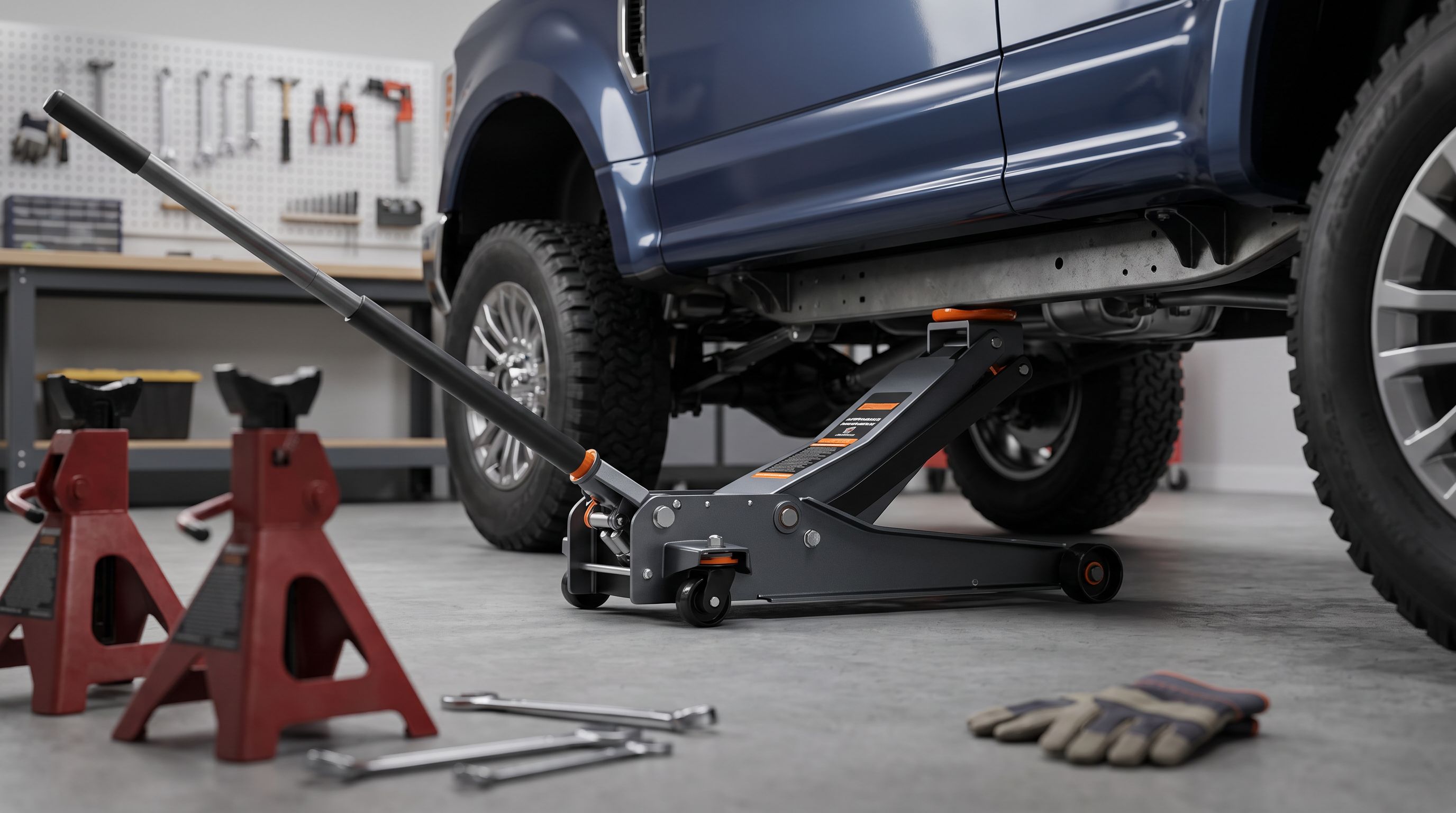
Long Reach Floor Jack for Trucks 2026: Reach Before Tonnage
A 2026 guide to long reach floor jacks for trucks and lifted SUVs — how chassis reach, max lift height, and saddle design decide whether a jack actually works.

Transmission Fluid Pump 2026: Match It to Your Fill Port
Picking a transmission fluid pump in 2026? Compare hand pumps, pneumatic ATF systems and adapter kits so your tool actually reaches sealed fill ports.
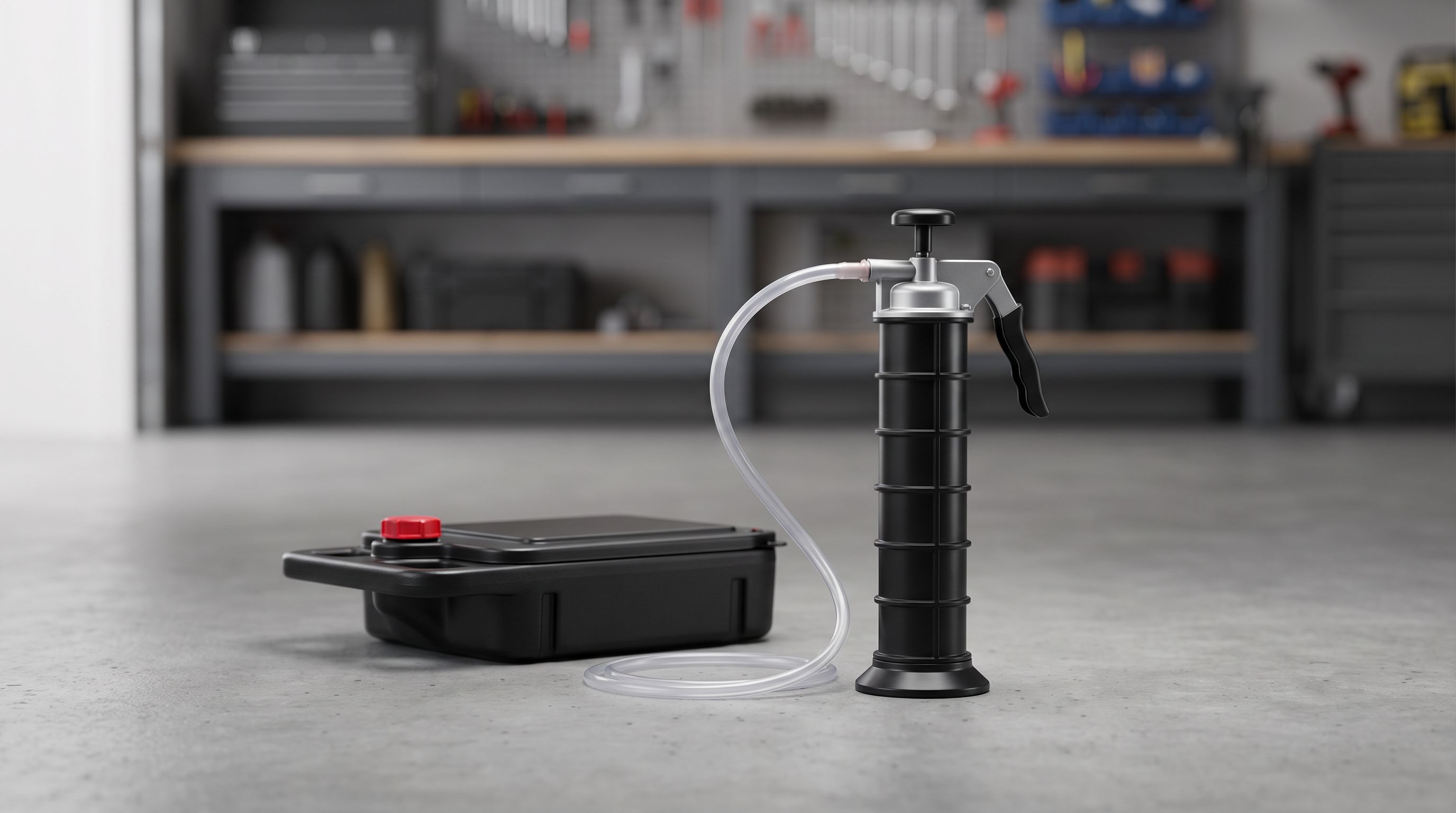
Oil Extractor vs Drain Pan in 2026: Which One Fits Your Car
Engine oil extractor pump or classic drain pan in 2026? Compare removal completeness, filter location and clearance — plus 5 researched picks for your garage.