Floor Jack and Jack Stand Buying Guide 2026: Match Lift to Ride Height
The best floor jack and jack stands for 2026, matched to ride height and tonnage — low-profile sedans, half-ton trucks and lifted SUVs, with stand ratings explained.
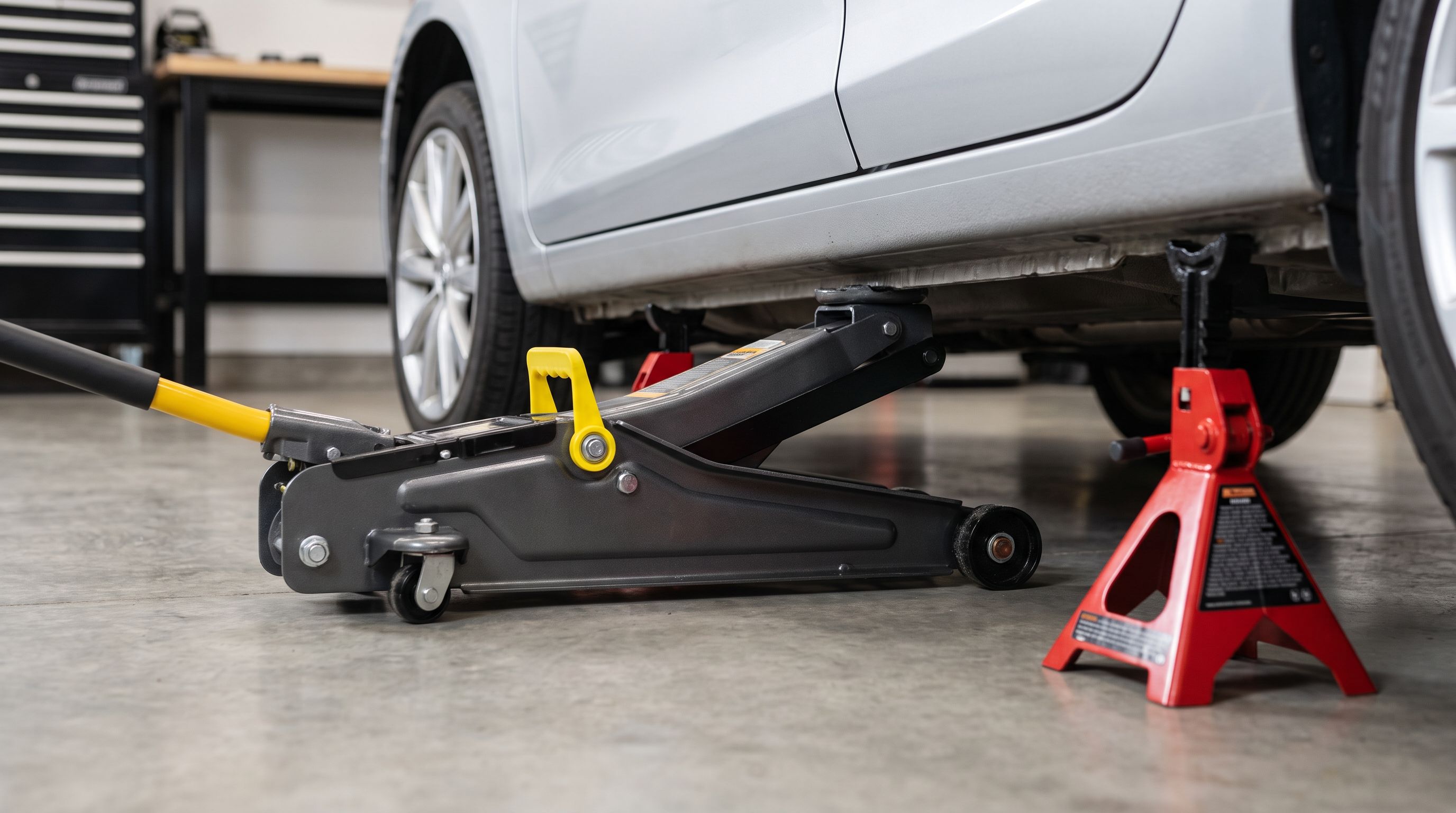
Reader-supported: we may earn a commission from links on this page, at no extra cost to you. It never affects our picks. Learn more.
The short version
- Best overall: Blackhawk B6350 3.5 Ton Service Jack
- Best low-profile pick: Arcan ALJ3T 3 Ton Aluminum Floor Jack
- Best for trucks and lifted SUVs: Torin Big Red AT84007R 4 Ton Jack
- Best value jack stands: Torin Big Red T43002 3 Ton Jack Stands
- Premium stands: ESCO 10498 3 Ton Jack Stands
 Best value jack stands · Torin Big Red T43002 3 Ton Jack Stands — Check price on Amazon →
 Best overall · Blackhawk B6350 3.5 Ton Service Jack — Check price on Amazon →
Buying a floor jack is one of the few garage purchases where getting it wrong is not just annoying — it's the difference between a job you can start and a job you can't. The jack either slides under your car or it doesn't. The stands either reach your frame rail or they leave you staring at a two-inch gap.
This guide is organized around that reality. We researched current floor jacks and jack stands using manufacturer specs, independent test results and verified owner feedback, then sorted them by the thing that actually matters: whether the numbers match your vehicle's ride height.
How to choose
Start with chassis clearance, not tonnage
Almost everyone shops for tonnage first. That's backwards. A 3-ton jack has roughly six times the capacity you need for one corner of a typical sedan — capacity is rarely the constraint. Entry height is.
Measure the clearance under your car's lift point (the pinch weld, subframe, or crossmember) with the tires at normal pressure and the car sitting level. Then compare it to the jack's minimum saddle height. You want at least a half-inch of margin so you're not scraping the jack in.
- Lowered cars, sports cars, many modern sedans: you need a low-profile jack, typically around 3 inches or less at the saddle. Aluminum racing-style jacks like the Arcan ALJ3T are built for this.
- Ordinary sedans and crossovers: a standard service jack in the 3.5-inch entry range, like the Blackhawk B6350, slides under fine.
- Trucks, vans, lifted SUVs: entry height is a non-issue. Your problem is the opposite one — max lift.
Then check maximum lift height against the wheel you want off the ground
This is the failure mode nobody anticipates. A jack with a 20-inch max lift will raise a half-ton pickup's frame... but not far enough to get the tire clear of the floor, because the suspension droops several inches before the wheel even moves.
Rule of thumb: on a vehicle with independent or solid-axle suspension, expect to lose 2–5 inches of useful lift to suspension travel before the tire breaks contact. On a lifted truck with long-travel shocks, it can be more. That's why tall-lift jacks like the Torin Big Red AT84007R exist — high max saddle height, and enough stroke to get a 33-inch tire off the deck.
If you own both a lowered car and a truck, you will likely end up owning two jacks. That's normal, and it's cheaper than buying one compromise jack that serves neither well.
Understand what a jack stand rating actually means
Jack stand tonnage is the most misunderstood number in the garage. Two important points:
Ratings are typically per pair, not per stand. A "3-ton" set is generally rated so the pair supports 3 tons — roughly 1.5 tons per stand. Always read the packaging on your specific set rather than assuming.
You're only ever supporting part of the vehicle. Lift one end of a 4,000 lb sedan and you've got roughly 2,000–2,400 lb across two stands. A 3-ton pair is enormous overkill for that, which is exactly what you want. Overkill is free safety margin.
Where 6-ton stands genuinely earn their place is on three-quarter-ton and one-ton trucks, work vans, and anything you plan to leave supported for an extended period. Heavier stands also tend to have wider bases and thicker steel, which matters more than the rating itself.
Ratchet vs. pin, and why base footprint matters
Ratcheting stands (the Torin Big Red T43002 design) adjust in small increments and are fast to set. Pin-style stands, like the ESCO 10498, use a solid steel pin through the column — many pros prefer them because there's no pawl to skip and the load path is more direct. Both designs are safe when used correctly on level concrete; the pin style simply has fewer moving parts to inspect.
Base footprint is the underrated spec. A wider, heavier base resists tipping when you're pulling on a stuck suspension bolt or wrestling a transmission. If you frequently work on gravel, dirt or an uneven driveway apron, prioritize the biggest-footprint stand you can afford — or put down steel plates.
Never skip the redundancy step
A hydraulic jack is a lifting device, not a holding device. Seals fail, valves weep, and rams settle. Every reputable manufacturer says the same thing: lift with the jack, support with stands, then leave the jack in light contact as a backup. Chock the wheels still on the ground. Shake the car before you go under it.
Comparison table
| Product | Type | Best for | Key strength | Main trade-off |
|---|---|---|---|---|
| Blackhawk B6350 | 3.5-ton steel service jack | Sedans, crossovers, general shop use | Tall max lift with reasonable entry height | Heavy steel construction; not a low-profile jack |
| Arcan ALJ3T | 3-ton aluminum low-profile jack | Sports cars, lowered sedans, EVs with flat underbodies | Low entry height, light enough to carry | Lower max lift; aluminum is pricier per ton |
| Torin Big Red AT84007R | 4-ton tall-lift jack | Pickups, vans, lifted SUVs | Reaches high frame rails with real stroke left | Too tall to fit under low cars |
| Torin Big Red T43002 | 3-ton ratcheting stands | Most home garages | Proven design, wide availability, broad height range | Ratchet pawl design needs periodic inspection |
| ESCO 10498 | 3-ton pin-style stands | Long-duration support, pro use | Large footprint, simple pin load path | Heavier and bulkier to store |
The picks
Blackhawk B6350 — best overall
Blackhawk B6350 3.5 Ton Service Jack
Long-running steel service jack with a tall max lift and a saddle that reaches most sedan and crossover points.
The Blackhawk B6350 is the jack we'd point most people toward if they're buying one and only one. It's a conventional steel service jack with 3.5 tons of capacity and a max lift that comfortably clears the suspension droop on sedans, wagons and crossovers — the category where a lot of shorter jacks come up embarrassingly short. Independent testing has repeatedly landed it near the top of traditional floor jack roundups, and long-term owner feedback is consistently strong on seal durability.
What it gives up: weight and entry height. This is a heavy piece of steel that you'll drag rather than carry, and it is not low-profile. If your car's pinch weld sits three inches off the ground, look at the Arcan instead.
Arcan ALJ3T — best low-profile pick
Arcan ALJ3T 3 Ton Aluminum Floor Jack
Lightweight aluminum jack with a low chassis entry height for sports cars and lowered sedans.
Aluminum jacks earn their keep two ways: they slide under low cars, and you can actually lift them into a trunk. The Arcan ALJ3T does both, pairing a 3-ton rating with a low chassis entry height and dual-piston hydraulics that get the car up in fewer pump strokes than a single-piston unit. It's a favorite among track-day drivers for exactly that reason — it lives in the back of the car and works on a paddock surface.
The compromises are real. Max lift is lower than a full-size steel service jack, so it's a poor match for trucks. And per ton of capacity, aluminum costs meaningfully more than steel. If your only vehicle is a crossover, you're paying for portability you won't use.
Torin Big Red AT84007R — best for trucks and lifted SUVs
Torin Big Red AT84007R 4 Ton Jack
Tall-lift hydraulic jack built for high ride heights where a standard service jack runs out of stroke.
If you own a half-ton pickup, a full-size van, or anything with a lift kit, a standard service jack will frustrate you within one tire rotation. The Torin Big Red AT84007R is built for the opposite problem: high saddle reach, 4-ton capacity, and enough stroke to lift a tall frame rail until the tire genuinely clears the floor. It has appeared as a truck-specific recommendation in current expert roundups for exactly this reason.
The trade-off is obvious and unavoidable — it will not fit under a low car. Treat it as a dedicated truck jack, not a universal one. Also confirm your vehicle's designated lift points before use; body-on-frame trucks and unibody SUVs have very different correct locations, and your owner's manual is the authority.
Torin Big Red T43002 — best value jack stands
Torin Big Red T43002 3 Ton Jack Stands
Classic ratcheting steel stands with a wide base — the default pair for most home garages.
These are the stands in an enormous number of home garages, and there's a reason. The T43002 pair uses a ratcheting column with a broad height adjustment range, a wide cast base, and a saddle profile that sits securely on frame rails and pinch weld reinforcements. For a sedan, crossover or light truck, a 3-ton pair gives you a huge safety margin over the load you'll actually put on them.
What they give up is refinement. The ratchet pawl is a moving part, so inspect it for wear and debris before each use, and always lower the stand onto a fully seated tooth rather than leaving it on the edge of one. On soft or uneven ground, put plywood or steel plate underneath.
ESCO 10498 — premium stands
ESCO 10498 3 Ton Jack Stands
Heavy pin-style stands with a large footprint, favored by pros who leave vehicles up for days.
Ask professionals which stands they trust and ESCO comes up constantly. The 10498 is a pin-style 3-ton stand with a large, heavy base and a simple solid-pin load path — no pawl, no ratchet, nothing to skip. That simplicity is the appeal. If you leave a vehicle supported for days while you wait on parts, or you're working under a car regularly rather than occasionally, the extra confidence is worth the money.
The downsides are weight and bulk. These are noticeably heavier to move around and take up more shelf space than budget stands, and the height increments are coarser than a fine-tooth ratchet. For someone who jacks up a car twice a year, they're more stand than the job requires — but they'll outlast several cheaper sets.
FAQ
Do I really need jack stands if I have a good hydraulic jack? Yes. Every manufacturer's instructions say the same thing, because hydraulic seals and release valves can fail without warning. Lift with the jack, support with stands, and leave the jack in light contact underneath as redundancy.
Are jack stand tonnage ratings per stand or per pair? Usually per pair, meaning a "3-ton" set supports about 1.5 tons per stand. Check the label on your specific set — this varies by manufacturer, and assuming the more generous interpretation is how people get hurt.
How do I find the right lift points on my vehicle? Your owner's manual shows them, and they differ significantly by year, make and model. Unibody cars typically use reinforced pinch weld seams; body-on-frame trucks use the frame rails. Never lift on floor pans, oil pans, or plastic underbody trays. Many EVs have specific pucked lift points because the battery pack occupies the floor — check the manual before the jack touches anything.
Can I use one floor jack for both my lowered car and my truck? Realistically, no. The entry height that lets a jack slide under a sports car is incompatible with the max lift a truck needs. Most people who own both end up with a low-profile aluminum jack and a tall-lift steel jack.
Is concrete required, or can I work on a driveway? Level, solid concrete is strongly preferred. On asphalt — which softens in heat — and on gravel or dirt, place thick plywood or steel plates under both the jack and the stands to spread the load. Never work under a vehicle on a sloped surface.
How often should I service a floor jack? Check hydraulic fluid level annually, keep the ram and pivot points lightly oiled, and bleed air from the system if the jack starts lifting in stages or won't reach full height. Inspect stands for bent columns, cracked welds and worn ratchet teeth before every use, and retire anything deformed.
Get the best car care deals in your inbox
Join the GarageProof newsletter for hand-picked car care deals and new buying guides. No spam, unsubscribe anytime.
Related reads
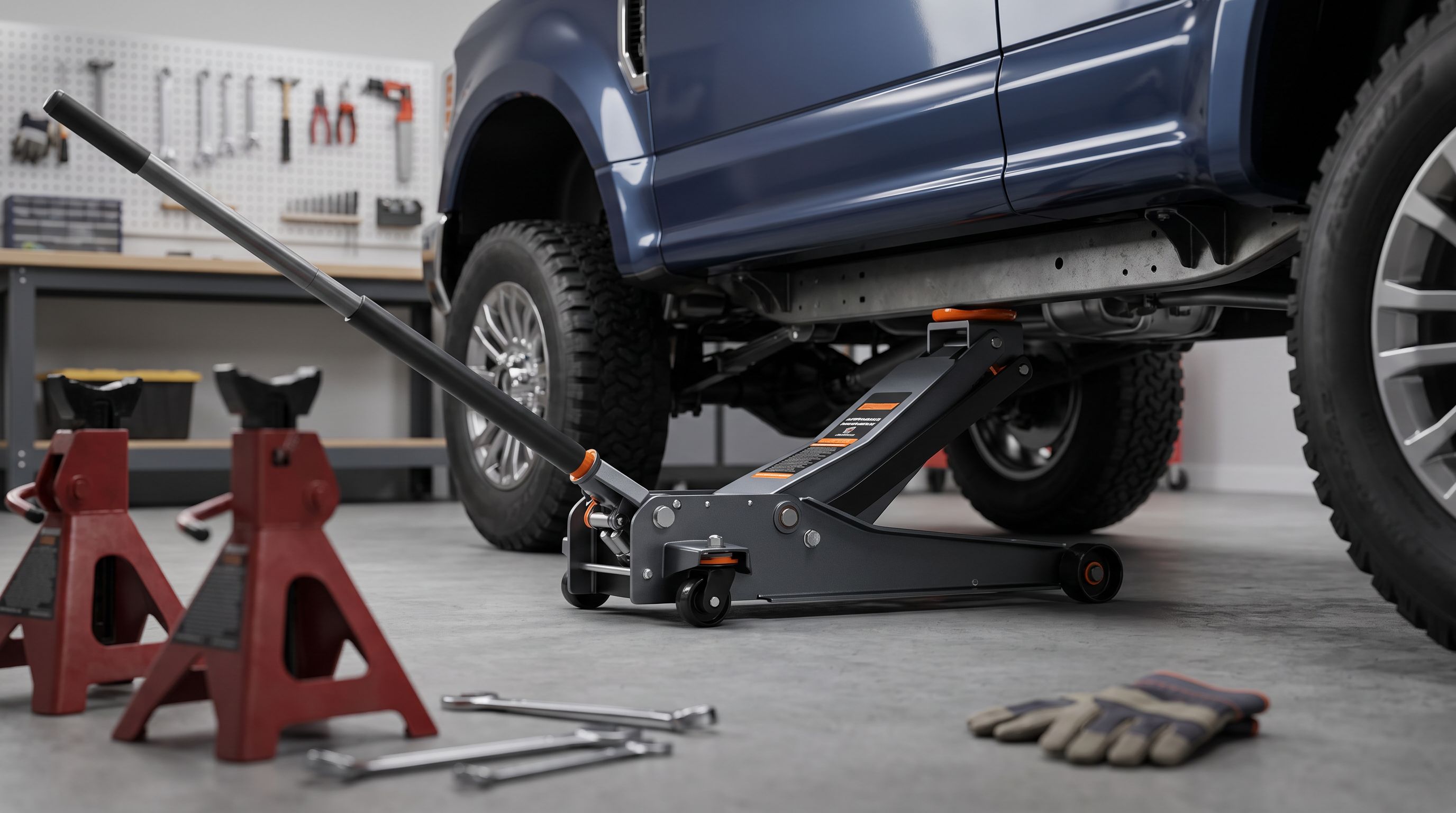
Long Reach Floor Jack for Trucks 2026: Reach Before Tonnage
A 2026 guide to long reach floor jacks for trucks and lifted SUVs — how chassis reach, max lift height, and saddle design decide whether a jack actually works.
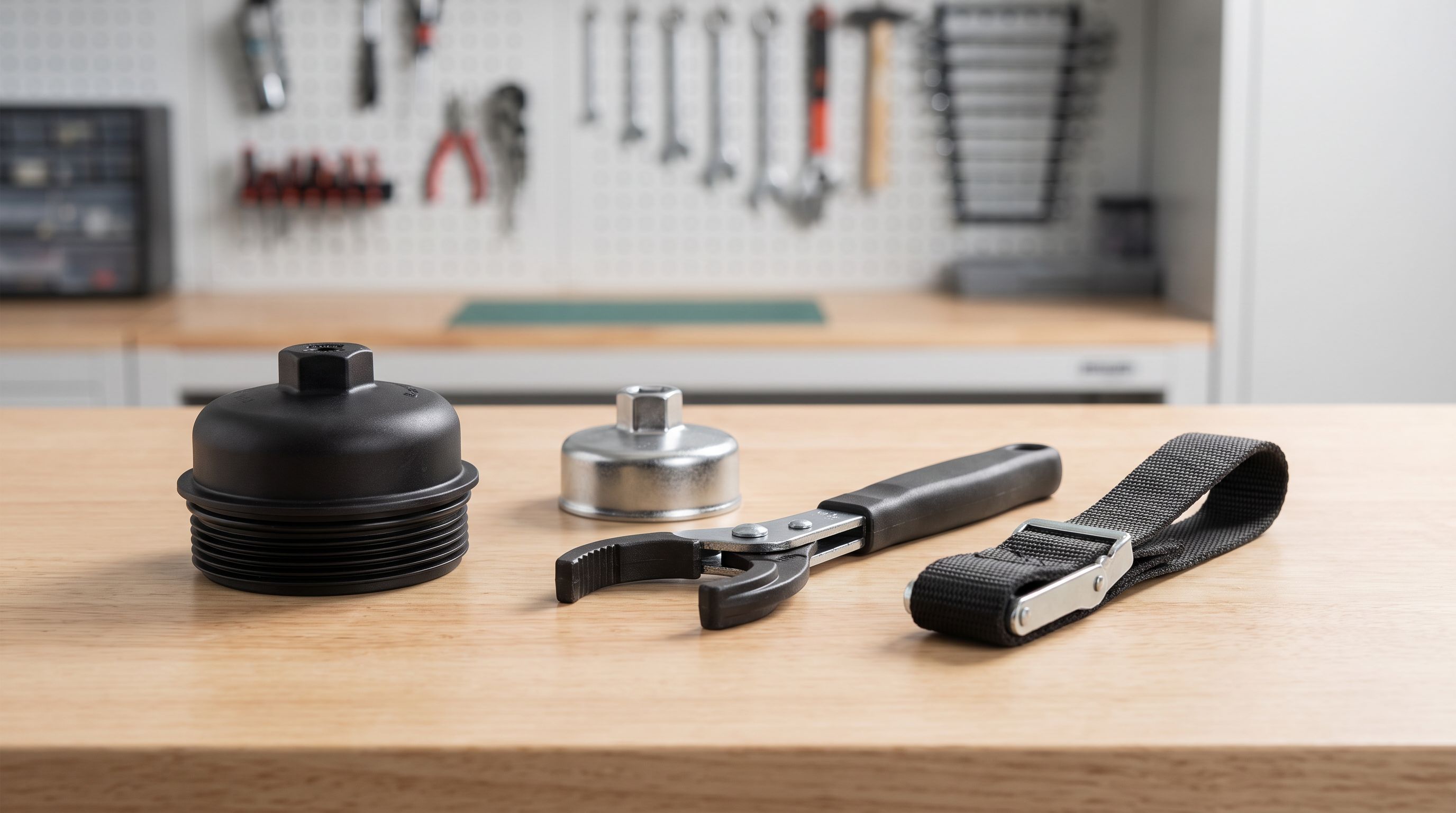
Oil Filter Wrench Fitment 2026: Cap, Cup or Claw?
Cap, cup, claw or strap? Match the right oil filter wrench to your engine's filter size and flute count in 2026 — plus five picks that actually fit.
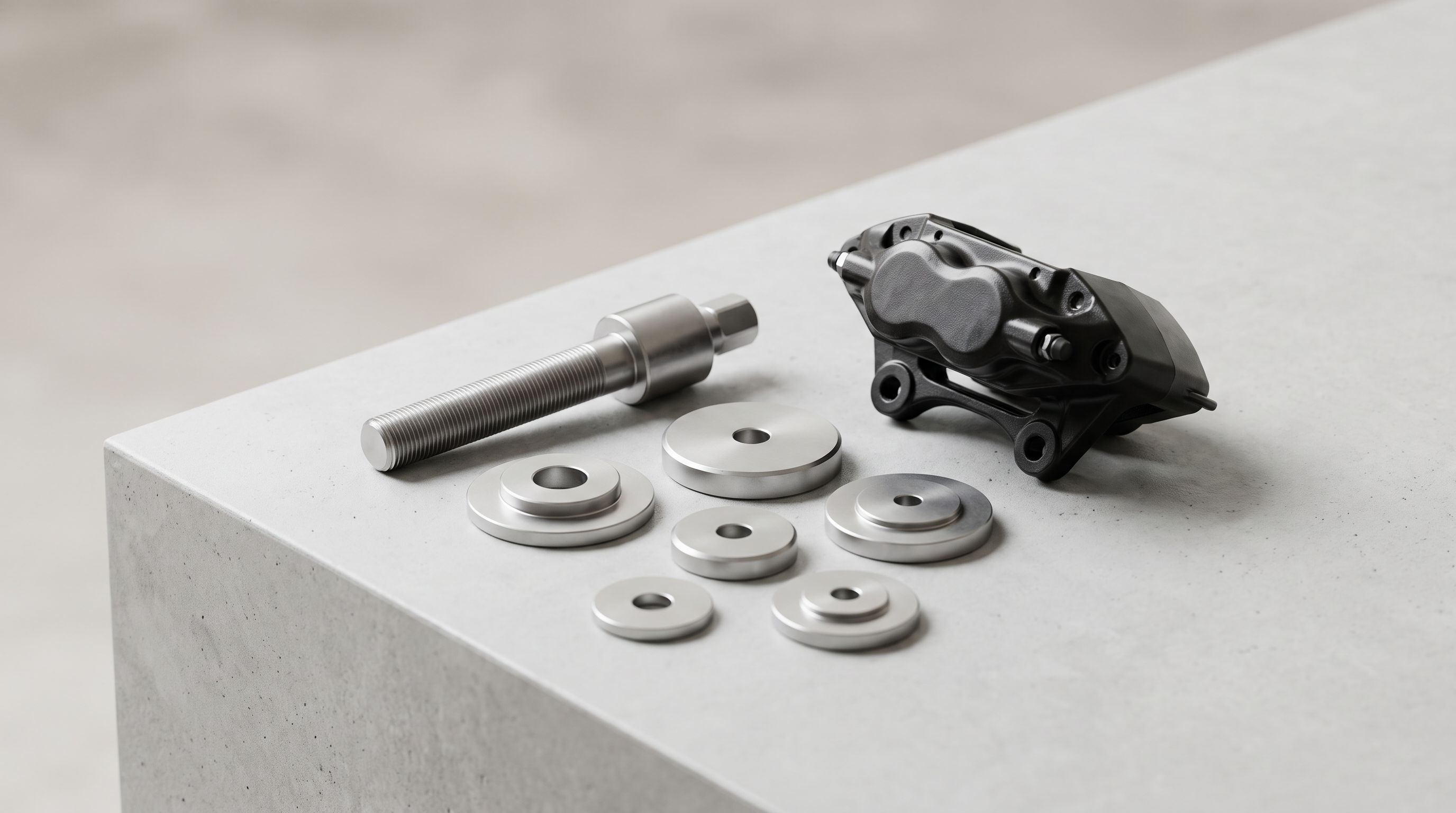
Brake Caliper Piston Tool Kit 2026: Match the Pin Pattern
Pick a brake caliper piston tool kit that actually fits your rear calipers in 2026 — adapter coverage, pin patterns, EPB cars and build quality compared.