Paint Thickness Meters for Cars in 2026: 5 Picks Worth Owning
Comparing the best paint thickness meters for cars in 2026. Find the right gauge to check clear coat before polishing or verify bodywork on a used car.
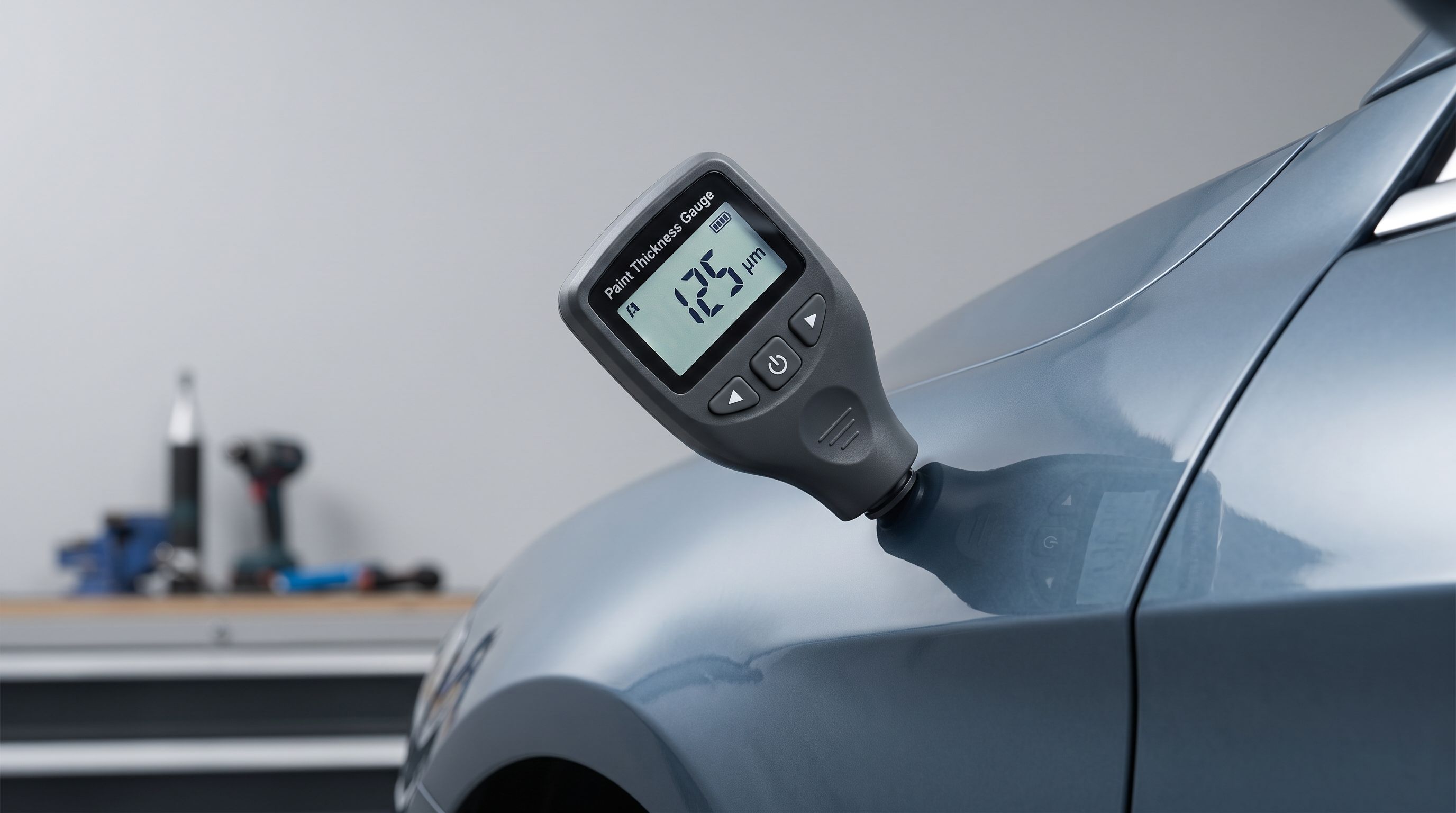
Reader-supported: we may earn a commission from links on this page, at no extra cost to you. It never affects our picks. Learn more.
A paint thickness meter is one of the most honest tools a car owner can buy. Press it against a panel and you get an objective number—no guesswork—telling you how much coating sits on the substrate. That reading can save you from polishing through thin clear coat, or from paying retail for a used car hiding bondo and respray work. We researched and compared five gauges across accuracy, substrate modes, measurement range, and real-world usability for 2026 to help you pick the right one.
The short version
- Best overall — Elcometer 311 Automotive Paint Meter
- Best for non-metal substrates — DeFelsko PosiTector 200
- Budget pick — VLEPPO CM-205FN Paint Thickness Gauge
- Best pocket-size gauge — Yunombo YNB-100 Paint Thickness Gauge
- Best mid-range value — ElekTek CM-8826FN Coating Thickness Meter
 Best for non-metal substrates · DeFelsko PosiTector 200 — Check price on Amazon →
 Best overall · Elcometer 311 Automotive Paint Meter — Check price on Amazon →
Why you need a paint thickness meter
Factory paint on most modern cars runs between roughly 90–150 µm (microns) total—primer, base coat, and clear coat combined. Knowing where a panel sits in that range tells you several things at once:
- Clear coat health before machine polishing. If a fender already reads low (say, 80 µm), a heavy-cut compound could burn through the clear. A meter lets you adjust your pad and compound choice panel by panel.
- Respray and body-filler detection on used cars. Repainted panels often read 200 µm or higher; filler and bondo can push readings above 500 µm. Walking around a car with a gauge takes under five minutes and reveals work that a visual inspection can miss.
- Ceramic coating or PPF verification. After paying for a professional ceramic coating or paint protection film, a before-and-after reading confirms the installer did the work.
How to choose
Substrate mode: Fe, NFe, or both?
Paint thickness gauges work by sensing the distance between the probe tip and the metal substrate underneath. Ferrous (Fe) mode uses a magnetic-induction method for steel panels. Non-ferrous (NFe) mode uses eddy-current technology for aluminum, zinc, and other non-magnetic metals. Many modern cars—especially luxury and performance models—use a mix of steel and aluminum panels, so a dual Fe/NFe gauge is the minimum you should consider. Some gauges auto-detect the substrate; others require you to switch manually. Automatic detection is faster and less error-prone when you're walking around a car in a parking lot.
If your vehicle has plastic or fiberglass body panels (Corvettes, some fenders on crossovers, fiberglass kit cars), standard Fe/NFe gauges won't work on those panels. You'll need an ultrasonic gauge like the DeFelsko PosiTector 200, which can measure coating thickness on non-metallic substrates.
Accuracy and resolution
Most budget gauges claim ±3% accuracy at readings above 50 µm, with ±1–2 µm resolution. That's perfectly adequate for detecting respray or body filler, where the difference from factory is often 100+ µm. If you're doing professional-level paint correction and need to track clear-coat removal pass by pass, look for gauges with ±1% accuracy and 0.1 µm resolution—features typically found in pro tools like the Elcometer 311.
Measurement range
Factory paint rarely exceeds 200 µm total, but body filler can be several millimeters thick. A range of 0–1300 µm (about 0–51 mils) is more than enough for automotive use and will let you detect even heavy filler. Some budget gauges top out around 1000 µm, which is still workable but may clip readings on badly repaired panels.
Reading speed and probe design
If you're inspecting a full vehicle, you'll take 30–50+ readings. A slow gauge that requires repositioning between readings gets tedious fast. The Elcometer 311, for instance, is marketed as the fastest automotive paint gauge available, with virtually instant readings. Flat-tipped probes work best on flat panels; a rounded or spring-loaded probe tip is better for curved areas like fender flares and bumper transitions.
Calibration and zero-check
Every gauge drifts slightly over time. Look for models that ship with calibration foils (thin plastic shims of known thickness) so you can verify and recalibrate before each inspection session. A quick zero-check on a bare metal surface confirms the gauge is reading true. Models without included foils force you to buy them separately.
Our picks for 2026
Elcometer 311 — Best overall
Prices last checked November 11, 2026. Amazon prices change frequently, so treat these as a guide and check the live price before you buy.
Elcometer 311 Automotive Paint Meter
Fastest reading speed on the market with automatic substrate detection and pro-grade accuracy.
The Elcometer 311 Automotive Paint Meter is purpose-built for car inspectors and detailers. It features automatic substrate detection (Fe/NFe), meaning it instantly identifies whether a panel is steel or aluminum and applies the correct measurement mode. According to Elcometer, it's the fastest automotive paint gauge currently on the market—a claim backed by professional detailer feedback praising its near-instant readings. The backlit display is easy to read in parking lots and garages alike, and it stores batches of readings for reporting. The trade-off is price: this is a professional-tier instrument that costs significantly more than budget alternatives. It's the right pick if you inspect vehicles regularly—for a business, an auction buyer, or a serious hobbyist detailer who wants uncompromising accuracy.
DeFelsko PosiTector 200 — Best for non-metal substrates
DeFelsko PosiTector 200
Measures coatings on plastic, fiberglass, and composites—ideal for modern mixed-material cars.
The DeFelsko PosiTector 200 uses ultrasonic technology instead of magnetic induction or eddy current, which means it can measure coating thickness on plastic, fiberglass, carbon fiber, and composites—substrates where conventional Fe/NFe gauges simply won't work. This matters for owners of vehicles with mixed-material construction or fiberglass body panels. It also works on metal, but its real advantage is versatility. DeFelsko is a respected name in the coating-inspection industry, and the PosiTector platform supports interchangeable probe bodies. The downside: it's expensive and more specialized than most DIY owners need. Choose this if your vehicle (or your inspection clients' vehicles) includes non-metal body panels and you need readings on every surface.
VLEPPO CM-205FN — Budget pick
VLEPPO CM-205FN Paint Thickness Gauge
Fe/NFe dual-mode gauge with surprisingly accurate readings at a fraction of pro-tool pricing.
The VLEPPO CM-205FN is a dual Fe/NFe gauge with a wide measurement range that covers factory paint through heavy filler. Owner reviews consistently praise its accuracy relative to its low price point, and it ships with calibration foils for zero-checking. The compact body and simple interface make it straightforward to use even if you've never held a paint meter before. Where it falls short compared to pricier options: reading speed is slower, there's no automatic substrate detection (you select Fe or NFe manually, or use an auto mode that's less reliable than premium gauges), and build quality is basic plastic. For a DIY owner inspecting a used car once or twice a year, or a hobbyist detailer checking clear coat before polishing, it's hard to argue with the value.
Yunombo YNB-100 — Best pocket-size gauge
Yunombo YNB-100 Paint Thickness Gauge
Tiny, one-button design that fits in a shirt pocket—great for used-car lot walkarounds.
The Yunombo YNB-100 is about the size of a car key fob, making it the easiest gauge to toss in a jacket pocket or glove box for impromptu used-car inspections. It's a single-button device: press, read, done. Despite the tiny footprint, it offers Fe/NFe dual mode and reasonably accurate readings for detecting respray and filler. The trade-off is the small screen and minimal features—no data logging, no backlight on most versions, and calibration is more basic. Think of it as a quick-screening tool rather than a precision instrument. If a panel reads suspiciously high on the YNB-100, you've got probable cause to bring a more capable gauge or walk away from the deal.
ElekTek CM-8826FN — Best mid-range value
ElekTek CM-8826FN Coating Thickness Meter
Wide 0–1300μm range handles factory paint and heavy body filler detection with ease.
The ElekTek CM-8826FN (sometimes listed as CM-8826FN or similar model numbers from the same OEM family) offers a 0–1300 µm measurement range with Fe/NFe dual-mode operation. That wide range means it comfortably handles factory paint readings and can flag body filler without maxing out the display. It typically ships with calibration foils and a carrying case. Reading speed and accuracy fall between the budget VLEPPO and the professional Elcometer—good enough for regular use without the premium price tag. It's a solid middle ground for the car enthusiast who inspects multiple vehicles a year or wants to monitor clear coat health over time without spending professional-tool money.
Comparison table
| Feature | Elcometer 311 | DeFelsko PosiTector 200 | VLEPPO CM-205FN | Yunombo YNB-100 | ElekTek CM-8826FN |
|---|---|---|---|---|---|
| Substrate modes | Fe/NFe auto | Ultrasonic (metal + non-metal) | Fe/NFe (manual/auto) | Fe/NFe | Fe/NFe |
| Range | Varies by probe; covers automotive range | Up to 7600 µm (ultrasonic) | ~0–1300 µm | ~0–1250 µm | 0–1300 µm |
| Auto substrate detect | Yes | N/A (ultrasonic) | Basic auto mode | Yes | Varies |
| Calibration foils included | Yes | Yes | Yes | Limited | Yes |
| Data logging | Yes | Yes | No | No | No |
| Best for | Pro inspectors, detailers | Fiberglass/plastic panels | Budget DIY owners | Pocket carry, quick checks | Enthusiast mid-range use |
| Price tier | Premium | Premium | Budget | Budget | Mid-range |
How to take accurate readings
- Calibrate first. Use the included foils on the included metal substrate plates to verify accuracy. Do this every session.
- Clean the surface. Dirt, wax, and thick ceramic coatings add microns to your reading. Wipe panels with isopropyl alcohol or quick detailer for the truest measurement.
- Take multiple readings per panel. Measure center, edges, and near seams. A single reading can be misleading; three to five per panel gives you a reliable average.
- Compare symmetrically. Compare the driver-side fender to the passenger-side fender. Factory paint should read similarly on both sides. A 30–50+ µm difference between matching panels is a red flag for respray or repair.
- Know your baseline. Factory paint ranges vary by manufacturer. German cars often read 100–130 µm; Japanese cars may run 80–120 µm. Check forums for your specific make and model to establish expectations before you start.
FAQ
Can I use a paint thickness meter on plastic bumpers?
Standard Fe/NFe gauges require a metal substrate underneath the paint. They won't give a reading on plastic bumpers, fiberglass panels, or carbon fiber. For those surfaces, you need an ultrasonic gauge like the DeFelsko PosiTector 200.
What reading indicates a repainted panel?
There's no single magic number, but any panel reading significantly higher than its symmetrical counterpart—typically 50 µm or more above the car's average—warrants suspicion. Readings above 200–250 µm almost always indicate respray; readings above 500 µm suggest body filler.
Do I need to calibrate every time I use the gauge?
Yes. A quick zero-check and foil verification takes under a minute and ensures your readings are trustworthy. Temperature changes and probe wear can cause drift over time.
Will a paint thickness meter work through PPF or vinyl wrap?
It will give a reading, but the number will include the film thickness (PPF is typically 150–200 µm; vinyl wrap is similar). You'll need to account for that added thickness when interpreting results, or measure an unwrapped area for comparison.
Is a budget gauge accurate enough to check a used car?
For respray and filler detection, absolutely. The differences you're looking for are large—often 100+ µm above factory—so even a gauge with ±3% accuracy will flag problem panels reliably. For pass-by-pass clear-coat measurement during paint correction, a more accurate gauge is worth the investment.
Get the best car care deals in your inbox
Join the GarageProof newsletter for hand-picked car care deals and new buying guides. No spam, unsubscribe anytime.
Related reads
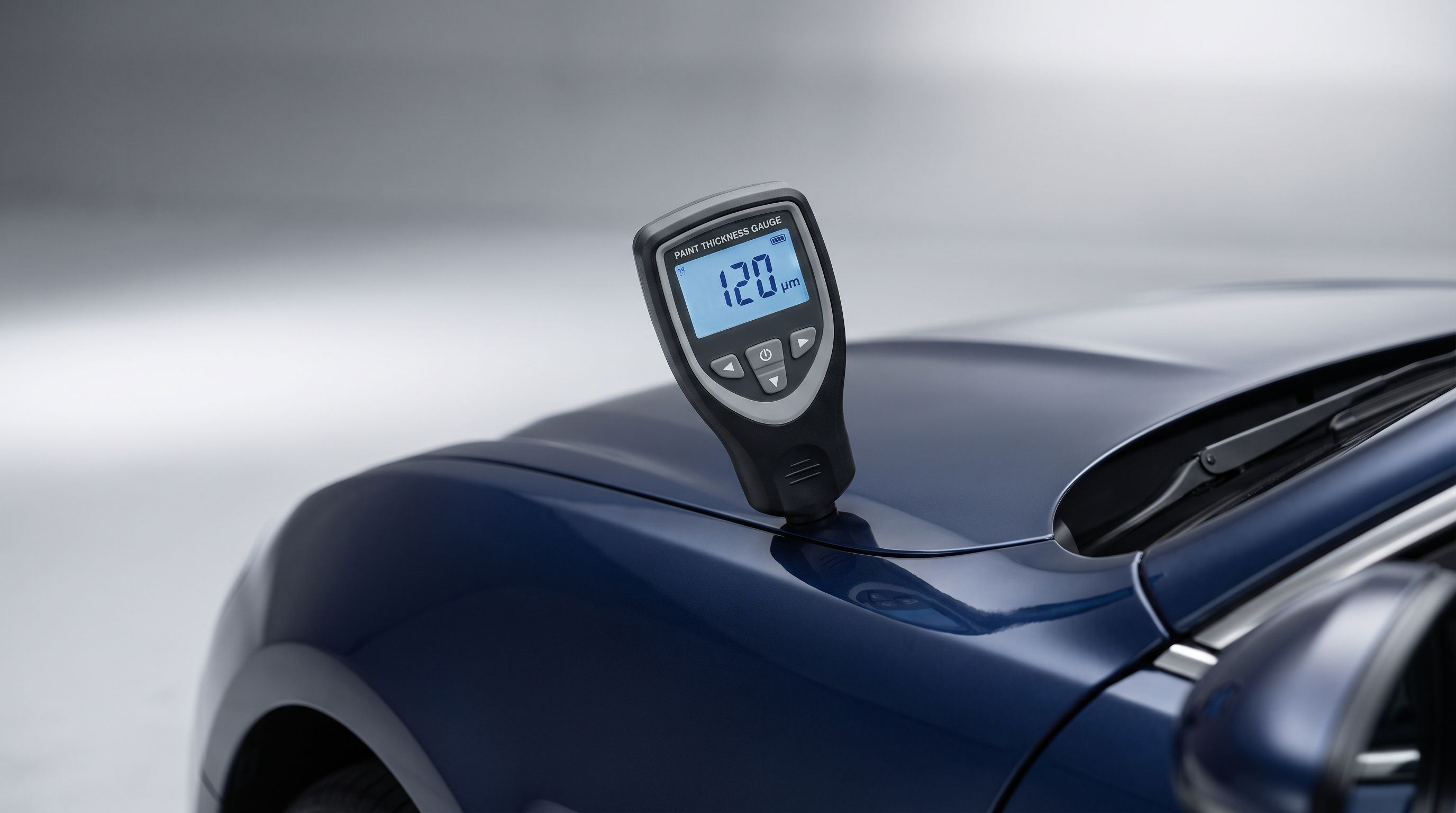
Paint Depth Gauge Buying Guide 2026: Ferrous + Aluminum
Which paint depth gauge is safe to buy in 2026? How probe type, aluminum panel coverage and calibration accuracy separate useful gauges from junk.
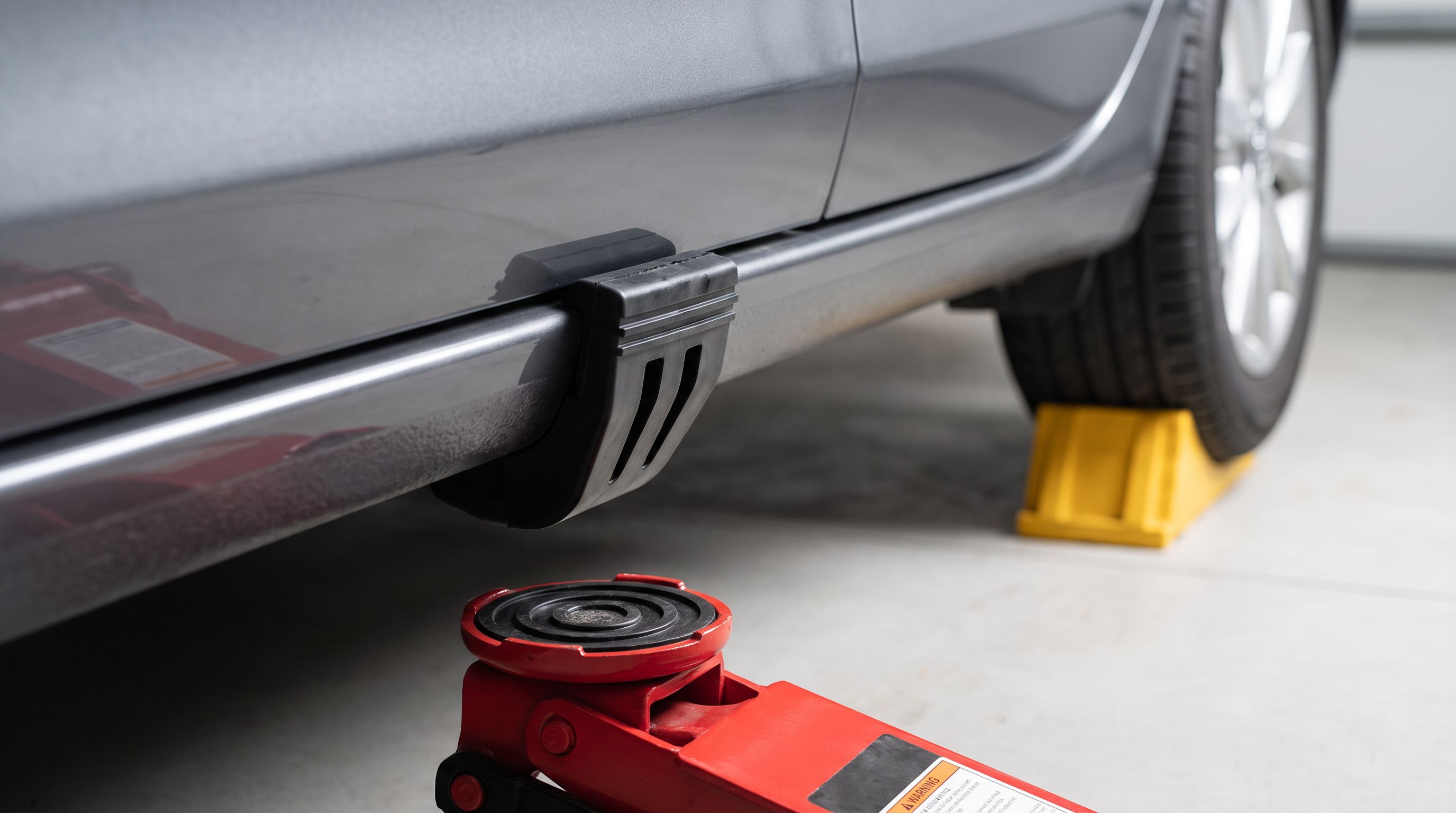
Jack Pad Pinch Weld Adapter 2026: Match It to Your Car First
A fitment-first guide to jack pad pinch weld adapters, EV jack pads and wheel chocks in 2026 — how to find your lift points before you buy anything.
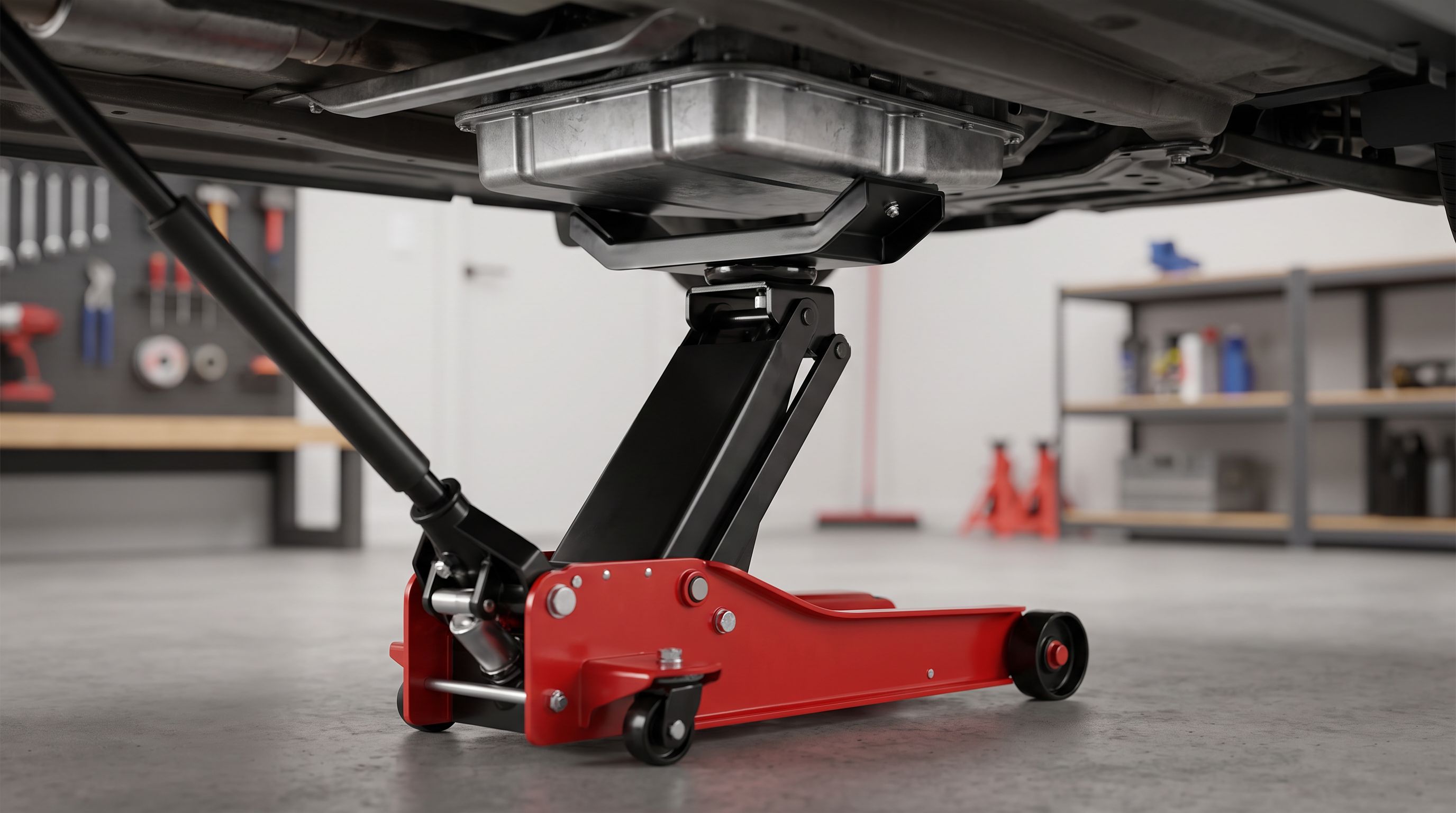
Transmission Jack Buying Guide 2026: Telescoping vs Low Profile
Telescoping or low profile? Match saddle tilt, lift range and capacity to your pan size and garage ceiling with our 2026 transmission jack buying guide.