Digital Tire Pressure Gauge 2026: Why Inflator Dials Lie
Built-in inflator gauges drift by several PSI. Here's how digital tire pressure gauges compare in 2026 on stated accuracy, chuck type and alloy-wheel valve access.
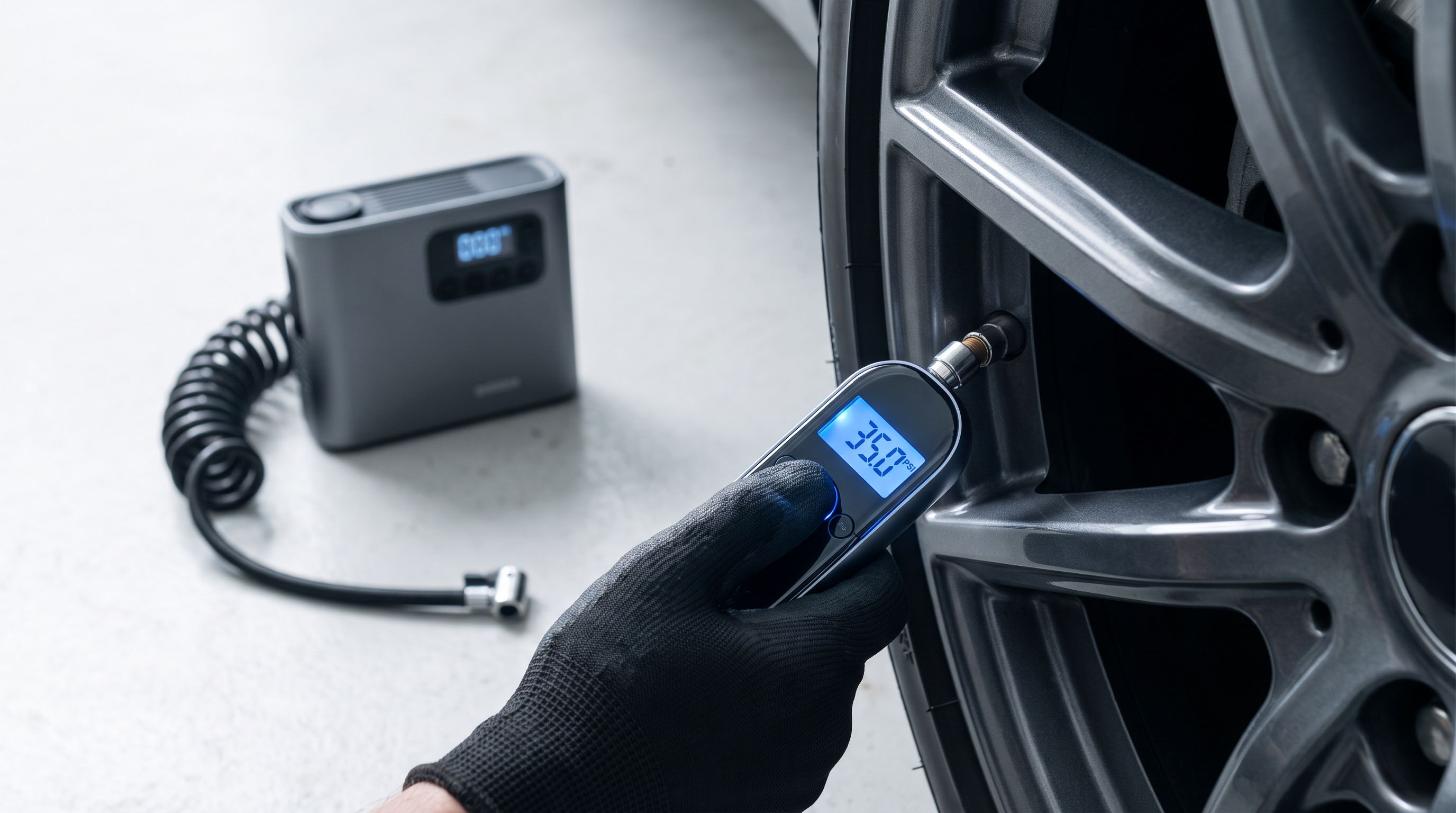
Reader-supported: we may earn a commission from links on this page, at no extra cost to you. It never affects our picks. Learn more.
If you set your tires using the dial or screen on your portable inflator, there's a decent chance every tire on your car is 2–4 PSI away from where you think it is. That's not a conspiracy — it's a predictable consequence of where that gauge sits, how it's built, and what it costs the manufacturer to include.
This guide explains why built-in inflator gauges drift, what "accuracy" claims actually mean on a spec sheet, and which standalone digital tire pressure gauges are worth keeping in the door pocket in 2026. GarageProof researches and compares products using manufacturer specifications, independent test results, and verified owner feedback; we don't physically test units ourselves.
The short version
- Best overall: JACO ElitePro Digital Tire Pressure Gauge 100 PSI
- Best compact: Accutire MS-4021B Digital Tire Pressure Gauge
- Best budget: AstroAI Digital Tire Pressure Gauge 150 PSI
- Best for trucks and RVs: ETENWOLF T300 Digital Tire Pressure Gauge 200 PSI
- Best battery-free backup: Milton S-921 Pencil Tire Pressure Gauge
 Best battery-free backup · Milton S-921 Pencil Tire Pressure Gauge — Check price on Amazon →
 Best budget · AstroAI Digital Tire Pressure Gauge 150 PSI — Check price on Amazon →
 Best overall · JACO ElitePro Digital Tire Pressure Gauge 100 PSI — Check price on Amazon →
Why built-in inflator gauges drift
A standalone gauge has one job: read static pressure in a sealed tire. An inflator's gauge has a much harder life, and three things conspire against it.
1. It's reading the hose, not the tire
Most portable inflators — especially the cordless 12V and battery-platform units that dominate in 2026 — place the gauge upstream of the pump outlet, measuring pressure in the hose. While the compressor is running, that hose pressure is higher than tire pressure because of flow restriction through the chuck and valve core. Decent inflators pause the motor to take a reading, which helps a lot. Cheaper ones don't, or only partially settle before displaying a number. The result: you stop at "35" and the tire is actually sitting at 32 or 33.
Short, narrow hoses and screw-on brass chucks make this worse, not better, because the pressure drop across a restrictive valve connection is larger.
2. Heat and vibration are hard on sensors
An inflator's pressure transducer lives inches from a motor that gets genuinely hot during a four-tire top-up, and it gets shaken every time the unit runs. Cheap MEMS sensors have a temperature coefficient — the zero point and the span both shift as the sensor warms. A gauge that's spot-on at ambient on tire one can read differently on tire four. Dedicated handheld gauges are never hot, rarely vibrate, and spend their life in a glovebox.
3. Nobody calibrates them, and nothing enforces a standard
Handheld gauges from reputable brands cite a calibration standard — usually ANSI B40.1 Grade B (±2% of full scale) for pressure gauges, or ANSI B40.7 for digital. Those standards tell you what the tolerance means and across what portion of the scale. Inflator gauges typically cite nothing, or a vague "±1 PSI" with no reference pressure and no indication of whether that applies at 10 PSI or 150 PSI. Over time, there's no practical way to re-verify them either.
None of this means inflators are bad. A good one fills fast and shuts off automatically. It just means you should treat the inflator as the pump and a separate digital tire pressure gauge as the measuring instrument — set the inflator a little high, then bleed down to the real number with the handheld.
What "±1 PSI accuracy" actually means
Read the fine print carefully, because two gauges claiming the same number can be very different instruments.
- ±X% of full scale. A 150 PSI gauge with ±2% full-scale accuracy is ±3 PSI everywhere, including at 32 PSI. That's a lot of error at passenger-car pressures.
- ±X% of reading. Much better at the low end. 2% of a 35 PSI reading is 0.7 PSI.
- ±1 PSI flat. Common on handheld digitals, usually specified over a working range rather than the full scale. For car tires, this is genuinely good enough — TPMS warning thresholds are typically 25% below placard pressure, so a 1 PSI error never puts you in danger.
- Resolution is not accuracy. A screen showing 0.1 PSI increments tells you about display precision, nothing about whether it's correct.
For a daily driver on 32–38 PSI placard pressures, the practical sweet spot is a gauge with a lower full-scale range (60–100 PSI), because full-scale-referenced tolerances get tighter as the range shrinks. A 200 PSI gauge is the right call for a 3/4-ton truck running 70–80 PSI rears or an RV at 100+, and the wrong call for a Civic.
Chuck type and alloy-wheel access
This is the part spec sheets ignore and owners complain about most.
Straight chuck — the simplest head, pressed on axially. Fine on steel wheels and anything with a stem that protrudes clearly. Awkward on deep-dish alloys where the valve sits recessed behind a spoke.
Angled / 45-degree chuck — the Accutire's angled head is the classic example. Much easier on factory alloys because you can approach from outside the wheel face without barking your knuckles on the spokes.
Swivel chuck (ball or 360-degree) — the most flexible. JACO's ElitePro uses a swiveling head that lets you line up the chuck square to the stem from almost any approach angle. This is what you want on staggered wheels, low-profile tires with short stems, or dually inner wheels.
Dual-foot chuck — two openings, one straight and one angled, on a single head. Mostly found on truck and fleet gauges; genuinely useful on duals.
Two more details worth checking before you buy:
- Seal quality. A gauge that hisses while you read it is bleeding the tire and reading low. Good gauges seat and seal in one firm push with no audible leak.
- Hose vs. rigid head. A short braided hose between the chuck and the body lets you get the chuck onto an awkward stem while holding the display where you can read it. It's the single biggest quality-of-life upgrade on aftermarket wheels with short, deeply recessed stems — and it's why many enthusiasts prefer hose-equipped gauges over pen-style ones.
The picks compared
| Gauge | Stated range | Chuck style | Power | Best suited to |
|---|---|---|---|---|
| JACO ElitePro | 100 PSI | 360° swivel, rubber-armored | Battery (auto shutoff) | Everyday cars, enthusiasts, alloy wheels |
| Accutire MS-4021B | 5–150 PSI | Angled rigid head | Coin cell | Glovebox duty, quick checks |
| AstroAI | 150 PSI | Straight, lighted nozzle | Battery (auto shutoff) | Night checks, multi-car households |
| ETENWOLF T300 | 200 PSI | Heavy-duty, ANSI B40.7 rated | Replaceable AAA | Trucks, trailers, RVs, LT tires |
| Milton S-921 | ~5–50 PSI | Straight pencil tip | None | Backup, glovebox, verification |
JACO ElitePro — best overall
The ElitePro is the gauge most often named as a default recommendation by independent reviewers and in enthusiast forums, and the reasons are consistent: a calibrated sensor referenced to ANSI standards, a rubber boot that survives being dropped on concrete, a backlit display that's legible at dusk, and a swiveling chuck that seats cleanly on recessed valve stems. The 100 PSI version is the right one for passenger cars and most light trucks, because the narrower range keeps full-scale tolerance tight.
What you give up: it's bulkier than a pen gauge, it needs batteries, and the 100 PSI version isn't enough for heavy-duty LT or RV pressures. There's also no bleed valve, so topping down means a separate press.
Accutire MS-4021B — best compact
Prices last checked October 2, 2026. Amazon prices change frequently, so treat these as a guide and check the live price before you buy.
Accutire MS-4021B Digital Tire Pressure Gauge
Pocket-sized, angled head, stated ±1 PSI accuracy — the classic glovebox gauge that just works.
The MS-4021B has been the quiet default glovebox gauge for years and still earns Editors' Choice nods in lab-based roundups. Its appeal is unglamorous: it's small enough to live in a door pocket permanently, the angled head clears alloy spokes better than a straight chuck, and the stated ±1 PSI accuracy is more than adequate for setting placard pressure. The large single-button operation makes it easy to use with gloves.
The compromises are real, though. The coin-cell battery isn't user-friendly to replace on some units, the display isn't as bright as larger gauges, and there's no hose, so very short or deeply shrouded stems can still be fiddly.
AstroAI — best budget
AstroAI's digital gauge is the one most frequently cited as the best value pick, and it earns that on features rather than raw accuracy claims. You get a backlit LCD plus a separate lighted nozzle — genuinely useful when you're checking pressures in a dark driveway — four switchable units (PSI, bar, kPa, kg/cm²), and auto shutoff to save the batteries. For a household that wants a gauge in every car, it's the obvious call.
The trade-off is the 150 PSI range, which loosens full-scale-referenced tolerance at car pressures, and a straight nozzle that's less forgiving than an angled or swivel head on deep-dish wheels. Build quality is decent but not armored.
ETENWOLF T300 — best for trucks and RVs

ETENWOLF T300 Digital Tire Pressure Gauge 200 PSI
200 PSI range, ANSI B40.7 calibration and replaceable AAA batteries for high-pressure LT and RV tires.
If you're running an LT-rated truck tire at 70–80 PSI, a travel trailer at 65, or an RV at 100+, a 60 PSI car gauge is useless and a 100 PSI gauge is working at the top of its range. The T300 covers to 200 PSI and is explicitly calibrated to ANSI B40.7, which is the standard you want cited on a high-pressure digital gauge. Replaceable AAA batteries matter here too — coin cells die at inconvenient times on a trip.
The downside is proportionality: a 200 PSI instrument is overkill for a sedan, and the wider range means more absolute error at 33 PSI than a dedicated low-range gauge.
Milton S-921 — best battery-free backup
Milton S-921 Pencil Tire Pressure Gauge
No batteries, no screen to fail — a cheap, durable sanity check to keep in every vehicle.
Not everything needs a screen. The Milton pencil gauge has no battery, no electronics, and essentially nothing to fail, which makes it the ideal second gauge — the one that lives in the trunk and tells you whether your digital gauge has quietly drifted. Milton is a long-standing pneumatic-tools brand, and these are built properly rather than being gas-station throwaways.
What you sacrifice is resolution and convenience. Reading the stick in 1–2 PSI graduations under a streetlight is no fun, the narrow range limits it to passenger-car pressures, and it's easier to get a bad seal than with a well-designed digital chuck.
How to choose
Match the range to your heaviest vehicle — but don't over-range
Buy the lowest full-scale range that covers your actual pressures with headroom. Cars and crossovers: 60–100 PSI. Half-ton trucks and small trailers: 100 PSI. Heavy-duty trucks, duals, RVs: 150–200 PSI. If you own both a sedan and an RV, two gauges beats one compromise.
Insist on a cited calibration standard
"±1 PSI" with no reference tells you nothing. "Calibrated to ANSI B40.1" or "ANSI B40.7" tells you the manufacturer measured against something defined. JACO and ETENWOLF both cite standards; that's a meaningful differentiator in a category full of vague claims.
Check the chuck against your actual wheels
Walk out to your car and look at a valve stem. Is it standing proud, or tucked behind a spoke? Short rubber stems on deep-dish aftermarket wheels need a swivel or angled head, or a gauge with a short hose. A straight rigid chuck on a recessed stem means a bad seal, a hiss, and a low reading every time.
Decide how much you care about night use and gloves
Backlit display, lighted nozzle, big single button, rubber armor. None of these affect accuracy, but all of them affect whether you actually check pressures monthly or let it slide until the TPMS light comes on.
Keep a second gauge as a reference
The cheapest accuracy insurance is a $10 mechanical gauge. If your digital and your pencil gauge agree within a PSI or so, both are probably fine. If they diverge by 4 PSI, one has drifted and it's time to investigate.
How to actually set your pressures
- Check cold — parked at least three hours, or driven under a mile. Pressure rises roughly 1 PSI per 10°F of tire temperature increase, so a hot-tire reading will read high.
- Use the placard on the driver's door jamb, not the number molded into the tire sidewall. The sidewall figure is a maximum, not a recommendation.
- Fill with the inflator to slightly above target, then verify and bleed with your handheld gauge.
- Re-check after a big ambient temperature swing. A 30°F cold snap drops roughly 3 PSI — which is why TPMS lights bloom across the country on the first cold morning of the year.
- Don't forget the spare, if you have a full-size or compact spare rather than a sealant kit.
FAQ
Are built-in inflator gauges ever accurate enough?
Some premium inflators that pause the motor and settle before displaying a reading are close — within a PSI or two. But there's no way to know where yours sits without comparing it to a known-good gauge. Treat the inflator's readout as a target and verify with a handheld.
Does the TPMS reading on my dash count as a gauge?
Direct TPMS sensors measure actual tire pressure and are usually reasonably accurate, but readings update slowly, display in whole numbers, and reflect hot pressure while driving. Indirect TPMS doesn't measure pressure at all — it infers it from wheel speed. Neither replaces a handheld gauge for setting cold pressures.
How often should I check tire pressure?
Monthly, plus before any long trip and after a significant temperature change. Tires lose roughly 1 PSI per month through normal permeation even with no leak.
Can a digital tire pressure gauge be recalibrated?
Consumer gauges generally can't be field-calibrated. What you can do is verify against a second gauge, or against a shop's calibrated gauge, and replace yours if it's drifted. Some brands offer lifetime warranty coverage that makes replacement straightforward.
Will pressing a gauge on the stem set off my TPMS?
No. Checking pressure doesn't disturb the sensor. Just avoid banging the chuck against the stem on wheels with aluminum clamp-in TPMS stems, which can crack if abused, and have the valve cores and seals replaced when you get new tires.
Our picks
JACO ElitePro Digital Tire Pressure Gauge 100 PSI
Calibrated to ANSI B40.1 Grade B, rubber-armored, with a 360-degree swivel chuck that reaches recessed stems.
AstroAI Digital Tire Pressure Gauge 150 PSI
Bright backlit LCD and lighted nozzle for night checks, with four pressure units and auto shutoff.
Get the best car care deals in your inbox
Join the GarageProof newsletter for hand-picked car care deals and new buying guides. No spam, unsubscribe anytime.
Related reads
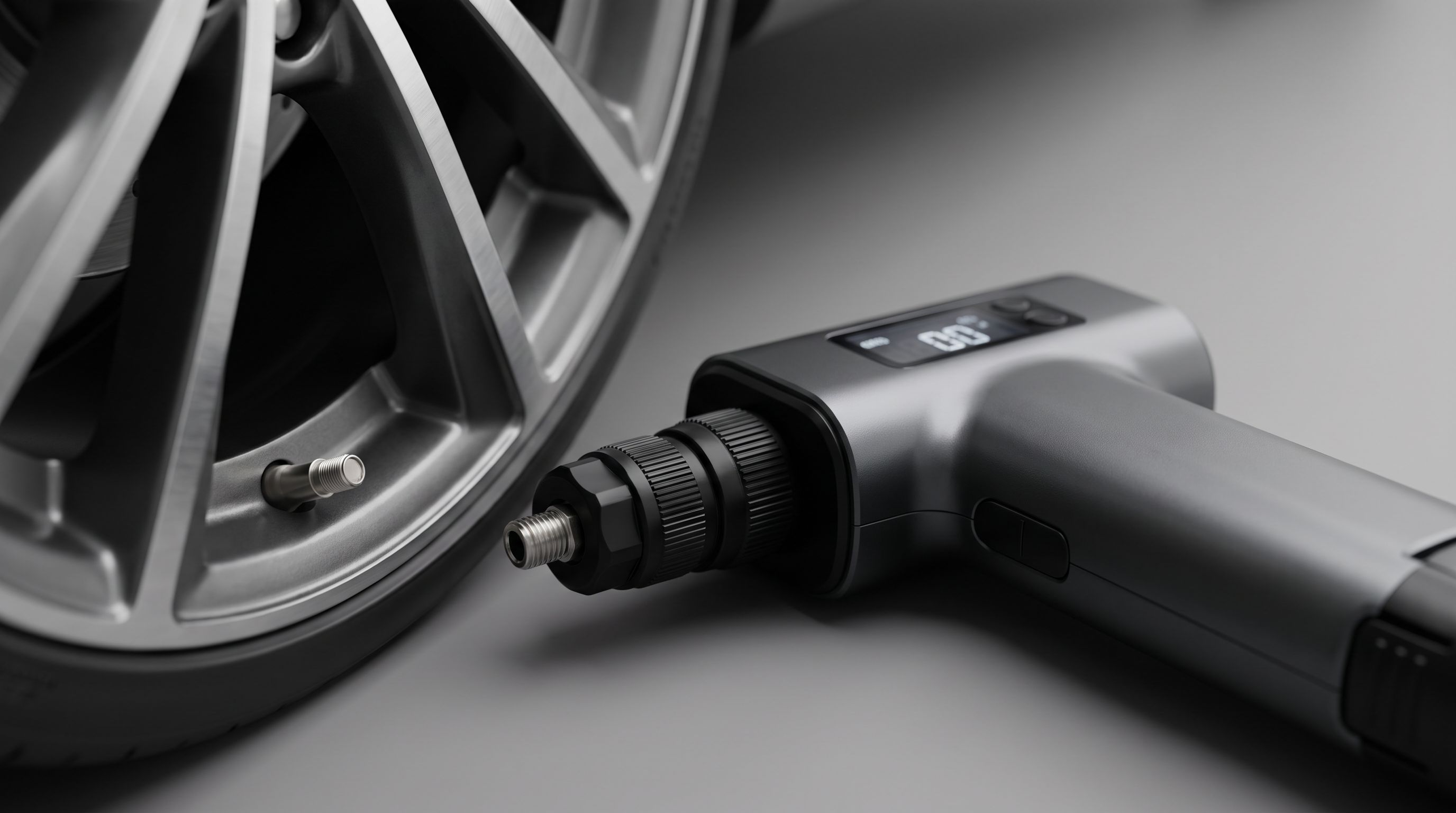
Cordless Tire Inflator Valve Stem Fitment in 2026: 4 Picks
Match cordless tire inflator chucks and hose lengths to your valve stems — rubber, metal, TPMS or recessed alloys — with 2026 picks, specs and owner feedback.
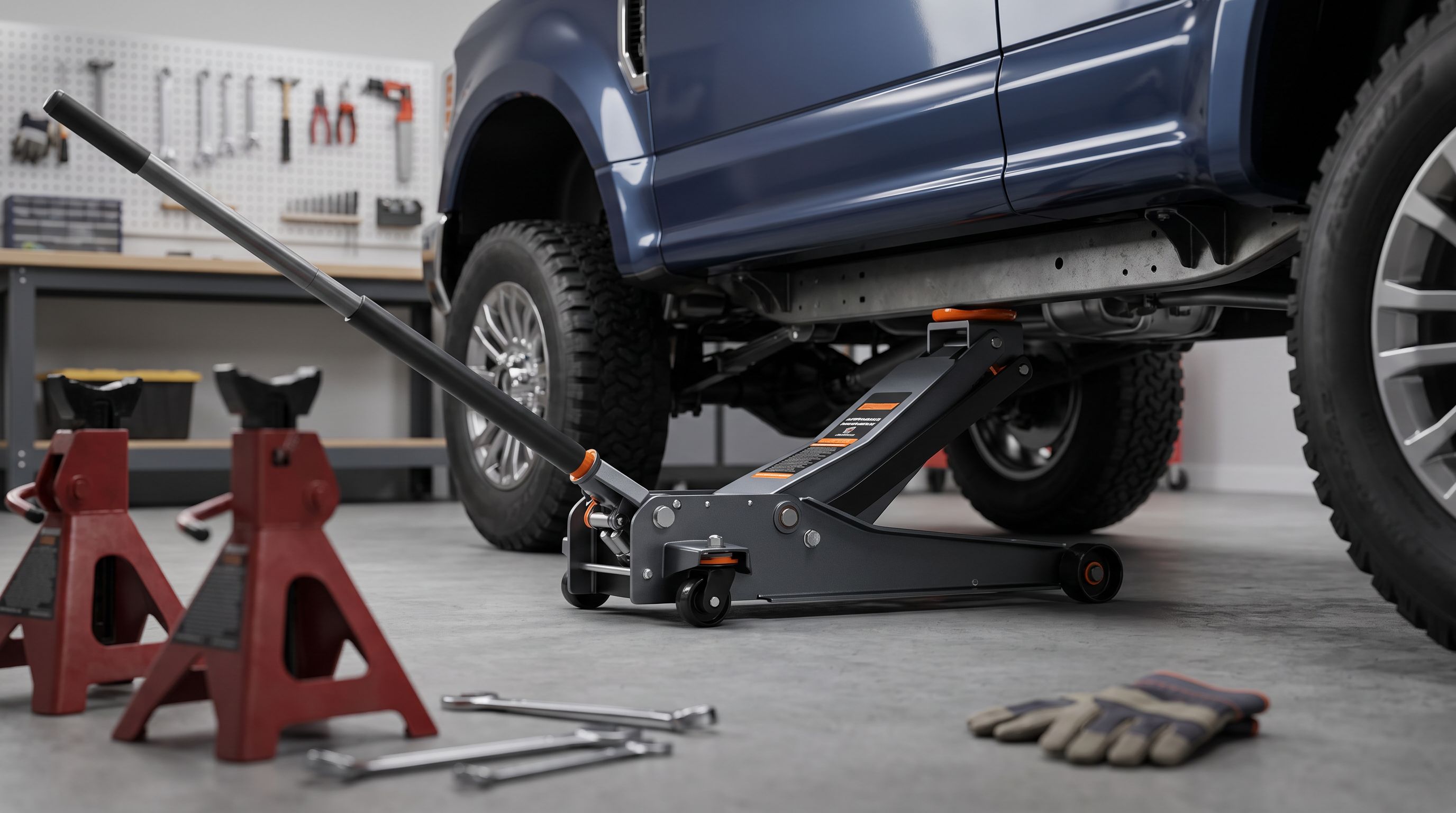
Long Reach Floor Jack for Trucks 2026: Reach Before Tonnage
A 2026 guide to long reach floor jacks for trucks and lifted SUVs — how chassis reach, max lift height, and saddle design decide whether a jack actually works.
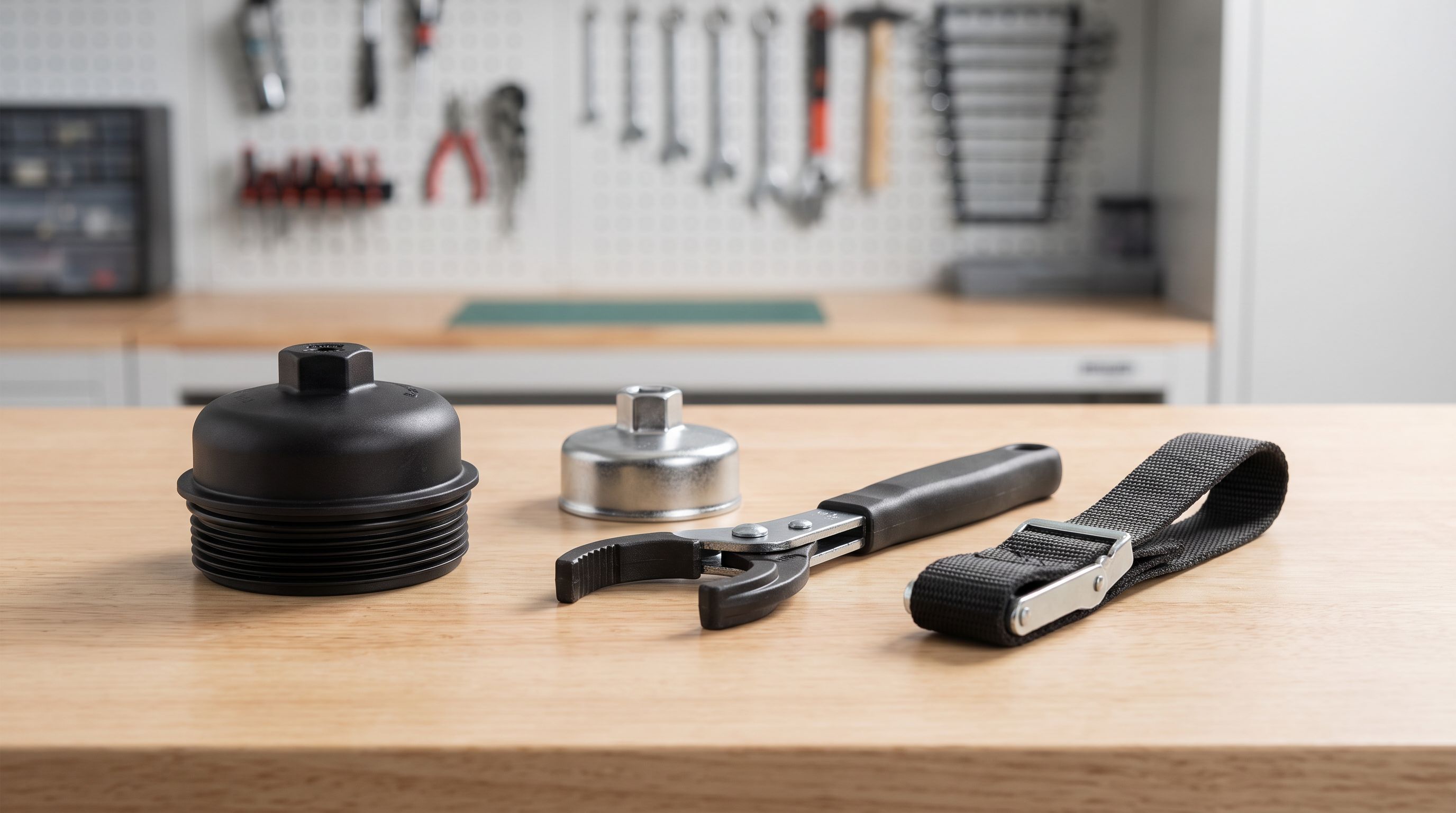
Oil Filter Wrench Fitment 2026: Cap, Cup or Claw?
Cap, cup, claw or strap? Match the right oil filter wrench to your engine's filter size and flute count in 2026 — plus five picks that actually fit.