Wiper Blade Lifespan, Explained: Why Yours Fail Fast
Wiper blades rarely wear out — they degrade. Here's how rubber compounds, UV, and winter blade design decide whether yours last six months or three years.
Reader-supported: we may earn a commission from links on this page, at no extra cost to you. It never affects our picks. Learn more.
There is a specific kind of frustration that only happens at 70 mph in a rainstorm: the wiper sweeps, and instead of clearing the glass it smears a greasy arc of light straight into your eyes. You replaced those blades. You're almost sure you did. Was it last spring? Two springs ago?
That uncertainty is the whole story. Wiper blades are one of the few parts on a car that fail on a calendar, not an odometer. The near-universal guidance — from manufacturers, parts retailers and maintenance write-ups alike — lands on six to twelve months, with two years as an outer bound for garage-kept cars in mild climates. But the reason behind that number is more interesting than the number itself, and it explains why some people genuinely get three years out of a set while others are back at the parts counter before the next oil change.
What's Actually Happening Now
A wiper blade doesn't wear out the way a brake pad does. Very little of the rubber actually gets abraded away under normal use. What kills a blade is chemistry.
The working edge of a conventional blade is a natural-rubber or synthetic-rubber compound with a precisely formed wiping lip. That lip has to do something subtle: flip over cleanly at each end of the stroke so the trailing edge drags across the glass at a consistent angle. When it flips properly, you get a clean sheet of water. When it doesn't — because the rubber has hardened, taken a set, or torn microscopically — you get chatter, streaks, and that infamous smeared crescent.
Three things drive that degradation, and only one of them involves actually using the wipers:
UV and ozone. Ultraviolet light breaks polymer chains in rubber, and atmospheric ozone attacks the double bonds in natural rubber specifically, producing the fine surface cracking that rubber chemists call ozone cracking. This happens whether or not it ever rains. A car parked outside in Phoenix is degrading its blades in dry sunshine, which is exactly why the common advice flags outdoor parking and extreme temperatures as the main accelerants.
Heat cycling. Blades baking on hot glass, then contracting overnight, drive plasticizers out of the compound. The rubber gets stiffer and loses the flexibility it needs to flip.
Contamination. Road film, tree sap, car wash brush residue, and the waxy haze that builds on untreated glass all load up the wiping edge. A lot of "dead" blades are really just filthy blades — wiping the edge with isopropyl alcohol on a paper towel genuinely revives marginal ones for a while.
The practical upshot: a blade's life is mostly determined before you ever switch it on. Which is why that Reddit habit of scratching the install date into the blade frame is unreasonably smart. You cannot troubleshoot what you cannot date.
The Real Players and What's Actually Shipping
The aftermarket has consolidated around three structural designs, and the structure matters as much as the compound.
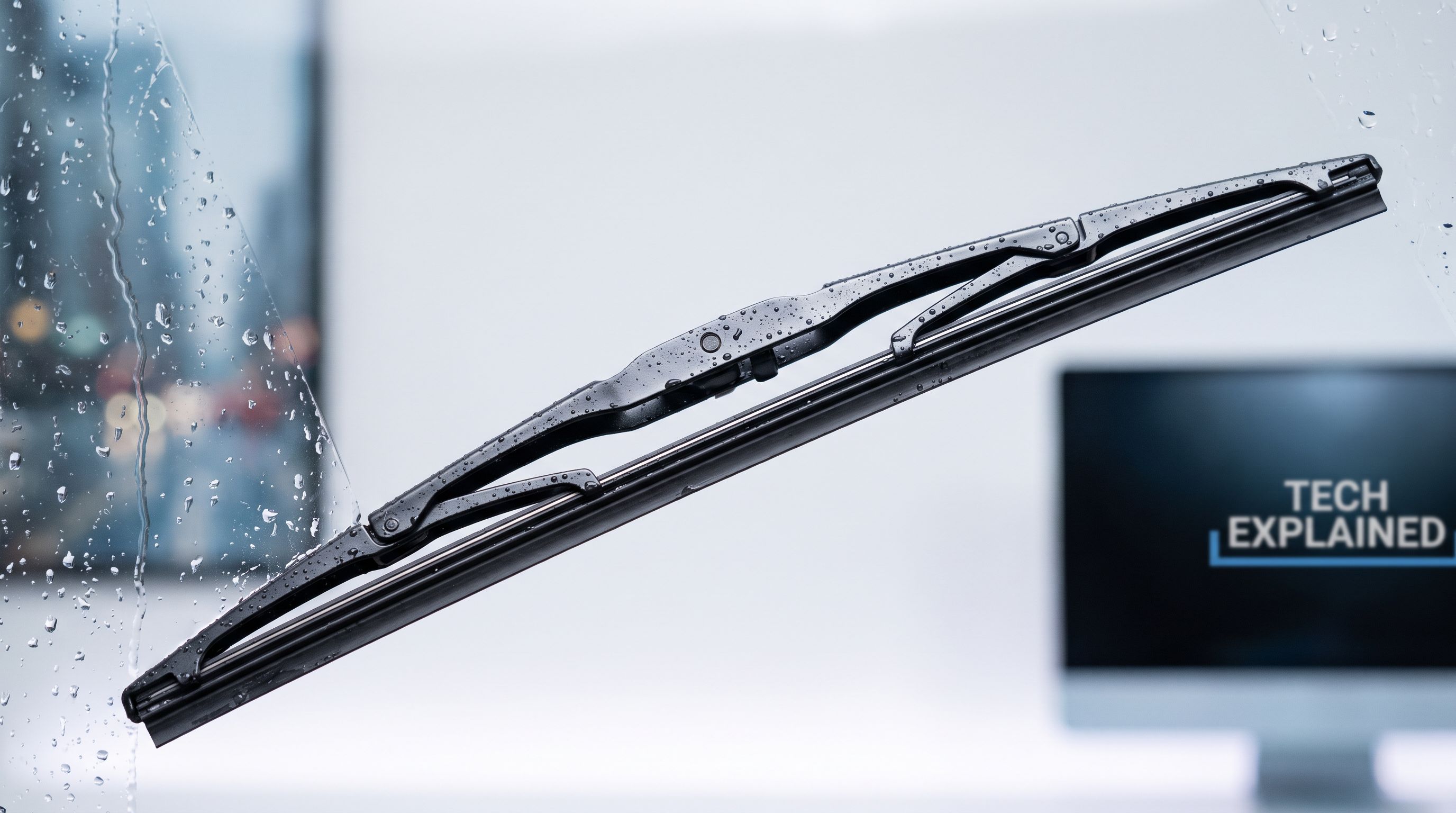
Conventional frame blades use a metal bridge with multiple pressure points. Cheap, widely available, and the worst choice for winter because the open frame is a perfect ice trap. Once the joints pack with slush and freeze, the blade becomes a rigid bar that skates over the glass.
Beam blades replaced the frame with a curved spring steel strip inside a rubber body. Bosch ICON is the long-running benchmark here — Bosch markets it as a bracketless design with a dual rubber compound and a built-in wear indicator, which is a sensible acknowledgment that most people genuinely cannot tell by looking. Rain-X Latitude is the other high-volume beam option, with the twist that it transfers Rain-X's water-repellent treatment onto the glass as it sweeps. That's a real functional difference, though it's a consumable effect, not a permanent coating.
 Best available now for long service life · Bosch ICON Wiper Blades — Check price on Amazon →
Hybrid blades split the difference: a beam-style spine inside an enclosed aerodynamic shell. Michelin Stealth Ultra is the familiar example in US retail, with a Smart-Flex design and an enclosed frame intended to keep snow and ice from packing in.
 Best hybrid for ice and snow · Michelin Stealth Ultra Hybrid Wiper Blades — Check price on Amazon →
Then there's the dedicated winter blade — Trico Ice being the archetype — where the entire frame lives inside a flexible rubber boot. They're heavier, noisier at highway speed, and they age faster in summer sun. They are also dramatically better in a freezing-rain event, which is the point.
 Purpose-built winter option · Trico Ice Winter Wiper Blades — Check price on Amazon →
On compounds: silicone blades are the perennial "lasts forever" claim, and there's real chemistry behind it, since silicone rubber is far more resistant to UV and ozone than natural rubber. Published claims put silicone blades at roughly two to four years versus six to twelve months for conventional rubber. Treat the upper end of those ranges as marketing-adjacent — they come from vendors with an interest in the answer — but the directional advantage is legitimate. The trade-off is that silicone can require a break-in period and may initially leave a hazy film as it transfers to the glass.
| Blade type | Typical structure | Winter behavior | Expected service life |
|---|---|---|---|
| Conventional frame | Metal bridge, multiple pressure points | Poor — ice packs the joints | ~6–12 months |
| Beam (Bosch ICON, Rain-X Latitude) | Spring steel strip in rubber body | Good — no open joints | ~6–12 months, often toward the top |
| Hybrid (Michelin Stealth Ultra) | Beam spine in enclosed shell | Good, with aero benefit | ~6–12 months |
| Winter boot (Trico Ice) | Frame sealed in rubber boot | Best in freezing rain | One winter season |
| Silicone edge | Varies | Depends on frame | Reportedly 2–4 years |
What It Means If You're Shopping Today
Spend money on structure and compound; ignore the rest.
The upgrade that reliably pays for itself is going from a bargain frame blade to a beam or hybrid design. You get even pressure distribution across a curved modern windshield, no ice traps, and less wind lift at highway speed. Bosch ICON and Rain-X Latitude are the two beam blades you'll find on nearly every parts shelf in the US; Michelin Stealth Ultra is the hybrid equivalent.
The upgrade that doesn't pay for itself is buying premium blades and then parking in the sun and never cleaning your glass. A mid-tier blade on a clean, decontaminated windshield outperforms a premium blade on a waxy one. Clay-barring the glass once and wiping the blade edges monthly will move your replacement interval more than any brand switch.
If you live somewhere with real freezing rain, run two sets. A Trico Ice or similar winter blade from November to March, then back to a beam blade. The seasonal swap also does something useful: it forces you to handle the blades twice a year, which means you'll actually notice when the rubber has gone chalky.
And lift your wipers before a freeze, or at least make sure they aren't frozen to the glass before you switch them on. Tearing a wiping lip off a blade with the motor is the single fastest way to turn a year-old blade into a six-month blade.
What to Watch Next
Two things are quietly reshaping this category. First, more vehicles are routing washer fluid through nozzles built into the blade itself rather than the hood, which improves cleaning but narrows replacement options to OE-style parts. Second, windshields increasingly carry ADAS camera mounts and heated zones, and a streaky wipe isn't just an annoyance anymore — it can trigger a camera-blocked warning and disable lane keeping. Visibility has become a system dependency, not just a comfort item.
Expect more blades marketed on coating transfer and hydrophobic treatment, following the Rain-X Latitude playbook. The honest framing: those coatings work, and they wear off, and they are not a substitute for replacing a hardened blade.
FAQ
Is six months a real interval or a sales tactic? Both, in the sense that it's conservative but defensible. Manufacturer and retailer guidance consistently says six to twelve months, with up to two years possible in mild climates with garage parking. If your car lives outside in strong sun, six months is realistic.
Are silicone blades worth it? On paper, yes for longevity — silicone resists UV and ozone far better than natural rubber, with vendor claims in the two-to-four-year range. Expect a break-in haze and verify the frame design is good, because a silicone edge on a cheap open frame still freezes shut.
Can I revive a streaking blade? Often, temporarily. Wipe the edge with isopropyl alcohol to remove road film. If it still chatters afterward, the rubber has hardened and it's done.
Do I need winter-specific blades? Only if you see freezing rain or heavy wet snow. In those conditions a booted blade like Trico Ice is a meaningful safety difference. In mild winters, a beam blade's sealed structure is already sufficient.
What's the single best habit? Write the install date on the blade with a paint pen. Guessing is why people drive on three-year-old wipers.
Our picks
Prices last checked November 1, 2026. Amazon prices change frequently, so treat these as a guide and check the live price before you buy.
Bosch ICON Wiper Blades
Bosch's exclusive bracketless beam blade with a dual rubber compound and built-in wear indicator.

Rain-X Latitude Water Repellency Wiper Blades
Beam blade that transfers Rain-X water-repellent treatment to the glass as it wipes.
Michelin Stealth Ultra Hybrid Wiper Blades
Enclosed hybrid frame with Smart-Flex design, aimed at resisting snow and ice packing.
Trico Ice Winter Wiper Blades
Classic armored winter blade with a protective rubber boot over the frame to block ice buildup.
Get the best car care deals in your inbox
Join the GarageProof newsletter for hand-picked car care deals and new buying guides. No spam, unsubscribe anytime.
Related reads
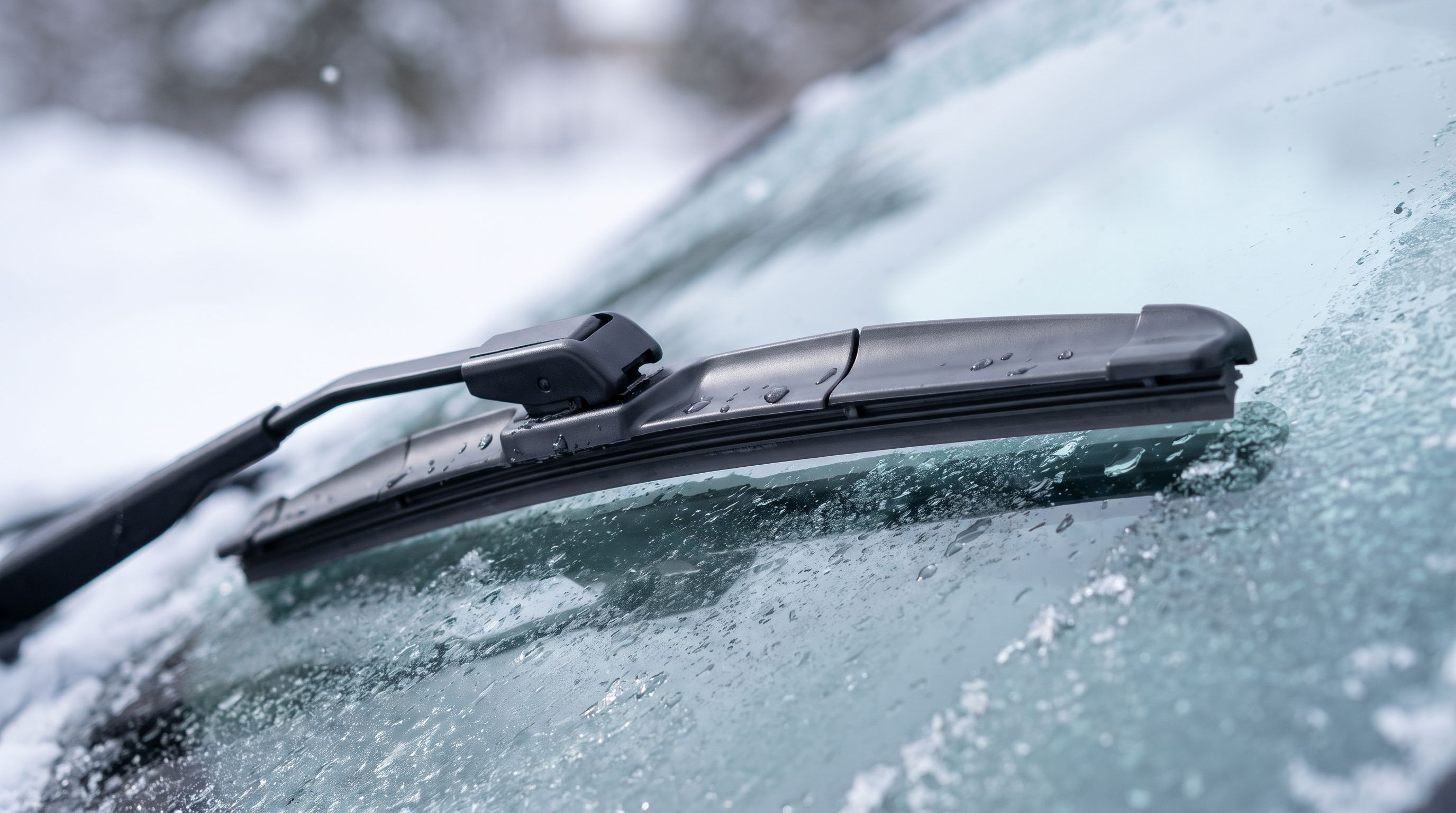
Wiper Blades Size Fitment 2026: Beam vs Hybrid, Clip by Clip
How to confirm wiper blades size fitment and arm connector type before buying — plus when beam blades beat hybrid and conventional designs in snow and ice.
Dash Cam Storage, Explained: Bitrate, Cards, and Why They Die
Why dash cam SD cards fail early, how bitrate (not resolution) drives file size, and roughly how many hours you really get from 64GB to 512GB in 2026.
Car Vacuum Suction Ratings, Decoded for 2026
Air watts, kPa and "20,000Pa" claims explained — why the spec on the box rarely predicts how a car vacuum handles pet hair, sand and floor mats.