Torque Wrenches in 2026: Click vs Digital, and What You Need
Click vs digital vs beam torque wrenches compared on range, accuracy spec and calibration certificates — plus the right drive size and ft-lb range for lug nuts and engine work.
Reader-supported: we may earn a commission from links on this page, at no extra cost to you. It never affects our picks. Learn more.
Torque wrenches are one of the few garage tools where "good enough" genuinely isn't. Under-torque a wheel and it can work loose. Over-torque it and you stretch studs or warp a rotor. Guess at a cylinder head and you've bought yourself a weekend you didn't plan on.
The good news: a properly specified torque wrench is not an expensive tool, and the decisions are simpler than the marketing suggests. GarageProof compared current click, digital and beam wrenches on stated accuracy, usable range, drive size, and whether the manufacturer actually ships a calibration certificate — using manufacturer specs, independent test reports and verified owner feedback rather than hands-on testing of our own.
The short version
- Best overall: Tekton 1/2-Inch Drive Click Torque Wrench (10-150 ft-lb)
- Budget pick: EPAuto 1/2-Inch Drive Click Torque Wrench (10-150 ft-lb)
- Best digital: GearWrench 85077 1/2-Inch Drive Electronic Torque Wrench
- Premium pick: CDI 2503MFRPH 1/2-Inch Drive Click Torque Wrench
- Best for engine and interior work: Tekton 3/8-Inch Drive Click Torque Wrench (10-80 ft-lb)
 Premium pick · CDI 2503MFRPH 1/2-Inch Drive Click Torque Wrench — Check price on Amazon →
 Best digital · GearWrench 85077 1/2-Inch Drive Electronic Torque Wrench — Check price on Amazon →
 Budget pick · EPAuto 1/2-Inch Drive Click Torque Wrench (10-150 ft-lb) — Check price on Amazon →
Click vs digital vs beam: what actually differs
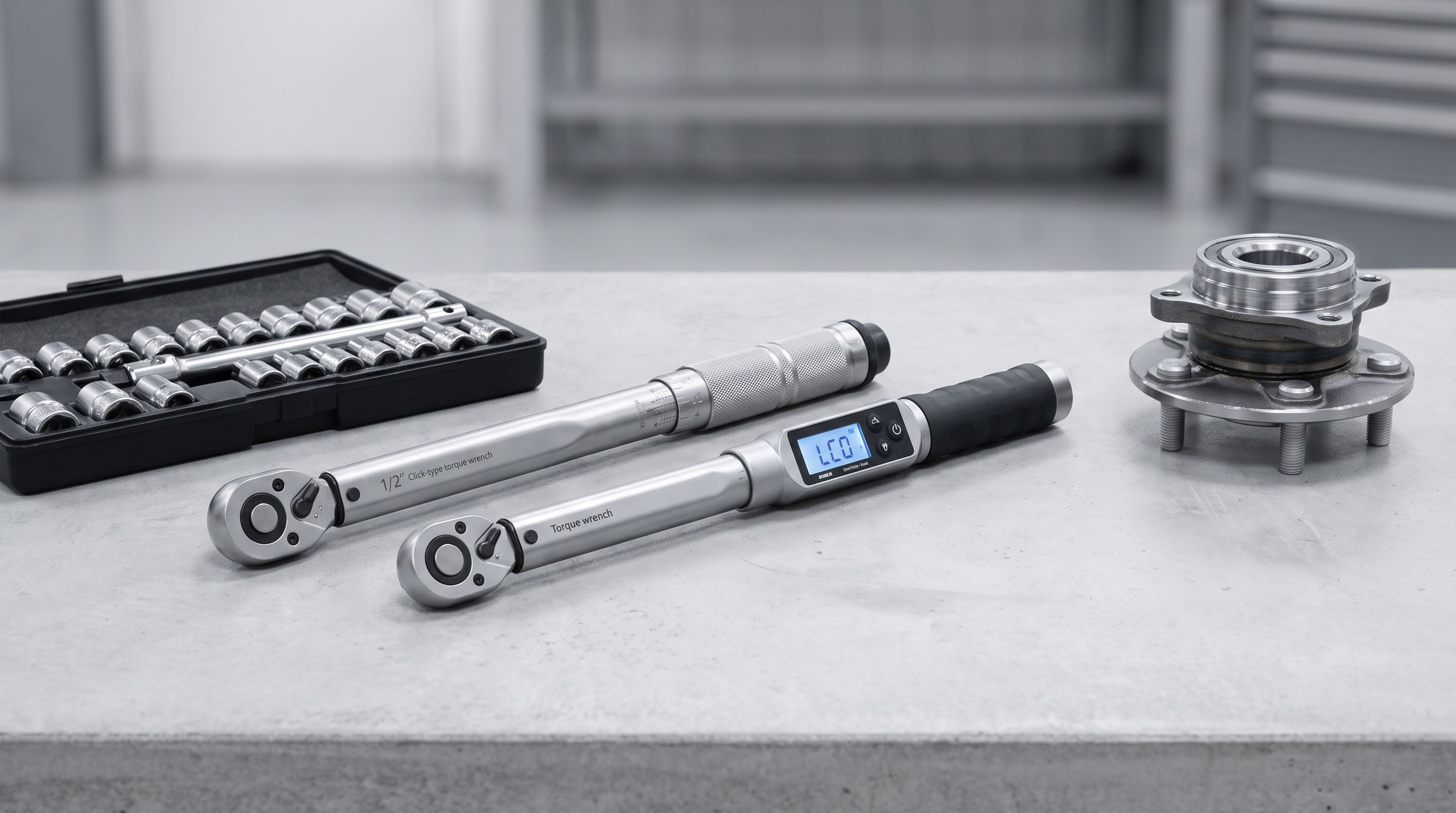
Click wrenches are micrometer-adjustable. You dial a value on the handle, pull smoothly, and an internal cam breaks over with an audible click and a distinct tactile bump. They're the default for a reason: no batteries, robust, fast to set, and accurate enough for virtually all published factory torque specs. Typical consumer spec is ±4% clockwise; better tools claim ±3% and certify to ISO 6789. The catch is that a click wrench only tells you one thing — that you hit the number you dialled. It can't show you what you're at on the way there, and if you keep pulling after the click you'll blow straight past the setting.
Digital (electronic) wrenches use a strain gauge and read live torque on a screen, usually with a target mode that beeps, buzzes or flashes as you approach and hit the setting. Two features earn their keep: torque-plus-angle, which is mandatory for the torque-to-yield bolts used on modern head, rod and main caps; and peak hold, which lets you check what a fastener was already at without disturbing it much. They cost more, need batteries, and are more sensitive to drops and solvent.
Beam wrenches are a flat bar with a pointer and a printed scale. There's essentially nothing to go out of calibration, which is why some old hands keep one as a reference. But you must be able to see the scale while pulling — awkward under a car, impossible in a wheel well — and reading accuracy depends on your eye. As a second opinion, great. As your only wrench, frustrating.
| Type | Typical stated accuracy | Reads live torque? | Angle mode | Batteries | Best for |
|---|---|---|---|---|---|
| Click (consumer) | ±4% CW | No | No | No | Lug nuts, suspension, general service |
| Click (pro/ISO 6789) | ±3% CW | No | No | No | Daily use, shops, repeatability |
| Digital / electronic | ±2-3% typical | Yes | Usually | Yes | TTY engine bolts, checking existing torque |
| Beam | Varies with reading skill | Yes (pointer) | No | No | Cross-checking, low-budget backup |
How to choose
Match the drive size to the job, not to the price
Drive size determines the torque band a wrench is built for, and using the wrong one is the most common DIY mistake.
- 1/2-inch drive is the wheels-and-suspension size. Most lug nut specs land between roughly 80 and 140 ft-lb, and most 1/2-inch wrenches run 10-150 or 25-250 ft-lb. Buy this one first.
- 3/8-inch drive typically covers around 10-80 ft-lb and is the one you'll actually use for brake caliper brackets, intake manifolds, valve covers, oil pan bolts, spark plugs and most interior fasteners.
- 1/4-inch drive is an inch-pound tool, usually 20-200 in-lb, for sensors, plastic trim, small covers and anything where the spec is printed in in-lb or Nm rather than ft-lb.
If you only own a 1/2-inch 10-150 ft-lb wrench, you are not equipped to torque a valve cover — see the next point.
Buy for the middle of the range, not the ends
Torque wrench accuracy specs generally apply from about 20% of full scale upward; below that, all bets are off. A 250 ft-lb wrench set to 20 ft-lb is a guess with a handle on it. This is why the sweet spot for a single DIY wrench is a 1/2-inch 10-150 ft-lb tool — a 100 ft-lb lug nut sits comfortably mid-scale — and why a 3/8-inch 10-80 ft-lb wrench is the natural second purchase rather than a bigger 1/2-inch.
Write down the specs you actually use. If your heaviest fastener is a 180 ft-lb axle nut, you need a bigger wrench; if everything you touch is under 100 ft-lb, don't buy the 250.
Read the accuracy spec properly — and look for a certificate
"±4%" is meaningless without three qualifiers: the direction, the range it applies over, and whether the tool was individually verified. Reputable makers state clockwise accuracy separately from counter-clockwise (CCW is usually looser, often ±6%), specify the percentage as "of reading" over the calibrated span, and reference ISO 6789, the international standard for hand torque tools.
The practical tell is the paperwork. Tekton and CDI ship a calibration certificate traceable to national standards with the individual tool, which means that specific wrench was checked, not just its design. A generic "accurate to ±4%" claim with no certificate is a design target. Independent European testing in 2026 found significant variation between brands, with the most accurate wrenches landing within about one per cent of the set value and the worst drifting well beyond their claims — so the paperwork is worth something.
Plan for recalibration and storage
Click wrenches drift. The usual recommendation is recalibration every 5,000 cycles or annually, whichever comes first — for a home mechanic doing four wheel swaps a year, annually is conservative. Always wind a click wrench back to its lowest setting (not zero, unless the maker says so) before storing, to relax the spring. Never use a torque wrench to break fasteners loose, never use it as a breaker bar, and don't leave it loose in a toolbox drawer; the supplied blow-moulded case exists for a reason.
Digital wrenches don't have a spring to relax but do have a zero point that should be re-tared regularly, and they hate being dropped.
The picks
Tekton 1/2-Inch Drive Click Torque Wrench (10-150 ft-lb) — best overall
Tekton 1/2-Inch Drive Click Torque Wrench (10-150 ft-lb)
Wide 10-150 ft-lb range, ±4% CW accuracy claim and a per-tool calibration certificate in the box.
This is the wrench most DIYers should buy first. The 10-150 ft-lb span puts typical lug nut specs squarely mid-scale, the head is a 24-tooth reversible ratchet, and the dual ft-lb/Nm scale is legible without squinting. Tekton states ±4% clockwise accuracy and includes an individual calibration certificate, which is unusual at this level and is the main reason it edges out cheaper look-alikes. The action is firm with a clear break-over you can feel through gloves.
What you give up: no angle measurement, no live reading, and the CCW spec is looser than CW, so left-hand-thread work is approximate. It's also physically long, which is great for leverage and annoying in a tight wheel arch.
EPAuto 1/2-Inch Drive Click Torque Wrench (10-150 ft-lb) — budget pick
EPAuto 1/2-Inch Drive Click Torque Wrench (10-150 ft-lb)
The default first torque wrench for lug nuts — correct range, ±4% spec, hard case included.
The EPAuto is the wrench that gets recommended in every "I just need to do my own wheels" thread, and the recommendation holds up. Same useful 10-150 ft-lb window, same ±4% clockwise claim, knurled handle with a locking collar, and a hard storage case included. For seasonal tyre swaps, brake jobs and suspension bolts it does exactly what a torque wrench needs to do.
The compromises are in refinement and paperwork: the ratchet is coarser than the Tekton's, the scale printing is less crisp, and documentation is thinner. If you torque things every week, spend more. If it lives in the boot for winter wheel changes, this is plenty.
GearWrench 85077 1/2-Inch Drive Electronic Torque Wrench — best digital
GearWrench 85077 1/2-Inch Drive Electronic Torque Wrench
Reads live torque plus angle, with audible/visual alerts — ideal for torque-to-yield engine fasteners.
Buy a digital wrench for one of two reasons: you need angle, or you need to read torque rather than just hit it. The GearWrench 85077 does both. It displays live torque as you pull, alerts you audibly and visually as you approach and reach target, and offers a torque-plus-angle mode for torque-to-yield fasteners — head bolts, rod bolts, some driveshaft and suspension hardware on modern cars — where the spec reads "40 ft-lb plus 90 degrees". It stores readings and switches units without doing maths in your head.
Trade-offs: batteries, a screen you have to be able to see, a higher price, and more care required around drops and brake fluid. Most owners keep a click wrench for wheels and reach for this for engine work.
CDI 2503MFRPH 1/2-Inch Drive Click Torque Wrench — premium pick
CDI 2503MFRPH 1/2-Inch Drive Click Torque Wrench
Snap-on-owned CDI build with ±3% CW accuracy and ISO 6789 certification for people who torque for a living.
CDI is Snap-on's industrial division, and this is the wrench that shows up when someone who torques fasteners for a living recommends a click tool. The 2503MFRPH covers roughly 30-250 ft-lb, is built to ISO 6789 with a tighter ±3% clockwise accuracy spec, and comes with a certificate of calibration. The adjustment is precise, the break-over is unmistakable, and it's designed to be recalibrated repeatedly rather than replaced.
Two caveats. The range starts at 30 ft-lb, so it's a heavy-fastener tool — axle nuts, big suspension bolts, truck lug nuts — not a general-purpose wrench. And you pay a real premium for the build and the paperwork, which only makes sense if the tool earns its keep.
Tekton 3/8-Inch Drive Click Torque Wrench (10-80 ft-lb) — best for engine and interior work
Tekton 3/8-Inch Drive Click Torque Wrench (10-80 ft-lb)
The low-range companion wrench that covers most 10-80 ft-lb bolts a big 1/2-inch wrench can't do accurately.
The second wrench, and the one people wish they'd bought sooner. A 10-80 ft-lb 3/8-inch drive tool covers the bulk of what's under the bonnet and inside the cabin: valve covers, intake manifolds, caliper brackets, water pumps, spark plugs, oil pans, seat bolts. These are the fasteners a 150 ft-lb wrench cannot set accurately because they sit at the very bottom of its scale. Same construction and individual calibration certificate as the larger Tekton, in a shorter, lighter body that fits between accessories.
It won't do wheels, and anything specified in inch-pounds still needs a 1/4-inch drive wrench. Think of it as one third of a complete set.
Fitment and spec: check before you pull
Torque wrenches themselves are universal — any 1/2-inch drive wrench fits any 1/2-inch socket. What is not universal is the torque figure. Lug nut specs vary by vehicle, wheel material and stud size, and can differ between steel winter wheels and alloys on the same car. Engine fastener specs vary by year and engine code, frequently include a multi-stage sequence, and often call for new bolts.
Get your numbers from the factory service manual or a reputable OEM-derived database for your exact year, make, model and engine — not a generic chart. Torque in the specified sequence, in the specified stages, on clean dry threads unless the manual says lubricated (a lubed spec applied to dry threads, or vice versa, can be off by 20-30% in clamping force). And re-torque wheels after roughly 50-100 miles following any wheel removal.
FAQ
Do I need a calibration certificate? You don't strictly need one, but it's the cleanest evidence that your specific wrench was verified rather than just designed to a target. Tekton and CDI include one; many budget wrenches don't. If you're torquing safety-critical fasteners, it's worth having.
How often should a torque wrench be recalibrated? The common guidance is every 5,000 cycles or once a year. Home users doing occasional wheel and brake work can reasonably stretch that, but if the wrench has been dropped, used as a breaker bar, or stored under load, treat its accuracy as suspect until checked.
Can I use a torque wrench to loosen bolts? No. Breaking loose a seized fastener can shock-load the mechanism well beyond its rated capacity and knock a click wrench out of calibration. Use a breaker bar to loosen; use the torque wrench only for final tightening.
Is a digital torque wrench more accurate than a click wrench? Usually slightly, and more importantly it's more informative. Digital tools typically claim ±2-3% and show live values, but a certified click wrench at ±3% is entirely adequate for published specs. Buy digital for angle measurement and torque verification, not because you assume clicks are inaccurate.
What's the one wrench to buy if I can only have one? A 1/2-inch drive click wrench covering about 10-150 ft-lb. It handles wheels, brakes and suspension — the jobs most DIYers actually do — and keeps common specs in the accurate middle of its range.
Should I set a click wrench to zero for storage? Wind it down to the lowest mark on the scale, not below it, unless the manufacturer explicitly instructs otherwise. Forcing it past the bottom stop can damage the adjustment mechanism.
Get the best car care deals in your inbox
Join the GarageProof newsletter for hand-picked car care deals and new buying guides. No spam, unsubscribe anytime.
Related reads
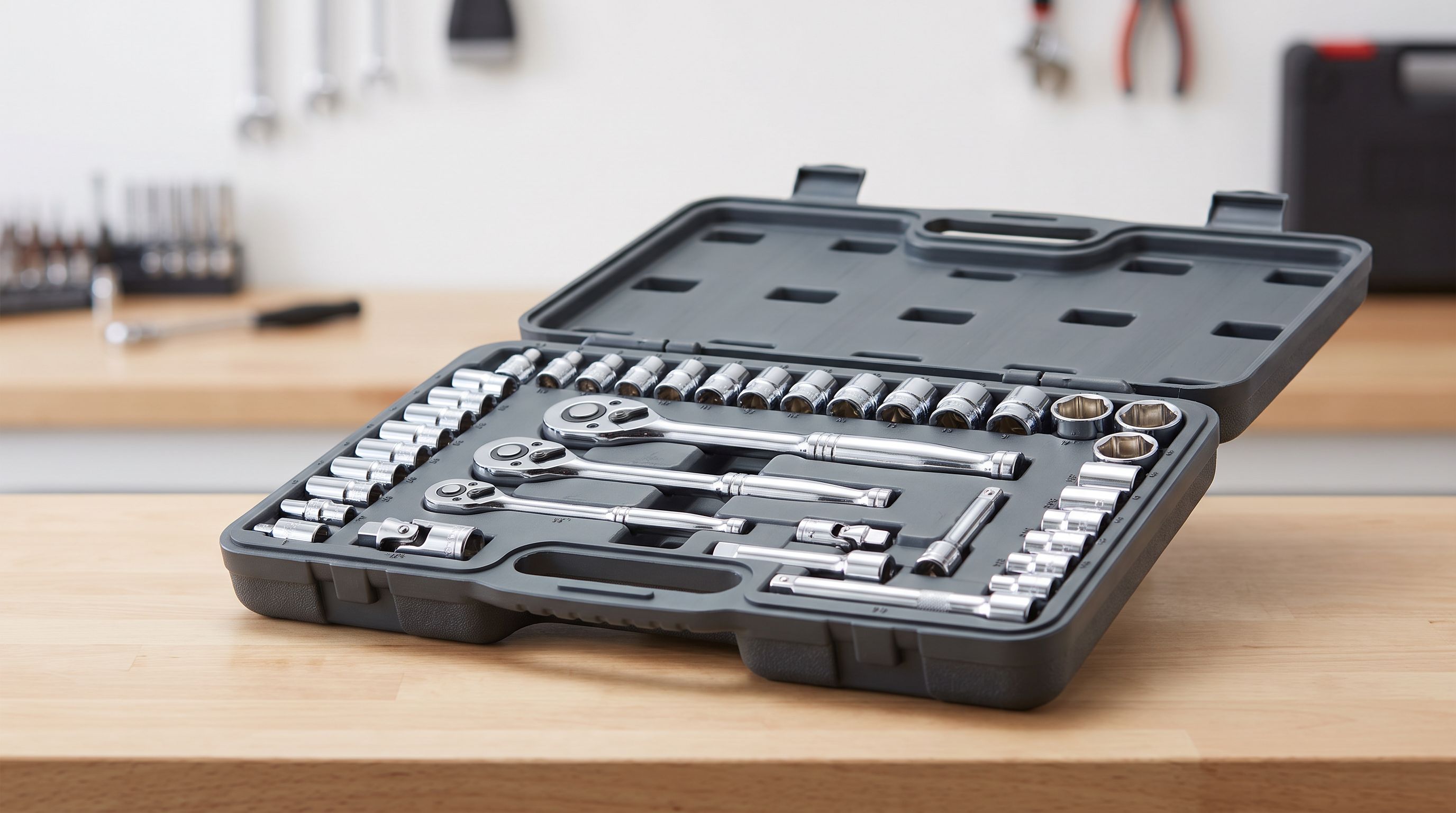
Socket Set Buying Guide 2026: 6-Point vs 12-Point, SAE vs Metric
A spec-led 2026 socket set buying guide: 6-point vs 12-point, shallow vs deep, 1/4-3/8-1/2 drive sizes and SAE/metric coverage so you only buy one set.
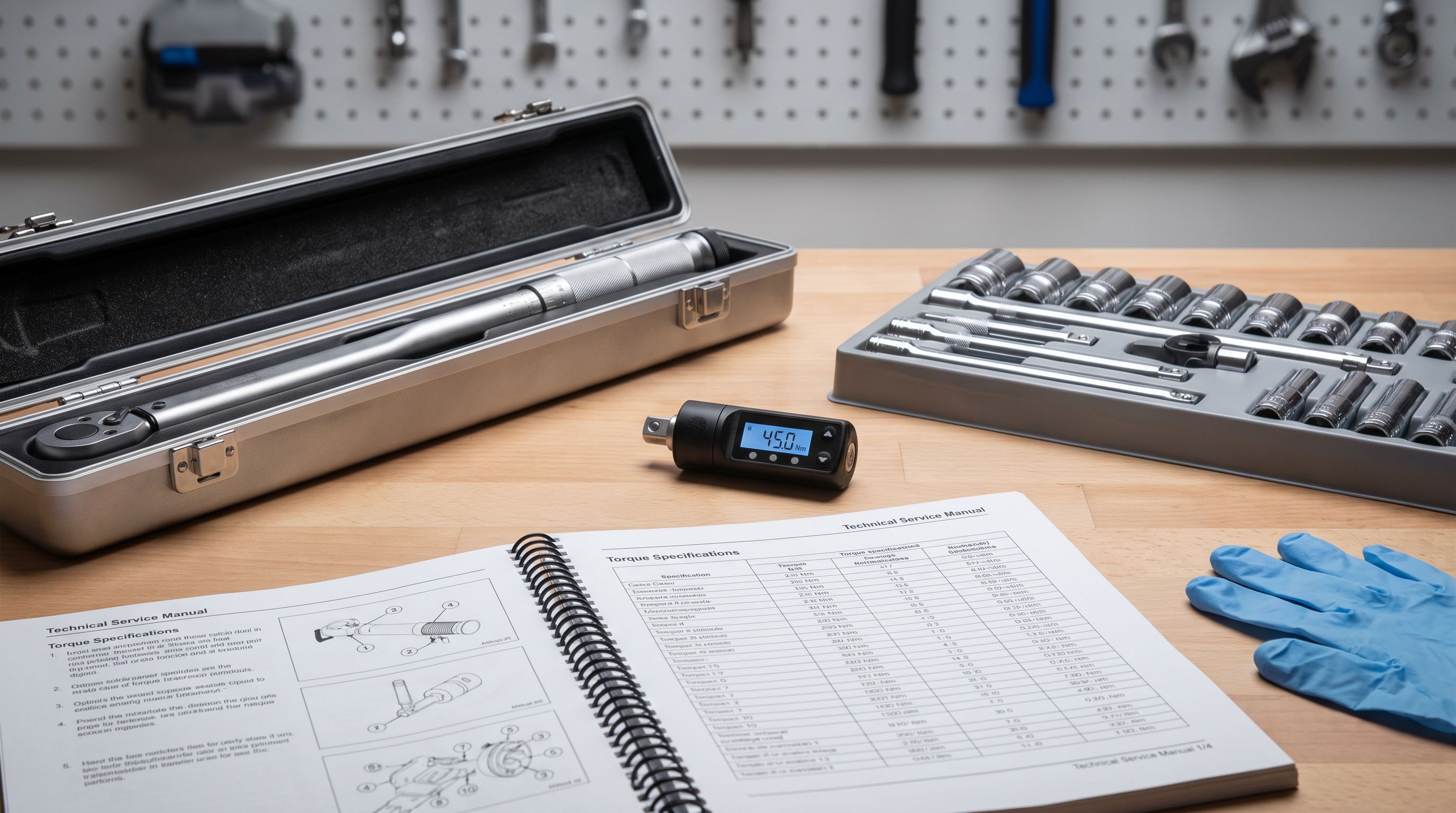
Torque Wrench Calibration, Explained (2026 Reality Check)
How fast torque wrenches drift, what ±4% accuracy actually buys you, and why fastener friction ruins the number long before your wrench does.
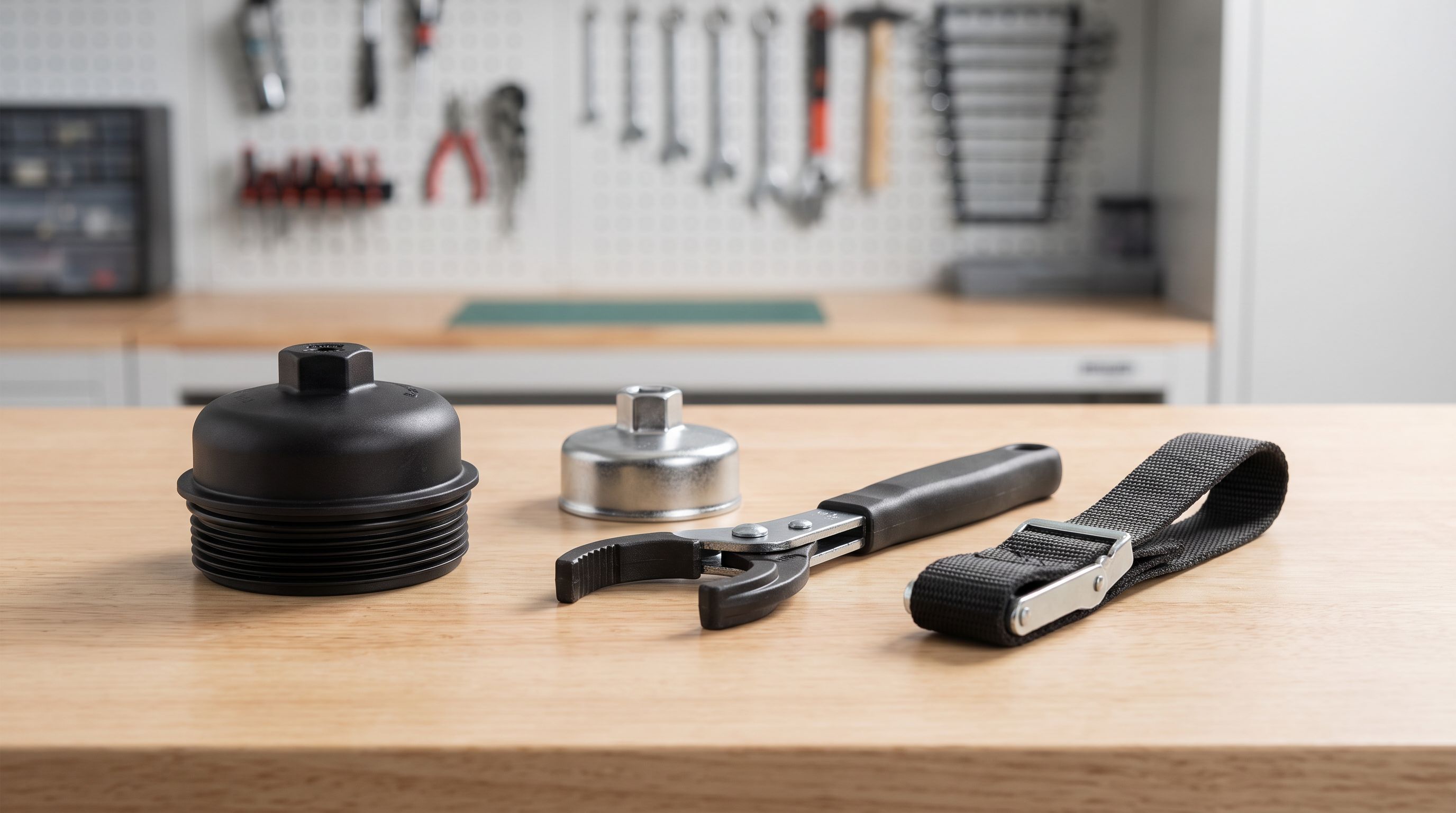
Oil Filter Wrench Fitment 2026: Cap, Cup or Claw?
Cap, cup, claw or strap? Match the right oil filter wrench to your engine's filter size and flute count in 2026 — plus five picks that actually fit.