Torque Wrench Calibration, Explained (2026 Reality Check)
How fast torque wrenches drift, what ±4% accuracy actually buys you, and why fastener friction ruins the number long before your wrench does.
Reader-supported: we may earn a commission from links on this page, at no extra cost to you. It never affects our picks. Learn more.
The number on the handle is a suggestion, not a promise
Every service manual speaks with total confidence: 89 lb-ft on the lug nuts, 18 lb-ft on the caliper bracket, 7 Nm on that aluminum valve cover. The implication is that your wrench delivers exactly that. It doesn't. It delivers something within a tolerance band, applied to a fastener whose friction you can't see, producing a clamp load you never measure.
That gap — between the number you dial in and the clamp load you actually create — is the whole story of torque specs. And it's why the "is my torque wrench out of calibration?" debate that flares up on every forum and subreddit is simultaneously important and slightly beside the point. Your wrench probably is drifting. It's also probably not your biggest error source.
Here's what's actually going on, what checking accuracy costs in 2026, and when it's worth paying for.
What's happening now
Two camps dominate the conversation online, and both have a point.
Camp one, repeated constantly in professional tool forums: torque wrenches rarely lose calibration unless they're abused — dropped, used as a breaker bar, or stored cranked to full scale. Calibration houses themselves reportedly tell customers this. Camp two, which is where the calibration industry and most tool manufacturers live: click wrenches use a spring-loaded mechanism that fatigues with cycles, and without periodic verification they drift from their settings, leaving fasteners too loose or too tight.
Both are describing the same mechanism from different ends. A click wrench compresses a coil spring against a pivoting cam. The spring doesn't care about time; it cares about cycles and load. A wrench that clicks 40 times a year in a home garage behaves very differently from one that clicks 300 times a day on a tire rack. The common manufacturer guidance — recalibrate annually or every 5,000 cycles, whichever comes first — is really a cycle rule wearing a calendar costume.
The accepted accuracy spec gives you the other half of the picture. Industry guidance generally treats a tolerance of roughly 3–4% as acceptable for a quality click wrench, with better wrenches holding accuracy across a wider portion of their range rather than just the middle. Most consumer wrenches are specified at ±4% clockwise, and many are only rated from about 20% to 100% of full scale. Use a 250 lb-ft wrench to set 15 lb-ft and you're outside the certified zone entirely — no drift required.
And then there's the error nobody calibrates away. Torque is a proxy for clamp load, and the relationship between them is dominated by friction under the head and in the threads. Experienced techs and fastener engineers alike point out that even with a perfectly accurate wrench, actual bolt tension can land roughly 20% off target depending on thread condition, lubrication, plating, and whether the manual assumed dry or oiled threads. That's a bigger number than any realistic calibration drift.
The real players and what's actually shipping
The tool side of this is mature and the lineup is stable.
CDI, Precision Instruments, and Proto are the Stanley Black & Decker professional torque brands; CDI builds wrenches sold under several badges and is the reference point many shops use. Snap-on and Mac sell through trucks at professional prices. Tekton has become the default recommendation in enthusiast circles for click wrenches that ship with a serialized calibration certificate in the box — the Tekton 1/2-inch drive click torque wrench is specified at ±4% clockwise and is widely cited as the value benchmark. ACDelco and Gearwrench cover the digital end, where a strain gauge replaces the spring-and-cam and the readout shows live torque instead of a single click.
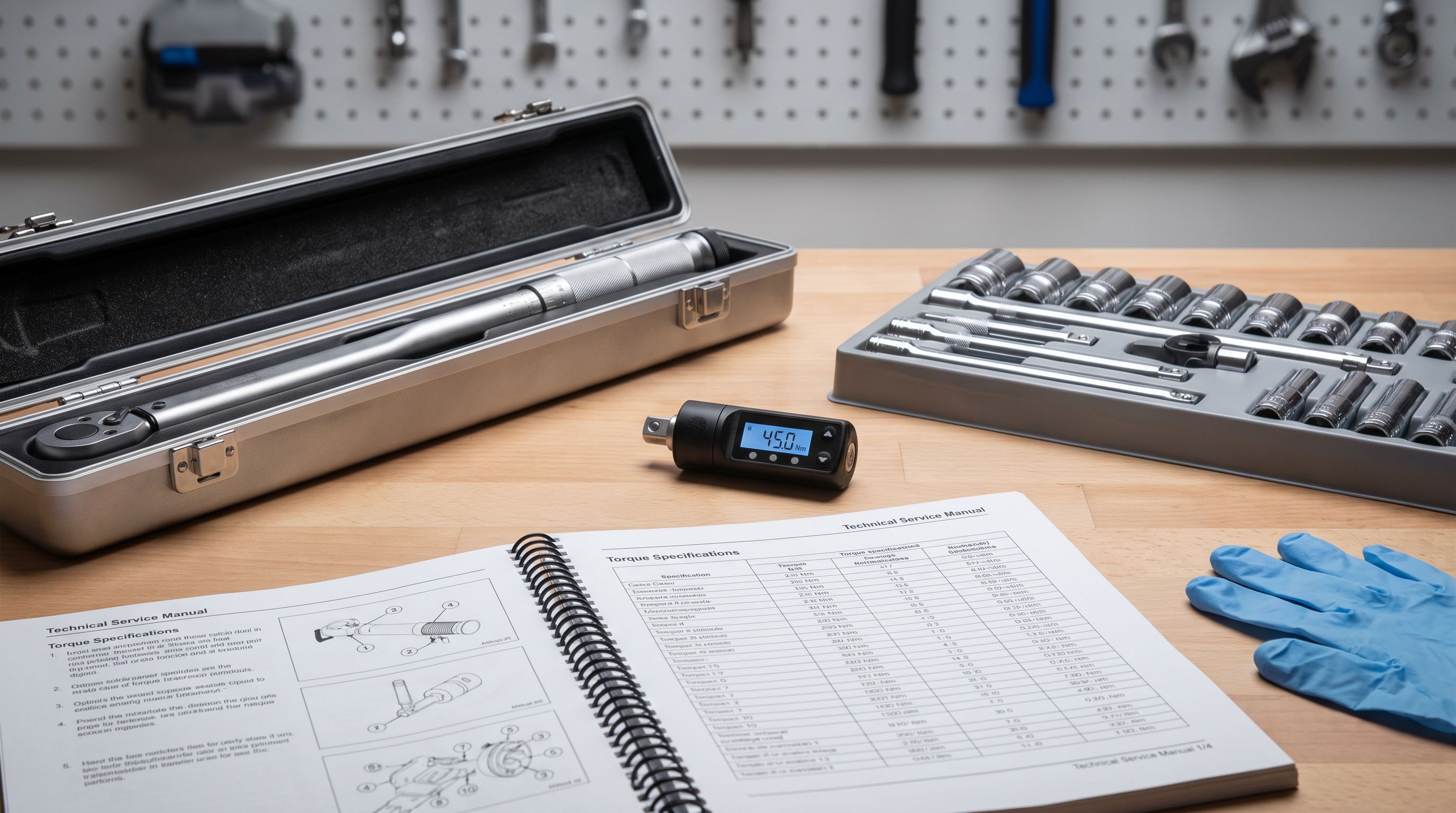
The genuinely useful development for home mechanics isn't a new wrench — it's cheap verification. Digital torque adapters, such as the ACDelco ARM601-4 (a 1/2-inch drive electronic adapter with a stated accuracy of ±2% clockwise), slot between your ratchet and socket and read torque directly. Used on a bench against a known load, that same adapter becomes a poor man's calibration checker for your click wrench. It is not a traceable, certified verification — it's a sanity check — but it tells you whether you're 2% off or 15% off, and that distinction is the one that matters.
For the DIY check itself, the method described in most step-by-step guides is the same: clamp the square drive in a vise horizontally, measure a known distance out to the handle, hang a known weight, and compare. Torque equals force times distance. A 25 lb weight at 2 feet is 50 lb-ft. It's crude, it's sensitive to where the weight actually hangs, but it reliably catches a wrench that's badly off.
| Approach | What it gets you | Rough effort/cost reality |
|---|---|---|
| Send out for certified calibration | Traceable certificate, adjustment if needed | Shipping plus lab fee; often a meaningful fraction of a mid-range wrench's price |
| Digital torque adapter check | Repeatable comparison at several setpoints | One-time tool purchase, reusable forever |
| Weight-and-lever bench check | Catches gross error | Essentially free if you have weights and a vise |
| Buy a new certified wrench | Fresh cert, known baseline | Sometimes cheaper than calibrating an old budget wrench |
That last row is the uncomfortable truth. For an inexpensive click wrench, professional recalibration can cost enough that replacement is the rational move — which is exactly why so many people never calibrate anything.
What it means if you're shopping today
Three practical conclusions.
Buy for range, not for maximum number. The single most common real-world torque error is using a big 1/2-inch wrench at the bottom of its scale. If you do suspension and engine work, you need two wrenches — a 3/8-inch for the 10–80 lb-ft world and a 1/2-inch for lug nuts and axle hardware. The Tekton 1/2-inch drive click torque wrench covers the heavy end with a certificate in the box; a 3/8-inch click wrench handles the rest.
Treat the certificate as a baseline, not a guarantee. A new wrench ships verified. What you want to know is how far it has moved after two years in a toolbox. That's an argument for owning a digital torque adapter like the ACDelco ARM601-4 rather than guessing — or for stepping to a digital wrench such as the Gearwrench electronic torque wrench, which reads live torque and doesn't depend on a fatiguing spring at all.
Store it at the bottom of its range, not at zero and not cranked. Common manufacturer guidance is to wind a click wrench down to its lowest setting (not below) after use to relax the spring. Free, and it's the single highest-return habit for keeping a mechanical wrench honest.
What to watch next
The direction of travel is away from the spring. Electronic torque wrenches with angle measurement are already standard in professional work because modern engine and suspension hardware increasingly specifies torque-plus-angle (torque-to-yield fasteners), which a click wrench physically cannot do. As those tools trickle down in price, the "when do I calibrate?" question quietly changes shape: strain-gauge tools don't fatigue like springs, but they do need periodic verification against a reference, and they add batteries to the failure list.
The other thing to watch is fastener-side honesty. Manuals are getting more explicit about dry versus lubricated specs, because that's where the real 20% lives. If you want better clamp load, clean threads and following the manual's lubrication assumption will do more for you than a calibration certificate.
FAQ
How often should I actually calibrate? Common manufacturer guidance is annually or every 5,000 cycles. For a home garage doing occasional work, a yearly bench check against a digital adapter is proportionate; send it out only if the check shows meaningful error.
What accuracy should I expect? Roughly 3–4% is the widely cited acceptable tolerance, and most quality consumer click wrenches are specified at ±4% clockwise. Counter-clockwise accuracy is often worse or unspecified.
Does a DIY weight check count as calibration? No. It's verification, not calibration — it tells you whether the wrench is off, not a traceable certificate, and it doesn't adjust anything. For most home use, that's still the information you need.
Is a digital wrench automatically more accurate? Not automatically, but it avoids spring fatigue and usually works across a wider usable range. It still needs verification, and it needs a working battery.
Our picks
Prices last checked November 3, 2026. Amazon prices change frequently, so treat these as a guide and check the live price before you buy.
Tekton 1/2 Inch Drive Click Torque Wrench (10-150 ft-lb)
Ships with a serialized calibration certificate and a ±4% clockwise accuracy spec — a known baseline.

ACDelco ARM601-4 1/2 Inch Digital Torque Adapter
Stated ±2% clockwise accuracy; doubles as a bench sanity check for your click wrench.

Gearwrench 3/8 Inch Drive Electronic Torque Wrench
Strain-gauge readout for live torque, useful where click wrenches run out of low-end range.
Get the best car care deals in your inbox
Join the GarageProof newsletter for hand-picked car care deals and new buying guides. No spam, unsubscribe anytime.
Related reads
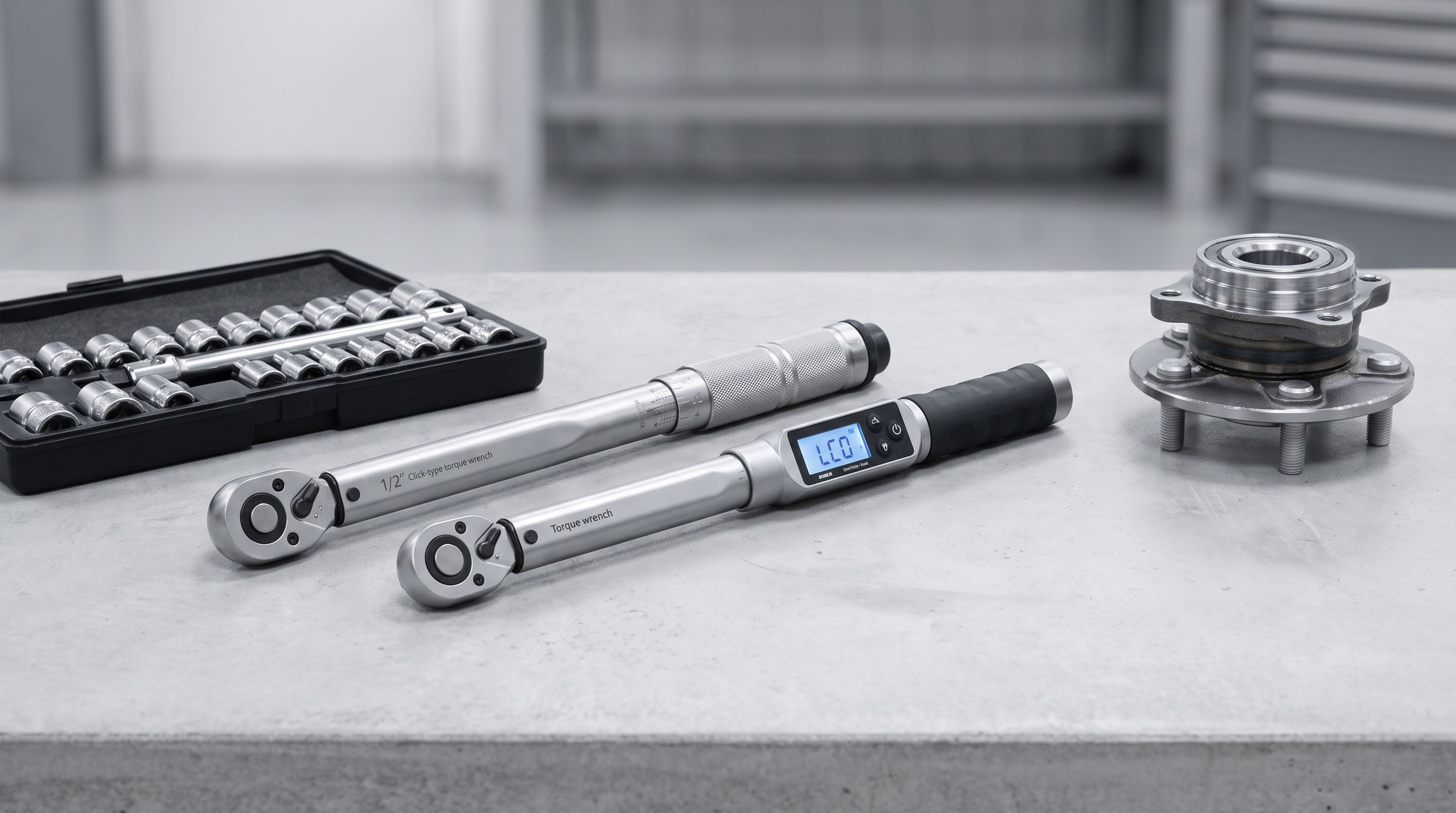
Torque Wrenches in 2026: Click vs Digital, and What You Need
Click vs digital vs beam torque wrenches compared on range, accuracy spec and calibration certificates — plus the right drive size and ft-lb range for lug nuts and engine work.
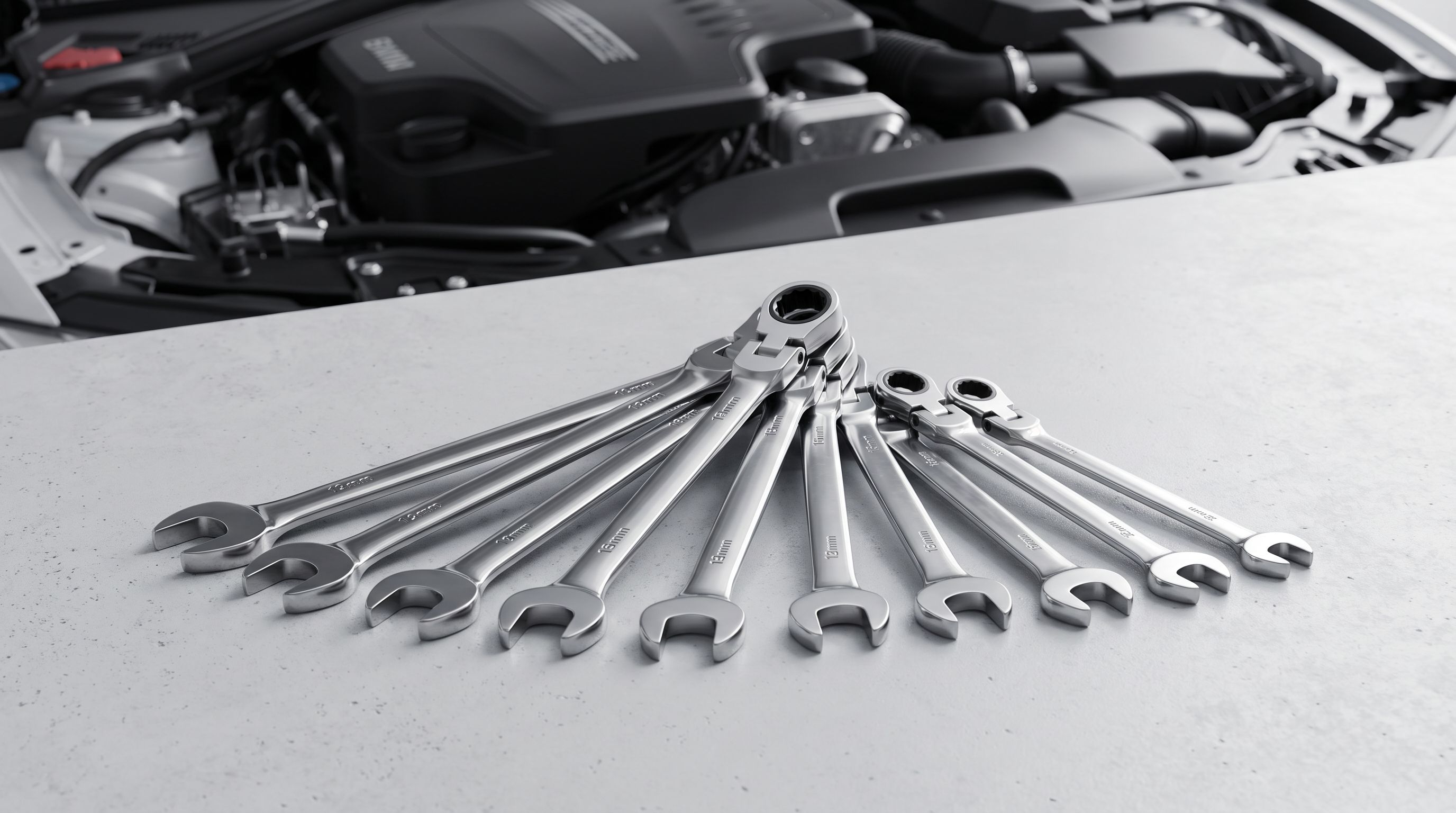
Ratcheting Wrench Sets 2026: Flex-Head vs Fixed Clearance
Pick a ratcheting wrench set by swing arc, head profile and SAE/metric spread — not piece count. Flex-head vs fixed compared, with 4 picks for 2026.
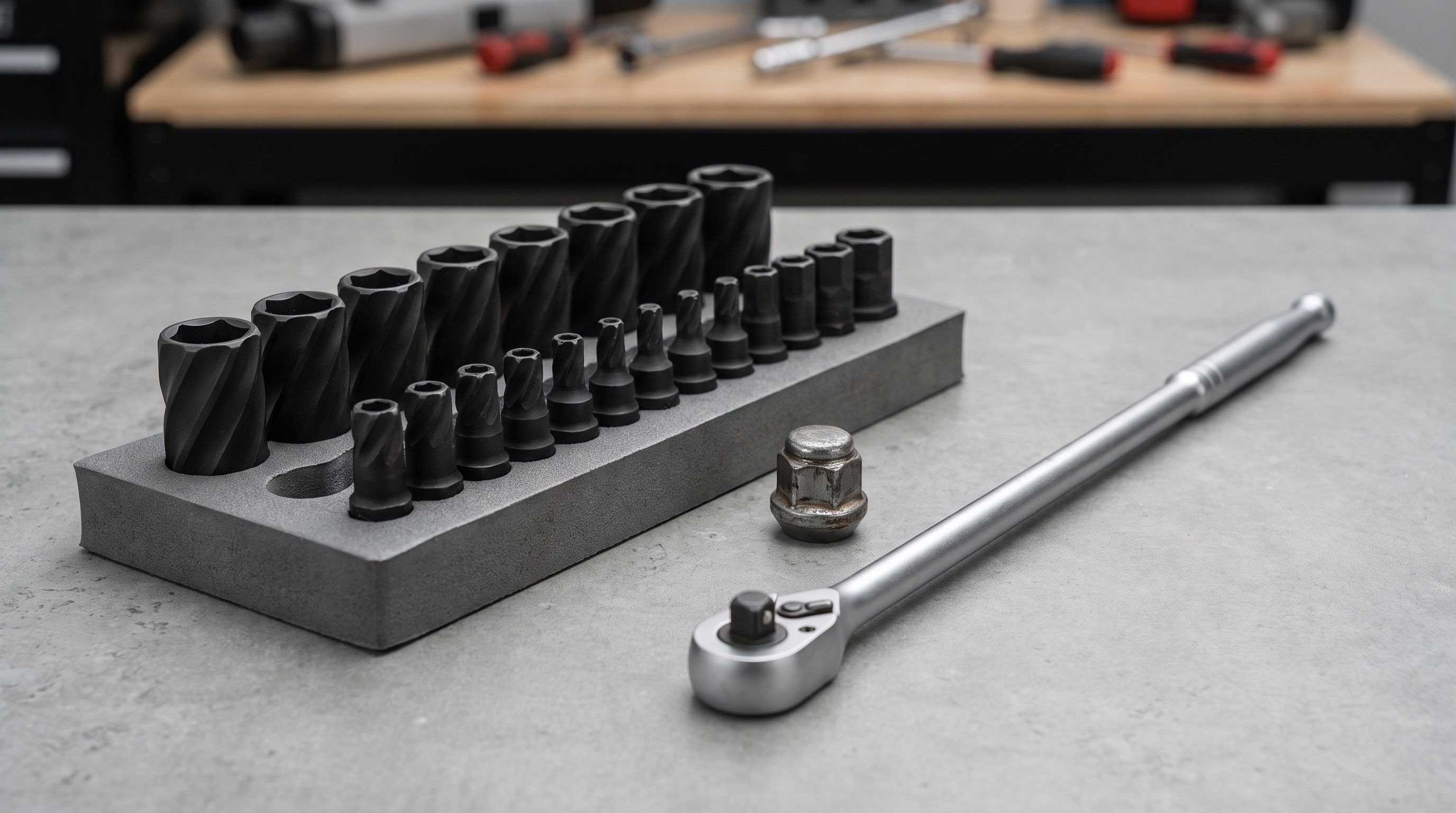
Wheel Lock Removal Tool Kit 2026: Match Your Spline First
Lost your wheel lock key? Learn how to identify your lock pattern and pick a wheel lock removal tool kit that actually grips — sized by lug diameter and depth.