Supercapacitor Dash Cam vs Battery in 2026: Heat Survival
Supercapacitor dash cams vs lithium-battery models in 2026: how each survives hot parked cars, what parking mode really needs, and which cameras owners trust.
Reader-supported: we may earn a commission from links on this page, at no extra cost to you. It never affects our picks. Learn more.
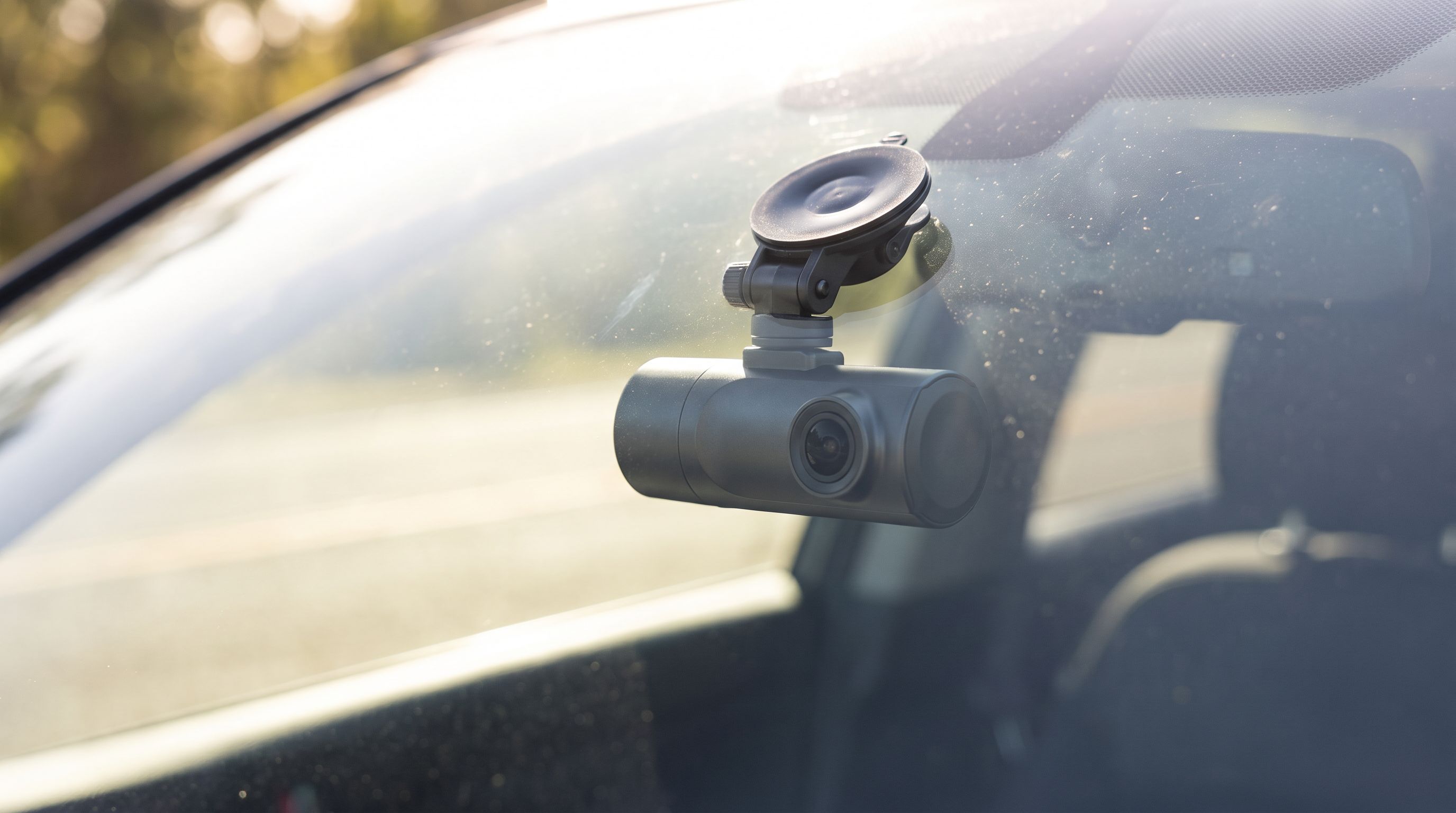
If you park outside in Phoenix, Houston, Dubai or anywhere else where a closed car turns into an oven, the single most important spec on a dash cam spec sheet isn't resolution. It's what stores the energy inside the camera.
Two options exist: a small lithium-ion or lithium-polymer battery, or a supercapacitor (sometimes written "super capacitor" or "ultracapacitor"). Both exist to do the same minimum job — keep the camera alive for a few seconds after power is cut so the last video file gets closed properly instead of corrupted. But they behave very differently when a windshield-mounted device bakes at 150 °F / 65 °C for six hours a day, every day, all summer.
We compared published manufacturer temperature ratings, warranty language and a large volume of long-term owner reports to work out what actually survives. Here's what matters.
The short version
- Best overall: Viofo A229 Pro
- Best compact / budget pick: Viofo A119 Mini 2
- Premium pick for parking surveillance: Thinkware U3000
- Best for rideshare and multi-angle coverage: Vantrue Nexus 5S
- Best new 4K single-channel: Viofo A329S
 Best new 4K single-channel · Viofo A329S — Check price on Amazon →
 Premium pick for parking surveillance · Thinkware U3000 — Check price on Amazon →
 Best compact / budget pick · Viofo A119 Mini 2 — Check price on Amazon →
 Best overall · Viofo A229 Pro — Check price on Amazon →
All five use supercapacitors. That's not a coincidence — in 2026, essentially every dash cam that serious reviewers and long-term owners recommend for hot climates has moved away from internal lithium cells.
Why heat is the whole argument
A lithium cell degrades fastest when it's hot and held at a high state of charge — which is exactly the condition inside a dash cam that's wired to constant power and sitting in a sunlit windshield. Capacity fades, internal resistance climbs, and in the worst cases the pouch swells. Swollen-battery reports are the classic failure mode owners describe in hot-climate forums: the camera case bulges, the screen separates or cracks, and the unit dies — sometimes within one or two summers.
A supercapacitor stores energy electrostatically rather than chemically. There's no intercalation chemistry to degrade, so it tolerates a much wider temperature band and far more charge/discharge cycles. It also can't swell or vent the way a lithium pouch can. That's the core safety and longevity argument, and it's why manufacturers quote broader operating temperature ranges on their capacitor models.
The trade-off is energy density. A supercapacitor holds a tiny fraction of the energy of even a small lithium cell. Practically, that means:
- A supercapacitor cam has enough reserve to finish writing the current file and shut down cleanly. That's it.
- It generally cannot record on its own after power is removed.
- It often cannot run GPS logging or Wi-Fi off-vehicle, and some models won't even power up to play back footage unless they're plugged in.
A battery cam might record for 30 seconds to a few minutes after an unplug event — occasionally useful if a thief rips the camera off the glass. That's a real advantage, and it's the one legitimate reason to choose a battery model. For most people it doesn't outweigh the heat risk.
Supercapacitor vs battery: the honest comparison
| Factor | Supercapacitor dash cam | Lithium-battery dash cam |
|---|---|---|
| Heat tolerance | Wide operating range; designed for sun-baked windshields | Narrower range; manufacturers often warn against high-heat storage |
| Typical failure mode | Gradual; capacitor failure is relatively rare | Swelling, capacity fade, sudden death after 1–3 hot seasons |
| Runtime after power loss | Seconds — enough to close the file safely | Seconds to a few minutes; may keep recording briefly |
| Cold-weather start | Generally reliable; no chemistry to stall | Cold cells can struggle to supply boot current |
| Standalone/off-car use | Usually needs external power to operate | Can run briefly untethered (handheld evidence capture) |
| Parking mode | Needs hardwire kit or OBD power — always | Also needs hardwire kit for anything beyond a token buffer |
| Long-term reliability reputation | Strongly favoured by reviewers and long-term owners | Acceptable in mild climates, risky in hot ones |
| Typical warranty posture | Often 1–2 years; heat damage still excluded | Battery frequently excluded or covered for a shorter term |
The warranty point deserves emphasis because it's the part buyers skip. Many dash cam warranties explicitly carve out consumable components and damage from "exposure to extreme temperatures." On battery models, the internal cell is frequently treated as a consumable with a shorter coverage window than the camera body. So the device most likely to fail from heat is often the device whose heat-sensitive part is least covered. Read the warranty page on the manufacturer's own site — not the marketplace listing — before you buy, and register the camera so you have a purchase date on file.
How parking mode actually works (and why it changes the calculus)
A lot of confusion comes from assuming a battery cam can do parking surveillance on its own power. It can't — not meaningfully. Recording 4K video for hours draws far more than any coin-sized internal cell can supply.
Real parking mode comes from one of three sources:
- A hardwire kit tapped into a fuse box circuit, with low-voltage cutoff so it stops before it drains your starter battery.
- An OBD-II power cable, which is simpler to install but occupies the diagnostic port and doesn't always offer as fine a cutoff control.
- A dedicated auxiliary battery pack (such as the Cellink or BlackVue-style units) that charges while you drive and powers the camera after shutdown.
Once you accept that parking mode requires external power regardless, the internal energy storage question collapses down to one thing: which technology survives the climate. In hot regions, that's the supercapacitor.
Worth knowing: an external lithium power pack sits in the cabin or trunk, not stuck to the glass in direct sun, so it isn't subject to the same thermal abuse as an internal cell. Pairing a supercapacitor camera with an external pack is the long-life configuration for people who want serious unattended surveillance.
How to choose
1. Match the power source to your climate and parking habits
Garage-kept in a temperate climate with no parking mode? Almost anything works, and a battery model's extra untethered runtime is a minor plus. Street-parked in the desert Southwest, Gulf Coast, Australia or the Middle East? Buy a supercapacitor model and don't overthink it. Also factor in windshield rake — a steeply raked windshield puts the camera closer to the glass and into more direct sun, which raises the device's internal temperature.
2. Decide how many channels you actually need
Front-only is enough for most insurance disputes. Front plus rear is the sweet spot for rear-end collisions and tailgating evidence. Front, rear and interior matters for rideshare drivers and anyone carrying passengers for money. Every extra channel is more heat generated inside the unit and more write load on the card, so don't buy channels you won't use.
3. Plan the install before you buy the camera
Check whether the model you want has a hardwire kit available from the same manufacturer, whether it supports buffered parking recording (which captures the seconds before an impact), and whether low-voltage cutoff is adjustable. If you're not comfortable pulling an A-pillar trim and using a fuse tap, budget for a shop install. A badly hardwired cam that drains your car battery overnight is a worse outcome than no parking mode.
4. Use a card rated for the job — and replace it
Dash cams loop-record continuously, which is brutal on flash memory. Use a high-endurance microSD card from a known brand, sized to match your resolution and channel count, and format it in-camera on a schedule. Card failure is, by a wide margin, the most common cause of "my dash cam didn't record the one time I needed it." Treat the card as a wear item you replace roughly annually in heavy use.
5. Check the stated operating temperature range
Manufacturers publish an operating and a storage temperature range. Compare them across the models you're considering rather than trusting marketing phrases like "heat resistant." Supercapacitor models generally quote a wider range; if a spec sheet is vague, that's informative in itself.
The picks
Viofo A229 Pro — best overall
Prices last checked October 4, 2026. Amazon prices change frequently, so treat these as a guide and check the live price before you buy.
Viofo A229 Pro
Dual/triple-channel 4K STARVIS 2 recording with a supercapacitor and mature parking-mode firmware.
The A229 Pro is the model that reviewers including Wirecutter have put at the top of the category, and the reasoning is consistent: strong low-light performance from Sony STARVIS 2 sensors, flexible one-, two- or three-channel configuration, and a supercapacitor rather than a battery. Viofo's parking-mode firmware is mature — buffered recording, motion and impact detection, and a time-lapse option — and the company sells its own hardwire kit, which keeps the install tidy. What it gives up: it's a fairly visible unit on the glass compared with the stealthier minis, the companion app is functional rather than polished, and multi-channel setups mean a longer, more involved wiring job.
Viofo A119 Mini 2 — best compact / budget pick
Viofo A119 Mini 2
Tiny 2K single-channel cam with a supercapacitor — the easy answer for hot-climate daily drivers.
If you want the heat-survival argument without spending big, the A119 Mini 2 is the default recommendation and has been picked out repeatedly by reviewers as a smart buy for hot parked cars. It's small enough to hide behind the mirror, records sharp 2K front video, and uses a supercapacitor. For a huge number of drivers, a discreet single-channel cam that reliably survives summer is the right answer. The compromises are obvious: no rear channel, 2K rather than 4K so licence plates at distance are harder to resolve, and a tiny screen that makes on-camera menu work fiddly.
Thinkware U3000 — premium pick for parking surveillance
Thinkware U3000
Radar-assisted parking mode, energy-saving modes and supercapacitor power for long unattended stints.
Thinkware builds its reputation on parking mode, and the U3000 is the flagship expression of that: radar-assisted detection that wakes the camera on genuine approach rather than every shadow, multiple energy-saving modes, and supercapacitor power so the unit tolerates long hot stints. If your car sits unattended in a lot all day and you want the best chance of catching a hit-and-run or a break-in attempt, this is the system to build around. The downsides are price positioning, an install that really rewards professional fitting, and an ecosystem of Thinkware-specific accessories you'll likely buy into.
Vantrue Nexus 5S — best for rideshare and multi-angle coverage
Vantrue Nexus 5S
Four-channel coverage including interior IR, built around a supercapacitor rather than a battery.
Rideshare and delivery drivers have a different problem: they need the cabin covered as well as the road, and their cars spend far more hours running in heat than a commuter's. The Nexus 5S covers front, interior with infrared, and rear or side angles, and uses a supercapacitor rather than an internal cell — important given the duty cycle. Trade-offs: splitting bandwidth across that many channels means no single view is as sharp as a dedicated 4K front cam, the unit is physically larger, and you'll want a generous, genuinely high-endurance card to keep up with the write load.
Viofo A329S — best new 4K single-channel
Viofo A329S
Sharp 4K front video, expandable with rear/interior cameras, supercapacitor-powered for heat.
The A329S is the newer 4K option that's been drawing strong reviews as an all-rounder, with sharp front footage and the ability to add rear or interior cameras later. It's the pick if you want maximum plate legibility from a single front channel now, with room to expand. Supercapacitor power keeps it in the hot-climate-safe camp. What you give up: 4K files eat card space quickly, so loop windows get shorter unless you buy a large card; and as a newer model, third-party mount and accessory support is thinner than for the long-established A119 line.
Practical heat-proofing beyond the camera
Even the best capacitor model benefits from basic thermal hygiene:
- Mount behind the rear-view mirror, where the mirror body casts shade for part of the day.
- Use a sunshade when parked. It lowers cabin temperature meaningfully and costs almost nothing.
- Enable time-lapse or energy-saving parking mode instead of continuous recording when parked for long periods — less processing means less self-generated heat.
- Avoid cheap adhesive mounts in heat; 3M VHB-style pads from reputable makers hold far better than generic tape, which softens and lets cameras fall.
- Reformat the card monthly and check that footage is actually being written. A cam that's thermally fine but writing to a dead card is still useless.
FAQ
Do supercapacitor dash cams record after the car loses power?
Only for a few seconds — just long enough to safely close the current video file. If you want recording to continue after the engine is off, you need a hardwire kit, an OBD power cable, or an external battery pack. Internal supercapacitors are not a parking-mode power source.
Will a battery dash cam definitely fail in a hot climate?
Not definitely, but the odds are worse. Owner reports in hot regions consistently describe swollen batteries and dead units after one to three summers, while supercapacitor models tend to keep going. If you park in shade or a garage most of the time, a battery model is less risky — but the cost difference between the two technologies is small enough that there's little reason to gamble.
Can I replace the battery in a dash cam that has swollen?
On a handful of models, yes, but it usually means opening a glued case and may void the warranty. A swollen lithium pouch is also a safety hazard — don't puncture it, and dispose of it at a proper battery recycling point. Most owners end up replacing the whole camera, which is the argument for buying capacitor-based from the start.
Does a supercapacitor dash cam work in extreme cold too?
Generally better than a battery model. Lithium cells struggle to deliver current at low temperatures, which can cause boot failures on freezing mornings. Supercapacitors are less affected. Check the manufacturer's published operating temperature range for the specific model if you live somewhere that sees deep sub-zero winters.
What microSD card should I use?
A high-endurance card from a reputable brand, sized for your resolution and channel count. Standard consumer cards are not designed for continuous overwriting and fail early in dash cam service. Format in-camera periodically, and treat the card as a wear item — replacing it annually in heavy use is cheap insurance against losing the one clip that mattered.
Does parking mode drain my car battery?
It can, which is why hardwire kits include low-voltage cutoff. Set the cutoff conservatively — especially on a car you don't drive daily — or use a dedicated auxiliary battery pack that isolates the camera from your starter battery entirely. If your vehicle has a modern smart charging system or start-stop battery, confirm the kit is compatible before installing.
Get the best car care deals in your inbox
Join the GarageProof newsletter for hand-picked car care deals and new buying guides. No spam, unsubscribe anytime.
Related reads
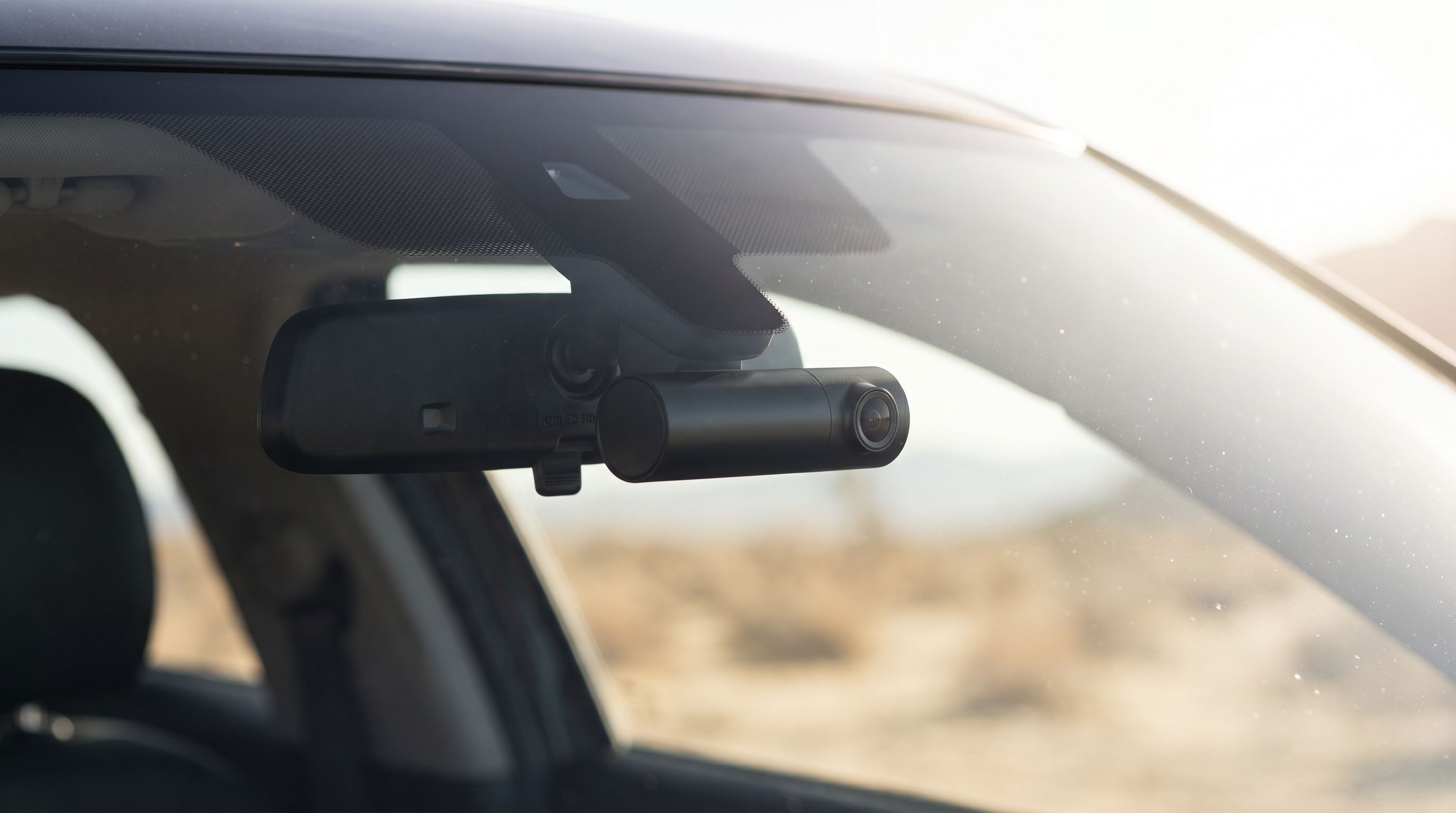
Heat Resistant Dash Cam 2026: Picks for 115°F Summers
A heat resistant dash cam has to survive a dashboard that hits 160°F. We compared supercapacitor models from Viofo, Thinkware, BlackVue and Vantrue for Sunbelt drivers.
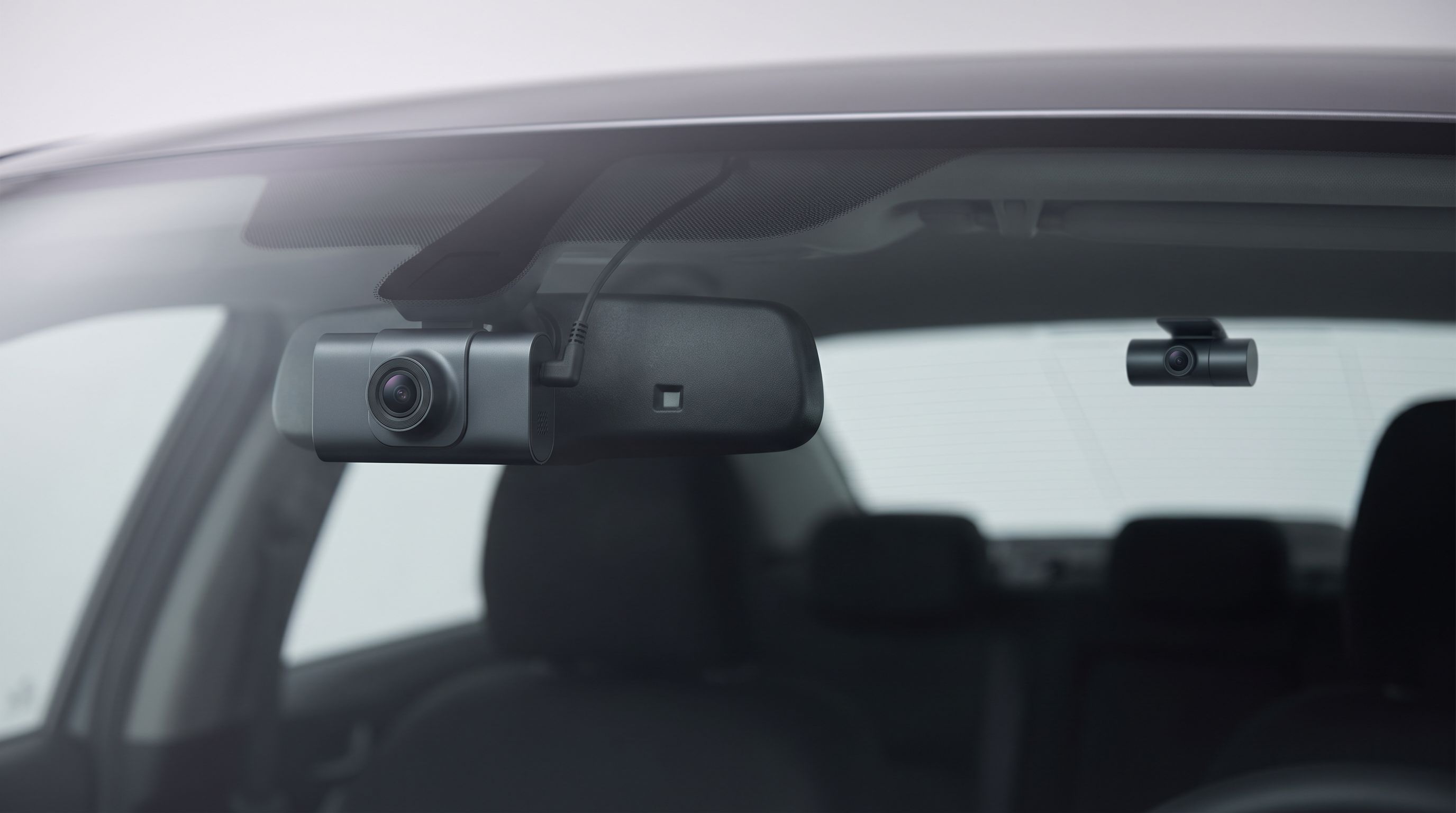
4K Dash Cams With Rear Camera: 5 Picks Worth Wiring In
We compared the best 4K dash cams with rear camera for 2026 — Viofo, Vantrue, 70mai and Rove — on rear resolution, night video, parking mode and plate legibility.
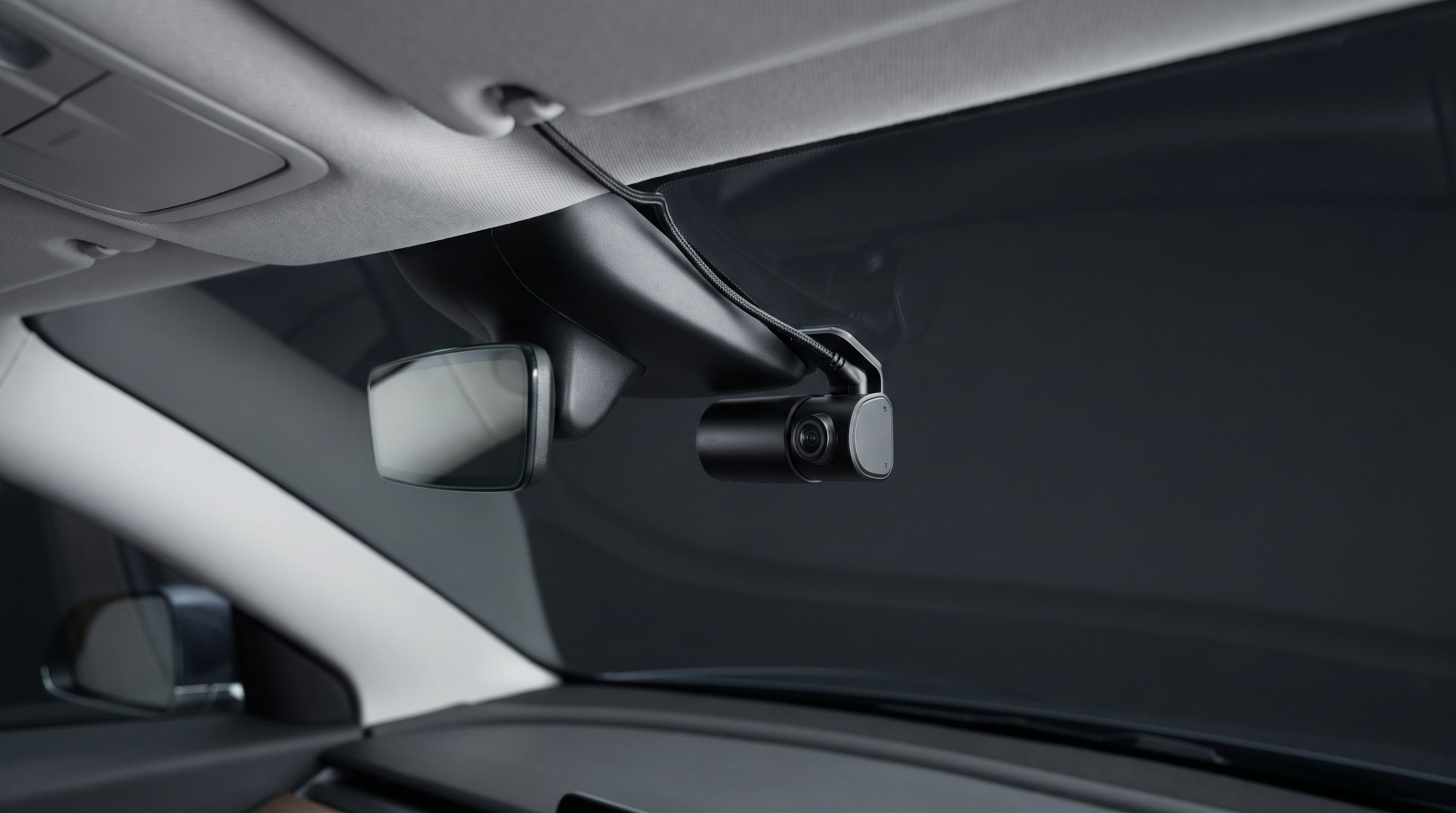
Dash Cam for a Leased Car in 2026: No-Drill Power Routes
The best no-drill dash cam setups for leased cars in 2026 — OBD and fuse-tap power, adhesive mounts, and how to route cables around A-pillar airbags safely.