Socket Set Buying Guide 2026: 6-Point vs 12-Point, SAE vs Metric
A spec-led 2026 socket set buying guide: 6-point vs 12-point, shallow vs deep, 1/4-3/8-1/2 drive sizes and SAE/metric coverage so you only buy one set.
Reader-supported: we may earn a commission from links on this page, at no extra cost to you. It never affects our picks. Learn more.
Most people buy two socket sets. They buy a cheap one, discover it's missing the 10mm deep, missing 1/2-inch drive, or that the 12-point sockets round off a rusty caliper bolt — and then buy a second set to fill the gaps. This guide is about buying one set that actually covers your car's fasteners.
GarageProof researches and compares tools using manufacturer specs, independent reviews and verified owner feedback. We don't physically test units, so what follows is a spec-led comparison and a framework for matching a set to the work you actually do.
The short version
- Best overall: GearWrench 80966 239-Piece Mechanics Tool Set
- Best 3/8-inch drive set: Milwaukee 48-22-9008 3/8" Drive 56-Piece Ratchet and Socket Set
- Best budget all-rounder: Craftsman CMMT12034 230-Piece Mechanics Tool Set
- Best for suspension and wheels: Tekton SHD92122 1/2" Drive 6-Point Deep Impact Socket Set
- Best specialty add-on: Sunex 3342 3/8" Drive Low Profile Impact Socket Set
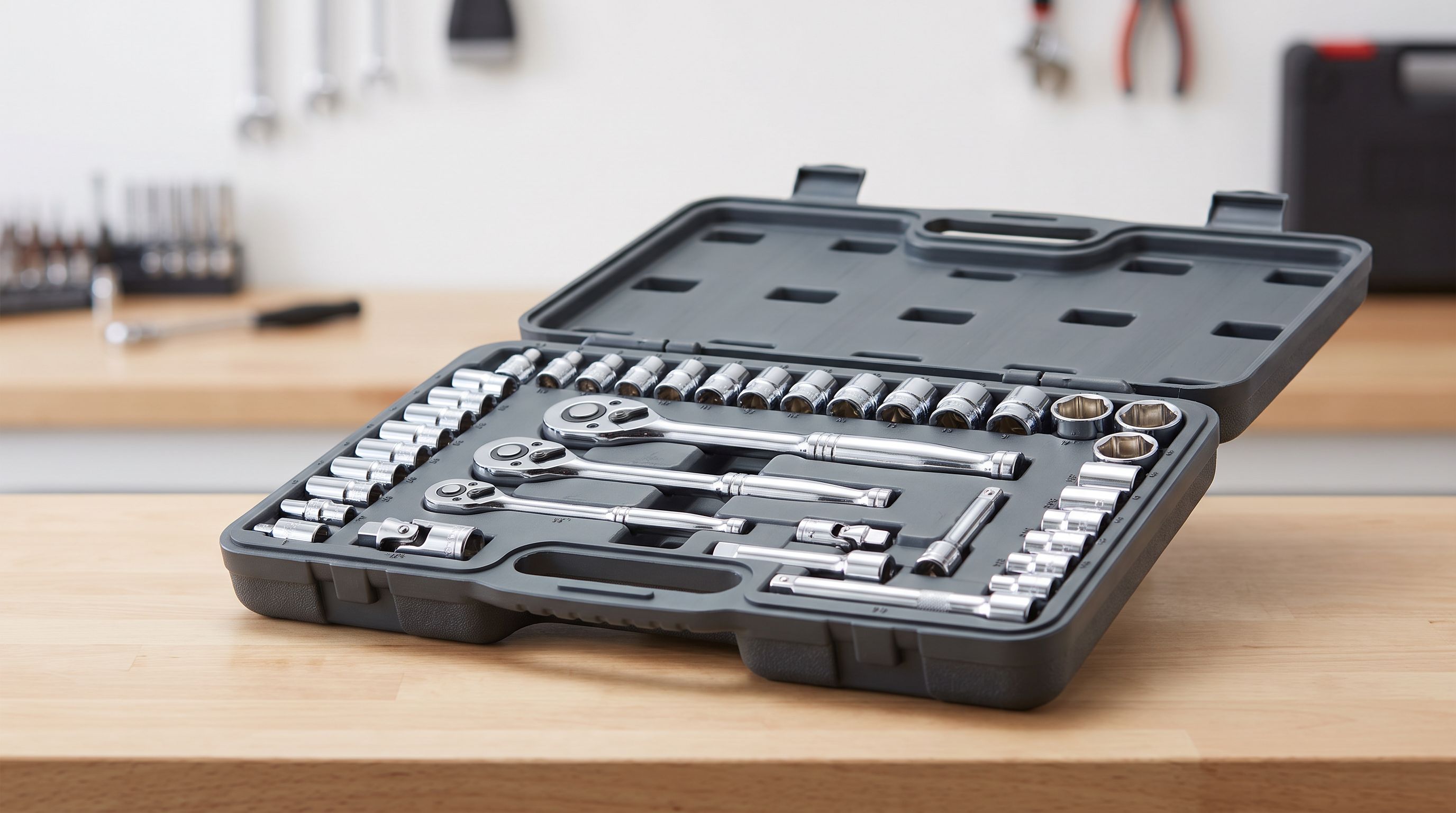
 Best budget all-rounder · Craftsman CMMT12034 230-Piece Mechanics Tool Set — Check price on Amazon →
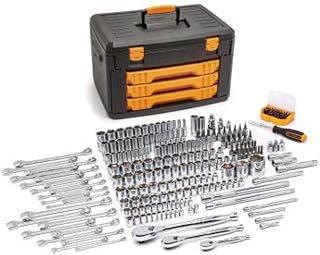 Best overall · GearWrench 80966 239-Piece Mechanics Tool Set — Check price on Amazon →
6-point vs 12-point: the decision that matters most
A 6-point socket contacts the flats of a hex fastener. A 12-point socket has twice as many engagement points, so it slides on at 30-degree increments instead of 60 — handy when you're working blind behind a manifold or swinging a ratchet in a 40-degree arc.
The trade-off is load distribution. Because a 12-point's corners sit closer to the fastener's corners, more of the torque is carried near the edges of the hex. On a crisp, unrusted bolt that's fine. On a corroded or already-slightly-rounded fastener, a 12-point is far more likely to slip and cam the corners off.
Practical rule for cars:
- Buy 6-point as your default. Suspension bolts, axle nuts, caliper brackets, crank bolts, anything rusty or high-torque.
- Add 12-point selectively. Some engine fasteners are genuinely 12-point (many European bi-hex head bolts, some flywheel and pressure plate bolts), and a 12-point socket is the only thing that fits those. A 6-point socket will not engage a 12-point fastener.
- Never use 12-point on an impact wrench unless the socket is explicitly rated for it.
If a "mechanics tool set" spec sheet is vague about point count, assume it's 12-point — that's the cheaper standard for big piece-count kits. The sets we recommend below are explicit about it.
Shallow vs deep vs low-profile
Socket depth is where most cheap kits fall down.
Shallow sockets are stronger for a given wall thickness and fit under brackets and in recessed pockets. They're what you'll use for most bolt heads.
Deep sockets (roughly 2 to 2.5 inches long in 3/8-inch drive) swallow protruding studs — exhaust manifold nuts, strut top nuts, battery terminals, spark plugs, U-bolts. Without deep sockets you simply cannot reach a nut on a long stud. Any set you buy should include a full deep range in metric, not just three token sizes.
Low-profile / thin-wall impact sockets like the Sunex 3342 exist for a narrow but infuriating problem: a socket that fits the bolt but won't fit in the space around it. Think sway bar end links, alternator brackets, and recessed bellhousing bolts. It's an add-on, not a first purchase.
Spark plug sockets are a separate category — 5/8 and 13/16 inch are the classic sizes, with 14mm and 16mm thin-wall versions for modern coil-on-plug engines. Check what your engine takes before assuming the set covers it.
Drive sizes: why three, not one
Drive size determines how much torque the square drive can carry and how bulky the tool is.
- 1/4-inch drive: interior trim, sensors, valve covers, small 7–13mm fasteners. Low torque, high access.
- 3/8-inch drive: the workhorse. Roughly 8–19mm covers the majority of under-hood work. If you only ever buy one drive size, buy this one.
- 1/2-inch drive: lug nuts, suspension, subframe, crank pulley. Anything above roughly 75 lb-ft should live here.
Adapters exist, and they're fine for occasional use — but running a 1/2-inch job through a 3/8-inch ratchet is how ratchets die. A three-drive set like the GearWrench 80966 or Craftsman CMMT12034 exists precisely so you stop doing that.
Metric vs SAE: what your car actually uses
Almost every passenger vehicle built in the last 30 years, including domestic models, uses metric fasteners. Ford, GM and Stellantis went metric decades ago. So metric is not optional — it's the core of your set.
SAE still matters if you work on older American vehicles (pre-1980s especially), classic British and American motorcycles, trailers, lawn equipment, plumbing, or aftermarket parts with imperial hardware. It also matters because some sizes are close enough to be dangerous: 1/2 inch is 12.7mm and will feel "almost right" on a 13mm, then round it.
A dual metric/SAE set costs a little more and weighs more, but it means one box in the garage instead of two. If you genuinely only work on modern cars and want a compact kit, a metric-only set like the Milwaukee 48-22-9008 is a legitimate choice.
One more spec worth checking: 6-point sockets often carry hard stamped and laser-etched size markings. On a cheap set, markings wear off within a year and you spend your life test-fitting. Look for deep-stamped or dual-marked sizes.
Comparison table
| Set | Drives | Point count | Depth coverage | Metric / SAE | Best for |
|---|---|---|---|---|---|
| GearWrench 80966 239-Piece | 1/4", 3/8", 1/2" | 6-pt and 12-pt sockets | Shallow + deep | Both | One-box general automotive work |
| Milwaukee 48-22-9008 56-Piece | 3/8" | 6-point | Shallow + deep | Metric + SAE | Tight engine bays, compact kit |
| Craftsman CMMT12034 230-Piece | 1/4", 3/8", 1/2" | Mixed 6-pt / 12-pt | Shallow + deep | Both | Budget-conscious DIY starter |
| Tekton SHD92122 1/2" Impact | 1/2" | 6-point impact | Deep | Metric (size range varies by SKU) | Suspension, axle nuts, rusted hardware |
| Sunex 3342 3/8" Low Profile | 3/8" | 6-point impact | Low profile | Metric | Clearance-limited fasteners |
Always confirm the exact size range and point count on the listing before you buy — manufacturers revise kit contents between production runs.
The picks
GearWrench 80966 — best overall
Prices last checked September 28, 2026. Amazon prices change frequently, so treat these as a guide and check the live price before you buy.
GearWrench 80966 239-Piece Mechanics Tool Set
Deep and shallow 6-point sockets in three drives, plus 90-tooth ratchets and full metric/SAE coverage.
GearWrench's 239-piece set is the closest thing to a "buy once" answer for a home garage. You get 1/4, 3/8 and 1/2-inch drive ratchets with the brand's 90-tooth mechanism (a 4-degree swing arc, which matters more than piece count when you're working against a frame rail), plus shallow and deep sockets in both metric and SAE, combination wrenches, hex keys and bits. The case is a molded blow-mold tray with labeled pockets, so you can see what's missing at a glance.
What it gives up: it's heavy and bulky, the case is not a rugged jobsite box, and the combination wrenches are adequate rather than exceptional. If you already own good wrenches, you're paying twice for some of it.
Milwaukee 48-22-9008 — best 3/8-inch drive set
Milwaukee 48-22-9008 3/8" Drive 56-Piece Ratchet and Socket Set
Bob Vila's top overall pick; 4-degree arc ratchet and PACKOUT-friendly case for tight engine bays.
Bob Vila's 2026 socket set roundup named this Milwaukee 56-piece set their best overall, and the reasoning holds up on paper: a 4-degree arc swing ratchet, 6-point sockets in shallow and deep, and a case designed to drop into the PACKOUT system. The 3/8-inch-only focus is the point — this is the drive you reach for 70% of the time, and by skipping 1/4 and 1/2 the kit stays genuinely portable.
What it gives up: no 1/2-inch drive means no lug nuts, no suspension work, no crank bolt. Treat it as the core set you supplement with a 1/2-inch impact kit, not as a complete solution.
Craftsman CMMT12034 — best budget all-rounder
Craftsman CMMT12034 230-Piece Mechanics Tool Set
Broad metric and SAE coverage across 1/4, 3/8 and 1/2 drives with a lifetime warranty at a DIY price.
If this is your first proper set, the Craftsman 230-piece covers the bases without a professional-tool-truck outlay: three drive sizes, metric and SAE, shallow and deep sockets, bits and hex keys, all under Craftsman's lifetime warranty. Owner feedback consistently rates the sockets and ratchets well above the case they come in, which is the usual compromise at this tier.
What it gives up: some sockets in the kit are 12-point, the ratchet tooth count is lower than the GearWrench, and the blow-mold case latches are a known weak point — plenty of owners transplant the contents into a drawer or a tool box within a year. Budget for that.
Tekton SHD92122 — best for suspension and wheels
Tekton SHD92122 1/2" Drive 6-Point Deep Impact Socket Set
Thick-wall 6-point impact deep sockets that survive a gun on rusted suspension and axle nuts.
Chrome sockets are hardened for hand-tool loads; impact sockets use a softer, tougher alloy with thicker walls so they deform rather than shatter under impact loads. For anything on the underside of a car in a salt state, you want 6-point deep impact sockets on a 1/2-inch drive, and Tekton's set is a well-regarded, clearly specified option with a straightforward warranty.
What it gives up: the thick walls mean it won't fit in tight recesses, it's metric-focused, and it's a supplement rather than a general-purpose set — you still need chrome shallow sockets for everyday work. Check the exact size range on the SKU you buy, since Tekton sells several deep impact sets.
Sunex 3342 — best specialty add-on
Sunex 3342 3/8" Drive Low Profile Impact Socket Set
Low-profile impact sockets that clear tight brackets where a standard socket bottoms out.
Buy this one after you've been beaten by a bolt. Sunex's low-profile 3/8-inch impact sockets have deliberately reduced outer diameter and shorter overall height, so they slide into pockets where a standard impact socket physically will not seat. Sunex is a long-standing impact-socket specialist and the build reflects that.
What it gives up: thinner walls mean less margin on extremely high-torque or badly corroded fasteners, and the size range is narrow. This is a problem-solver, not a starter kit — nobody should buy it as their only sockets.
How to choose
Match point count to the fasteners you'll meet
If your vehicle lives in a rust belt, go 6-point and don't think about it again. If you work on European engines with bi-hex head bolts, add a dedicated 12-point set for those specific bolts. Mixed kits that advertise "12-point sockets" for higher piece counts are optimizing for the spec sheet, not for you.
Count the deep sockets, not the total pieces
A 230-piece set with 40 hex bits and 12 deep sockets is worse than a 120-piece set with a full deep metric range. Read the contents list. Confirm deep sockets run the full 8–19mm span in 3/8-inch drive, and that 1/2-inch drive covers at least 14–24mm.
Check ratchet arc swing before tooth count
Marketing quotes tooth count; what matters is the resulting arc swing. A 72-tooth ratchet needs 5 degrees of movement, a 90-tooth needs 4, a 120-tooth needs 3. In a wheel well, that difference decides whether the job takes ten minutes or an hour. Also check whether the ratchet head is low-profile and whether it has a quick-release button for the socket.
Decide metric-only vs dual coverage honestly
Modern-car-only owners can save weight and money going metric-only. If there's any chance of a classic, a trailer, a motorcycle or shop equipment in your life, buy dual coverage now — retrofitting SAE later means a second, redundant box.
Take the case seriously
The most common complaint about big-box mechanics sets, across every brand, is the case. Hinges crack, latches break, and sockets end up loose in a drawer. If you have a rolling tool chest, consider buying sets that organize into socket rails instead, and treat the blow-mold case as disposable packaging.
FAQ
Do I need SAE sockets for a modern car? No. Virtually all vehicles built since the late 1980s, including American brands, use metric fasteners. SAE is for older vehicles, trailers, shop equipment and some aftermarket parts.
Can I use 12-point sockets on 6-point bolts? Yes, but with more risk of rounding, especially on corroded or high-torque fasteners. The reverse is not true — a 6-point socket will not fit a 12-point fastener.
Are impact sockets necessary if I don't own an impact wrench? Not strictly, but 6-point impact sockets are tougher and thicker-walled, which is useful on stubborn suspension hardware even with a breaker bar. What you must not do is put chrome sockets on an impact gun.
What drive size should I buy if I can only afford one? 3/8-inch. It covers the widest range of automotive fasteners. Add 1/2-inch as soon as you plan to do wheels, brakes or suspension.
How many pieces do I actually need? For general car maintenance, a set covering 1/4, 3/8 and 1/2-inch drives with shallow and deep metric sockets from roughly 6mm to 24mm — typically 100 to 250 pieces depending on what else is bundled. Piece count beyond that is usually bits and accessories.
Does a lifetime warranty matter on sockets? It matters more on ratchets than sockets. Ratchet mechanisms wear and fail; sockets rarely do unless abused. Check whether the warranty covers the ratchet internals or just replacement of the whole tool, and whether claims go through a retailer or the manufacturer.
Get the best car care deals in your inbox
Join the GarageProof newsletter for hand-picked car care deals and new buying guides. No spam, unsubscribe anytime.
Related reads
Torque Wrenches in 2026: Click vs Digital, and What You Need
Click vs digital vs beam torque wrenches compared on range, accuracy spec and calibration certificates — plus the right drive size and ft-lb range for lug nuts and engine work.
Oil Filter Wrench Fitment 2026: Cap, Cup or Claw?
Cap, cup, claw or strap? Match the right oil filter wrench to your engine's filter size and flute count in 2026 — plus five picks that actually fit.
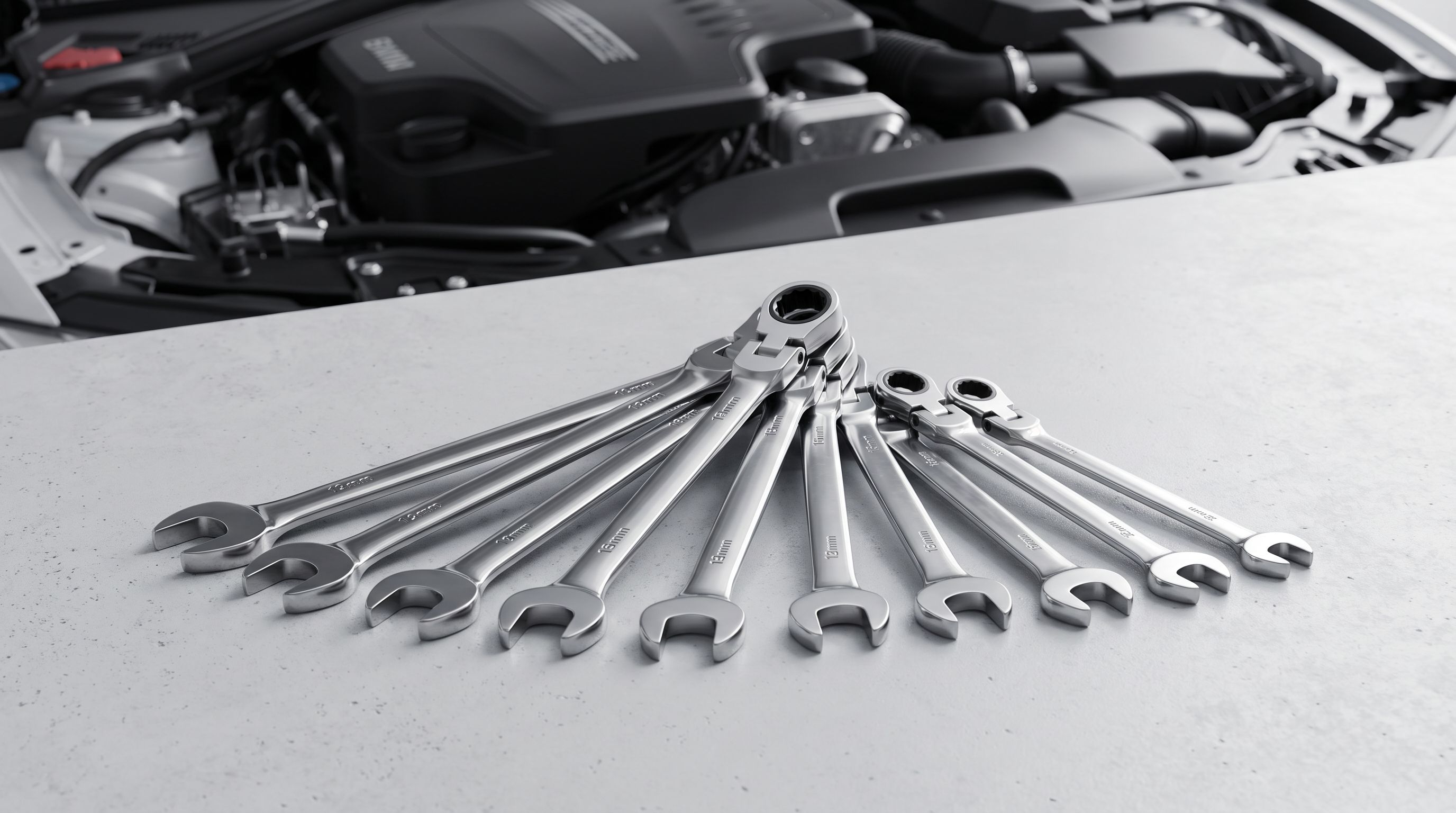
Ratcheting Wrench Sets 2026: Flex-Head vs Fixed Clearance
Pick a ratcheting wrench set by swing arc, head profile and SAE/metric spread — not piece count. Flex-head vs fixed compared, with 4 picks for 2026.