Snow Chains for Tires in 2026: Class S or Bust?
Snow chains for tires in 2026: how to match SAE Class S, S-Class cables, and full chains to your wheel well clearance and tire size — plus five picks.
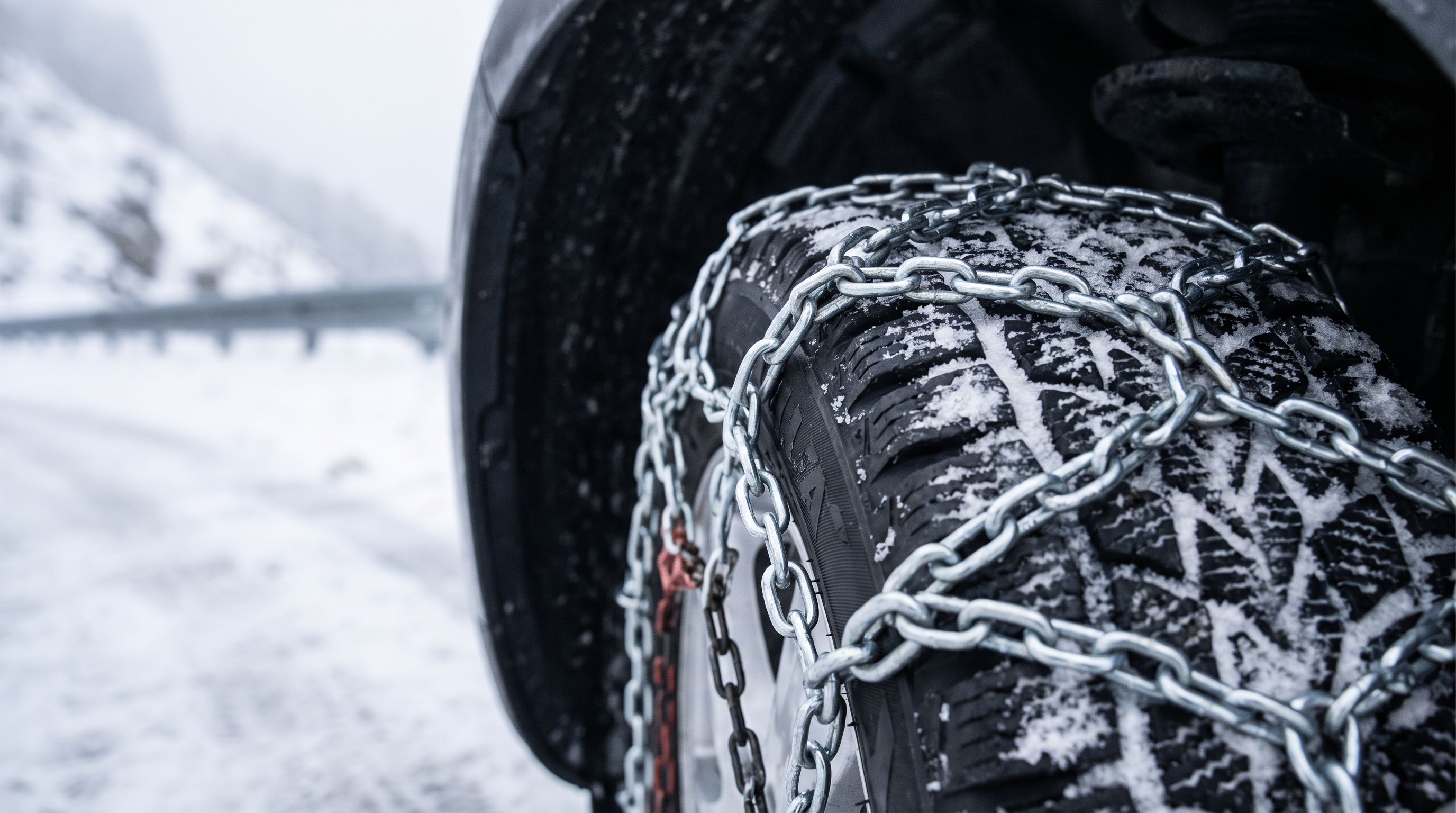
Reader-supported: we may earn a commission from links on this page, at no extra cost to you. It never affects our picks. Learn more.
Snow chains are one of the few pieces of car gear where buying the "best" product and buying the right product are completely different exercises. A heavy-gauge ladder chain that transforms a 4x4 on a forest service road will destroy the brake lines, strut housing, or inner fender liner of a modern crossover with 8 mm of clearance behind the tire. The chain isn't bad. It just doesn't fit the space your vehicle gives it.
So this guide is organized around clearance class first, product second. Get that part right and almost any reputable chain will get you over the pass.
The short version
- Best overall: Security Chain Company Peerless Auto-Trac SZ Series
- Premium pick: König XG-12 Pro
- Best low-clearance cables: Security Chain Company Super Z6
- Best for SUVs and light trucks: Security Chain Company Shur Grip Z SZ
- Best fabric alternative: AutoSock HP
 Best fabric alternative · AutoSock HP — Check price on Amazon →
 Best for SUVs and light trucks · Security Chain Company Shur Grip Z SZ — Check price on Amazon →
 Premium pick · König XG-12 Pro — Check price on Amazon →
Why "SAE Class S" is the first thing you look up
The Society of Automotive Engineers defines traction device classes by how much room the device needs around the tire. The one that matters for most drivers is Class S: a regular (non-reinforced) passenger tire traction device with limited sidewall and overhead clearance. In practical terms, a Class S device is designed to work in vehicles that allow roughly 1.46 inches of clearance above the tread and about 0.59 inches (15 mm) on the sidewall — the SAE figures your owner's manual is referencing when it says "use only SAE Class S traction devices."
Class U and Class W devices are the heavier, higher-profile stuff: reinforced chains with thicker cross-links for trucks, equipment, and vehicles with generous wheel wells.
Here's the part people miss. Class S is a clearance rating, not a quality rating. Plenty of excellent chains are Class S. And a single product line can be Class S in some tire sizes and not others, because the cross-link profile stays the same while the tire gets bigger. Always verify the class for your specific size code, not the product family.
Some vehicles are stricter than SAE. A number of manufacturers publish a specific clearance figure — commonly 6 mm on the inboard sidewall — or prohibit chains on one axle, or prohibit them entirely. That instruction overrides everything in this article.
Find your three numbers before you shop
- Your tire size stamp. Read it off the sidewall: something like 225/65R17. The chain listing must match that exact combination of width, aspect ratio, and rim diameter. "It fits a RAV4" is not a fitment spec; tire sizes change across trims and between OE and replacement tires.
- Your manual's traction device page. Search the index for "tire chains" or "traction devices." Note whether it says Class S, gives a millimeter clearance figure, or forbids chains.
- Your drive axle. Chains go on the driven wheels. Front-wheel drive: front. Rear-wheel drive: rear. AWD and 4WD: check the manual, because manufacturers differ, and some specify the front axle even on rear-biased systems.
If you've upsized your wheels or run aftermarket tires, remeasure. Plus-sized wheels are the single most common reason a "factory-approved" chain suddenly contacts a strut.
How to choose
Clearance class: cables, low-profile chains, or full chains
Three broad tiers, and your wheel well picks for you.
Cable chains use steel cable cross-members wrapped in alloy rollers. They're the thinnest option, the lightest, and the easiest to store — and they're what you buy when your manual quotes a tight millimeter figure. They give up outright bite in deep snow and wear faster on dry pavement.
Low-profile link chains (diamond or D-pattern, Class S) are the sweet spot for most passenger cars and crossovers. More traction than cables, still legal for tight clearances in the sizes where they carry the Class S rating.
Full-profile link chains — ladder patterns, reinforced cross-links, square-link designs — are for pickups, vans, older body-on-frame SUVs, and anything with real room. They dig hardest and last longest, and they'll gouge a modern fender liner without hesitation.
Pattern: ladder vs diamond vs D
Ladder chains run cross-links straight across the tread. Maximum bite per link, but there's a gap between links where you get no traction, which you feel as a pulsing at speed and as weaker lateral grip.
Diamond and D patterns keep metal in contact with the road at all times. Smoother, noticeably better sideways stability on cambered mountain roads, and easier on the driveline. For road use — which is what almost everyone buying chains is doing — the diamond family wins. TireChains.com and most chain retailers make the same recommendation for on-road driving.
Tensioning: self-tightening or manual
Old-school chains need a bungee-style tensioner and a re-check after 100 to 400 feet of driving. That means stopping again on a shoulder in a storm.
Self-tensioning systems — the ratchet on SCC's SZ lines, the rubber tensioner on Super Z6, König's automatic tensioner — pull the chain tight as you drive off. A loose chain is the number one cause of body damage, so this feature is worth real money. It also removes the "did I tighten it enough in the dark with cold hands" question.
Installation method
Look for designs you can fit from the outside of the wheel without moving the vehicle. Auto-Trac and Shur Grip Z are built around that: drape, connect, drive. Traditional chains often require you to reach behind the tire and then roll the car forward to finish the job, which is miserable in a chain-up area with traffic going by.
Whatever you buy, practice once in your driveway in daylight. Every experienced winter driver says the same thing, and every roadside chain-up area proves why.
Legal and seasonal considerations
Chain control zones in the Sierra, Cascades, and Rockies can require chains even on AWD vehicles with winter tires during the strictest levels. Some European-influenced jurisdictions and certain Alpine routes accept approved textile covers; many US chain control signs do not. Check the specific agency's rules for where you're driving.
Comparison at a glance
| Product | Type | Typical class | Tensioning | Best for |
|---|---|---|---|---|
| Peerless Auto-Trac SZ | Diamond link chain | Class S in most passenger sizes | Self-ratcheting | Cars, crossovers, mixed road use |
| König XG-12 Pro | Alloy low-clearance chain | Low-clearance / Class S rated sizes | Automatic self-tensioning | Performance and luxury cars, tight wells |
| SCC Super Z6 | Cable chain | Class S, 6 mm clearance design | Rubber tensioner | Vehicles with the tightest published clearance |
| SCC Shur Grip Z SZ | Diamond link chain | Class S in listed sizes | Self-ratcheting | SUVs, light trucks, larger tire sizes |
| AutoSock HP | Textile traction cover | Not a chain; check local legality | Stretch fit | Vehicles where the manual bans chains |
The picks
Security Chain Company Peerless Auto-Trac SZ Series — best overall
Prices last checked September 30, 2026. Amazon prices change frequently, so treat these as a guide and check the live price before you buy.
Security Chain Company Peerless Auto-Trac SZ Series
Self-tightening diamond-pattern chains that install without crawling behind the wheel — and most sizes are SAE Class S.
This is the default recommendation for most drivers because it solves the two hardest parts of using chains: fitment and installation. The diamond pattern gives continuous tread contact and good lateral stability, the built-in ratchet tightens the chain automatically as you pull away, and you fit it entirely from the outside of the wheel. In independent comparison testing it has repeatedly come out on top for all-around road use. What it gives up: it's not the tool for deep unplowed snow or serious off-road work, the cross-links are thinner than truck chains so they wear faster on bare pavement, and Class S status still depends on the size you order.
König XG-12 Pro — premium pick
König XG-12 Pro
Self-tensioning, low-clearance alloy chains for performance and luxury vehicles with tight wheel wells.
König's XG series is the answer for drivers who look behind their wheel, see almost nothing, and assume chains are off the table. It's a low-clearance alloy chain with an automatic tensioning system, designed specifically around vehicles with restricted sidewall and overhead room — sports sedans, performance SUVs, and European cars with wide tires stuffed under tight arches. Installation is genuinely fast once you've done it once. What you give up is price and ruggedness: this is a road-going device with fine cross-links, not something to flog on a gravel climb, and you should still verify the exact size against your manual's clearance figure.
Security Chain Company Super Z6 — best low-clearance cables
Security Chain Company Super Z6
Cable chains with a rubber tensioner — designed for vehicles that allow only 6 mm of side clearance.
When the manual specifies a very tight clearance — the 6 mm figure shows up on a lot of modern front-drive cars — cables are frequently the only compliant option, and the Super Z6 is the benchmark. Steel cable cross-members with alloy traction coils keep the profile minimal, and the integrated rubber tensioner does the tightening for you, so there's no separate bungee to lose. It fits from the outside of the wheel. The trade-offs are real: cables bite less in deep, heavy snow than link chains, and the alloy rollers wear down quickly if you drive them on cleared pavement. Treat them as get-over-the-pass equipment, not all-day tires.
Security Chain Company Shur Grip Z SZ — best for SUVs and light trucks
Security Chain Company Shur Grip Z SZ
Class S-rated diamond pattern in larger light-truck sizes, with a self-tightening ratchet system.
Same design language as Auto-Trac — diamond pattern, self-ratcheting tensioner, outside installation — scaled into the larger sizes that SUVs, minivans, and half-ton pickups actually run, while still carrying a Class S rating in many of those sizes. That combination is unusual and it's the reason this line gets recommended for modern crossovers with big tires but small wheel wells. What it gives up: it's still a Class S-profile device, so if you have a lifted truck with room to spare and you're heading somewhere genuinely rough, a heavier reinforced chain will last longer and dig deeper.
AutoSock HP — best fabric alternative
AutoSock HP
Textile traction covers for vehicles whose manuals ban chains entirely — quick on, quick off, low speed only.
Some owner's manuals simply say no traction devices, period, usually because of suspension or brake-line geometry. AutoSock is the mainstream answer: a high-grip textile cover that stretches over the tire and grips snow and ice through fiber-to-surface friction. It takes a couple of minutes to fit, weighs almost nothing, and can't gouge your fender liner. The limits are strict — low speed only, short distances, and rapid wear on bare or wet pavement. Critically, not every chain control checkpoint accepts textile devices, so confirm the rules for your route before relying on them as your only winter kit.
Fitting and driving: the rules that keep the chains on the tires
- Fit them before you need them, on a flat pullout, not on a grade in traffic.
- Chains go on the drive axle unless the manual says otherwise. If you only buy one set, it goes there.
- Observe the speed limit printed on the packaging — commonly around 30 mph for link chains and lower for cables and textiles. Speed is what breaks chains and what turns a broken chain into body damage.
- Re-check tension after the first short distance even on self-tensioning designs.
- Avoid bare pavement. Metal on asphalt wears links in minutes and hurts ride quality.
- No hard braking, no sharp steering inputs, no wheelspin. Chains give you grip, not physics immunity.
- Rinse and dry them before storage so the links don't rust into a solid lump by next season.
FAQ
Do I need chains if I have all-wheel drive and winter tires? For ordinary winter driving, usually not. But chain control zones in mountain states can escalate to levels that require chains on all vehicles, including AWD, regardless of tire type. Carry a set if your route crosses a controlled pass.
How do I know if my car requires SAE Class S chains? Check the owner's manual under "tire chains" or "traction devices." If it names Class S or gives a millimeter clearance figure, that's your requirement. If it's silent, measure the clearance from the tire sidewall to the nearest suspension or body component, and to the fender above the tread.
Can I use chains on only two wheels? Yes — and that's the normal approach. Fit them to the drive axle specified by your manufacturer. Four chains give more balanced braking and steering if your vehicle permits them, but two on the correct axle is the standard configuration.
Will chains fit my aftermarket wheels and tires? Only if you check. Chain fitment is by tire size code, not vehicle, and plus-sizing reduces wheel-well clearance. Read the size stamped on your current sidewall and match it exactly to the manufacturer's fit chart.
How fast can I drive with snow chains on? Follow the speed printed on your specific product. Link chains are commonly rated around 30 mph and cables and textile covers lower. Exceeding it is the fastest way to break a chain and damage your vehicle.
Are tire socks a legal substitute for chains? Sometimes. Some jurisdictions accept approved textile devices; many US chain control checkpoints require actual chains at higher control levels. Verify with the road authority for your route rather than assuming.
Get the best car care deals in your inbox
Join the GarageProof newsletter for hand-picked car care deals and new buying guides. No spam, unsubscribe anytime.
Related reads
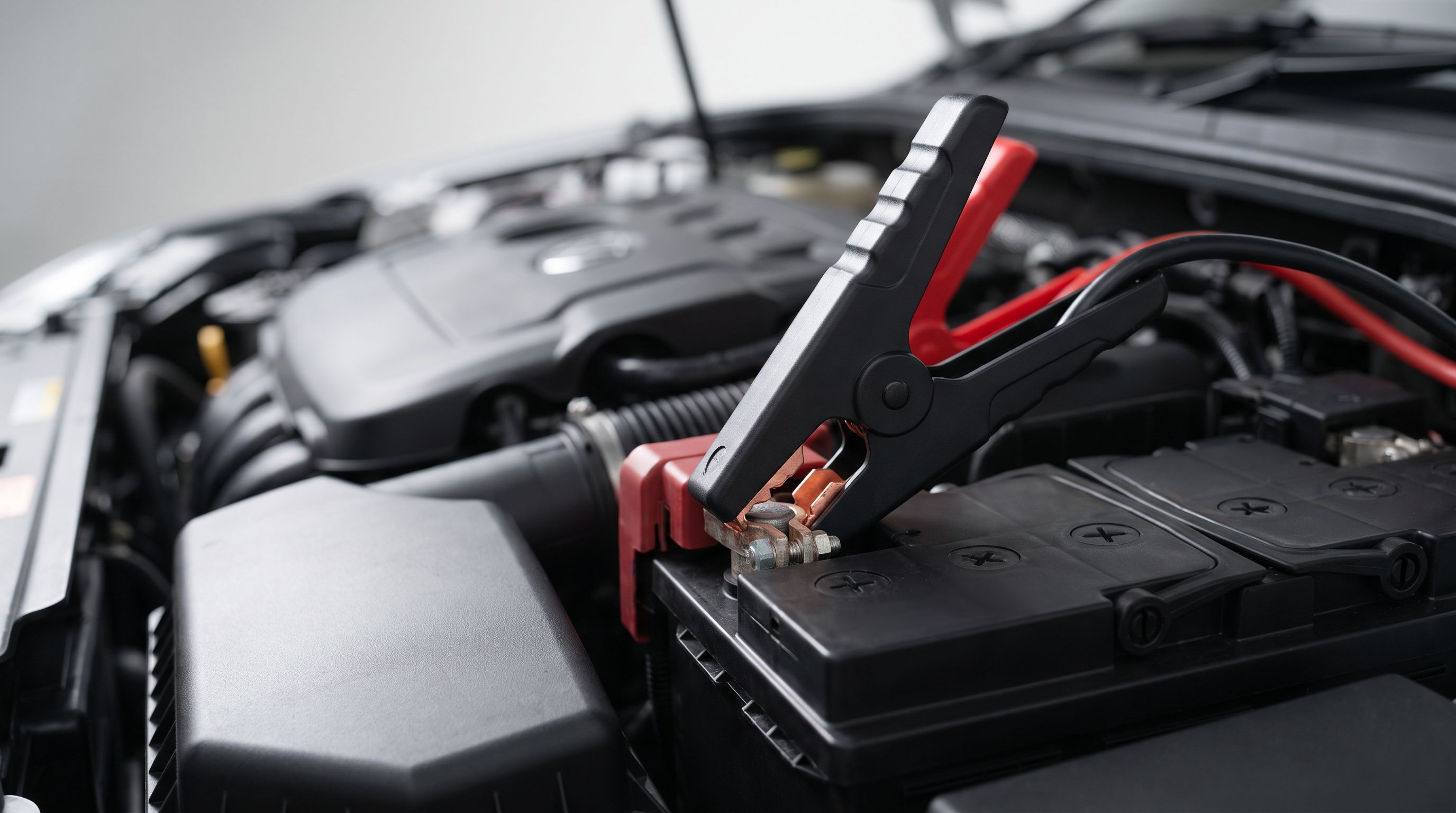
Jump Starter Clamps in 2026: Will They Fit Your Posts?
Jump starter clamps vs battery terminals: compare jaw openings, cable gauge and reach for top-post, side-post and recessed truck batteries before you buy in 2026.
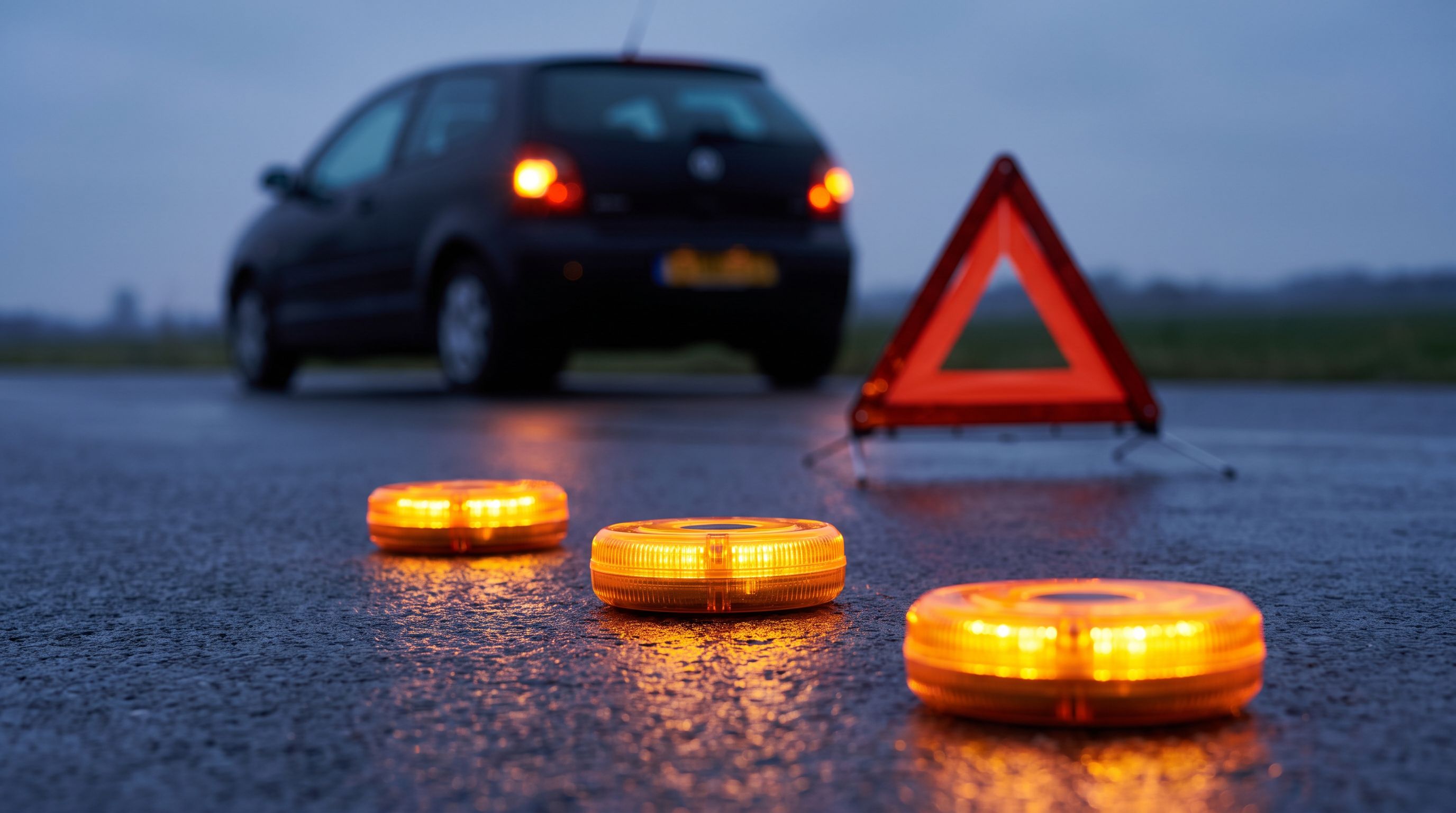
LED Road Flares for Cars in 2026: Do You Still Need Triangles?
LED road flares for cars vs reflective triangles in 2026: visibility distance, DOT-style rules, cold-weather battery life, and five kits worth keeping in the trunk.
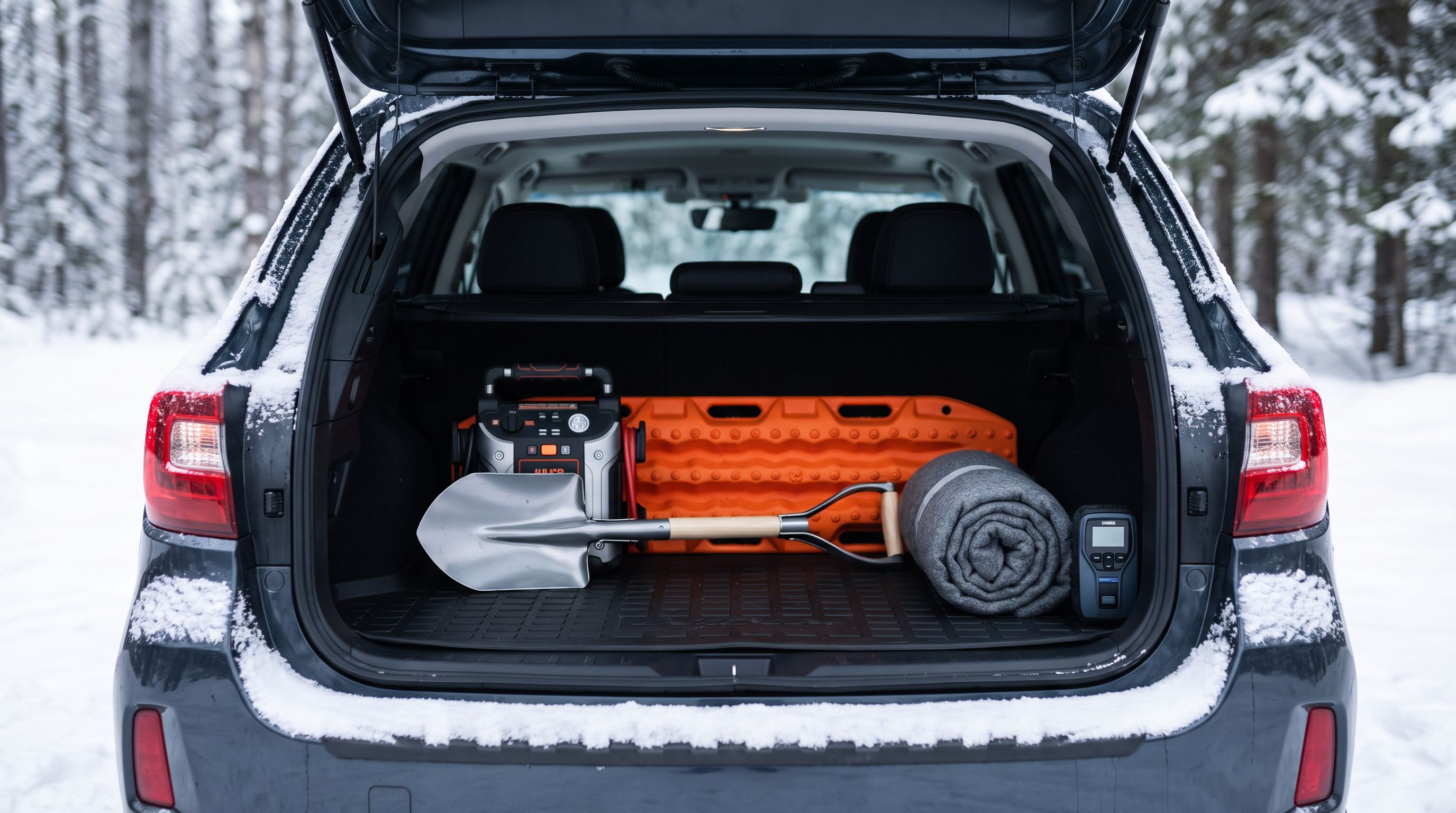
Winter Car Emergency Kit 2026: Build It or Buy It?
Prebuilt winter car emergency kit vs. a component build in 2026: what boxed kits leave out, what a jump starter, inflator and traction boards really cover.