Roof Rack Crossbars 2026: Fitment by Roof Type First
Roof rack crossbars fitment made simple: identify raised rails, flush rails, fixed points or a naked roof, then pick the right foot pack and load rating.
Reader-supported: we may earn a commission from links on this page, at no extra cost to you. It never affects our picks. Learn more.
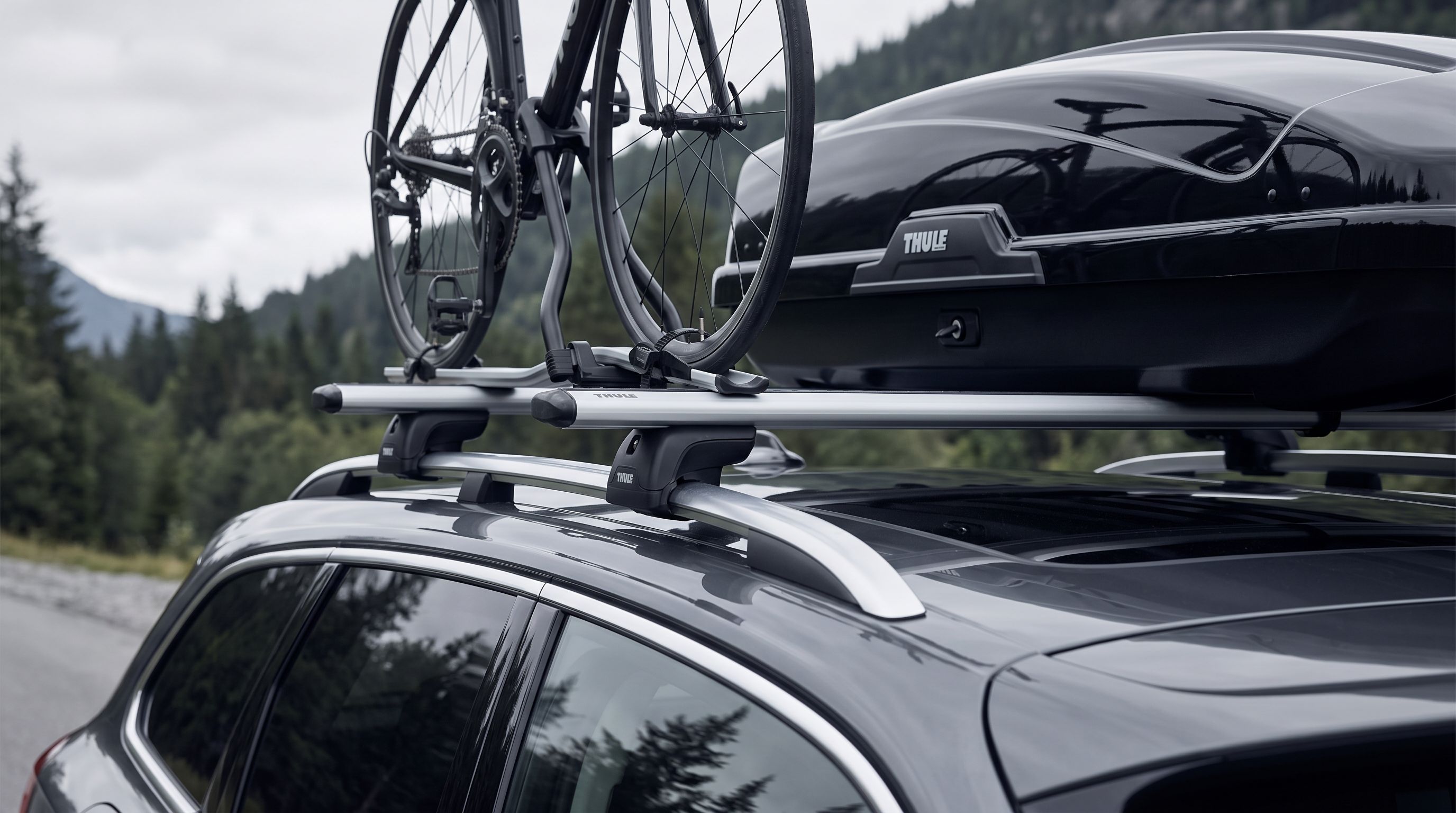
Buying roof rack crossbars is unlike buying almost any other car accessory: the bar itself is the easy part. What decides whether a rack bolts on in 20 minutes or sits in a box waiting for a return label is the foot pack — the towers, feet, clips, brackets or landing pads that connect bar to roof. Get the roof type wrong and the hardware physically cannot attach. There is no workaround, no shim, no "close enough."
So this guide is organized the way the decision actually works: identify your roof, then choose a bar system that supports it, then confirm the load rating for what you plan to carry.
The short version
- Best overall: Thule WingBar Evo
- Best for accessory compatibility: Yakima JetStream
- Best budget crossbar: Thule SquareBar Evo
- Best for raised side rails: Rhino-Rack Vortex RLT600
- Best fitment tool: Yakima RoofPick (tower + clip kit matching)
 Best fitment tool · Yakima RoofPick — Check price on Amazon →
 Best budget crossbar · Thule SquareBar Evo — Check price on Amazon →
 Best for accessory compatibility · Yakima JetStream — Check price on Amazon →
 Best overall · Thule WingBar Evo — Check price on Amazon →
Step one: identify your roof type
Walk out to the car and look at the roof from the side. You have one of four setups.
1. Raised side rails
Two rails run front-to-back along the roof edges with a visible gap underneath — you can slide your fingers between rail and roof. Common on older SUVs, wagons, and many trucks' SUV siblings. This is the easiest roof to fit, because crossbar legs simply clamp around the rail. Most universal "fit any raised rail" bars on Amazon are designed for exactly this roof, and the aftermarket choice is huge.
2. Flush side rails (integrated rails)
Rails run front-to-back but sit flush against the roof skin with no gap. Hugely common on modern crossovers — RAV4, CR-V, Tiguan, Santa Fe, Outback and similar. Flush rails need a dedicated foot that grips the rail's inner lip from the side. A raised-rail clamp will not close around a flush rail, and a naked-roof clip kit has nothing to hook onto. This is the roof type that generates the most returns.
3. Fixed points / factory mounting points
The roof looks bare, but there are small plastic covers or flaps along the roof edge (sometimes inside the door opening). Pop one and you find a threaded insert or a slot. Common on European cars, many Mazdas, Subarus with "fixed point" packages, and vans. Fixed points are the strongest mount type because you're bolting into structure the manufacturer engineered for it. You need a vehicle-specific fit kit, usually a numbered kit from Thule, Yakima or Rhino-Rack.
4. Naked roof (bare roof)
No rails, no visible mounting points, nothing. The crossbar system uses clips — shaped metal brackets that hook into the door frame channel and squeeze the roof skin through a rubber pad. Clips are highly vehicle-specific: a clip for a Civic will not fit a Corolla. If you have a naked roof, your fit kit number matters more than your bar choice.
A fifth case: factory crossbars already fitted
Some SUVs ship with crossbars already spanning the roof. Those can often carry gear directly, but their rated capacity is usually modest and their shape may not accept aftermarket clamps well. Check your owner's manual for the roof load limit before assuming they're adequate.
How to check fitment before you buy
Every major brand publishes a fit guide keyed to year, make, model, body style and roof type — and body style matters more than people expect. A 2026 crossover in base trim may have a naked roof while the same model year in a higher trim has flush rails. Enter your exact configuration, then:
- Note the recommended bar length. Too long and the bars overhang and whistle; too short and wide accessories won't straddle them.
- Note the fit kit or clip number and buy it alongside the bars — they are almost always sold separately.
- Cross-check the spread (the distance between front and rear bars). Some accessories, especially roof boxes and rooftop tents, specify a minimum spread.
- Check your vehicle's dynamic roof load in the owner's manual, not the rack's rating.
That last point trips up almost everyone, so it deserves its own section.
Weight ratings, decoded
There are three numbers in play, and the lowest one wins.
| Rating | What it means | Typical range | Where to find it |
|---|---|---|---|
| Vehicle dynamic roof load | Max weight your car's roof can carry while driving | Often around 100–165 lb on cars and crossovers | Owner's manual |
| Rack system rating | Max the bars + feet are rated to hold in motion | Varies widely by system and roof type | Manufacturer fit guide |
| Accessory rating | Max for the box, basket, bike mount or tent | Varies by product | Accessory manual |
| Static load | Weight the roof can hold parked — relevant only for rooftop tents | Usually several times the dynamic figure | Vehicle manufacturer, sometimes on request |
Two practical consequences. First, the rack's weight counts toward the limit — a 15 lb bar set plus a 35 lb roof box leaves far less for cargo than the headline number suggests. Second, if you're eyeing a rooftop tent, you need the static rating, and you need a rack system explicitly rated for tent use. Many clip-mounted naked-roof systems are not.
Fixed-point and track-mount systems generally carry the highest ratings. Raised-rail systems are next. Flush-rail and clip systems tend to be the most conservative, because the load path runs through the roof skin or a bonded rail rather than a structural bolt.
Bar shape: aero, square or round?
Aero bars have a wing-shaped cross-section. They're quieter at highway speed, cut drag, and look better. Most modern aero bars use an internal T-slot channel on top, so accessories bolt in rather than clamp around.
Square bars are steel, cheap, strong, and accept clamp-style accessories that have been made for decades. They also hum — noticeably — unless you fit a wind fairing.
Round bars are the legacy Yakima format. Still supported, still a huge accessory ecosystem, but aero has largely taken over for new buyers.
If you plan to leave the bars on year-round, pay for aero. If the bars come off between ski season and summer, square bars save real money and nobody hears them from inside a parked garage.
The picks
Thule WingBar Evo — best overall
Prices last checked October 11, 2026. Amazon prices change frequently, so treat these as a guide and check the live price before you buy.
Thule WingBar Evo
Quiet aero aluminum bar with a foot-pack system that covers every roof type via one swap.
The WingBar Evo is the bar most people should buy because it's the hub of the broadest foot-pack ecosystem on the market. The same bar pairs with Thule's Evo Raised Rail, Evo Flush Rail, Evo Fixpoint and Evo Clamp feet, which means the system covers all four roof types — and if you change cars, you often keep the bars and buy new feet. The extruded aluminum profile with its rubber strip runs quietly, and the WingBar's integrated channel takes Thule's T-track accessories directly. What you give up: the bars, feet and fit kit are three purchases, which pushes total cost up, and installation on clip-mount cars requires careful torque work with the supplied tool.
Yakima JetStream — best for accessory compatibility
Yakima JetStream
Wide, flat-top aero bar with internal T-slot channels that bolt-on gear mounts love.
JetStream bars have a wide, flat top deck and full-length T-slot channels on top, which makes them unusually friendly to third-party gear — many rooftop tents, awnings and bike trays bolt straight into the slot without adapters. Yakima's tower range covers raised rails, flush rails, fixed points, tracks and naked roofs, and the fit guide spits out the exact tower plus clip combination for your car. The flat deck also gives roof boxes a stable landing surface. Trade-offs: JetStream bars are on the wider side, so narrow older clamp accessories can be a tight fit, and like Thule, you're buying bars and towers separately.
Thule SquareBar Evo — best budget crossbar
Thule SquareBar Evo
Steel square bars that clamp almost anything cheaply — louder, but hard to beat on value.
If you want crossbars without a three-figure aero premium, the SquareBar Evo is the pragmatic answer. It's a coated steel square bar that uses the same Evo foot-pack family as the WingBar, so your fitment options are identical — you're simply trading quiet for cost. The square section also plays nicely with older clamp-on accessories designed before T-slots existed. The downside is honest and well documented in owner feedback: wind noise at highway speed is significant, and square steel bars are heavier and add more drag than aero. A wind fairing helps a lot, though it eats into the savings.
Rhino-Rack Vortex RLT600 — best for raised side rails
Rhino-Rack Vortex RLT600
Heavy-duty aero bar and leg system built around raised rails and serious load ratings.
For raised-rail vehicles that actually get loaded — rooftop tents, loaded baskets, long overland trips — Rhino-Rack's Vortex system with RLT600 legs is built around strength rather than minimalism. The legs clamp the rail with a wide footprint, the aero Vortex bar carries a channel for accessories, and Rhino-Rack publishes separate dynamic and static ratings so you can plan a tent install properly. It's also available in longer bar lengths than many rivals, useful if you want overhang for an awning. Downsides: it's a bigger, more visually prominent system, and it's primarily a raised-rail and track solution rather than a do-everything platform.
Yakima RoofPick — best fitment tool
Yakima RoofPick
Not a bar — Yakima's fit guide output tells you exactly which towers and clips your car needs.
This one isn't a bar — it's the step most people skip. Before you order anything, run your exact year, make, model and trim through Yakima's fit finder (and Thule's, for cross-reference) to get the tower and clip kit numbers your car requires. The output tells you whether your roof is naked, flush, raised or fixed-point, the recommended bar length, and the specific clip part number. Searching for that part number afterward is far more reliable than searching by vehicle name. The limitation is obvious: it only covers Yakima hardware, so use it as a diagnostic even if you ultimately buy another brand.
Installation and living with a rack
- Torque matters. Clip systems include a torque-limiting tool or indicator for a reason. Over-tightening dents the roof skin; under-tightening lets the rack creep.
- Re-check after the first 50 miles, then periodically. Thermal cycles and vibration loosen things.
- Expect an MPG hit. Bars alone cost a few percent; a loaded box can cost considerably more at highway speed.
- Remove bars you aren't using. It saves fuel, noise and theft risk — and most modern systems come off in minutes.
- Lock them. Most premium foot packs accept keyed lock cores; budget universal bars often don't.
- Mind the garage. Measure total height with the box fitted before you drive into anything with a low opening.
FAQ
Will "universal" crossbars fit my car? Usually only if you have raised side rails. Most universal kits clamp around a rail with a gap underneath. Flush rails, fixed points and naked roofs all need vehicle-specific hardware, so "universal" listings for those roofs should be treated with suspicion unless the listing names your exact year and model.
How do I tell flush rails from raised rails? Try to slide a finger under the rail. If there's a gap running most of the rail's length, it's raised. If the rail sits tight against the roof, it's flush.
Can I fit a rooftop tent to any rack? No. You need the vehicle's static roof load (parked, with occupants) and a rack system the manufacturer rates for tent use. Fixed-point and track systems are the safest bet; lightweight clip systems on naked roofs often are not approved.
Do longer bars carry more weight? No — length determines how wide a load you can straddle, not capacity. Extra length adds overhang, wind noise and the possibility of clipping a garage frame.
My 2026 crossover isn't listed in the fit guide yet. What now? New model years often lag fit guides by a few months. If the body and roof are unchanged from the previous generation, the prior year's fit kit frequently carries over — several 2026 crossovers use 2024–2025 hardware — but confirm with the manufacturer's customer service rather than assuming.
Will crossbars damage my roof? Correctly installed, no. Damage comes from over-torqued clips, grit trapped under rubber pads, and leaving bars on through years of weather. Clean the contact points before installing and inspect pads annually.
Get the best car care deals in your inbox
Join the GarageProof newsletter for hand-picked car care deals and new buying guides. No spam, unsubscribe anytime.
Related reads
Roof Cargo Box Fitment in 2026: Measure Before You Buy
A 2026 roof cargo box fitment guide: crossbar spread, roof weight limits, hatch clearance and ski length, plus four boxes that fit the widest range of racks.
Hitch Bike Rack 2 Inch Receiver vs Bed Mount in 2026
Bed-mounted or hitch bike rack? Compare 2-inch receiver classes, tongue weight limits and real 2026 racks so you confirm fitment before you buy.
Mud Flaps for Trucks 2026: Fit the Wheel Well, Not the Badge
Heavy-duty mud flaps for trucks in 2026: how wheel-well lip, lift height and flare type decide whether drill-in or no-drill kits actually fit.