Rear Dash Cam for SUV 2026: Cable Runs That Actually Fit
Picking a rear dash cam for an SUV or hatchback? Compare 2026 cable lengths, connector styles and liftgate grommet runs so your rear camera wiring survives.
Reader-supported: we may earn a commission from links on this page, at no extra cost to you. It never affects our picks. Learn more.
Buying a two-channel dash cam for a sedan is mostly about image quality. Buying one for an SUV, wagon or hatchback is about geometry. The rear camera has to reach from the windshield, down the A-pillar or across the headliner, back through 6–10 feet of body, and then — the part that kills most installs — across the flexible rubber boot between the body and the liftgate.
That boot is typically a corrugated rubber tube roughly the thickness of a finger, already stuffed with wiper motor wiring, defroster feeds, washer tubing and the lock actuator harness. Whether your dash cam install takes 45 minutes or turns into a weekend of swearing comes down to two numbers nobody puts on the box in big type: cable length and connector diameter.
This guide ranks rear-camera dash cams by how well they survive that run. We compared manufacturer specs, installer documentation, independent reviews and verified owner feedback — GarageProof does not physically install or bench-test units.
The short version
- Best overall: Viofo A329S
- Best 4K front and rear: Viofo A229 Pro
- Best value: REDTIGER F7NP
- Best for tight interiors: 70mai Dash Cam Omni
- Premium pick: Thinkware U3000
 Premium pick · Thinkware U3000 — Check price on Amazon →
 Best for tight interiors · 70mai Dash Cam Omni — Check price on Amazon →
 Best value · REDTIGER F7NP — Check price on Amazon →
 Best 4K front and rear · Viofo A229 Pro — Check price on Amazon →
 Best overall · Viofo A329S — Check price on Amazon →
Why body style changes the math
A mid-size sedan needs roughly 15–20 feet of rear cable with slack for trim routing. A three-row SUV like a Telluride, Tahoe or Grand Highlander can eat 20–26 feet once you account for the headliner detour, the C- and D-pillar drops, and the loop you must leave at the hinge so the cable flexes instead of stretching every time the hatch opens.
Three distinct mounting strategies exist, and they have very different cable budgets:
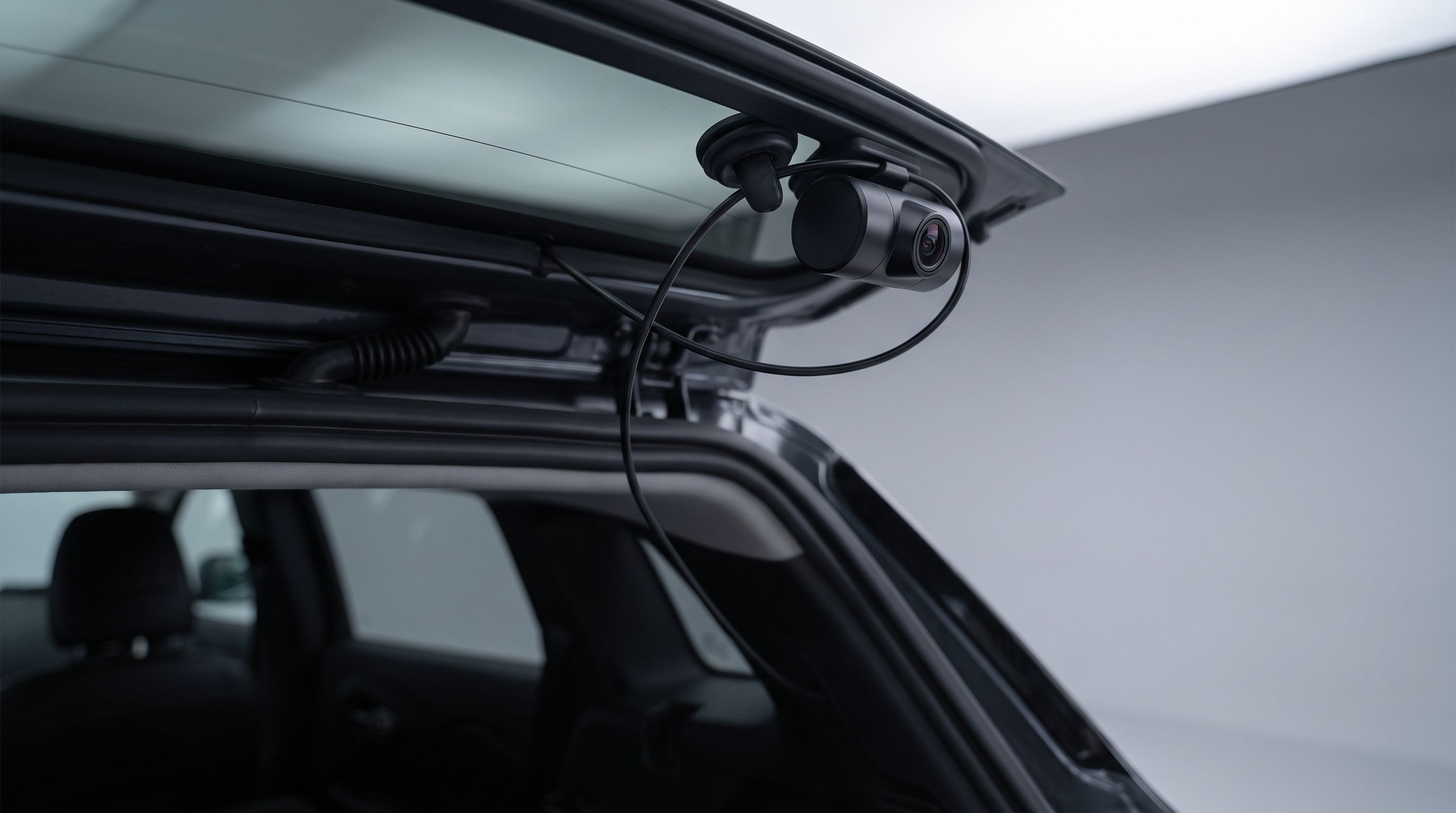
1. Tailgate glass mount (longest run). Camera sits on the inside of the liftgate glass, aimed straight back. Best image, no wiper blade sweep in frame on most vehicles, but the cable must cross the hinge boot. This is the run that fails.
2. Rear cabin glass / cargo area mount (medium run). On wagons and some SUVs you can mount to the fixed quarter glass or shoot through the rear window from a headliner mount. No hinge crossing at all. Image quality suffers slightly from shooting through tint and defroster lines, and cargo stacked high will block the view.
3. Interior-facing or bumper-mount (specialist). Exterior rear cameras exist for trucks and some SUVs with no usable glass, but they need weather-sealed connectors and a grommet pass-through at the body, not the hatch.
Most buyers want option 1. So plan for option 1's cable requirement, and treat anything shorter as a problem you'll have to solve with an extension.
The connector is as important as the length
Here's the detail that ruins installs: you have to pull the connector through the grommet, not just the wire. A chunky four-pin plug or a molded strain relief the size of a AA battery will not thread through a packed factory boot without a fight — and forcing it can nick the defroster or lock wiring beside it.
Look for:
- Slim coaxial / mini-coax rear connectors (Viofo's current platform uses a thin coaxial lead with a small barrel-style plug). These are the friendliest for grommet work.
- Pin-count honesty. Analog rear cameras with 3–4 conductors tend to have fatter plugs than a single coax carrying a digital signal.
- Detachable camera-end connector, so you can route the bare cable first and attach the camera last. Some kits wire the camera permanently to the lead — if yours does, the camera body itself becomes the thing you're pushing through the boot, which is usually impossible.
A trick worth knowing: pull a length of stiff fish tape or a coat hanger through the boot from the hatch side first, tape the connector to it with a long, smooth tapered wrap of electrical tape, lubricate with a little silicone spray (never petroleum grease on rubber), and pull steadily. Never yank.
Leave a service loop, or you'll replace the cable
The boot flexes several thousand times a year. Cable routed tight will work-harden at the exit point and fail intermittently — usually showing up as a rear channel that drops out in cold weather, which owners misdiagnose as a bad camera. Leave 4–6 inches of slack inside the boot in a gentle S, and secure the cable to existing harnesses with cloth tape rather than zip ties that create pressure points.
Comparison
| Model | Rear camera style | Rear cable (as supplied) | Connector | Best body style | Watch out for |
|---|---|---|---|---|---|
| Viofo A329S | Interior glass-mount, slim coax | Long run included; extension cables sold separately | Slim coaxial barrel | Mid/full-size SUV, wagon | Needs a Class-10+ high-endurance card; app setup is fiddly at first |
| Viofo A229 Pro | Interior glass-mount, slim coax | Long run included; extensions available | Slim coaxial barrel | 3-row SUV, crossover | Larger front body than Omni-style cams |
| REDTIGER F7NP | Interior glass-mount | Generous rear lead in box | Compact multi-pin | Crossover, hatchback | Companion app less polished than Viofo/Thinkware |
| 70mai Omni | Rotating front unit + compact rear cam | Shorter lead; suits small vehicles | Slim lead | Hatchback, compact SUV | Short-wheelbase bias — verify length before buying |
| Thinkware U3000 | Interior glass-mount, OEM-style harness | Sized for SUV installs | Keyed harness plug | Any; best with pro install | Highest cost and most install-intensive |
Cable lengths vary by package and region. Always confirm the supplied length against your own measurement before ordering.
The picks
Viofo A329S — best overall
Prices last checked October 1, 2026. Amazon prices change frequently, so treat these as a guide and check the live price before you buy.
Viofo A329S
Long coaxial rear cable, slim connector and a thin-wire hardwire option make liftgate runs straightforward.
The A329S is the current flagship of Viofo's lineup and widely cited as the best all-around dash cam of 2026, with 4K front capture that reviewers consistently call class-leading. For SUV owners the relevant part is the platform: Viofo's rear camera connects over a slim coaxial lead with a small barrel connector, and the company sells longer extension cables outright — so a Suburban-length run is a parts problem, not a dealbreaker. The hardwire kit is thin enough to tuck behind A-pillar trim without disturbing curtain airbags.
What it gives up: it's not cheap, the app takes patience, and you'll want a genuine high-endurance microSD card. Those are reasonable trades for the install flexibility.
Who it's for: owners of mid-size and full-size SUVs who want the best rear-channel footage and are willing to do a tidy, planned install.
Viofo A229 Pro — best 4K front and rear
Viofo A229 Pro
Proven 2-channel platform with generous rear cable length and a well-documented SUV install process.
Wirecutter named the A229 Pro the best overall dash cam after researching hundreds of models, and it remains the most documented two-channel install on the internet — which genuinely matters when you're staring at a D-pillar wondering where the clip is. Real-world install writeups and video walkthroughs exist for most popular SUVs, including the awkward hinge-boot pass on crossovers.
It shares the slim coaxial rear connector that makes grommet runs survivable, and the rear channel resolution is high enough that plates stay legible at a useful distance after dark.
What it gives up: the front unit is bigger than the compact rotating designs, so it's more visible behind the mirror on vehicles with small windshield shade bands. If stealth matters more than resolution, look elsewhere.
Who it's for: three-row SUV and wagon owners who want strong footage on both channels with the least install guesswork.
REDTIGER F7NP — best value
REDTIGER F7NP
Sony STARVIS 2 front sensor and a long rear cable bundled in the box — good for taller wagons and crossovers.
Consumer Reports' top-rated front-and-rear pick for 2026 pairs a Sony STARVIS 2 front sensor with a wide 170° front and 140° rear field of view — a serious spec sheet at a mainstream price. REDTIGER ships a long rear lead in the box, which is the single most useful thing a budget two-channel kit can do for crossover owners; the usual failure mode of cheap bundles is a sedan-length cable that strands you two feet short at the hatch.
What it gives up: the app and firmware experience isn't on Viofo or Thinkware's level, and the rear connector is a multi-pin type rather than slim coax, so budget extra patience at the grommet.
Who it's for: crossover and hatchback owners who want strong image quality without paying flagship money.
70mai Omni — best for tight interiors
The Omni's rotating body is the smallest practical footprint here, and its rear camera module is physically tiny — which matters on a Golf, Civic hatch, Mazda3 or Kona where the headliner-to-hatch distance is short and the trim gaps are narrow. Less cable to hide means fewer places for it to show.
What it gives up: the supplied rear lead is sized for smaller vehicles. On anything the size of a Highlander or Tahoe you'll run out of cable, and extension options are more limited than Viofo's. 70mai's T-series models also appear in 2026 roundups if you want a more conventional fixed-lens layout.
Who it's for: hatchback and compact-SUV owners prioritising a discreet install over maximum resolution.
Thinkware U3000 — premium pick
Thinkware U3000
Radar parking mode and a robust rear camera harness for owners who want a clean, hardwired install.
Thinkware builds its cameras around professional installation, and the U3000 shows it: radar-based parking surveillance, low-profile front body, and a rear harness designed to be run properly rather than tucked under a sun visor. If you're paying a shop to do the liftgate run — genuinely sensible on vehicles with power liftgates and dense hinge booting — this is the platform installers like working with.
What it gives up: price, and a setup process that rewards patience. Parking mode features also depend on a hardwire kit and a healthy battery.
Who it's for: owners who want OEM-grade tidiness and advanced parking protection, and who'd rather hand the hinge boot to someone with trim tools.
How to choose
Measure before you buy, not after
Run a length of string from behind your rearview mirror, up into the headliner, back along the trim line you intend to use, down the pillar, through the hatch boot and up to the rear glass. Add 20 percent. That's your real cable requirement. Doing this takes five minutes and saves a return.
Check the connector against your grommet
Pop the rubber boot loose at the body side (it usually unclips with firm, even pressure) and look at how much free space exists. A packed boot on a power-liftgate SUV may only accept a coax-sized lead. If the boot is truly full, the alternative is a cargo-area mount shooting through the fixed rear glass — less ideal, far less risk.
Decide on hardwire vs. 12V socket early
Parking mode requires constant power, which means a hardwire kit tapped into the fuse box with a voltage cutoff, or an OBD power lead. If you only want driving footage, a 12V plug is fine — but plan the cable route the same way, because a cable flapping loose in the cargo area will eventually get crushed by luggage.
Match resolution to purpose
Rear channels in 2026 range from 1080p to 4K. For reading plates at night behind you — the main reason people add a rear camera — a modern STARVIS 2-class sensor at 1440p or better is the meaningful threshold. Higher front resolution matters less than low-light performance on both ends.
Don't ignore heat
Rear cameras mounted on tailgate glass sit in direct sun with poor airflow. Supercapacitor-based cameras (rather than lithium batteries) tolerate this far better and are standard on the Viofo and Thinkware models here. If you park outside in a hot climate, treat supercapacitors as non-negotiable.
FAQ
How long a rear cable do I need for an SUV? Most mid-size SUVs need 20 feet or more once you include headliner routing, the pillar drop and the hinge service loop. Full-size and three-row vehicles can need 26 feet. Measure with string first.
Can I run the cable through the liftgate boot myself? Usually yes, with a fish tape, a smooth taped connector, silicone spray and patience. If the boot is tightly packed with power-liftgate wiring, consider a cargo-area or fixed-glass mount instead of forcing it.
Will the rear camera see through tinted glass or defroster lines? Light tint is usually fine; heavy aftermarket tint noticeably degrades night footage. Defroster lines are visible but rarely obstruct plate reading. Mounting on the glass rather than through the cabin gives the cleanest result.
Do I need an extension cable? Only if your measurement exceeds the supplied length. Viofo sells extensions for its coaxial rear leads; other brands vary. Never splice a rear camera cable yourself — the signal and shielding are easy to compromise.
Is a rear dash cam vehicle-specific? The camera isn't, but the install is. Mounting points, grommet access and trim removal differ by year, make and model. Check a model-specific install video or your service manual before buying trim tools.
Does a rear camera drain the battery in parking mode? Two channels draw more than one. Use a hardwire kit with a low-voltage cutoff, and on older or low-mileage vehicles consider a dedicated dash cam battery pack instead of tapping the starter battery.
Our picks
70mai Dash Cam Omni
Compact rotating body with a slim rear-camera lead that hides easily in trim on small hatchbacks.
Get the best car care deals in your inbox
Join the GarageProof newsletter for hand-picked car care deals and new buying guides. No spam, unsubscribe anytime.
Related reads
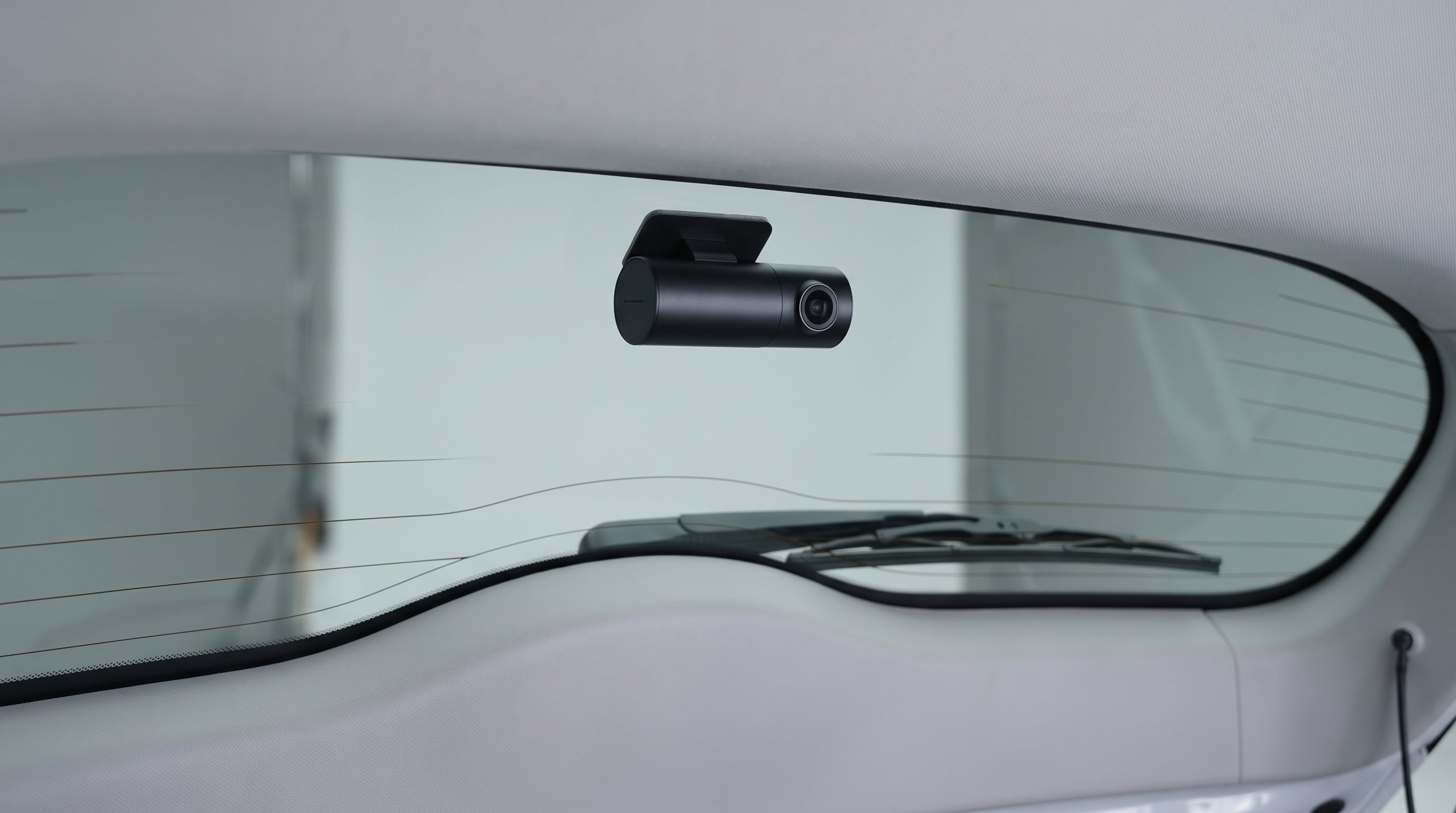
Rear Dash Cam for Hatchback Rear Wiper: 2026 Mount Map
Rear wipers and defroster grids ruin rear dash cam placement. Our 2026 guide maps mount spots and cable routing by body style, plus four picks that fit.
Cold Weather Dash Cam Picks for 2026 That Boot at −20°C
Supercapacitor dash cams that survive sub-zero mornings. We compare BlackVue, Viofo, Thinkware and Vantrue models on cold-rated specs and winter owner feedback.
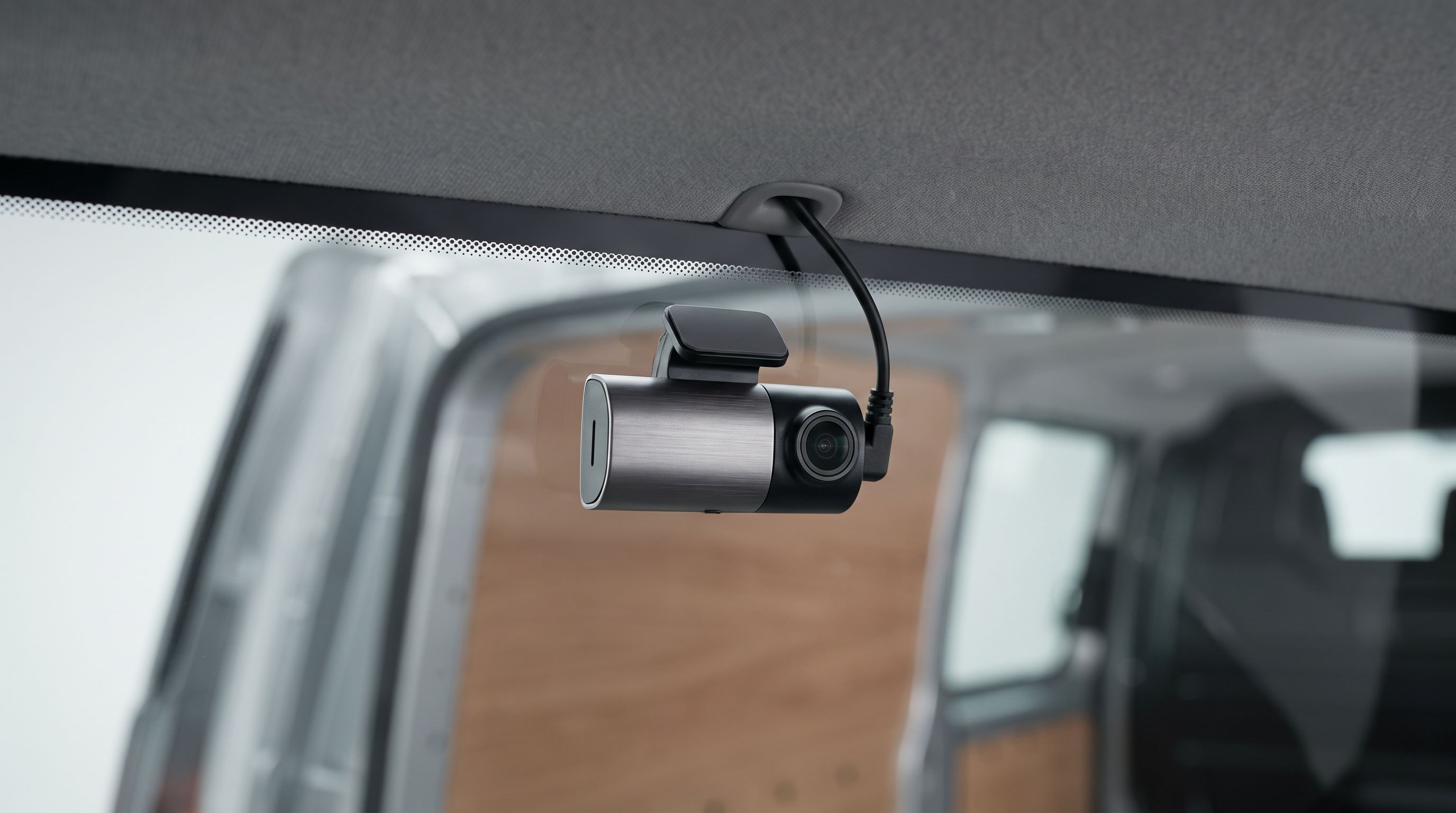
Dash Cam Rear Camera Cable Length in 2026: Sedan vs Van
How long a dash cam rear camera cable do you need in 2026? Compare bundled cable lengths, connector types and extension options for sedans, SUVs and vans.