PSI vs. GPM for Car Washing, Explained
Why chasing high PSI is the wrong move for washing cars, how GPM and cleaning units actually work, and which nozzles keep paint safe in 2026.
Reader-supported: we may earn a commission from links on this page, at no extra cost to you. It never affects our picks. Learn more.
The number on the box is the number that matters least
Walk down the pressure washer aisle and every carton screams one thing: PSI. 2000. 3000. 4200. It's printed in the largest font the box will allow, because pressure is the spec people understand and compare. GPM — gallons per minute — usually hides in smaller type, sometimes as a hyphenated afterthought.
For washing a car, that hierarchy is exactly backwards. Pressure is what lets water break a bond. Flow is what carries the broken-loose dirt off the panel and down the driveway. On a car, most of the bond has already been broken by soap and dwell time, so what you actually need is volume moving across the paint — not a high-velocity jet concentrating force into a coin-sized spot.
The uncomfortable part: a high-PSI machine doesn't just fail to help. Paired with the wrong nozzle and an impatient hand, it's the fastest way to lift a chip edge, blast trim, force water past a worn window seal, or leave a visible stripe in a soft clearcoat.
What's actually going on with PSI, GPM, and "cleaning units"
The industry's own shorthand for combined performance is cleaning units (CU), calculated as PSI × GPM. It's a blunt metric, but it's useful precisely because it refuses to let either number dominate.
Buying guides in this space make the comparison plainly: a 2,000 PSI / 1.4 GPM machine works out to 2,800 CU, while a 3,000 PSI / 1.0 GPM machine works out to 3,000 CU — yet the lower-pressure, higher-flow unit will typically clean a broad flat surface faster, because it rinses more area per second. On a car, which is essentially a collection of broad flat surfaces, that difference compounds.
The commonly cited safe window for automotive work sits around 1,200–2,200 PSI, with recommendations for detailing generally landing in the 1,000–2,000 PSI band and flow somewhere around 1.2–2.5 GPM. Testing-based roundups of electric washers for car washing point to the same territory — a roughly 1,900 PSI, 2.0 GPM class machine is described as the practical shape of the job, not a compromise.
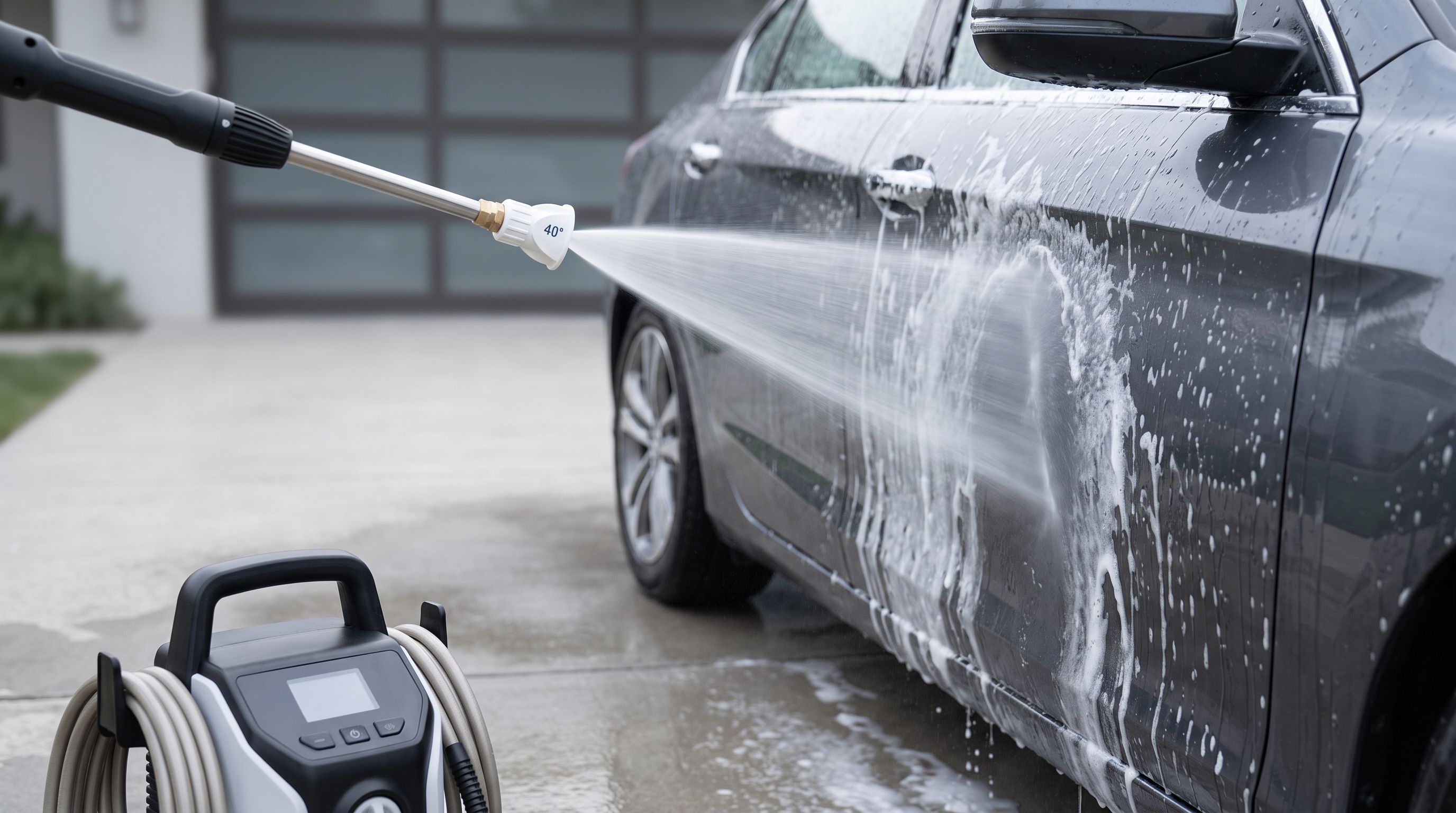
And here's the nuance that gets lost: PSI at the trigger is not PSI at the paint. The nozzle decides. As one long-running forum thread puts it, you can wash a car safely with 3,000 PSI through a 40-degree nozzle, or do damage with 1,600 PSI through a 15-degree tip. Spray angle spreads the same energy over a wider footprint, and distance drops impact force further still. The machine sets the ceiling; the tip and your standoff distance set the reality.
| Spec / choice | What it actually controls | Car-washing sweet spot |
|---|---|---|
| PSI | Force concentrated at impact point | ~1,200–2,200 PSI at the machine |
| GPM | Volume of water carrying dirt away | ~1.2–2.5 GPM |
| Cleaning units (PSI × GPM) | Rough overall throughput | Favor the higher-GPM path to the same CU |
| Nozzle angle | Effective pressure on the panel | 40° white for rinsing; 25° green for wheels/wells |
| Soap nozzle | Foam/pre-soak delivery | 65° black, lowest pressure tip in the set |
| Standoff distance | Impact force drop-off | Keep 12+ inches; more near trim and chips |
The real players and what's shipping
The electric side of the market is where car-focused buyers are actually shopping in 2026, and the lineups reflect the flow-versus-pressure argument better than the marketing does.
Ryobi has leaned into flow explicitly. Its 1800 PSI class electric units have been the volume seller for years, but the more interesting move is the push toward "high flow" models — the comparisons circulating in detailing content now are Ryobi's 1.8 GPM-class machine versus the older 1800, with the flow figure, not the pressure figure, being the headline. The brushless Ryobi RY142300, rated 2300 PSI at 1.2 GPM, sits right in the recommended pressure band with quick-connect nozzles included, which is what makes it practical rather than its peak number.
Sun Joe remains the budget reference point, and the SPX3000 is instructive: at 2030 PSI and 1.76 GPM it's not a pressure monster, but that flow rating is higher than plenty of pricier machines. Reviews consistently place it as adequate-to-good for vehicles precisely because the water volume does the work.
 Budget benchmark · Sun Joe SPX3000 Electric Pressure Washer — Check price on Amazon →
Then there's the category that arguably matters more than the machine. A foam cannon — the MATCC unit with a 1/4-inch quick connect being one of the widely available options — runs at low pressure by design and exists to put soap on the car and let chemistry, not force, release the dirt. Touchless-wash content built around Ryobi machines plus dedicated touchless chemistry is popular right now for exactly this reason: the workflow is pre-soak, dwell, rinse, and the pressure washer's job is mostly the rinse.
Finally, nozzles. A complete quick-connect set such as the Tool Daily tips kit costs almost nothing and is the single highest-leverage safety item in the whole setup. Many machines ship with an adjustable wand or a partial tip set that omits the 65-degree black soap nozzle, which is the one you want for applying product.
What it means if you're shopping today
Reorder your filters. Instead of sorting by PSI descending, do this:
- Set a pressure ceiling, not a floor. Anything from roughly 1,400 to 2,300 PSI is plenty for paint. Above that, you're buying capability you'll have to deliberately throttle with nozzle choice every single wash.
- Compare GPM between finalists. Between two machines at similar price and similar CU, the higher-flow one will rinse faster and drain your patience less.
- Confirm the nozzle set. Check that a 40-degree and a 65-degree soap tip are in the box, or budget for a tip set. Skip the 0-degree red tip entirely for vehicle work.
- Budget for the foam cannon as part of the machine, not an upsell. The pre-soak step is what makes low pressure sufficient.
- Check the inlet and hose reality. Flow ratings assume adequate water supply; a kinked garden hose or a low-pressure spigot will cap GPM regardless of what the pump can do.
Gas machines still make sense for mobile detailers covering many vehicles a day — the recurring question in mobile detailing forums is about sustained flow for back-to-back work, not about hitting bigger pressure numbers. For a driveway and one or two cars, electric is the right shape of tool.
What to watch next
Two threads worth tracking. First, flow is becoming a marketing number. Ryobi putting "high flow" on the front of the box is a small but real sign that manufacturers have noticed buyers are catching on. Expect more GPM-forward positioning, and expect some of it to be generous rounding — cross-check the spec sheet against the rated inlet requirements.
Second, touchless chemistry is eating the pressure argument from the other side. Dedicated touchless pre-wash products are designed to do the dirt-releasing work so that the rinse can be gentle. As those formulas get better and more widely available, the case for high-PSI home machines gets weaker, not stronger. The direction of travel in car washing is toward less mechanical force, not more.
FAQ
Is 3,000 PSI too much for a car? Not inherently — with a 40-degree nozzle and reasonable standoff distance it can be used safely. But it gives you far less margin for error than a 1,800 PSI machine, and the extra capability does nothing useful on paint.
What nozzle should I use on paint? The 40-degree white tip for rinsing, and the 65-degree black soap tip for applying product. The 25-degree green is reasonable for wheels, tires, and wheel wells. Never use the 0-degree red tip on a vehicle.
Does higher GPM mean a faster wash? Generally yes, for broad surfaces. More water per second means more area rinsed per pass, which is why a lower-PSI/higher-GPM machine can out-clean a higher-PSI/lower-GPM one at similar cleaning units.
Do I still need a foam cannon if my washer has a soap tank? Built-in detergent siphons typically produce a thin, runny solution. A dedicated foam cannon creates thicker foam that clings and dwells, which is the whole point of a pre-soak.
Will a pressure washer strip wax or a ceramic coating? Properly cured coatings are built to tolerate normal washing, but concentrated high pressure at close range and narrow angles is the scenario most likely to cause trouble. Wide angle, sane distance, and no dwelling on one spot is the answer.
Our picks
Prices last checked September 30, 2026. Amazon prices change frequently, so treat these as a guide and check the live price before you buy.
Ryobi RY142300 2300 PSI 1.2 GPM Brushless Electric Pressure Washer
Brushless electric unit in the sweet-spot range for car work, with a standard quick-connect nozzle set.
Sun Joe SPX3000 Electric Pressure Washer
The long-running 2030 PSI / 1.76 GPM electric that shows why flow matters more than peak pressure.
MATCC Foam Cannon with 1/4" Quick Connect
Turns any quick-connect washer into a pre-soak tool so you rinse dirt off instead of grinding it in.

Tool Daily Pressure Washer Nozzle Tips Set 1/4" Quick Connect
A proper 40-degree white and 65-degree black soap tip is the difference between rinsing and etching.
Get the best car care deals in your inbox
Join the GarageProof newsletter for hand-picked car care deals and new buying guides. No spam, unsubscribe anytime.
Related reads
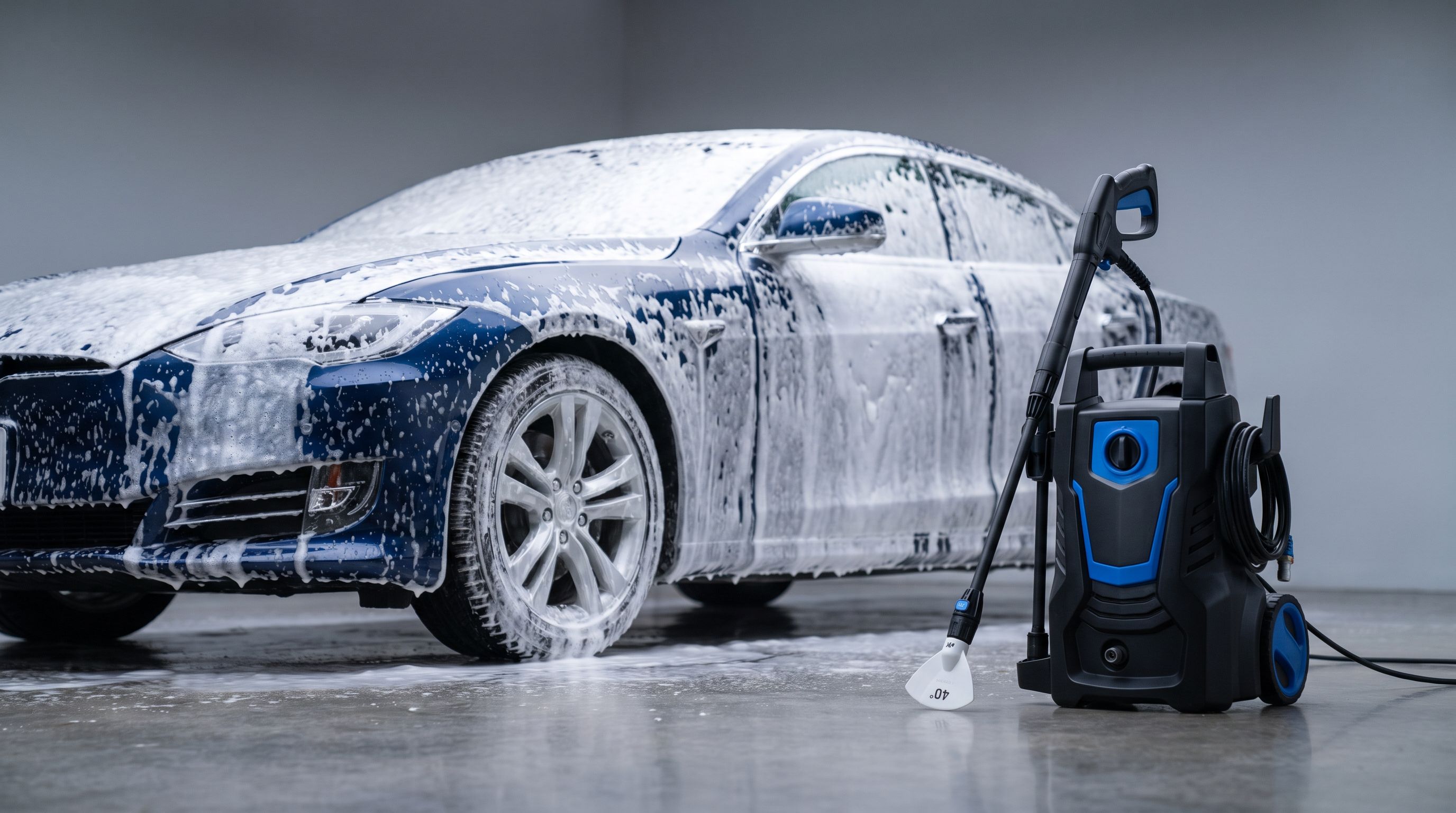
PSI vs. GPM, Explained: Why More Pressure Fails Cars
Pressure washer PSI is the number marketers sell you; GPM is the number that rinses your car. Here's what the spec sheet hides — and which nozzles are safe.
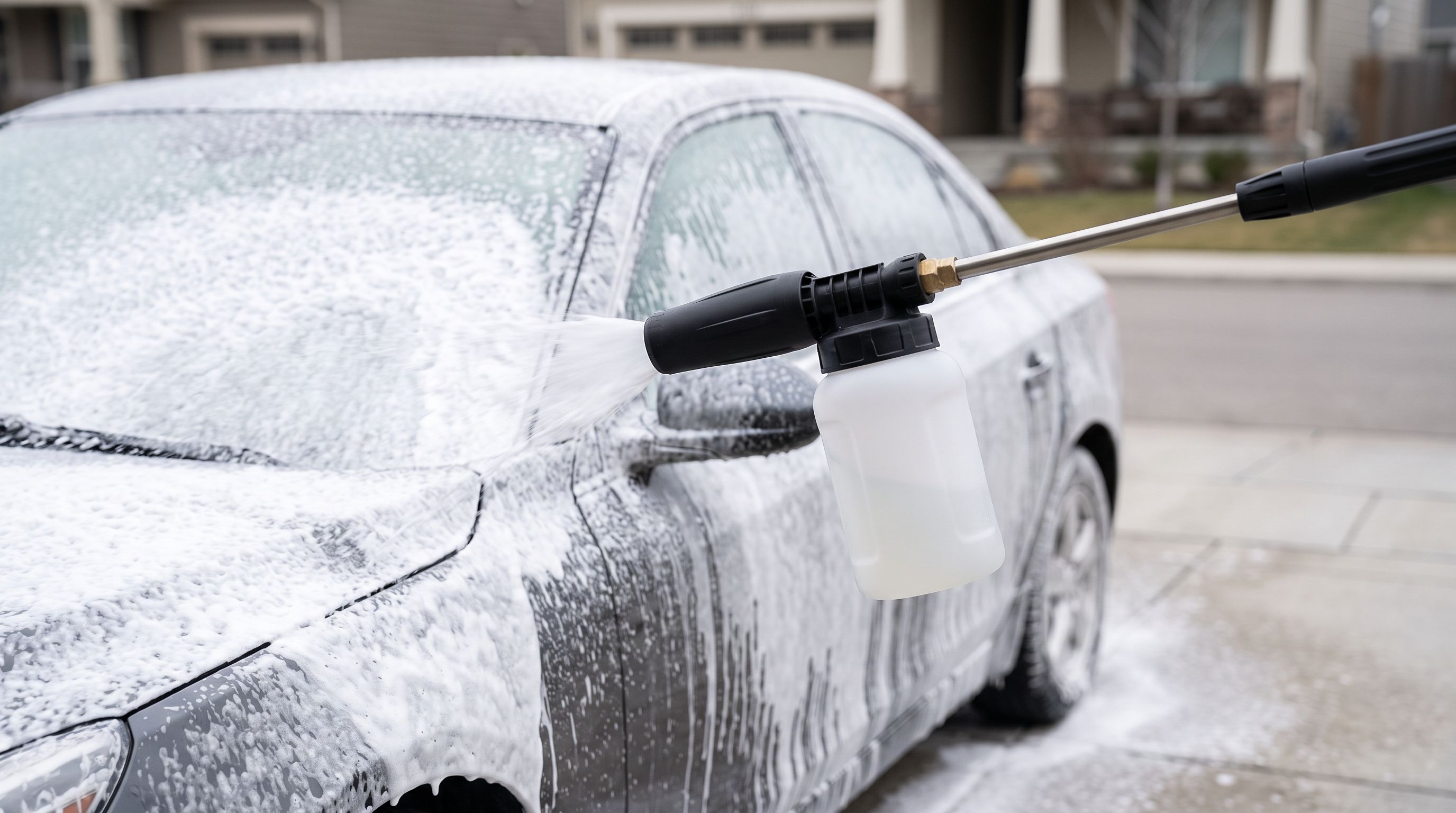
Foam Cannon Buying Guide 2026: Match Orifice to Your Washer
The best foam cannon for your pressure washer depends on orifice size, GPM and quick-connect fit. Here's how to match them — plus four picks for 2026.
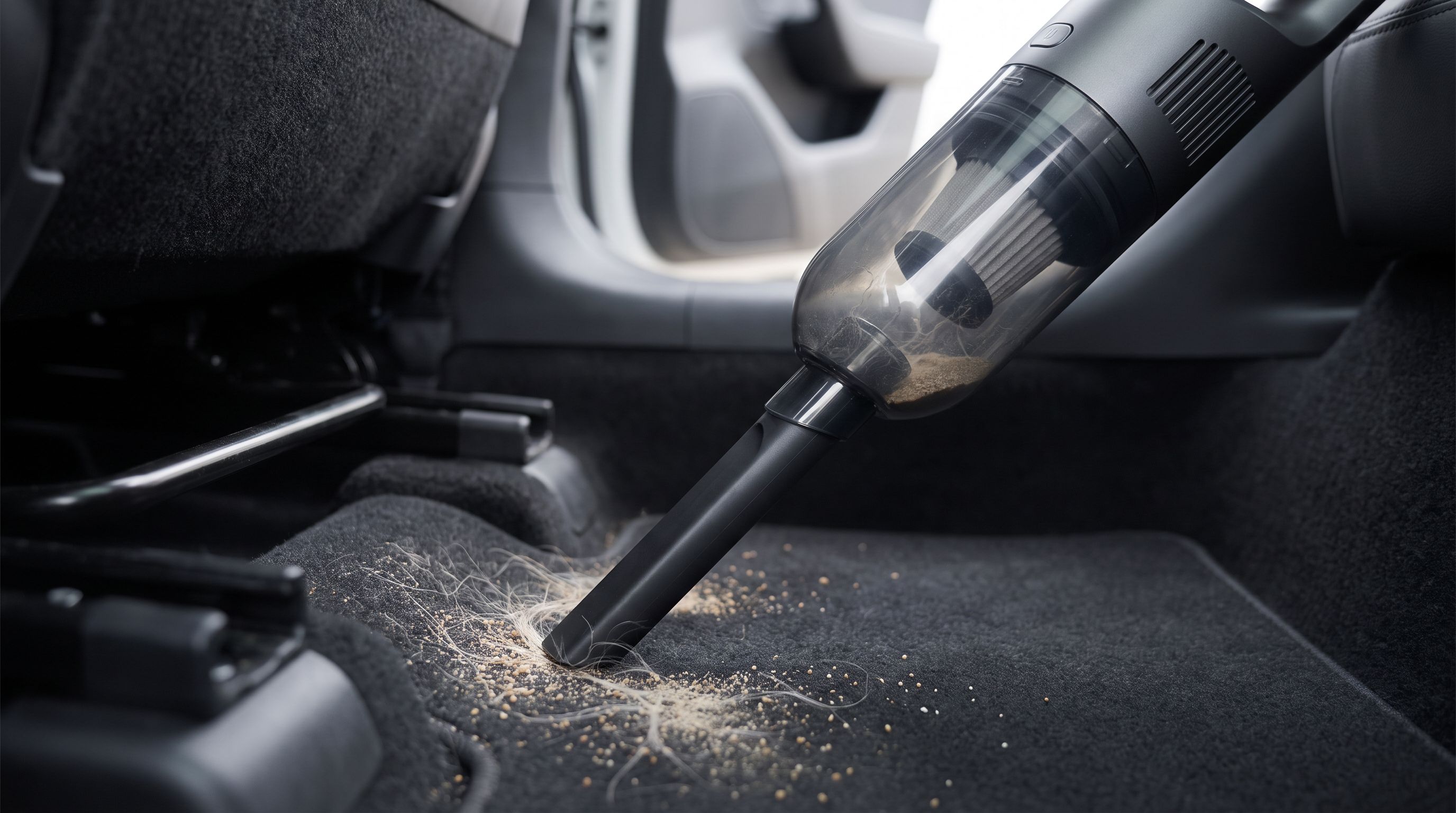
Car Vacuum Suction Ratings, Decoded for 2026
Air watts, kPa and "20,000Pa" claims explained — why the spec on the box rarely predicts how a car vacuum handles pet hair, sand and floor mats.