Pressure Washers for Car Washing in 2026: 4 Safe Picks
The best pressure washer for car washing in 2026 isn't the most powerful one. We compare PSI/GPM sweet spots, hose length, motor type and foam cannon fit.
Reader-supported: we may earn a commission from links on this page, at no extra cost to you. It never affects our picks. Learn more.
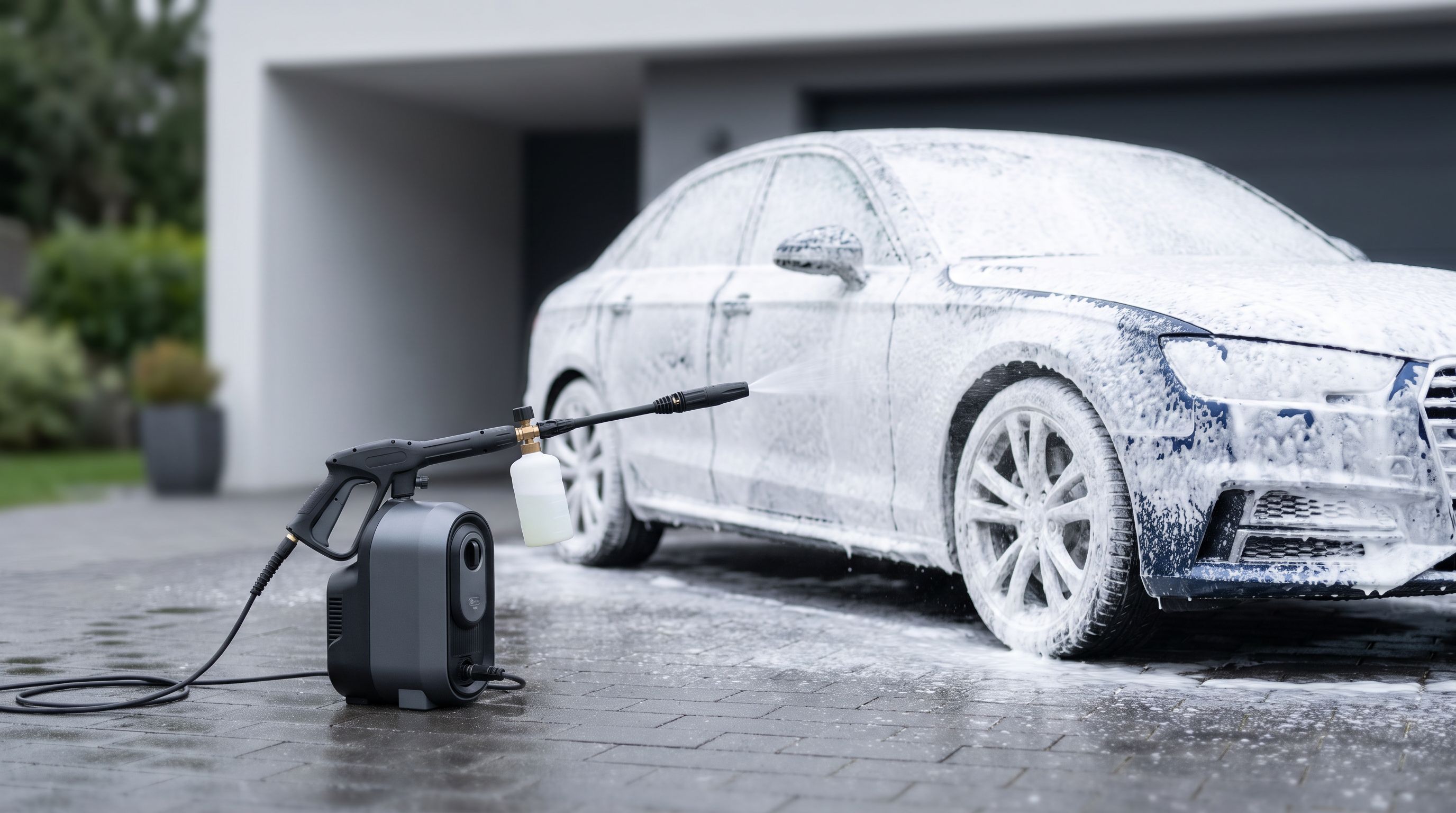
Buying a pressure washer for car washing is one of the few times in the tool world where the biggest number on the box is the wrong number to chase. A 4200 PSI gas unit will absolutely clean your paint — it will also lift a stone chip into a bare-metal crater, blast water past worn door seals and peel the edge of a vinyl wrap if you get lazy with the wand.
What you actually want is a machine that produces enough flow to carry dirt off the panel, enough pressure to strip a foam blanket, a hose long enough to walk around the car without dragging the unit over, and a quick-connect fitting your foam cannon will screw onto without an adapter hunt. We compared current electric models on specs, independent test results and owner feedback to pick four that hit that target — plus the cannon most people end up buying anyway.
The short version
- Best overall: Craftsman CMEPW2100 Electric Pressure Washer
- Budget pick: Sun Joe SPX3000 Electric Pressure Washer
- Best for storage-limited garages: Westinghouse WPX3500e Electric Pressure Washer
- Best gentle/low-pressure option: Ryobi RY1419MTVNM Electric Pressure Washer
- Best foam cannon add-on: MATCC Foam Cannon
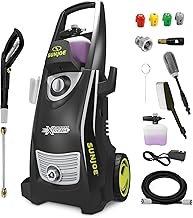 Budget pick · Sun Joe SPX3000 Electric Pressure Washer — Check price on Amazon →
 Best overall · Craftsman CMEPW2100 Electric Pressure Washer — Check price on Amazon →
How to choose
PSI and GPM: the car-washing sweet spot
Pressure (PSI) breaks the bond between dirt and paint. Flow (GPM) carries it away. Cleaning power is roughly a function of both, which is why a low-flow 2500 PSI machine can feel weaker on a dirty car than a 1700 PSI machine moving more water.
For cars, the widely accepted safe window is roughly 1200–2000 PSI at the nozzle with 1.2–1.8 GPM. Under about 1.1 GPM, most foam cannons struggle to produce thick, clinging foam — they'll sputter out a watery mist instead. Above about 2200 PSI, the margin for error around badges, trim clips, emblems, plastic wheel arch liners and any existing paint chips gets thin fast.
Two important caveats:
- Manufacturer PSI ratings are often peak/unloader figures, not sustained working pressure. Real-world output is usually lower, which is part of why 2000–2300 PSI-rated consumer electrics are still fine on paint.
- Nozzle choice matters more than the rating. A 0° red tip on a 1700 PSI machine is far more dangerous to paint than a 40° white tip on a 2300 PSI machine. For cars: use the 40° white tip for rinsing, the 25° green tip only for wheel wells and lower rockers, and keep the red tip in the box permanently.
Induction vs universal motors
This is the single biggest durability divider in electric pressure washers.
Universal motors are light, loud, high-RPM and cheap to build. Almost every sub-$200 electric washer — including the Sun Joe SPX3000 — uses one. They're perfectly adequate for a weekend car wash, but they're rated for short duty cycles and their brushes wear. Expect a few hundred hours, not a few thousand.
Induction motors run slower, cooler and dramatically quieter, and they're what you find in prosumer and commercial machines (Kränzle being the enthusiast benchmark). They last far longer under repeated use and tolerate longer sessions without heat-soaking. The trade-off: heavier, bulkier and considerably more expensive.
The honest guidance: if you wash one or two cars a couple of times a month, a well-reviewed universal-motor machine is the rational buy. If you're washing weekly, doing friends' cars, or running a side detailing operation, budget for induction — the cost difference pays back in not replacing a machine every two years.
Also check for Total Stop System (TSS), which cuts the motor when you release the trigger. Nearly all modern electrics have it. It saves the pump from cavitating and dead-heading while you're scrubbing wheels.
Hose length, hose quality and reach
This is the spec buyers ignore and then complain about within a week. A 20-foot hose means the machine follows you around the car, which means you're dragging a plastic unit across your driveway and occasionally tipping it over mid-rinse.
Aim for 25 feet minimum; 30–50 feet is better. With a 25-foot hose you can usually park the unit at one corner of the car and reach all four sides. Add a 25-foot extension if your machine's hose is short — just confirm the fitting type (M22 is the most common, but check whether it's 14mm or 15mm internal, since they don't interchange cleanly).
Second consideration: hose material. The stiff PVC hose bundled with budget machines coils with a memory and kinks under its own attitude, especially in cold weather. A rubber or polyurethane replacement hose is one of the cheapest upgrades you can make, and it stops the hose from scratching your rocker panels as you drag it.
Also check the inlet hose length — the machine needs to reach your spigot too.
Foam cannon compatibility
A foam cannon is not optional for touchless-ish car washing; it's the whole point of owning a pressure washer for detailing. Compatibility comes down to three things:
- Fitting type. Most aftermarket cannons (including the MATCC Foam Cannon) ship with a 1/4-inch quick-connect male plug, which fits the majority of electric washers. Some machines — Sun Joe and certain Ryobi and Karcher models — use proprietary bayonet or click-lock wand connections and need a brand-specific adapter. Buy the adapter at the same time as the cannon.
- Minimum flow. Cannons generally want 1.2 GPM or more to make thick foam. Below that, you'll get soapy water.
- Orifice size. Cannons come with different orifice inserts (commonly 1.1mm for gas, 1.25mm for electric). If your foam is thin on an electric machine, a larger orifice often fixes it.
Foam quality also depends heavily on your soap and dilution — a dedicated snow foam concentrate at the right ratio will outperform dish soap and a bigger machine every time.
Comparison at a glance
| Model | Rated pressure | Motor type | Hose length | Best for | Main trade-off |
|---|---|---|---|---|---|
| Craftsman CMEPW2100 | ~2100 PSI class | Universal | Long (25 ft class) | All-round car washing | Not a commercial-duty machine |
| Sun Joe SPX3000 | ~2030 PSI class | Universal | ~20 ft | First pressure washer, tight budget | Short, kink-prone hose; adapter needed for cannons |
| Westinghouse WPX3500e | Higher-output electric | Universal | Onboard storage | Small garages, quick rinsing | More pressure than paint needs — nozzle discipline required |
| Ryobi RY1419MTVNM | ~1800 PSI class | Universal | Compact setup | Delicate trim, wraps, nervous first-timers | Slower on baked-on road film |
| MATCC Foam Cannon | N/A (accessory) | N/A | N/A | Adding thick foam to any electric | Needs correct quick-connect/adapter |
Specifications vary by production year and region — confirm current figures on the manufacturer's listing before you buy.
Craftsman CMEPW2100 — best overall
Craftsman CMEPW2100 Electric Pressure Washer
Sensible 2100 PSI output, easy foam cannon swap and a long hose make it the safest all-round car washer.
The CMEPW2100 landed as Best Overall in at least one dedicated car-washing test roundup, and the reasoning holds up on paper: a pressure rating right in the safe-for-paint band, enough flow to support a foam cannon, and a hose long enough to work around a sedan without repositioning the machine every panel. The quick-connect nozzle system makes swapping between a 40° rinse tip and a cannon fast, which matters more than it sounds when you're mid-wash with wet hands.
Who it suits: the home detailer who washes a car or two every couple of weeks and wants something that works out of the box. What it gives up: it's a universal-motor consumer machine, not a Kränzle. Treat it as a weekend tool, drain it before freezing weather, and it'll last.
Sun Joe SPX3000 — budget pick
Sun Joe SPX3000 Electric Pressure Washer
Dual detergent tanks, five quick-connect tips and a huge owner base make it the easiest cheap entry point.
The SPX3000 has been the default cheap electric pressure washer for years, and that ubiquity is genuinely useful — parts, adapters and troubleshooting advice are everywhere. It includes five quick-change nozzles and, unusually at its price, two onboard detergent tanks, so you can keep wheel cleaner in one and soap in the other.
Who it suits: first-time buyers, apartment dwellers with a shared driveway, anyone who isn't sure they'll use it enough to justify more. What it gives up: the stock hose is short and stiff, the plastic construction feels its price, and the wand uses a proprietary connection — you'll want the Sun Joe-to-1/4-inch quick-connect adapter before your foam cannon will fit. Budget for the adapter and a longer rubber hose and it becomes a genuinely good setup.
Westinghouse WPX3500e — best for storage-limited garages
Westinghouse WPX3500e Electric Pressure Washer
Compact upright body with onboard hose and tip storage, plus enough flow for quick rinsing.
Reviewers have singled out the WPX3500e specifically for people short on space: it's an upright design with onboard storage for the hose, wand and nozzles, so it stands in a corner rather than sprawling across your floor. Output is on the higher side for an electric, which means fast rinsing and no struggle producing thick foam.
Who it suits: anyone whose "garage" is really a corner of a garage, plus people who also want to clean patios and siding without buying a second machine. What it gives up: that extra pressure means you need to be disciplined about nozzle selection and standing distance around paint. Use the 40° tip, keep roughly a foot of standoff, and never dwell on a chip or a wrap seam.
Ryobi RY1419MTVNM — best gentle/low-pressure option

Ryobi RY1419MTVNM Electric Pressure Washer
Lower-pressure output that's kind to trim, badges and wraps while still stripping a foam blanket.
Ryobi's lower-output electric sits near the bottom of the useful range, and that's deliberate here. If your car has aftermarket vinyl, aged plastic trim, questionable respray work, or you simply don't trust yourself with a wand yet, a ~1800 PSI-class machine gives you a wider safety margin while still comfortably rinsing a foam blanket off.
Who it suits: nervous first-timers, owners of wrapped or PPF-protected cars, and anyone whose main job is maintenance washes rather than digging out a winter's worth of salt. What it gives up: it's slower on heavy road film and caked wheel arches, and marginal-flow machines can produce thinner foam — check the cannon's orifice size and step up if needed. Ryobi's wand connection may also need an adapter for third-party cannons.
MATCC Foam Cannon — best foam cannon add-on
MATCC Foam Cannon
Cheap brass-inlet cannon with adjustable spray and an included 1/4-inch quick-connect for most electrics.
Whichever machine you choose, the cannon is what turns it into a car-washing tool. The MATCC cannon is the popular budget choice for good reason: brass inlet, adjustable fan and foam-ratio controls, a reasonably sized bottle and an included 1/4-inch quick-connect plug that fits most electric washers directly.
Who it suits: essentially everyone buying their first pressure washer setup. What it gives up: build quality is a step below premium cannons, and if your machine uses a proprietary bayonet connection (Sun Joe, some Ryobi and Karcher units), you'll need a brand adapter. Pair it with a proper snow foam concentrate rather than car shampoo — foam thickness comes far more from chemistry than from the cannon.
Technique matters more than the machine
A few rules that protect paint regardless of what you bought:
- Pre-rinse from the top down, loosening grit before any contact.
- Foam, dwell 3–5 minutes, don't let it dry, then rinse.
- Keep 12+ inches of standoff from paint; more near badges, trim edges, chips and wrap seams.
- Never point a narrow tip at door seals, wheel bearings, radiator fins or engine bay electronics.
- Follow with a two-bucket contact wash — pressure washing alone is a pre-wash, not a full wash.
- Drain the pump and store indoors below freezing. Ice splits pump heads, and that's rarely covered under warranty.
FAQ
Is 2000 PSI too much for a car?
No, provided you use a wide nozzle and keep your distance. 1200–2000 PSI at a 40° spray angle is the standard safe range. Damage almost always comes from narrow nozzles (0°/15°), holding the wand inches from the surface, or hitting an existing chip or lifted clear coat.
Can I use any foam cannon with any pressure washer?
Mechanically, no. Check the connection type first — most aftermarket cannons use a 1/4-inch quick-connect, but Sun Joe, Karcher and some Ryobi machines use proprietary fittings and need an adapter. Also check your machine makes at least around 1.2 GPM, or the foam will be thin.
Induction or universal motor — does it really matter for home use?
For one or two washes a month, a universal motor is fine and saves a lot of money. If you wash weekly or run long sessions, an induction motor runs quieter, cooler and lasts substantially longer. It's a duty-cycle decision, not a cleaning-power one.
How long a hose do I need?
25 feet is the practical minimum for walking around a car without moving the unit; 30–50 feet is more comfortable, especially for trucks and SUVs. If you're extending, match the fitting standard (usually M22) and check whether yours is 14mm or 15mm.
Will a pressure washer strip wax or ceramic coating?
A properly applied ceramic coating won't be removed by normal car-washing pressure. Traditional carnauba wax will degrade faster under repeated washing, especially with aggressive alkaline snow foams — use a pH-neutral foam if you're maintaining a wax layer.
Electric or gas for car washing?
Electric, nearly always. Gas machines produce more pressure than paint wants, are far louder, can't be used in an enclosed garage, and require fuel and oil maintenance. Gas makes sense for driveways and decks — not for cars.
Get the best car care deals in your inbox
Join the GarageProof newsletter for hand-picked car care deals and new buying guides. No spam, unsubscribe anytime.
Related reads
Foam Cannon Buying Guide 2026: Match Orifice to Your Washer
The best foam cannon for your pressure washer depends on orifice size, GPM and quick-connect fit. Here's how to match them — plus four picks for 2026.
Battery Powered Pressure Washer 2026: PSI That Still Cleans
Cordless vs corded for car washing in 2026: real PSI and GPM at the nozzle, runtime per battery, tank-draw limits, and five picks that actually rinse a car clean.
Microfiber GSM Guide 2026: Match the Weave to the Job
GSM, weave and edge construction explained — plus the best microfiber towels for cars in 2026, matched to drying, buffing, glass and interior work.