Portable Tire Inflators in 2026: Cordless vs 12V Socket
Cordless lithium or 12V socket? We compare the best portable tire inflator options for 2026 on duty cycle, real fill times for truck and car tires, and gauge accuracy.
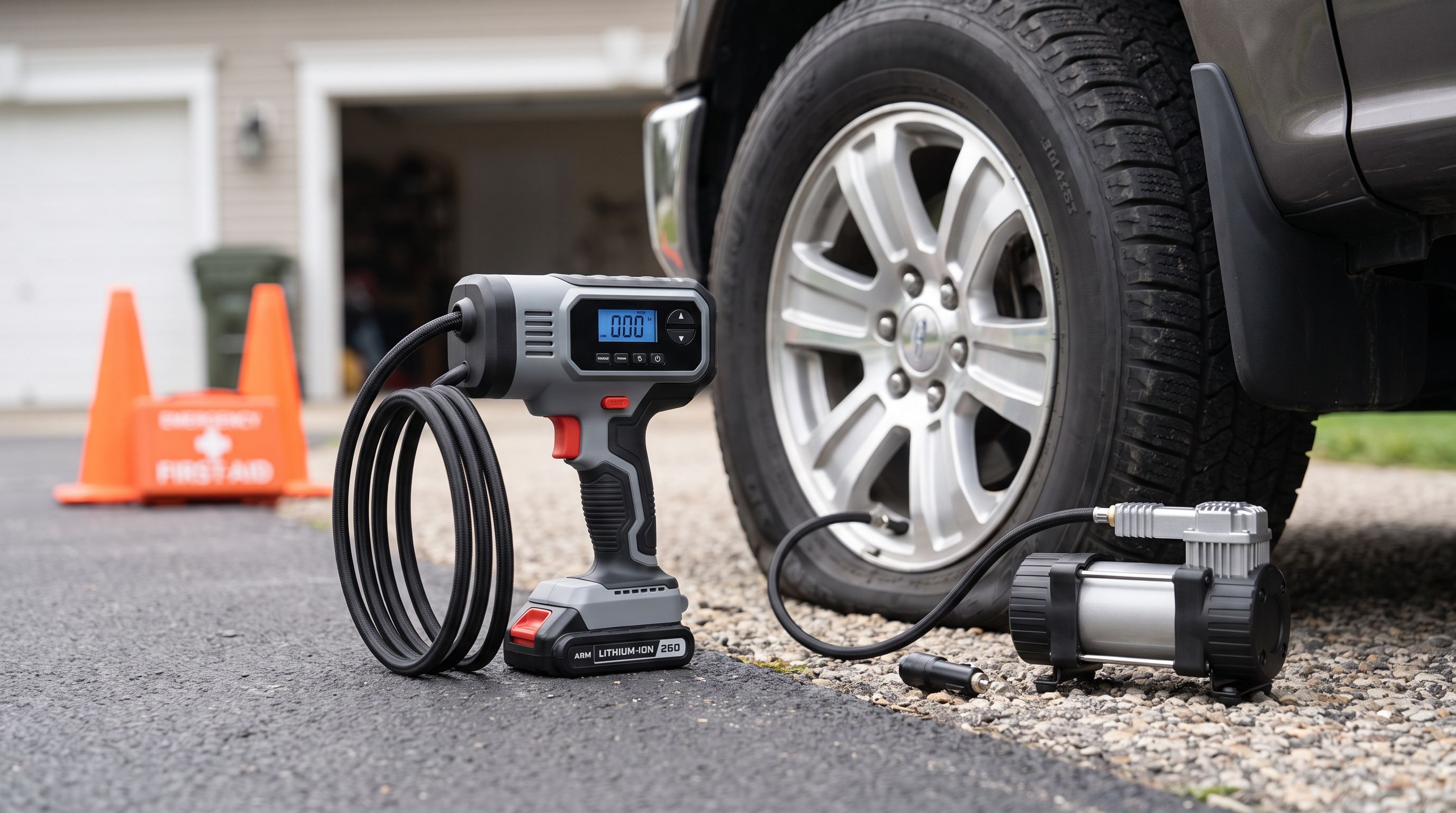
Reader-supported: we may earn a commission from links on this page, at no extra cost to you. It never affects our picks. Learn more.
Tire pressure is the one maintenance item that changes every week, costs nothing to fix, and quietly wrecks fuel economy, handling, and tread life when you ignore it. A portable inflator is the cheapest insurance in your trunk — but the category has split into two very different tools, and buying the wrong one is the reason so many inflators end up dead in a garage drawer.
On one side: cordless lithium inflators, compact and convenient, usually fine for car tires and hopeless on a hot, half-flat 285-section truck tire. On the other: 12V socket and battery-clamp compressors, uglier and tethered, but with the airflow and cooling to actually finish the job.
We compared the leading 2026 models against manufacturer specs, independent test results from outlets like Car and Driver and Road & Track, and a large volume of verified owner feedback — particularly on the two things that spec sheets hide: duty cycle and gauge accuracy.
The short version
- Best overall for trucks and SUVs: Viair 88P Portable Compressor
- Best cordless for tool owners: DeWalt DCC020IB 20V Max Inflator
- Best value cordless: Ryobi P747 One+ 18V Inflator
- Best budget 12V glovebox pick: AstroAI Digital Tire Inflator 100 PSI
- Best compact cordless: Fanttik X8 Apex Cordless Tire Inflator
 Best compact cordless · Fanttik X8 Apex Cordless Tire Inflator — Check price on Amazon →
 Best cordless for tool owners · DeWalt DCC020IB 20V Max Inflator — Check price on Amazon →
 Best overall for trucks and SUVs · Viair 88P Portable Compressor — Check price on Amazon →
Cordless vs 12V: the honest tradeoff
The marketing for cordless inflators leans hard on convenience, and that part is true — no cable routing, no reaching for the lighter socket, works on a bicycle in the driveway. What the marketing skips is thermal management.
A cordless inflator packs a small motor, a small pump head, and a lithium pack into something you can hold in one hand. That means less mass to absorb heat and less surface area to shed it. Owners consistently report that compact lithium units get very hot after two or three car tires and noticeably slow down on the third or fourth. Many have thermal cutouts that pause the unit until it cools. On a 20-something-inch car tire needing 5–8 PSI, that's a non-issue. On four 35-inch tires being aired back up from 15 PSI after a trail run, it's a deal-breaker.
A 12V compressor draws power from the vehicle, which means the battery does the heavy lifting and the pump can be physically larger. The serious ones — the Viair 88P being the archetype — clamp directly to the battery terminals instead of using the cigarette-lighter socket, which is what unlocks the current draw needed for real airflow. Most accessory sockets are fused at 10–15A, and that fuse is the hard ceiling on how fast any socket-powered inflator can move air.
Here's the practical summary:
| Factor | Cordless lithium | 12V socket inflator | 12V battery-clamp compressor |
|---|---|---|---|
| Best for | Top-offs, bikes, sports gear, 1–2 tires | Car and crossover tires, glovebox duty | Truck, SUV, off-road, trailer tires |
| Typical duty cycle | Short; thermal pauses common after 2–3 tires | Moderate; limited by fuse, not heat | Longest; designed for continuous runs |
| Airflow ceiling | Limited by pack and motor size | Limited by ~10–15A socket fuse | Limited by compressor design, not wiring |
| Setup time | Seconds | Under a minute | 2–3 minutes (hood open, clamps on) |
| Works with engine off | Yes | Yes, but drains battery | Yes, best with engine running |
| Bulk | Smallest | Small | Largest, needs a case |
| Fails you when | Multiple large tires, cold weather, dead pack | High-pressure or high-volume fills | Nothing — but you have to carry it |
Real fill times: what to actually expect
Nobody's published fill time applies to your tire, because time depends on tire volume, starting pressure, target pressure, and ambient temperature. But the pattern across published testing and owner reports is consistent enough to plan around:
- Compact cordless on a 225/60R17 car tire, 28 → 35 PSI: roughly a minute, sometimes less. Genuinely quick for top-offs.
- Compact cordless on the same tire from 0 PSI: several minutes, and often enough to trigger a heat pause partway through.
- Socket-powered 12V on a light-truck tire from 20 → 35 PSI: expect multiple minutes per corner, and plan on letting it rest.
- Battery-clamp compressor like the Viair 88P on a 33-inch tire, 15 → 32 PSI: a few minutes per tire, and — critically — it'll do all four back to back without stopping.
The metric to watch isn't peak speed on one tire. It's whether the unit can finish four tires in one session. That single question separates the category.
Gauge accuracy, per owner reports
Every one of these has a digital gauge with auto shutoff, and every one of them is a mass-produced pressure sensor with a tolerance band. Across owner feedback and independent comparisons, the recurring themes are:
- Most reputable inflators land within 1–2 PSI of a quality standalone gauge, which is fine for daily driving.
- Readings drift when the unit is hot. Check pressure with a separate gauge after the unit has been running hard.
- Some units read the pressure in the hose, not the tire, while the pump is running — the display settles a second or two after the motor stops. Trust the settled number.
- Cheap units are more likely to be consistently off by a fixed amount than to be erratic, which means you can calibrate around them mentally.
Our advice regardless of which inflator you buy: keep a cheap, accurate dial or pencil gauge in the glovebox and spot-check once in a while. Treating the inflator's display as the final word is how people end up 4 PSI low on every corner.
How to choose
Match power source to tire size
If your largest tire is on a sedan, crossover, or minivan, a compact cordless or a good socket-powered 12V unit is all you need. If you own a half-ton truck, a three-quarter-ton, a travel trailer, or anything on 33s or larger, buy a battery-clamp compressor and stop fighting the fuse. The dividing line is roughly where tire volume and target pressure combine to require sustained airflow rather than a quick top-off.
Look for duty cycle, not max PSI
Max PSI is a nearly meaningless marketing number — a 150 PSI rating tells you the pump can reach that pressure, not that it can do it quickly or repeatedly. What matters is duty cycle: how many minutes of continuous run the manufacturer rates at a given pressure, and whether the unit has a real cooling path. Products that publish a duty cycle (Viair does) are generally the ones confident enough to be held to it.
Decide whether battery compatibility matters
If you already own DeWalt 20V Max or Ryobi One+ packs, buying into that ecosystem is close to free performance — you're buying a bare tool and inheriting a battery you already charge. The DeWalt DCC020IB is notable because it accepts a 20V pack, a 12V socket lead, and 110V AC, which means it's equally at home in a trunk and on a workbench. If you own no cordless tools, a self-contained lithium unit or a 12V compressor is the simpler answer.
Check the hose, the chuck, and the light
These small details dominate real-world frustration. A screw-on brass chuck seals better than a clip-on lever on valve stems set deep in alloy wheels. A hose long enough to reach all four corners from the battery or socket saves you from repositioning the car. And a decent LED is not a gimmick — most emergency inflation happens at night on a shoulder.
The picks
Viair 88P Portable Compressor — best overall for trucks and SUVs
Viair 88P Portable Compressor
Battery-clamp 12V compressor with real duty cycle and enough airflow to refill 33-inch tires without overheating.
The 88P is the default recommendation for anyone with real tires. It clamps to the battery terminals rather than begging power from an accessory socket, which is why it can run long enough to bring four large tires up from off-road pressures without a thermal tantrum. Build quality, the sand-tray base, the braided hose, and the screw-on chuck all read like a tool rather than a gadget. What it gives up: bulk and setup time. You're opening the hood and unspooling cables, which is annoying for a five-second top-off, and it needs a storage case in the trunk. For overlanders, truck owners, and anyone airing down regularly, that's a fair trade.
DeWalt DCC020IB 20V Max Inflator — best cordless for tool owners
DeWalt DCC020IB 20V Max Inflator
Runs on 20V Max packs, 12V socket, or 110V AC — one inflator that covers every power source you have.
The DCC020IB is the most versatile unit here because it isn't locked to one power source: 20V Max pack, 12V vehicle socket, or household AC. That flexibility means it stays useful when the battery is flat, which is exactly when a cordless-only inflator lets you down. It has a high-pressure pump for tires and a separate high-volume hose for air mattresses and pool toys, plus a digital auto-shutoff gauge that owners generally find close to accurate. What it gives up: it's bulkier than a pocket inflator, it's loud, and battery runtime on large truck tires is limited enough that you'll want the 12V lead for a full four-corner fill.
Ryobi P747 One+ 18V Inflator — best value cordless
Ryobi P747 One+ 18V Inflator
High-volume and high-pressure modes in one One+ tool, ideal if you already own Ryobi batteries.
If you're already in the Ryobi One+ ecosystem, the P747 is the easy answer. Like the DeWalt, it pairs a high-pressure tire pump with a high-volume inflator/deflator port, so it doubles as the tool that inflates the air mattress and then sucks it flat again for packing. Owner feedback is broadly positive on convenience and reasonable on accuracy — within a couple of PSI of a reference gauge in most reports. What it gives up: it's a bare-tool proposition, so factor in a battery if you don't own one, and its duty cycle on large tires is modest. Treat it as a top-off and emergency tool, not a trail-airing-up compressor.
AstroAI Digital Tire Inflator 100 PSI — best budget 12V glovebox pick
AstroAI Digital Tire Inflator 100 PSI
Compact 12V socket inflator with a clear digital auto-shutoff gauge for car and crossover tires.
For a commuter car, a second vehicle, or a teenager's first car, this is the sensible minimum. It plugs into the 12V socket, you dial in a target pressure, and it shuts off on its own. The display is clear, the LED works, and it's small enough to live under the trunk floor and be forgotten until it's needed. What it gives up: airflow is capped by the accessory-socket fuse, so it's slow on anything larger than a passenger tire, and it gets hot enough that you should let it rest between corners. It's also cord-dependent — no vehicle power, no air. For its role, none of that matters much.
Fanttik X8 Apex Cordless Tire Inflator — best compact cordless
Fanttik X8 Apex Cordless Tire Inflator
Pocketable lithium inflator that tops off car tires fast and fits in a door pocket or backpack.
The X8 Apex is the one you actually carry. It's small enough for a door pocket, runs entirely off its internal lithium pack, and tops off a car tire quickly enough that you'll use it rather than putting it off. The digital preset with auto shutoff, a usable light, and USB-C charging make it a genuinely modern piece of kit, and owners rate the gauge well against reference gauges for light duty. What it gives up: duty cycle, plainly. It's built for top-offs and bike tires, not four truck tires from flat. Keep it charged — a lithium inflator that's been sitting for a year at low charge is just a paperweight.
FAQ
Is a cordless inflator enough for an emergency flat? For a slow leak or a plug repair on a car tire, yes — most compact lithium units can take a tire from near-zero to driveable, though it may take several minutes and a cooling pause. For a full-size truck tire from flat, you want a 12V compressor. If a cordless unit is your only tool, keep it charged and keep a tire plug kit with it.
Can a 12V socket inflator drain my battery? It can, if you run it long with the engine off. Sustained draw for ten-plus minutes across four tires is meaningful. Run the engine while inflating — it's easier on the battery and gives the compressor a slightly higher supply voltage, which helps airflow.
How accurate are the built-in digital gauges? Typically within 1–2 PSI of a quality standalone gauge, with accuracy degrading as the unit heats up. Let readings settle after the motor stops, and verify occasionally with a separate gauge.
Should I inflate to the number on the tire sidewall? No. The sidewall number is the tire's maximum, not your vehicle's recommendation. Use the pressure listed on the driver's door jamb placard, set when the tires are cold.
Do these work with nitrogen-filled tires? Yes. Topping off a nitrogen-filled tire with regular compressed air is harmless — ordinary air is already about 78% nitrogen. You'll lose the (modest) benefits of a pure fill, not damage anything.
What about TPMS — will inflating trip a warning? No. Inflating to the correct pressure is what clears a TPMS warning. Some vehicles need a few minutes of driving before the light resets; a handful require a relearn procedure, which your owner's manual will spell out.
Get the best car care deals in your inbox
Join the GarageProof newsletter for hand-picked car care deals and new buying guides. No spam, unsubscribe anytime.
Related reads
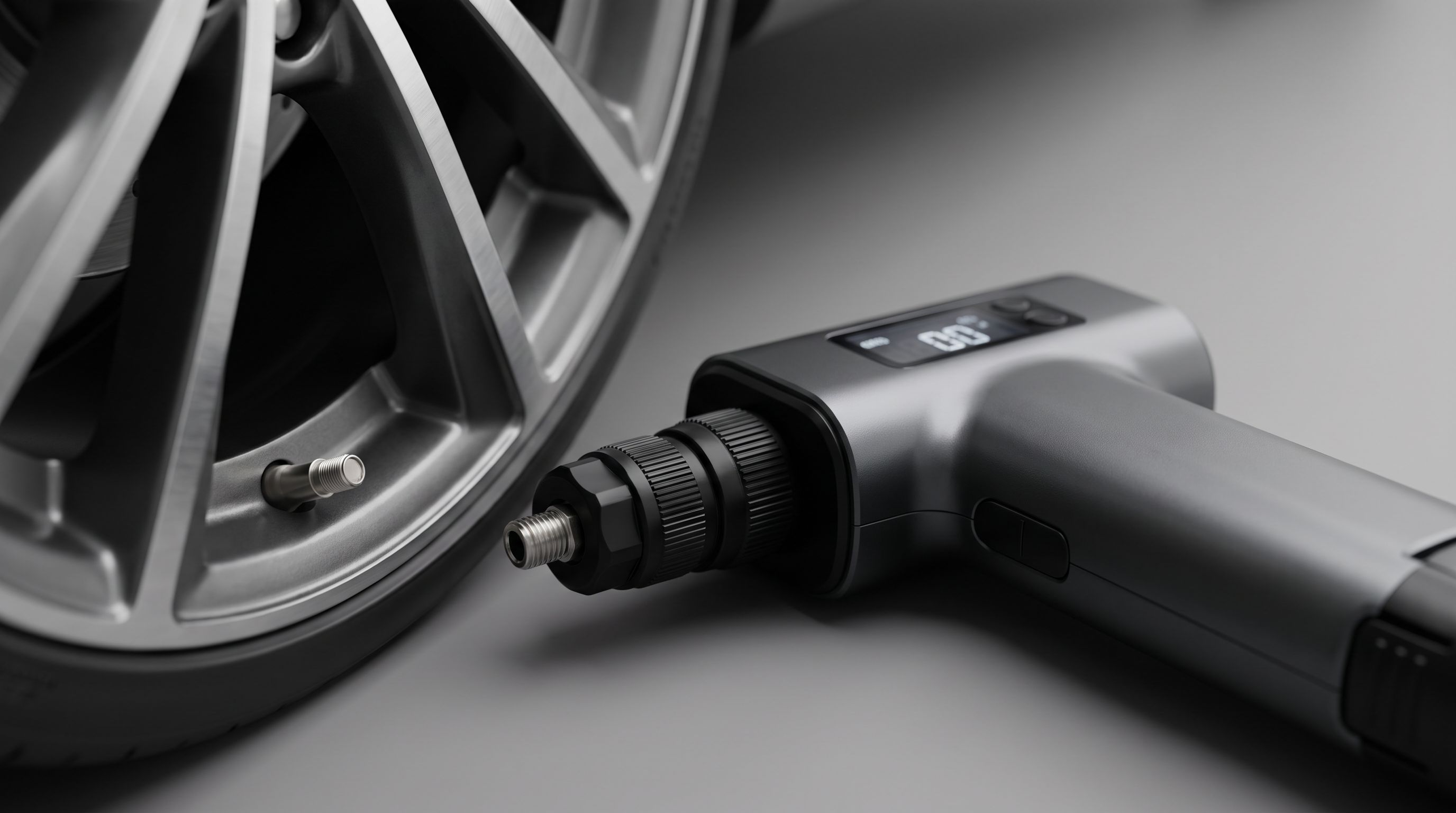
Cordless Tire Inflator Valve Stem Fitment in 2026: 4 Picks
Match cordless tire inflator chucks and hose lengths to your valve stems — rubber, metal, TPMS or recessed alloys — with 2026 picks, specs and owner feedback.
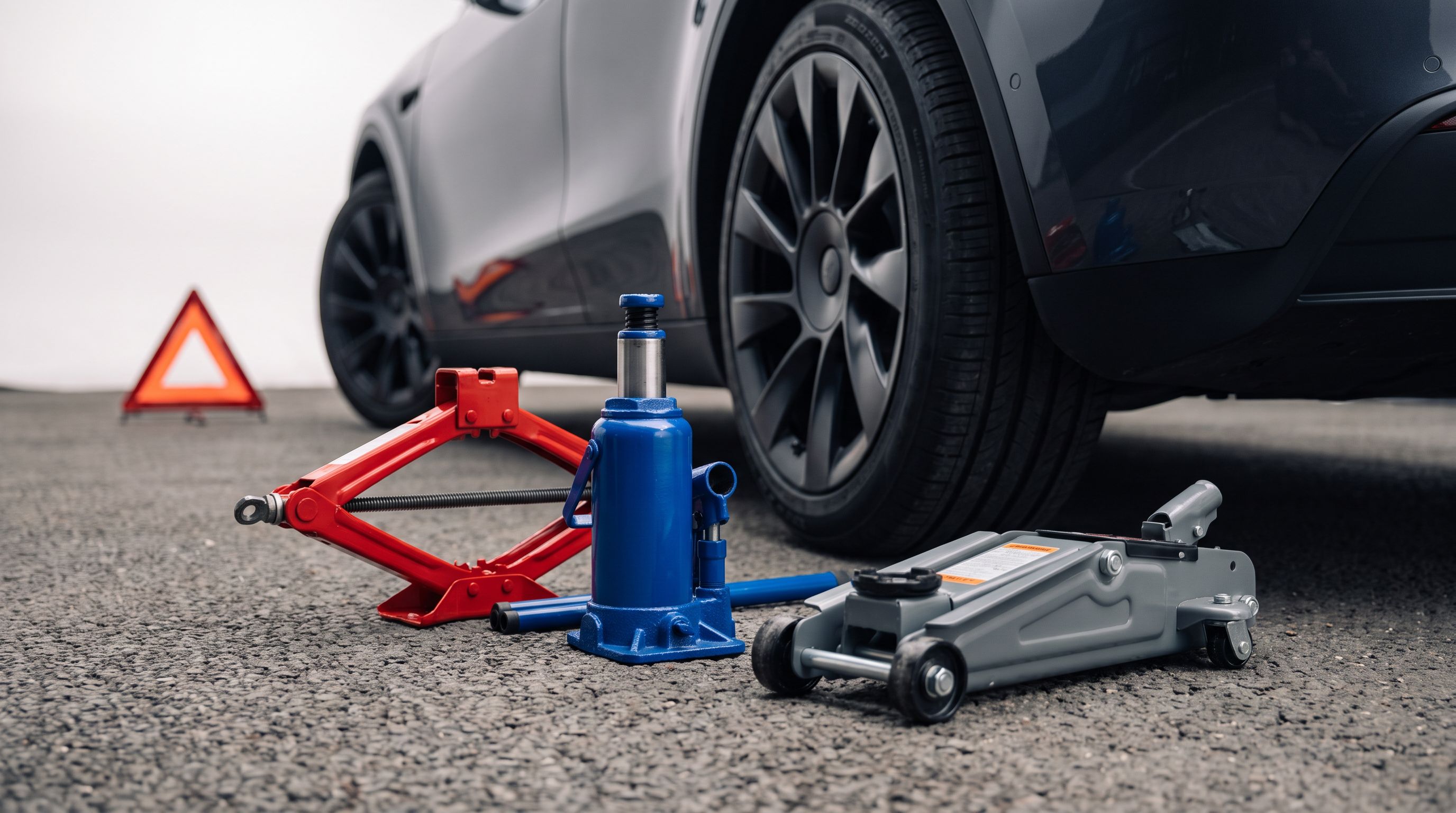
Scissor vs Bottle vs Floor Jack in 2026: What to Carry
Scissor, bottle, or low-profile floor jack? Compare capacity, lift range, and trunk space to pick the best emergency car jack for your vehicle in 2026.
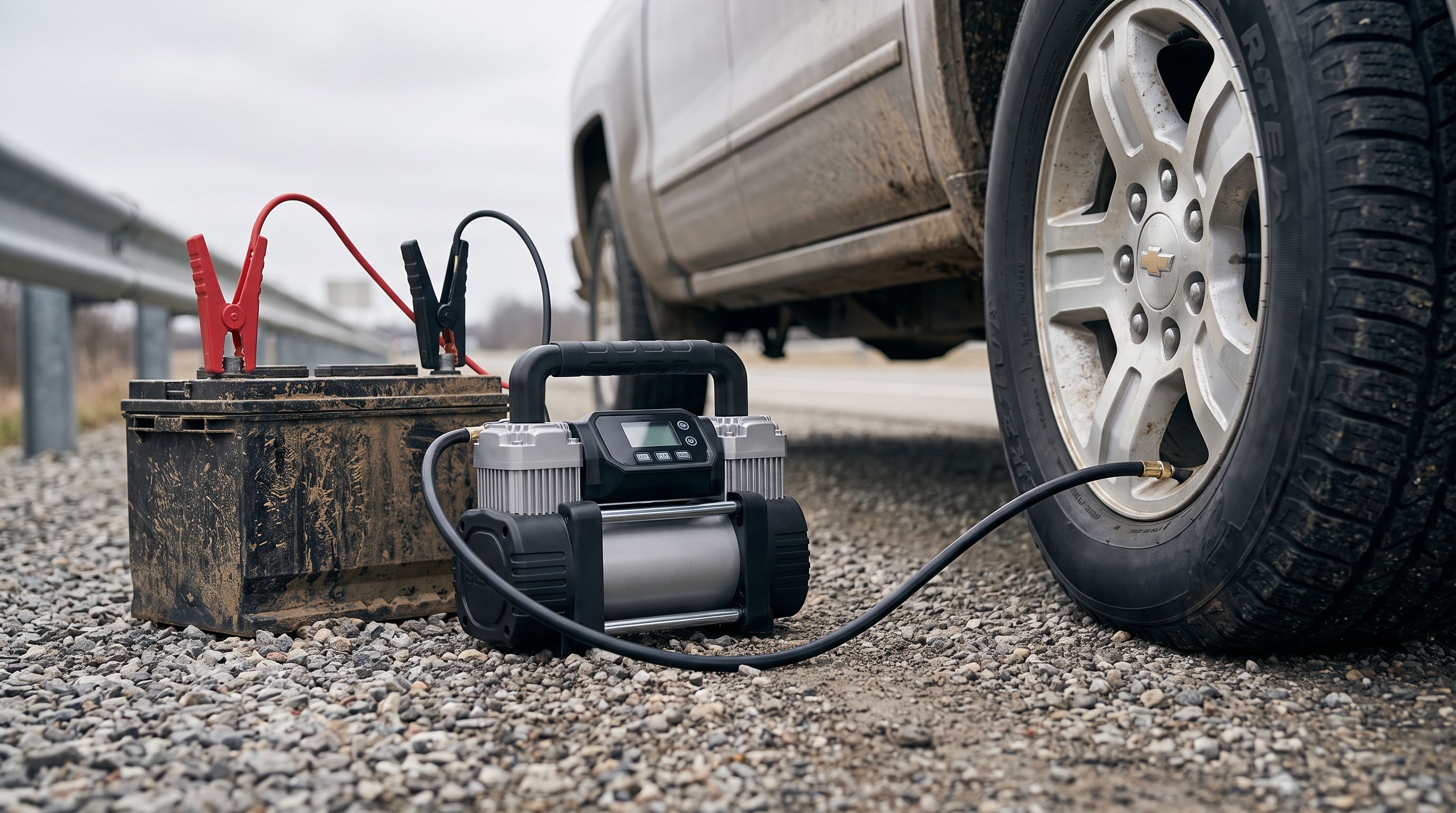
12V Air Compressor for Truck Tires in 2026: 4 That Handle 80 PSI
Need a 12V air compressor for truck tires or RV duals? We compare duty cycle, max PSI and clamp vs socket power so your roadside kit can actually reach 80–110 PSI.