Portable Level 2 EV Charger 2026: NACS or J1772?
Picking a portable Level 2 EV charger in 2026? We compare 32–40A travel units, NACS vs J1772 plugs, and NEMA 14-50 vs 6-50 adapters so you buy the right one.
Reader-supported: we may earn a commission from links on this page, at no extra cost to you. It never affects our picks. Learn more.
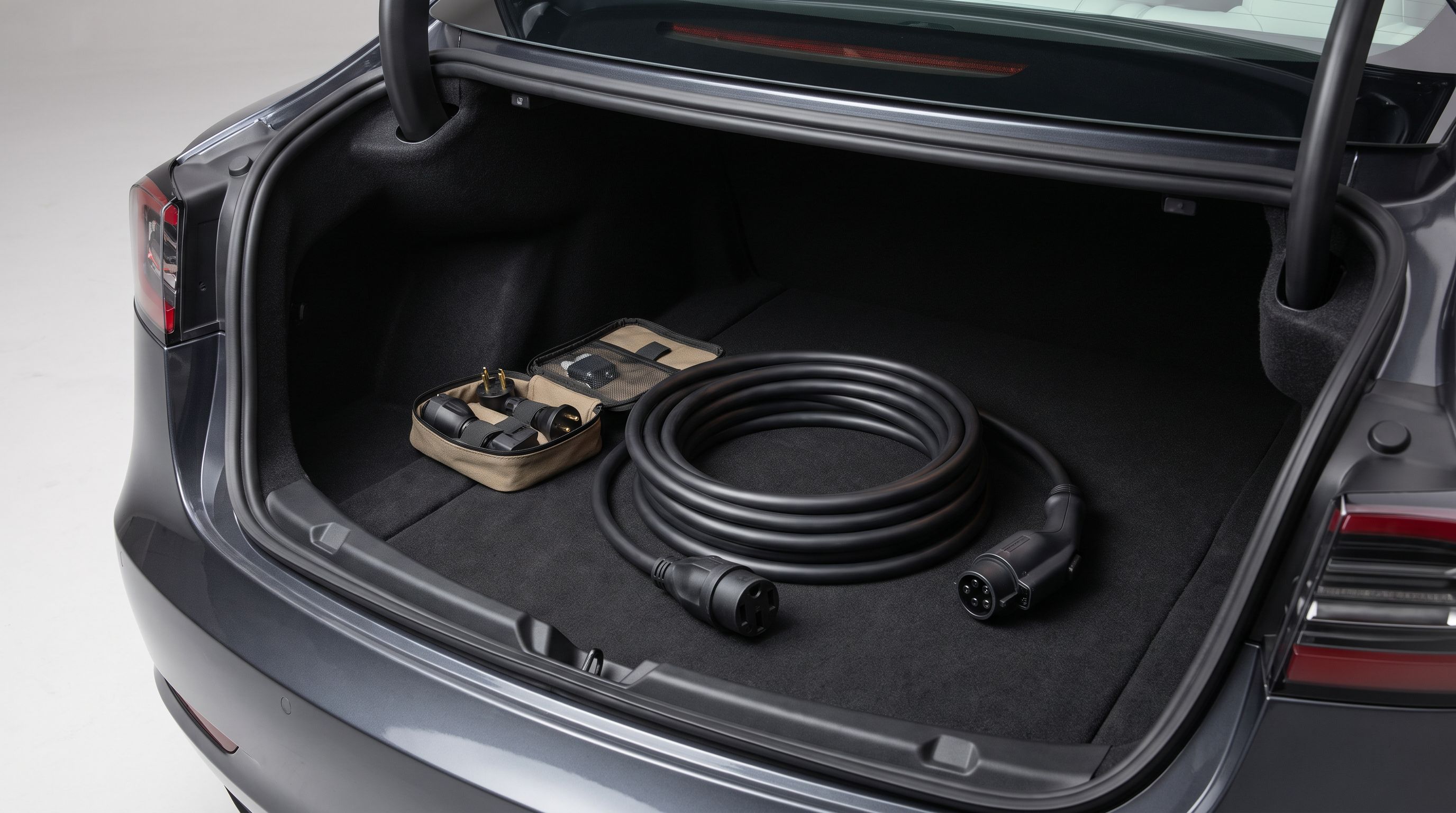
Road-tripping an EV in 2026 is mostly a solved problem — until you land at a rental house with a dryer outlet in the garage and no public charger for 30 miles. That's the moment a portable Level 2 charger earns its trunk space. It turns any 240V outlet into an overnight fill-up, typically 20–35 miles of range per hour instead of the 3–5 you'd get from a wall socket.
The confusing part isn't the charger. It's the two connectors at opposite ends of the cable: which plug goes into the wall (NEMA 14-50 vs 6-50 vs 10-30), and which connector goes into the car (NACS vs J1772). Get either wrong and you own an expensive extension cord. Here's how to get both right.
The short version
- Best overall: Lectron Portable Level 1 & 2 EV Charger (J1772, 40A, NEMA 14-50)
- Best for Tesla / NACS drivers: Lectron Tesla Level 2 Charger 40A NEMA 14-50 (Wi-Fi)
- Premium pick: Tesla Mobile Connector (Gen 2) Bundle
- Best adapter versatility: EVDANCE Portable EV Charger Level 2 32A with Interchangeable Plugs
- Best home-plus-travel hybrid: Emporia Level 2 EV Charger (48A, NEMA 14-50 plug)
 Premium pick · Tesla Mobile Connector (Gen 2) Bundle — Check price on Amazon →
GarageProof researches and compares chargers using manufacturer specifications, independent test coverage, and verified owner feedback. We don't physically test units — where we cite performance, it comes from published specs or third-party testing.
NACS vs J1772: which connector does your car actually take?
As of 2026 nearly every major automaker has committed to the North American Charging Standard (NACS, formerly the Tesla connector), but "committed" doesn't mean your car has one. Three situations exist:
Your car has a J1772 port. This covers the vast majority of non-Tesla EVs and plug-in hybrids sold before roughly 2025 — Chevrolet Bolt, Ford Mustang Mach-E and F-150 Lightning, Hyundai Ioniq 5/6, Kia EV6, Nissan Ariya and Leaf, VW ID.4, Rivian R1T/R1S, Subaru Solterra, Toyota bZ4X, plus every PHEV on the road. Buy a J1772 charger.
Your car has a NACS port. All Teslas, plus newer model-year vehicles from Ford, GM, Hyundai/Kia, Honda, Volvo, Polestar and others that have switched over. Buy a NACS charger — or a J1772 unit plus a J1772-to-NACS adapter.
You're not sure. Look at the port itself. J1772 for AC charging is a round connector with five pins and a latch button on top; NACS is a smaller, flatter oval with five slots. Check your owner's manual or the manufacturer's spec page for your exact year, make, model and trim before buying — automakers changed ports mid-model-year during the transition, and trim levels within the same year sometimes differ.
The adapter question
Adapters work in both directions and are widely used, but they aren't equal:
- J1772 charger → NACS car: A small J1772-to-NACS adapter (Tesla sells one; so do Lectron and A2Z) works reliably for AC Level 2. This is the flexible route — your charger works on any public J1772 station too, and the adapter handles your car.
- NACS charger → J1772 car: A NACS-to-J1772 adapter exists and is common at Tesla Destination Chargers. Fine for AC.
- Either adapter for DC fast charging: Different hardware entirely, different rules. Don't assume a cheap AC adapter is rated for it.
Our general advice: if you own one NACS vehicle and nothing else, buy native NACS. If you own a J1772 car, or a mixed-fleet household, buy J1772 and keep a quality adapter in the glovebox. A native connector is one fewer heat-generating junction and one fewer thing to lose in a hotel parking lot.
NEMA 14-50 vs 6-50 vs everything else
The wall end matters just as much. These are the outlets you'll actually encounter:
| Outlet | Volts / wires | Typical max charger draw | Where you'll find it | Notes |
|---|---|---|---|---|
| NEMA 14-50 | 240V, 4-wire (with neutral) | 40A continuous on a 50A circuit | RV parks, campgrounds, modern garages, ranges | The single most useful plug for travel |
| NEMA 6-50 | 240V, 3-wire (no neutral) | 40A continuous on a 50A circuit | Welding outlets, workshops, older garages | Very common in shops; cheap adapter fix |
| NEMA 14-30 | 240V, 4-wire | 24A continuous on a 30A circuit | Electric dryers (modern) | Charger must be dialable down to 24A |
| NEMA 10-30 | 240V, 3-wire, no ground | 24A continuous | Older dryer circuits | No ground — many chargers refuse to run |
| NEMA 6-20 | 240V, 3-wire | 16A continuous | Some workshops, window A/C circuits | Handy fallback, roughly 2x Level 1 speed |
| NEMA 5-15 / 5-20 | 120V | 12–16A (Level 1) | Anywhere | 3–5 miles of range per hour |
Two rules that save grief. First, continuous load is 80% of breaker rating — a 50A circuit supports 40A continuous charging, a 40A circuit supports 32A, a 30A circuit supports 24A. Any charger that lets you dial amperage down is worth more than one that doesn't, because you'll plug into circuits you didn't choose. Second, an adapter does not upgrade a circuit. A 14-50-to-10-30 adapter on a 30A dryer circuit still needs the charger set to 24A or you'll trip the breaker — or worse, cook the wiring in an old house.
Also worth knowing: RV-park 14-50 outlets are notoriously abused. If a plug feels loose or the charger's plug head gets noticeably hot, stop and drop the amperage. Several portable units now include thermal sensors in the plug head that throttle automatically — a genuinely useful safety feature, not marketing.
How to choose
Amperage: 32A is the sweet spot, 40A is the ceiling
A 40A portable unit on a NEMA 14-50 delivers roughly 9.6 kW, which is about 25–35 miles of range per hour for most EVs. A 32A unit delivers about 7.7 kW. In practice the difference over a 10-hour overnight stop is academic — both fully replenish a typical day's driving. 32A units are lighter, cheaper, run cooler, and are more likely to work on the 40A circuits you'll find in older garages. Buy 40A if your home outlet supports it and you want one charger for both duties; buy 32A if this lives in the trunk. Ignore 48A for portable use — 48A requires hardwiring in most cases, since no standard 240V plug is rated for it continuously.
Adjustable current — non-negotiable
Look for a unit with onboard amperage selection (buttons, a dial, or an app). Without it, a 40A charger plugged into a 30A circuit is useless. Chargers that automatically detect which NEMA adapter is attached and cap current accordingly are the safest implementation, and Tesla's Mobile Connector has done this for years.
Cable length and cold-weather flexibility
Sixteen to 25 feet is the practical range. Shorter cable means less weight and a tidier coil; longer means you can reach across a driveway when the outlet is on the wrong wall. Check the cable jacket spec — TPE/TPU jackets stay flexible well below freezing, while cheaper PVC turns into a garden hose in January. NEMA 4 or IP65-rated enclosures matter if the charger will hang outdoors in weather.
Certification and warranty
Insist on UL or ETL listing for the complete unit, not just "UL-listed components." Energy Star certification is now common on better units and signals low standby draw. A three-year warranty is typical for reputable brands; anything under one year on a device carrying 9.6 kW is a warning sign.
The picks
Lectron Portable Level 1 & 2 EV Charger — best overall
This is the default recommendation for anyone with a J1772 port. Lectron's portable line has been the value benchmark in multiple 2026 roundups — it's the "best budget" or "best portable" choice in several major guides — and the 40A NEMA 14-50 version hits the practical ceiling for plug-in Level 2. You get selectable amperage, a 120V adapter so it doubles as a Level 1 emergency cable, and a connector that works on any public J1772 station. What it gives up: no deep smart-home integration, app features are basic compared to Emporia or ChargePoint, and the carrying bag is functional rather than luxurious. For a trunk charger, that's the right set of compromises.
Lectron Tesla Level 2 Charger 40A NEMA 14-50 — best for Tesla / NACS drivers

Lectron Tesla Level 2 Charger 40A NEMA 14-50 (Wi-Fi)
Native NACS connector at 40A with Wi-Fi monitoring, so no adapter sits between plug and port.
Same hardware philosophy, native NACS connector. If your household is all-Tesla (or all-NACS), this removes the adapter from the equation: fewer connections, fewer failure points, and nothing to leave behind. The Wi-Fi version adds session monitoring and scheduling from a phone, which is genuinely useful for charging on off-peak rates at a second home. The trade-off is flexibility — a native NACS cable won't plug into a J1772 car without an adapter running the other direction, so it's a poor fit for mixed-brand garages. Also confirm your vehicle's onboard charger can actually accept 40A AC; some models cap lower.
Tesla Mobile Connector (Gen 2) Bundle — premium pick
Tesla Mobile Connector (Gen 2) Bundle
Tesla's own NACS mobile unit with swappable outlet adapters and tight vehicle integration.
Tesla's own unit is the most polished implementation of the swappable-adapter concept: plug in a different NEMA head and the charger automatically limits current to that outlet's rating, no menu diving. It's compact, well-built, and integrates with the car's charging screen and scheduling. The catch is that the base Gen 2 Mobile Connector is rated to 32A, not 40A, and the adapters are sold as a bundle or individually — costs add up. It's also NACS-native, so J1772 owners need an adapter. Best for Tesla drivers who value refinement and automatic outlet detection over raw amps.
EVDANCE Portable EV Charger Level 2 32A — best adapter versatility

EVDANCE Portable EV Charger Level 2 32A with Interchangeable Plugs
32A J1772 charger with swappable NEMA heads, so one cable covers 14-50, 6-50 and 5-15 outlets.
The pitch here is one cable, many outlets. EVDANCE's interchangeable-plug design swaps between NEMA 14-50, 6-50, 10-30 and 5-15 heads, which covers essentially every realistic travel scenario without a bag of dongles. At 32A it's lighter and cooler-running than 40A units and more forgiving on older 40A circuits. Compromises: a lower ceiling if you want it to serve as your primary home charger, and the connector-swap mechanism is one more mechanical part to keep clean and dry. For a dedicated road-trip charger that lives in the frunk, the versatility is worth more than the missing 8 amps.
Emporia Level 2 EV Charger (48A plug-in) — best home-plus-travel hybrid

Emporia Level 2 EV Charger (48A, NEMA 14-50 plug)
Plug-in 48A unit with app energy tracking that unplugs and travels when you need it to.
Emporia's Level 2 units top several 2026 home-charger rankings for good reason: solid build, Energy Star certification, real energy monitoring, load management, and a UL-listed design. The NEMA 14-50 plug-in version installs on a garage outlet, then unplugs and travels when you need it to. Understand the limits, though: on a 14-50 plug it runs at 40A continuous, not 48A — that figure requires hardwiring. It's also heavier and bulkier than a purpose-built travel cable, with a longer, stiffer cord that's a chore to coil. Choose it if you want one excellent charger for daily home use that can occasionally make a trip, not the reverse.
Fitment: check before you buy
Portable Level 2 chargers are not universally compatible, and the mismatch is usually the car end. Before ordering:
- Confirm your vehicle's AC port type — J1772 or NACS — from the owner's manual or the automaker's spec page for your exact year, make, model and trim.
- Confirm your car's onboard AC charger rating in kW. If the car maxes at 7.7 kW (about 32A), a 40A charger will simply charge at 32A. That's fine, but don't pay extra for headroom you can't use.
- Confirm the outlet at your destination. Ask the host or campground directly — "240V" isn't an answer, "NEMA 14-50 on a 50-amp breaker" is.
- If you're installing a new outlet, have a licensed electrician do it and follow local code. A 14-50 on a properly sized circuit is the most future-proof choice.
FAQ
How fast is a portable Level 2 charger, really? At 32A/240V you're drawing about 7.7 kW; at 40A about 9.6 kW. Expect roughly 20–35 miles of range per hour depending on the vehicle's efficiency and onboard charger. Overnight, that's a full battery for almost any EV.
Can I use a J1772 charger on a Tesla? Yes, with a J1772-to-NACS adapter for AC charging. Tesla and several third parties sell them, and they're widely used. Keep it with the charger, and don't use AC adapters for DC fast charging.
Is a NEMA 6-50 adapter safe with a 14-50 charger? Electrically yes — 6-50 simply omits the neutral, which Level 2 charging doesn't use. Buy a properly rated adapter from a reputable brand, not an unbranded one, and verify the circuit is actually 50A.
Can I plug a 40A charger into a dryer outlet? Only if you dial the charger down to 24A first, and only if the outlet has a proper ground. Old NEMA 10-30 circuits lack a ground wire and many chargers will refuse to operate on them — for good reason.
Do I need a permanent home charger if I have a portable one? Not necessarily. A 40A portable unit on a dedicated 14-50 outlet does the same job as most wall units. Hardwired stations make more sense when you want 48A, outdoor permanence, or utility load management.
Will an extension cord work? Avoid it. If unavoidable, use a heavy-gauge 240V-rated cord as short as possible, check it for heat, and reduce the charger's amperage. Most manufacturers explicitly void warranties for extension cord use.
Our picks
Lectron Portable Level 1 & 2 EV Charger (J1772, 40A, NEMA 14-50)
40A J1772 travel unit with a 14-50 plug and swappable adapters — the default choice for non-Tesla EVs.
Get the best car care deals in your inbox
Join the GarageProof newsletter for hand-picked car care deals and new buying guides. No spam, unsubscribe anytime.
Related reads
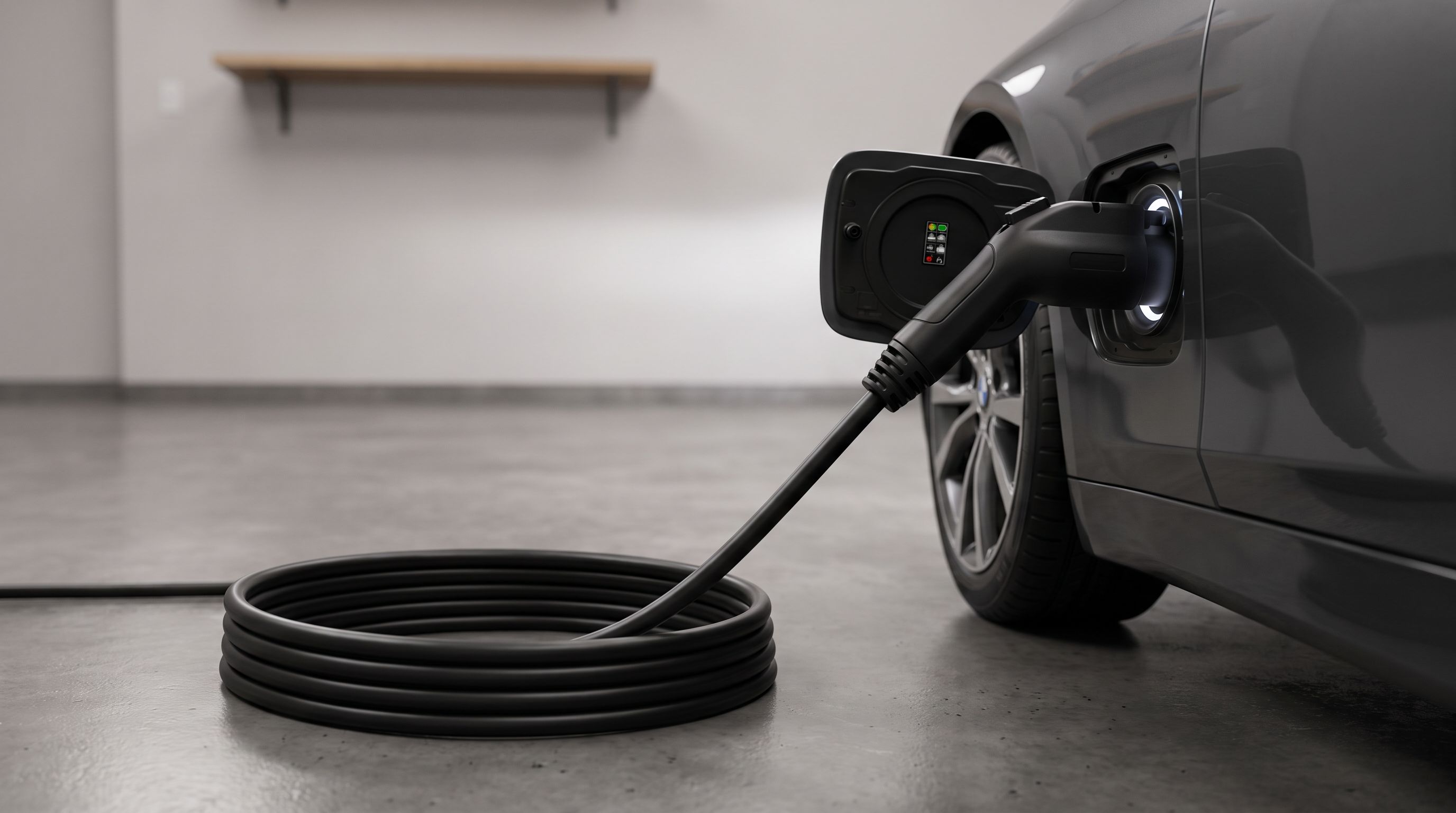
EV Charging Cable Extension 2026: What's Actually Safe
Most EV charging cable extensions aren't code-compliant. Here's what NEC and automakers actually say, plus safer ways to add reach in 2026.
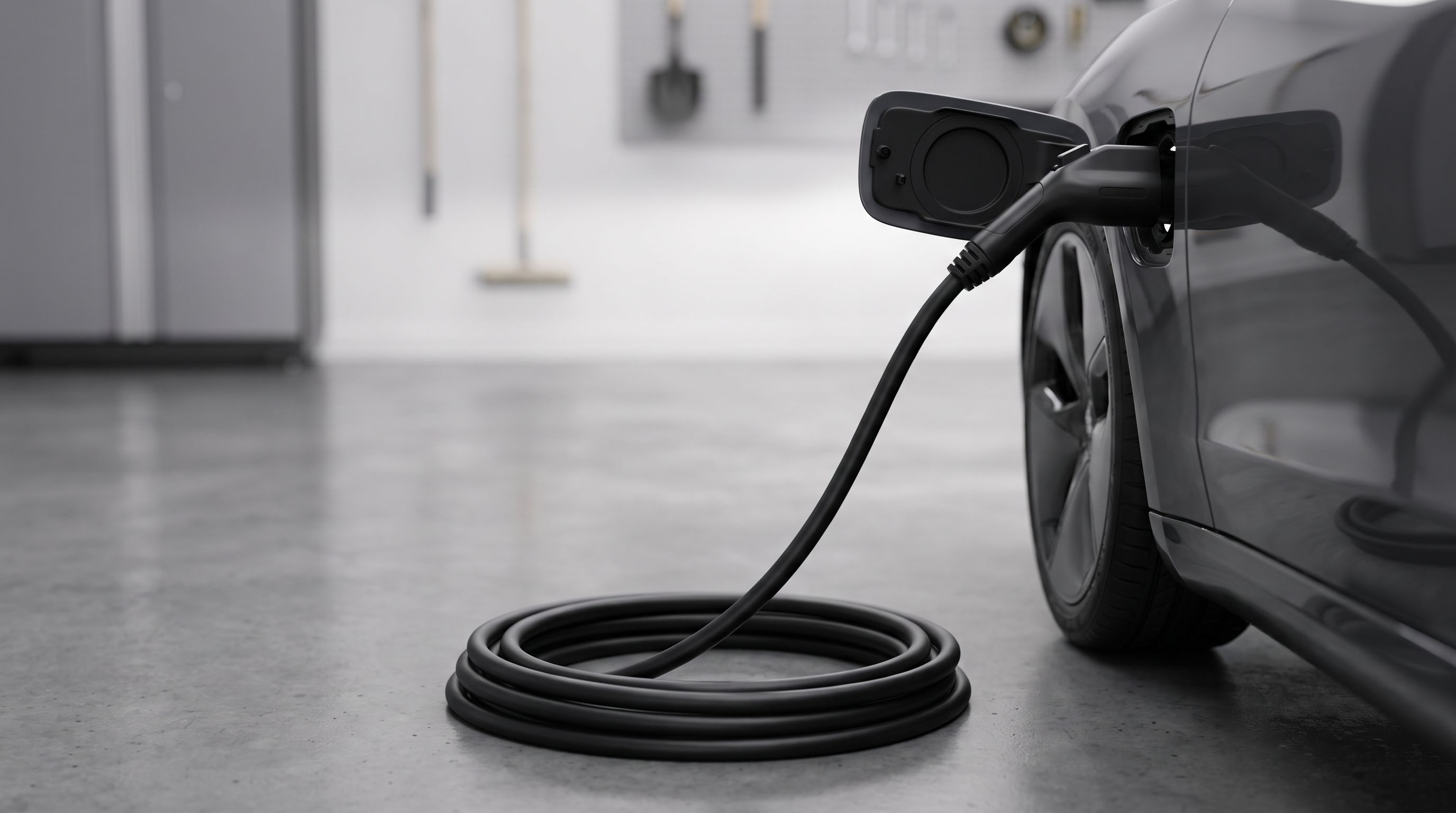
J1772 Charging Cable 40 Amp: Why Cheap Cords Run Hot in 2026
A J1772 charging cable rated 40 amp is only as good as its copper, jacket and contacts. Here's how gauge and connector quality prevent heat soak — plus 2026 picks.
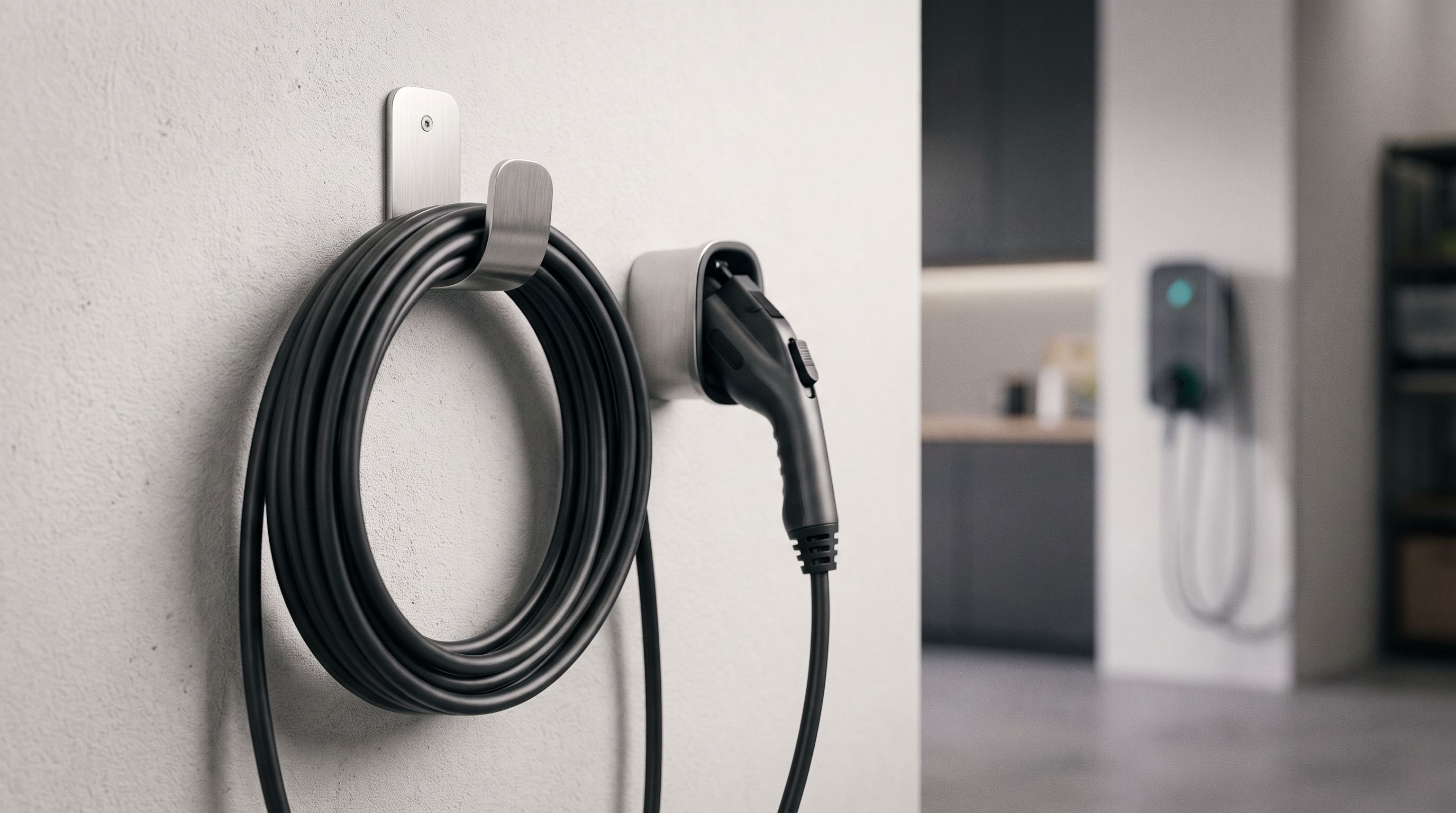
EV Charger Cable Holder 2026: NACS vs J1772 Wall Fit
Which EV charger cable holder fits your setup in 2026? We compare holsters, J-hooks and docks by connector type (NACS vs J1772) and garage wall material.