Paint Depth Gauge Buying Guide 2026: Ferrous + Aluminum
Which paint depth gauge is safe to buy in 2026? How probe type, aluminum panel coverage and calibration accuracy separate useful gauges from junk.
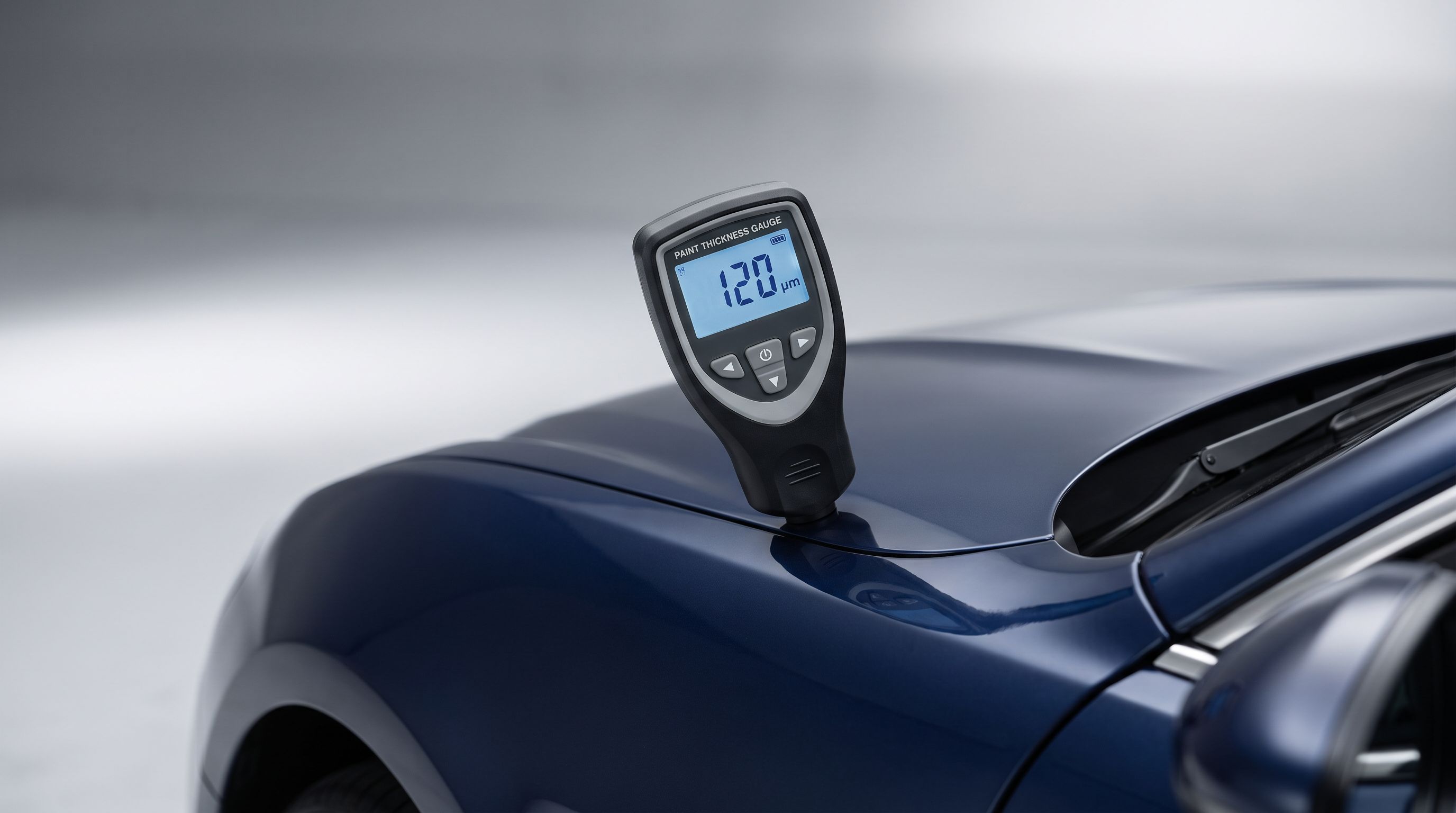
Reader-supported: we may earn a commission from links on this page, at no extra cost to you. It never affects our picks. Learn more.
A paint depth gauge is one of the few tools that can tell you, in about ninety seconds, whether the "never hit" used car in front of you has been repainted — and whether the swirl-filled hood you're about to polish has enough clear coat left to survive it. But the category is a minefield. Prices run from pocket change to more than a decent set of tires, and the cheapest units routinely fail on exactly the panels that matter most: aluminum hoods, fenders and doors that have become standard on everything from F-150s to Teslas.
The single biggest buying decision is probe type. Get that wrong and your gauge will read zero on half a modern car — or worse, give you a confident number that's meaningless.
The short version
- Best overall: DeFelsko PosiTector 6000 FNS1
- Best value for detailers: NexDiag NexPTG Advanced
- Best budget dual-probe: FNIRSI CTG-20
- Best pocket check-it-fast pick: Extech CG204
 Best pocket check-it-fast pick · Extech CG204 — Check price on Amazon →
 Best overall · DeFelsko PosiTector 6000 FNS1 — Check price on Amazon →
Why probe type is the whole ballgame
Paint thickness gauges don't measure paint directly. They measure the distance from the probe tip to the metal underneath, and there are two completely different physics tricks for doing that:
Magnetic induction (F / ferrous) works on steel. The probe senses the magnetic field change caused by the gap between it and the steel substrate. Cheap, reliable, and fine on a 1998 sedan.
Eddy current (N / non-ferrous) works on aluminum and other non-magnetic conductive metals. It induces a small current in the substrate and reads the field it generates back. Needed for aluminum panels.
A gauge marketed as FN or F/NF has both, and auto-switches between them when you set it down. A gauge with only an F probe will simply read nothing — or nonsense — on an aluminum hood.
Why this matters more every model year
Aluminum closures are no longer exotic. Ford has used aluminum bodies on F-150s since 2015. Most Teslas mix aluminum and steel. Jaguar, Audi, BMW, Land Rover, Corvette, Ram 1500 hoods, countless European hatchbacks — all have aluminum panels sitting right next to steel ones. On some cars the hood is aluminum, the fenders are steel, and the doors are a mix.
If you're inspecting a used car with an F-only gauge, the panel that reads "nothing" is the one you'll be tempted to hand-wave. That's also the panel most likely to have been replaced. Buy FN. There is almost no scenario in 2026 where a ferrous-only gauge is the right purchase for automotive work, unless you exclusively work on pre-2005 domestic steel.
Neither probe type works on plastic, carbon fibre or fibreglass. Bumper covers, some fender flares, and Corvette/Saturn-style composite panels will not read on any of these gauges — that's a limitation of the technology, not a defect.
What a reading actually tells you
Factory paint on most modern cars lands somewhere in the 90–160 micron (3.5–6.3 mil) range, measured as total film build: e-coat, primer, base coat and clear coat combined. Japanese cars often run thinner; German cars often run thicker. That's the key caveat — there is no universal "good" number. What matters is consistency across panels on the same car.
- All panels within roughly ±15–20 microns of each other: likely original.
- One door reading 250 microns while its neighbour reads 120: refinished.
- A panel reading 400+ microns: body filler underneath, almost certainly.
- A panel reading noticeably thinner than the rest: previously polished hard, or a repaint that was buffed aggressively.
The second use case is paint correction. Total film build tells you how much material is there, but not how much of it is clear coat — which is the only layer you actually cut into when polishing. Budget gauges give you one number and nothing else. Clear-coat-separating gauges (the ones that break out layers) exist, but they cost several times more and rely on assumptions that can be thrown off by certain paint systems. For most detailers the practical approach is: take a baseline, polish a test spot, re-measure, and know how many microns your pad-and-compound combo removes. If a panel reads unusually thin, step down to a finishing polish or refuse the job.
How to choose
1. Probe configuration: FN, always
Look for "FN", "F/NF", or explicit mention of both magnetic induction and eddy current. Auto-detection is standard on decent units and saves you from manually switching modes. Also check whether the probe is integral (built into the body) or cabled. Integral is faster and cheaper; a cabled probe lets you reach into door jambs, inside wheel arches and along tight roof rails without contorting the whole instrument.
2. Calibration and verifiable accuracy
This is where cheap gauges fall apart. A credible gauge ships with certified shim foils and a bare metal zero plate (usually one steel, one aluminum), and publishes an accuracy spec — typically something like ±(1–3 µm + 1–3% of reading). If a listing quotes a headline resolution of 0.01 µm with no stated accuracy, treat it as marketing noise; resolution is not accuracy. Zeroing on the supplied plates before each session, then verifying against a known shim, is the difference between data and guessing.
Also consider whether the manufacturer offers recertification. DeFelsko, for example, supports certificate-backed calibration — meaningful if you're producing inspection reports for clients or dealers.
3. Measurement range and probe geometry
Automotive work rarely needs more than about 1000 µm (40 mil), but heavy filler can exceed that — a wider range keeps a bad panel from just showing "over range" and leaving you unsure. Probe tip geometry matters on curves: a small, rounded tip seats properly on body lines, mirror caps and bumper-adjacent panels where a broad flat probe rocks and reads high.
4. Speed, logging and readability
If you're checking 40 points on a car in a dealer lot, reading speed and a screen you can see in daylight matter more than features. Look for continuous/scan modes, an auto-rotating display, and audible or visual alarms when a reading falls outside a set band — that lets you sweep a panel and hear when something's off instead of staring at the screen. Bluetooth logging and app export is genuinely useful for pre-purchase inspection businesses and less so for a hobbyist.
5. Build and batteries
Body shops and lots are hostile environments. Rubberised housings, standard AA/AAA cells (rather than a sealed proprietary pack that dies in three years), and a proper case are worth paying for. A gauge that lives in a glovebox and gets used twice a year is better served by something small and rugged than something delicate and clever.
Comparison
| Model | Probe type | Best for | Notable strength | Trade-off |
|---|---|---|---|---|
| DeFelsko PosiTector 6000 FNS1 | FN, auto-switching, integral | Pros, PPI inspectors, body shops | Certified accuracy, shim foils, recalibration support, proven build | Highest cost of the group; interchangeable-probe versions cost more again |
| NexDiag NexPTG Advanced | FN, auto-switching | Detailers and used-car buyers who want pro data without pro pricing | Fast readings, app connectivity, designed around automotive workflow | Not a lab instrument; fewer substrate options than industrial gauges |
| FNIRSI CTG-20 | FN, auto-switching | Enthusiasts, first gauge, occasional inspections | Dual-probe coverage at an entry price, rotating display, alarm limits | Accuracy spec and calibration support far less rigorous than pro units |
| Extech CG204 | FN, auto-switching | Quick glovebox checks, single-number verdicts | Compact, simple, established brand support | One total-thickness number only; no layer separation, basic feature set |
The picks
DeFelsko PosiTector 6000 FNS1 — best overall
Prices last checked September 27, 2026. Amazon prices change frequently, so treat these as a guide and check the live price before you buy.
DeFelsko PosiTector 6000 FNS1
Auto-switching ferrous/non-ferrous probe with certified shims and recalibration support for high-stakes readings.
If the readings you take influence money — a pre-purchase inspection, a valuation, a decision to wet sand — buy the instrument that can defend its numbers. The PosiTector 6000 FNS1 combines ferrous and non-ferrous sensing in a single auto-switching integral probe, measures well beyond typical automotive film builds, and ships within an ecosystem that supports certified calibration and documented accuracy. It's fast, it's readable outdoors, and the housing is built for shop life rather than a desk drawer.
What you give up is price and, in this specific configuration, probe interchangeability — the separate-probe PosiTector bodies let you swap in other sensor types later, which this integral version doesn't. For pure automotive paint work, most people never need that.
NexDiag NexPTG Advanced — best value for detailers
NexDiag NexPTG Advanced
Automotive-focused dual-probe gauge with fast readings and app logging for panel-by-panel reports.
NexDiag built the NexPTG line specifically for cars rather than adapting an industrial coating gauge, and it shows in the workflow: quick successive readings, automatic ferrous/non-ferrous switching, and app-side logging so a panel-by-panel record can go straight into a customer report or a listing. For a detailer who needs to document paint condition before correction — and prove they didn't cause a problem — that record-keeping is the feature that pays for itself.
It's a step below full industrial metrology in traceability and substrate breadth, and it's a bigger outlay than the budget tier. But for someone measuring cars every week, it hits the sweet spot between credibility and cost.
FNIRSI CTG-20 — best budget dual-probe
FNIRSI CTG-20
Steel and aluminum coverage with auto substrate detection and alarm limits at an entry-level price.
The CTG-20 is the answer to "I want to check cars occasionally and I refuse to spend four figures." It handles both steel and aluminum with automatic substrate detection, has a rotating display so you can read it upside down under a hood, and supports high/low alarm limits so you can sweep panels and listen for outliers rather than squinting.
The compromise is rigor. Calibration support, long-term stability and published accuracy guarantees don't match the pro tier, so verify it against the supplied foils regularly and treat readings as comparative rather than absolute. For spotting a repainted door — which is 90% of what buyers need — that's enough.
Extech CG204 — best pocket check-it-fast pick
Extech CG204
Compact F/NF gauge that gives one fast total-thickness number — ideal for screening used cars on a lot.
The CG204 does one thing: gives you a single total-thickness number on steel or aluminum, fast, from a compact body with a recognisable brand behind it. No layer breakdown, no clear-coat estimate, no cloud sync. For a used-car shopper who wants to walk a lot and flag the car with the 300-micron quarter panel, that's the entire job.
Where it falls short is paint correction planning. Knowing total film build doesn't tell you how much clear is above the base, so you're still working from a baseline-and-test-spot method. Accept it as a screening tool, not a decision-making instrument for aggressive compounding.
Using it properly: a five-minute routine
- Zero the gauge on the supplied bare steel and aluminum plates, then verify against a shim. Do this at the start of every session, not once a year.
- Take three readings per panel, minimum — upper, middle, lower. Single readings lie.
- Measure symmetric pairs: left front door vs right front door, both quarters, both fenders. Asymmetry is the signal.
- Note the substrate the gauge reports. A hood switching to non-ferrous mode on a car whose fenders read ferrous is normal on many models — not evidence of anything.
- Check the roof and the jambs. Repairs hide where people don't look, and overspray in a jamb plus a thick panel is a conclusive story.
Hold the probe flat and still. Rocking on a body line, measuring over a badge edge, or pressing on a flexible panel all inflate readings.
FAQ
What's a normal paint thickness reading? Most modern factory finishes fall around 90–160 microns (roughly 3.5–6.3 mil) total. But there's meaningful variation by manufacturer and even by plant, so consistency between panels on the same car tells you far more than the absolute number.
Will a paint depth gauge work on plastic bumpers? No. Both magnetic induction and eddy current need a metal substrate. Bumper covers, plastic fender flares and composite body panels won't read on any of the gauges here. Ultrasonic gauges exist for non-metal substrates but are a different, pricier category.
Do I really need non-ferrous if my car is steel? For your own car, maybe not. For inspecting used cars, yes — aluminum hoods, doors and fenders are common across trucks, EVs and European models, and a ferrous-only gauge will read nothing on exactly the panels most likely to have been replaced.
Can a gauge tell me how much clear coat is left? Only specialist layer-separating gauges attempt it, and even those rely on assumptions about the paint system. Standard gauges give total film build. The practical method for polishing is to baseline a panel, do a test spot, re-measure, and learn what your process removes.
How much material does polishing remove? It depends heavily on pad, compound, machine and pressure — typically a small number of microns per pass with a finishing polish, more with aggressive compounding or wet sanding. Measure before and after on your own setup rather than trusting a generic figure.
Is an expensive gauge more accurate, or just better built? Both. Premium units publish tighter accuracy specs, ship certified shims, and support recalibration so you can prove drift hasn't crept in. Budget units are often adequate for pass/fail screening but shouldn't anchor a high-stakes decision on their own.
Get the best car care deals in your inbox
Join the GarageProof newsletter for hand-picked car care deals and new buying guides. No spam, unsubscribe anytime.
Related reads
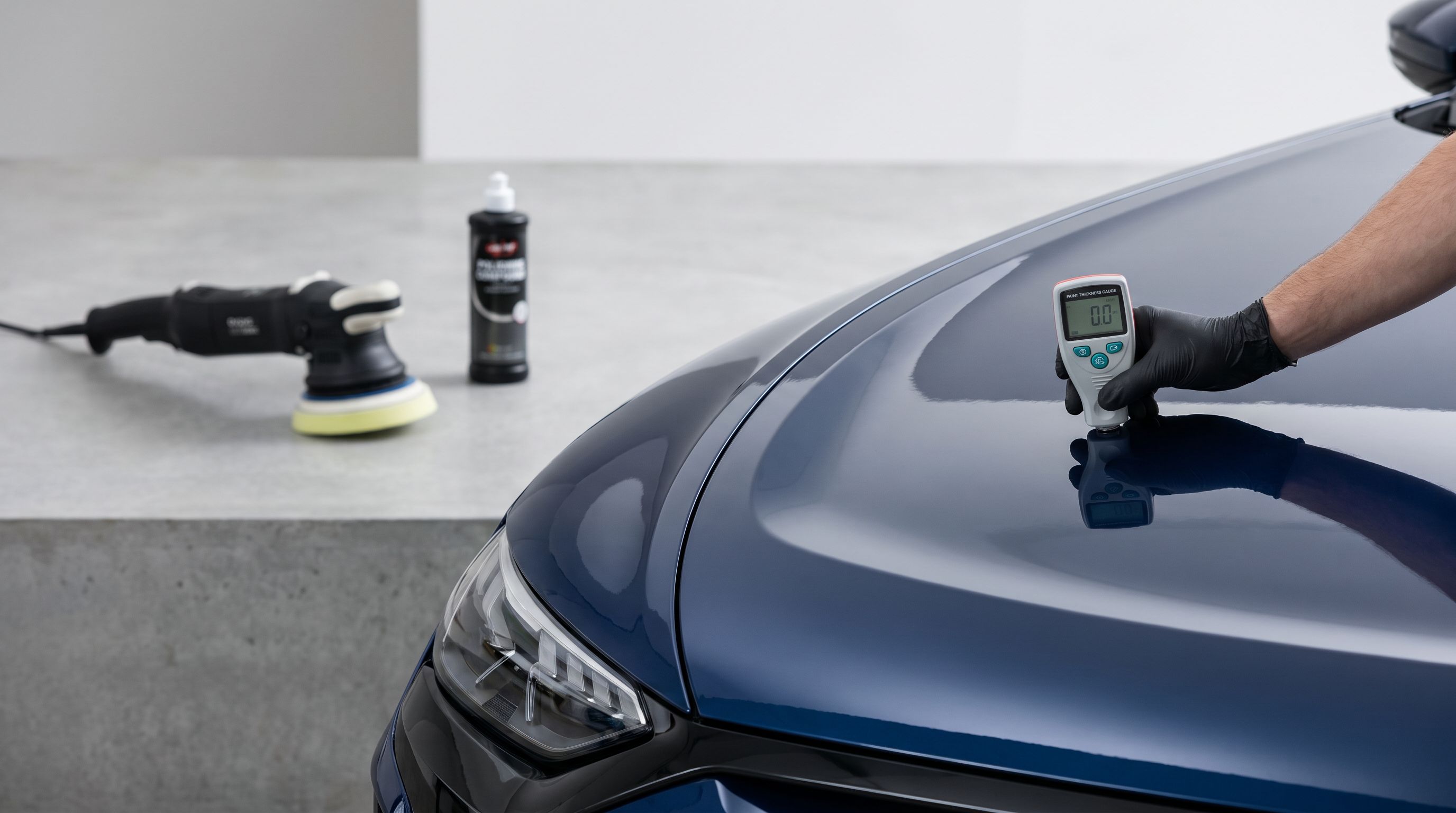
Paint Correction Clear Coat Thickness in 2026: When to Stop
How to read a paint depth gauge, budget clear coat microns, and know when to stop polishing — plus the best paint thickness gauges and compounds for 2026.
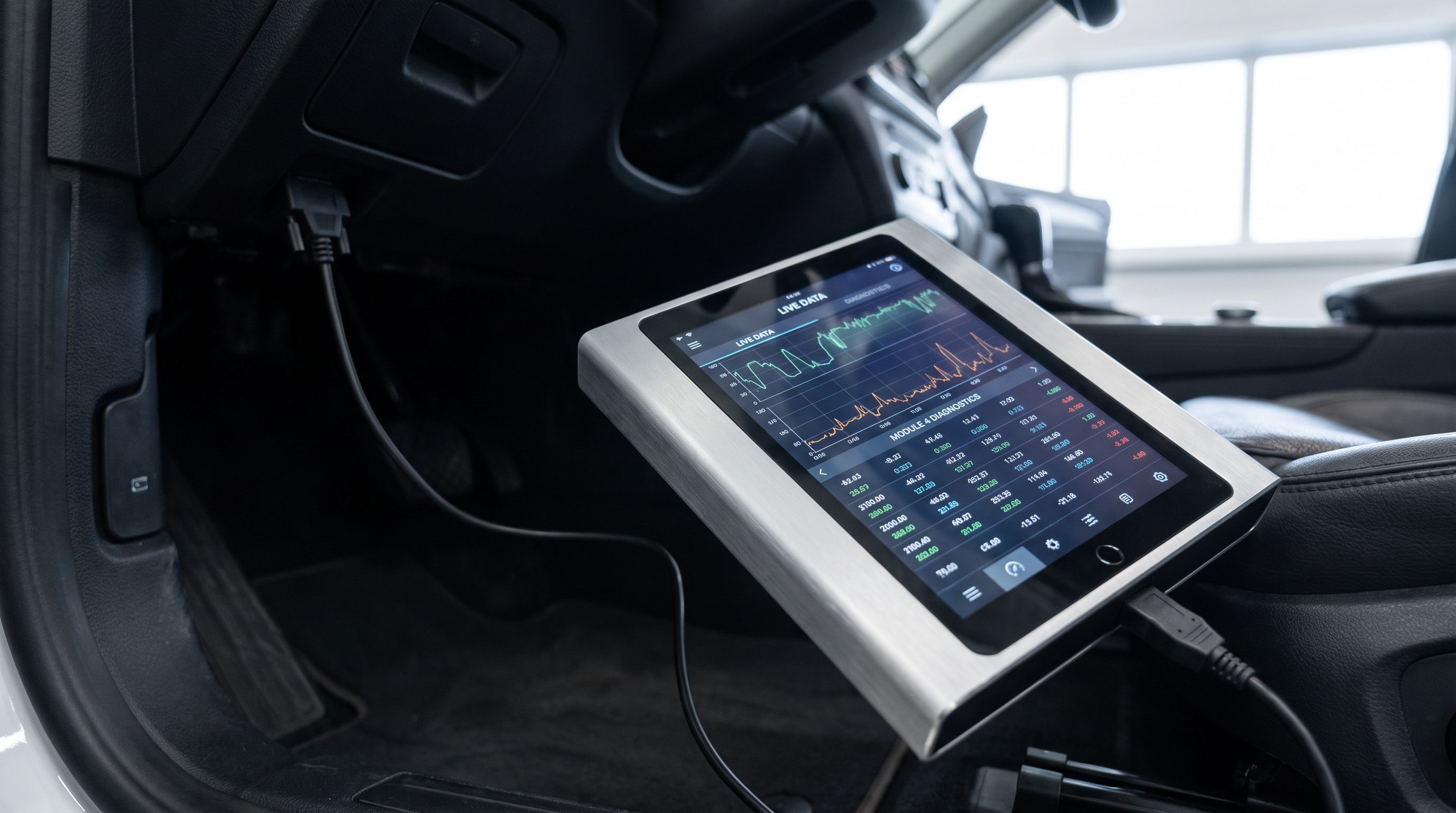
ECU Coding Scan Tool in 2026: Do You Actually Need One?
ECU coding scan tool vs mid-tier bidirectional in 2026: which tier you actually need, what coding really unlocks, and 5 tools ranked by module coverage.
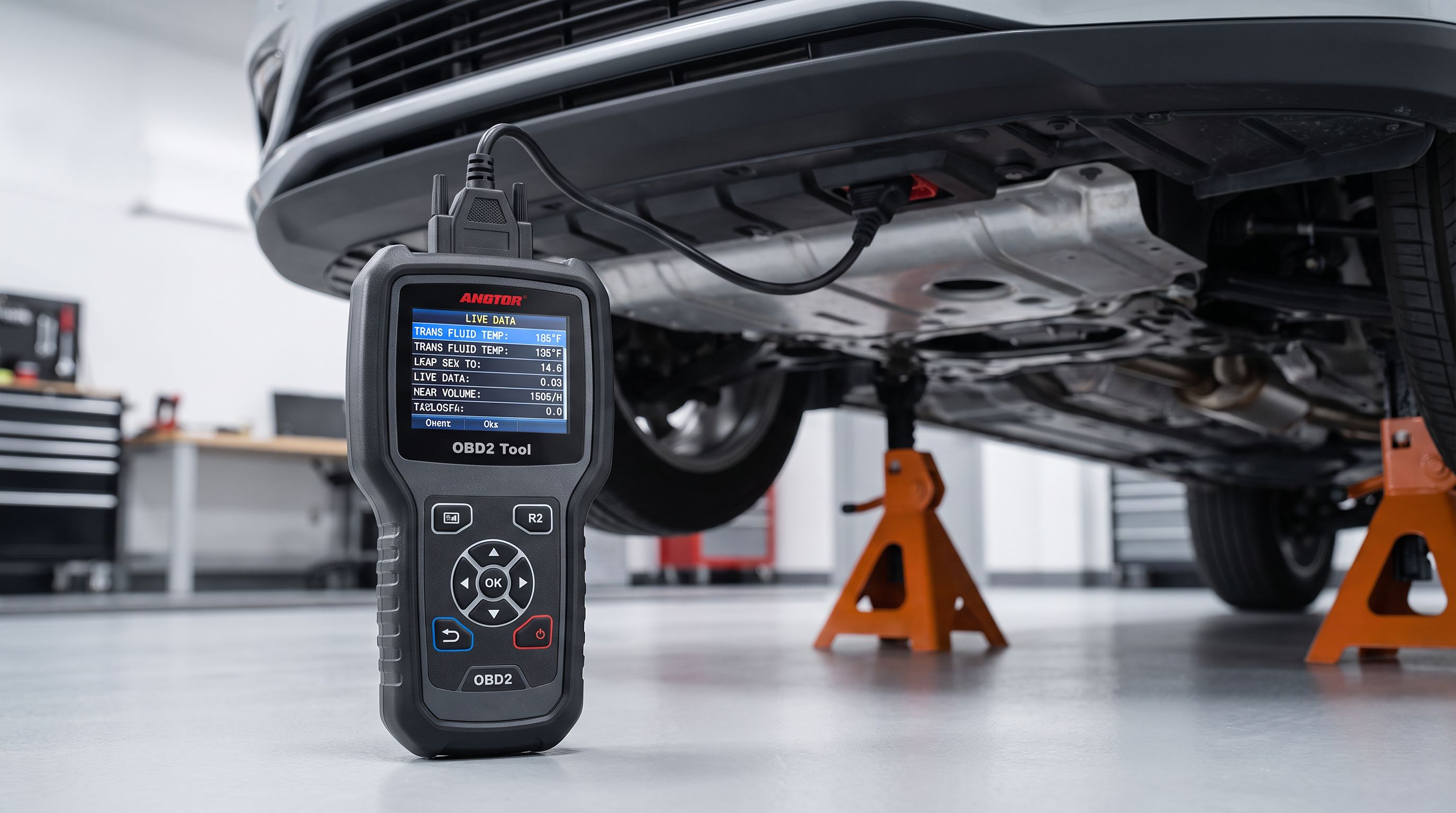
Scan Tools That Read Transmission Fluid Temp in 2026
Most modern automatics have no dipstick. We compare scan tools by whether they read live transmission fluid temperature PIDs for your make in 2026.