Oil Catch Can Buying Guide 2026: Match the Port to Your PCV
An oil catch can only works if it matches your PCV routing and hose size. Here's how to identify your setup in 2026, plus four separators worth buying.
Reader-supported: we may earn a commission from links on this page, at no extra cost to you. It never affects our picks. Learn more.
Direct injection gave us better fuel economy and more power, and it took away the one thing that used to keep intake valves clean: fuel washing over them. On a port-injected engine, gasoline sprays across the back of the valve on every cycle and scrubs off oil vapor residue. On a DI engine, nothing does. Whatever the PCV system pushes into the intake tract bakes onto the valve stems and ports until airflow — and eventually power and idle quality — suffer.
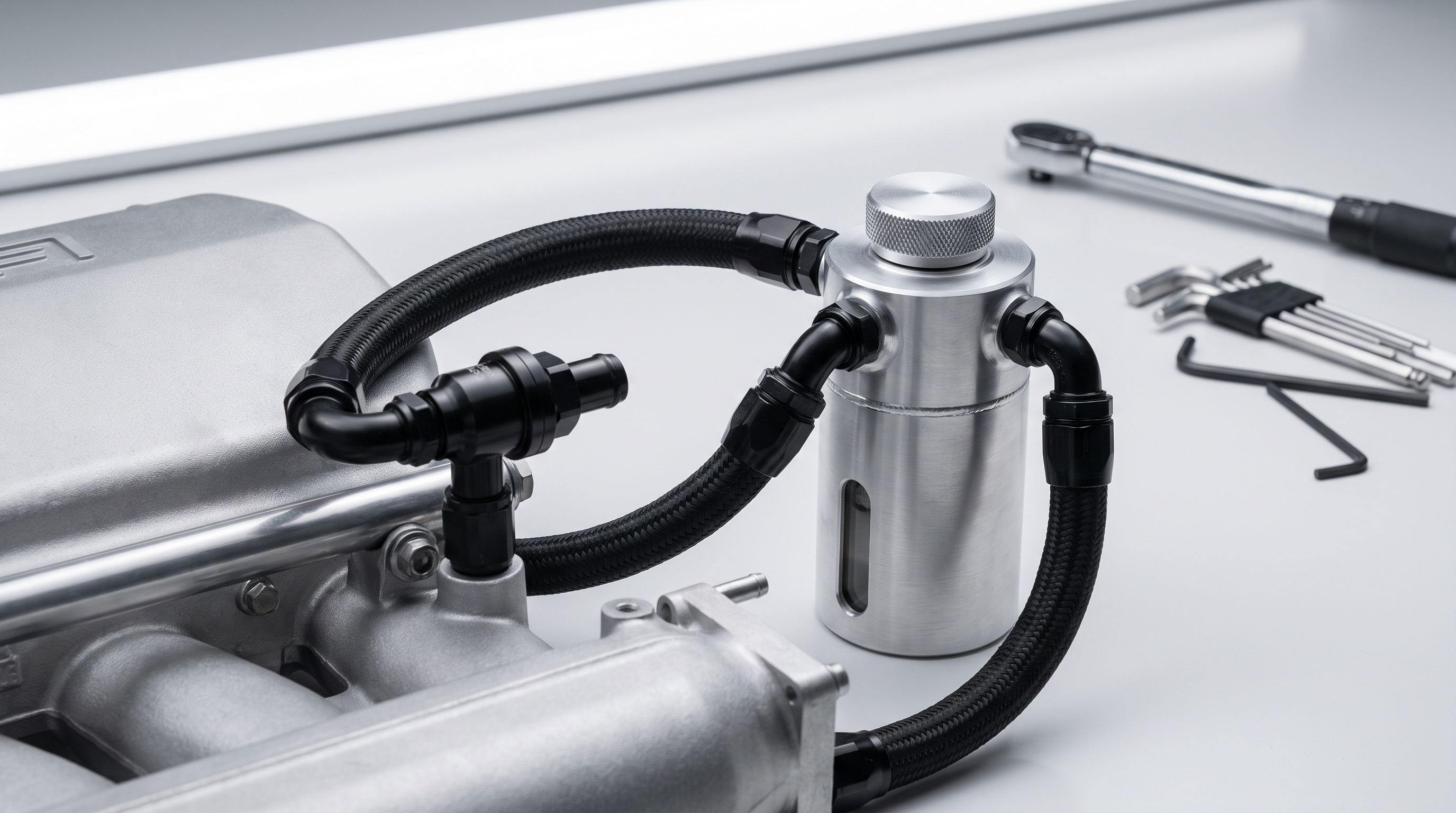
An oil catch can (more accurately, an air/oil separator) sits in the PCV plumbing, condenses that oil mist, and drops it into a reservoir you empty instead of into your intake. It's one of the few genuinely preventative mods left.
The catch is that a catch can is only as good as its fitment. Buy the wrong port size, tap the wrong side of the PCV system, or pick a can with no internal baffling, and you've added a leak point and a vacuum leak risk for nothing. This guide walks through identifying your engine's PCV routing and hose diameter first, then picks.
The short version
- Best overall: Mishimoto Compact Baffled 2-Port Oil Catch Can
- Best vehicle-specific fit: J&L Oil Separator 3.0
- Best for late-model Fords: UPR Products Plug N Play Oil Catch Can
- Best for easy draining: Mishimoto Baffled Oil Catch Can with Petcock Drain
- Budget pick: Boomba Racing Oil Catch Can
 Best vehicle-specific fit · J&L Oil Separator 3.0 — Check price on Amazon →
 Best overall · Mishimoto Compact Baffled 2-Port Oil Catch Can — Check price on Amazon →
Fitment first. Catch cans are either universal (you supply hose and a bracket) or vehicle-specific (brackets, fittings and pre-cut hose for one engine family and year range). Always confirm the listing covers your exact year, make, model and engine displacement before ordering — a 5.3L and a 6.2L in the same truck body can use different routing, and mid-generation PCV revisions are common.
Before you shop: find your PCV routing
Nearly every complaint about catch cans — "it filled with water," "it threw a code," "it did nothing" — traces back to plumbing the wrong line.
There are two sides to a PCV system
Modern engines vent the crankcase through two paths:
The PCV (vacuum) side. Under cruise and idle, manifold vacuum pulls crankcase vapor through the PCV valve and into the intake manifold, downstream of the throttle body. This is the dirty side on a naturally aspirated DI engine, and it's where a single-can install should go. On an NA engine it is almost always the only line worth catching.
The CCV / fresh-air side. Air enters the crankcase from the intake tract ahead of the throttle body. On a turbocharged engine under boost, manifold pressure closes the PCV valve and flow reverses — crankcase vapor exits through this line into the turbo inlet. That's why boosted cars often run a dual-can or dual-port setup: one can on each side.
So the first question isn't "which brand," it's "am I naturally aspirated or boosted?" NA DI engine: one can on the PCV line. Turbo or supercharged: either a dedicated dual setup, or accept that you're only catching half the vapor.
Measure the hose, don't guess
PCV hoses commonly run around 3/8 in, 1/2 in or 5/8 in outside-diameter barb sizes, and metric engines frequently use hose that's close to but not the same as an imperial size. Pull the hose off (engine cold), measure the inside diameter with calipers, and match it. Universal cans typically ship with 3/8 in or 1/2 in barbs or AN-style fittings; getting a 10AN fitting when your engine wants 3/8 in means an adapter stack and three more leak points.
Also check what kind of connection you have. A lot of late-model engines — Ford's EcoBoost and Coyote families especially — use plastic quick-disconnect couplers rather than a barb and clamp. Cutting those off to fit hose barbs is how people end up with a check-engine light. That's exactly the problem the plug-and-play kits solve.
Baffling and media matter more than can size
A hollow aluminum cylinder is a hose with extra steps. Oil mist is fine enough that it will pass straight through unless the can forces the air to change direction and impact a surface. Look for internal baffles plus a filter medium — bronze or stainless mesh is common. A can with real media will collect noticeably more in the same mileage than a hollow one.
Bigger isn't automatically better either. A compact can that you check and drain every oil change beats a large can mounted somewhere you can't reach.
Drain access and winter condensation
Whatever the can collects is mostly oil, fuel dilution and water. In cold climates that mixture can freeze in the can or the hoses, and a frozen PCV line is a real risk to crankcase seals. Short, downhill-sloped hose runs, an engine-bay mounting location that stays warm, and frequent draining all help. If you live somewhere with hard winters, consider a can with a bottom drain petcock so emptying it is a 30-second job rather than a knuckle-busting exercise, and check it more often than every oil change for the first winter.
How to choose
Universal vs. vehicle-specific
Vehicle-specific kits from J&L and UPR include a bracket that bolts to an existing engine or body fastener, hoses cut to length, and the correct couplers. If your platform is covered — late-model F-150, Silverado/Sierra and the GM SUVs, Frontier, Mustang, and other high-volume DI applications — just buy the specific kit. Universal cans make sense for engines nobody makes a kit for, swaps, and track builds where you're fabricating anyway.
Single-port vs. dual-port
A two-port can has one inlet and one outlet and sits inline on a single circuit — that covers most NA DI engines. "Dual catch can" setups use two separate cans (or one can with isolated chambers) to cover both the vacuum and boost sides. If you're turbocharged and want the full benefit, budget for two.
Serviceability
Ask how you'll empty it. Screw-off reservoir, bottom petcock, or a drain hose routed to the fender? Also check whether the filter media is removable and cleanable — mesh that can be pulled out and washed in solvent lasts the life of the can.
Emissions and legality
A catch can that keeps the PCV system intact and simply filters what's already flowing is a closed system. A can vented to atmosphere is not, and that's where you run into emissions inspection problems in many regions. Keep the outlet plumbed back to where the original hose went. Some jurisdictions take a hard line on any modification to emissions plumbing, so check local rules before an inspection year.
Comparison
| Product | Type | Best for | Ports | Drain style |
|---|---|---|---|---|
| Mishimoto Compact Baffled 2-Port | Universal | Most NA DI street cars | 2 (inlet/outlet) | Unscrew reservoir |
| J&L Oil Separator 3.0 | Vehicle-specific | Trucks and DI V6/V8s with a listed kit | 2, application-matched | Unscrew reservoir |
| UPR Plug N Play | Vehicle-specific | Late-model Ford EcoBoost/Coyote | 2, OE quick-connect | Unscrew reservoir |
| Mishimoto Baffled w/ Petcock | Universal | Cold climates, frequent draining | 2 | Bottom petcock |
| Boomba Racing Oil Catch Can | Universal + platform brackets | Turbo four-cylinder budget builds | 2 | Unscrew reservoir |
The picks
Mishimoto Compact Baffled 2-Port Oil Catch Can — best overall
Prices last checked October 18, 2026. Amazon prices change frequently, so treat these as a guide and check the live price before you buy.
Mishimoto Compact Baffled 2-Port Oil Catch Can
Sealed billet body, real bronze filter media and a lifetime warranty — the safest universal pick.
This is the default recommendation for a reason. It's a sealed billet aluminum body with internal baffling and bronze filter media, 2-port layout for inline PCV installs, and Mishimoto's lifetime warranty behind it. The compact size fits engine bays where a tall can won't clear the hood, and the finish options let it look intentional rather than bolted-on.
What it gives up: it's universal, so you supply the bracket, hose and clamps, and you'll need to confirm the included fitting size matches your PCV hose. Draining means unscrewing the lower reservoir, which is easy if you mounted it somewhere accessible and annoying if you didn't. Plan the mounting location before you order.
J&L Oil Separator 3.0 — best vehicle-specific fit
J&L Oil Separator 3.0
Model-specific brackets and pre-bent hoses for popular trucks and DI V6/V8s — true bolt-on.
J&L builds application-specific separators for a long list of popular engines — Silverado/Sierra and Tahoe/Suburban/Yukon 5.3L and 6.2L, the 3.8L Nissan Frontier, Ford V8s and EcoBoost, and more — with a bracket, correct couplers and hoses cut to length. If your engine is on the list, this is the shortest path from box to installed, typically well under an hour with hand tools. The 3.0 body has internal separation and a clean billet finish.
The trade-off is that it's only as good as the fitment listing: buy strictly by year range, model and engine displacement, and confirm which side (driver or passenger) the kit addresses. Some trucks have a second circuit left uncovered unless you add a companion kit.
UPR Products Plug N Play Oil Catch Can — best for late-model Fords
UPR Products Plug N Play Oil Catch Can
Factory-style quick-connects and billet mount built around Ford's PCV routing, no hose cutting.
Ford's PCV plumbing uses plastic quick-disconnect couplers, and UPR's Plug N Play kits are built around them — nothing gets cut, and the original hoses can go back on if you sell the vehicle. Kits exist for recent F-150 5.0L applications among others, with a billet bracket that uses existing hardware. For owners who want the DI valve-deposit insurance without modifying a factory harness or hose, it's the lowest-anxiety option.
Downside: it's priced as a specialty part, and single-valve kits address one circuit only. Boosted EcoBoost owners who want full coverage should look at dual setups. As always, verify the exact year and engine before ordering.
Mishimoto Baffled Oil Catch Can with Petcock Drain — best for easy draining

Mishimoto Baffled Oil Catch Can with Petcock Drain
Bottom petcock lets you empty the can without pulling hoses or unscrewing the reservoir.
Mechanically similar to the compact can but with a bottom petcock, this version solves the single most neglected part of catch can ownership: actually emptying it. Open the valve, catch the fluid in a cup, close it. That makes it realistic to check monthly in winter, when fuel and water accumulation is fastest and freezing is a genuine concern.
The compromise is packaging — the petcock needs clearance underneath, so you lose a little flexibility in tight engine bays, and a valve is one more potential seep point if it's bumped or over-tightened. It's still universal, so bracket and hose planning is on you.
Boomba Racing Oil Catch Can — budget pick
Boomba Racing Oil Catch Can
Simple, well-machined billet separator with platform-specific brackets for common turbo fours.
Boomba machines simple, honest billet separators and offers platform-specific brackets for a number of common turbo four-cylinders, which keeps the install tidy without specialty-kit pricing. Build quality is well regarded in enthusiast circles and it's frequently recommended alongside Mishimoto and IAG in Subaru WRX discussions.
It gives up some of the internal complexity of pricier cans — you're relying on baffling and separation volume rather than an elaborate media stack — and the application coverage is narrower than J&L's. For a turbo four where you're adding a can mostly for crankcase vapor control and tidy packaging, it's a sensible place to spend less.
Installation notes worth knowing
- Do the work on a cold engine, and relieve any residual pressure before pulling hoses.
- Keep hose runs as short as practical and sloped so condensate drains toward the can, not back into the intake.
- Orient the can so the inlet and outlet are labeled correctly — reversing them destroys separation efficiency.
- Use proper fuel-rated or PCV-rated hose, not generic vacuum line, and good clamps.
- After install, check for vacuum leaks: a rough idle or a lean code usually means a loose clamp or a cracked coupler.
- Log the first few drains. If the can fills unusually fast, that's useful diagnostic information about ring or turbo seal condition, not just maintenance.
FAQ
Does an oil catch can actually prevent intake valve carbon? It reduces the oil vapor reaching the intake, which is the main contributor to deposits on DI engines. It won't eliminate deposits entirely — EGR flow and valve-guide seepage also play a role — but it meaningfully slows accumulation. It's prevention, not a cure for an engine that already has heavy buildup.
Will a catch can void my warranty or trip a code? A properly installed, closed catch can that preserves the original PCV flow path generally shouldn't set codes. Warranty handling varies by manufacturer and dealer, and in the US the Magnuson-Moss Act means a dealer must show the part caused the failure — but that's a dispute you'd rather avoid. Vented-to-atmosphere setups are a different story and can cause emissions-test failures.
How often do I empty it? Check at every oil change at minimum. In cold weather, short-trip driving, or on a high-mileage engine with blow-by, check monthly. The volume varies enormously by engine and climate.
Do I need one or two cans? Naturally aspirated DI: one, on the PCV vacuum line. Turbocharged or supercharged: two gives full coverage, because flow reverses through the fresh-air side under boost. One is still better than none.
Can I use a universal can on any car? Physically, usually — if you match the hose diameter and find a mounting spot. Practically, a vehicle-specific kit from J&L or UPR saves an afternoon of fabrication and avoids coupler damage on cars with quick-disconnect PCV fittings. Check fitment by year, make, model and engine size rather than assuming a kit for "F-150" or "Silverado" covers every variant.
Get the best car care deals in your inbox
Join the GarageProof newsletter for hand-picked car care deals and new buying guides. No spam, unsubscribe anytime.
Related reads
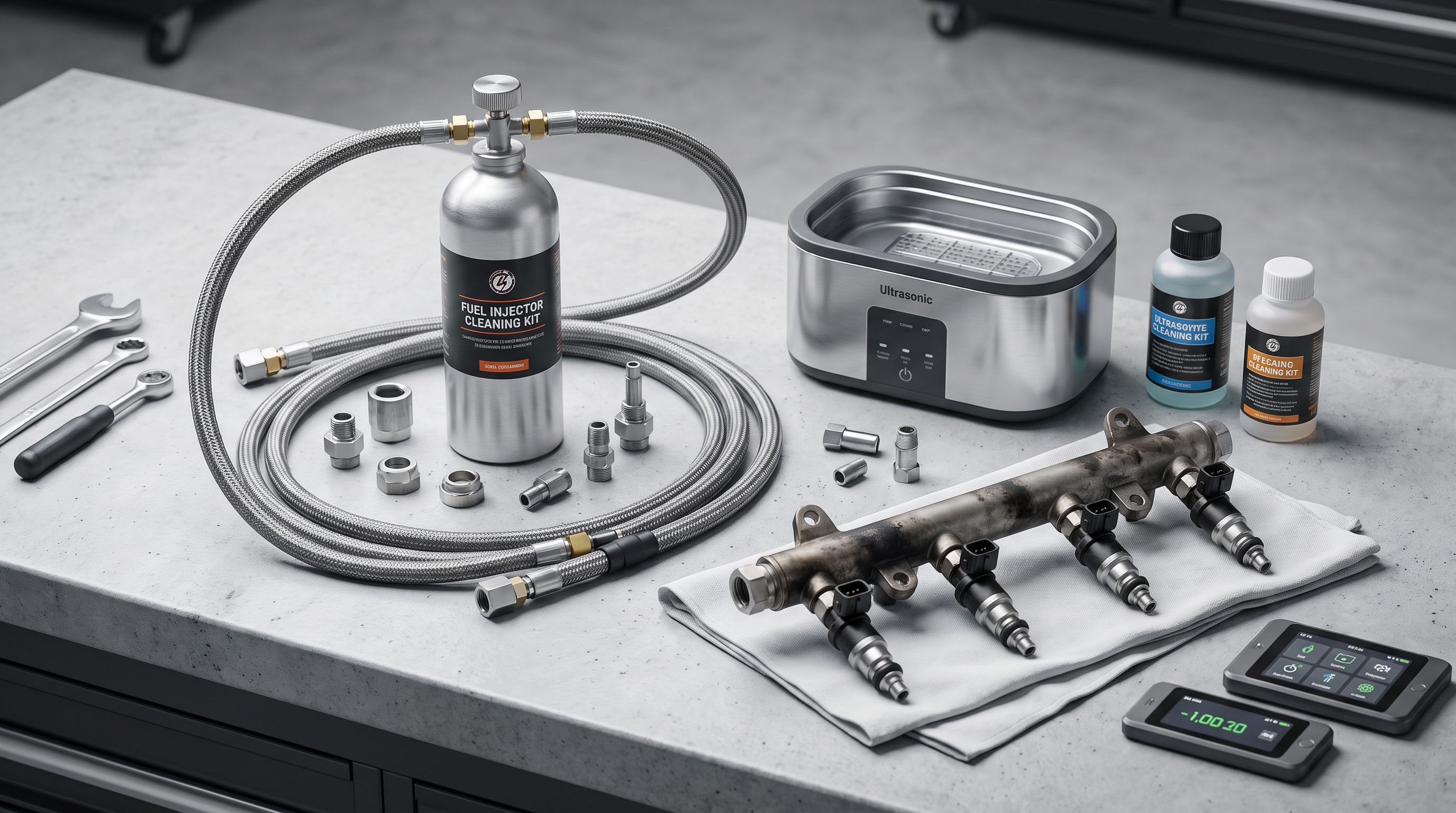
Fuel Injector Cleaning Kit 2026: Which Port Do You Have?
Port, direct or dual injection? Our 2026 fuel injector cleaning kit guide matches chemistry and hardware to your engine family, with real fitment cues.
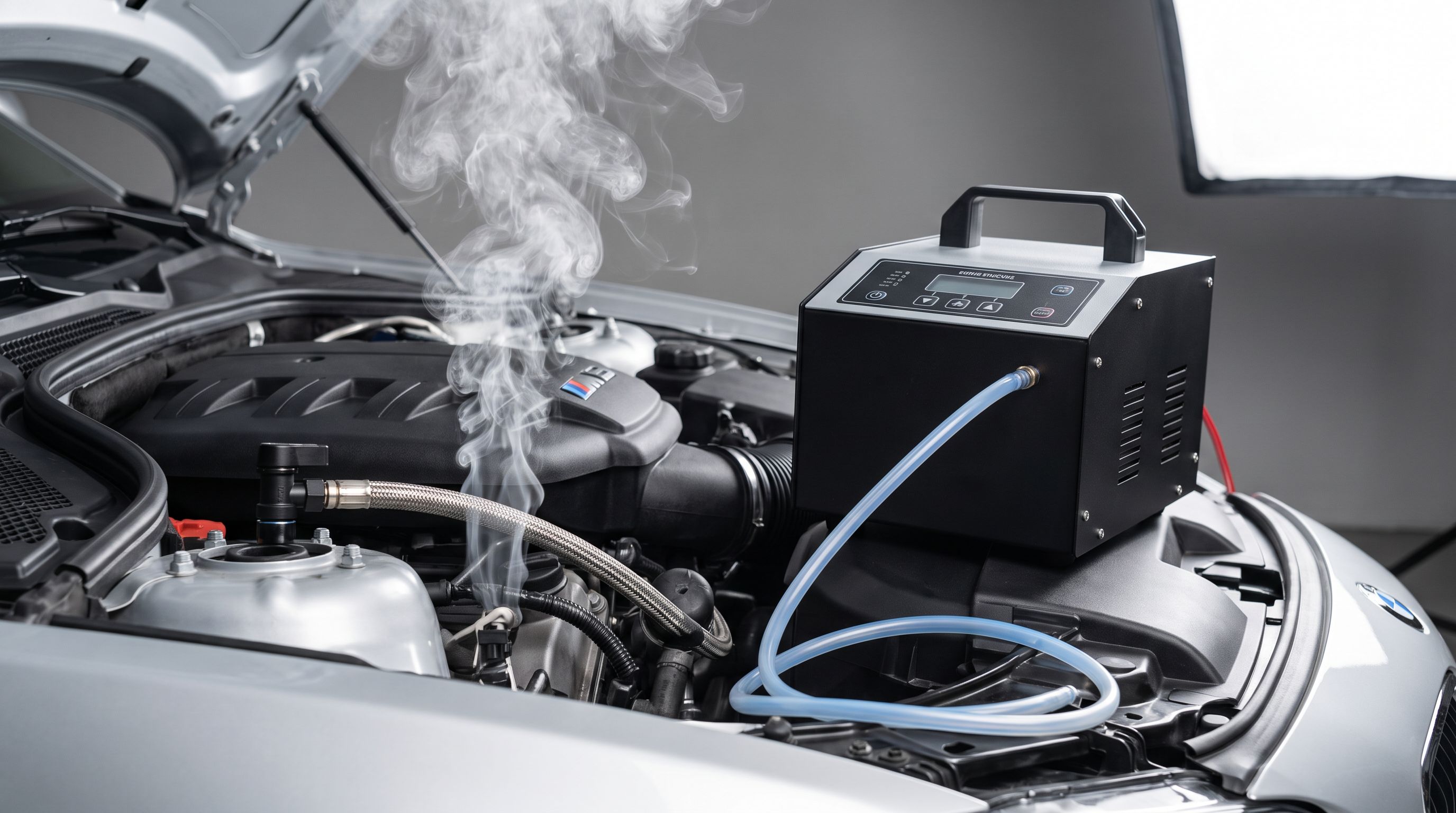
EVAP Smoke Machine Leak Tester 2026: Pressure & Port Fit
How to pick an EVAP smoke machine leak tester in 2026: safe output pressure, adapter cone sizing, gas cap vs. service port fit, and four picks for DIY garages.
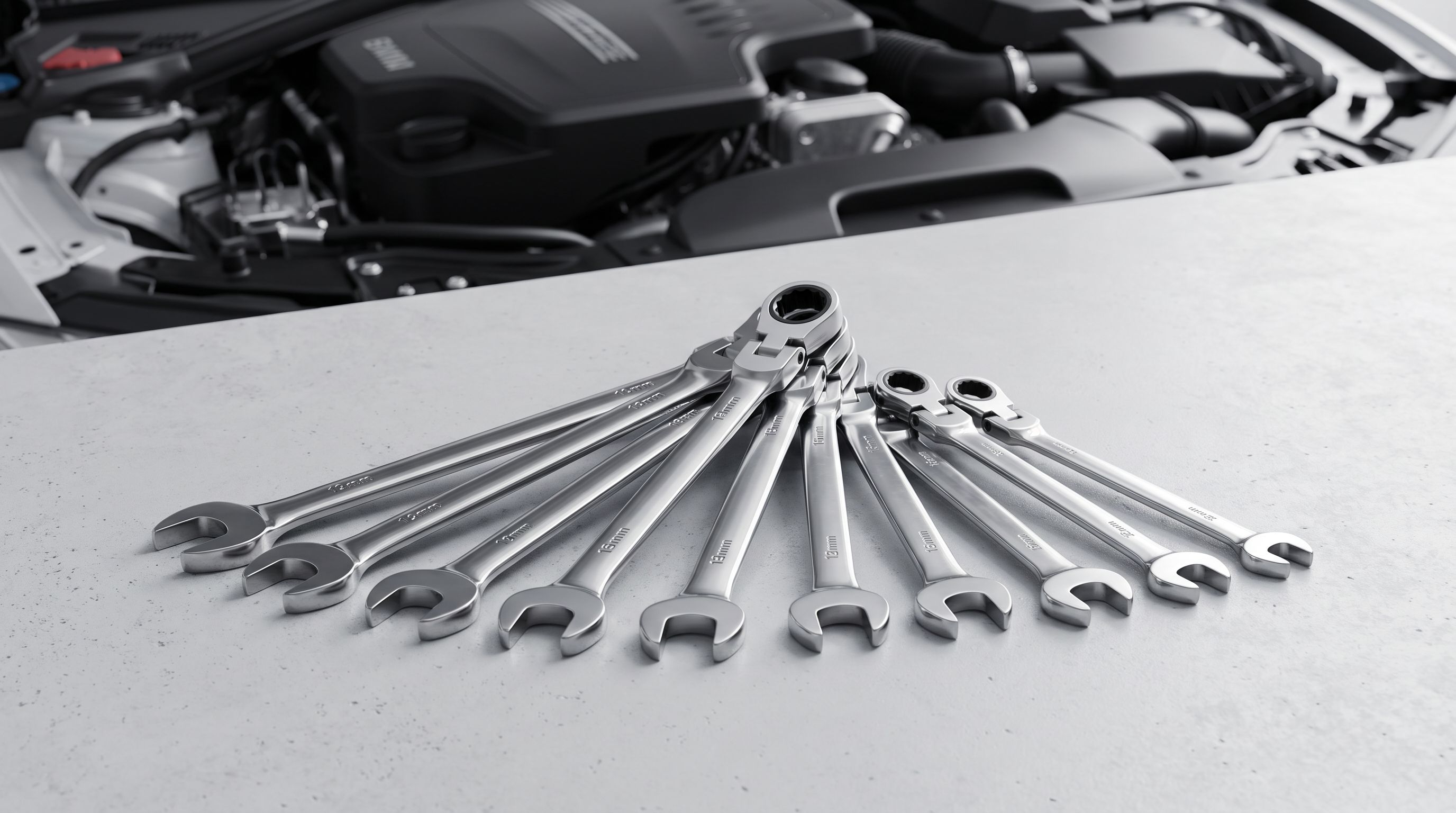
Ratcheting Wrench Sets 2026: Flex-Head vs Fixed Clearance
Pick a ratcheting wrench set by swing arc, head profile and SAE/metric spread — not piece count. Flex-head vs fixed compared, with 4 picks for 2026.