No-Start Diagnosis in 2026: Testers vs. Guessing
Load testing, conductance testers and parasitic draw checks explained — why a battery can "test good" and still leave you stranded, and which cheap tools actually find the fault.
Reader-supported: we may earn a commission from links on this page, at no extra cost to you. It never affects our picks. Learn more.
The most expensive word in car repair is "probably"
A no-start is one of the few automotive failures where guessing is socially acceptable. The car doesn't crank, somebody says "probably the battery," a new battery goes in, and about a third of the time the problem walks right back in a week later — because the real fault was a corroded terminal, a worn starter, a dying alternator, or a parasitic draw quietly emptying a perfectly healthy battery overnight.
The frustrating part is that the diagnostic sequence is not hard, and the tools that run it honestly cost less than one unnecessary battery. What's changed recently isn't the physics — lead-acid chemistry hasn't moved much — it's that cheap conductance testers and DC clamp meters have put shop-grade measurements in a glovebox-sized package, while marketing has gotten better at implying those measurements mean more than they do.
What's actually happening now
Two things are colliding.
First, vehicles draw more current at rest than they used to. Telematics modules, keyless entry receivers, alarm systems, always-on infotainment and aftermarket dashcams all sip power when the key is out. A modern car's normal parasitic draw is typically measured in tens of milliamps once the modules go to sleep — and "go to sleep" can take 20 to 45 minutes after you close the door. That sleep delay is why so many draw tests give a false positive: people clamp on, read 400 mA, and start pulling fuses on a car that was simply still awake.
Second, the testing method most people encounter has quietly changed. The classic carbon-pile load test applies a real load — roughly half the battery's rated cold cranking amps for around 15 seconds — and watches whether voltage holds. What you get at most parts counters today is a conductance tester: it injects a small AC signal, measures internal resistance, and extrapolates a CCA number. It's fast, safe, works on a partially discharged battery, and it's what AGM-equipped cars need. It is also the reason so many people have lived the experience described in the coverage of this topic: the battery "tests good" and the car still won't start.
Conductance testing measures the battery's ability to conduct, not its reserve capacity. A battery with low capacity — plenty of plate surface, not much stored energy — can post a passing CCA number and still collapse under 200+ amps of starter draw on a cold morning. That's the gap between a pass sticker and reality.
The real players and the tools that actually ship
The honest tool stack for a no-start has three tiers, and most people only need the first two.
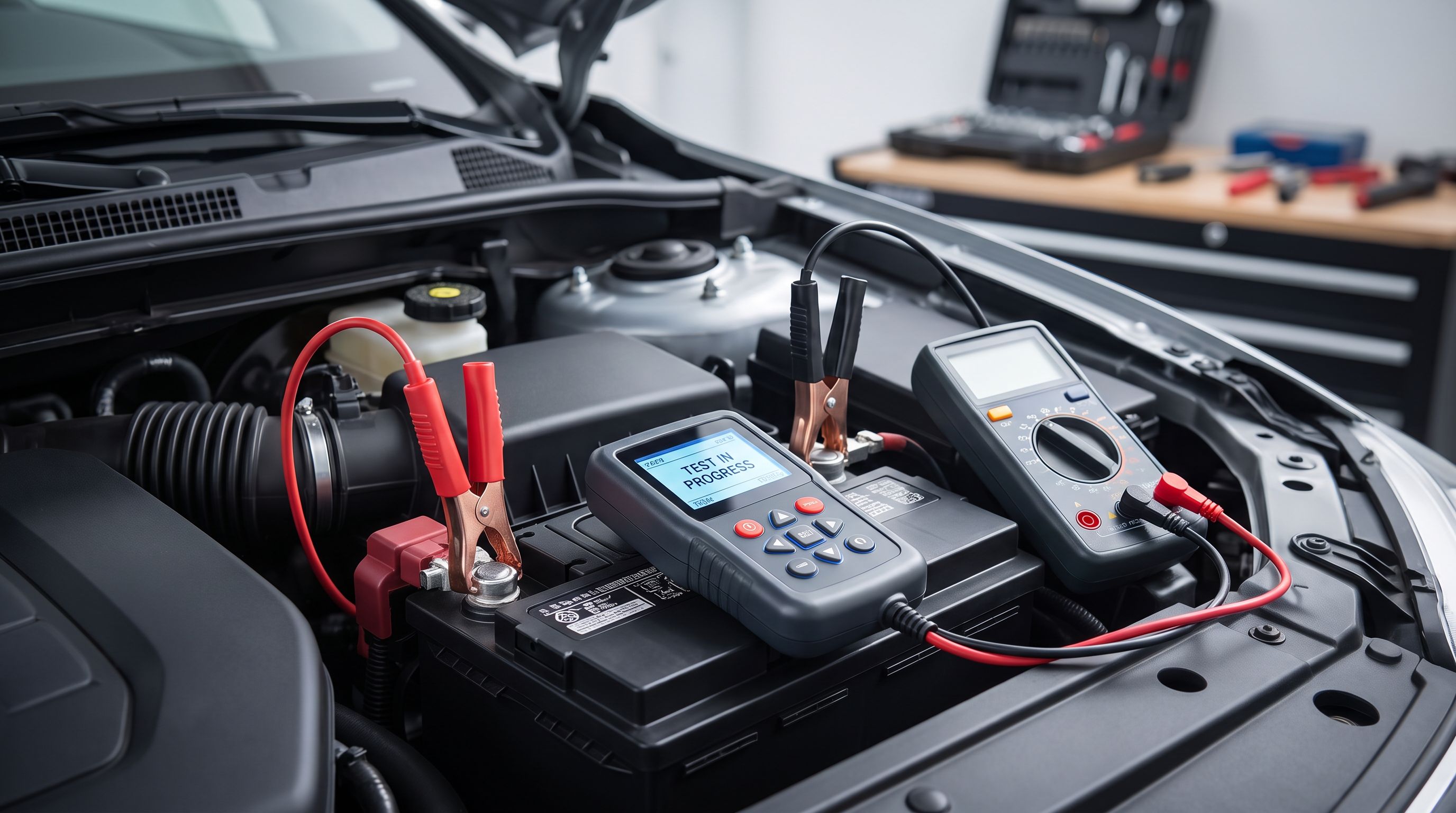
A plain multimeter is tier one and it answers more questions than any other single device. A Fluke 101 is the small, no-frills end of a brand that's earned its reputation in electrical work; it reads resting voltage, cranking voltage and charging voltage, which between them separate battery problems from starter problems from charging problems. The numbers that matter: a rested, surface-charge-free battery around 12.6 V is full, roughly 12.4 V is about 75 percent, and 12.2 V or below means it's discharged and you're not diagnosing anything until it's charged. During cranking, voltage that sags below roughly 9.6 V on a warm engine points at the battery; voltage that holds while the engine barely turns or just clicks once points downstream at the starter, cables or grounds. With the engine running, something in the low-13s to mid-14s is a working alternator.
Tier two is a conductance tester, and the shipping options are genuinely cheap now. The ANCEL BST500 is a handheld unit that reports CCA, internal resistance, and separate cranking and charging tests, with a built-in printer for people who want a record. The TOPDON BT100 covers the same core ground — battery health, cranking test, alternator ripple check — in a simpler clamp-on package. Both are 12 V-focused consumer tools, and both carry the same caveat as the parts-store machine: they estimate health from resistance, so treat a marginal result as a reason to load test properly rather than as a verdict.
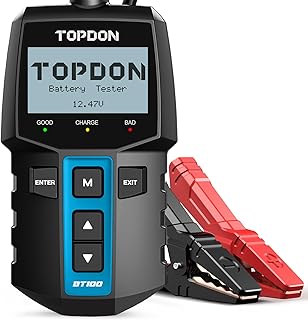 Simplest clamp-on health check · TOPDON BT100 Battery Tester — Check price on Amazon →
 Conductance tester with a printer · ANCEL BST500 Battery Load Tester — Check price on Amazon →
Tier three is the one most DIYers skip and shouldn't: a DC clamp meter for parasitic draw. The UNI-T UT210E is the common recommendation because it reads DC amps down into the milliamp range without breaking the circuit. That matters more than it sounds. The old method — disconnect the negative terminal and insert a meter in series — wakes modules up, risks blowing the meter's fuse the moment someone opens a door, and resets radio and module memory on some cars. A clamp around the negative cable reads the draw with everything still connected.
 Best for hunting parasitic draw · UNI-T UT210E Clamp Meter — Check price on Amazon →
| Tool | What it actually measures | Where it misleads |
|---|---|---|
| Multimeter | Static, cranking and charging voltage | Surface charge after driving inflates resting voltage; rest it an hour or load it briefly first |
| Conductance tester | Internal resistance, estimated CCA | Can pass a low-capacity battery; CCA estimate is an extrapolation, not a measured load |
| Carbon-pile load tester | Voltage under a real ~half-CCA load | Needs a near-full charge to be valid; generates heat; not ideal for AGM |
| DC clamp meter | Parasitic draw in milliamps | Reads high if modules haven't slept yet; cheap clamps drift at very low current |
What it means if you're shopping today
If you own one electrical tool, make it a multimeter — the Fluke 101 or anything comparable with a solid DC volts range. The cranking-voltage test alone resolves the battery-versus-starter argument that sends most people to the parts store in the first place. The widely repeated rule of thumb holds up: rapid clicking usually means not enough current to hold the solenoid in, which is a battery or connection problem; a single solid click with healthy lights and good cranking voltage points at the starter itself.
If you own a second tool, the choice depends on your symptom. Recurring dead batteries on a car that otherwise runs fine is a parasitic draw story, and a clamp meter like the UNI-T UT210E is the only tool that finds it efficiently — clamp the negative cable, wait for the modules to sleep, then pull fuses one at a time and watch for the drop. A battery that's simply getting old and marginal is a conductance-tester story, where something like the ANCEL BST500 or TOPDON BT100 gives you a trend over months rather than a single pass/fail.
What's worth ignoring: the skepticism you'll find in mechanic forums that digital testers are "junk." That's an overcorrection. The criticism is really about interpretation — a conductance number is one data point, not a diagnosis. Used alongside a voltage reading and a cranking test, it's useful. Used alone to justify a new battery, it's exactly the guessing it was meant to replace.
Also be realistic about what cheap testers won't do. Most consumer units are 12 V only and won't properly handle 24 V systems, lithium starter batteries, or the sophisticated battery-management strategies on some newer start-stop vehicles — where replacing a battery may require registering it to the vehicle before the charging system treats it correctly.
What to watch next
Start-stop systems have made AGM and EFB batteries mainstream, and those chemistries are less tolerant of deep discharge and more dependent on correct charging profiles. Expect more consumer testers to advertise explicit AGM/EFB modes, and more vehicles to require battery registration after replacement — a step that no handheld tester performs and that increasingly needs an OBD-II scan tool.
The other thing to watch is Bluetooth battery monitors that live permanently on the terminals and log voltage over time. They don't load test, but a logged voltage curve across several nights is a far better parasitic-draw indicator than a single spot reading — and it catches the slow drain that shows up only after the car sits for a weekend.
FAQ
My battery tested good at the parts store. Why won't the car start? Most counter testers are conductance units measuring internal resistance, not stored capacity. A battery can conduct well and still lack the reserve to crank. Check cranking voltage with a meter and inspect terminals and grounds before accepting the pass.
What's a normal parasitic draw? Tens of milliamps on most modern cars once all modules have gone to sleep, which can take 20 to 45 minutes after the doors close. Testing before the car sleeps is the single most common source of false alarms.
Do I need a carbon-pile load tester? Not for most home use. It's the gold standard for proving capacity under real load, but it requires a well-charged battery to be valid and is overkill if a multimeter plus a conductance tester already agree on the answer.
Clicking versus no crank — what's the difference? Rapid clicking generally means the solenoid can't hold, typically a low battery or bad connection. One click with the lights staying bright and good voltage at the starter points at the starter or its circuit.
Can a bad alternator mimic a bad battery? Yes. A failing alternator leaves you with a discharged battery every morning, and replacing the battery buys a few days at most. Measure charging voltage with the engine running before you buy anything.
Our picks
Prices last checked November 2, 2026. Amazon prices change frequently, so treat these as a guide and check the live price before you buy.
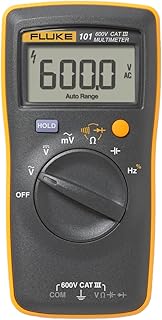
Fluke 101 Digital Multimeter
Measures resting voltage, cranking voltage and charging voltage — the three numbers a no-start argument turns on.
ANCEL BST500 Battery Load Tester
Handheld conductance tester that reports CCA, internal resistance and cranking/charging test results.
TOPDON BT100 Battery Tester
Inexpensive 12V conductance tester covering battery health plus cranking and alternator ripple checks.
UNI-T UT210E Clamp Meter
True-RMS DC clamp meter reads milliamp draw without breaking the circuit or losing vehicle memory.
Get the best car care deals in your inbox
Join the GarageProof newsletter for hand-picked car care deals and new buying guides. No spam, unsubscribe anytime.
Related reads
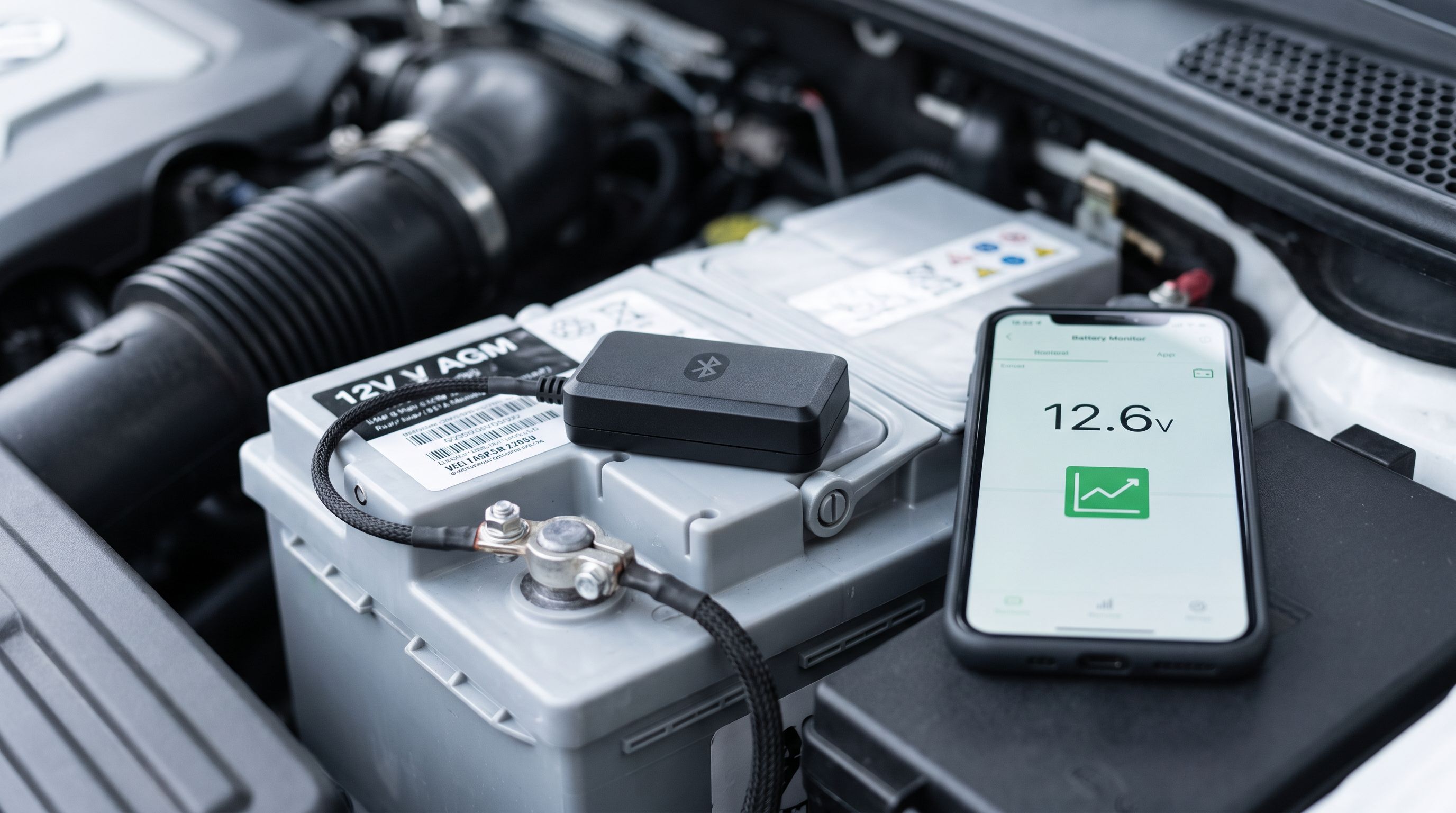
Bluetooth Car Battery Monitors 2026: Shunt or Terminal Clamp?
Compare Bluetooth car battery monitors for 2026: terminal clamps vs shunts, AGM and lithium profiles, parasitic drain logging, and terminal fitment checks.
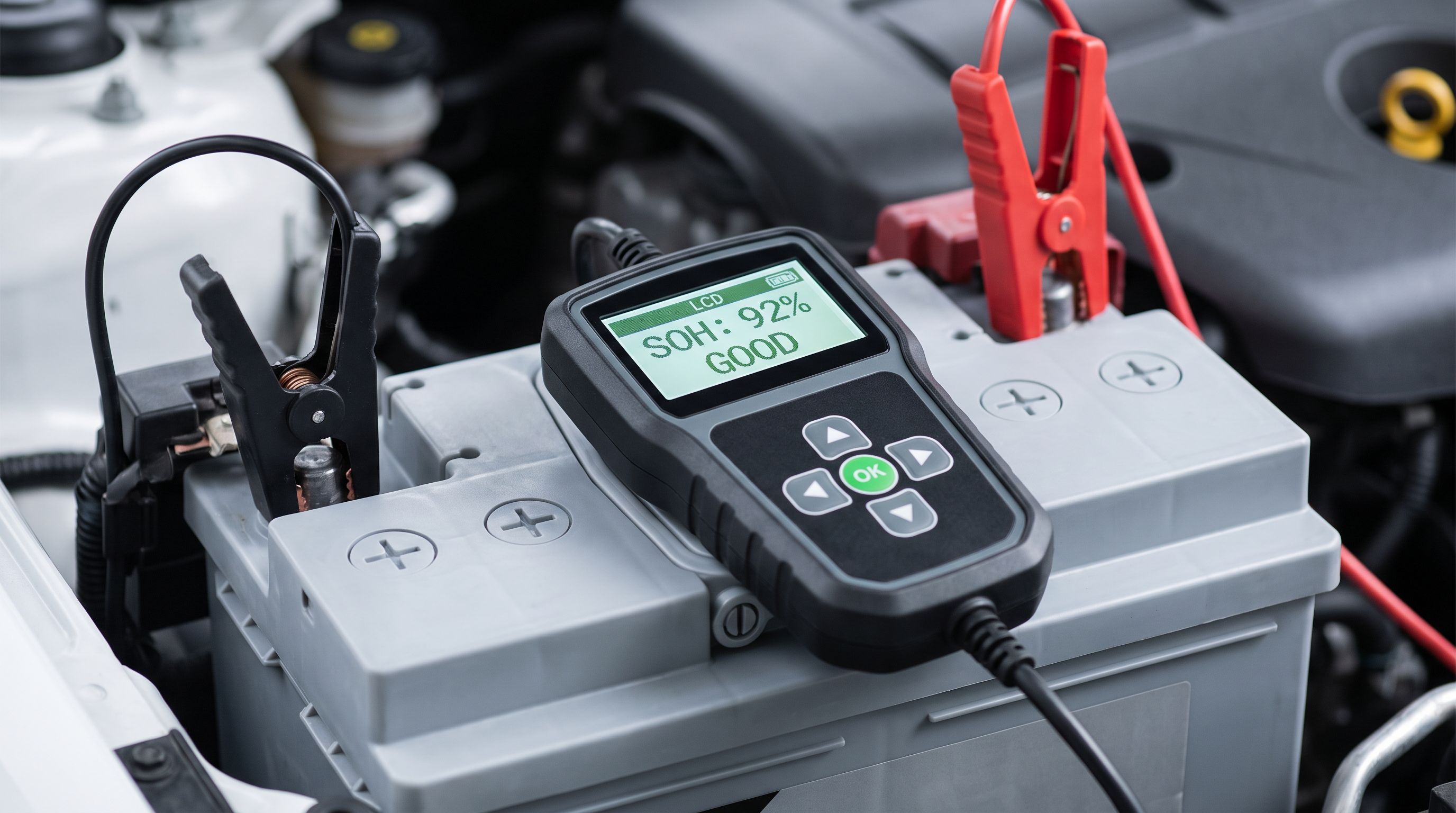
Car Battery Load Tester 2026: AGM and Mild-Hybrid Traps
A car battery load tester has to match your chemistry. Compare conductance analyzers for AGM, EFB, lithium and 48V mild-hybrid systems in 2026.
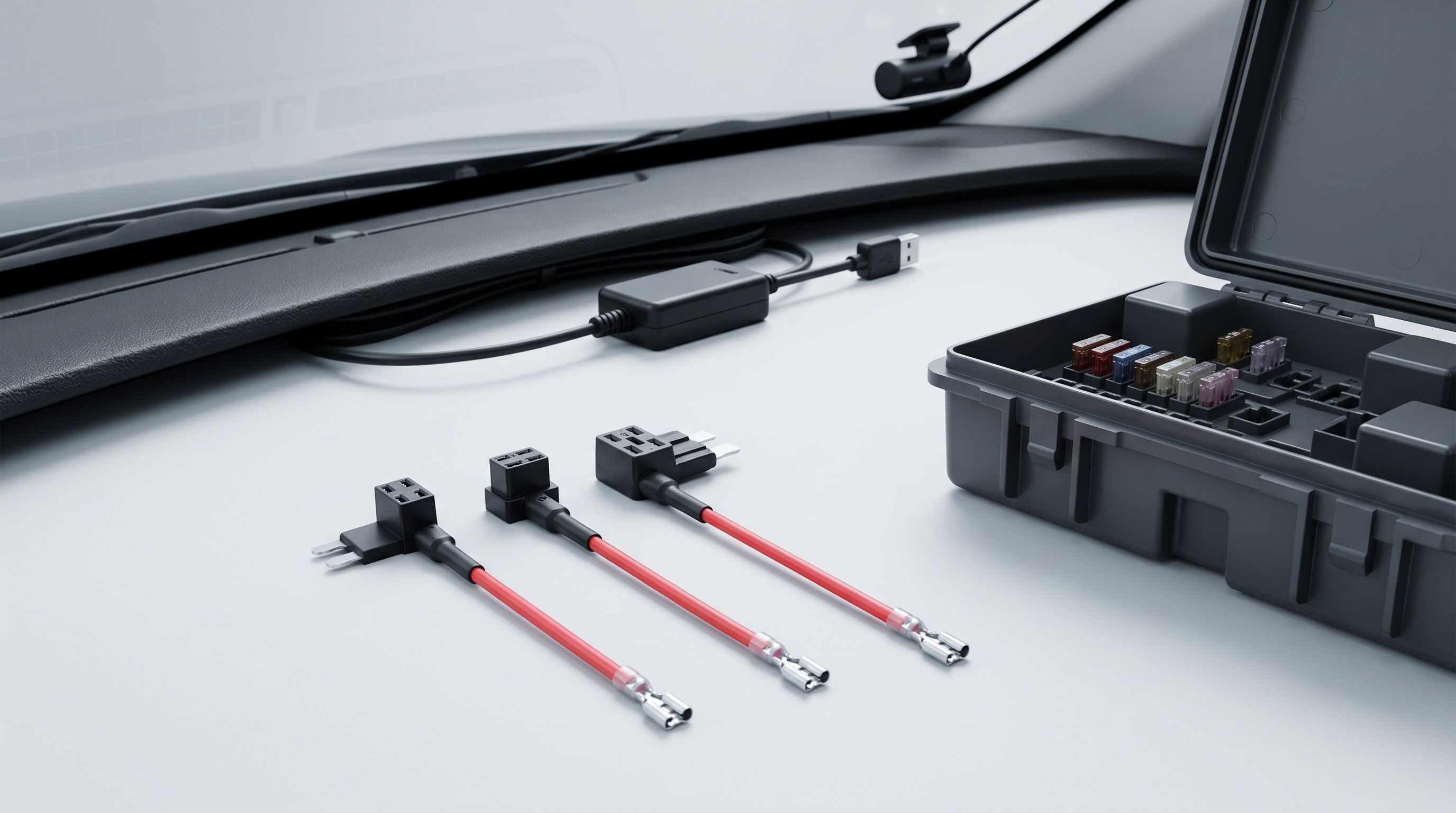
Dash Cam Hardwire Kit 2026: Match the Tap to Your Fuse Box
Pick the right dash cam hardwire kit in 2026: mini vs micro2 vs low-profile fuse taps, voltage cutoff settings, ACC vs constant circuits, and fitment checks before you order.