NACS to J1772 Adapters in 2026: Amperage and Fit
Pick the right NACS to J1772 adapter in 2026: match your inlet direction, onboard charger amperage and connector lock style. Five adapters compared.
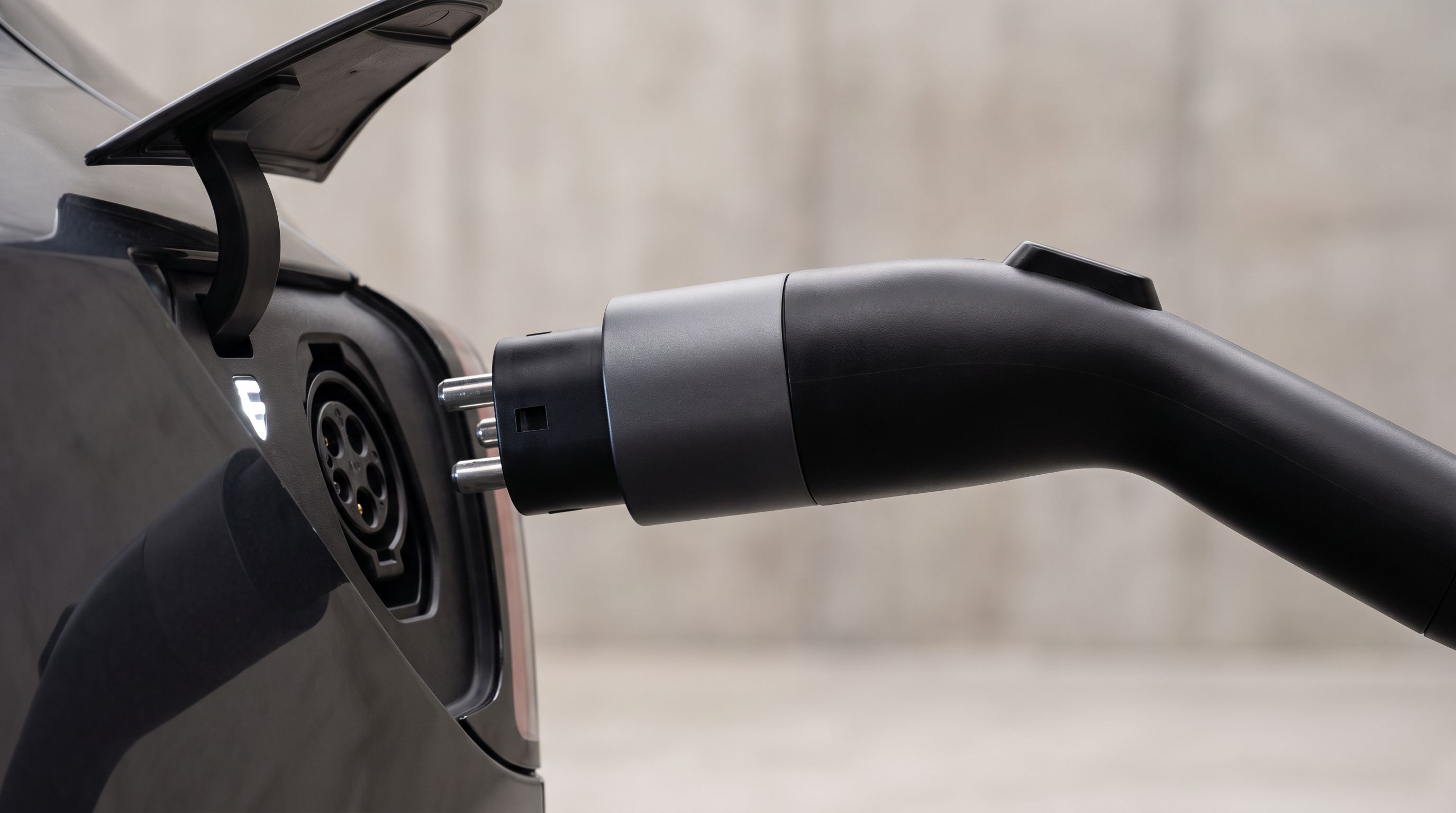
Reader-supported: we may earn a commission from links on this page, at no extra cost to you. It never affects our picks. Learn more.
Direction matters more than almost anything else when you buy an EV charging adapter, and it's the single thing people get wrong most often. A "NACS to J1772 adapter" can mean two completely opposite products depending on who's talking, and buying the wrong one leaves you with an expensive paperweight.
Here's the plain-English version:
- NACS (Tesla-style) plug → J1772 car inlet: you drive a J1772 EV (Bolt, Ioniq 5 from 2024 and earlier, ID.4, Mach-E, older EV6/EV9) and you want to use a Tesla Wall Connector or Tesla Destination Charger. The adapter's male end is J1772 (goes in your car) and the female socket accepts the NACS handle.
- J1772 plug → NACS car inlet: you drive a Tesla or a 2025-and-newer NACS-equipped EV (Ioniq 5, EV9, Blazer EV, Equinox EV, etc.) and you want to use the enormous installed base of J1772 Level 2 stations.
Both are commonly listed under the search term "NACS to J1772 adapter." Read the listing photos, not the title. In this guide we compare the adapters worth owning in 2026, and more importantly, how to match one to your inlet, your onboard charger amperage, and the connector lock style on the station you'll actually use.
The short version
- Best overall (NACS station → J1772 car): Lectron Tesla to J1772 Adapter
- Best build quality: A2Z EV NACS to J1772 Adapter
- Best value: EVDANCE NACS to J1772 Adapter
- Best for NACS cars at J1772 stations (reverse direction): Lectron J1772 to Tesla Adapter
- Budget reverse-direction pick: LENZ J1772 to NACS Adapter
 Best for NACS cars at J1772 stations · Lectron J1772 to Tesla Adapter — Check price on Amazon →
 Best value · EVDANCE NACS to J1772 Adapter — Check price on Amazon →
 Best build quality · A2Z EV NACS to J1772 Adapter — Check price on Amazon →
 Best overall · Lectron Tesla to J1772 Adapter — Check price on Amazon →
How to choose
1. Get the direction right — look at the metal, not the title
Hold the listing photo up against your car. If your charge port has the round two-pin-on-top, five-pin J1772 inlet, you need an adapter with a male J1772 pin cluster on one end. If your car has the small, flat NACS inlet, you need an adapter with a male NACS blade set.
A useful sanity check: the end that plugs into your car is always the male end. The end that receives the station's handle is the female socket. Sellers name products inconsistently — "Tesla to J1772" and "J1772 to Tesla" are used interchangeably by different brands, which is exactly why so many get returned.
2. Match amperage to your onboard charger, not to the adapter
Adapters are rated for a maximum continuous current — commonly 48A, 60A, or 80A at up to 250V AC. That rating is a ceiling, not a promise. Your actual charge speed is set by the lowest number in the chain:
- Your car's onboard AC charger (often 7.7 kW / 32A, 9.6 kW / 40A, or 11.5 kW / 48A)
- The station's output (a Tesla Wall Connector can be configured anywhere from 15A to 48A; Destination Chargers are often lower)
- The adapter's rating
- The circuit breaker feeding the station
Most J1772 EVs sold in North America top out at 48A or less on AC, so a 48A-rated adapter is sufficient for the overwhelming majority of drivers. An 80A adapter doesn't charge faster — it just has more headroom and typically heavier conductors, which means it runs cooler at a given current. That's a real durability benefit, not a speed benefit.
One important caveat: Tesla Supercharger posts are DC, and no passive AC adapter in this guide will let a J1772 car use one. Tesla's Magic Dock sites and the growing number of native-NACS DC stalls are a different conversation entirely.
3. Understand lock styles and the "handle release" problem
This is the detail that bites people. J1772 handles have a mechanical latch with a thumb release; NACS handles rely on an electronic latch controlled by the vehicle. When you combine them with an adapter, odd things happen:
- NACS station handle into a J1772 car: the Tesla handle's button needs to communicate a release to the adapter. Good adapters have a sturdy internal latch and a clearly accessible release. Cheap ones can stick or, worse, allow the handle to pull free under tension.
- J1772 handle into a NACS car: many public J1772 stations lock the handle until the session ends, and some adapters require you to press the J1772 thumb latch while the car still holds the adapter. Look for adapters with a dedicated release button and, ideally, a lanyard or lock hole so the adapter can't walk off.
- Stations with cable-retention locks (common at apartment complexes and paid networks) may physically prevent removing the adapter mid-session. Always end the session in the app or at the car before pulling.
If your adapter will live permanently on a public pedestal, a model with a padlock loop is worth seeking out.
4. Certification, temperature sensing, and weather rating
Look for UL 2252 certification, which is the standard specific to EV coupler adapters. Lectron advertises UL 2252 certification on its J1772-to-NACS adapter, and several other brands have pursued it. Also look for an IP54 or better rating for outdoor use, and internal temperature monitoring that reduces or stops current if the contacts overheat.
Plastic quality matters more than it sounds. An adapter hanging off a charge port acts as a lever arm on your car's inlet. Glass-filled nylon housings and short bodies are better than long, heavy, hollow ones. If you charge outdoors in a cold climate, brittle plastic at -10°F is a genuine failure mode reported by owners.
5. Check your specific vehicle's known quirks
Some cars are pickier than others. Owners of certain Hyundai, Kia, and GM vehicles have reported handshake issues with specific adapter-and-station combinations, usually resolved by a firmware update or by switching adapter brands. Before buying, search your exact year and model plus the adapter name on an owners' forum. A 2026 Kia EV9 and a 2022 Kia EV6 have different inlets and different answers.
Comparison table
| Adapter | Direction | Max rating (per maker) | Standout feature | Best for |
|---|---|---|---|---|
| Lectron Tesla to J1772 | NACS plug → J1772 car | Up to 48A, 250V AC | Widely owned, broad vehicle compatibility | Most J1772 EV owners using Tesla Wall/Destination Chargers |
| A2Z EV NACS to J1772 | NACS plug → J1772 car | High-current rated, heavy conductors | Machined, compact, premium housing | Daily users who want the sturdiest option |
| EVDANCE NACS to J1772 | NACS plug → J1772 car | Up to 48A, 250V AC | Strong value with LED status indicator | Occasional or glovebox backup use |
| Lectron J1772 to Tesla | J1772 plug → NACS car | 80A, 240V AC, UL 2252 certified | Highest headroom plus certification | Tesla and 2025+ NACS EVs on public J1772 |
| LENZ J1772 to NACS | J1772 plug → NACS car | Level 1 and Level 2 J1772 | Simple, compact, lanyard-friendly | Budget-conscious NACS drivers |
Specs are as published by each manufacturer; confirm current ratings on the listing before you buy, since makers revise hardware between production runs.
The picks
Lectron Tesla to J1772 — best overall
Prices last checked October 2, 2026. Amazon prices change frequently, so treat these as a guide and check the live price before you buy.
Lectron Tesla to J1772 Adapter
Long-proven compatibility across GM, Ford, Hyundai, Kia and VW J1772 EVs on Tesla Wall and Destination Chargers.
If you drive a J1772 EV and keep finding Tesla Destination Chargers at hotels, offices, and parking garages, this is the default answer. Lectron has been making this adapter longer than almost anyone, which matters because compatibility across dozens of vehicle models is a function of accumulated firmware and handshake refinement, not just molded plastic. Owner feedback consistently reports reliable sessions across GM, Ford, Hyundai, Kia, VW, and Nissan J1772 vehicles.
What it gives up: it's rated well below the 80A ceiling of Lectron's reverse-direction model, which is a non-issue for nearly every J1772 car but worth noting if you have a 48A onboard charger and want maximum thermal headroom. The housing is competent, not luxurious.
A2Z EV NACS to J1772 — best build quality
A2Z EV NACS to J1772 Adapter
Compact, heavily built housing favored by EV9 and EV6 owners for sustained 40-48A Level 2 sessions.
A2Z has built a strong reputation among EV9, EV6, and Ioniq owners for adapters that feel engineered rather than sourced. Forum users specifically recommend the A2Z NACS to J1772 adapter for Kia EV9 Level 2 charging, citing solid contact seating and a compact body that doesn't hang heavily off the inlet. Heavier internal conductors and tighter tolerances translate to cooler operation at sustained 40-48A.
What it gives up: it's typically positioned above the mainstream brands on price, and availability can be inconsistent. If you only adapt a few times a year, the extra robustness is probably more than you need. For someone whose home or workplace charger is a Tesla Wall Connector, it earns its keep.
EVDANCE NACS to J1772 — best value
EVDANCE NACS to J1772 Adapter
Solid everyday performer with an LED status light; a smart glovebox backup for J1772 EV owners.
EVDANCE is the pick frequently named as a default recommendation for J1772-equipped EV owners who want to use NACS Level 2 chargers without overspending. It covers the same core job as the Lectron and A2Z units — Tesla Wall Connector or Destination Charger into a J1772 inlet — with an LED indicator that makes it easy to confirm the connection is live before you walk away.
What it gives up: housings and strain relief are a step down from A2Z, and long-term durability reports are more mixed. Treat it as a glovebox backup or a light-duty daily rather than something you leave clipped to an outdoor pedestal through a Midwest winter.
Lectron J1772 to Tesla — best for NACS cars at J1772 stations
Lectron J1772 to Tesla Adapter
UL 2252 certified and rated to 80A at 240V, giving Tesla and 2025+ NACS EVs access to J1772 pedestals.
This is the one to buy if you drive a Tesla or a 2025-and-newer NACS-inlet EV and want access to the vast installed base of J1772 stations: workplace chargers, municipal lots, apartment pedestals, ChargePoint, Blink, and the rest. Lectron rates it for 80A at 240V and advertises UL 2252 certification, which is the specific safety standard for EV coupler adapters and a meaningful differentiator in a category full of uncertified imports.
What it gives up: the 80A rating is headroom you almost certainly won't use, since Tesla onboard chargers cap at 48A or less and most public J1772 stations deliver 32A. You're paying for conductors and certification, not speed.
LENZ J1772 to NACS — budget reverse-direction pick
LENZ J1772 to NACS Adapter
Compact Level 1 and Level 2 adapter for Tesla and NACS EVs that need public J1772 access on the cheap.
LENZ makes a straightforward J1772-to-NACS adapter that works at both Level 1 and Level 2 J1772 stations, which is handy because Level 1 compatibility means you can also borrow a friend's wall-outlet EVSE when travelling. It's compact, light, and easy to stash in a frunk bin, and it covers the common scenario: NACS-equipped car, public or apartment J1772 pedestal.
What it gives up: lower stated current headroom than the Lectron, less documented certification, and a simpler latch mechanism. If your routine involves daily 48A sessions, step up. For intermittent use and travel insurance, it's a sensible, inexpensive hedge.
Practical tips once your adapter arrives
Support the weight. Many stations' cables are stiff. Loop the cable so the adapter isn't bearing the full cable weight on your inlet — repeated strain is the leading cause of inlet damage.
Start and stop in the right order. Plug the adapter into the car first, then the station handle into the adapter. To end a session, stop charging at the car or in the app, then release the station handle, then remove the adapter.
Check temperature early. Twenty minutes into your first session, touch the adapter body. Warm is normal. Hot enough that you don't want to hold it is a reason to reduce the amperage in your car's settings and investigate.
Reduce amperage if you're on a shared or older circuit. Nearly every EV lets you set a lower AC charge limit. Dropping from 48A to 32A costs you some time and buys a lot of thermal margin.
Don't leave it behind. Adapters disappear from public chargers constantly. A lanyard and a habit of walking back to the pedestal are cheaper than a replacement.
FAQ
Does a NACS to J1772 adapter let me use Superchargers? No. These are AC adapters. Superchargers deliver DC, and passive adapters cannot bridge that. Access for non-Tesla vehicles comes via Magic Dock stalls or native NACS DC ports with the vehicle manufacturer's own DC adapter.
Will an 80A adapter charge my car faster? No. Your speed is limited by your car's onboard charger, the station's output, and the breaker. An 80A rating gives you thermal headroom and heavier conductors, which is a durability advantage, not a speed one.
My 2026 EV has a NACS inlet. Which direction do I need? You need a J1772-to-NACS adapter — male NACS into your car, female J1772 socket for the station handle. The Lectron J1772 to Tesla and LENZ J1772 to NACS are both in this category.
Are these adapters legal and safe to leave plugged in outdoors? Reputable adapters carry weather ratings and, in the best cases, UL 2252 certification. Leaving one attached at a public pedestal is more a theft risk than a safety one. Look for a padlock loop if that's your situation.
Why won't my adapter release from the station handle? Most stations lock the handle during an active session. End charging at the vehicle or in the network app first. If it still won't release, check that you're pressing the adapter's own release button, which is separate from the station handle's thumb latch.
Does using an adapter void anything? Manufacturers' positions vary, and some discourage third-party adapters. Using a certified adapter within its ratings is the lowest-risk approach. Check your owner's manual and your vehicle's charging guidance before making an adapter part of your daily routine.
Get the best car care deals in your inbox
Join the GarageProof newsletter for hand-picked car care deals and new buying guides. No spam, unsubscribe anytime.
Related reads
EV Charging Cable Extension 2026: What's Actually Safe
Most EV charging cable extensions aren't code-compliant. Here's what NEC and automakers actually say, plus safer ways to add reach in 2026.
J1772 Charging Cable 40 Amp: Why Cheap Cords Run Hot in 2026
A J1772 charging cable rated 40 amp is only as good as its copper, jacket and contacts. Here's how gauge and connector quality prevent heat soak — plus 2026 picks.
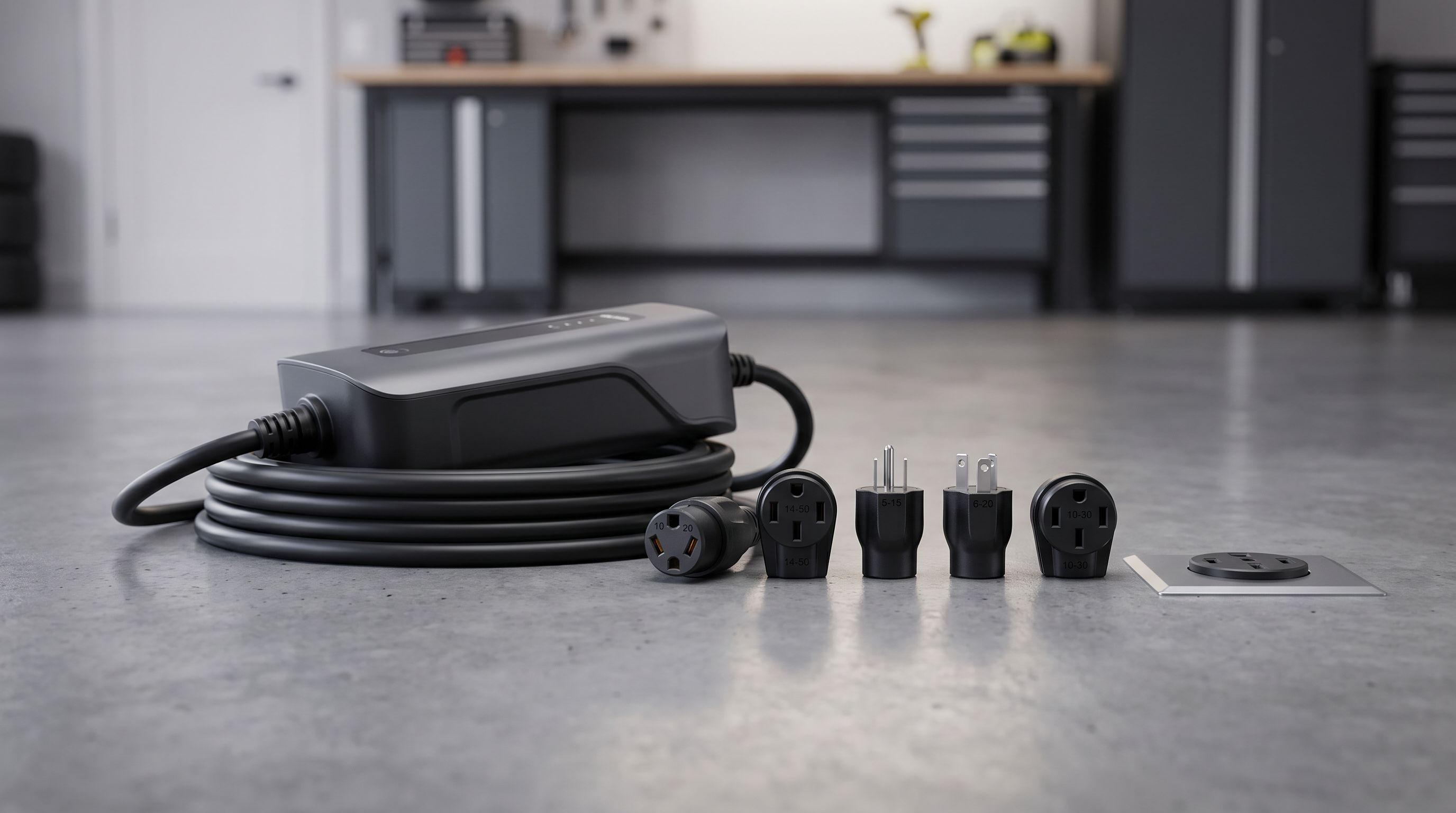
Portable EV Charger Adapter Guide 2026: Match Your Outlet
Portable EV charger adapter guide for 2026: which NEMA plugs travel chargers ship with, how to identify your outlet, and the amperage limits that actually matter.