Mud Flaps for Trucks 2026: Fit the Wheel Well, Not the Badge
Heavy-duty mud flaps for trucks in 2026: how wheel-well lip, lift height and flare type decide whether drill-in or no-drill kits actually fit.
Reader-supported: we may earn a commission from links on this page, at no extra cost to you. It never affects our picks. Learn more.
The short version
- Best overall: Truck Hardware Gatorback Mud Flaps
- Best no-drill option: Husky Liners Kick Back Mud Flaps
- Best for heavy haulers: Husky Liners MudDog Mud Flaps
- Best for stock trucks and SUVs: WeatherTech No-Drill MudFlaps
- Best for towing: Rock Tamers Adjustable Mud Flap System
 Best for towing · Rock Tamers Adjustable Mud Flap System — Check price on Amazon →
 Best for stock trucks and SUVs · WeatherTech No-Drill MudFlaps — Check price on Amazon →
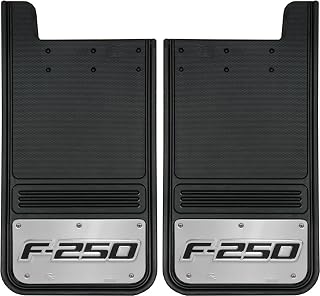 Best overall · Truck Hardware Gatorback Mud Flaps — Check price on Amazon →
Mud flaps don't fit trucks — they fit wheel wells
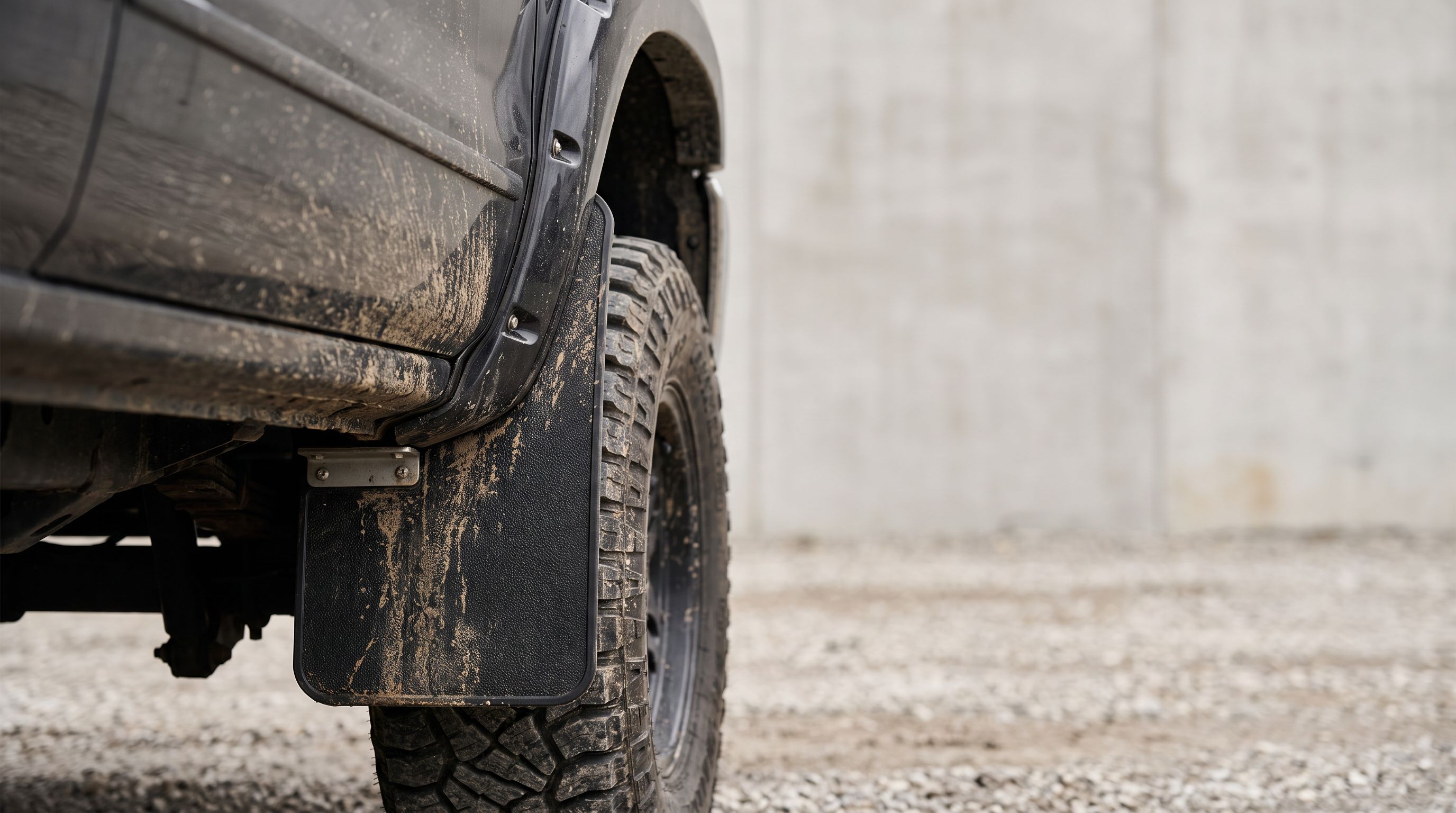
Here's the thing that trips people up when they shop for mud flaps for trucks: the listing says "2026 F-250" or "2021–2026 Ram 1500," and buyers assume that's the whole story. It isn't. A mud flap bolts to a specific piece of sheet metal or plastic — the wheel-well lip, the fender liner, or the rocker pinch weld — and that interface changes based on things the year/make/model dropdown never asks about.
Two identically badged trucks can need two different flap kits. One has factory fender flares with a molded lip and integrated fasteners. The other is a work-spec truck with a bare stamped fender. One is stock height. The other has a 3-inch lift and 35s, which pushes the tire outboard and down relative to the flap. One is a dually with a fender that bulges 4 inches past the single-rear-wheel version.
We compared the current heavy-duty options based on manufacturer fitment data, installer notes and verified owner feedback, and the pattern is consistent: the returns and complaints almost always trace back to flare type, lift height, or tire size — not to the flap itself.
So before you buy anything, go look at the back of your wheel well.
How to choose
Start with the flare type
Walk around your truck and identify what's at the bottom rear of each wheel opening. There are four common situations:
Bare stamped fender lip. Common on work trucks and base trims. There's a folded metal lip, usually with a factory splash-guard hole or two already punched. Nearly every flap style works here, and drill-in kits are straightforward.
Factory flares (OEM painted or textured). Most mid and upper trims — Lariat, Limited, High Country, SLT — have these. The flare covers the metal lip and uses push-pin rivets. Vehicle-specific flaps are designed to reuse those exact fastener locations, which is why a Ram-specific kit won't land right on a Silverado even if the flap itself looks similar.
Aftermarket bolt-on or pocket-style flares. These are the problem children. Bushwacker, Rough Country and similar flares change the wheel-opening geometry entirely, and the flap often has to mount to the flare rather than the body. Check whether your flare manufacturer sells a matched flap or has published a compatibility note.
Fender liner only, no accessible lip. Some newer SUVs and crossovers hide everything behind plastic. No-drill, liner-fastener kits like WeatherTech No-Drill MudFlaps are usually the only clean answer.
Measure your lift and tire clearance
This is the step almost nobody does, and it's the one that matters most on modified trucks.
With the truck on level ground, measure from the bottom edge of the wheel-well opening straight down to the ground. Then measure from the bottom of your tire tread to the ground at the rear of the tire contact patch. A flap that hangs more than a couple of inches below the tire's lowest rear point on a lifted truck is going to catch on driveway aprons, curbs and trail ruts.
On a lifted truck, you generally want shorter flaps than stock, not longer. The lift already raises the mounting point; a stock-length flap now dangles into trouble. Gatorback and MudDog flaps are both commonly trimmed, and trimming a thick rubber flap with a utility knife and a straightedge is a 10-minute job that doesn't void anything.
Conversely, if you've gone to oversized tires without a lift, the tire may now contact the flap at full compression or full lock. Check by turning the wheel lock-to-lock and, if you can, by loading the bed.
Decide drill-in vs. no-drill honestly
No-drill is not automatically better. It means the kit depends entirely on existing factory holes or on clamping the wheel-well lip. If your truck has those holes in the right place, great — you get a clean, reversible install. If it doesn't, a "no-drill" kit either won't mount or will mount on two fasteners instead of four and flap around in a crosswind.
Drill-in kits give you a stronger, more adjustable mount and work on almost any fender, but you've made permanent holes in painted metal. If you drill, treat the bare edge with primer or touch-up paint before you bolt anything down, or you'll be looking at rust bloom in a salt-belt winter.
Husky Liners Kick Back Mud Flaps split the difference with a clamp that grips the wheel-well lip — genuinely no-drill on most applications, but it requires a lip to grab.
Match the flap to the job
A commuter pickup that mostly sees highway spray needs something different from a gravel-road work truck or a fifth-wheel tow rig.
- Stone chip protection on your own truck: standard-length molded flaps, vehicle-specific.
- Protecting vehicles behind you: longer, stiffer rubber — this is where Husky Liners MudDog Mud Flaps earn their keep.
- Protecting a trailer: truck-mounted flaps barely help. The spray that sandblasts a travel trailer comes off the rear tires at an angle a fender-mounted flap can't intercept. A hitch-mounted system like Rock Tamers Adjustable Mud Flap System is the purpose-built tool.
- Winter salt: rubber over plastic, every time. Thermoplastic flaps stiffen and crack in deep cold; molded rubber stays pliable.
Check for parking sensors and running boards
Two late-stage surprises. Rear park-assist sensors in the bumper can get false-triggered by an oversized flap at certain angles — less common with modern software, but worth testing after install. And on trucks with power-deploying running boards, front flaps occasionally interfere with the board's travel arc. Cycle the boards before you torque anything down.
The picks
Truck Hardware Gatorback — best overall
Prices last checked November 1, 2026. Amazon prices change frequently, so treat these as a guide and check the live price before you buy.
Truck Hardware Gatorback Mud Flaps
Thick molded rubber with a stainless plate and truck-specific sizing that actually matches the wheel-well arc.
Gatorback flaps are the default recommendation among truck forums for a reason: thick molded rubber, a stainless or polished plate with your choice of emblem, and — critically — sizing that's cut to the actual wheel-opening arc of your truck rather than a generic rectangle. That's the difference between coverage that follows the tire and coverage that leaves a gap at the trailing edge.
They're sold in truck-specific fitments and in multiple cut patterns (including moon-cut options for clearance), so read the fitment notes for your flare type. Downsides: they're a premium-priced flap, the plate is a visual statement you either want or don't, and dually and lifted applications need you to pick the right variant up front rather than hoping.
Husky Liners Kick Back — best no-drill option
Husky Liners Kick Back Mud Flaps
Clamp-style mounting that grabs the wheel-well lip, so most installs need no new holes.
The Kick Back is the pick when you don't want to put holes in a new truck. It uses a clamping mount that grabs the wheel-well lip, so on most pickups with an accessible lip you install it with hand tools in under half an hour and remove it with no trace. The flap itself is a flexible molded design meant to deflect spray down and back.
What you give up: it needs that lip. Trucks with deep aftermarket flares or fully shrouded liners may not give the clamp anything solid to bite. The clamp also wants periodic re-checking — road vibration and winter freeze cycles can loosen things over a season. It's a sensible budget-to-mid choice rather than the burliest flap on the market.
Husky Liners MudDog — best for heavy haulers
Husky Liners MudDog Mud Flaps
Long, stiff flaps built for dually and HD trucks that throw serious spray off the rear axle.
MudDog flaps are the long, stiff, no-nonsense option for HD trucks — the kind of flap that shows up in fitment lists for 2026 F-350 and similar one-ton applications. They're built to hang lower and resist folding under highway airflow, which is exactly what you want if you're running a gravel pit road or trying to keep rocks off whoever's behind you.
The trade-off is clearance. On a lifted HD truck these can sit low enough to catch on steep driveway transitions, and they're heavier than a standard flap, so the mounting hardware matters. Plan to trim them to your measured tire-to-ground dimension rather than running them full length. Not the choice for an off-road rig with departure-angle ambitions.
WeatherTech No-Drill MudFlaps — best for stock trucks and SUVs
WeatherTech No-Drill MudFlaps
Vehicle-specific molded flaps that use existing fender liner fasteners for a factory look.
If your truck is stock-height on stock tires and you want it to look like the flaps came from the factory, this is the cleanest answer. The kits are molded per vehicle and mount using existing fender liner fasteners — no drilling, no clamps, and a profile that hugs the wheel opening rather than hanging off it.
The limitation is right there in the design philosophy: they're built around the factory geometry. Lift the truck, swap the flares, or go up two tire sizes and the fitment assumptions stop holding. Coverage is also more modest than a long rubber flap — good for stone chips and paint, less effective at protecting a trailer or a following vehicle from heavy gravel.
Rock Tamers — best for towing
Rock Tamers Adjustable Mud Flap System
Hitch-mounted, height- and width-adjustable flaps that shield the trailer instead of the truck.
Rock Tamers is a different category of product that solves a problem fender flaps can't. It mounts in the receiver hitch, between truck and trailer, with adjustable width and height so you can tune coverage to your trailer's track and ground clearance. For anyone towing a travel trailer, boat or enclosed car hauler on gravel, it's the single most effective rock-protection upgrade available.
Caveats are real: it occupies the receiver, so you need the appropriate hitch-mount adapter for your setup; it adds a component to remove when you're not towing; and it does nothing for your own truck's paint when you're running empty. Think of it as trailer protection equipment, not a mud flap upgrade.
Comparison table
| Product | Mount type | Best for | Material style | Main limitation |
|---|---|---|---|---|
| Truck Hardware Gatorback | Drill-in / vehicle-specific | All-around heavy-duty use | Thick molded rubber + metal plate | Premium price; pick correct variant for flares/lift |
| Husky Liners Kick Back | No-drill lip clamp | New trucks, reversible install | Flexible molded composite | Needs an accessible wheel-well lip |
| Husky Liners MudDog | Bolt-on, HD applications | Dually/one-ton, gravel roads | Long stiff rubber | Low clearance; often needs trimming |
| WeatherTech No-Drill MudFlaps | Existing liner fasteners | Stock-height trucks and SUVs | Molded thermoplastic | Assumes factory tire/flare geometry |
| Rock Tamers | Receiver hitch | Towing trailers on gravel | Adjustable rubber panels | Occupies hitch; no benefit unladen |
Installation notes worth reading first
Dry-fit everything before you commit. Hold the flap against the wheel well, check it clears the tire at full lock and full compression, and mark your holes with the truck on the ground rather than on a lift — suspension position changes the geometry.
Use the supplied hardware and backing washers. Rubber flaps carry real aerodynamic load at highway speed, and a single bolt through unreinforced plastic liner will tear out. If a kit gives you fender washers, there's a reason.
Finally, re-torque after the first few hundred miles. Rubber compresses, clamps settle, and the first winter will find anything you left loose.
FAQ
Do mud flaps actually do anything on a daily-driven truck?
Yes, measurably. The main benefit is to the lower rocker panels, bed sides and rear bumper — the areas that get sandblasted by your own tires. On salted winter roads they also reduce the amount of brine thrown onto the frame and body seams. They are not a performance item, and they add a small amount of drag.
Will mud flaps fit after I lift my truck?
Often, but not in stock length. A lift raises the mounting point, so a standard flap now hangs lower relative to the tire and the ground. Measure from the bottom of the wheel-well opening to the ground, compare it to your tire's clearance, and trim the flap with a straightedge and sharp utility knife. Shorter is better on a lifted truck.
Can I use front flaps and rear flaps from different kits?
Mechanically, usually yes. Visually, often not — flap shape, thickness and plate style rarely match across brands, and front/rear sets from the same product line are sized differently because front wheel wells need more steering clearance. Buy as a set where you can.
Do I need different flaps for a dually?
Yes. Dually rear fenders are substantially wider and the wheel-opening arc is different, so single-rear-wheel flaps will leave the outer tire uncovered. Look specifically for dually-fitment listings. Husky Liners MudDog is commonly specified for these applications.
How do I confirm fitment for my exact truck?
Use the manufacturer's fitment lookup with your year, make, model, cab and bed configuration, then verify three physical things yourself: whether you have factory flares or a bare fender lip, whether existing splash-guard holes are present, and your current tire size and lift height. If any of those differ from stock, call or message the seller with those details before ordering.
Get the best car care deals in your inbox
Join the GarageProof newsletter for hand-picked car care deals and new buying guides. No spam, unsubscribe anytime.
Related reads
Hitch Cargo Carriers 2026: Match Tongue Weight First
A hitch cargo carrier guide for 2026: match receiver class, tongue weight rating and shank rise to your truck or SUV before you buy a 2-inch basket.
Tonneau Cover Buying Guide 2026: Match Bed Length First
A fitment-first tonneau cover guide for 2026: how bed length, rail type, bed liners and cargo track systems decide between hard folding and soft roll-up covers.
Hitch Bike Rack 2 Inch Receiver vs Bed Mount in 2026
Bed-mounted or hitch bike rack? Compare 2-inch receiver classes, tongue weight limits and real 2026 racks so you confirm fitment before you buy.