LTE Cloud Dash Cam in 2026: Is the Subscription Worth It?
We compared LTE cloud dash cams in 2026 on hardware cost, monthly plan fees, live-view limits and parking alerts — and when a plain SD card cam is smarter.
Reader-supported: we may earn a commission from links on this page, at no extra cost to you. It never affects our picks. Learn more.
Cloud dash cams have gone from niche fleet gear to a mainstream upsell. Walk into any 2026 dash cam listing and you'll see the same pitch: get an alert on your phone the moment someone bumps your parked car, watch a live feed from anywhere, and have clips backed up off the SD card before a thief can rip the camera down.
All true. All of it costs money every month, forever.
We compared the current LTE-connected cloud cams against conventional SD-card parking-mode cams on the things that actually decide the purchase: hardware cost, recurring plan fees, how much live-view you really get, and whether the cloud layer solves a problem you have. Here's where the money goes and when it's worth spending.
The short version
- Best overall: BlackVue DR970X-2CH LTE
- Best all-in-one cloud package: Nexar One Pro
- Best SD-card cam with optional LTE: Viofo A329S
- Best budget cloud-capable cam: Vantrue E3
- Best hidden install: BlackVue DR770X Box
 Best hidden install · BlackVue DR770X Box — Check price on Amazon →
 Best SD-card cam with optional LTE · Viofo A329S — Check price on Amazon →
 Best all-in-one cloud package · Nexar One Pro — Check price on Amazon →
 Best overall · BlackVue DR970X-2CH LTE — Check price on Amazon →
What "LTE cloud" actually buys you
Strip away the marketing and a cloud dash cam does four things a standard cam can't:
- Push notifications while you're away from the car. Impact detected in parking mode, your phone buzzes — wherever you are. A standard cam records the same event, but you find out when you walk back to the vehicle.
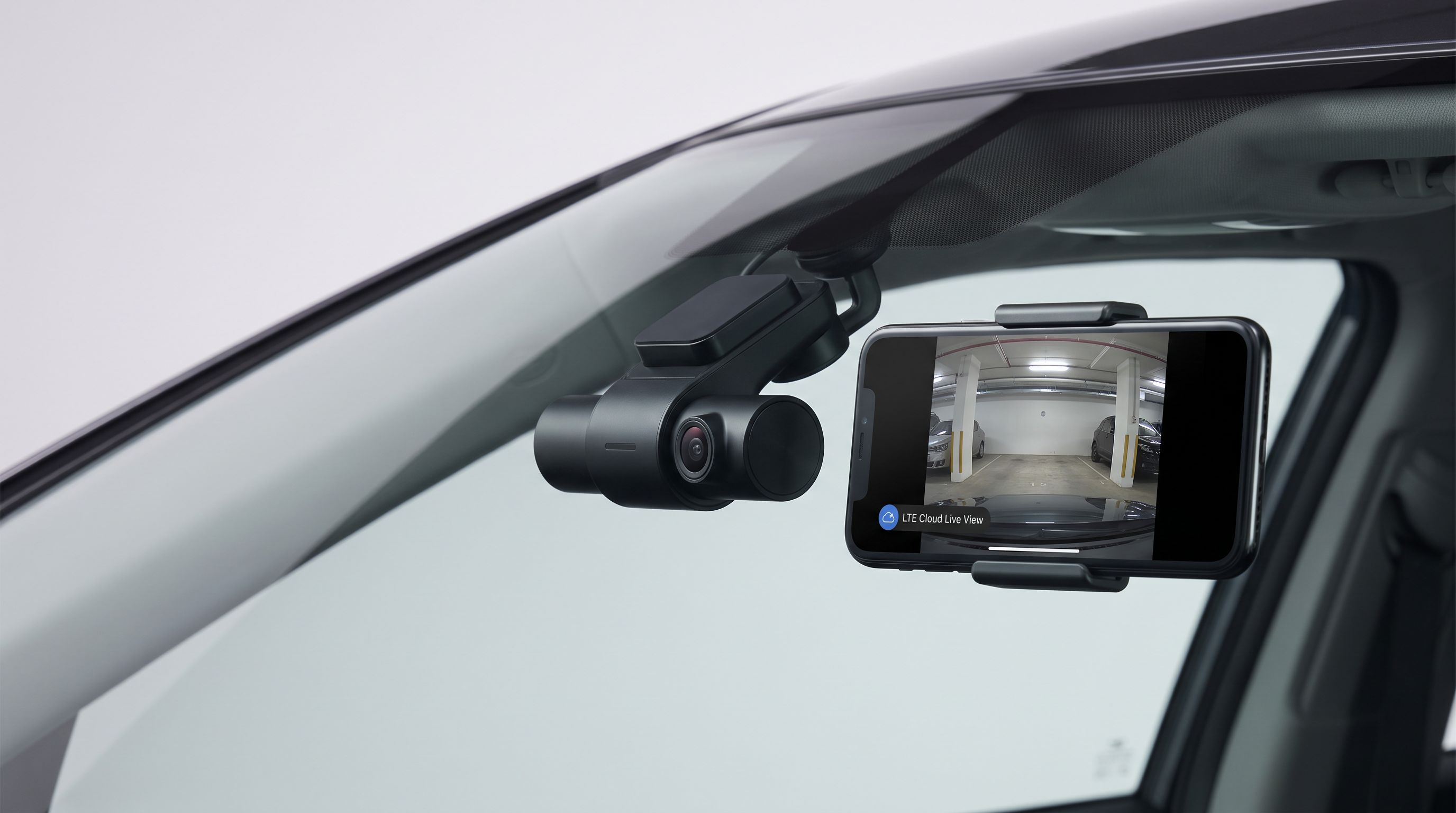
- Remote live view. Open the app, see through the lens in near-real time. Useful for checking on a car parked in a sketchy lot or confirming a tow.
- Automatic off-board clip upload. Event files go to a server, so a stolen camera or a yanked SD card doesn't take the evidence with it.
- GPS tracking / geofencing. Some apps show the vehicle's last known position and trip history.
Everything else — resolution, HDR, Sony STARVIS 2 sensors, capacitor vs. battery, voltage cutoff — is identical to what a non-cloud cam of the same generation does.
That's the central question. You're not paying monthly for better video. You're paying for telemetry and remote access.
The three cost layers nobody breaks out
Cloud cams have a cost structure that's easy to misread:
- Hardware. LTE-capable models carry a premium, either built into the camera (BlackVue's LTE variants, Nexar One Pro) or as an add-on module (Viofo's optional LTE accessory, Vantrue's dongle).
- Cellular data. The camera needs its own connection. Depending on the brand and region, that's a dedicated SIM/eSIM plan, a line added to your existing carrier account, or a hotspot you'd have to keep running — which in practice means it drains your phone or a MiFi battery and isn't a real solution for parked surveillance.
- Cloud service tier. Separate from data. Free tiers typically cap stored clips, cap live-view minutes per month, or limit how many events trigger an upload. Paid tiers raise or remove those caps.
Nexar is the notable exception to layer three: the One Pro bundles unlimited cloud backup with the hardware rather than charging a separate storage subscription, with LTE connectivity handled through its own plan. That's a genuinely different model and worth factoring in if recurring-fee fatigue is your main objection.
Live view is not a security camera
The single most common disappointment: people expect a 24/7 CCTV stream. You don't get that.
Live view on a parked car wakes the camera, pulls power from the vehicle battery, and burns cellular data — so manufacturers gate it. Expect short sessions, manual activation only, and a hard dependency on the cam being powered through a hardwire kit with a voltage cutoff that hasn't tripped yet. If your car has been sitting for two days and the cutoff pulled the plug at 12.0 V to protect the battery, the camera is off and the app shows nothing. That's the system working correctly, and it's also the moment you most wanted footage.
Treat live view as an occasional check-in tool, not continuous monitoring.
Comparison: cloud cams vs. a good SD-card cam
| BlackVue DR970X-2CH LTE | Nexar One Pro | Viofo A329S | Vantrue E3 | BlackVue DR770X Box | |
|---|---|---|---|---|---|
| LTE | Built-in (SIM required) | Built-in | Optional add-on module | Optional dongle | Built-in on LTE variant |
| Cloud service | BlackVue Cloud, tiered | Bundled with hardware | Viofo cloud via module | Vantrue cloud app | BlackVue Cloud, tiered |
| Remote live view | Yes | Yes | Yes, with module | Yes, with module | Yes |
| Parking mode power | Hardwire kit or battery pack | Hardwire kit | Hardwire kit | Hardwire kit | Hardwire kit |
| Rear channel | Included (2CH) | Optional rear cam | Optional rear cam | Optional rear/interior | Included on 2CH |
| Form factor | Cylindrical, windshield | Compact bar | Compact, low-profile | Very compact | Separate box, hidden |
| Best for | Full-featured remote monitoring | Simplest cloud setup | Video quality first | Tight budgets, small cars | Stealth installs |
Note that every one of these needs a hardwire kit for meaningful parking mode. That's a cost and an install job regardless of which column you pick, and on many vehicles it means tapping a fuse box with an add-a-circuit. Check your own fuse panel layout and confirm the kit matches your cam's connector before ordering.
The picks
BlackVue DR970X-2CH LTE — best overall
Prices last checked October 21, 2026. Amazon prices change frequently, so treat these as a guide and check the live price before you buy.
BlackVue DR970X-2CH LTE
Built-in LTE plus BlackVue's mature Cloud app make this the most complete remote-view package.
BlackVue has been running a cloud platform longer than almost anyone, and it shows in the small stuff: reliable push alerts, geofencing, remote file download, and a two-channel package so the rear is covered without a second purchase. The DR970X-2CH LTE is the one to buy if remote monitoring is the reason you're shopping, not a bonus.
What it gives up: the cylindrical body is conspicuous on the windshield, the cloud service is tiered so the free plan will feel restrictive, and you're committing to BlackVue's ecosystem and app for the life of the camera. Video quality is strong but not category-leading against the newest Viofo sensors. Budget for a hardwire kit and, ideally, a dedicated SIM.
Nexar One Pro — best all-in-one cloud package
Nexar One Pro
4K front camera with LTE and unlimited cloud backup bundled into the hardware purchase.
The Nexar One Pro is the easiest answer for someone who wants cloud without reading a pricing matrix. Built-in LTE, 4K front recording, and cloud backup bundled with the hardware rather than billed as a separate storage tier. Clips sync automatically, and the app's incident-report flow is genuinely useful if you've ever had to send footage to an insurer.
What it gives up: you're inside Nexar's ecosystem, including its data and connectivity terms, which some owners dislike on principle. The rear camera is a separate purchase. Enthusiasts who pixel-peep night footage will find dedicated video-first cams sharper. And "bundled" still means a connectivity plan exists — read the current terms before assuming zero recurring cost.
Viofo A329S — best SD-card cam with optional LTE

Viofo A329S
Top-tier recording quality first; add the CPL-style LTE module only if you actually need cloud.
The A329S is the 2026 enthusiast default: excellent sensor, 5 GHz Wi-Fi for fast phone transfers, solid GPS logging, and an optional LTE module rather than a mandatory one. That optionality is the point. Buy it, run it on an SD card, and if six months later you decide you want cloud alerts, add the module then.
What it gives up: the cloud experience is newer and less polished than BlackVue's, so expect a less mature app and fewer fleet-style features. Parking mode still requires a hardwire kit. And if you never add LTE, you have a terrific recorder with zero remote capability — which, for most drivers, is exactly right.
Vantrue E3 — best budget cloud-capable cam
Vantrue E3
Compact 3-channel-ready cam with 5GHz Wi-Fi, GPS and optional LTE dongle for cloud alerts.
The E3 is small, discreet, and supports the add-on connectivity dongle for cloud alerts, making it the cheapest realistic path into remote notifications. It's a good match for a daily driver that parks in a reasonably safe spot where you want some awareness without a flagship outlay. 5 GHz Wi-Fi and GPS come standard; multi-channel options let you add an interior cam for rideshare duty.
What it gives up: smaller imaging hardware than the flagships, a cloud platform that's less proven, and reliance on an accessory rather than integrated LTE. Confirm the current module compatibility for your exact E-series variant before buying — Vantrue's lineup splits across several similar model numbers.
BlackVue DR770X Box — best hidden install
BlackVue DR770X Box
Separate box design hides behind the trim while still supporting LTE cloud parking alerts.
Most dash cams advertise their own presence. The DR770X Box separates the camera head from the processing box, so the visible part behind the mirror is tiny and the brains hide in the headliner or behind trim. For anyone parking in a high-theft area — where a visible BlackVue cylinder is itself a target — that's a meaningful security upgrade, and the LTE variant keeps cloud alerts intact.
What it gives up: a harder, longer install, often one worth paying a shop for. Resolution and sensor spec sit below the DR970X tier. And because it's hidden, you lose the deterrent value of a visible camera — a trade some owners won't want.
How to choose
Do you actually need to know right now?
Be honest about the use case. If your car lives in a locked garage overnight and a monitored office lot by day, the realistic benefit of a real-time alert is small — you'll review footage later either way. Cloud earns its keep when the car parks on a street, in an apartment lot, at an airport for a week, or when a teen or employee drives it. If "right now" doesn't change your actions, a standard parking-mode cam on a good SD card does the same job for free.
Power is the hidden prerequisite
Cloud features assume the camera stays awake. That means a hardwire kit with an adjustable low-voltage cutoff, or better, a dedicated dash cam battery pack if you want multi-day monitoring without risking a no-start. Many disappointing cloud cam experiences are really battery-cutoff experiences. Factor the kit — and on a modern start-stop or EV platform, confirm which circuit you're allowed to tap — into the budget before you compare camera prices.
Read the plan tiers before, not after
Compare three numbers per brand: clips stored, live-view minutes per month, and how many event uploads are included. Free tiers exist on most platforms and are deliberately tight. Also check whether data is included or whether you supply a SIM — that's a second bill. A cam that looks cheaper at checkout can cost more over three years.
SD card quality still decides everything
Cloud uploads event clips. Continuous loop footage lives on the card. Use a high-endurance microSD rated for dash cam/surveillance duty, size it to your recording resolution, and format it in-camera on a schedule. No subscription saves you from a worn-out card.
Fitment and install
Dash cams are broadly universal, but hardwire kits are not. Check your vehicle's fuse box type, available always-on and switched circuits, and whether your windshield has an acoustic or heated zone that affects mounting. For vehicles with ADAS camera housings behind the mirror, confirm clearance before you commit to a mount position.
FAQ
Can I use my phone's hotspot instead of a SIM? Only while you're near the car and the hotspot is running — which defeats the purpose for parking surveillance. For live-view and parked alerts, the camera needs its own always-on connection.
Does cloud recording replace the SD card? No. Cloud stores event clips and short uploads; the card still holds continuous footage. Both current cloud models here, including the Nexar One Pro, still record locally.
Will an LTE cloud cam drain my battery? It can, which is why hardwire kits include voltage cutoffs. Set the cutoff conservatively for your battery's age, or use a dedicated dash cam battery pack for multi-day parking.
Is live view really live? There's typically a few seconds of latency, sessions are time-limited, and the camera must be powered and connected. It's a check-in tool, not continuous streaming.
I just want great footage of crashes. What should I buy? A Viofo A329S on a hardwire kit with a good high-endurance card, no LTE module. Spend the subscription money on a rear camera instead.
Get the best car care deals in your inbox
Join the GarageProof newsletter for hand-picked car care deals and new buying guides. No spam, unsubscribe anytime.
Related reads
Heat Resistant Dash Cam 2026: Picks for 115°F Summers
A heat resistant dash cam has to survive a dashboard that hits 160°F. We compared supercapacitor models from Viofo, Thinkware, BlackVue and Vantrue for Sunbelt drivers.
Cold Weather Dash Cam Picks for 2026 That Boot at −20°C
Supercapacitor dash cams that survive sub-zero mornings. We compare BlackVue, Viofo, Thinkware and Vantrue models on cold-rated specs and winter owner feedback.
Dash Cam for Uber Drivers 2026: 3 Channels or 2?
The best dash cam for Uber drivers in 2026 depends on cabin IR, mounting room, and parking power. We compare 2- vs 3-channel picks from Vantrue, Viofo and more.