Level 2 Home Charging in 2026, Explained
Level 2 EV charger installs run roughly $800–$6,000 in 2026. Here's how amperage, panel capacity, and hardware choices actually drive that number.
Reader-supported: we may earn a commission from links on this page, at no extra cost to you. It never affects our picks. Learn more.
The quote spread is the story
Ask five homeowners what their Level 2 charger install cost and you'll get five wildly different answers — $600, $1,400, $2,800, $5,500. Industry cost guides published for 2026 put the typical range at roughly $800 to $3,000 for the install labor and materials, with totals climbing past $6,000 when a service or panel upgrade enters the picture. Other 2026 estimates frame the all-in figure as $1,100 to $4,900.
That's not sloppy reporting. It's a genuine reflection of how this work is priced. The charger on the wall — the part everyone shops for — is usually the smallest and most predictable line item. The expensive variables are wire length, panel headroom, and whether your utility service can absorb another continuous 40–60 amp load. Understanding those three things is the difference between a $900 job and a $5,000 one, and it's mostly knowable before an electrician ever walks in.
What's actually happening now
Two structural shifts are reshaping home charging economics in 2026.
The first is that NACS — the Tesla-derived connector — has moved from announcement to shipping reality across most major brands. That matters less for the wall box than people assume, because Level 2 charging is fundamentally the same AC power either way; the connector is a plug, not a power system. But it does mean adapter compatibility and cable-end choice are now real considerations when you buy hardware you expect to keep for a decade.
The second, and the more financially consequential, is load management. Older thinking said a new 60A circuit required 60A of spare panel capacity, full stop. NEC provisions around energy management systems, plus the load-sharing and panel-monitoring features now built into mainstream chargers, mean many homes can add Level 2 charging without a service upgrade at all. A charger that can throttle itself when the dryer and the oven are running is not a gimmick — it's often the single feature that turns a $4,500 quote into a $1,200 one.
Meanwhile, the operating cost side has gotten boring in a good way. Qmerit's 2026 installation data puts a full 72 kWh charge at roughly $13 at $0.18/kWh — about five cents a mile, or around $694 a year at 13,489 miles. The fuel math is settled. The install math is where the money moves.
The real players and what they ship
The Level 2 market has consolidated around a handful of units that show up repeatedly in installer recommendations and owner forums.
The Tesla Wall Connector (Gen 3) delivers up to 48A and supports power sharing across multiple units on one circuit — genuinely useful for two-EV households that would otherwise need two dedicated 60A circuits. It's NACS-native, which is now an advantage rather than a walled garden.
 Best for NACS-native households · Tesla Wall Connector (Gen 3, NACS) — Check price on Amazon →
The ChargePoint Home Flex is the amperage chameleon. It's field-configurable across a range from 16A up to 50A, which is exactly the right design for homes with uncertain panel headroom: you install it, you set it to what the panel can actually carry, and you raise it later if you upgrade. Buying a fixed 48A unit and discovering your panel supports 32A is a common and avoidable mistake.
 Most flexible on amperage · ChargePoint Home Flex — Check price on Amazon →
The Emporia Level 2 EV Charger has become the value benchmark — a UL-listed 48A unit at a price point that used to buy a basic 32A box, with load-management integration into Emporia's home energy monitoring.
And for people who want none of the software, the Grizzl-E Classic remains the rugged 40A answer: a sealed aluminum enclosure, no app, no account, no firmware update bricking your Tuesday.
| Hardware | Max output (typical) | Circuit it wants | Best fit |
|---|---|---|---|
| Tesla Wall Connector Gen 3 | 48A | 60A | NACS households, multi-EV power sharing |
| ChargePoint Home Flex | Adjustable up to 50A | 40A–60A depending on setting | Homes with unknown or limited panel headroom |
| Emporia Level 2 | 48A | 60A (or 50A plug at reduced output) | Cost-conscious buyers who still want smart features |
| Grizzl-E Classic | 40A | 50A | Simple, app-free, outdoor-exposed installs |
Note what the table implies: a 48A charger requires a 60A breaker, because NEC continuous-load rules cap you at 80% of the circuit. A 50A NEMA 14-50 outlet legally supports 40A of continuous draw, not 48A. Marketing copy loves the bigger number.
What it means if you're shopping today
Start with the amperage you actually need, not the maximum you can buy. A 40A charger delivers roughly 9.6 kW — call it 30-ish miles of range per hour for a typical EV. Overnight, that refills almost any battery. Jumping to 48A buys you about 20% more speed for a circuit that costs meaningfully more in wire and breaker, and that many panels can't accommodate. For a car that sits in a garage for ten hours a night, the upgrade is frequently invisible.
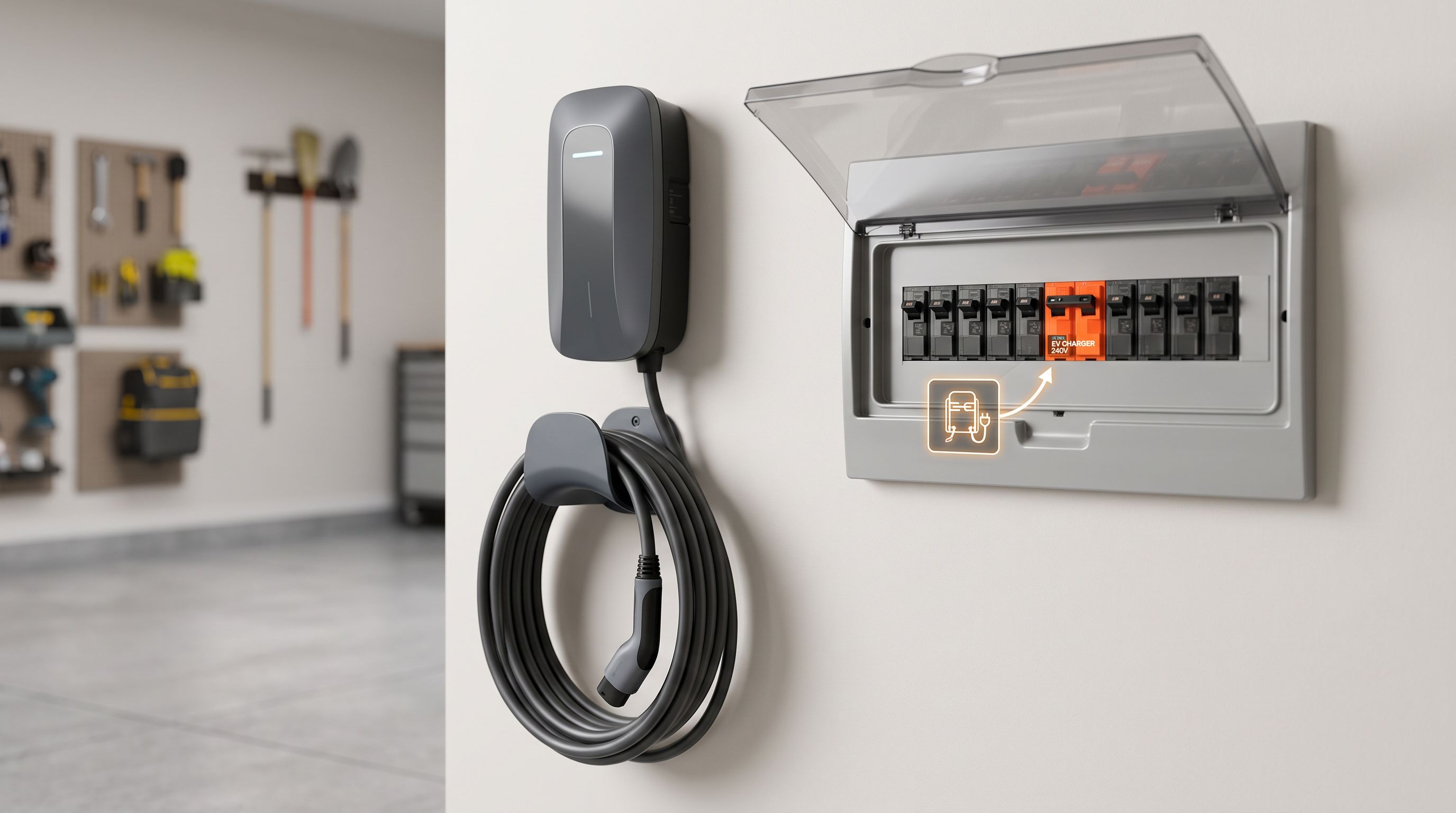
Second, get your panel read before you get quotes. Open the door, photograph the label (it'll say 100A, 150A, or 200A service), and count open breaker slots. A 200A panel with open slots and a garage on the same wall is the cheap scenario. A 100A panel, a full breaker bay, and a charger location on the opposite side of the house is the $4,000+ scenario — and in that case the ChargePoint Home Flex's adjustability or a charger with built-in load management is worth more than raw output.
Third, understand the plug-in versus hardwire tradeoff honestly. A NEMA 14-50 receptacle install is often cheaper and lets you take the unit with you when you move, but it caps continuous output at 40A and adds a connection point that can degrade. Hardwiring unlocks 48A and is what most installers prefer for permanent installs. Neither is wrong; they solve different problems.
Finally, budget for the boring stuff. Permit fees, a load calculation, conduit runs through finished walls, and trenching to a detached garage are the line items that blow up estimates — not the charger.
What to watch next
Bidirectional charging is the interesting frontier. Vehicle-to-home capability is shipping on a limited set of vehicles and requires specific, more expensive hardware plus utility coordination — it is not something a standard Level 2 box retrofits into. Treat it as a reason to leave conduit capacity, not a reason to delay a purchase.
Also watch smart panels and circuit-splitting devices, which let a single 240V circuit serve a dryer and a charger with automated switching. Based on installer commentary, these are often cheaper than a full service upgrade for 100A homes — a category worth pricing against a panel quote rather than assuming the upgrade is inevitable.
And watch incentives. Utility rebates and state programs continue to shift year to year, and they frequently cover a meaningful slice of install cost — but many require a licensed install and specific listed equipment, which is one more argument against the unlisted bargain unit.
FAQ
Do I need 48A charging? Probably not. 40A covers overnight charging for essentially every EV on sale. Choose higher amperage only if you drive unusually high daily mileage or share one charger between two cars.
Can I install this myself? The charger mounting, maybe. The 240V circuit, no — and DIY work typically voids rebate eligibility and can complicate insurance claims. Permitting also generally requires a licensed electrician.
Will a 100A panel work? Often yes, with load management or a reduced amperage setting. A proper load calculation is the deciding factor, not a rule of thumb.
Does NACS vs. J1772 change the install? No. The wiring, breaker, and conduit are identical. Only the cable end and adapter situation differ.
Our picks

Emporia Level 2 EV Charger (48A, NEMA 14-50 / hardwired)
48A output, Energy Star listed, and one of the cheapest UL-listed smart units that still supports load management.
ChargePoint Home Flex
Field-adjustable from 16A to 50A, so it adapts if your panel can't support a full 60A circuit.
Tesla Wall Connector (Gen 3, NACS)
Up to 48A, supports power sharing across multiple units, and ships with a J1772 adapter path for non-Tesla EVs.

Grizzl-E Classic Level 2 EV Charger (40A)
No app, no cloud account — a sealed aluminum 40A unit for people who just want electrons.
Get the best car care deals in your inbox
Join the GarageProof newsletter for hand-picked car care deals and new buying guides. No spam, unsubscribe anytime.
Related reads
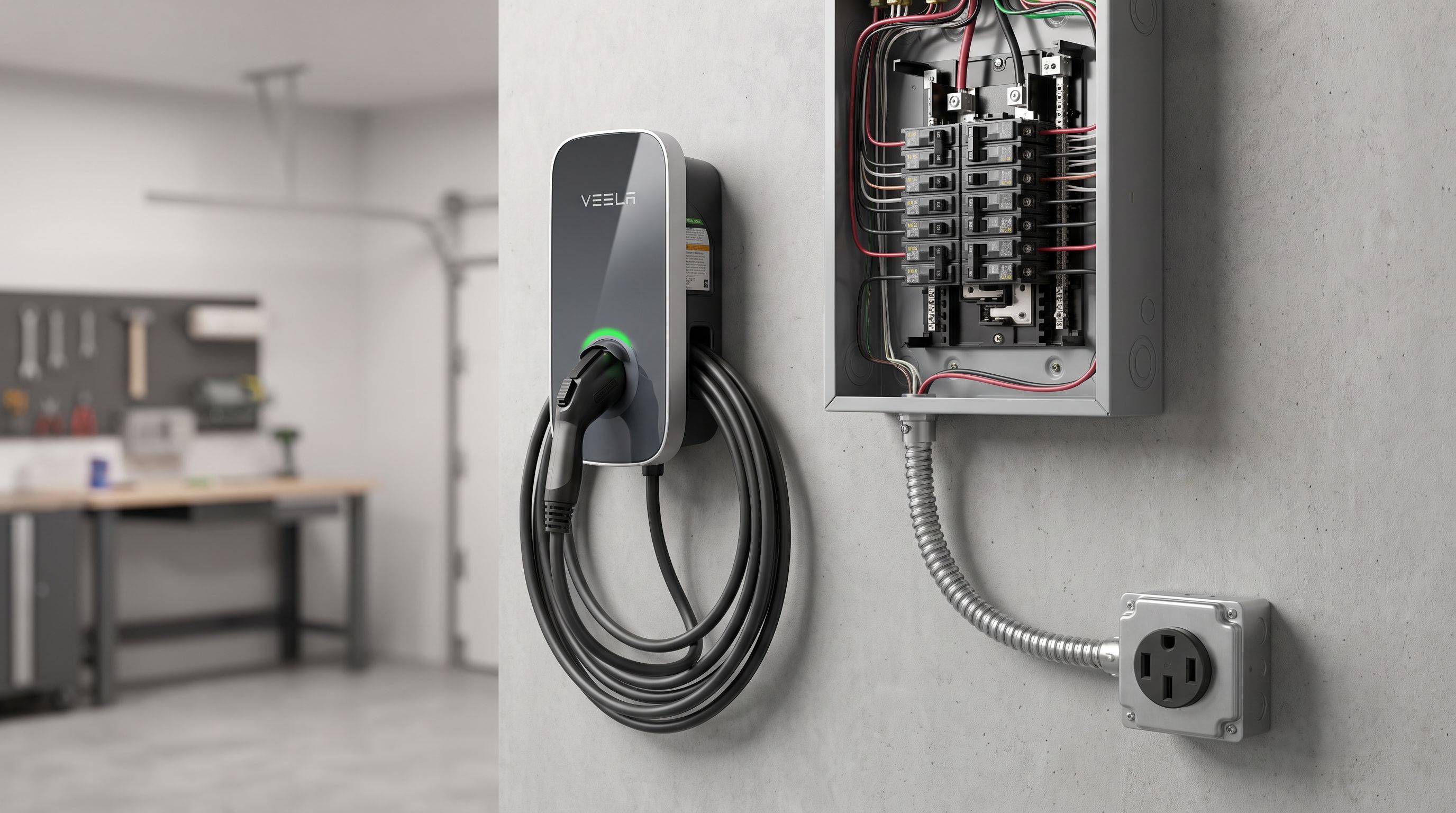
Level 2 EV Charger Garage Install: Amps, Outlet or Hardwire?
Outlet vs hardwire, 40A vs 48A, and the 80% continuous rule — how to pick a Level 2 EV charger that actually fits your 2026 garage panel and wiring.
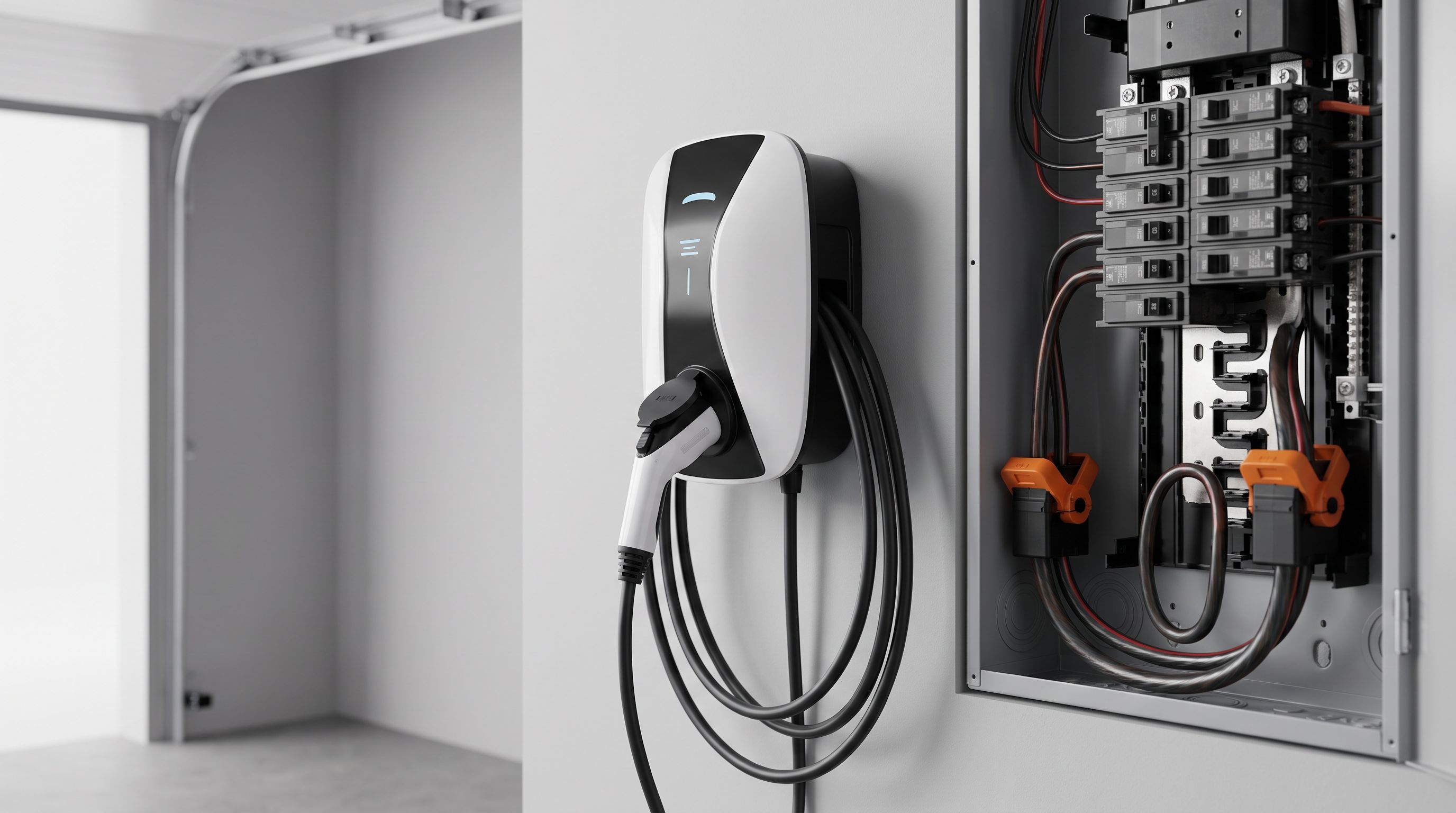
Level 2 Charger Load Management in 2026: Skip the Subpanel?
Got 100A service? Compare Level 2 chargers with built-in load management, CT clamps and power sharing in 2026 — and learn when you still need a panel upgrade.
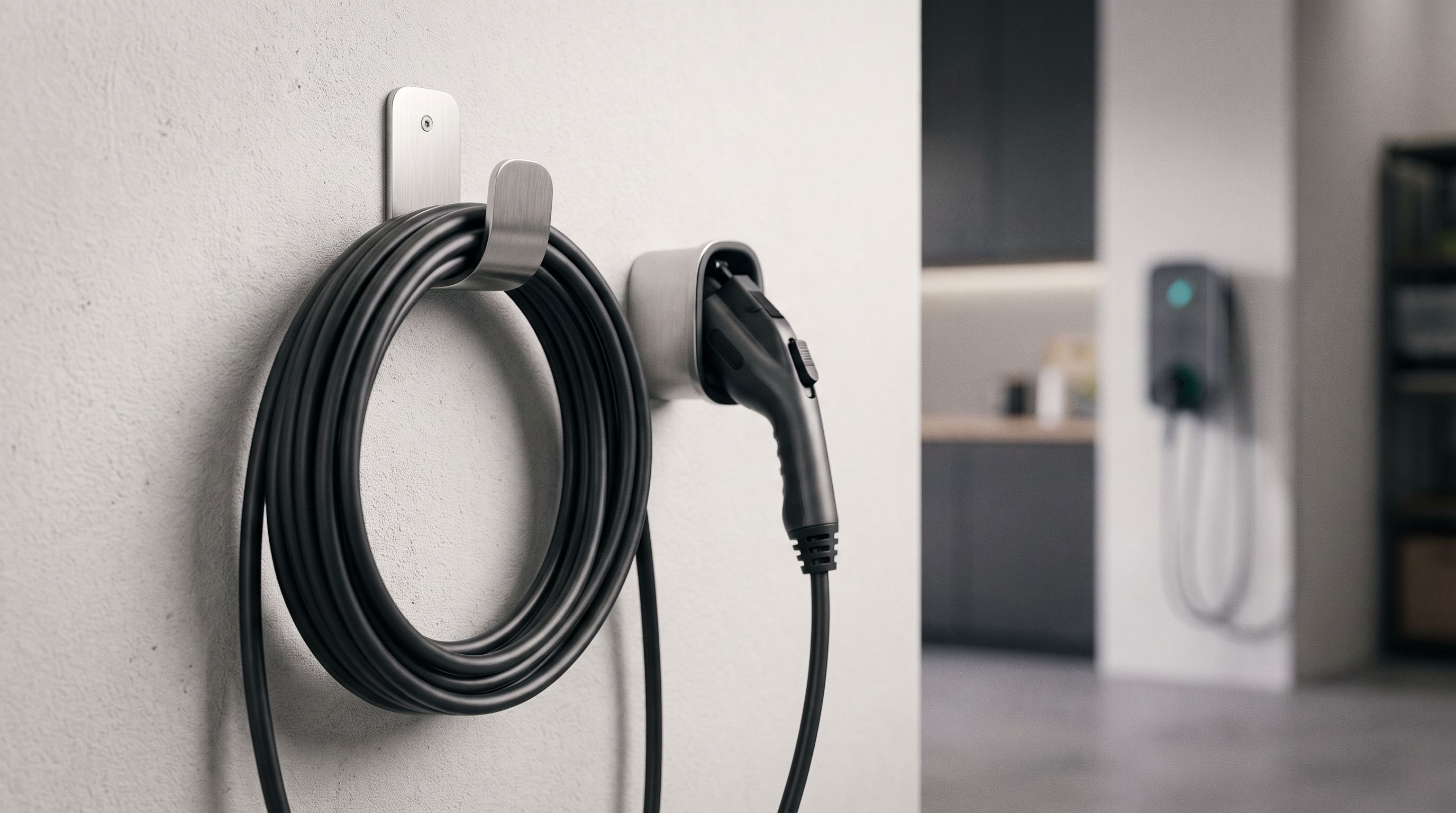
EV Charger Cable Holder 2026: NACS vs J1772 Wall Fit
Which EV charger cable holder fits your setup in 2026? We compare holsters, J-hooks and docks by connector type (NACS vs J1772) and garage wall material.