Level 2 EV Chargers in 2026: 40A vs 48A, Explained
Picking the best Level 2 EV charger for home in 2026? Compare 40A vs 48A, NEMA 14-50 vs hardwired, cable length and panel load — plus five solid picks.
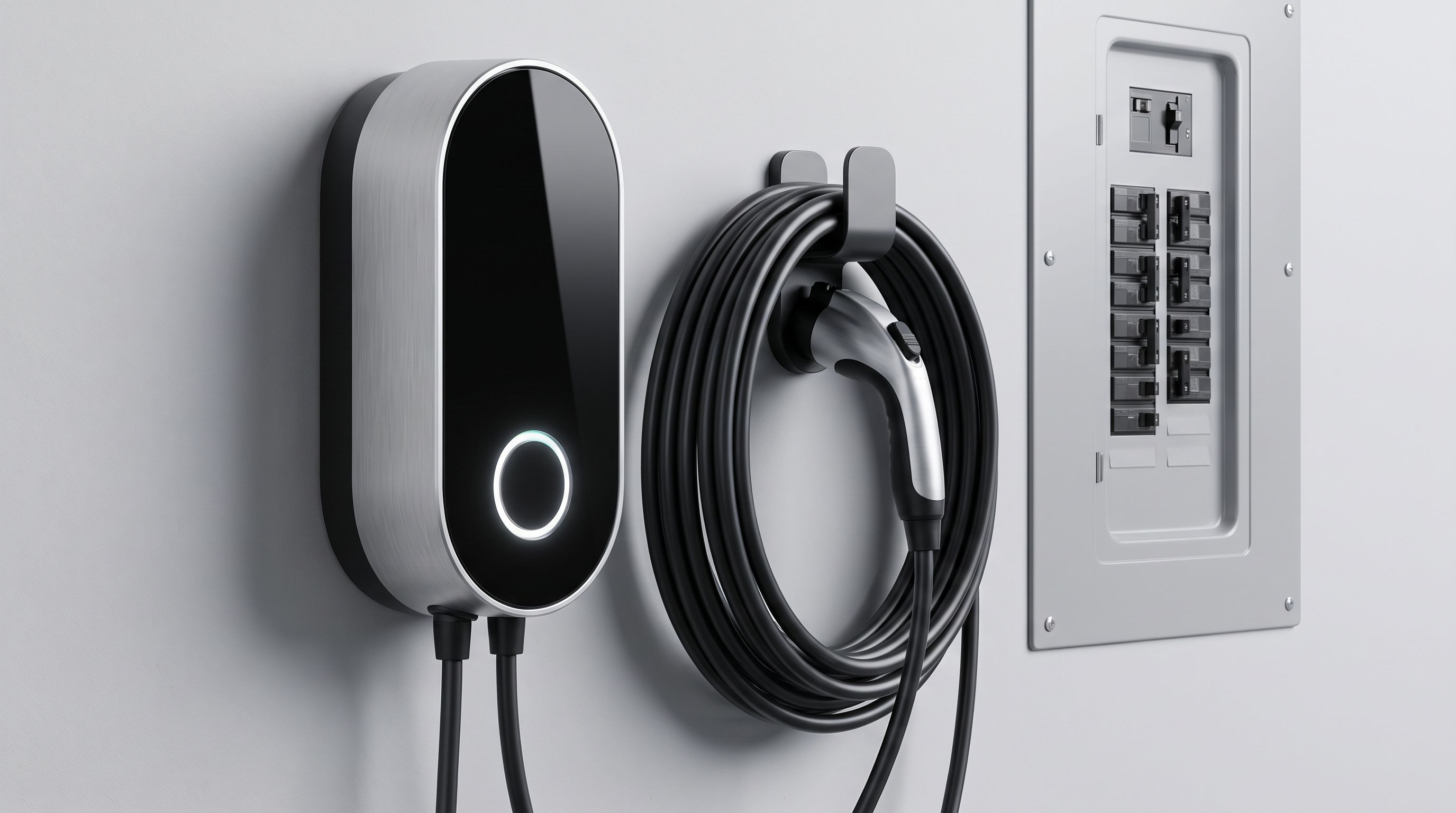
Reader-supported: we may earn a commission from links on this page, at no extra cost to you. It never affects our picks. Learn more.
Most people shopping for the best Level 2 EV charger for home start with the wrong question. It isn't "which charger is fastest?" — it's "how much current can my panel and my car actually use?" Get those two numbers right and the charger choice gets easy. Get them wrong and you either overpay for amps your car will never draw, or you hire an electrician twice.
This guide walks through 40A vs 48A, plug-in vs hardwired, cable length, and how to sanity-check your electrical panel before you buy. Then we recommend five chargers that are widely available in 2026. GarageProof researches and compares gear using manufacturer specs, certification listings, independent expert reviews and verified owner feedback — we don't physically install and bench-test units ourselves.
The short version
- Best overall: Tesla Universal Wall Connector
- Best for energy monitoring: Emporia Pro EV Charger
- Best 40A plug-in pick: Autel MaxiCharger AC Lite 40A
- Toughest enclosure: Grizzl-E Ultimate 48
- Best app and scheduling: ChargePoint Home Flex
 Toughest enclosure · Grizzl-E Ultimate 48 — Check price on Amazon →
 Best 40A plug-in pick · Autel MaxiCharger AC Lite 40A — Check price on Amazon →
 Best for energy monitoring · Emporia Pro EV Charger — Check price on Amazon →
 Best overall · Tesla Universal Wall Connector — Check price on Amazon →
40A vs 48A: what actually changes
Level 2 charging runs on 240V. Power is simply volts × amps, so:
- 40A charger on a 50A circuit = 9.6 kW
- 48A charger on a 60A circuit = 11.5 kW
That's about a 20% difference in charging rate — roughly 30 miles of range per hour versus 36 for a typical efficient EV. Over an overnight charge, both fully refill almost any battery from a normal daily state of charge.
Two things kill the 48A advantage for many owners:
1. Your car's onboard charger is the real bottleneck. AC charging speed is capped by the vehicle's internal charger, not the wall unit. A large share of EVs — including many Hyundai, Kia, Ford, Subaru, Nissan and Toyota models — top out around 7.2 kW to 11 kW on AC. If your car accepts 9.6 kW, a 48A charger will simply deliver 40A and the extra capability sits unused. Check your owner's manual for "maximum AC charging power" or "onboard charger" before you spend more.
2. The circuit costs more. A 48A charger legally requires a 60A branch circuit (the NEC 125% continuous-load rule), which usually means 6 AWG copper and a hardwired connection. A 40A charger needs a 50A circuit. If your panel is tight on capacity or the run to the garage is long, the difference in wire cost and labor can exceed the price gap between the chargers themselves.
Rule of thumb: buy 48A only if (a) your current or next EV can actually accept 11 kW or more, and (b) your panel has room for a 60A circuit without gymnastics. Otherwise 40A is the sensible, cheaper, entirely adequate choice.
Plug-in (NEMA 14-50) vs hardwired
| Factor | NEMA 14-50 plug-in | Hardwired |
|---|---|---|
| Max continuous output | 40A (9.6 kW) | Up to 48A (11.5 kW) |
| Circuit required | 50A breaker, GFCI protected | 60A breaker for 48A units |
| Portability | Unplug and take it, or swap units easily | Fixed in place |
| Outdoor suitability | Outlet becomes a weak point; needs quality receptacle | Cleaner, fewer failure points |
| Typical install cost | Lower if a 240V outlet exists | Higher; electrician terminates inside the unit |
| Common failure mode | Cheap receptacles overheating | Rare once done correctly |
A real-world caveat on plug-in: 14-50 receptacles were designed for occasional range and RV use, not eight hours of continuous 40A load every night. Builder-grade outlets are a known heat-and-melt risk. If you go plug-in, insist on an industrial-spec receptacle (Hubbell, Bryant or Leviton industrial grade) and have it installed by a licensed electrician on its own breaker. That single upgrade is cheap insurance.
Also note that NEC 2020 and later require GFCI protection for 240V receptacles. That occasionally causes nuisance tripping with some chargers, which is one more quiet argument for hardwiring if you're settled on a permanent spot.
Connector type in 2026: NACS or J1772?
The industry has largely converged on NACS (SAE J3400). Tesla vehicles use it natively, and most new non-Tesla EVs now ship with NACS ports or an included adapter. Meanwhile millions of J1772 cars are still on the road.
Practical guidance:
- If your household is all-Tesla or all-NACS, buy a NACS charger.
- If you have a J1772 car now but expect a NACS car next, a NACS charger plus the J1772 adapter (as the Tesla Universal Wall Connector includes) is the more future-proof combination.
- If you only have J1772 cars and no imminent change, a J1772 unit is simpler — no adapter to lose or leave dangling in the rain.
Whichever way you go, the adapter route works but adds a connection point. Match the connector to the car you'll own longest.
How to choose
Start with your panel, not the charger
Before anything else, have an electrician perform a load calculation (NEC Article 220). A 200A panel doesn't automatically have 60A to spare — your A/C, electric range, dryer and water heater all count. If you're short, you have options: a 100A subpanel, a smart splitter that shares a dryer circuit, or a charger with dynamic load management that throttles output when household demand spikes. The Emporia Pro and ChargePoint Home Flex both offer load management approaches, and Tesla's Wall Connector supports power sharing across multiple units.
If the calculation says 50A max, that settles it: 40A charger. Don't fight the panel.
Match amperage to the car, not the marketing
Look up your vehicle's onboard AC charger rating. Tesla Model 3/Y (most trims), Rivian, Lucid and several premium models can take 11 kW or more; a large share of mainstream EVs cannot. If nothing in your driveway will exceed 9.6 kW in the next five years, a 40A unit like the Autel MaxiCharger AC Lite 40A does everything a 48A unit would, on a cheaper circuit.
One nuance: some chargers, including ChargePoint Home Flex, let you dial output down at install. Buying a higher-rated unit and running it at 32A or 40A today is a legitimate hedge — as long as you're not paying a big premium for the privilege.
Cable length and where the port actually sits
This is the most common regret. Measure from the intended wall location to the charge port on your car, then add slack for the cable to droop, route around the front or rear of the vehicle, and reach a second parking spot if you swap cars. Twenty feet is the practical minimum for most garages; 23–25 feet covers a two-car bay or a driveway park. Longer cables are heavier and stiffer, especially below freezing — a wall holster and hook matter more than people expect.
Also check the cable jacket. TPE/TPU cables stay flexible in cold weather; cheaper PVC-style cables go stiff and fight you every January.
Indoor or outdoor, and how cold
Look for a NEMA 4 (or better) enclosure rating and a UL listing for outdoor installs — this is one area where no-name imports get cagey. Verify the unit is certified by a Nationally Recognized Testing Laboratory (UL, ETL/Intertek, CSA); that's also what many utility rebate programs require. The Grizzl-E Ultimate 48's aluminum enclosure and wide operating temperature range are built exactly for the exposed-wall, salt-and-snow scenario.
Software: how much do you actually want?
Scheduled charging to hit off-peak rates is the one feature nearly everyone uses. Beyond that, ask whether you want energy dashboards (Emporia), utility demand-response enrollment and public network integration (ChargePoint), or just a dumb-simple unit that charges when plugged in (Grizzl-E). More software means more app updates, accounts and occasional connectivity headaches. There's no wrong answer — just be honest about what you'll use.
Comparison table
| Charger | Max output | Connector | Install | Best for |
|---|---|---|---|---|
| Tesla Universal Wall Connector | 48A / 11.5 kW | NACS + J1772 adapter | Hardwired | Mixed-brand households, future-proofing |
| Emporia Pro EV Charger | 48A / 11.5 kW | NACS or J1772 versions | Hardwired or plug-in | Energy tracking and load management |
| Autel MaxiCharger AC Lite 40A | 40A / 9.6 kW | J1772 | NEMA 14-50 plug-in | Most mainstream EVs, simplest install |
| Grizzl-E Ultimate 48 | Up to 48A | J1772 | Hardwired or plug-in | Harsh outdoor and cold-climate mounting |
| ChargePoint Home Flex | Adjustable to 50A | J1772 | Hardwired or plug-in | App control, scheduling, utility programs |
The picks
Tesla Universal Wall Connector — best overall
Tesla Universal Wall Connector
Built-in NACS plug with a J1772 adapter, load sharing and a strong warranty — works with almost any EV.
The Universal Wall Connector solves the connector question more elegantly than anything else on the market: a native NACS cable with an integrated, stowable J1772 adapter, so one box serves a Tesla and a Bolt, Ioniq or Mach-E in the same garage. It supports up to 48A hardwired, offers power sharing across multiple units on one circuit, and carries a long warranty by home-charger standards. What it gives up: it's hardwired-only for full output, the app experience for non-Tesla vehicles is thinner than Tesla owners enjoy, and there's no built-in energy dashboard. If you want one unit that won't be obsolete when you change cars, this is it.
Emporia Pro EV Charger — best for energy monitoring
Emporia Pro EV Charger
48A charging plus whole-home energy insight and load management in one tidy ecosystem.
Emporia's appeal is context. The Pro delivers 48A charging while tying into Emporia's broader home energy ecosystem, so you can see charging against total household consumption and use load management to avoid tripping a marginal panel. It's available in NACS and J1772 versions, supports scheduled charging around time-of-use rates, and is commonly cited as a top overall pick by reviewers in 2026. Trade-offs: you get the most value if you buy into the wider Emporia hardware, and app-dependent features mean the occasional firmware or Wi-Fi annoyance. For households watching kWh closely — especially with solar — it's the smartest pick here.
Autel MaxiCharger AC Lite 40A — best 40A plug-in pick
Autel MaxiCharger AC Lite 40A
A no-drama 40A NEMA 14-50 unit that matches most EVs' onboard charger limit without a panel upgrade.
This is the answer for the majority of EV owners who don't need 48A and shouldn't pay for it. The AC Lite plugs into a NEMA 14-50 outlet, delivers the full 9.6 kW that most mainstream EVs can accept, and keeps the install simple. Autel is a serious name in automotive diagnostics, and the hardware feels the part. What you give up: the 40A ceiling is fixed, so if you later buy an 11 kW-capable EV you'll be leaving speed on the table, and the app is functional rather than feature-rich. Pair it with an industrial-grade receptacle.
Grizzl-E Ultimate 48 — toughest enclosure
Grizzl-E Ultimate 48
Aluminum-bodied, cold-weather-friendly 48A charger built for outdoor walls and rough garages.
If your charger lives on an exterior wall in Minnesota, Grizzl-E is the obvious shortlist entry. The Ultimate 48 uses a rugged aluminum housing, is rated for harsh outdoor conditions and very low temperatures, and offers up to 48A with hardwired or plug-in configuration. Grizzl-E also makes a Duo variant if you're charging two vehicles from one circuit. The compromise is polish: it's heavier and less sleek than a Tesla or Emporia unit, and the software side is deliberately minimal compared with app-first competitors. Buy it for durability, not dashboards.
ChargePoint Home Flex — best app and scheduling
ChargePoint Home Flex
Adjustable 16–50A output, mature app, utility program support and flexible plug or hardwired install.
Home Flex remains the most flexible unit here on paper: output is adjustable across a wide range (roughly 16A to 50A depending on circuit), and it installs either plug-in or hardwired. That adjustability makes it a strong fit for homes where the final circuit size isn't settled, or where you might move and reinstall on a different breaker. The app is mature, scheduling around off-peak rates is straightforward, and it's frequently supported by utility rebate and demand-response programs. Downsides: it's a premium-priced option, and it's J1772, so NACS owners will need an adapter.
FAQ
Is a 48A charger meaningfully faster than 40A? About 20% faster in theory — 11.5 kW vs 9.6 kW — but only if your vehicle's onboard charger can accept 11.5 kW. Many mainstream EVs cap below that, in which case the two perform identically.
Can I install a Level 2 charger myself? Running a new 240V circuit is licensed-electrician territory in most jurisdictions, and permits plus inspection are typically required. DIY work can void warranties, jeopardize insurance claims and disqualify you from utility rebates. Mounting the unit yourself after an electrician sets the circuit is often fine — check local code.
Do I need GFCI protection? Under NEC 2020 and later, 240V receptacles generally require GFCI protection, which affects plug-in installs. Hardwired chargers include their own CCID/ground-fault protection internally, so a separate GFCI breaker usually isn't needed — and can cause nuisance trips. Your electrician should confirm against the code edition your area enforces.
What cable length should I buy? Measure to your car's charge port and add slack. Under 20 feet only works if the charger is right beside the port. Most owners are happiest with 23–25 feet, which covers either bay in a two-car garage.
NACS or J1772 in 2026? NACS is the direction the industry has taken, and a NACS charger with a J1772 adapter covers both. If every car you own uses J1772 and will for years, a J1772 unit is simpler and cheaper.
Will a home charger work with any EV? Level 2 AC charging is standardized, so any properly certified charger works with any EV as long as the connector matches (or you use an adapter). Unlike most parts in your garage, home chargers are not year/make/model specific — but your vehicle's onboard charger rating is, so check the manual before choosing amperage.
Get the best car care deals in your inbox
Join the GarageProof newsletter for hand-picked car care deals and new buying guides. No spam, unsubscribe anytime.
Related reads
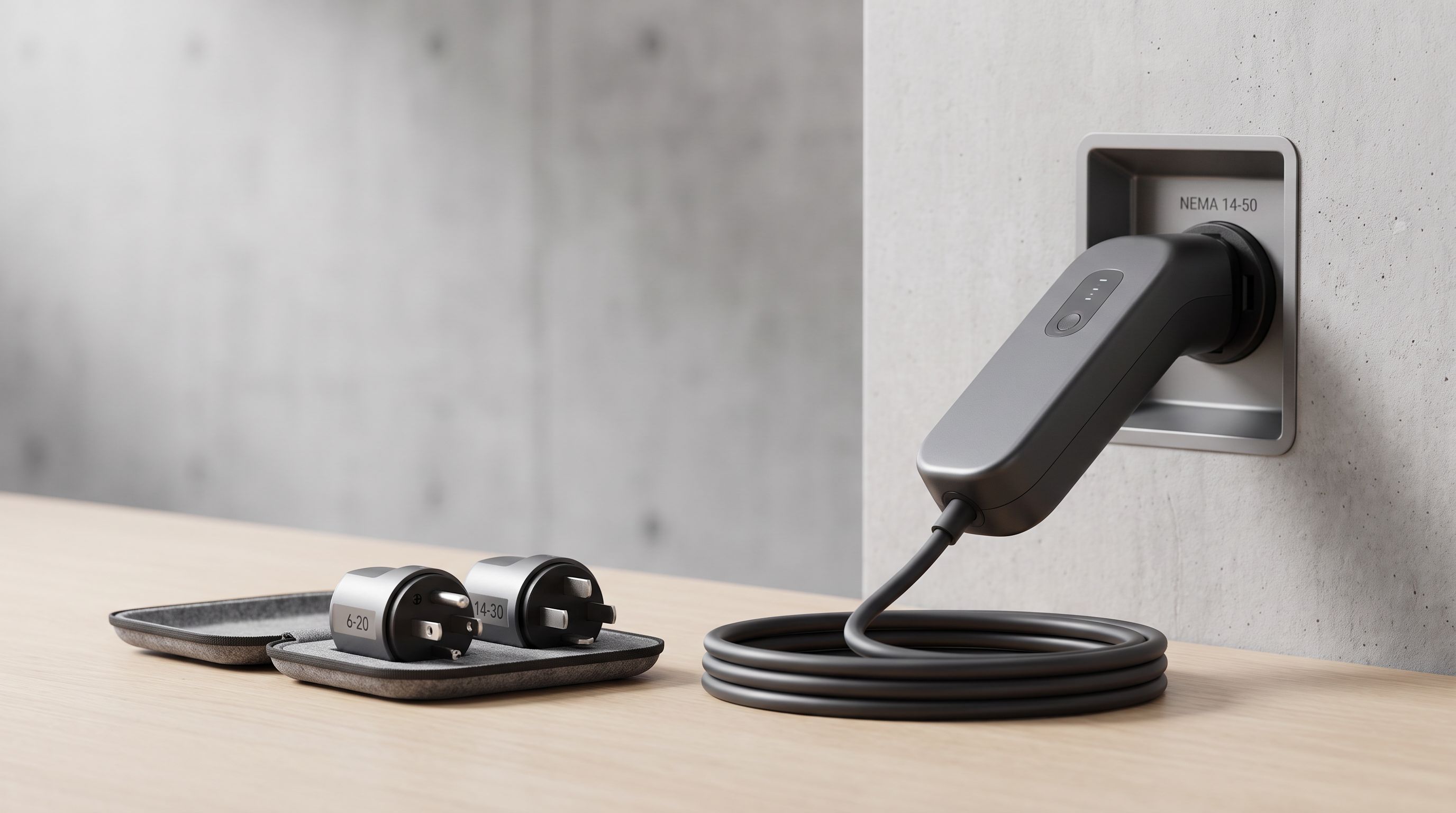
Portable EV Charger NEMA 14-50 vs 6-20: What to Buy in 2026
Portable EV charger NEMA 14-50 vs 6-20 explained for 2026: match plug tails and amperage to your real outlet, plus picks that ship swappable adapters.
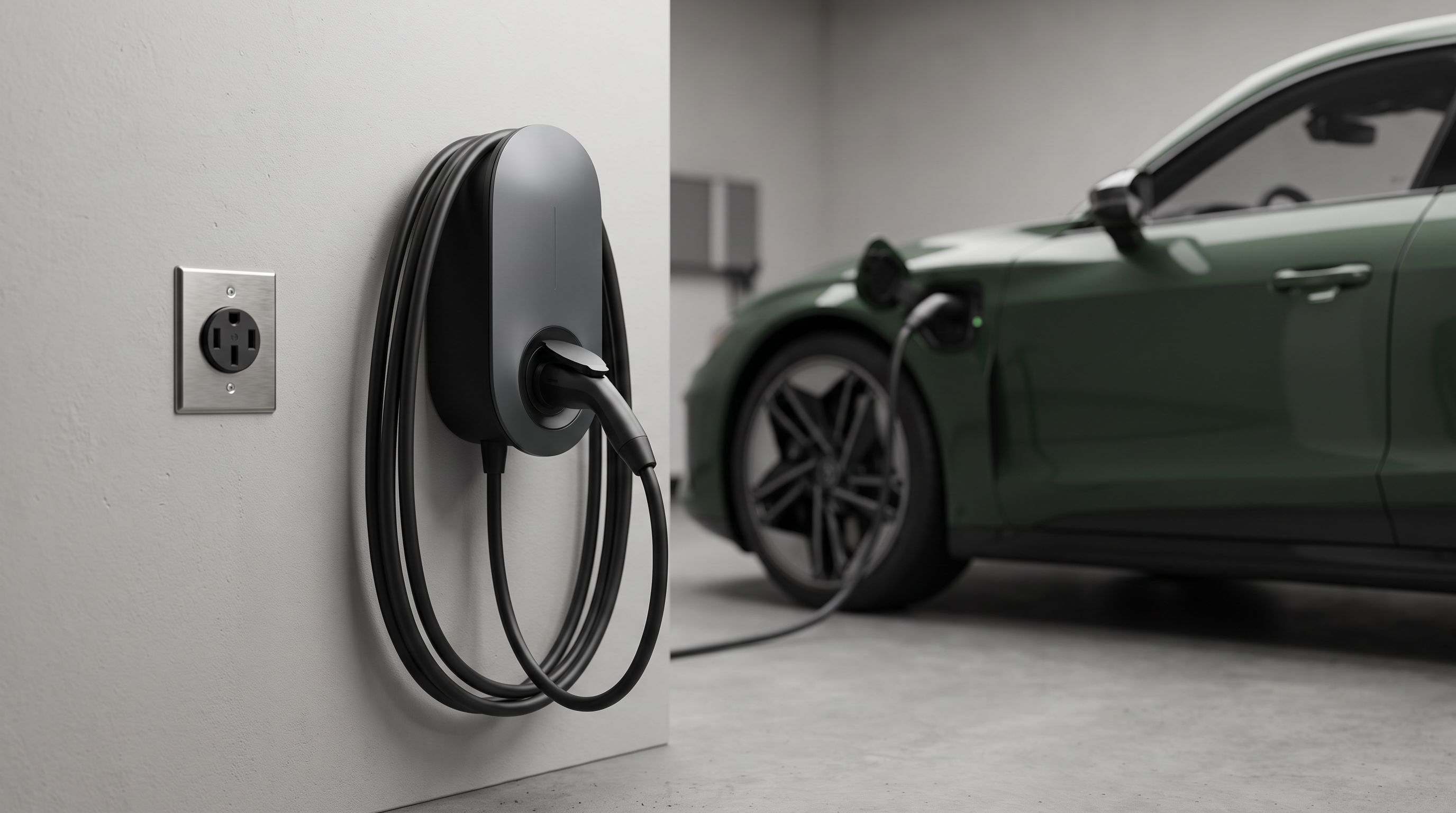
Hardwired vs Plug In Level 2 Charger: 2026 Install Reality
Hardwired vs plug in Level 2 charger in 2026: how continuous-load rules, GFCI breaker costs and outdoor durability should decide your install before you get quoted.
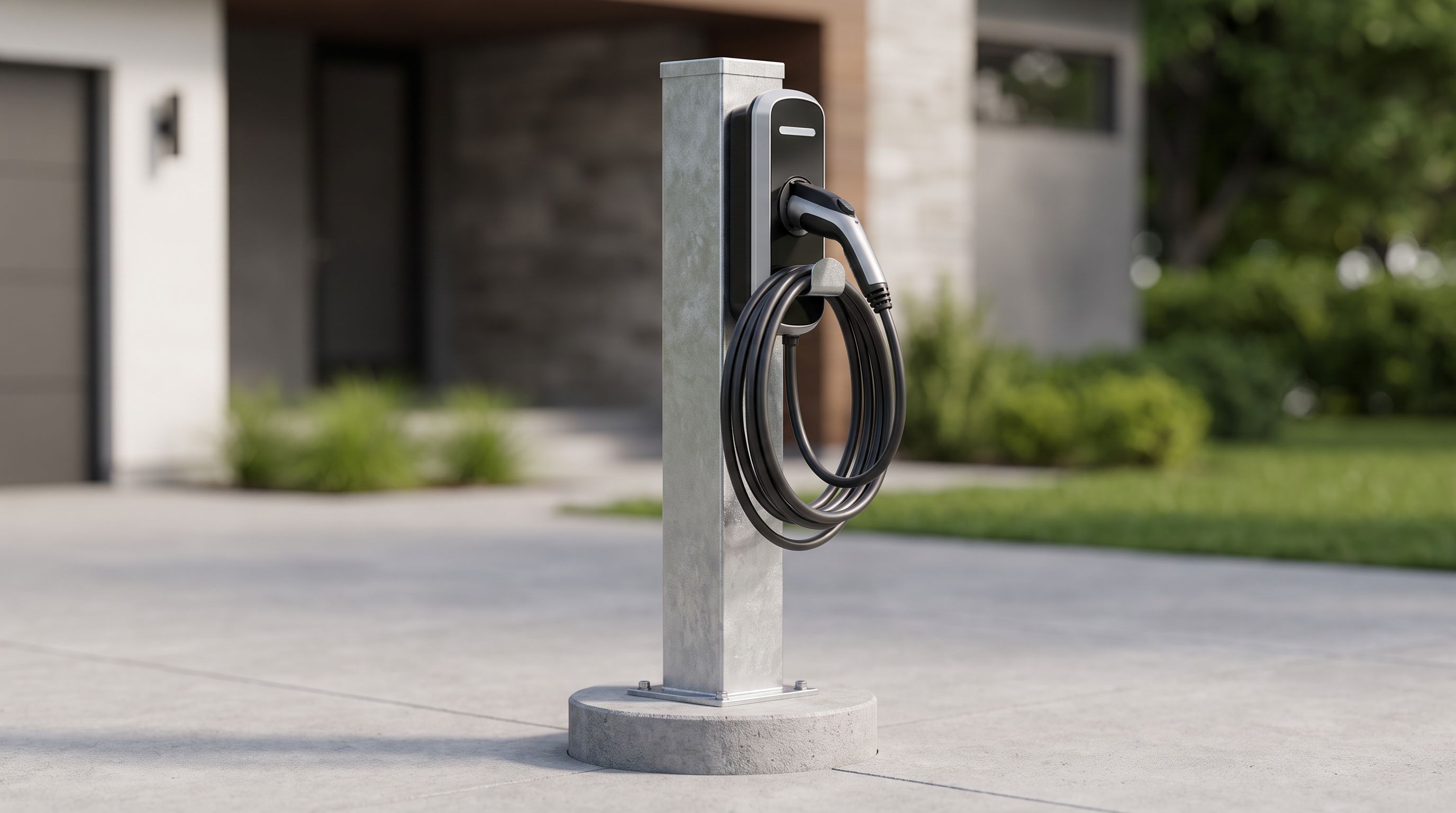
EV Charger Pedestal Mount 2026: Fit It Before You Dig
Compare EV charger pedestal mounts for 2026 by bolt pattern, charger compatibility, cable reach and footing depth — confirm your Level 2 unit fits before you pour concrete.