Level 2 EV Charger Garage Install: Amps, Outlet or Hardwire?
Outlet vs hardwire, 40A vs 48A, and the 80% continuous rule — how to pick a Level 2 EV charger that actually fits your 2026 garage panel and wiring.
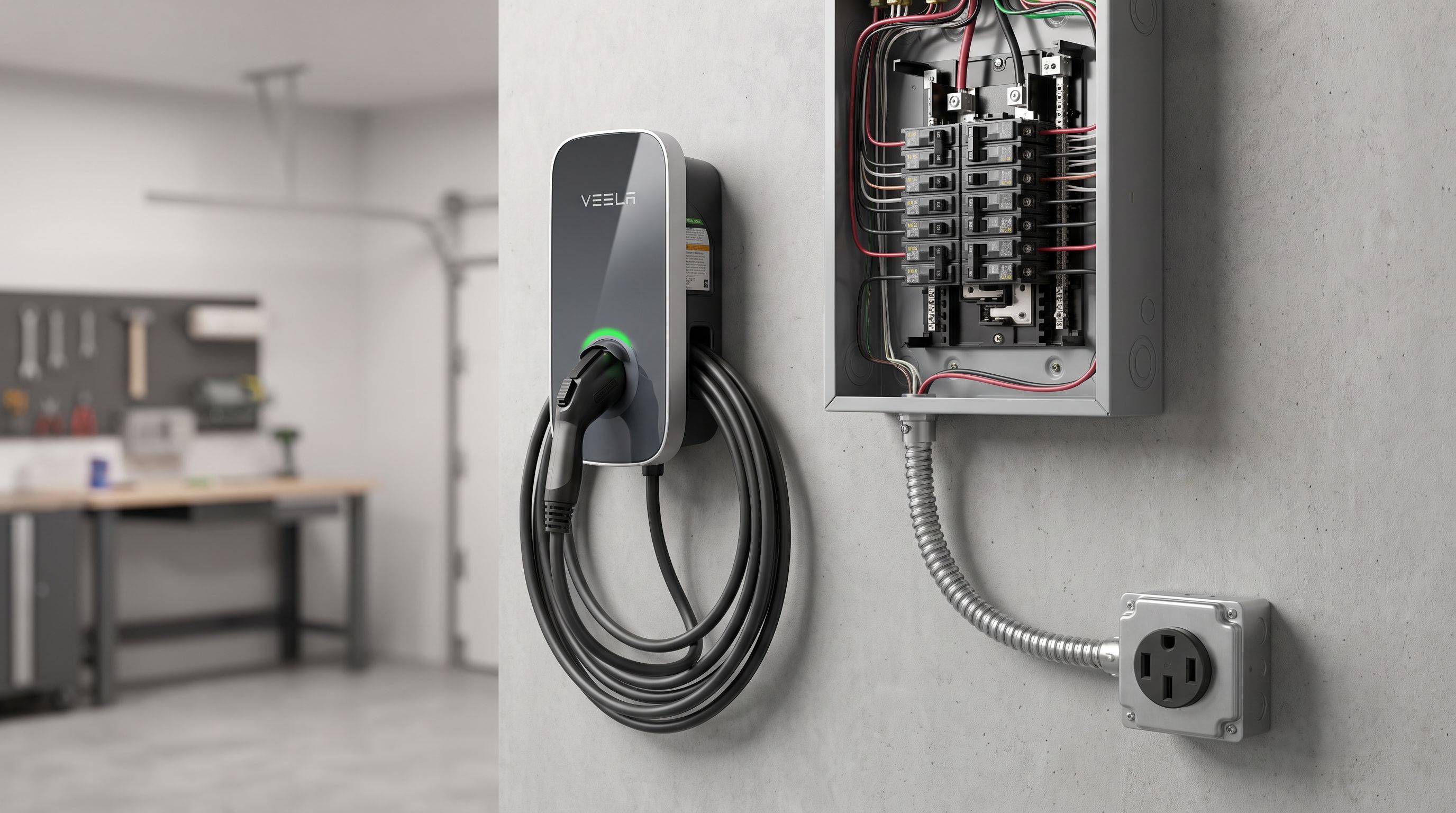
Reader-supported: we may earn a commission from links on this page, at no extra cost to you. It never affects our picks. Learn more.
Buying a Level 2 charger is the easy part. Getting it to fit your garage — your panel's spare capacity, the wire run to the wall you actually want it on, and the difference between a breaker's rating and what it can carry continuously — is where people get stuck, overspend, or end up returning a 48-amp unit because their 100-amp panel laughed at it.
This guide walks the decision in the order an electrician would: how many amps you can realistically supply, whether to go plug-in or hardwired, and which charger matches each outcome. GarageProof researches and compares gear using manufacturer specs, certification listings, electrical code requirements, and verified owner feedback — we don't physically install units ourselves.
The short version
- Best overall: Emporia Level 2 EV Charger (48A, NACS)
- Best for flexible amperage: ChargePoint Home Flex
- Best plug-in simplicity: Grizzl-E Classic 40A EVSE
- Best premium smart charger: Autel MaxiCharger AC Elite (50A)
- Best for Tesla-first garages: Tesla Wall Connector (Gen 3, Universal)
 Best for Tesla-first garages · Tesla Wall Connector (Gen 3, Universal) — Check price on Amazon →
 Best premium smart charger · Autel MaxiCharger AC Elite (50A) — Check price on Amazon →
 Best plug-in simplicity · Grizzl-E Classic 40A EVSE — Check price on Amazon →
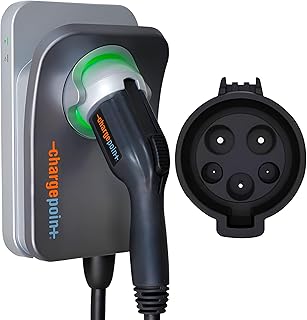 Best for flexible amperage · ChargePoint Home Flex — Check price on Amazon →
The one rule that decides everything: 80% continuous
EV charging is a continuous load — current flowing for three hours or more. Under the National Electrical Code, a continuous load can only use 80% of a circuit's rating. That single rule explains every amperage number you'll see on a charger box:
| Breaker size | Max continuous charger output | Approx. power at 240V | Typical real-world range added per hour |
|---|---|---|---|
| 20A | 16A | ~3.8 kW | ~10–13 mi |
| 30A | 24A | ~5.8 kW | ~15–20 mi |
| 40A | 32A | ~7.7 kW | ~20–26 mi |
| 50A | 40A | ~9.6 kW | ~25–33 mi |
| 60A | 48A | ~11.5 kW | ~30–40 mi |
| 100A | 80A | ~19.2 kW | rarely usable — few EVs accept it |
Range figures are rough and depend heavily on the vehicle's efficiency, temperature, and onboard charger.
Two things fall out of this table. First, a "50-amp outlet" does not give you a 50-amp charger — it gives you 40A continuous, which is why so many plug-in units are rated exactly 40A. Second, chasing 48A means a 60-amp breaker and heavier wire, and most 2026 EVs cap their onboard AC charger around 11–11.5 kW anyway. Plenty of popular models cap lower, at 7.7 kW or 9.6 kW, where a 48A charger buys you nothing at all.
Check your car before your panel
Look up your vehicle's maximum onboard AC charging rate (often listed as kW, sometimes as amps). If it's 7.7 kW, a 40A circuit already saturates it. If it's 11.5 kW, 48A is the ceiling worth paying for. Nothing a wall charger does can push more AC power than the car's onboard charger accepts.
Outlet vs hardwire: the real trade-offs
Plug-in (NEMA 14-50 or 6-50)
A plug-in EVSE needs a receptacle on a dedicated 240V circuit. Upside: the charger is a removable appliance, easy to swap, take to a new house, or RMA. In some jurisdictions a plug-in install is treated as simpler permitting work.
Downsides are real though. Plug-in units are capped at 40A continuous on a 50A circuit. Cheap receptacles are a known failure point — heat-damaged 14-50 outlets are one of the most common EV-charging service complaints, so insist on an industrial-grade receptacle (Hubbell, Bryant, Leviton industrial) rather than the $12 RV outlet. And since 2020, NEC has required GFCI protection on 240V receptacles in garages, which adds breaker cost and occasionally causes nuisance trips with an EVSE that already has its own internal ground-fault protection.
Hardwired
The charger's conductors land directly in the unit — no plug, no receptacle to overheat, no GFCI breaker required in most cases because the EVSE's internal CCID protection satisfies code. Hardwiring is the only way to run 48A, it's required outdoors in many setups, and it's generally the more durable long-term install. The cost: you're committing that charger to that wall, and replacing it is an electrician visit rather than unplugging.
Which should you pick?
- Panel has room for 60A and your car accepts 11+ kW → hardwire at 48A.
- Panel is tight, or you want to move the unit later → plug-in 40A on a 50A circuit.
- Long run from the panel (60+ feet) → price the wire first. At 60A you're into #6 copper; voltage drop and conduit fill can make the wire cost more than the charger.
- Shared/condo garage or renting → plug-in, every time.
How to choose
1. Measure the run, then count breaker spaces
Walk the actual conduit path from your panel to the charger location — around the garage perimeter, not through the middle of the floor. Write down the footage. Then open the panel cover and count genuinely free spaces (not "we'll pull tandems" hopes). A 60A circuit needs two adjacent full-size spaces and enough headroom in the main service. Most 100A services with electric water heating or AC will need a load calculation before a 60A addition; 200A services usually have room.
2. If the panel is maxed, look at load management before an upgrade
A service upgrade is a four-figure job. Many 2026 chargers support load sharing or dynamic load management — a current sensor on the main feed throttles charging when the dryer and oven are running. The Autel MaxiCharger AC Elite and Tesla Wall Connector both support this, and the Emporia unit integrates with Emporia's whole-home energy monitor. A meter-collar or branch-circuit load controller can also let you add a 60A circuit to a panel that technically can't support one.
3. Match the connector: J1772 vs NACS
2026 is the messy middle of the transition. Most non-Tesla EVs still have J1772 AC inlets; many new models ship with NACS (SAE J3400). Buy the connector that matches your current car, and keep the adapter that came with the vehicle for the other standard — AC adapters are cheap and reliable, unlike DC fast-charge adapters. Several manufacturers, including Emporia and Tesla, now sell NACS or universal versions of the same hardware.
4. Cable length and where the car's port actually is
Measure from the proposed wall position to the charge port on the side of the vehicle as you park it, then add slack for backing in versus nosing in, and for a second car later. 25 ft is the comfortable default; 18 ft works only if the mount is close to the port. Also consider cable stiffness — thinner 40A cables coil far more easily in a cold garage than heavy 48A cable.
5. Certification and enclosure rating
Insist on UL listing (UL 2594 / UL 2231) or equivalent — this matters for insurance and for permit sign-off. For an unheated or detached garage, check the NEMA enclosure rating and the stated operating temperature range. An Energy Star listing is a useful proxy for low standby draw if the unit stays powered 24/7.
The picks
Emporia Level 2 EV Charger (48A, NACS) — best overall
Prices last checked November 2, 2026. Amazon prices change frequently, so treat these as a guide and check the live price before you buy.
Emporia Level 2 EV Charger (48A, NACS)
48A hardwire or 40A plug-in, energy monitoring, and an Energy Star listing at a sane price.
Emporia hits the sweet spot: it can be hardwired at 48A or plugged in at 40A, so you can buy it before you've finalized the install and decide later. It's UL listed and Energy Star rated, the app handles scheduling and cost tracking, and it pairs with Emporia's energy monitor for whole-home load awareness — genuinely useful if your panel is near its limit. Available in J1772 and NACS versions. What you give up: build quality is good but not industrial, and the app ecosystem is less polished than ChargePoint's. It's also the unit many lease programs hand out free, which tells you something about its cost-to-value ratio.
ChargePoint Home Flex — best for flexible amperage
ChargePoint Home Flex
Field-selectable 16–50A output means one unit fits almost any circuit you end up with.
The Home Flex's calling card is field-selectable output from 16A to 50A, set during commissioning. If you aren't sure whether your electrician will land on a 30A, 40A, or 60A circuit — or you expect to move house — this removes the guesswork. It's available in plug-in and hardwired configurations, the app is mature, and ChargePoint's public-network account integration is a bonus if you charge away from home often. Trade-offs: it's one of the pricier mainstream units, and the app leans heavily on cloud connectivity, which some owners find irritating when Wi-Fi drops.
Grizzl-E Classic 40A EVSE — best plug-in simplicity
Grizzl-E Classic 40A EVSE
Rugged, no-app, NEMA 14-50 plug-in 40A unit built for cold, dirty, unheated garages.
If you want a charger, not a gadget, the Grizzl-E Classic is the answer. No app, no account, no firmware anxiety — a rugged aluminum-bodied, UL-listed 40A unit designed in Canada for genuinely cold, dusty, unheated garages. It plugs into a NEMA 14-50 and just works, which makes it a strong pick for renters, detached shops, and anyone who'd rather schedule charging in the car's own menu. What it gives up: no energy reporting, no load management, no remote control, and 40A is its ceiling — if you later want 48A you're buying a different unit. The cable is stiff in deep cold, as all 40A cables are.
Autel MaxiCharger AC Elite (50A) — best premium smart charger
Autel MaxiCharger AC Elite (50A)
50A hardwired output, solid app, and optional load management for tight panels.
Autel's MaxiCharger AC Elite is the one to look at when the install is complicated. Hardwired output up to 50A, a well-regarded app, scheduling, and optional dynamic load management accessories that let it back off when household demand spikes — the difference between adding a circuit and upgrading your service. Build quality and the weatherproof enclosure are a step above the budget tier, so it suits outdoor or carport mounting. Downsides: it's a premium price, setup has more steps than a dumb unit, and some of the smartest features require additional Autel hardware rather than being built in.
Tesla Wall Connector (Gen 3, Universal) — best for Tesla-first garages
Tesla Wall Connector (Gen 3, Universal)
Up to 48A hardwired with built-in power sharing across multiple units on one circuit.
The Universal Wall Connector carries both a NACS connector and a built-in J1772 adapter, so it serves a Tesla today and a non-Tesla second car without juggling dongles. Hardwired at up to 48A on a 60A circuit, it's one of the few home units with genuine power sharing: install multiple Wall Connectors on one circuit and they split available current automatically — a clean answer for a two-EV household with a tight panel. Compromises: it's hardwire-only (no plug-in option), the app experience is best inside the Tesla ecosystem, and at lower amperages it's over-specified for cars that cap at 7.7 kW.
Install checklist before you order
- Confirm your EV's max AC charge rate in kW.
- Count free breaker spaces and note your service size (100A/200A).
- Measure the conduit run from panel to mount position.
- Decide plug-in 40A vs hardwired 48A based on steps 1–3.
- Get a permit. It's cheap, it protects your insurance claim, and some utility rebates require it.
- Ask your utility about off-peak EV rates and rebates — in many regions the rate plan saves more money than the charger choice does.
FAQ
Is 48 amps actually better than 40 amps? Only if your car can use it. A 48A charger adds roughly 2 kW over 40A — about 5–7 miles of range per hour. For an overnight charge, both fully refill nearly any EV. 48A matters for high-capacity trucks and SUVs, multiple cars on one charger, or short top-up windows.
Can I use my existing dryer outlet? Sometimes, with a 30A dryer circuit giving 24A continuous — about 5.8 kW, which is plenty for overnight charging. Never use a splitter that lets both run at once unless it's a listed load-managing device. Dryer outlets are usually NEMA 14-30, so you'll need the matching plug version of your EVSE.
Do I need a GFCI breaker? For a plug-in charger on a garage receptacle, yes under current code. For a hardwired EVSE, generally no — the unit's internal ground-fault protection satisfies the requirement. Your local inspector has the final word.
What wire size do I need? That's a job for your electrician, because it depends on run length, conduit type, temperature, and material. As a rough orientation: 50A circuits commonly use #6 copper, 60A circuits #6 or #4 depending on distance. Long runs need upsizing for voltage drop.
Will a plug-in charger be fine outdoors? Only with a proper weatherproof in-use cover and an EVSE rated for outdoor mounting. Hardwiring is the cleaner outdoor solution and avoids an exposed receptacle entirely.
Can two EVs share one circuit? Yes, with power sharing. The Tesla Wall Connector does this natively across multiple units; several other brands offer load-managed multi-unit setups. The alternative is simply charging the cars on alternating nights — most households drive far less than a Level 2 charger replaces overnight.
Get the best car care deals in your inbox
Join the GarageProof newsletter for hand-picked car care deals and new buying guides. No spam, unsubscribe anytime.
Related reads
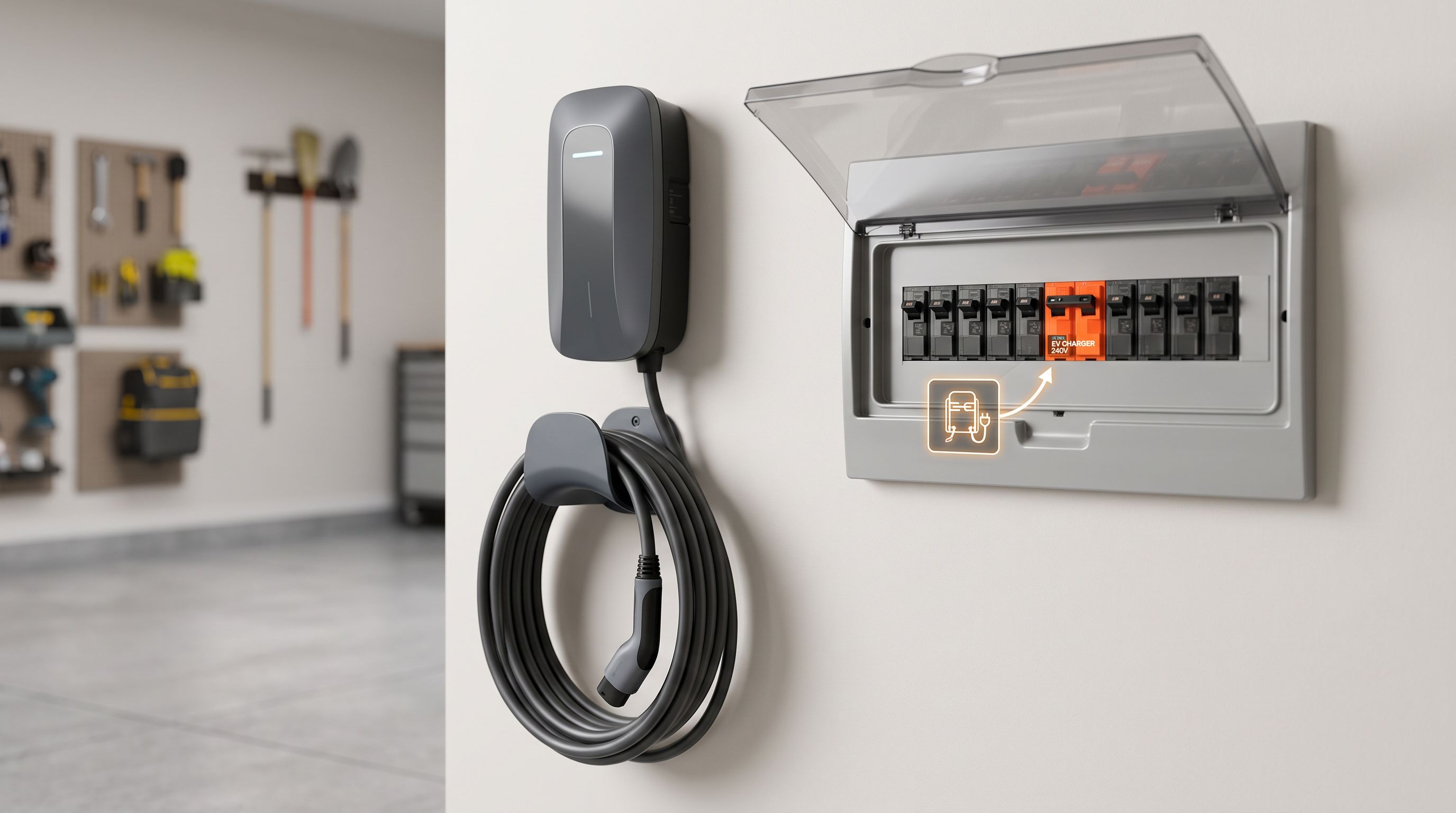
Level 2 Home Charging in 2026, Explained
Level 2 EV charger installs run roughly $800–$6,000 in 2026. Here's how amperage, panel capacity, and hardware choices actually drive that number.
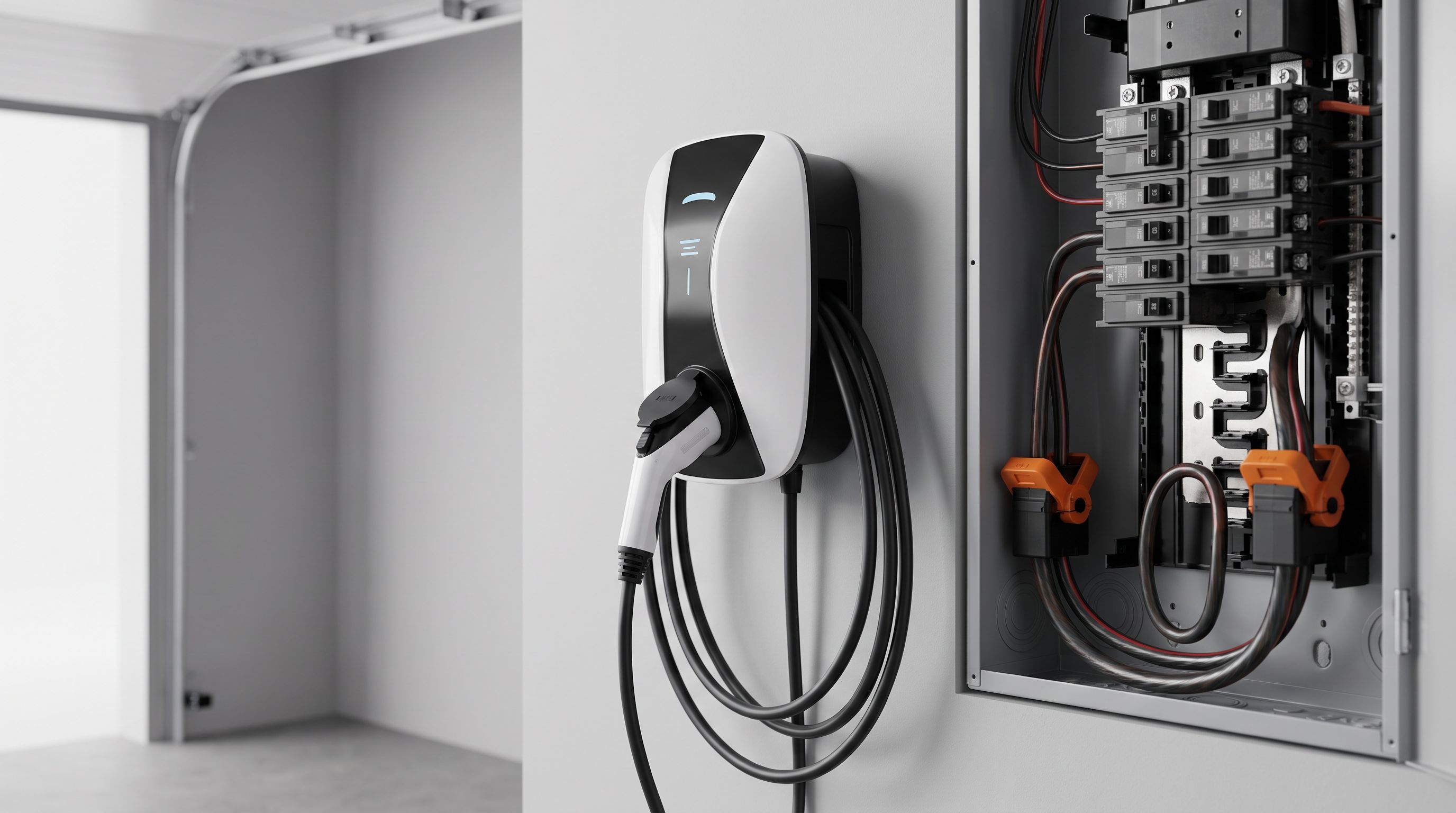
Level 2 Charger Load Management in 2026: Skip the Subpanel?
Got 100A service? Compare Level 2 chargers with built-in load management, CT clamps and power sharing in 2026 — and learn when you still need a panel upgrade.
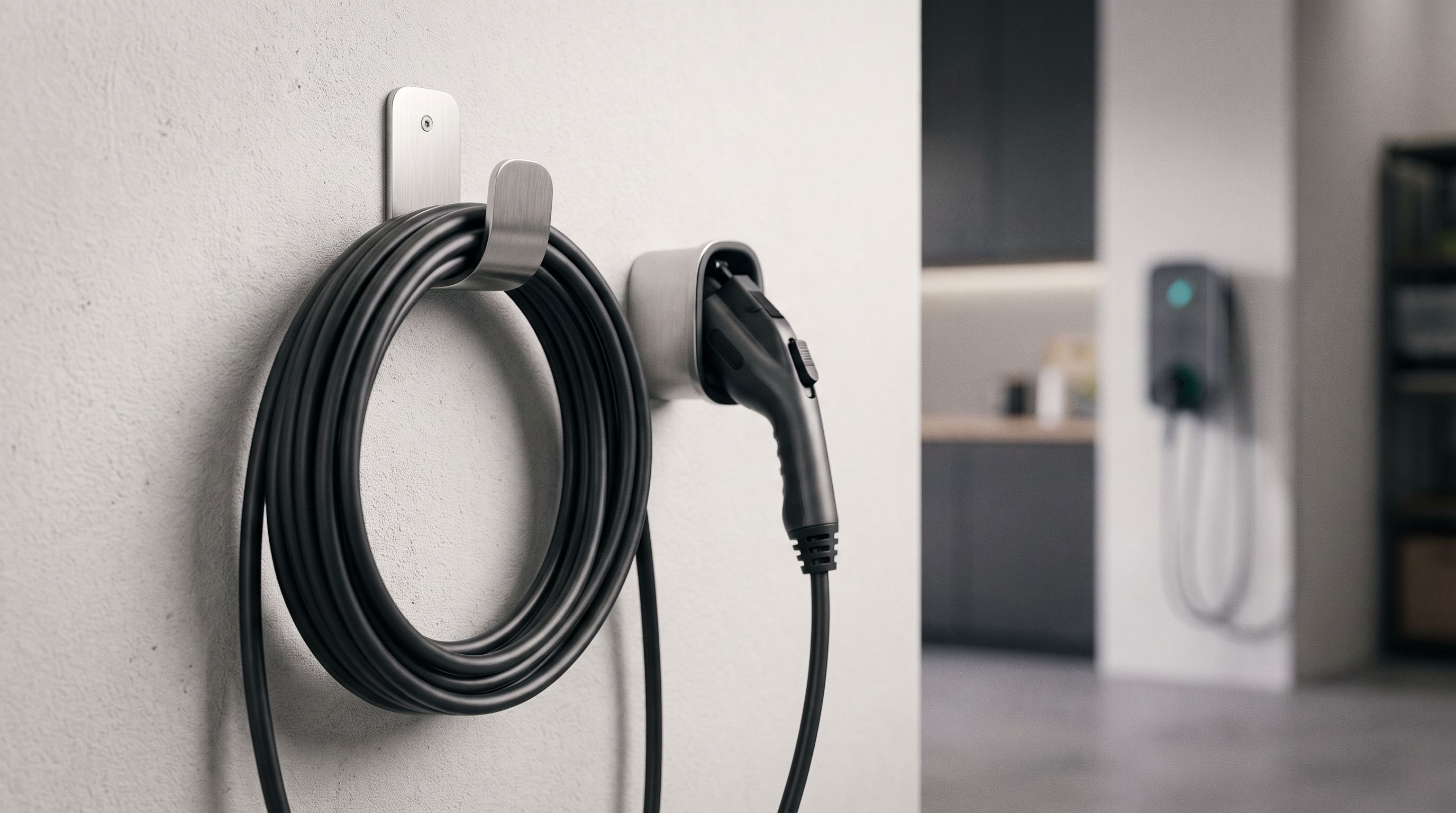
EV Charger Cable Holder 2026: NACS vs J1772 Wall Fit
Which EV charger cable holder fits your setup in 2026? We compare holsters, J-hooks and docks by connector type (NACS vs J1772) and garage wall material.