Level 2 EV Charger Cable Length in 2026: 25ft Without Sag
Level 2 EV charger cable length explained for 2026: why 25 ft is the ceiling, what gauge really matters, and how to match reach to your charge port side.
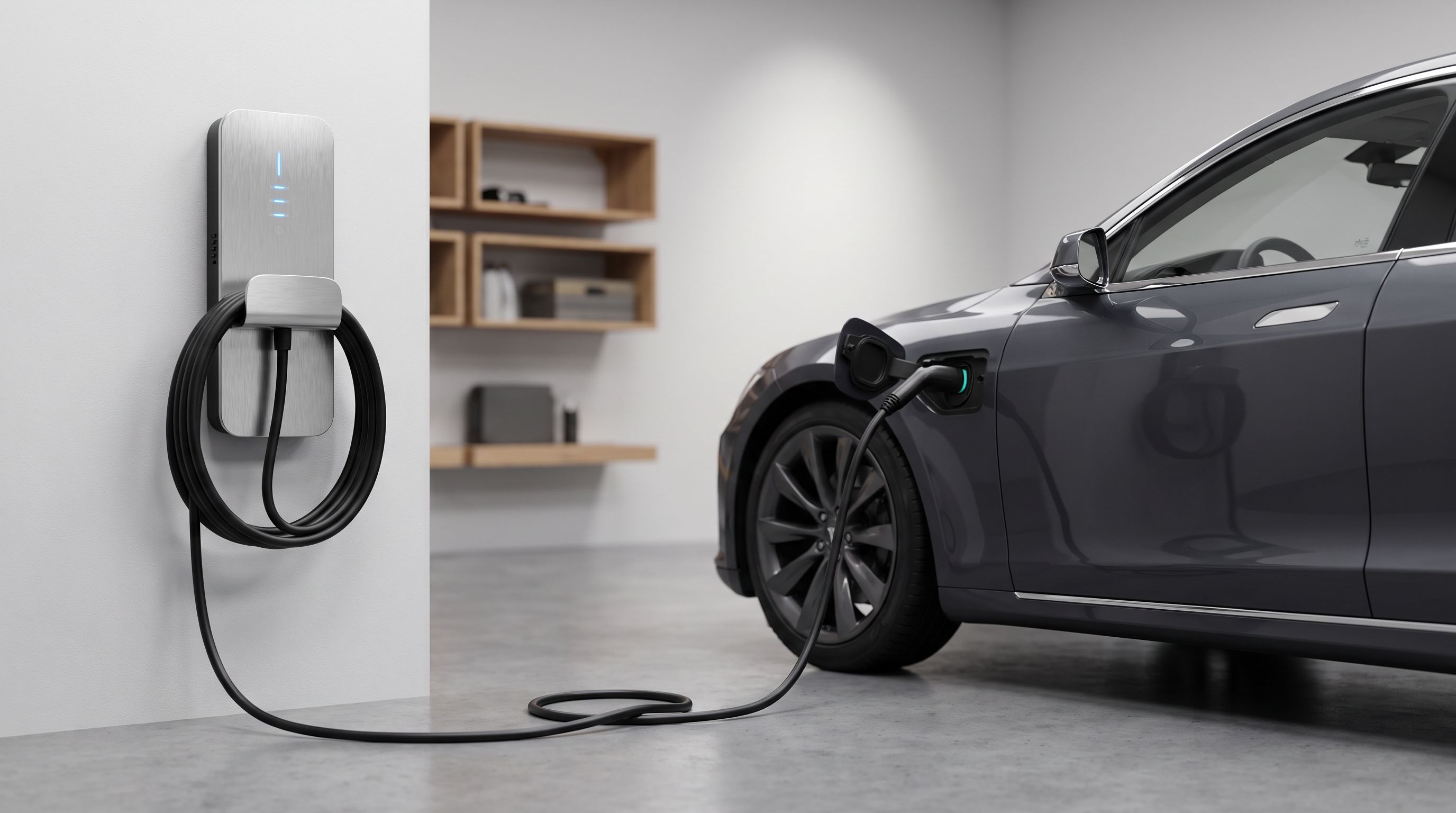
Reader-supported: we may earn a commission from links on this page, at no extra cost to you. It never affects our picks. Learn more.
The short version
- Best overall for reach: Grizzl-E Ultimate 48 (24 ft cable, cold-rated jacket)
- Best 25 ft cable management: Tesla Wall Connector Gen 3
- Best slim, cold-weather-friendly cable: Emporia Pro Level 2 EV Charger
- Best plug-in budget pick: ChargePoint Home Flex
- Best way to add length without rewiring: Lectron 40 ft J1772 Extension Cable
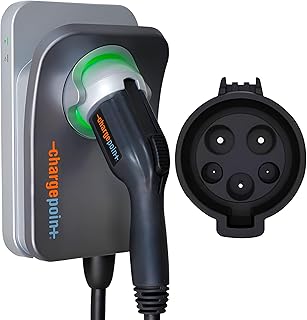 Best plug-in budget pick · ChargePoint Home Flex — Check price on Amazon →
 Best slim, cold-weather-friendly cable · Emporia Pro Level 2 EV Charger — Check price on Amazon →
 Best 25 ft cable management · Tesla Wall Connector Gen 3 — Check price on Amazon →
 Best overall for reach · Grizzl-E Ultimate 48 — Check price on Amazon →
Cable length is the single most common home-charging regret we see in owner feedback, and it almost never shows up in spec comparisons until it's too late. People obsess over 48 A versus 40 A, then discover the charger they mounted next to the panel can't reach a charge port on the opposite corner of the car. Or they buy the longest cord they can find and spend every winter wrestling a frozen garden hose into a holster.
The right answer depends on three things: where your breaker panel actually is, which corner of the car your charge port lives on, and how cold your garage gets. Here's how to work it out before you drill a single hole.
Why 25 feet is the practical ceiling
UL 2594 and the NEC govern how long an EVSE output cable can be. The short version that matters to you: the usable cord length on a Level 2 EVSE is generally capped at 25 ft unless the unit ships with a cable management system. That's why nearly every mainstream wall box lands between 18 and 25 ft, and why you rarely see a factory 30 ft cord.
This is a real constraint, not marketing. It exists because a long, heavy conductor lying across a garage floor is a trip hazard, an abrasion hazard, and a thermal management headache. The cable is the hottest-running part of a Level 2 charger — it's carrying 32 to 48 continuous amps through a flexible jacket with no heatsink.
So when you see a 25 ft charger, understand what you're getting: roughly 25 ft of cable, minus the length that hangs from the wall mount to the floor, minus the sag in the middle, minus the last couple of feet of connector handle geometry. Usable reach is typically 20 to 22 ft of real-world distance from the wall box.
Measure the path, not the straight line
Grab a tape measure or a length of rope and physically walk the route: from the proposed charger location, down the wall, across the floor, around the back or front of the car, up to the charge port. Don't measure diagonally through the vehicle. Add 3 ft of slack so the cable isn't under tension at the connector — strain on the J1772 or NACS latch is what kills connectors.
If that number comes out over 20 ft, you either need a different mounting position or a cable management setup.
Charge port location changes everything
This is the part most buying guides skip. Charge port position varies wildly by manufacturer, and it determines whether you can park nose-in, tail-in, or both.
| Charge port location | Common examples | Garage mounting implication |
|---|---|---|
| Left rear quarter | Tesla Model 3/Y, Ford Mustang Mach-E (driver side front, actually) | Mount on the driver-side wall near the rear of the bay; short cable works |
| Left front fender | Chevy Bolt, Kia EV6 (right rear), Ford F-150 Lightning (left front) | Mount near the garage door opening, driver side |
| Right rear quarter | Hyundai Ioniq 5, Kia EV6, Nissan Ariya | Wall box on the passenger side, or a long cable crossing the bay |
| Front center / nose | Nissan Leaf, BMW i3 (right rear), Tesla Cybertruck (left rear) | Nose-in parking is mandatory; mount near the door |
Always verify your own vehicle — port placement changes between model years and trims, and some models moved ports mid-generation. Check your owner's manual or just look at the car.
The painful scenario is a panel on the passenger-side wall and a charge port on the driver-side rear. That's a diagonal run of the full vehicle length plus the width of the bay — frequently 22 to 26 ft of actual cable path. In that case you want a genuine 24–25 ft unit and an overhead cable management reel or a wall-mounted cable hook at the midpoint.
Gauge, amperage, and why thinner can be better
There's a persistent myth that a thicker EVSE cable means better charging. It doesn't. The output cable gauge is determined by the amperage rating, and the manufacturer has already sized it to UL requirements. A 48 A charger will typically use heavier conductors than a 32 A unit, but both are correctly sized for their load.
Where gauge genuinely matters is the branch circuit wiring in your wall, not the cord hanging off the box. That's an electrician's job: a 48 A continuous load needs a 60 A circuit, which generally means 6 AWG copper for typical residential runs, with longer runs sometimes bumping up a size to manage voltage drop. If your charger is 150 ft from the panel, tell your electrician — voltage drop over that distance is real and affects charge speed.
What you should actually evaluate on the output cable:
- Jacket material and cold rating. Look for a stated low-temperature rating. Some manufacturers specify operation down to −22°F or −40°F. A cable that stiffens into a hoop at 10°F is a daily annoyance.
- Overall diameter and weight. Slimmer cables coil more easily and stay on the holster. Emporia specifically redesigned the Pro with a thinner, more manageable cable than its previous generation, and reviewers consistently call out the Tesla Wall Connector's cable as among the easiest to handle.
- Strain relief at both ends. The junction where the cable enters the connector handle is the usual failure point.
Cold weather is a cable spec, not a charger spec
If you park outdoors or in an unheated garage in a northern climate, cable flexibility at low temperature is the feature you'll notice every single day. A stiff cable doesn't just annoy you — it puts bending load on the connector latch and the wall box's cable gland.
Grizzl-E built its reputation on this. The Ultimate 48 uses a cold-weather-rated jacket and a heavy-duty housing explicitly aimed at outdoor and extreme-climate installs. It's the least elegant cable on this list to coil, but it doesn't turn into rebar in January.
Hardwired vs. plug-in changes your placement options
A NEMA 14-50 plug-in charger has to live within a few feet of an outlet, which is usually near the panel. A hardwired unit can go anywhere you're willing to run conduit — which means you can often solve a reach problem by moving the charger instead of buying a longer cable.
Hardwiring is also required for 48 A operation on most units; plug-in versions are typically limited to 40 A because the NEMA 14-50 receptacle is rated for a 50 A circuit and continuous load rules cap you at 80 percent. If you're choosing between a 40 A plug-in and a 48 A hardwired unit, be honest about whether your car can even accept 48 A — many can't. Check your vehicle's onboard charger rating before paying for headroom you'll never use.
The picks
Grizzl-E Ultimate 48 — best overall for reach
Prices last checked October 7, 2026. Amazon prices change frequently, so treat these as a guide and check the live price before you buy.
Grizzl-E Ultimate 48
24 ft cold-weather-rated cable and a rugged outdoor enclosure for awkward garage geometry.
Grizzl-E's Ultimate 48 pairs a 24 ft cable with the brand's hallmark cold-weather construction and a rugged, outdoor-rated enclosure. It's the pick for anyone with a difficult garage geometry — a port on the far side of the car, a panel in an awkward corner, or an outdoor install in a climate that regularly goes below freezing. It supports up to 48 A hardwired. What you give up: it's bulkier and heavier than the slim-cable competition, the cable is comparatively stiff to coil, and the app ecosystem is less polished than Tesla's or Emporia's. If you want maximum durability and reach over refinement, it's the one.
Tesla Wall Connector Gen 3 — best 25 ft cable management
Tesla Wall Connector Gen 3
One of the slimmest, easiest-to-coil long cables on the market, plus power sharing.
The Gen 3 Wall Connector ships with a long cable — roughly 24 ft — that independent reviewers consistently rate as among the slimmest and easiest to handle on the market. It works with J1772 vehicles via the included or separate adapter depending on region and version, and it carries one of the better warranties in the category. Power sharing across multiple units is a genuine advantage for two-EV households on a constrained panel. The trade-off: setup and configuration run through Tesla's ecosystem, it's hardwire-only, and non-Tesla owners need an adapter, which adds a connection point and a small amount of effective length loss.
Emporia Pro Level 2 EV Charger — best slim, cold-weather-friendly cable
Emporia Pro Level 2 EV Charger
Redesigned thinner cable and slimmer body make nightly coiling far less of a chore.
Emporia redesigned the Pro with a noticeably thinner, more flexible cable than its earlier model, and a slimmer body. That matters most if you coil the cable on a holster every night rather than letting it lie on the floor. Emporia's energy-monitoring integration is a real draw if you already use their home energy products, and scheduling for off-peak rates is straightforward. What it gives up: the enclosure doesn't feel as armored as a Grizzl-E, and if your install is fully outdoors and exposed in a harsh climate, the heavier-duty option is the safer bet. For a typical attached garage, it's the easiest cable to live with.
ChargePoint Home Flex — best plug-in budget pick
ChargePoint Home Flex
Reliable scheduling and app support in a NEMA 14-50 plug-in package for same-side installs.
Home Flex remains the sensible default for people who want a plug-in installation, reliable scheduling, and access to the broader ChargePoint network app for public charging on the same account. The cable is long enough for most single-bay garages where the panel and port are on the same side. In plug-in form it's limited to 40 A on a NEMA 14-50; hardwiring unlocks more. What you give up: it leans harder on cloud connectivity than some rivals, and the cable isn't the slimmest or the most cold-tolerant of the group. If your garage is attached and heated, that won't matter much.
Lectron 40 ft J1772 Extension Cable — best way to add length without rewiring
Lectron 40 ft J1772 Extension Cable
A pragmatic stopgap when an already-installed charger falls a few feet short.
Sometimes the charger is already installed and the reach is simply wrong. A J1772 extension cable is the pragmatic fix, and Lectron's 40 ft version is the common choice. Use it with clear eyes: extensions add resistance and another pair of connections, they are not covered by most EVSE warranties, and they're not NEC-sanctioned as a permanent solution. Treat it as a temporary bridge or occasional-use item, keep it off wet ground, verify the amp rating matches your charger, and inspect the contacts periodically for heat discoloration. Moving the wall box is always the better permanent answer.
How to choose
Start with the panel, then the port
Mark your panel location and your car's charge port on a rough sketch of the garage. The charger wants to be close enough to the panel that the conduit run is affordable, and close enough to the port that 20 usable feet of cable reaches with slack. If those two zones don't overlap, you're paying either for a longer conduit run or for a cable management system. Conduit is usually cheaper and always safer.
Match amperage to your car, not to the spec sheet
Your charge speed is capped by the vehicle's onboard charger. Many popular EVs accept 32 A or 40 A on AC; a smaller number take 48 A or more. Buying a 48 A wall box for a car that tops out at 32 A gains you nothing today, though it does future-proof for the next vehicle if your panel can support the 60 A circuit.
Prioritize cable handling if you unplug daily
If you plug in every night, you will touch the cable roughly 700 times a year. Slim and flexible beats armored for most attached-garage owners. If the unit lives outdoors or in an unheated space below freezing, flip that priority and buy for the cold rating.
Decide hardwired vs. plug-in early
Plug-in is easier to replace and move, and the unit can be taken with you. Hardwired allows 48 A, looks cleaner, and is required by some jurisdictions for outdoor installs. Confirm local code with your electrician before buying — some areas require GFCI breakers for plug-in installs, which can cause nuisance tripping with chargers that already include internal ground-fault protection.
FAQ
Is a 25 ft charging cable actually 25 ft of reach? No. Subtract the drop from wall-mount height to the floor, plus the slack you need so the connector isn't under tension. Plan on 20 to 22 ft of real reach from a 24–25 ft cable.
Can I buy a 30 or 40 ft Level 2 charger? Not as a standard listed EVSE. The usable output cord is generally limited to 25 ft unless the product includes a cable management system. Longer total lengths exist mainly as extension cables, which carry their own trade-offs.
Does a longer cable slow down charging? Marginally, through added resistance, but a properly sized factory cable at 24 ft won't produce a difference you'd notice. Voltage drop in a long branch circuit from the panel is a bigger factor — mention the run distance to your electrician.
Are J1772 extension cables safe? They work, but they're outside what most EVSE warranties and the NEC contemplate for permanent installation. Use a correctly amp-rated unit, keep connections dry and off the ground, and treat it as a stopgap rather than a design choice.
What wire gauge do I need in the wall? That's a job for a licensed electrician, who will size conductors to the circuit amperage and run length. A 48 A charger needs a 60 A circuit; a 40 A charger needs 50 A. Long runs may require a larger gauge to control voltage drop.
My panel is on the opposite side from my charge port. What now? Three options, in order of preference: run conduit to put the charger near the port, install an overhead cable reel or retractor, or park in the opposite orientation. Buying an extension is the last resort.
Get the best car care deals in your inbox
Join the GarageProof newsletter for hand-picked car care deals and new buying guides. No spam, unsubscribe anytime.
Related reads
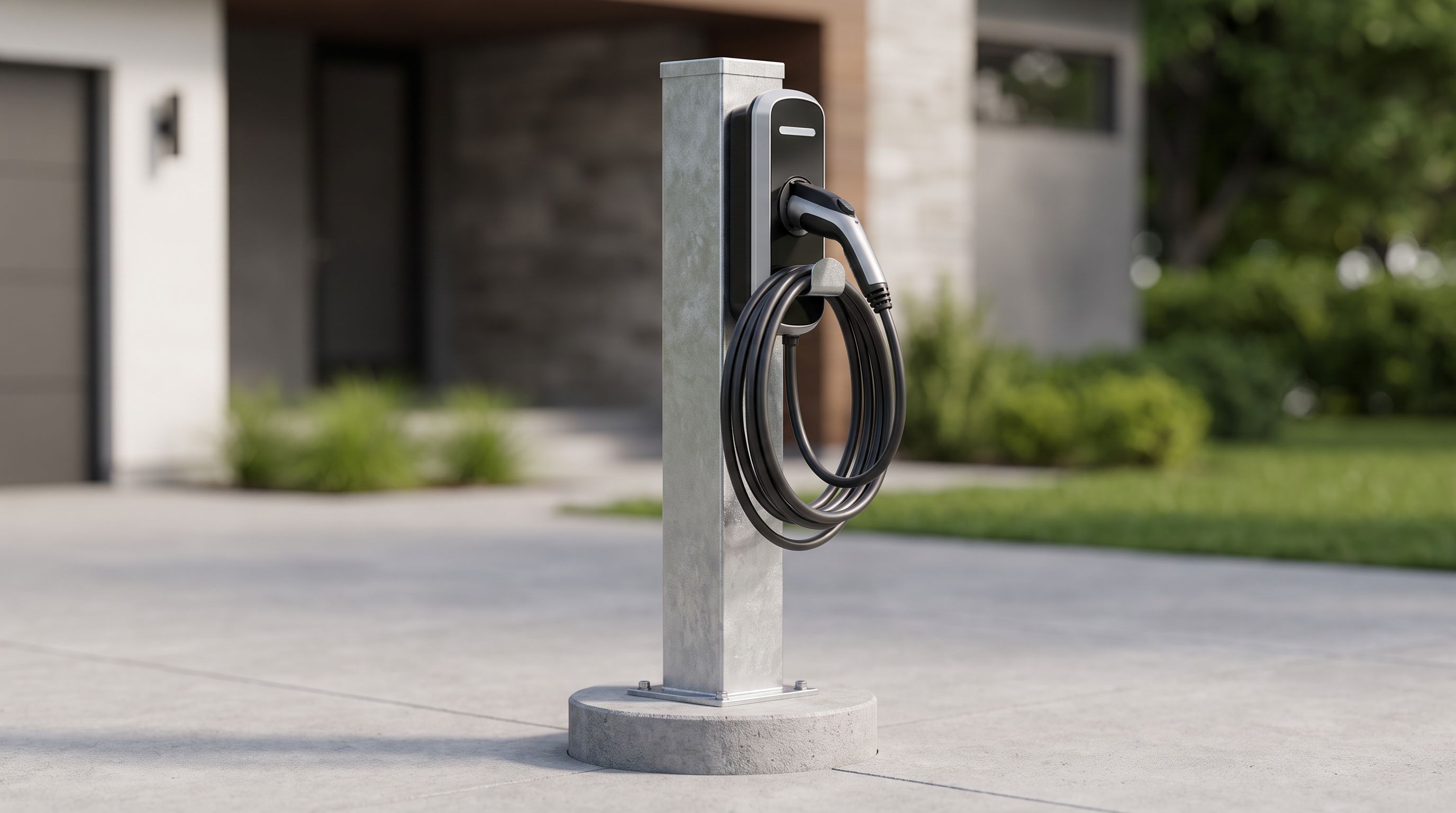
EV Charger Pedestal Mount 2026: Fit It Before You Dig
Compare EV charger pedestal mounts for 2026 by bolt pattern, charger compatibility, cable reach and footing depth — confirm your Level 2 unit fits before you pour concrete.
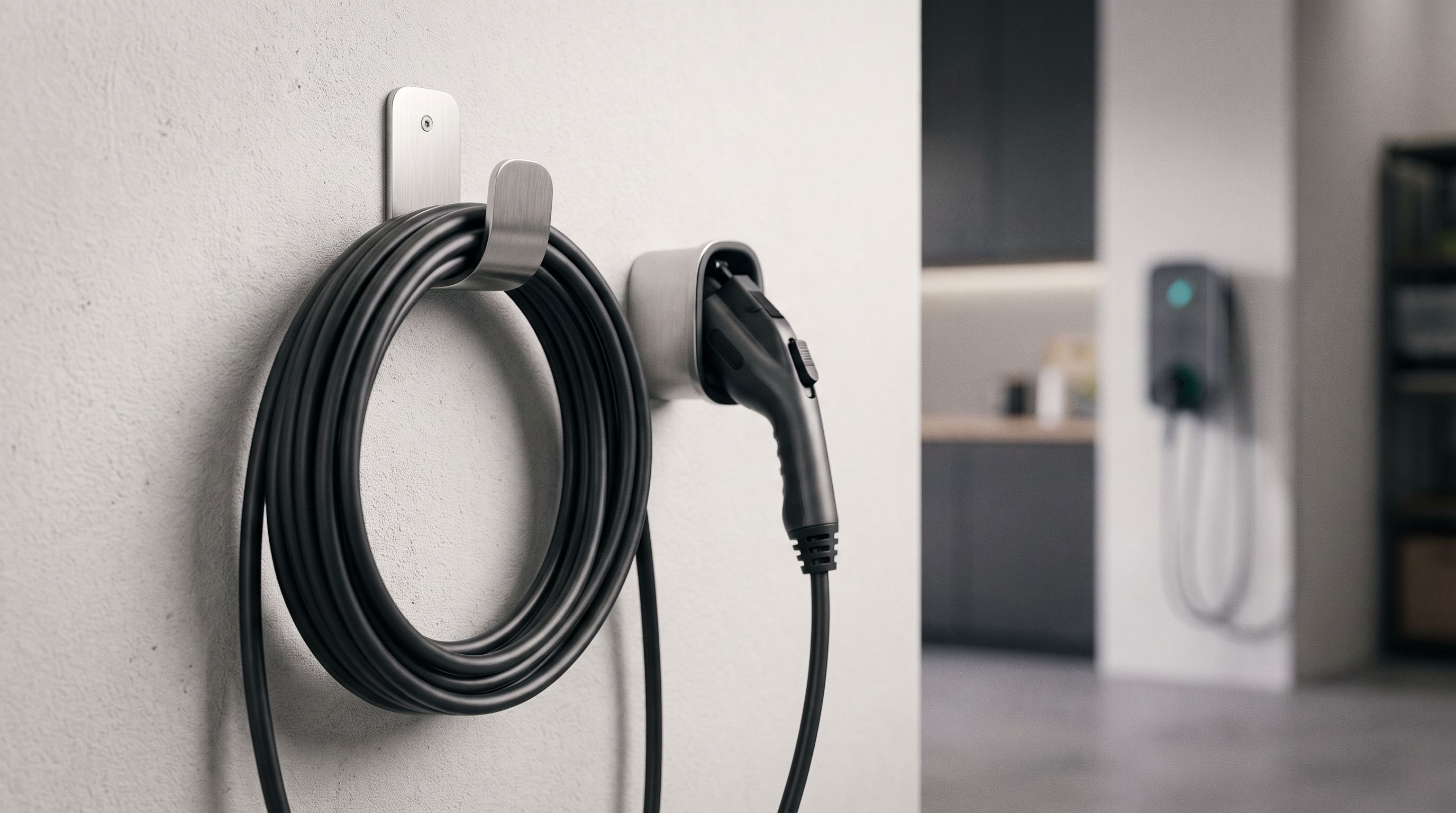
EV Charger Cable Holder 2026: NACS vs J1772 Wall Fit
Which EV charger cable holder fits your setup in 2026? We compare holsters, J-hooks and docks by connector type (NACS vs J1772) and garage wall material.
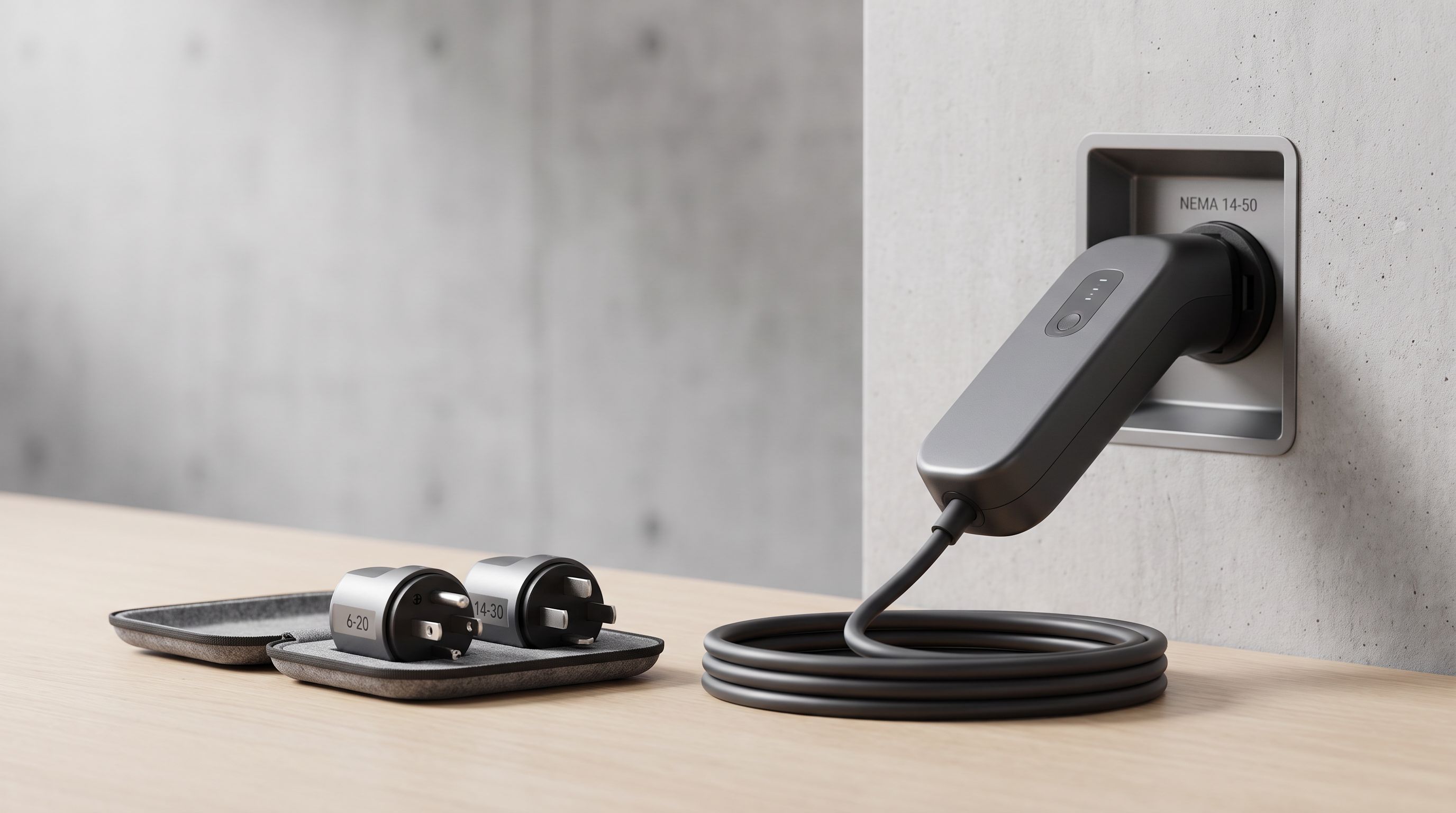
Portable EV Charger NEMA 14-50 vs 6-20: What to Buy in 2026
Portable EV charger NEMA 14-50 vs 6-20 explained for 2026: match plug tails and amperage to your real outlet, plus picks that ship swappable adapters.