Level 2 EV Charger Breaker Size in 2026: 50A vs 60A
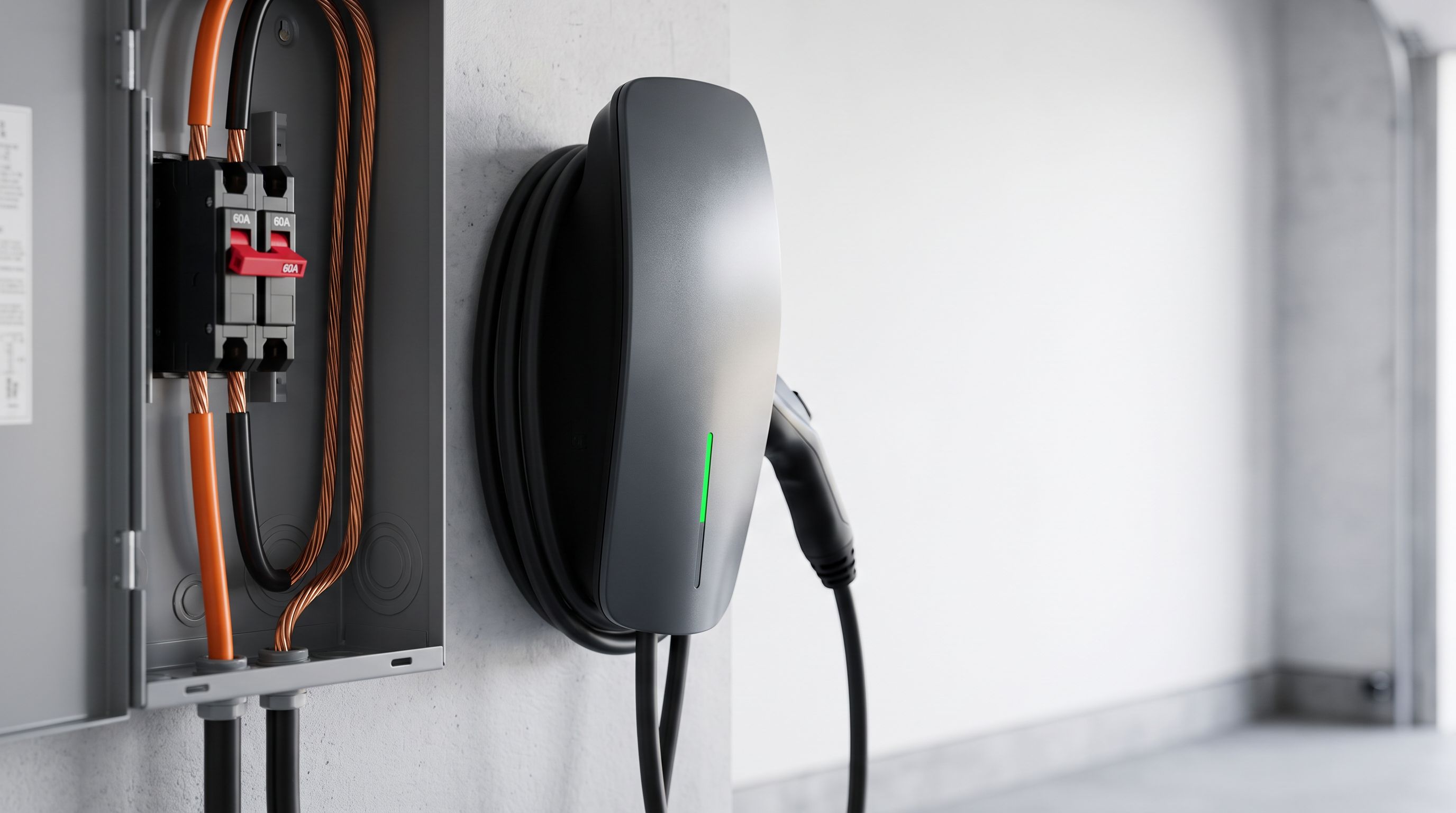
Level 2 EV charger breaker size explained for 2026: how the NEC 125% rule, wire gauge and panel capacity decide between a 40A and 48A hardwired charger.
Reader-supported: we may earn a commission from links on this page, at no extra cost to you. It never affects our picks. Learn more.
Most home charging arguments end the same way: someone buys a 48-amp charger, the electrician looks at the panel, and the charger gets dialed down to 32 amps anyway. The breaker — not the charger — is what actually determines your charging speed, and the breaker is determined by your panel, your wire run, and one deceptively simple NEC rule.
This guide walks through how 40A and 48A hardwired Level 2 chargers map to 50A and 60A circuits, when each is realistic, and which units give you room to adapt if the electrician comes back with bad news. GarageProof researches and compares products using manufacturer documentation, electrical code references, and verified owner feedback; we don't physically install or bench-test units.
The short version
- Best overall for a 60A circuit — Emporia Level 2 EV Charger (48A)
- Best for a 40A/50A circuit — Grizzl-E Classic
- Most flexible amperage — ChargePoint Home Flex
- Best smart features — Autel MaxiCharger AC Elite
- Best compact unit — Wallbox Pulsar Plus 48A
 Best compact unit · Wallbox Pulsar Plus 48A — Check price on Amazon →
 Best smart features · Autel MaxiCharger AC Elite — Check price on Amazon →
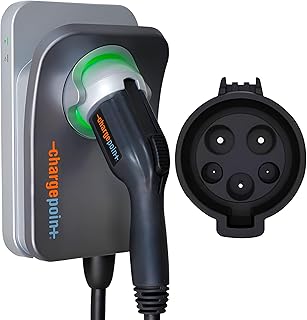 Most flexible amperage · ChargePoint Home Flex — Check price on Amazon →
 Best for a 40A/50A circuit · Grizzl-E Classic — Check price on Amazon →
The one rule that drives everything: 125% continuous load
EV charging is treated as a continuous load — three hours or more at full draw. Under the National Electrical Code, a branch circuit supplying a continuous load must be rated at at least 125% of that load. Flip it around and you get the familiar "80% rule": a charger may only draw 80% of its breaker's rating.
That single multiplier produces the entire sizing chart:
| Charger output | Required breaker (125%) | Typical copper wire | Approx. power @ 240V | Realistic added range/hr |
|---|---|---|---|---|
| 16A | 20A | 12 AWG | ~3.8 kW | ~10–13 mi |
| 24A | 30A | 10 AWG | ~5.8 kW | ~15–20 mi |
| 32A | 40A | 8 AWG | ~7.7 kW | ~20–26 mi |
| 40A | 50A | 6 AWG | ~9.6 kW | ~25–33 mi |
| 48A | 60A | 6 AWG (often) | ~11.5 kW | ~30–40 mi |
| 80A | 100A | 3 AWG or larger | ~19.2 kW | ~55–65 mi |
Range figures are approximate and vary hugely by vehicle efficiency, temperature, and state of charge. Wire gauge assumes copper at 75°C terminations and a short-to-moderate run; long runs, high ambient temperatures, conduit fill, and aluminum conductors all push you a size larger. Your electrician's calculation governs, not a table on the internet.
Why 48A is the practical ceiling
A 48A charger is the largest unit that still fits on a 60A circuit, and 60A is the largest circuit most residential panels can spare without a service upgrade. Push to 80A charging and you need a 100A circuit — which in a typical 200A service usually means a panel upgrade, a load-management device, or both. It's also pointless for most drivers: almost no mainstream EV accepts more than 11.5 kW on AC. A handful of models (certain Teslas with the older dual-charger option, some luxury EVs with 19.2 kW onboard chargers) can use more, but if your car tops out at 11 kW, an 80A circuit buys you nothing.
Why 40A is the practical floor for "fast enough"
A 40A charger on a 50A breaker delivers roughly 9.6 kW. Overnight, that's 80–100+ miles of range added in eight hours for most EVs. Unless you routinely drain the pack and need a full recharge before morning, the difference between 9.6 kW and 11.5 kW is mostly theoretical.
Can your panel actually take it?
This is where projects die. Before buying anything, three things need checking.
1. Spare breaker spaces
A 240V circuit needs two adjacent slots for a double-pole breaker. If your panel is full, tandem breakers may free space elsewhere — but many panels only accept tandems in specific positions, and the panel label will say. If the panel is physically full and non-tandem-rated, you're looking at a subpanel.
2. Load calculation, not guesswork
"I have a 200A service, I'm fine" is the single most common mistake. The electrician performs a load calculation (NEC Article 220) that tallies your square footage, HVAC, range, dryer, water heater, and other fixed appliances. A 200A service with a heat pump, electric range, electric dryer, and a hot tub may genuinely have no room for 60A of continuous load — even though the main breaker says 200.
If the calculation comes up short, you have options before a full service upgrade:
- Dial the charger down. A 48A unit set to 32A on a 40A breaker still adds ~26 mi/hr.
- Use an EVSE with load management. Some chargers and accessory modules monitor whole-home draw and throttle charging when the house is busy, letting a larger circuit pass the calculation.
- Circuit-sharing devices. Splitters that share an existing dryer or range circuit exist, though availability and code acceptance vary by jurisdiction.
3. The wire run
Six-gauge copper is stiff, expensive, and awkward to pull through finished walls. A 60-foot run from a basement panel to a detached-garage wall is a very different job from a 10-foot run beside the panel. Voltage drop over long distances may force 4 AWG. Get the run measured before you pick a charger, because the cost delta between a 50A and 60A install is often dominated by conductor cost and labor, not the breaker itself.
Hardwired vs. plug-in: the 2026 reality
Recent code cycles tightened this. GFCI protection is required for 240V receptacles in garages and outdoors, and nuisance tripping between a GFCI breaker and a charger's internal CCID has frustrated plenty of owners. Hardwiring sidesteps that interaction in many installs.
More importantly: 48A chargers must be hardwired. NEMA 14-50 receptacles are rated 50A, and a continuous load on them is limited to 40A. If you want the full 11.5 kW, there is no plug option — it's a hardwired unit on a 60A circuit. Plug-in units are capped at 40A output.
Plug-in still wins on two counts: you can unplug and take the charger when you move, and replacement is a two-minute job instead of an electrician visit.
The picks
Emporia Level 2 EV Charger (48A) — best overall for a 60A circuit
Prices last checked October 1, 2026. Amazon prices change frequently, so treat these as a guide and check the live price before you buy.
Emporia Level 2 EV Charger (48A)
48A hardwired output with built-in energy monitoring, and it can be dialed down if your panel can't take 60A.
Emporia's hardwired charger is the straightforward answer if your load calculation supports 60A: 48A output, UL listing, and integrated energy monitoring that reports consumption without a separate meter. Emporia's broader ecosystem of home energy monitoring is a genuine advantage if you want to see what charging costs against the rest of your house. Crucially, it's amperage-selectable, so if the electrician comes back and says 40A circuit maximum, the unit still works — you just configure it down. What you give up: the app is more utilitarian than ChargePoint's, and cable management is basic.
Grizzl-E Classic — best for a 40A/50A circuit
Grizzl-E Classic
Rugged all-metal 40A unit with DIP-switch amperage selection — a natural fit for a 50A breaker and 6 AWG.
If your panel has room for 50A and nothing more, the Grizzl-E Classic is the unit to beat. It's an all-metal, weather-rated enclosure with DIP-switch amperage selection (commonly 16/24/32/40A depending on model), and it's deliberately dumb — no app, no cloud account, no firmware that stops working when a server retires. That simplicity is the point for owners who just want the car full by morning. What you give up: no scheduling in the unit itself (you schedule in the car), no energy reporting, and a heavier, less elegant cable than premium rivals.
ChargePoint Home Flex — most flexible amperage
ChargePoint Home Flex
Field-selectable from 16A up to 50A, so one unit covers almost any breaker you end up with.
Home Flex earns its name: field-selectable output across a wide range up to 50A, available in hardwired and plug-in configurations. That makes it the safest purchase when your install details aren't settled — buy it, let the electrician determine the circuit, configure accordingly. ChargePoint's app is one of the more mature options, with scheduling, cost tracking, and utility program integration in some regions. What you give up: it's a cloud-dependent product, so app features rely on ChargePoint's servers, and the hardware generally sits at the higher end of the market.
Autel MaxiCharger AC Elite — best smart features
Autel MaxiCharger AC Elite
50A-capable smart charger with scheduling, app control and solid build for outdoor installs.
Autel comes from diagnostics, and the MaxiCharger reflects that: a well-built outdoor-rated unit with 50A capability, app-based scheduling, usage logging, and in some configurations load-management support that helps a bigger circuit clear a tight load calculation. It's a good match for someone with time-of-use rates who wants real control over when and how fast charging happens. What you give up: firmware and app polish have historically lagged ChargePoint slightly, and the feature set varies by model variant — confirm the exact SKU's amperage and connector type before ordering.
Wallbox Pulsar Plus 48A — best compact unit
Wallbox Pulsar Plus 48A
One of the smallest 48A hardwired chargers, useful in tight garages with a short wall run.
The Pulsar Plus is notably small for a 48A hardwired charger, which matters more than people expect in a garage where the wall beside the panel is already crowded with a water heater and shelving. It supports 48A on a 60A circuit, offers app scheduling and power sharing between two units, and looks considerably better than most competitors. What you give up: the short body means cable management is on you, and some owners report connectivity quirks with the app — worth reading recent firmware feedback for your region before committing.
How to choose
Start with the panel, not the charger
Get a load calculation first. The answer — 40A circuit, 50A circuit, or 60A circuit — eliminates most of the shopping decision for you. Buying a 48A charger before you know whether 60A is available is how people end up with an expensive 32A charger.
Buy amperage-selectable, always
Every pick here can be configured below its maximum. That flexibility costs nothing and protects you against a surprise during installation, a future panel change, or a move to a different house. A fixed-output charger is a bet on circumstances that may change.
Match the connector to your garage's future
NACS (the Tesla-style connector) is now standard across most new North American EVs, with J1772 adapters widely available. If you're buying in 2026 and expect your next car to be NACS-native, a NACS-connector charger plus adapter is often the more future-proof direction — but check that adapters are supported for your specific vehicle.
Measure the cable run twice
Cable length determines where you can park. A 25-foot cable lets you reach either side of a two-car garage or a car parked on the driveway; an 18-foot cable may not. Longer cables are heavier and harder to coil. Decide where the charger mounts and where the car's port sits before choosing.
Don't pay for amps your car can't use
Check your vehicle's onboard AC charger rating. Many popular EVs accept 7.2 kW or 11 kW. If yours is a 7.2 kW car, a 48A charger and a 60A circuit deliver exactly the same charge rate as a 40A charger on a 50A circuit — and cost considerably more to install.
FAQ
What size breaker do I need for a Level 2 EV charger? 125% of the charger's continuous output. A 32A charger needs 40A, a 40A charger needs 50A, and a 48A charger needs 60A. Never size the breaker equal to the charger's output.
Can I put a 48A charger on a 50A breaker? No. 48A exceeds 80% of 50A (which is 40A). You'd either need a 60A circuit or configure the charger down to 40A.
Is 6 AWG enough for a 60A EV circuit? Often yes for copper at 75°C terminations over a typical residential run, but long runs, high ambient temperature, conduit fill, or aluminum conductors can require larger. Your electrician's calculation decides.
Do I need a 200A service for a 48A charger? Not necessarily. Service size matters less than the load calculation result. Some 200A homes can't support 60A continuous; some 150A homes with gas appliances can.
Is 48A actually faster than 40A in practice? Roughly 11.5 kW vs 9.6 kW — about 20% more. Over an eight-hour overnight charge, that's a difference most drivers never notice, and it's irrelevant if your car's onboard charger caps below 11 kW.
Should I hardwire or use a NEMA 14-50 plug? Hardwire if you want 48A (plugs can't legally do it), if you're mounting outdoors, or if you want to avoid GFCI breaker interaction. Plug in if portability and easy replacement matter more. Either way, the work should be done by a licensed electrician and permitted per local code.
Get the best car care deals in your inbox
Join the GarageProof newsletter for hand-picked car care deals and new buying guides. No spam, unsubscribe anytime.
Related reads
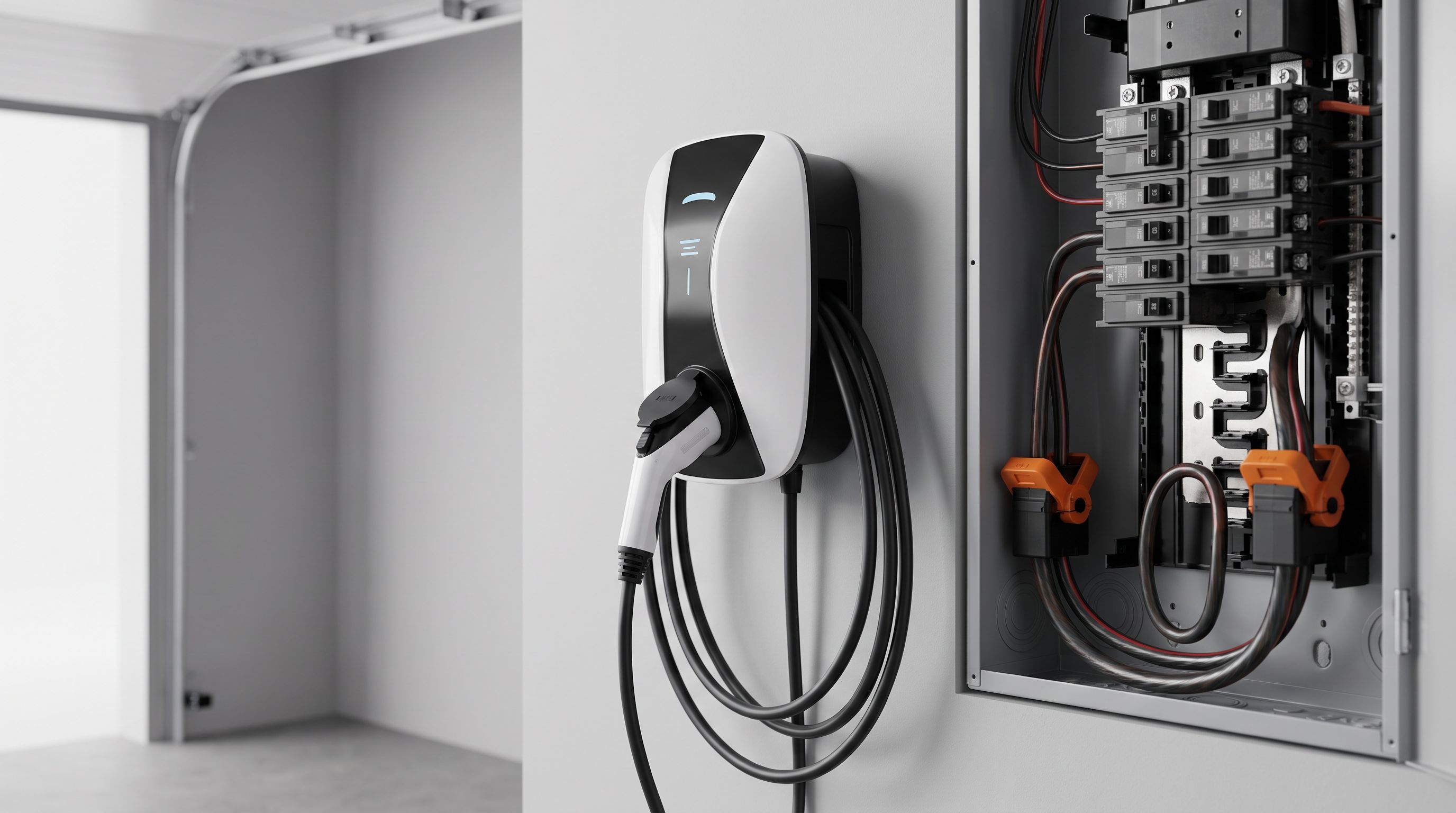
Level 2 Charger Load Management in 2026: Skip the Subpanel?
Got 100A service? Compare Level 2 chargers with built-in load management, CT clamps and power sharing in 2026 — and learn when you still need a panel upgrade.
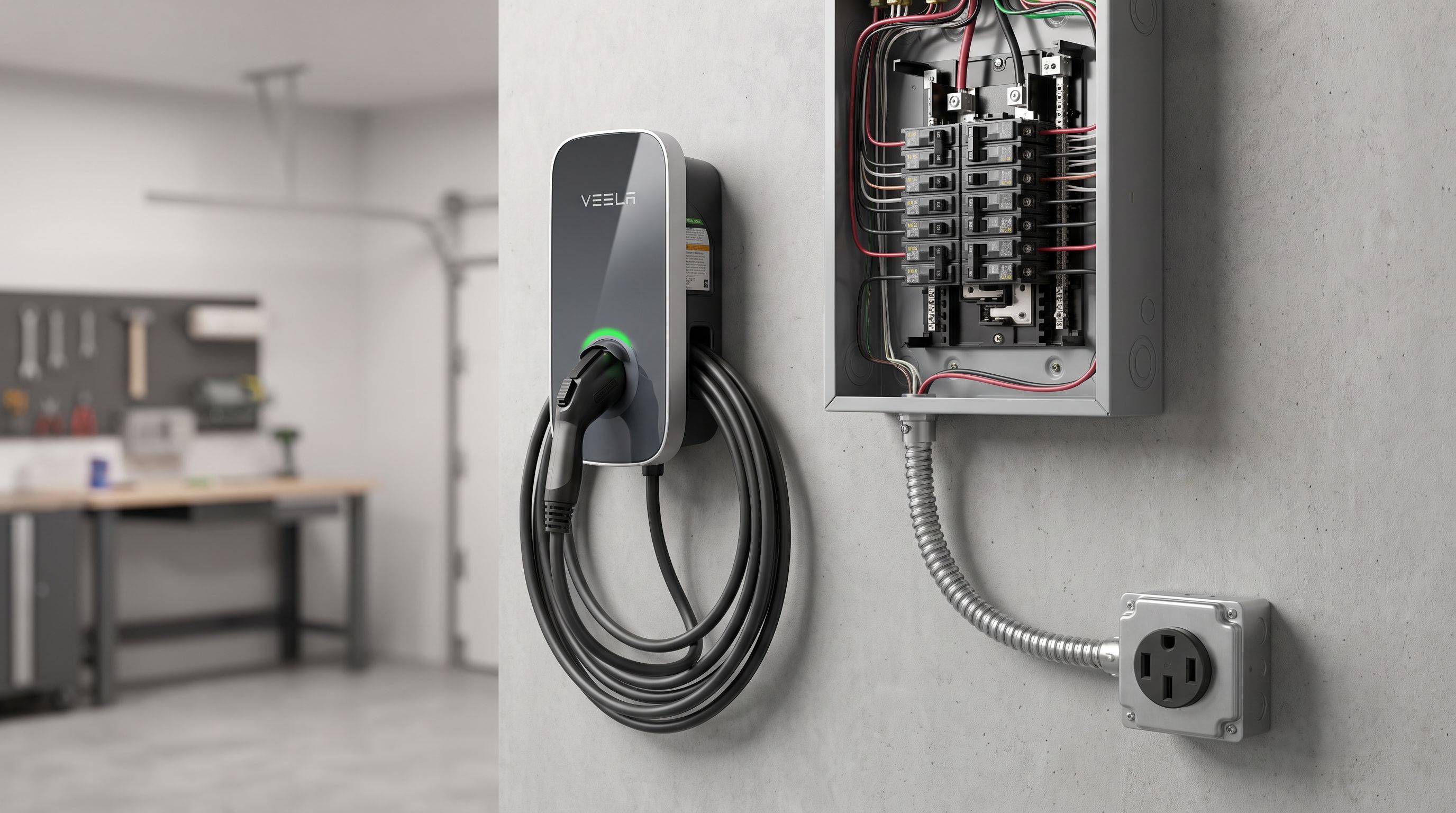
Level 2 EV Charger Garage Install: Amps, Outlet or Hardwire?
Outlet vs hardwire, 40A vs 48A, and the 80% continuous rule — how to pick a Level 2 EV charger that actually fits your 2026 garage panel and wiring.
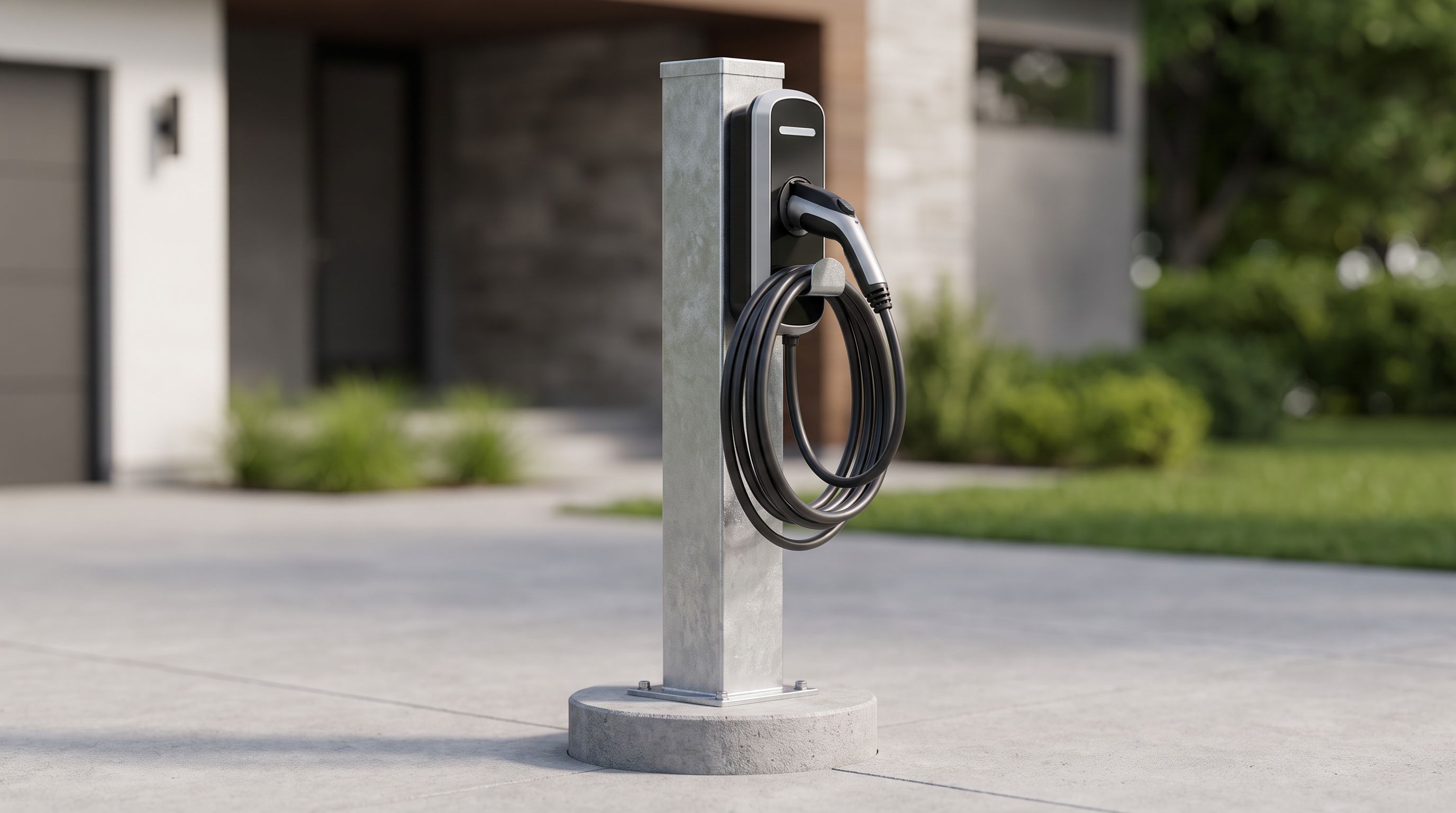
EV Charger Pedestal Mount 2026: Fit It Before You Dig
Compare EV charger pedestal mounts for 2026 by bolt pattern, charger compatibility, cable reach and footing depth — confirm your Level 2 unit fits before you pour concrete.