Level 2 Charger Wire Gauge 2026: 6 vs 8 AWG at 48A
Level 2 charger wire gauge explained for 2026: why 48A units need more than 8 AWG, how length and conduit cut headroom, plus hardwired chargers with long cables.
Reader-supported: we may earn a commission from links on this page, at no extra cost to you. It never affects our picks. Learn more.
The short version
- Best overall: Emporia Level 2 EV Charger (48A, 24 ft cable)
- Best for flexible amperage: ChargePoint Home Flex
- Best rugged/outdoor pick: Grizzl-E Classic
- Premium pick: Autel MaxiCharger AC Elite (50A)
- Best for mixed-brand garages: Tesla Wall Connector (Gen 3, Universal)
 Best for mixed-brand garages · Tesla Wall Connector (Gen 3, Universal) — Check price on Amazon →
 Premium pick · Autel MaxiCharger AC Elite (50A) — Check price on Amazon →
 Best rugged/outdoor pick · Grizzl-E Classic — Check price on Amazon →
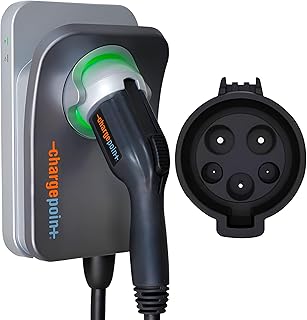 Best for flexible amperage · ChargePoint Home Flex — Check price on Amazon →
 Best overall · Emporia Level 2 EV Charger (48A, 24 ft cable) — Check price on Amazon →
The short answer to the headline question: 8 AWG copper is not the right conductor for a 48-amp hardwired charger. A 48A continuous load requires a 60A circuit, and 60A on copper THHN in conduit lands you at 6 AWG at best — and in many real-world installs, 4 AWG once you account for 75°C terminations, high ambient garage temperatures, and voltage drop over a long run. 8 AWG belongs on a 40A breaker feeding a 32A charger, or on a 50A breaker only where the conductor's ampacity rating genuinely supports it.
Everything below is the "why," plus which hardwired chargers actually ship with enough cable to reach your charge port without a goofy diagonal stretch across the garage.
Why 48A changes the math
The 125% continuous-load rule
NEC Article 625 treats EV charging as a continuous load — three hours or more at full draw, which is exactly what an overnight charge is. Continuous loads must be sized at 125% of the load:
- 32A charger × 1.25 = 40A circuit
- 40A charger × 1.25 = 50A circuit
- 48A charger × 1.25 = 60A circuit
- 80A charger × 1.25 = 100A circuit
People sometimes call this the "80% rule," which is the same idea from the other direction: a breaker may only carry 80% of its rating continuously. Either way, a 48A unit is a 60A circuit, full stop. You cannot land a 48A charger on a 50A breaker and dial the charger down later "when you get around to it" — the install has to be built for how the unit is configured on day one.
Where 8 AWG actually falls
Copper THHN/THWN-2 at the 75°C column — the column that matters, because nearly every residential breaker and charger terminal is rated 75°C — gives roughly:
- 10 AWG: 35A
- 8 AWG: 50A
- 6 AWG: 65A
- 4 AWG: 85A
So 8 AWG copper tops out at a 50A breaker, and only in good conditions. It is flatly undersized for a 60A circuit. The temptation is understandable: 8 AWG is cheaper, pulls easily through 3/4" conduit, and lands neatly on charger terminals. But a conductor run continuously near its ampacity limit in a hot garage attic is exactly how insulation degrades and terminations loosen over years of thermal cycling.
The derating traps that eat 6 AWG's margin
6 AWG at 65A looks like comfortable headroom over a 60A breaker. It usually is — until one of these applies:
- Ambient temperature. Conduit run through an unconditioned attic that hits 110–120°F in summer carries a correction factor that can knock 6 AWG below 60A.
- Conductor bundling. More than three current-carrying conductors in a raceway triggers an adjustment factor. A shared conduit with another circuit counts.
- Aluminum instead of copper. Aluminum SER or XHHW is common for longer runs because it's cheaper, but it needs to go up roughly two sizes. For a 60A circuit, that's typically 4 AWG aluminum minimum, often 2 AWG.
- Terminal ratings. If any device in the path is only 60°C rated, you size from the 60°C column, where 6 AWG is 55A — under your 60A breaker.
This is why plenty of licensed installers simply default to 4 AWG copper for 48A jobs. It's not gold-plating; it's building in margin so the circuit doesn't need re-pulling if the garage gets hotter or the conduit gets busier.
Length and voltage drop: the part people skip
Ampacity keeps the wire from overheating. Voltage drop determines whether your charger actually delivers the power it's rated for. The common target is 3% or less on a branch circuit.
At 240V, 3% is about 7.2 volts. On a 48A load, the resistance of the run matters fast. Rough guidance for copper on a 60A/48A circuit:
| One-way run length | Copper conductor (typical) | Notes |
|---|---|---|
| Under 50 ft | 6 AWG | Fine in most conditions; verify terminations are 75°C |
| 50–100 ft | 6 AWG, often 4 AWG | 4 AWG strongly preferred past ~75 ft |
| 100–150 ft | 4 AWG | Voltage drop, not ampacity, is the driver |
| Over 150 ft | 3 or 2 AWG, or a subpanel | Consider a feeder + local subpanel instead |
Note what's happening: past roughly 75 feet, you stop sizing for heat and start sizing for voltage drop. The wire isn't in danger — your charging speed is. A sagging supply voltage means the charger pulls its rated amps at fewer volts, so you get fewer kilowatts, and some units will throttle or fault on low-voltage detection.
If the run is long enough that 2 AWG copper starts looking expensive, the smarter move is often a subpanel near the garage fed with aluminum feeder cable, then a short 6 AWG copper branch to the charger. It costs more up front and buys you capacity for a second charger, a compressor, or shop lighting later.
Conduit choice isn't cosmetic
- EMT or rigid metal conduit indoors: durable, protects conductors, and the raceway itself can serve as the equipment grounding path in some configurations (though most installers pull a separate ground anyway).
- PVC conduit for outdoor or buried runs: cheap and corrosion-proof, but it expands and contracts, and direct sun exposure raises internal conductor temperature — another derating factor.
- NM-B (Romex) is common for 6/3 runs inside walls, but its 60°C rating in many jurisdictions is why 6 AWG NM-B is not a safe default for a 60A circuit. Check the listing, not the color of the jacket.
- Fill ratio matters. Four 4 AWG THHN conductors want 1" conduit, not 3/4". Overstuffed conduit makes pulls brutal and bundles heat.
Cable length on the charger side
Here's the install detail that quietly causes the most regret: the charger's own output cable. Charge ports live in wildly different places — driver's front fender on a Bolt or Mach-E, driver's rear quarter on a Tesla or Ioniq 5, passenger rear on some, front center on others. If you park nose-in and your port is on the opposite rear corner, an 18 ft cable can come up genuinely short.
Rules of thumb:
- 16–18 ft works only if the unit is mounted near the port side and you always park the same direction.
- 20–25 ft is the safe default for a single-bay garage where you might back in, park a second vehicle, or swap cars later.
- Longer cable = heavier cable. A 48A, 25 ft cable is a real workout in cold weather. Budget for a wall hook or holster.
- Mounting height around 48 inches keeps the connector off the floor without making the cable arc awkwardly.
Measure the actual path — around the mirror, over the hood, with the car parked where it really sits — before you decide 18 feet is enough.
The chargers
Emporia Level 2 EV Charger — best overall
Emporia's Level 2 unit is the one we'd point most homeowners toward for a 48A hardwired install. It supports 48A output when hardwired to a 60A circuit, ships with a 24 ft cable that covers most port placements in a standard garage, and includes energy monitoring that pairs with Emporia's broader home-energy ecosystem — useful if you're tracking charging cost separately from household load. It's UL listed and weather-rated for outdoor mounting. What you give up: the app and firmware experience is functional rather than polished, and support is thinner than the big names. If you want a 48A charger without paying a premium for brand, this is the sensible pick.
ChargePoint Home Flex — best for flexible amperage
Prices last checked October 3, 2026. Amazon prices change frequently, so treat these as a guide and check the live price before you buy.
ChargePoint Home Flex
Installer-selectable 16A to 50A output, so one unit fits a 40A or 60A circuit without replacing hardware.
The Home Flex's selling point is in the name: the installer sets output anywhere from 16A up to 50A to match the circuit you actually have. That matters enormously if your panel load calculation comes back tight and you end up on a 40A circuit instead of the 60A you hoped for — you keep the same hardware and just reconfigure. It's available in hardwired and plug-in versions, has a 23 ft cable, and ChargePoint's app and network integration are the most mature in the category. Downsides: it's priced above budget units, and the app leans on an account and cloud connection more than some owners want.
Grizzl-E Classic — best rugged/outdoor pick
Grizzl-E Classic
Simple no-app 40A charger in an aluminum NEMA 4 enclosure built for harsh outdoor installs.
If your charger lives on an exterior wall, under a carport, or in a garage that sees road salt and -20°F mornings, the Grizzl-E Classic earns its reputation. The aluminum enclosure is NEMA 4 rated, there's no app, no Wi-Fi, and no firmware to go stale — you plug in and it charges. Output is adjustable up to 40A, which means a 50A circuit rather than a 60A one; if your panel can't comfortably support 60A, that's a feature, not a limitation. What you give up is obvious: no scheduling, no energy reporting, no load management. Also note the standard Classic's cable is shorter than the premium cable variants, so check which cable length you're ordering.
Autel MaxiCharger AC Elite — premium pick
For owners with panel capacity to spare, Autel's MaxiCharger AC Elite goes up to 50A on a 60A circuit and ships with a 25 ft cable — among the longest in the mainstream market, and the reason it's worth considering when your charge port is on the far side of the car. Build quality is a clear step up, with Wi-Fi and Bluetooth, scheduling, and a solid app. It's a reasonable choice if you want a charger that won't be the bottleneck when you replace today's EV with something that accepts more AC power. The trade-off is cost, and the fact that 50A output requires a circuit that many older 100A/150A panels can't provide without a load calculation and possibly an upgrade.
Tesla Wall Connector (Gen 3, Universal) — best for mixed-brand garages
Tesla Wall Connector (Gen 3, Universal)
Up to 48A with a built-in adapter design that serves both NACS and J1772 vehicles on one unit.
The Universal Wall Connector handles up to 48A and serves both NACS and J1772 vehicles from one unit — genuinely useful now that non-Tesla EVs are shifting to the NACS port on a staggered timeline. If your household has a Tesla and a Ford or Hyundai, this avoids owning two chargers or living with adapters. Build quality and app integration are excellent, and power sharing across multiple units is supported. What you give up: the integrated adapter mechanism adds bulk, the cable is on the shorter side of the 24 ft class, and it's hardwire-only, so there's no easy "unplug and take it to the next house" option.
How to choose
Size the circuit before you pick the charger
Run a load calculation on your existing panel first. A 48A charger needs a 60A, two-pole breaker and a panel with room for it — both physically and in total service capacity. Plenty of 100A services can't carry 60A of continuous EV load alongside an electric range, dryer, and AC without load management. If the calculation comes back tight, a 40A charger on a 50A circuit charges most EVs fully overnight anyway, and saves you a service upgrade.
Match conductor to run length, not just amperage
Short run under 50 ft? 6 AWG copper in conduit is the normal answer for 60A. Past 75 ft, step to 4 AWG for voltage drop. Past 150 ft, price out a subpanel. And if your electrician proposes aluminum, expect sizes two steps larger than the copper equivalent, with antioxidant compound on the terminations.
Buy more charger cable than you think you need
Twenty-plus feet is the right default. Measure from the proposed mounting point, around the vehicle, to the port — with the car parked how it actually parks. Then add slack for the day you buy a different EV with the port on the other end.
Decide hardwired vs. plug-in deliberately
Hardwiring is required above 40A output and is more robust long-term. A NEMA 14-50 plug-in setup caps you at 40A, but it's portable and often permits more easily. If there is any chance you'll want 48A, hardwire now — retrofitting means re-pulling conductors and swapping the breaker.
Don't skip the permit
An inspected install protects your homeowner's insurance claim if anything ever goes wrong, and inspectors catch the exact derating mistakes described above. In most jurisdictions an EV circuit permit is routine and inexpensive relative to the install.
FAQ
Can I use 8 AWG for a 48A EV charger? No. A 48A charger requires a 60A circuit, and 8 AWG copper is limited to about 50A at 75°C. Use 6 AWG copper minimum, and 4 AWG for long runs or hot conduit environments.
Is 6 AWG always enough for a 60A circuit? Usually, but not always. 6 AWG copper is rated 65A at 75°C, which leaves little margin once you apply ambient temperature correction, conductor bundling adjustments, or a 60°C-rated termination. Many installers default to 4 AWG for 48A jobs.
How long can the run be before I need thicker wire? Voltage drop typically becomes the limiting factor around 75–100 feet on a 48A load. Past that, step up a size or two, or install a subpanel near the garage and run a short branch circuit from there.
Does a longer charger cable slow charging? Not meaningfully — the charger's output cable is engineered for its rated current. The length that affects performance is the branch circuit from your panel, where voltage drop reduces delivered power.
Should I hardwire or use a NEMA 14-50 plug? Hardwire if you want 48A, since plug-in units are limited to 40A. Plug-in is fine for 40A setups and makes it easier to take the charger with you when you move.
Will my charger work with a future EV that uses NACS? Most J1772 chargers work with NACS vehicles via an adapter, and the Tesla Universal Wall Connector handles both natively. Check your specific vehicle's adapter support before assuming compatibility.
GarageProof researches and compares products using manufacturer specifications, independent testing, and verified owner feedback. This article is general guidance, not a substitute for a licensed electrician or your local electrical code — always confirm circuit sizing and conductor selection with a qualified professional and pull a permit.
Our picks
Emporia Level 2 EV Charger (48A, 24 ft cable)
48A hardwire-capable charging, energy monitoring and a 24 ft cable that reaches awkward port placements.
Autel MaxiCharger AC Elite (50A)
Up to 50A output with a 25 ft cable, Wi-Fi/Bluetooth and scheduling for larger-amperage panels.
Get the best car care deals in your inbox
Join the GarageProof newsletter for hand-picked car care deals and new buying guides. No spam, unsubscribe anytime.
Related reads
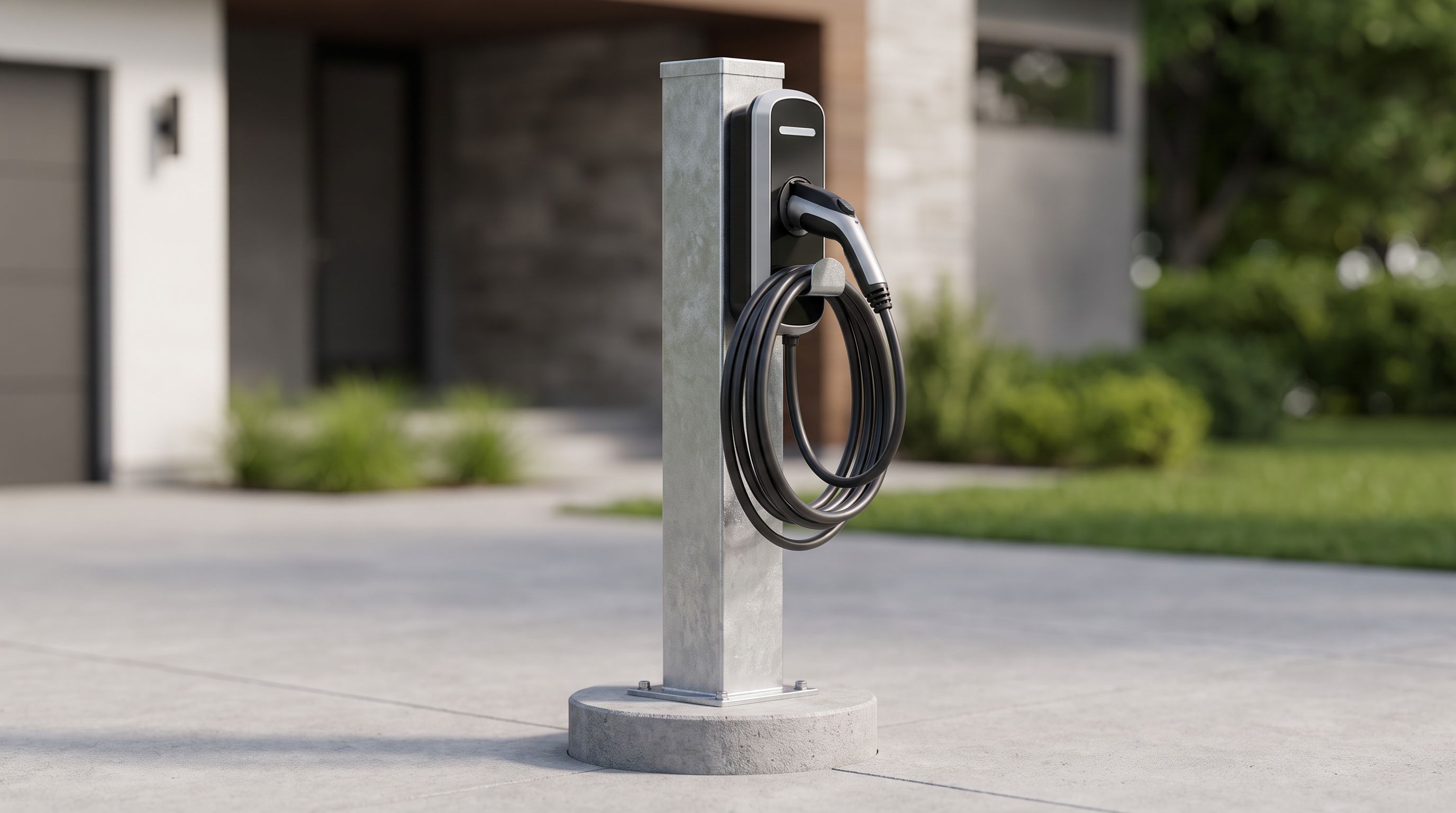
EV Charger Pedestal Mount 2026: Fit It Before You Dig
Compare EV charger pedestal mounts for 2026 by bolt pattern, charger compatibility, cable reach and footing depth — confirm your Level 2 unit fits before you pour concrete.
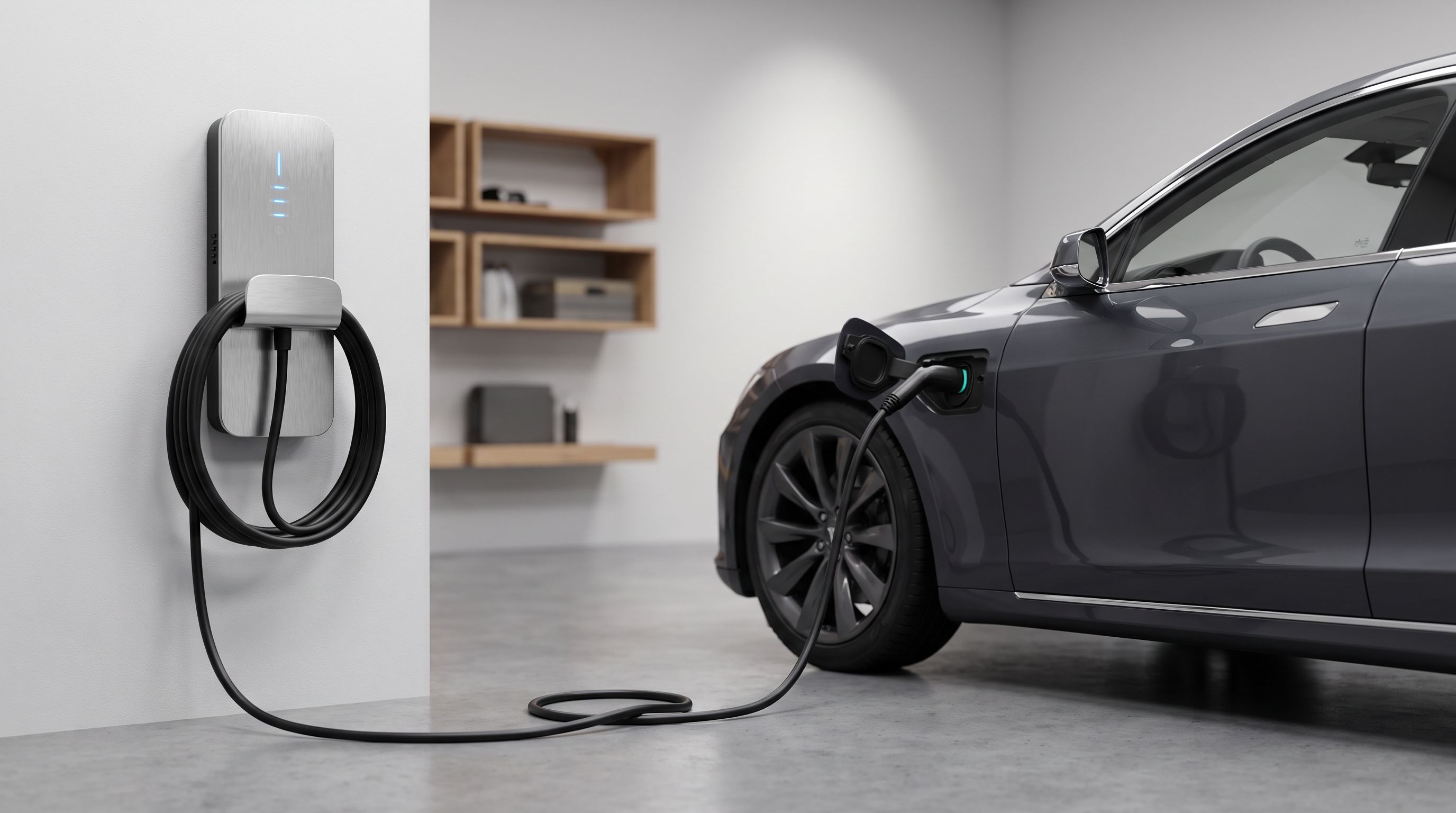
Level 2 EV Charger Cable Length in 2026: 25ft Without Sag
Level 2 EV charger cable length explained for 2026: why 25 ft is the ceiling, what gauge really matters, and how to match reach to your charge port side.
Portable EV Charger NEMA 14-50 vs 6-20: What to Buy in 2026
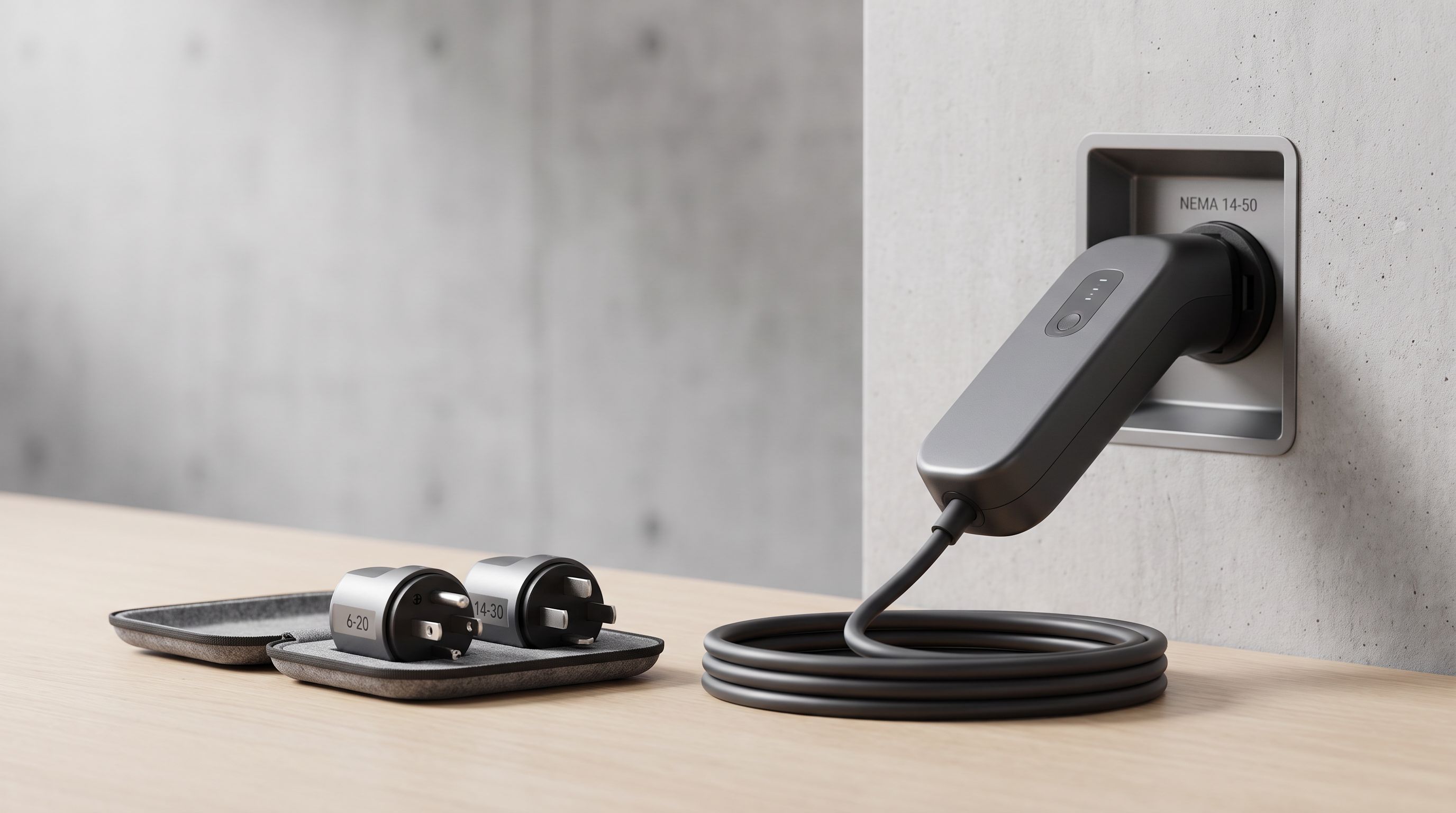
Portable EV charger NEMA 14-50 vs 6-20 explained for 2026: match plug tails and amperage to your real outlet, plus picks that ship swappable adapters.