Level 2 Charger Load Management in 2026: Skip the Subpanel?
Got 100A service? Compare Level 2 chargers with built-in load management, CT clamps and power sharing in 2026 — and learn when you still need a panel upgrade.
Reader-supported: we may earn a commission from links on this page, at no extra cost to you. It never affects our picks. Learn more.
The short version
- Best overall for 100A panels: Emporia Pro Level 2 EV Charger with PowerSmart (48A)
- Best for multi-charger power sharing: Tesla Wall Connector Gen 3
- Best compact install: Wallbox Pulsar Plus 48A
- Budget pick: Emporia Classic Level 2 EV Charger (NACS)
- Best app and scheduling: ChargePoint Home Flex
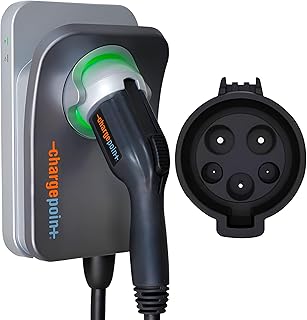 Best app and scheduling · ChargePoint Home Flex — Check price on Amazon →
 Budget pick · Emporia Classic Level 2 EV Charger (NACS) — Check price on Amazon →
 Best compact install · Wallbox Pulsar Plus 48A — Check price on Amazon →
 Best for multi-charger power sharing · Tesla Wall Connector Gen 3 — Check price on Amazon →
The honest answer to "do I need a subpanel?" is: usually no — but you may need a different charger than the one you had in your cart. Load management is the feature that turns a 100-amp service from a dealbreaker into a non-issue, and in 2026 it's finally cheap and common enough that paying an electrician thousands for a service upgrade should be your last resort, not your first assumption.
This guide is organized around panel capacity, not around a single "best" box. Figure out your headroom first, then pick the charger that matches it.
Why panel capacity decides everything
A Level 2 charger is, electrically, one of the largest continuous loads in a house. A 48-amp charger needs a 60-amp circuit and is assumed by code to run at full tilt for hours. On a 200-amp service with gas heat and a gas range, that's usually fine. On a 100-amp service with an electric dryer, central AC, and a heat pump water heater, a straight 60-amp addition often fails a load calculation.
You have four ways out:
- Hard-limit the charger. Dial the output down to 24A or 32A and install it on a correspondingly smaller circuit. Simple, free, and genuinely sufficient for most commuters — 32A adds roughly 25–30 miles of range per hour for a typical EV.
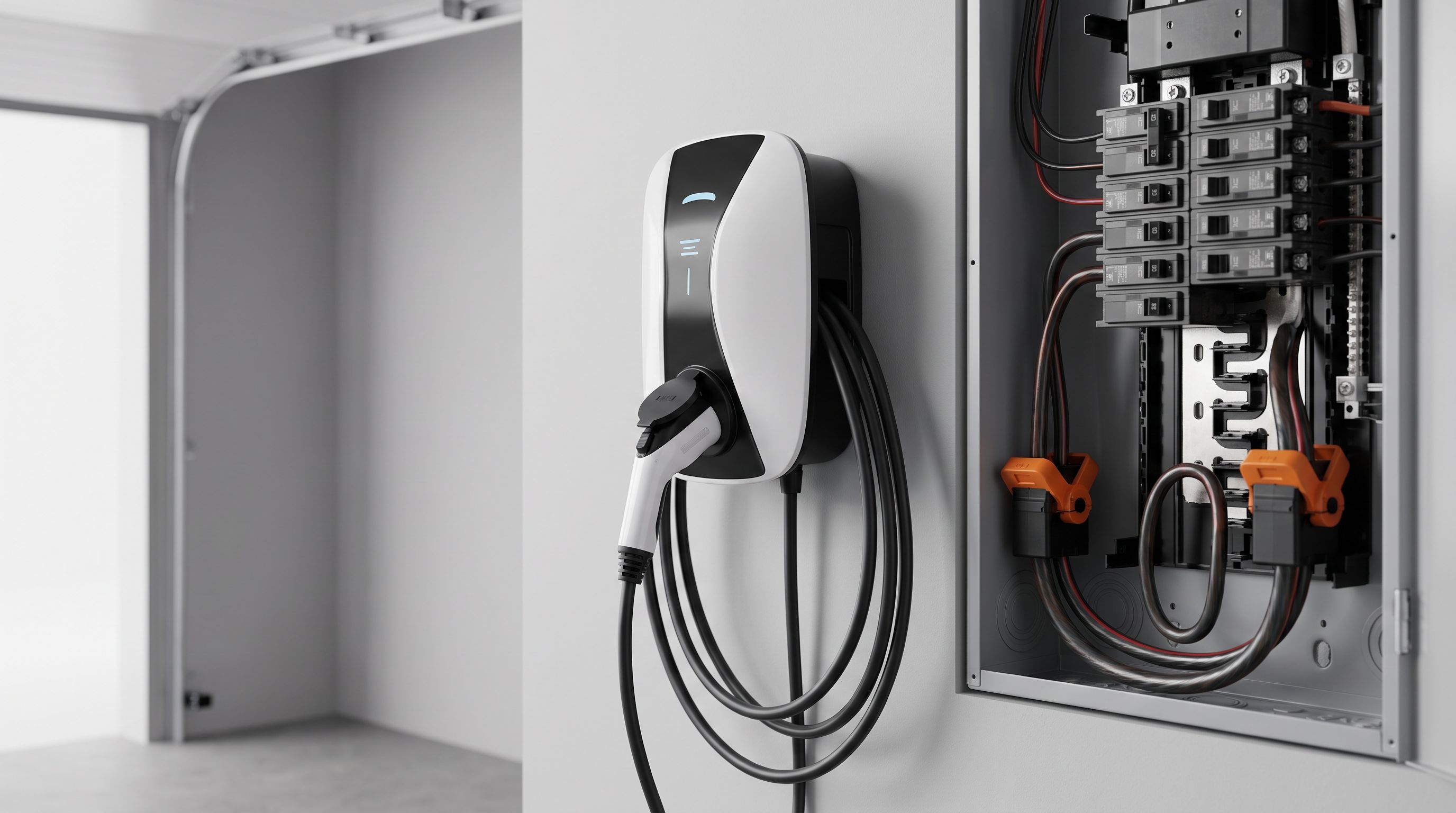
- Dynamic load management (DLM). Current transformer (CT) clamps on your main service conductors measure total household draw in real time, and the charger throttles itself so the house never exceeds the service rating. This is the feature the article is about.
- A branch-circuit interlock. Devices like a DCC or a dryer-outlet splitter shed another load (or shut off the charger) when the panel gets busy.
- A subpanel or service upgrade. Real money, permits, and sometimes a utility transformer visit.
Options 1 and 2 cover the large majority of 100A homes. The National Electrical Code has explicitly accommodated this: NEC 625.42 allows an EVSE's adjustable settings to be treated as the circuit load, and NEC 220.70 (and the energy management system provisions in Article 750) permits load-management hardware to be used in the service calculation. Translation — if the charger can prove it will never push the house over the limit, the inspector can sign off without a bigger panel. Your local authority having jurisdiction still has the final word, so confirm before you buy.
How to choose
Start with an actual load calculation
Don't guess. Have an electrician run a NEC Article 220 calculation, or at minimum pull 12 months of utility interval data and look at your real peak demand. A surprising number of 100A homes peak under 50 amps even on the worst January evening — which means a 32A charger slots in with room to spare and no special hardware at all. The homes that genuinely need DLM are the ones with electric heat, electric range, electric dryer, and a hot tub or well pump stacked up.
Decide: hard limit vs. dynamic throttling
A hard limit is a one-time setting. It's bulletproof, requires no extra hardware, and never fails to a weird state. The downside: you're permanently capped at the worst-case number, even at 2 a.m. when nothing else in the house is running.
Dynamic load management gives you the best of both — full 48A when the house is quiet, automatic throttling when the dryer and the oven come on. The cost is complexity: CT clamps have to be installed correctly on the main conductors, and a few owners report commissioning headaches. For most 100A households, the practical difference is small, because a scheduled overnight charge already avoids the household peak.
Be careful with the word "monitoring." Some chargers report energy use but don't actually throttle. Emporia's PowerSmart and Wallbox's Power Boost throttle; a plain energy monitor does not.
Check whether you need power sharing, too
Two EVs on one circuit is a separate problem. Power sharing (sometimes "load sharing") splits a single circuit's capacity between multiple chargers that talk to each other. Tesla's Wall Connector Gen 3 is the cleanest consumer implementation — up to six units on one circuit, splitting available amps automatically. Wallbox supports multi-unit sharing as well. If you have two EVs and a 100A service, power sharing plus DLM is almost always cheaper than a subpanel.
Connector type and future-proofing
2026 is the messy middle of the NACS transition. Most new non-Tesla EVs ship with NACS ports or adapters; most cars already in driveways are J1772. Adapters work in both directions for AC charging and are inexpensive, so don't let connector type override load-management capability. If you're buying for a household that will keep a J1772 car for years, a J1772 cable with a NACS adapter is the lower-friction choice; if everything in the driveway is NACS, buy NACS natively.
Hardwired vs. plug-in
Anything above 40A output must be hardwired (a NEMA 14-50 receptacle is limited to a 40A continuous load). Hardwiring also tends to be more reliable long-term — melted 14-50 receptacles are one of the most common EV-charging failure modes, and if you do use a plug, specify an industrial-grade receptacle, not a $12 hardware-store one.
Comparison table
| Charger | Max output | Load management | Power sharing | Connector | Install |
|---|---|---|---|---|---|
| Emporia Pro with PowerSmart | 48A | Yes — CT clamps on mains (PowerSmart) | Multi-unit via Emporia ecosystem | J1772 or NACS versions | Hardwired or 14-50 plug |
| Tesla Wall Connector Gen 3 | 48A | Scheduling + circuit-aware sharing | Yes — up to 6 units on one circuit | NACS (J1772 cars via adapter) | Hardwired |
| Wallbox Pulsar Plus 48A | 48A | Yes — Power Boost with add-on meter | Yes — multi-unit sharing | J1772 or NACS versions | Hardwired or plug |
| Emporia Classic (NACS) | 48A | Energy monitoring + adjustable limit | No | NACS | Hardwired or 14-50 plug |
| ChargePoint Home Flex | Up to 50A | Adjustable 16–50A limit, scheduling | No | J1772 | Hardwired or 14-50 plug |
Features vary by model variant and firmware. Confirm the exact SKU before ordering — several of these are sold in both J1772 and NACS versions, and in plug-in and hardwired configurations.
The picks
Emporia Pro Level 2 EV Charger with PowerSmart — best overall for 100A panels
This is the default recommendation for a constrained panel, and it's not close on value. PowerSmart uses CT clamps on your main service conductors to measure whole-home draw and throttles charging in real time, which is exactly the mechanism code-wise that lets you avoid a service upgrade. You also get granular energy reporting, scheduling, and solar-aware charging in the app. It's UL listed and available in J1772 and NACS versions at 48A.
What it gives up: the hardware feels less premium than a Tesla or ChargePoint unit, the cable is stiff in deep cold, and CT installation adds a step your electrician needs to do correctly. Emporia's app has improved but has historically been the weak point in owner reviews.
Tesla Wall Connector Gen 3 — best for multi-charger power sharing
Prices last checked October 14, 2026. Amazon prices change frequently, so treat these as a guide and check the live price before you buy.
Tesla Wall Connector Gen 3
Shares one circuit across up to six units and works with J1772 cars via adapter; excellent warranty.
If your constraint is two cars on one circuit rather than one car on a tight panel, this is the answer. Up to six Wall Connectors can be commissioned on a single circuit and will divide available current automatically — no subpanel, no second 60A run. It's also one of the best-built units you can buy, with a long warranty and a genuinely reliable Wi-Fi stack. The Universal variant adds a J1772 adapter in the handle for mixed-brand households.
What it gives up: it has no CT-based whole-home sensing of its own, so it manages the circuit, not the house. On a very tight 100A service you may still want to hard-limit the circuit or pair it with a separate energy management device.
Wallbox Pulsar Plus 48A — best compact install
Wallbox Pulsar Plus 48A
Small, light unit with Power Boost dynamic load management via an add-on meter.
The Pulsar Plus is remarkably small — roughly the size of a hardcover book — which matters in a tight garage, a narrow side yard, or anywhere the charger sits beside a door swing. Power Boost, Wallbox's dynamic load management, requires an add-on meter but then does the same job as Emporia's CTs: watch the mains, throttle the car. Multi-unit sharing is supported too, so it scales to a second EV later.
What it gives up: the Power Boost meter is an extra purchase and an extra install step, so the all-in cost closes the gap with pricier units. Wallbox's app and support have drawn mixed owner feedback, and firmware updates have occasionally been bumpy.
Emporia Classic Level 2 EV Charger (NACS) — budget pick
Emporia Classic Level 2 EV Charger (NACS)
Straightforward 48A charging with app scheduling — pair with a hard limit when panel headroom is tight.
If your load calculation comes back comfortable and you just need a reliable 48A-capable box with an adjustable limit, the Classic does the job for meaningfully less than the Pro. You still get app scheduling, energy reporting, and a UL-listed unit from a company that's been in home energy monitoring for years. Set the output to whatever your circuit supports, schedule overnight charging, and you're done.
What it gives up: no CT-based throttling. If an inspector wants documented load management, this isn't the unit — step up to the Pro. It's also NACS-native, so J1772 owners need an adapter.
ChargePoint Home Flex — best app and scheduling
ChargePoint Home Flex
Adjustable 16–50A output, strong app, utility program support, and plug-in or hardwired install.
The Home Flex's output is adjustable from 16A to 50A, which makes it unusually easy to right-size to a small circuit — a 24A setting on a 30A breaker is a perfectly legitimate 100A-panel solution. The app is the most polished here: clean scheduling, utility rate integration, and participation in many utility demand-response and rebate programs, which can meaningfully offset the purchase.
What it gives up: no whole-home CT sensing and no power sharing, so it manages your limit rather than reacting to the rest of the house. The J1772 cable means NACS owners need an adapter, and it's typically the priciest option in this group.
Putting it together
- 100A service, modest electric loads, one EV: Any of these works. Set a 32A limit, schedule overnight, done. ChargePoint Home Flex or Emporia Classic.
- 100A service, electric heat/range/dryer, one EV: You want real DLM. Emporia Pro with PowerSmart, or Wallbox Pulsar Plus with Power Boost.
- 100A service, two EVs: Tesla Wall Connector Gen 3 power sharing on one appropriately sized circuit, or two Wallbox units sharing.
- Load calc genuinely fails even at 24A: Now a subpanel or service upgrade is the honest answer — usually because the service is already near capacity before the EV existed.
FAQ
Does load management actually count toward my permit? In jurisdictions on recent NEC cycles, yes — Article 750 energy management systems and the adjustable-setting allowance in 625.42 let a listed load-management system be used in the service calculation. Your local inspector decides, so ask before you buy.
Is 32 amps enough? For most people, comfortably. Roughly 25–30 miles of range per hour means a 40-mile commute replenishes in under two hours. You'd only miss 48A if you routinely arrive near empty and leave again within a few hours.
Can I just use a dryer outlet? Only with a proper interlock or splitter device that prevents both loads running at once, and only within the circuit's rating (typically 24A continuous on a 30A dryer circuit). Don't improvise this.
CT clamps or a separate meter — who installs them? A licensed electrician, inside or beside your panel, on the main service conductors. It's a short job added to the charger install, not a separate project.
Will a NACS adapter slow charging? No. For AC Level 2, a quality adapter passes full current. Buy a UL-listed one from a reputable brand and check its amp rating matches your charger's output.
Our picks
Emporia Pro Level 2 EV Charger with PowerSmart (48A)
CT-based PowerSmart load management plus energy monitoring, at a price that undercuts most rivals.
Get the best car care deals in your inbox
Join the GarageProof newsletter for hand-picked car care deals and new buying guides. No spam, unsubscribe anytime.
Related reads
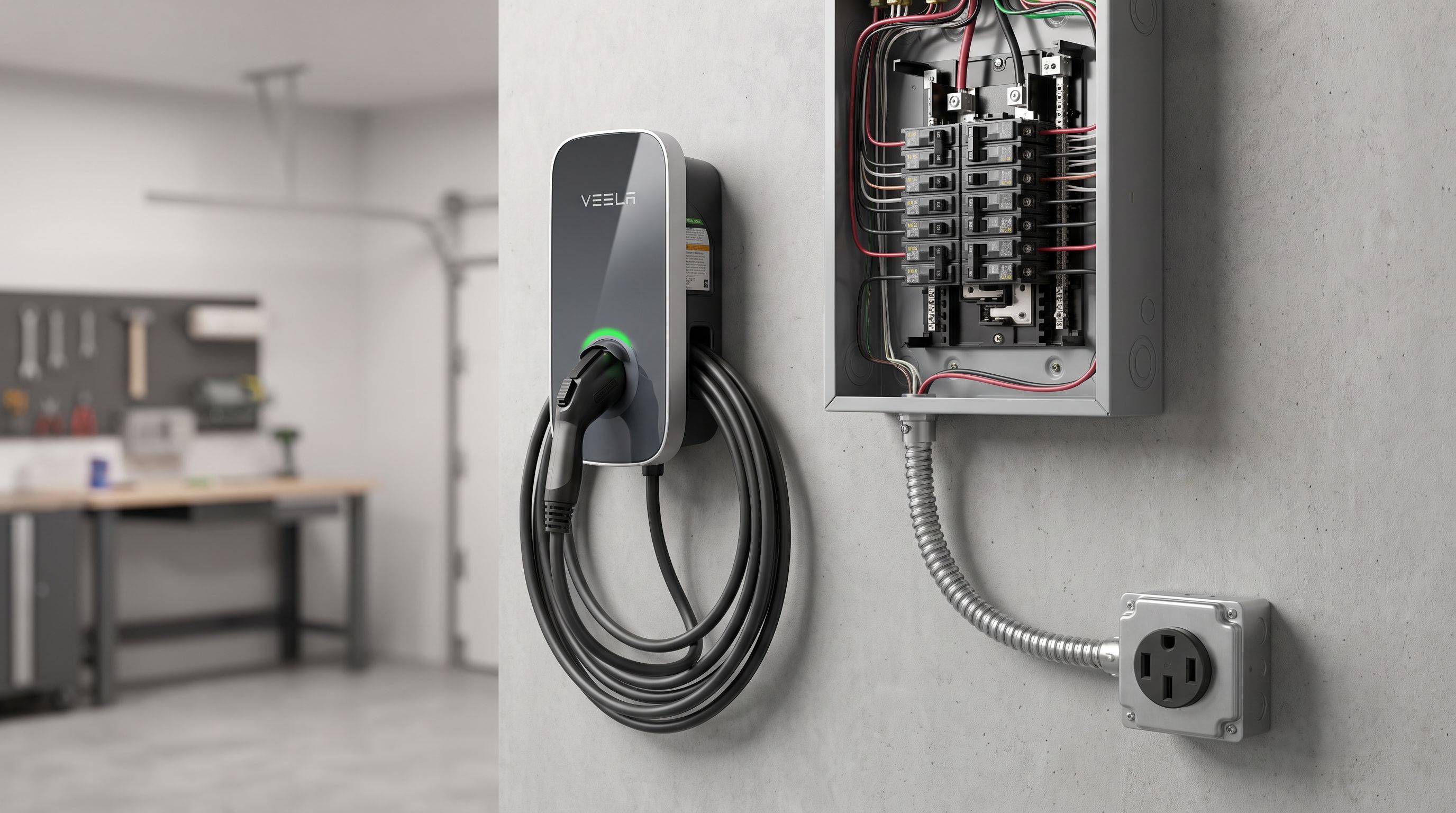
Level 2 EV Charger Garage Install: Amps, Outlet or Hardwire?
Outlet vs hardwire, 40A vs 48A, and the 80% continuous rule — how to pick a Level 2 EV charger that actually fits your 2026 garage panel and wiring.
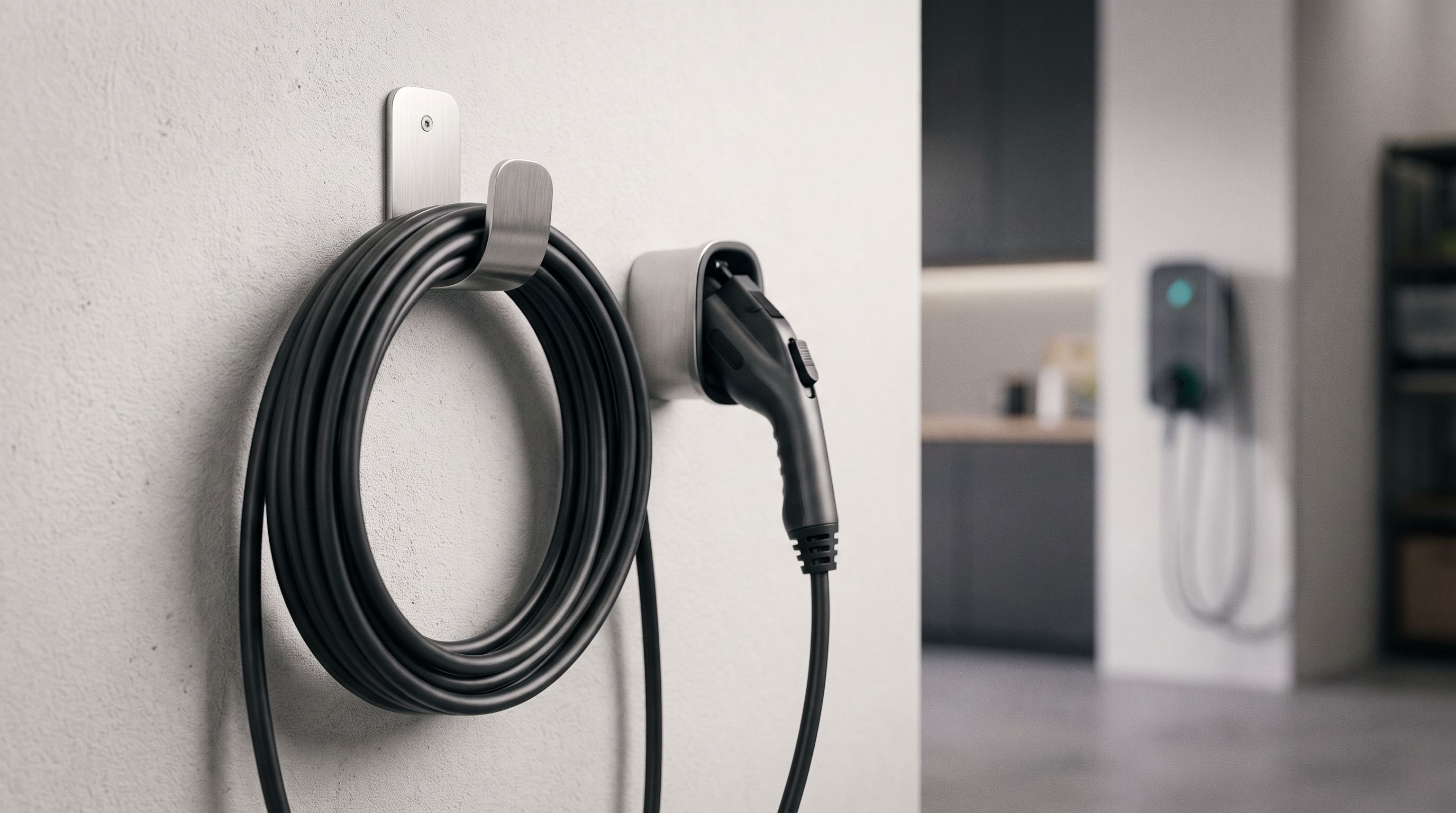
EV Charger Cable Holder 2026: NACS vs J1772 Wall Fit
Which EV charger cable holder fits your setup in 2026? We compare holsters, J-hooks and docks by connector type (NACS vs J1772) and garage wall material.
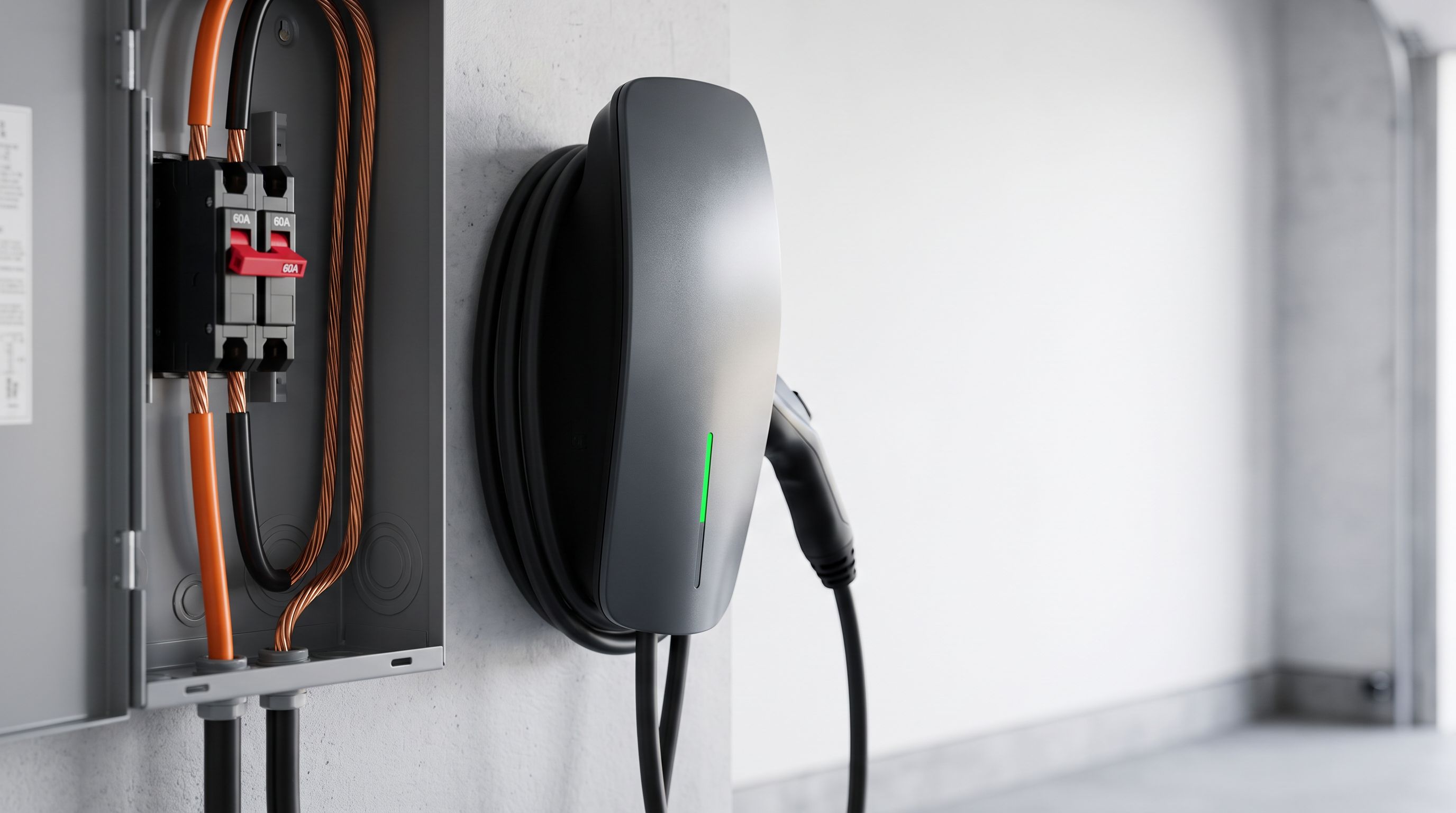
Level 2 EV Charger Breaker Size in 2026: 50A vs 60A
Level 2 EV charger breaker size explained for 2026: how the NEC 125% rule, wire gauge and panel capacity decide between a 40A and 48A hardwired charger.