Leather Seat Conditioner 2026: Coated vs Uncoated Hides
Most car seats are urethane-coated, not thirsty hide. Here's how to tell, plus the best leather seat conditioner for cars in 2026 for coated and uncoated leather.
Reader-supported: we may earn a commission from links on this page, at no extra cost to you. It never affects our picks. Learn more.
The short version
- Best overall for coated leather: Lexol Leather Conditioner
- Best cleaner-and-conditioner combo: Chemical Guys Leather Cleaner and Conditioner Kit
- Best for uncoated and aniline hides: Leather Honey Leather Conditioner
- Best quick maintenance wipes: Armor All Leather Care Wipes
- Best budget all-rounder: Weiman Leather Cleaner & Conditioner
 Best budget all-rounder · Weiman Leather Cleaner & Conditioner — Check price on Amazon →
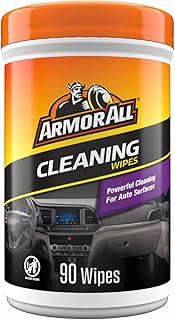 Best quick maintenance wipes · Armor All Leather Care Wipes — Check price on Amazon →
 Best for uncoated and aniline hides · Leather Honey Leather Conditioner — Check price on Amazon →
 Best overall for coated leather · Lexol Leather Conditioner — Check price on Amazon →
Most people buying a "leather seat conditioner for cars" in 2026 are solving a problem their seats don't actually have. They picture thirsty hide soaking up nourishing oils like a dry sponge. What's really happening on the vast majority of modern car seats is that a thin polyurethane film — the actual surface you touch — sits between the conditioner and the leather underneath. Oils can't cross it. Lanolin can't cross it. Mink oil definitely can't cross it.
That doesn't make conditioner useless. It just changes what a good product needs to do. Understanding which hide you have is the single highest-leverage thing you can learn about interior care, and it takes about thirty seconds to check.
Why almost all car leather is coated
Automotive leather lives a brutal life: UV through glass, 60 °C cabin temps in summer, denim dye transfer, sunscreen, hand oils, constant abrasion from sliding in and out. Raw hide would be stained and cracked within two years.
So manufacturers finish automotive leather with a pigmented base coat and a clear polyurethane topcoat — typically a few thousandths of a millimetre thick, applied by roller or spray. Terms you'll see include pigmented leather, finished leather, protected leather, and coated leather. BMW's Vernasca and Merino, Mercedes' ARTICO and Nappa, Audi's Valcona and Milano, plus essentially every mainstream leather or leatherette option from Toyota, Honda, Ford, Hyundai and Kia — all coated.
Two important consequences follow:
- You are maintaining a polymer film, not a hide. The failure mode on modern seats is almost never "dried out leather." It's the topcoat abrading, cracking at flex points, and then the pigment layer wearing through to the lighter base — which is why worn driver's bolsters go pale and shiny, not brittle.
- Conditioners that work by penetration can't. Heavy oil- and wax-based dressings sit on top, attract dust, and can leave a greasy sheen. They may feel satisfying for a week. They aren't doing structural good.
What does help coated leather: gentle pH-neutral cleaning that removes body oils and dye transfer before they etch in, plus a water-based conditioner or protectant that leaves a thin, flexible, matte film with some UV resistance. Think of it closer to a sealant for your dashboard than a balm for a baseball glove.
Where uncoated leather still shows up
Uncoated hides — aniline, semi-aniline, and nubuck — do still exist, mostly in luxury and performance cars and in specific option packages. Rolls-Royce, Bentley, some Porsche Club Leather options, certain Range Rover Semi-Aniline trims, older British and Italian interiors (Connolly-era Jaguar, classic Alfa), and plenty of pre-1990s vehicles. These have little or no topcoat, show natural grain and scarring, feel warm and slightly porous, and absolutely do benefit from a penetrating conditioner. They also stain instantly from water and spills, which is the trade-off for that feel.
Then there's the third category nobody wants to admit to owning: leatherette / vinyl / PU synthetic — MB-Tex, SofTex, Sensatec, V-Tex, Leatherette. Treat it like coated leather minus any need for conditioning. Clean it, protect it against UV, and stop there.
The 30-second hide test
Find an inconspicuous spot — the inner side of a seat bolster or under the seat belt anchor.
- Water drop test. Place a single drop of water. If it beads and sits for 30+ seconds, you have coated leather or vinyl. If it darkens the surface and absorbs within a few seconds, you have an uncoated or lightly finished hide.
- Look at the grain. Perfectly uniform, repeating grain = embossed coating. Irregular grain, visible pores, occasional natural marks = aniline or semi-aniline.
- Check the back of the perforations. On perforated coated leather you can often see the colour coat ending at the hole edge.
- Smell and feel. Uncoated leather smells like leather and feels slightly warm/dry. Coated leather feels smooth and faintly plastic, especially when cool.
Vinyl versus coated leather is harder to call by eye, but it rarely matters — the care routine is nearly identical.
How to choose
Match the chemistry to the surface
For coated leather, you want water-based products. Look for terms like micro-emulsion, water-based, pH-balanced, non-greasy, matte finish. Avoid heavy oils, petroleum distillates, silicone-heavy dressings, and anything that promises a glossy "showroom shine" — gloss on a seat is slippery and traps dust. For uncoated hide, the opposite is true: you want a genuinely penetrating oil- or wax-based conditioner with minimal water content, because water can stain aniline.
Cleaning power versus gentleness
Most real-world seat damage comes from cleaning, not from skipping conditioner. High-alkaline cleaners (pH 10+) strip topcoat and can soften pigment. Magic-eraser-type melamine pads are micro-abrasives and will burnish right through a finish. Stick to pH-neutral or mildly alkaline dedicated leather cleaners and a soft horsehair or nylon brush. On uncoated leather, be gentler still, and never use a cleaner formulated for finished leather.
Finish and feel
This is where personal taste matters. Coated leather should end up slightly matte with a little slip, not sticky and not slick. If a conditioner leaves your seats squeaky or shiny, you applied too much — that's almost always the real cause of "greasy seat" complaints. Perforated seats are extra unforgiving: product pools in the holes and dries white, so apply to the applicator, never spray directly onto perforations.
Format: liquid, cream, or wipes
Liquids and creams give control and go further. Wipes win on convenience and are genuinely the best option for a monthly five-minute wipe-down, which most people will actually do. If the choice is a perfect bottle you use twice a year versus wipes you use monthly, use the wipes.
UV protection
Sunlight through glass is the main long-term enemy of a topcoat. A conditioner with UV inhibitors adds real value on convertibles, light-coloured interiors, and cars that live outdoors. Combined with a sunshade, it's the cheapest crack-prevention you'll buy.
The picks compared
| Product | Best for | Base type | Format | Cleans too? | Notes |
|---|---|---|---|---|---|
| Lexol Leather Conditioner | Coated leather, everyday cars | Water-based emulsion | Liquid | No (separate cleaner sold) | Long-standing automotive standard; matte, non-greasy finish |
| Chemical Guys Leather Cleaner and Conditioner Kit | Owners starting from scratch | Water-based | Two bottles + applicators | Yes, dedicated cleaner | Matched pair plus brush; good process for beginners |
| Leather Honey Leather Conditioner | Uncoated, aniline, vintage hides | Non-toxic penetrating formula | Thick liquid | No | Needs long dwell; too heavy for most coated seats |
| Armor All Leather Care Wipes | Quick monthly upkeep | Water-based | Pre-moistened wipes | Light cleaning | Convenience first; no deep cleaning capability |
| Weiman Leather Cleaner & Conditioner | Budget, mixed-material interiors | Water-based | Spray/liquid | Yes, combined | One-step; less thorough than separate clean + condition |
Lexol Leather Conditioner — best overall for coated leather
Prices last checked October 27, 2026. Amazon prices change frequently, so treat these as a guide and check the live price before you buy.
Lexol Leather Conditioner
Water-based emulsion that keeps modern urethane-coated seats flexible and matte without greasy build-up.
Lexol has been the default recommendation in professional detailing circles for decades, and the reason is boring in the best way: it's a water-based emulsion that leaves a flexible, matte, non-oily film and doesn't darken most finished leather. On coated automotive hide that's precisely the brief — keep the topcoat supple at flex points, don't build gloss, don't attract dust.
What it gives up: it doesn't clean, so you need a separate cleaner (Lexol's own is the obvious pairing). It also won't do much for genuinely dry, uncoated vintage leather, which needs something with more body. Apply thin, work it in, buff off the excess within a few minutes.
Chemical Guys Leather Cleaner and Conditioner Kit — best cleaner-and-conditioner combo

Chemical Guys Leather Cleaner and Conditioner Kit
Matched cleaner, conditioner and brush so you actually do the two-step process coated leather needs.
If you're starting with nothing, a matched kit removes guesswork. Chemical Guys' pairing gives you a dedicated leather cleaner, a conditioner, and typically an applicator or brush — so you're actually doing the two-step process that coated leather needs, rather than smearing conditioner over trapped body oils. The cleaner is mild enough for finished leather, and the conditioner leaves a satin rather than glossy result, with UV protection claimed.
The trade-offs: kit components are rarely best-in-class individually, and the conditioner is too light for genuinely porous aniline. Some owners find the fragrance strong. For a daily driver with pigmented seats, it's a sensible one-purchase answer.
Leather Honey Leather Conditioner — best for uncoated and aniline hides
Leather Honey Leather Conditioner
Thick penetrating formula for porous vintage and aniline leather that can genuinely absorb it.
This is the pick for the minority who genuinely have porous leather: a 1970s interior, a Connolly-trimmed classic, aniline furniture, or a saddle-leather accessory. Leather Honey is thick, penetrating, and intended to be applied sparingly and left for hours to absorb. On a hide that can actually take it, the softening effect is real and long-lasting.
On modern coated seats, it's the wrong tool — it will largely sit on the topcoat and can leave a tacky, dust-grabbing residue. It also darkens light-coloured leather. Test on a hidden patch first, every time, and resist the urge to apply more than a thin film.
Armor All Leather Care Wipes — best quick maintenance wipes
Armor All Leather Care Wipes
Fast monthly wipe-down that removes body oils and dye transfer before they etch the topcoat.
Frequency beats perfection in interior care. These wipes let you do the single most valuable thing for coated leather — removing body oils, sunscreen and dye transfer before they etch the finish — in the time it takes to wait at a car wash. They leave a matte finish rather than the shiny look older Armor All products were criticised for, and they include UV protection.
Limits are obvious: a wipe can't deep-clean an embedded driver's bolster, there's no dwell time for stains, and you'll use a lot of them on a three-row SUV. Treat them as maintenance between proper cleans, not a replacement for one.
Weiman Leather Cleaner & Conditioner — best budget all-rounder
Weiman Leather Cleaner & Conditioner
Cheap, mild one-step option that covers coated seats, leatherette door cards and vinyl trim.
Weiman's combined cleaner-conditioner keeps appearing at the top of 2026 roundups for a simple reason: it's cheap, widely stocked, mild, and works across car seats, furniture and bags. For a mixed interior — leatherette door cards, coated seats, a vinyl armrest — one bottle covers everything without you having to think about it.
The compromise is inherent to one-step products: cleaning and conditioning want different chemistry, so you get adequate at both rather than excellent at either. Heavily soiled bolsters will need a dedicated cleaner first. For a tidy daily driver on a sensible budget, it's hard to argue with.
A realistic maintenance routine
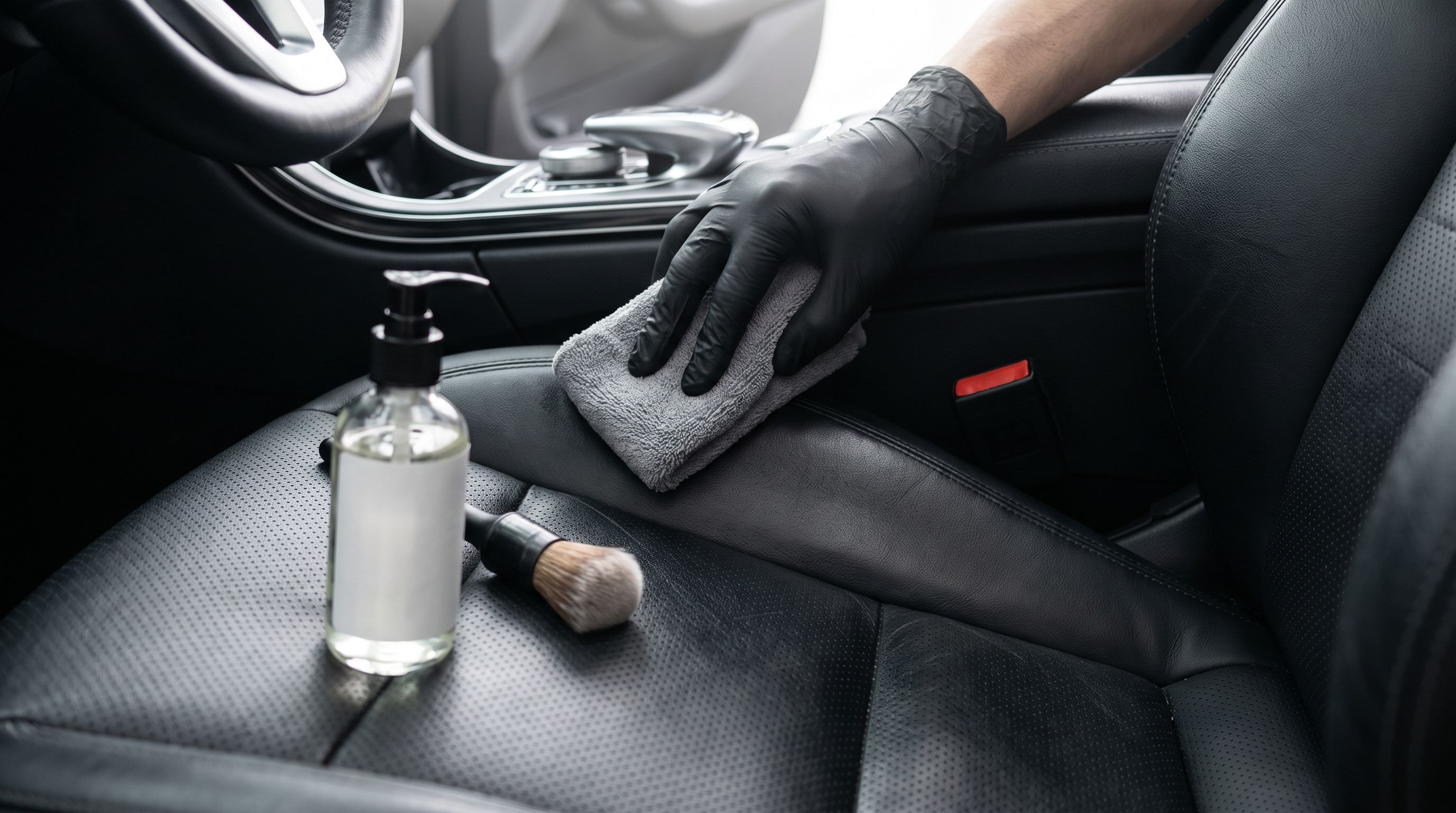
- Every 4–6 weeks: vacuum seams and perforations with a soft brush attachment, then wipe with a damp microfibre or leather wipe. This is 80% of the benefit.
- Every 3–6 months: dedicated leather cleaner with a soft brush, agitate gently, wipe residue, let dry, then a thin coat of conditioner. Twice a year is plenty for most climates; quarterly if the car lives outside in strong sun.
- Immediately: blot spills, especially on light interiors. Dye transfer from new jeans is the number one cause of "my cream seats are blue."
- Never: all-purpose cleaner at full strength, melamine pads, steam at close range, or silicone tyre dressing "because it's shiny."
If your seats are already cracked through the pigment layer, no conditioner will reverse it. That's a re-dye or re-coat job for a leather restoration specialist — conditioner from here just slows further damage.
FAQ
Does conditioner actually do anything on coated leather? Yes, but not what the marketing implies. It doesn't feed the hide. It leaves a thin flexible film that reduces friction and abrasion at flex points, adds some UV resistance, and restores an even matte appearance. That's worthwhile — it's just surface care, not nourishment.
How do I tell coated from uncoated leather? Put one drop of water on a hidden area. Beads up and sits = coated. Soaks in and darkens within seconds = uncoated. Uniform repeating grain also points to a coating; irregular natural grain and visible pores point to aniline.
Can I use the same product on leatherette or MB-Tex? Use the coated-leather routine: gentle cleaner plus a water-based protectant with UV inhibitors. Skip anything oil- or wax-based — synthetics can't absorb it and it will just sit on the surface.
How often should I condition car seats? Two to four times a year for most coated interiors. More often if the car is parked outdoors in strong sun or you have a light-coloured interior. Over-conditioning causes more complaints (greasy, shiny, dust-magnet seats) than under-conditioning does.
Will conditioner fix cracks? No. Softening can make fine surface crazing less visible, but once the pigment layer has cracked through, the repair is re-pigmenting or re-coating. Conditioning helps prevent the next cracks, not reverse the existing ones.
Are perforated seats different? Yes — never spray product directly at perforations. Apply to a foam or microfibre applicator, work it in with light pressure, and immediately buff. Trapped product dries white in the holes and is a nuisance to remove.
Is a leather cleaner really necessary, or can I just use soapy water? Very dilute pH-neutral soap and a damp cloth is better than an aggressive all-purpose cleaner. But dedicated leather cleaners are formulated to lift body oils without stripping the topcoat, and they rinse cleanly. On a car you plan to keep, it's worth the small spend.
Get the best car care deals in your inbox
Join the GarageProof newsletter for hand-picked car care deals and new buying guides. No spam, unsubscribe anytime.
Related reads
Cordless Car Vacuums in 2026: Suction vs Runtime
We compared the best cordless car vacuums of 2026 on air watts, real runtime, filter type and crevice reach — plus which ones fade before the footwells are clean.
Car Interior Steam Cleaner 2026: Pressure vs Dry Time
Picking a car interior steam cleaner in 2026? We compare handheld and canister units by boiler pressure, heat-up time, dryness of steam and attachments.
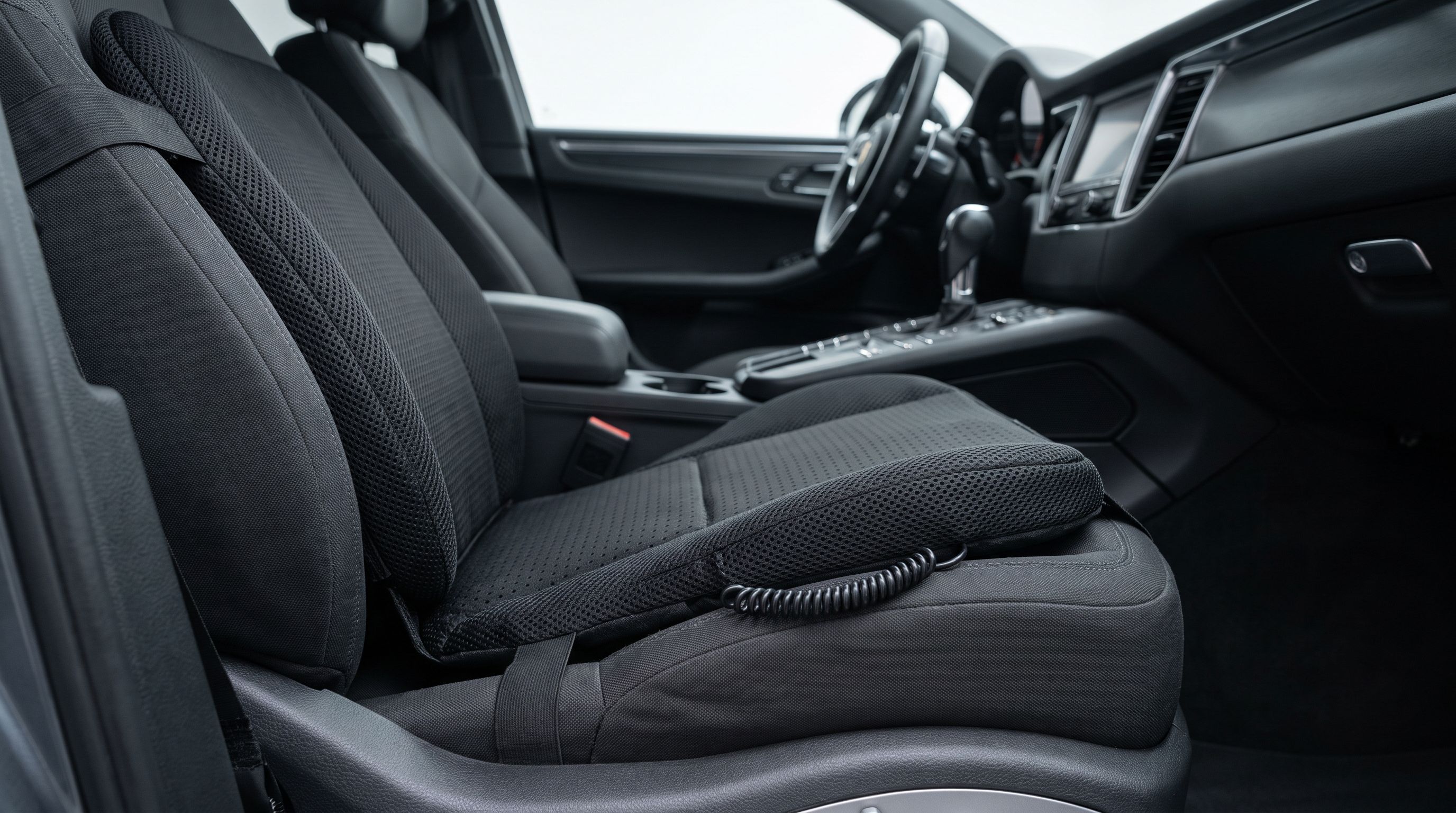
Cooling Car Seat Cushion 12V in 2026: Will It Fit Your Bucket?
A fitment-first guide to 12V cooling car seat cushions in 2026 — cushion dimensions, bolster clearance, fan noise and power draw compared for sedans, trucks and SUVs.