Jump Starter Clamps in 2026: Will They Fit Your Posts?
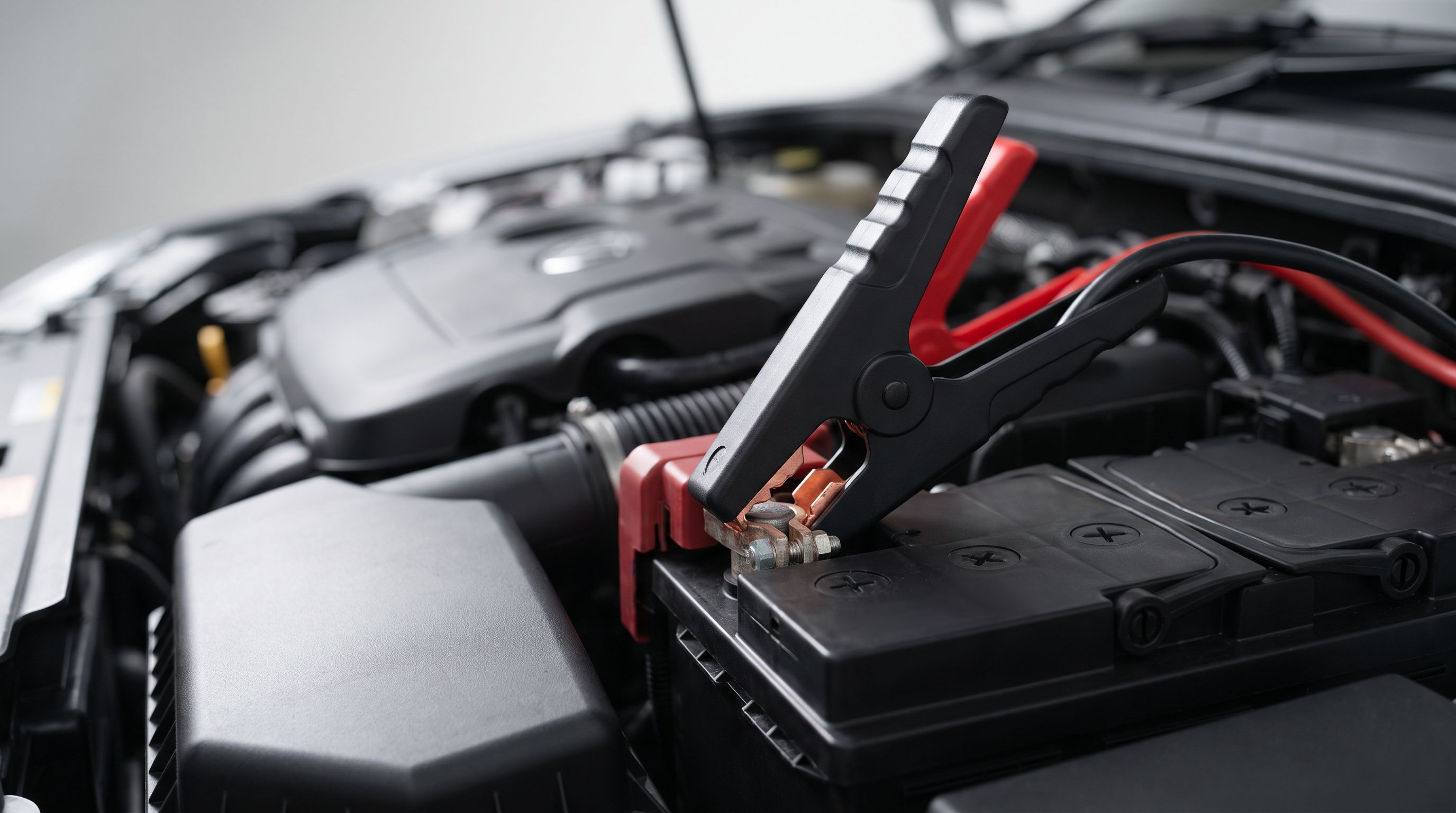
Jump starter clamps vs battery terminals: compare jaw openings, cable gauge and reach for top-post, side-post and recessed truck batteries before you buy in 2026.
Reader-supported: we may earn a commission from links on this page, at no extra cost to you. It never affects our picks. Learn more.
Most jump starter reviews obsess over peak amps. That number almost never decides whether you get home. What decides it is far more boring: can the clamps actually grab the metal on your battery, and will the cable carry enough current once they do?
It's a real failure mode. Compact lithium packs ship with small, light clamps sized for passenger-car top posts. Point them at a recessed truck battery, a side-post GM battery, or a terminal already crowded with a fused distribution block and a dual-battery lead, and you can end up holding a fully charged jump starter you can't connect.
This guide compares clamp jaw opening, cable gauge and cable length across the packs worth buying in 2026, and shows you how to check your own terminals before you order. We research and compare using manufacturer specs, independent testing and verified owner feedback — we don't physically test units ourselves.
The short version
- Best overall — NOCO Boost Plus GB40
- Best for trucks and recessed terminals — NOCO Boost HD GB70
- Best clamps, period — Clore Automotive Jump-N-Carry JNC660
- Best big-jaw lithium pack — Hulkman Alpha85S
- Best backup for awkward terminals — TOPDC 4 Gauge 20 Feet Jumper Cables
 Best backup for awkward terminals · TOPDC 4 Gauge 20 Feet Jumper Cables — Check price on Amazon →
 Best big-jaw lithium pack · Hulkman Alpha85S — Check price on Amazon →
 Best clamps, period · Clore Automotive Jump-N-Carry JNC660 — Check price on Amazon →
 Best for trucks and recessed terminals · NOCO Boost HD GB70 — Check price on Amazon →
 Best overall · NOCO Boost Plus GB40 — Check price on Amazon →
Why clamp fit is the spec nobody lists
Manufacturers publish peak amps, capacity in milliamp-hours and USB ports. Almost none publish jaw opening in millimetres. So buyers guess, and guess wrong.
Three things go wrong in a parking lot at 6am:
The jaw won't open wide enough. A standard SAE top post is a tapered lead cone — roughly 17–19mm at the base for the positive, slightly smaller for the negative. That's easy. The problem is that the factory terminal clamp is already on it, often with a lead shim, sometimes with an accessory ring terminal stacked underneath. Now you're asking the jaws to swallow 25–35mm of assembled hardware, or to find a sliver of exposed lead on the side.
The jaw bites, but only on one corner. Cheap clamps use thin stamped steel teeth with a weak spring. They'll perch on the edge of a terminal, make a few square millimetres of contact, and then drop voltage badly under cranking load. Current wants surface area. A clamp that technically closes but contacts in two points is a clamp that'll heat up and sag.
The cable won't reach. Battery under a rear seat, in the trunk, under a plastic cowl, or down in a fender well on a European car. Many compact lithium packs use cables in the 10–14 inch range. If your battery lives in a box with a 6-inch lip, that pack has to dangle from the clamps — which then wrenches them off the post.
Know which terminal type you have
| Terminal style | Typical vehicles | Clamp challenge |
|---|---|---|
| SAE top post (tapered cone) | Most cars, most pickups | Easiest; just need jaws to clear the existing terminal clamp |
| Side post (threaded, recessed) | Many GM cars and trucks | Flat recessed bolt head; needs narrow jaw tips or a side-post adapter stud |
| Stud / L-terminal | Many European cars, some hybrids | Small vertical bolt; needs precise tips, not wide fat jaws |
| Recessed in battery box | Heavy-duty diesel trucks, some SUVs | Needs long cables and deep-reaching jaws to get past the box wall |
| Remote jump terminal | Many BMW, Mercedes, Ford, Chrysler | Usually a single post under a cover plus a chassis ground point |
If you have side posts and no exposed top lug, buy a pair of side-post adapter studs. They thread into the terminal and give you a stub for any clamp to bite. They cost very little and they turn an impossible connection into a trivial one.
If you have a remote jump terminal — common on cars where the battery is in the boot — read the owner's manual. The positive post lives under a red plastic cap in the engine bay and the manufacturer specifies a ground point, usually a bracket or strut tower stud. Clamping to the negative battery post in the boot on these cars is usually wrong and sometimes unsafe.
How to choose
Measure before you buy
Pop the hood, take a tape measure or digital caliper, and record three numbers: the widest assembled dimension of your positive terminal hardware, the distance from the battery post to the nearest point where a pack could sit, and whether any exposed lead is reachable from above or only from the side. Those three numbers resolve nearly every fitment argument before it starts.
Then check the listing or manual for the pack's cable length. If the number isn't published, treat the product photos as unreliable — perspective flatters short cables.
Jaw geometry beats jaw size
Wider isn't automatically better. A big blunt jaw can't get into a side post recess or onto a slim L-terminal. What you want is a clamp with parallel-ish closing action, copper or heavily copper-plated contact faces, and strong spring tension. Parallel jaws keep contact area high across the whole bite; scissor-style jaws contact at a single line. Serrated copper faces cut through surface oxide. A stiff spring is the difference between a clamp that stays put during a 200-amp crank and one that walks off the post.
Pinch-test the clamps when they arrive: squeeze them closed on a 9mm bolt and on a 25mm socket. If the spring feels floppy at either extreme, the pack is going to disappoint you on a cold morning.
Cable gauge and length
For portable lithium packs, cable gauge is typically between 8 and 4 AWG — lower numbers are thicker and carry more current with less voltage drop. For a 4-cylinder petrol car, 8 AWG is fine. For a V8 or a diesel with high cranking draw, thicker cable matters because the whole point is delivering voltage to the starter, not to the resistance in the lead.
Length is the other half. Look for at least 12 inches on a compact pack, and 30 inches or more if you own a truck with a battery box or a vehicle with the battery buried. Lead-acid style portable units like the JNC660 use genuinely long cables because they were designed for workshop use, where the unit sits on the floor.
Safety features that interact with clamps
Reverse polarity protection, spark-proof connection and short-circuit protection are standard on every pack worth considering in 2026. The practical upshot for clamp handling is that a good pack won't arc if the jaws brush each other or if you connect backwards — but it will also refuse to deliver current until it detects a correct connection. That's why a marginal one-corner bite can read as "no battery detected." If your pack won't boost, re-seat the clamps onto clean metal before you assume the pack is faulty.
Manual override and battery detection
Deeply discharged batteries — under roughly 2 volts — may not be detected at all. Most quality packs include a manual override or "boost" mode that forces output. Confirm your chosen pack has one, and read how to engage it before you need it. Combined with a solid clamp bite, override mode is what rescues a battery that's been flat for a week.
The picks
NOCO Boost Plus GB40 — best overall
Prices last checked October 9, 2026. Amazon prices change frequently, so treat these as a guide and check the live price before you buy.
NOCO Boost Plus GB40
Well-built clamps with real spring tension and a 12V/1000A output that suits most cars and small trucks.
The GB40 remains the default recommendation for a reason: it's compact, the build quality is consistently good in owner feedback, and the clamps have genuine spring tension rather than the limp action you get on no-name packs. Jaw opening is sized for conventional top posts, which covers the large majority of cars and small trucks, and the safety suite — reverse polarity, spark-proof, manual override — is complete.
What it gives up: cable length and jaw width. If your battery sits in a recessed box, or if the terminals are crowded with accessory leads, the GB40 can run out of both reach and bite. It's also modest on output by 2026 standards, which matters for larger diesels.
NOCO Boost HD GB70 — best for trucks and recessed terminals
NOCO Boost HD GB70
Bigger jaws and heavier cable than the GB40, made for deep battery boxes and big diesel posts.
The HD is the GB40 scaled up where it counts. Heavier cable, longer cable, and noticeably larger clamps that will clear bulkier terminal hardware and reach down into a battery box wall. Independent reviews consistently note the clamps are substantially bigger than those on the compact NOCO units — still smaller than full jumper cable clamps, but in a different league from pocket packs.
Who it suits: V8 pickups, mid-size diesels, anyone with a battery that isn't sitting proud at the top of the engine bay. What it gives up: size and weight. It won't live in a glovebox, and for a commuter hatchback it's more pack than you need.
Clore Automotive Jump-N-Carry JNC660 — best clamps, period
Clore Automotive Jump-N-Carry JNC660
Full-size parallel-jaw clamps on 46-inch cables — the closest thing to shop jumper cables in a portable pack.
This is the lead-acid unit professional techs keep in the corner of the shop, and it earns that place on connection quality alone. The clamps are full-size, parallel-jaw, heavy copper units on long cables — the kind that bite a crusty terminal and don't let go. Reach is generous enough that the unit can sit on the ground while you work.
What it gives up: everything to do with convenience. It's heavy, it needs regular recharging to stay healthy, it won't charge your phone, and it takes up real boot space. But if your main worry is "will it physically connect and deliver," nothing in the portable category connects better.
Hulkman Alpha85S — best big-jaw lithium pack
Hulkman Alpha85S
High peak amps with chunky clamps and a clear display showing battery health and boost status.
The Alpha85S splits the difference: lithium portability with clamps and cable noticeably chunkier than entry-level packs, plus a display that actually tells you what's happening — pack charge, vehicle battery condition, boost status. That feedback is genuinely useful when a marginal clamp connection is the problem, because you can see whether the unit is detecting the battery.
It suits owners of larger petrol engines and mid-size diesels who want one pack for several vehicles. What it gives up: it's bulkier than a GB40 and the self-heating feature that helps in cold weather consumes charge, so it rewards owners who top it up a few times a year rather than leaving it in the boot for eighteen months.
TOPDC 4 Gauge 20 Feet Jumper Cables — best backup for awkward terminals
TOPDC 4 Gauge 20 Feet Jumper Cables
When a pack's clamps won't bite, 4-gauge cables with wide parallel jaws and 20 feet of reach will.
Not a jump starter, but the answer when clamp fit defeats one. A set of 4-gauge, 20-foot cables gives you wide parallel jaws that will grab almost any terminal geometry, plus enough length to reach a battery in a boot, under a seat, or nose-to-tail in a tight car park. Keep a set in the vehicle alongside a pack and you've covered both failure modes: no donor car, and no workable clamp fit.
What it gives up: it needs a second vehicle and a willing driver. Heavy-gauge cables are also bulky and stiff in cold weather.
Spec comparison
| Pick | Type | Clamp style | Best terminal match | Main limitation |
|---|---|---|---|---|
| NOCO Boost Plus GB40 | Compact lithium | Small, strong spring, copper-faced | Standard top post, clear access | Short reach, modest jaw opening |
| NOCO Boost HD GB70 | Mid-size lithium | Larger jaws, heavier cable | Recessed boxes, truck posts | Bulky for small cars |
| Clore JNC660 | Lead-acid portable | Full-size parallel jaw, long cables | Anything, including corroded posts | Heavy; needs maintenance charging |
| Hulkman Alpha85S | Lithium, high output | Chunky jaws, display feedback | Larger petrol and mid diesel | Larger than pocket packs |
| TOPDC 4 Gauge 20ft | Jumper cables | Wide parallel jaw | Side posts, boot batteries, odd geometry | Requires a donor vehicle |
Fitment: check before you order
Clamp compatibility is vehicle-specific. Before buying, confirm:
- Terminal type — top post, side post, stud/L-terminal, or remote jump point. Your owner's manual states this, usually in the jump-starting section.
- Access — is there exposed metal reachable from above, or only from the side?
- Designated jump points — many modern vehicles specify a positive post under a cover and a separate chassis ground. Use them. Clamping directly to a battery in a cabin or boot location can be prohibited by the manufacturer.
- Engine size and fuel type — a pack sized for a 1.5-litre petrol will struggle with a 6.7-litre diesel in cold weather, regardless of clamp fit.
If you're on side posts, order adapter studs at the same time as the pack. If you're on a recessed diesel battery, assume you need the longer cables of a GB70 or JNC660 rather than hoping a compact pack reaches.
FAQ
How wide do jump starter clamps actually open? Most compact lithium packs open enough for a standard SAE top post — roughly 20mm of material — but not much more. Larger units like the GB70 and lead-acid portables like the JNC660 open considerably wider. Manufacturers rarely publish the figure, so measure your assembled terminal and favour a bigger unit if you're near the limit.
Can I use a jump starter on side-post batteries? Often not directly. The bolt head sits recessed in plastic and most jaws can't get a grip. Side-post adapter studs thread into the terminal and give you a post to clamp onto. They're inexpensive and worth keeping in the kit permanently.
Does cable gauge matter more than peak amps? They work together. Peak amps is a marketing figure measured under ideal conditions; cable gauge and clamp contact area determine how much of that actually reaches the starter. A pack with thick cable and a solid bite will out-start a higher-rated pack with thin leads and a one-corner connection.
My pack says "no battery detected" — is it broken? Usually not. Either the clamps aren't making good contact, or the battery is below the detection threshold. Re-seat the clamps onto clean bare metal, check polarity, then use the pack's manual override or boost mode if it has one.
Should I clamp the negative to the battery or the chassis? Standard practice is the final negative connection to a clean unpainted chassis or engine ground point, away from the battery, to keep any spark away from vented hydrogen. On vehicles with a designated remote jump point, follow the manual exactly — it names the ground location.
How often should I recharge a jump starter that's just sitting in the boot? Lithium packs: every three to six months. Lead-acid portables like the JNC660: more frequently, and ideally on a maintainer, because sitting discharged damages the internal battery. A pack that won't hold charge is useless regardless of how good its clamps are.
Get the best car care deals in your inbox
Join the GarageProof newsletter for hand-picked car care deals and new buying guides. No spam, unsubscribe anytime.
Related reads
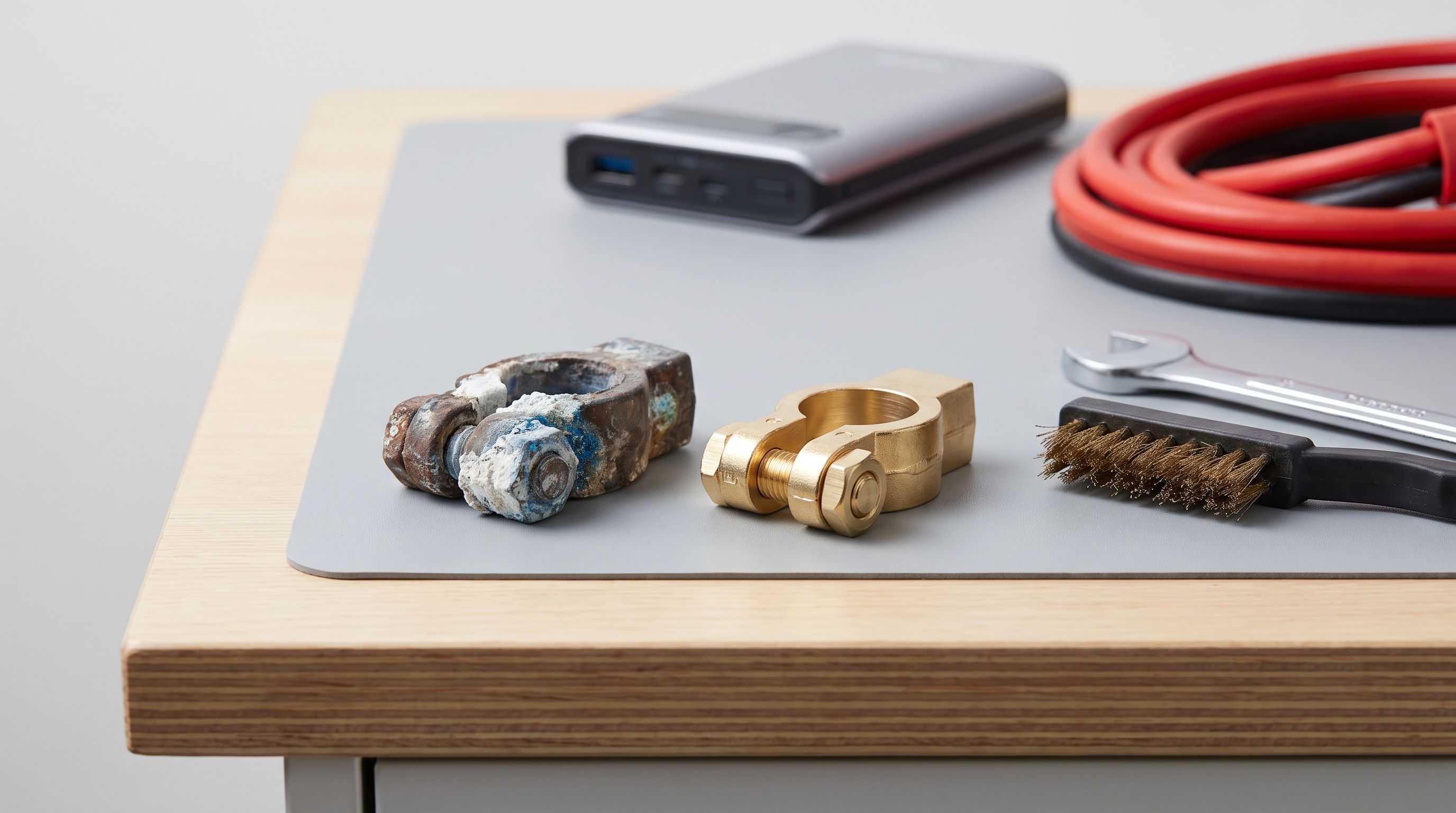
Battery Terminal Replacement 2026: Top Post vs Side Post
Battery terminal replacement in 2026: how to match top-post, side-post and GM stud fitments, size cable gauge correctly, and which clamp kits are worth buying.
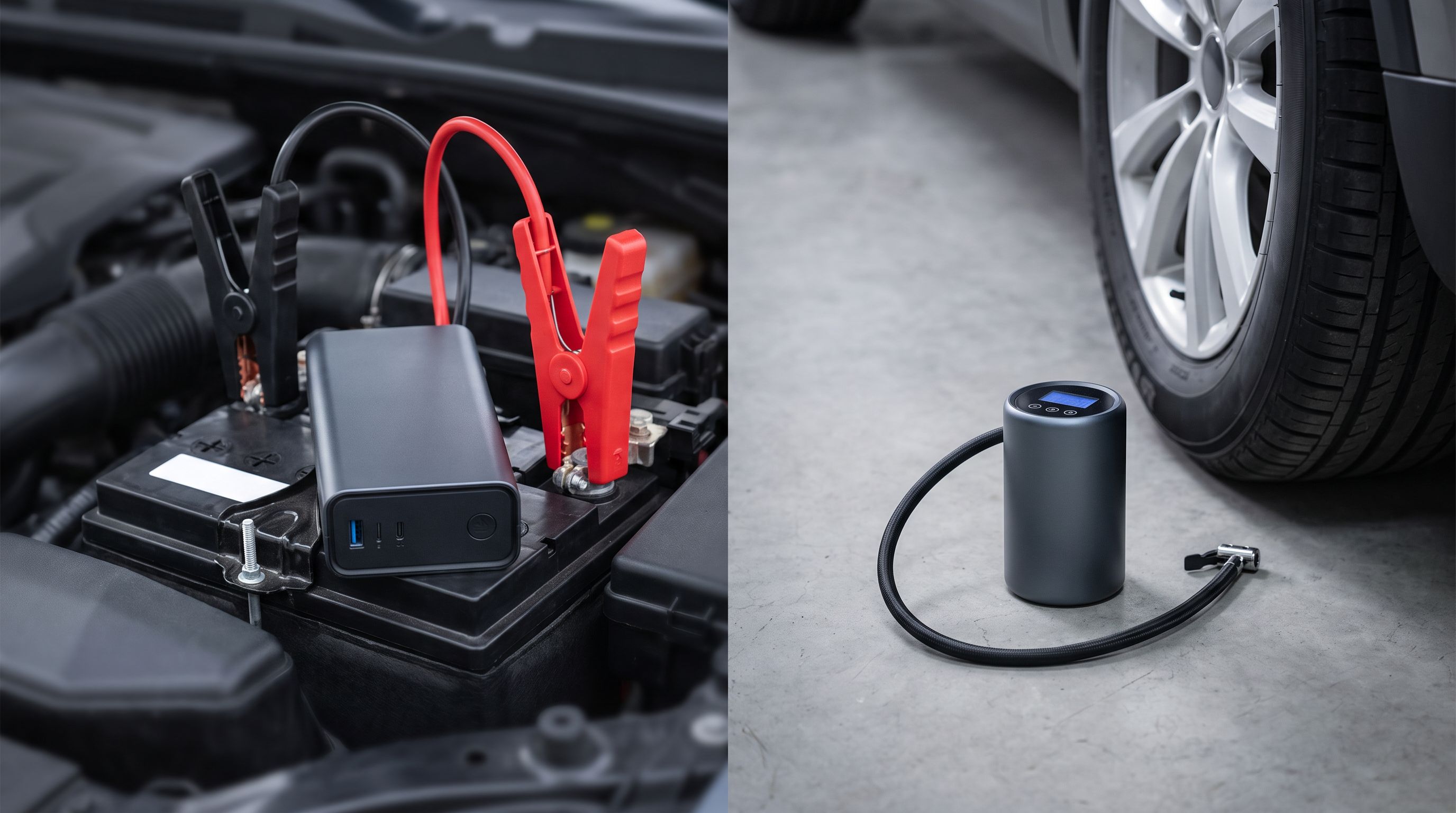
Prime Big Deal Days: What to Look For in Jump Starters
Prime Big Deal Days runs October 6-7, 2026. Here's which jump starter and tire inflator specs actually decide the purchase — and the cold-weather sizing mistake to avoid.
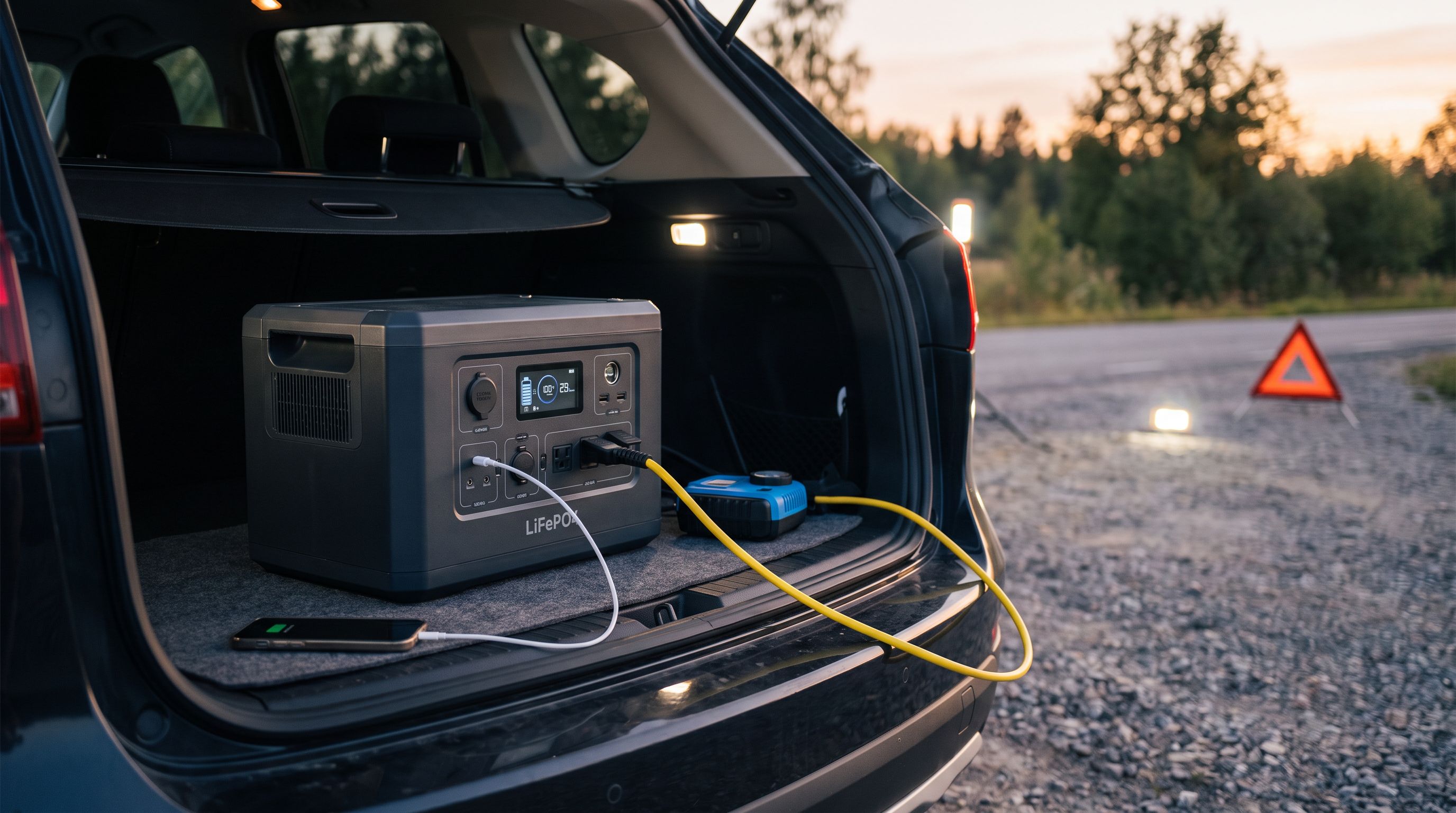
Portable Power Station for Car Emergency: 2026 Reality Check
Can a portable power station for car emergency use actually rescue a stranded EV? We compare usable Wh, 12V output and inverter surge across 5 top 2026 units.