J1772 Charging Cable 40 Amp: Why Cheap Cords Run Hot in 2026
A J1772 charging cable rated 40 amp is only as good as its copper, jacket and contacts. Here's how gauge and connector quality prevent heat soak — plus 2026 picks.
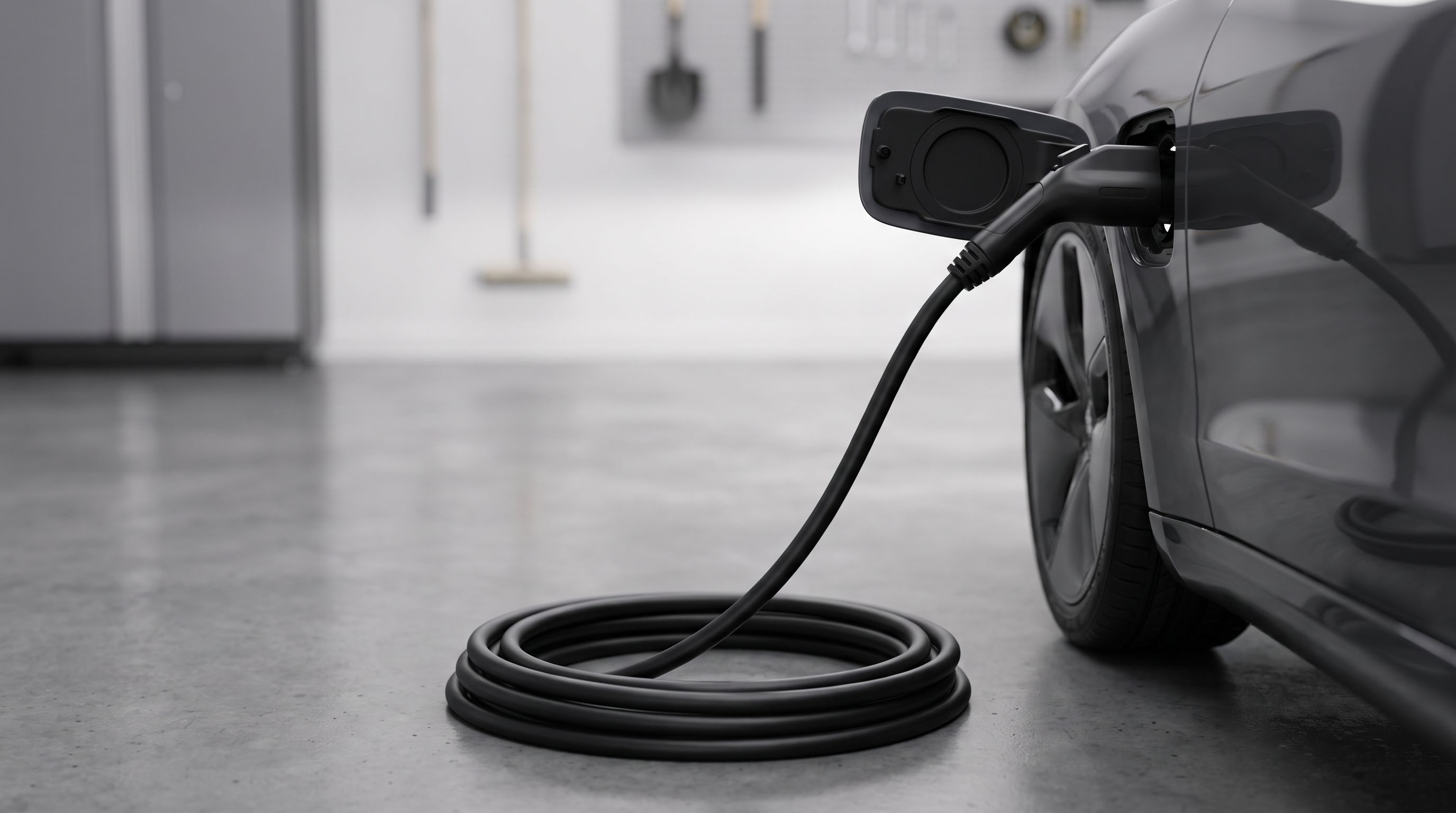
Reader-supported: we may earn a commission from links on this page, at no extra cost to you. It never affects our picks. Learn more.
Every spring, EV forums fill up with the same photo: a J1772 handle with a melted, browned plastic rim, or an extension cord whose jacket has gone tacky and shiny near the connector. Almost none of those failures are random. They're the predictable result of too little copper, too little contact area, or a jacket that was never rated for what it was asked to do.
If you're shopping for a J1772 charging cable rated 40 amp — or a NACS equivalent — this guide explains what actually determines whether it survives five years of daily plugging, and which currently available products get the fundamentals right.
The short version
- Best overall: VEVOR EV Charger Extension Cable 40A 40 ft J1772
- Best for most garages: VEVOR EV Charger Extension Cable 40A 20 ft J1772
- Best connector quality: Lectron J1772 Extension Cable 40A
- Best adapter, not a cable: Lectron Tesla to J1772 Adapter
- Premium pick: Emporia Level 2 EV Charger 48A
 Best adapter, not a cable · Lectron Tesla to J1772 Adapter — Check price on Amazon →
 Best connector quality · Lectron J1772 Extension Cable 40A — Check price on Amazon →
 Best overall · VEVOR EV Charger Extension Cable 40A 40 ft J1772 — Check price on Amazon →
Why "40 amp" on the box doesn't mean 40 amps forever
A charging cable is a resistor that happens to deliver electricity. Push current through it and it dissipates heat equal to current squared times resistance. The two numbers you can control are resistance (conductor gauge and length) and how well that heat escapes (jacket, bundling, ambient temperature).
Here's the part cheap cords exploit: ampacity ratings are usually quoted at a benign ambient temperature, in free air, for a straight run. Your reality is a coiled cord on a hot asphalt driveway in August, maybe with the loop sitting on itself. Coiled cable can't shed heat from its inner turns. That alone can push a conductor 20-30°C above its free-air temperature at the same current.
Level 2 charging also makes this worse than any household appliance does. A 40A charge session is a continuous load — three, four, six hours at full current with no duty cycle to let things cool. By NEC convention, a continuous load gets derated to 80% of circuit capacity, which is why a 40A EVSE sits on a 50A breaker. A cord that's genuinely fine for 40A intermittent can quietly cook itself at 40A continuous.
Heat soak is cumulative, not instant
The failure mode people miss is thermal cycling. Each hot session softens the plastic around the contacts a little and lets the spring tension in the blade or pin relax a fraction. Lower spring tension means higher contact resistance. Higher contact resistance means more heat at the same current. More heat means more relaxation. That feedback loop is why melted connectors typically show up in year two or three, not week one — and why a cable that "worked fine all last summer" is not proof of anything.
Conductor gauge: the one spec worth arguing about
For a 40A continuous EV circuit, conventional copper wiring practice lands on 8 AWG for a standard 240V run, with 6 AWG used when the run is long or conditions are hot. Flexible EV cable isn't quite the same animal — it uses fine-stranded conductors and high-temperature insulation (often rated to 90°C or more), which legitimately allows a somewhat smaller cross-section than solid building wire.
But there's a floor. If a listing advertises 40A and the spec sheet says 10 AWG, be skeptical. If it doesn't state gauge at all, treat that as an answer. Reputable 40A J1772 cables publish their conductor size, and the good ones are built around 8 AWG power conductors with separate, smaller conductors for ground, pilot and proximity.
Length multiplies everything
Resistance scales linearly with length, and in an extension scenario you're adding your cord to the EVSE's existing cable. A 25 ft EVSE lead plus a 40 ft extender is a 65 ft current path before you count the connector interfaces. Voltage drop over that distance means your car sees lower voltage, draws the same current to hit its target power, and every ohm in the chain dissipates more heat.
Practical rule: buy the shortest cable that solves your problem. A 20 ft extender that lets you reach around a parked truck is strictly better than a 40 ft one coiled in a heap.
Copper versus copper-clad aluminum
Copper-clad aluminum (CCA) appears in budget cords because it's cheaper and lighter. Aluminum has roughly 60% the conductivity of copper, so a CCA cable needs more cross-section for the same ampacity — and aluminum also creeps under the clamping pressure of a crimp or screw terminal, loosening connections over time. For a 40A continuous application, insist on pure stranded copper.
Jacket rating, and what IP66 actually buys you
The jacket does three jobs: mechanical protection, electrical insulation, and heat transfer. Good EV cable uses a thermoplastic elastomer or rubber compound that stays flexible well below freezing — look for a stated cold-flex rating, typically down to around -30°C. A cheap PVC jacket stiffens into a garden hose at 20°F, and stiff cable gets yanked, which stresses the strain relief at the connector exactly where you don't want it.
Water ingress ratings matter at the connector. IP66 means dust-tight and protected against powerful water jets — appropriate for outdoor use and for a connector that sits in a driveway puddle. IP67 adds temporary immersion. Either is fine; the absence of any stated rating is not.
Flame rating is the quieter spec. A jacket that self-extinguishes buys you margin in the one scenario that actually hurts.
Connector quality: where most failures actually start
Cable gauge gets the attention, but the handle is where the melting happens. A J1772 inlet makes contact through round pins in sprung sockets; NACS uses flat blades. In both cases the current passes through a contact patch measured in square millimeters, not a fat copper conductor.
What separates good connectors:
- Silver-plated or heavily gold-flashed contacts rather than bare brass. Plating resists oxidation, and oxide is resistance.
- Proper crimp or ultrasonic weld from conductor to pin, not a solder joint that can wick and go brittle.
- A real latch that holds the handle fully seated. Partial insertion is a top cause of localized heating.
- Thermal sensing. Better EVSEs and some adapters include a thermistor at the connector that throttles or stops charging when temperature climbs. This is the single best protection against the feedback loop described above.
Every extension cord you add inserts two more connector interfaces into the circuit. That's two more places for contact resistance to appear. It's not a reason to never use one — it's a reason to buy a good one and not to leave it permanently installed as a substitute for proper wiring.
How to choose
1. Match gauge to length, not just amperage
Decide your real amperage first — check the EVSE's output and your car's onboard charger limit, since the lower of the two governs. If you're pulling 32A, a 40A-rated cable has genuine headroom. If you're pulling the full 40A continuous, buy the heaviest copper available and the shortest length that works. Nobody has ever regretted an oversized conductor.
2. Verify the certification claim, not the certification word
"UL-certified components" is not the same as a UL or ETL listing for the finished assembly. Look for a file number or a listing mark you can actually look up. Extension cables occupy a grey area — the SAE J1772 standard doesn't contemplate them, so a genuine end-product listing is rarer than the marketing implies. Buy from sellers who are precise about what's certified.
3. Confirm the connector standard your car uses
In 2026 the fleet is split. Most non-Tesla EVs sold before the NACS transition have J1772 inlets; newer models increasingly ship with NACS. A J1772 extension cable only helps a J1772 inlet. If you have a NACS car and a J1772 EVSE, you want a short adapter — not a long cord — because the adapter adds almost no resistance. Check your owner's manual or the port itself before ordering; the two connectors are not interchangeable without hardware.
4. Decide whether you need a cable at all
Extension cords solve temporary problems: a trailer blocking the garage, an ICE vehicle parked in front of a public Level 2, a second parking spot during a renovation. If the problem is permanent, the correct fix is moving the EVSE or running a new circuit. Permanent extension use is where the cumulative heat-cycling damage happens.
5. Check the ambient reality
Garage, carport or open driveway? Coiled or straight? A cord that lives in direct Arizona sun needs more margin than one in a shaded Seattle garage. Derate your expectations accordingly, and uncoil the cable before every session.
Comparison
| Product | Best for | Form factor | Key strength | Trade-off |
|---|---|---|---|---|
| VEVOR EV Charger Extension Cable 40A 40 ft J1772 | Long reach, outdoor use | 40 ft extension | IP66 rating, heavy copper, widely stocked | Length adds voltage drop; heavy to coil |
| VEVOR EV Charger Extension Cable 40A 20 ft J1772 | Most garage situations | 20 ft extension | Lower resistance, easier to manage | Won't reach across a long driveway |
| Lectron J1772 Extension Cable 40A | Frequent daily plug cycles | Extension (multiple lengths) | Consistent latch and contact quality | Fewer length options than VEVOR |
| Lectron Tesla to J1772 Adapter | NACS cars on J1772 stations | Short rigid adapter | Negligible added resistance | Not an extension; adds no reach |
| Emporia Level 2 EV Charger 48A | Fixing the problem at the source | Hardwired/plug-in EVSE | 48A output, UL listed, long attached cable | Requires a suitable circuit and install |
The picks
VEVOR 40A 40 ft J1772 Extension Cable — best overall
Prices last checked October 12, 2026. Amazon prices change frequently, so treat these as a guide and check the live price before you buy.
VEVOR EV Charger Extension Cable 40A 40 ft J1772
IP66-rated 40A J1772 extender in a usable 40 ft length, with the heaviest copper in its class.
This is the one to buy when the distance genuinely requires it: a trailer in the way, a charger on the wrong side of a two-car driveway, a shared garage outlet. VEVOR publishes an IP66 rating and specifies heavy stranded copper, and the 40 ft length covers almost any realistic reach problem. It suits owners charging at 32-40A who need a seasonal or occasional solution. What it gives up: weight and voltage drop. Forty feet of 40A-capable cable is genuinely heavy to coil, and the added length means more resistance in series with your EVSE. Uncoil it fully every session and check the connector temperature by hand after the first few charges.
VEVOR 40A 20 ft J1772 Extension Cable — best for most garages
VEVOR EV Charger Extension Cable 40A 20 ft J1772
Half the length, half the voltage drop — the smart choice when you only need to clear a parked car.
Most people who think they need 40 feet need 20. This shorter version halves the added resistance, weighs noticeably less, and is far easier to store without creating a coiled heat trap. It's the right pick if your problem is reaching around a parked car, clearing a workbench, or bridging the gap to a second spot. It suits daily users better than the long version precisely because it's less punishing to handle. The trade-off is obvious: if your charger is at the back of the garage and the car parks at the curb, 20 feet won't close the gap, and stacking two extensions is a bad idea.
Lectron J1772 Extension Cable 40A — best connector quality
Lectron J1772 Extension Cable 40A
Lectron's latch and contact tooling is the most consistent in owner feedback for daily plug cycles.
Lectron has built its reputation on connector hardware rather than cable length, and that shows up in owner feedback about latch feel and seating consistency after months of use. If you plug and unplug daily, the handle is the component that wears, and a latch that holds the connector fully seated is worth more than an extra ten feet of reach. This suits high-cycle users and anyone who's already had a sloppy connector. What it gives up: Lectron's lineup typically offers fewer length choices than the budget brands, and you pay for the tooling quality rather than raw specs.
Lectron Tesla to J1772 Adapter — best adapter, not a cable
Lectron Tesla to J1772 Adapter
Short, rigid and heat-sinked — the right way to bridge NACS and J1772 without adding cable resistance.
Worth including because many readers searching for a 40A charging cable actually need this instead. If you drive a NACS-equipped car and want to use a J1772 station or home EVSE, a short rigid adapter adds a connector interface but essentially no cable resistance — far safer thermally than any extension. It suits NACS owners with an older J1772 wall unit, or anyone roadtripping where J1772 destination chargers dominate. What it gives up: it adds zero reach. Check your vehicle's charge port and onboard charger rating before buying, and confirm the adapter's amperage rating meets or exceeds your charging current.
Emporia Level 2 EV Charger 48A — premium pick
Emporia Level 2 EV Charger 48A
If your cord runs hot because the EVSE is marginal, a 48A UL-listed unit with a 24 ft cable fixes it at the source.
Sometimes the honest answer is that your cord runs hot because you're asking an extension to do a wall charger's job. The Emporia 48A unit is UL listed, works with both NACS and J1772 vehicles depending on configuration, and ships with a long attached cable that eliminates the extra connector interfaces entirely. It suits owners who've been extending for months and should just relocate or replace the EVSE. What it gives up: it needs an appropriate circuit — 48A continuous means a 60A breaker and correctly sized wire — which usually means an electrician and a permit.
Practical safety habits
- Uncoil before charging. Always. This is the single highest-value habit.
- Touch-test the connector 30 minutes into a session for the first week. Warm is normal; too hot to hold comfortably is not.
- Drop the amperage if anything runs hot. Most EVSEs and most cars let you set a lower charge current. Charging at 24A overnight is almost always fast enough.
- Inspect the pins monthly for discoloration or pitting. Brown or blue tint means heat.
- Don't daisy-chain extensions, and don't use a generic 240V extension cord in place of a purpose-built J1772 cable.
- Keep connectors off the ground where they'll sit in water or collect grit.
FAQ
Is a J1772 extension cable safe?
A well-built one, used occasionally and correctly, is reasonably safe. The risks are real but manageable: added resistance, two extra connector interfaces, and no coverage under the J1772 standard itself. Buy heavy copper, buy short, uncoil it, and treat it as a temporary solution rather than permanent infrastructure.
What gauge wire does a 40 amp EV charging cable need?
For a 40A continuous load, 8 AWG copper is the sensible target for the power conductors in flexible EV cable, with 6 AWG preferred for long runs or hot environments. Fine-stranded cable with 90°C-plus insulation legitimately performs better than solid building wire at the same gauge, but 10 AWG for 40A continuous is cutting it too fine.
Why does my charging connector get hot?
Most often it's contact resistance — a partially seated connector, oxidized pins, or a latch that's lost spring tension. Less often it's undersized conductors or a coiled cable that can't shed heat. Warm is normal. If it's uncomfortable to hold, stop charging at that amperage and inspect the pins.
Can I use a J1772 extension cord with a Tesla or NACS car?
Only with an adapter, and that stacks interfaces. If your car has a NACS port and the charger is J1772, use a short adapter alone where possible. Avoid combining an adapter with a long extension at high amperage — each junction is another potential hot spot.
Does a longer cable charge more slowly?
Slightly. Added resistance causes voltage drop, so the car sees lower voltage and delivers marginally less power at the same current. The bigger issue isn't speed, it's that the energy lost to resistance becomes heat in your cable.
Should I just lower my charging amperage?
For most owners, yes. Overnight charging at 24-32A adds plenty of range by morning and dramatically reduces thermal stress on every connector in the chain. There's no prize for pulling maximum current into a car that's parked for ten hours.
Get the best car care deals in your inbox
Join the GarageProof newsletter for hand-picked car care deals and new buying guides. No spam, unsubscribe anytime.
Related reads
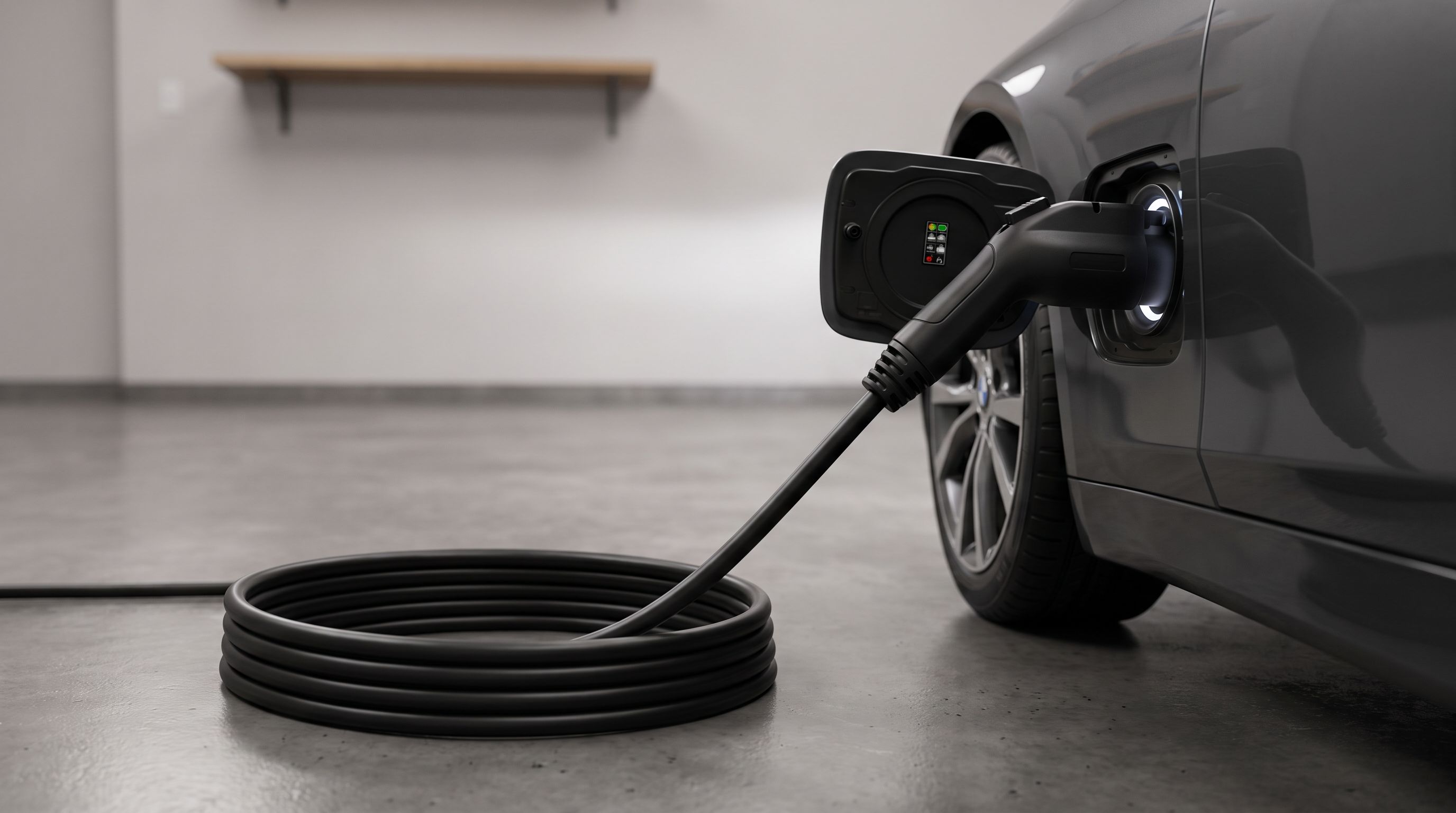
EV Charging Cable Extension 2026: What's Actually Safe
Most EV charging cable extensions aren't code-compliant. Here's what NEC and automakers actually say, plus safer ways to add reach in 2026.
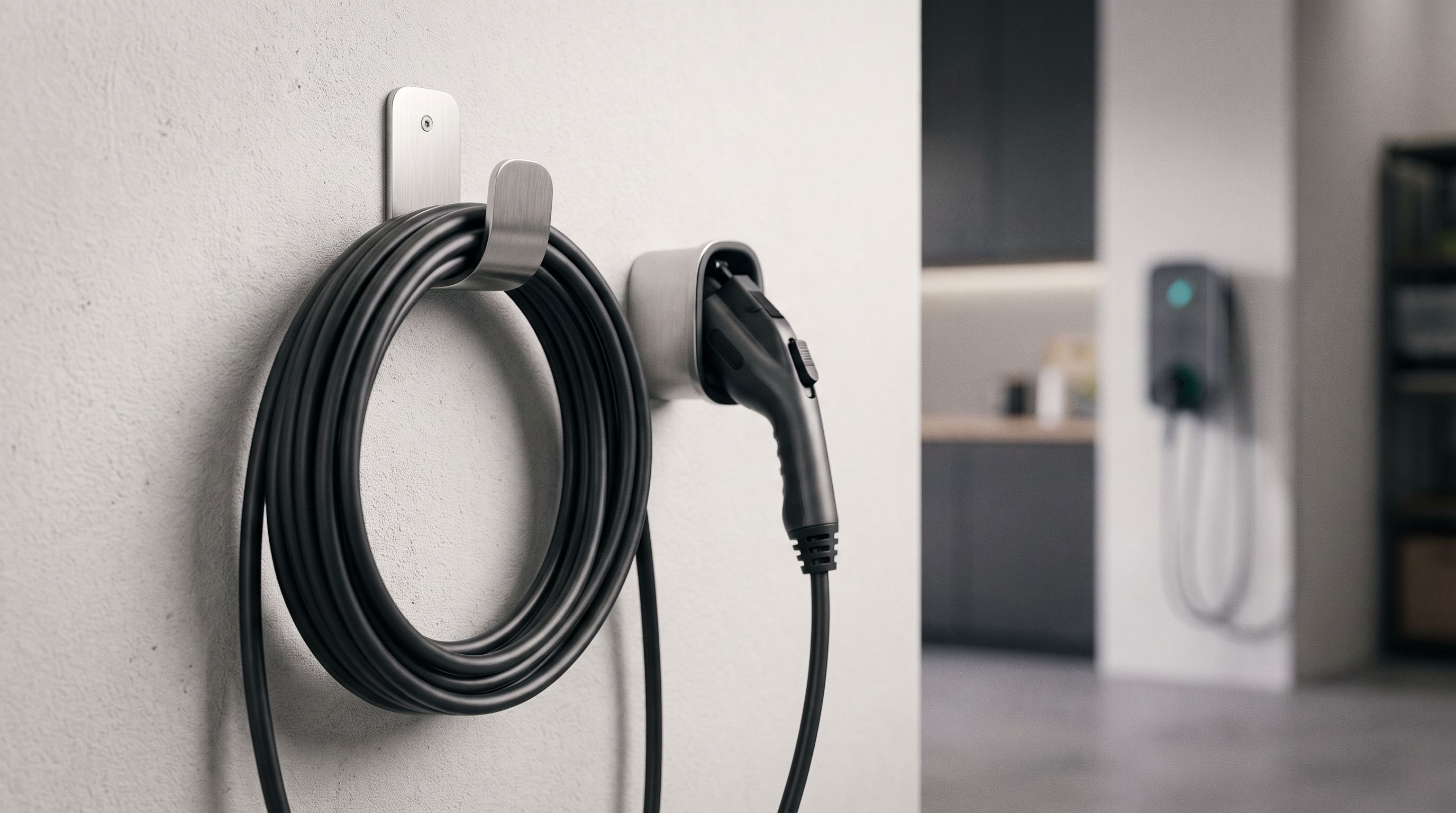
EV Charger Cable Holder 2026: NACS vs J1772 Wall Fit
Which EV charger cable holder fits your setup in 2026? We compare holsters, J-hooks and docks by connector type (NACS vs J1772) and garage wall material.
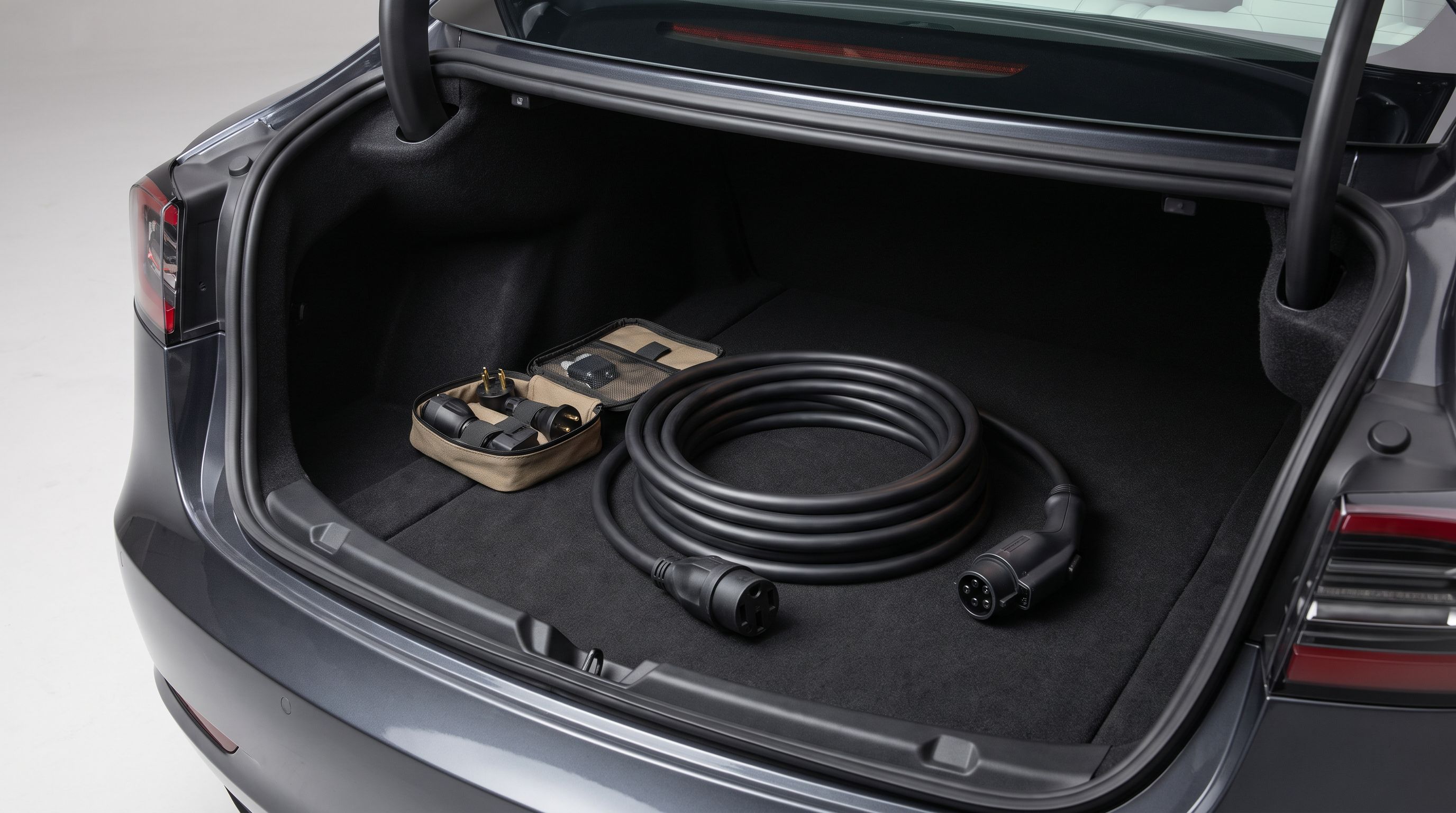
Portable Level 2 EV Charger 2026: NACS or J1772?
Picking a portable Level 2 EV charger in 2026? We compare 32–40A travel units, NACS vs J1772 plugs, and NEMA 14-50 vs 6-50 adapters so you buy the right one.