Interior Detailer vs Protectant 2026: Stop Dash Cracking
Interior detailer or UV protectant? We compare the best interior car protectant options for 2026 by finish, greasiness and real UV-blocking claims.
Reader-supported: we may earn a commission from links on this page, at no extra cost to you. It never affects our picks. Learn more.
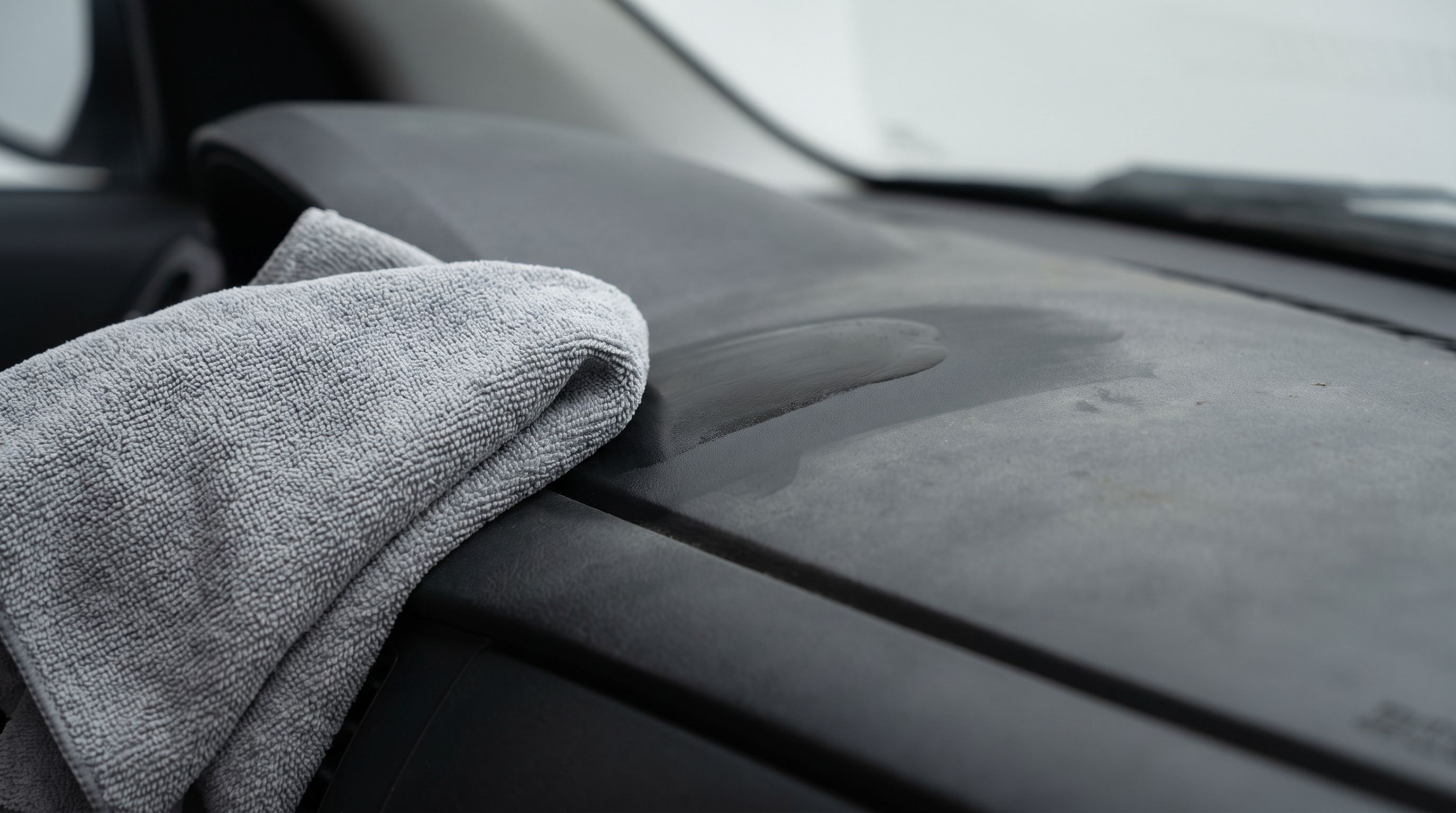
Sun-baked dashboards don't fail overnight. They fade, then chalk, then the top layer goes brittle, and one cold morning a hairline crack appears above the instrument cluster. By then nothing in a bottle will fix it. The products below are preventive — and the single biggest mistake owners make is reaching for a glossy "shine" dressing when what their interior actually needs is a thin, matte, UV-blocking film that doesn't cook in the windshield greenhouse.
This guide separates the two categories that get used interchangeably — interior detailers (cleaners with a light protective residue) and interior protectants (UV-focused dressings) — and ranks the water-based options worth buying in 2026 based on manufacturer specs, independent roundups from outlets like Car and Driver, and long-run owner feedback about dash cracking, dust attraction and windshield glare.
The short version
- Best overall: 303 Aerospace Protectant
- Best all-in-one: Chemical Guys Total Interior Cleaner & Protectant
- Budget pick: Meguiar's Quik Interior Detailer
- Best pro-grade cleaner: P&S Xpress Interior Cleaner
- Best adjustable finish: CarPro PERL
 Best adjustable finish · CarPro PERL — Check price on Amazon →
 Best pro-grade cleaner · P&S Xpress Interior Cleaner — Check price on Amazon →
 Budget pick · Meguiar's Quik Interior Detailer — Check price on Amazon →
 Best all-in-one · Chemical Guys Total Interior Cleaner & Protectant — Check price on Amazon →
 Best overall · 303 Aerospace Protectant — Check price on Amazon →
Detailer vs protectant: what the words actually mean
Interior detailer = a mild cleaner in a spray bottle. It lifts fingerprints, dust and light skin oils, flashes off fast, and usually leaves a trace of silicone or polymer behind. It's a maintenance product. Use it weekly or whenever the dash looks dusty.
Interior protectant = a dressing whose primary job is to deposit a UV-absorbing film on vinyl, rubber and plastic. It cleans poorly or not at all. It's a seasonal product — apply after a proper clean, then every month or two depending on sun exposure.
The practical consequence: if you only ever use a detailer, your dash stays clean but gets very little UV defense. If you only use a protectant, you're sealing dirt under the film and it will look blotchy. The correct routine is clean first, protect second, and maintain with a detailer in between.
All-in-one products — the Chemical Guys Total Interior Cleaner & Protectant being the headline example — compromise deliberately. They clean decently and leave meaningful (if lighter) protection. For a daily driver that lives outside, that compromise is usually the right call because the product actually gets used.
Why dashes crack, and what a bottle can and can't do
UV radiation breaks polymer chains in the plasticizers that keep vinyl and TPO flexible. Heat accelerates it; a parked car's dash can comfortably exceed 160°F / 70°C in summer. As plasticizers migrate out and degrade, the surface loses elasticity, chalks, and eventually splits — usually along the defroster vents and at the corners where thermal stress is highest.
What a water-based protectant does: lays down a sacrificial UV-absorbing layer, slows plasticizer loss, and keeps the surface from drying out. Applied consistently from new, owners of sun-belt cars report dramatically slower fading over five-plus years.
What it cannot do: reverse existing cracks or re-soften brittle vinyl. Products that look like they do are using heavy gloss to fill and hide, and that gloss bakes into a sticky, dust-magnet mess by midsummer.
And nothing beats physics: a reflective sunshade and parking nose-away from afternoon sun will out-perform any spray. Treat the chemistry as a supplement.
Water-based vs solvent-based — why we only recommend water-based here
Older solvent-carried dressings (and most cheap aerosol "protectants") use petroleum distillates to dissolve silicone oils. Those solvents can soften some plastics over repeated use, leave a greasy film, and off-gas into a hot cabin. Water-based emulsions — the 303, PERL and modern Meguiar's formulas included — carry the active ingredients in water, evaporate clean, and leave far less residue.
Water-based also tends to mean lower sheen, which matters more than people expect: a glossy dash throws a reflection onto the inside of the windshield in low sun, and that glare is a genuine safety annoyance in a crossover with a long dash top.
The picks
303 Aerospace Protectant — best overall
Prices last checked October 6, 2026. Amazon prices change frequently, so treat these as a guide and check the live price before you buy.
303 Aerospace Protectant
Water-based, matte finish and the strongest UV-blocking reputation for vinyl, rubber and plastic.
Still the benchmark for people whose priority is UV defense rather than shine. It's a water-based emulsion that dries to a true matte, near-invisible finish on vinyl, rubber and unfinished plastic, and owner reports across years of use in Arizona, Texas and Australia consistently cite preserved color on dash tops and door cards. It's also safe on rubber seals and convertible tops, which widens its usefulness beyond the cabin.
What it gives up: cleaning power — essentially none, so it must follow a cleaner. It's also among the pricier options per ounce, and applied heavily it can streak on piano-black trim. Spray onto the towel, not the panel, and buff until it looks like nothing's there.
Chemical Guys Total Interior Cleaner & Protectant — best all-in-one
Chemical Guys Total Interior Cleaner & Protectant
Cleans and leaves light UV protection in one wipe — the editorial favorite in 2026 roundups.
The product most 2026 roundups, including Car and Driver's, put at the top of the pile — and the reason is convenience rather than chemistry heroics. One bottle cleans light grime off dash, screens, leather, vinyl and door cards, then leaves a low-sheen protective residue with UV-blocker claims. For owners who will realistically detail the interior once a month, it beats a two-step routine they'll skip.
What it gives up: it's a weaker cleaner than a dedicated APC on heavily soiled or textured plastics, and the protection layer is thinner than a standalone dressing like 303. Fragrance is strong out of the bottle; some owners find it lingers longer than they'd like in a closed car.
Meguiar's Quik Interior Detailer — budget pick
The maintenance spray to keep in the door pocket. It's cheap, widely available, genuinely non-greasy, and has anti-static properties that noticeably reduce how fast dust resettles on a dash top — a recurring theme in owner feedback. Safe on navigation screens and gloss piano trim when used with a clean microfiber, which can't be said of every detailer.
What it gives up: UV protection is modest. Treat it as the product you use between protectant applications, not instead of them. It also won't touch set-in grime in textured grain — you'll need the P&S or an APC for that. Buy the big bottle and a dedicated towel.
P&S Xpress Interior Cleaner — best pro-grade cleaner
P&S Xpress Interior Cleaner
Dilutable detailer-shop staple that strips grime so your protectant can actually bond.
The dilutable shop standard that keeps appearing on detailer lists. It's a cleaner, full stop, and that's the point: textured plastic grain, sun-baked door armrests and grimy steering wheels need a product that lifts soil so the protectant can actually sit on the surface instead of on top of a film of hand oil. Dilutable, low-odor and fast-flashing, it stretches a long way for the money.
What it gives up: no protection whatsoever, no UV claims, no shine. It's step one in a two-step system. Also: dilute it. Used neat on delicate surfaces it can be stronger than you need, and always test on an inconspicuous area of leather or coated trim first.
CarPro PERL — best adjustable finish
CarPro PERL
Dilute 1:1 for satin trim or 1:5 for a dead-matte dash; also works on rubber and tires.
The answer for anyone arguing about sheen. PERL is a water-based concentrate you dilute to taste: roughly 1:1 for a satin look on engine bay plastics or exterior trim, 1:3 to 1:5 for dash and door cards where you want essentially no gloss. That control is rare, and it means one bottle covers interior plastics, rubber seals and even tires.
What it gives up: it demands mixing, a spray bottle and a little experimentation — not a grab-and-go product. Applied too strong indoors it can feel slick, and like all dressings it needs a clean surface first. Buff it properly with a dry towel or it will attract dust.
Comparison table
| Product | Type | Finish | Cleans? | UV protection | Best for |
|---|---|---|---|---|---|
| 303 Aerospace Protectant | Protectant | Matte, near-invisible | No | Strongest reputation | Sun-belt cars, long-term dash preservation |
| Chemical Guys Total Interior Cleaner & Protectant | All-in-one | Low sheen | Yes, light–moderate | Moderate | One-bottle monthly maintenance |
| Meguiar's Quik Interior Detailer | Detailer | Dry, matte, anti-static | Yes, light | Light | Weekly dust wipe-downs, screens |
| P&S Xpress Interior Cleaner | Cleaner | None (leaves bare) | Yes, strong | None | Deep cleans before protecting |
| CarPro PERL | Protectant (dilutable) | Matte to satin, your choice | No | Good | Enthusiasts who want finish control |
How to choose
Match the finish to your dash angle
A nearly vertical dash in a sedan tolerates a little satin. A long, shallow dash top in an SUV or truck reflects straight into the windshield, and any gloss becomes glare at sunrise and sunset. If your dash top is wide and flat, choose matte — 303 or a heavily diluted PERL — and don't compromise.
Decide how often you'll actually do this
Be honest. If the interior gets attention once a month, an all-in-one like the Chemical Guys Total Interior Cleaner & Protectant delivers more real-world protection than a perfect two-step system you abandon in February. If you enjoy the process, run P&S Xpress Interior Cleaner followed by 303 Aerospace Protectant and maintain with Meguiar's Quik Interior Detailer.
Check surface compatibility before you spray
Modern cabins mix materials: coated leather, Alcantara-style suede, piano-black trim, anti-glare screens and matte soft-touch plastic. Suede and open-pore wood generally want nothing from this list. Screens want a detailer on a towel, never a dressing. Always spray the towel rather than the panel so overspray doesn't land on glass, pedals or a steering wheel — a slick wheel or pedal is a safety issue, full stop.
Read the UV claim carefully
"UV protection" is unregulated marketing on a spray bottle. Some brands cite specific blocker packages and third-party exposure testing; most just say the words. Favor brands that describe the mechanism and have a long track record on sun-exposed materials, and weight multi-season owner feedback over a single glowing review.
Think beyond the bottle
Protectant is cheap insurance, but a folding reflective sunshade, cracked windows on hot days, and a garage or shade spot do more for crack prevention than any chemistry. If your dash is already cracked, a custom-fit dash cover is the only honest fix.
A simple routine that works
- Vacuum thoroughly, including vents and seams.
- Clean with P&S Xpress Interior Cleaner diluted appropriately, or an all-in-one if soiling is light. Agitate textured grain with a soft detailing brush.
- Wipe residue with a damp, then dry, microfiber.
- Apply protectant to the towel, work it over the dash, door cards, pillars and rear parcel shelf, then buff dry until the surface looks untouched.
- Maintain weekly with Meguiar's Quik Interior Detailer.
- Re-protect every 4–8 weeks in summer, less in winter.
Rear parcel shelves and the plastic around rear windows get forgotten and are often the first to fade — include them.
FAQ
Is an interior protectant the same as Armor All? Not necessarily. Classic high-gloss dressings prioritize shine, which looks good for a week and then attracts dust and causes windshield glare. Modern water-based protectants aim for a matte, low-residue finish with UV blockers. Check the label for "water-based" and "matte."
Can a protectant repair cracked vinyl? No. It slows further degradation but cannot restore elasticity or close cracks. For an already-cracked dash, your options are a fitted dash cover, a vinyl repair kit for small splits, or replacement.
How often should I apply it? Every four to eight weeks for a car parked outdoors in strong sun; every couple of months for a garaged car. If water or dust no longer sits on the surface the way it did after application, it's time.
Will it make my steering wheel slippery? It can, which is why you should never apply a dressing to the wheel, shifter or pedals. Clean those with a dedicated cleaner and leave them bare.
Do I need a separate product for leather? For protection, yes — leather benefits from a dedicated leather cleaner and conditioner. Most all-in-ones are safe for light cleaning of coated leather, but they're not a substitute for proper leather care on an older or perforated interior.
Does any of this work on exterior trim? Yes. 303 and CarPro PERL both work well on faded exterior black plastic and rubber seals, which is a good reason to own a bottle even if your cabin is pristine.
Our picks
Meguiar's Quik Interior Detailer
Cheap, fast, anti-static and genuinely non-greasy for weekly wipe-downs of dash and door cards.
Get the best car care deals in your inbox
Join the GarageProof newsletter for hand-picked car care deals and new buying guides. No spam, unsubscribe anytime.
Related reads
Car Seat Gap Filler Organizer 2026: Fit It First, Buy It Second
A car seat gap filler organizer only works if it fits your console and seat rails. Here's how to measure, avoid vented-seat conflicts, and which 2026 picks suit which seats.
Car Seat Covers in 2026: Universal or Custom-Fit?
The best car seat covers 2026 guide: how side-airbag seams, seat controls and headrest shapes decide universal vs custom-fit, plus five picks and a fitment checklist.
Trunk Organizers in 2026: 4 Picks Sized to Your Load Floor
The best trunk organizer 2026 picks compared by folded and open dimensions, load rating, anchor straps and how they fit sedan boots, SUV floors and truck beds.