Heated Car Seat Cover Fitment Guide 2026: Airbag-Safe Picks
Which heated car seat cover actually fits your seats in 2026? We compare side-airbag-safe designs, bucket vs bench fit, 12V amp draw, and mounting hardware.
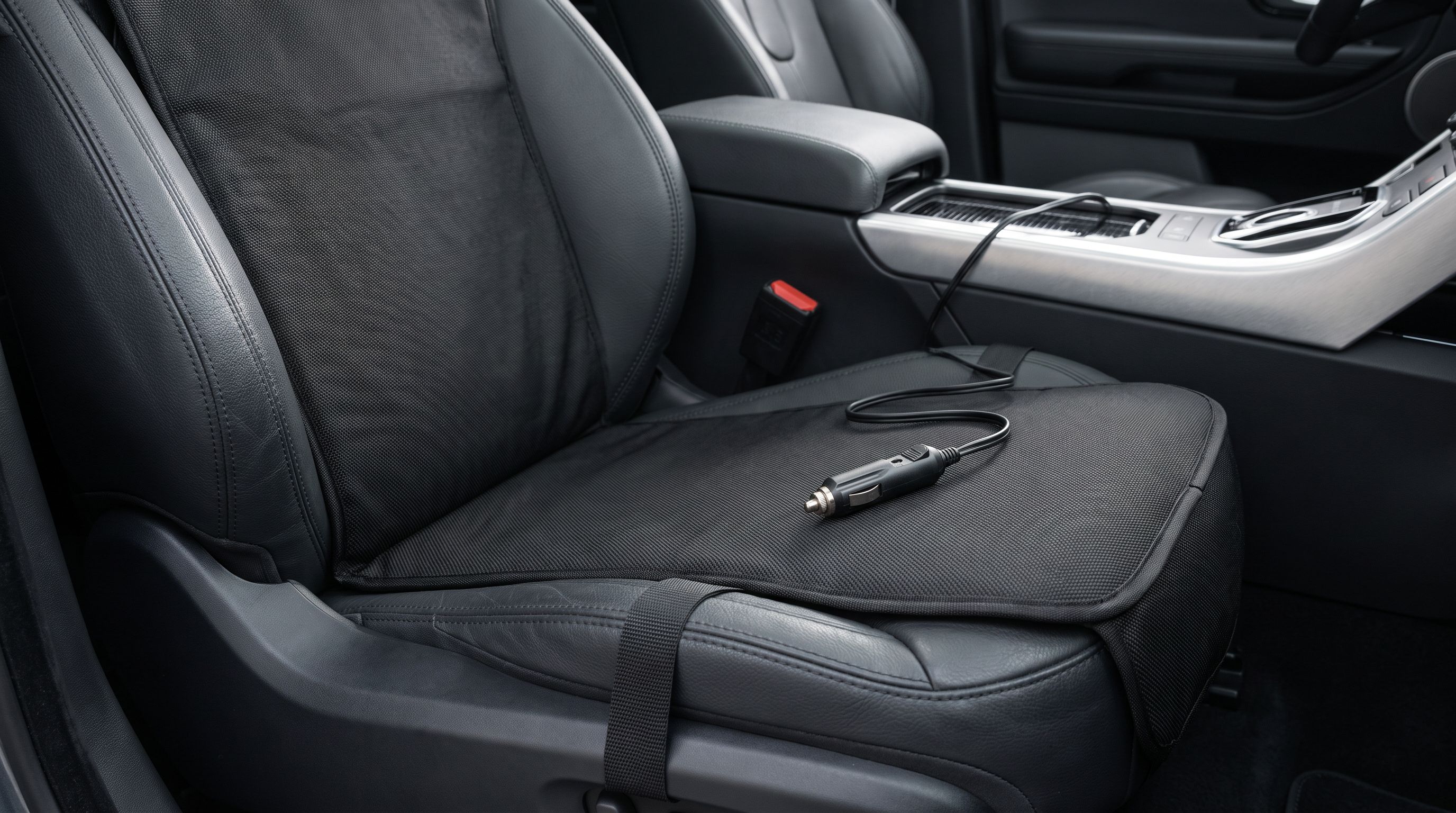
Reader-supported: we may earn a commission from links on this page, at no extra cost to you. It never affects our picks. Learn more.
Factory heated seats are still an options-package item on plenty of trims, and older cars often skipped them entirely. A 12V heated seat cover or cushion is the low-commitment fix — but "universal fit" is doing a lot of work in most product listings. The real questions are whether the thing clears your side airbag, whether it stays put on your seat shape, and whether your 12V socket can carry the current without popping a fuse.
This guide compares the styles that matter, explains how to confirm fitment for your specific seats, and ranks five options we researched using manufacturer specs, independent reviews, and verified owner feedback. GarageProof does not physically test units; where we cite performance, it comes from published testing and owner reports.
The short version
- Best overall: Sojoy Universal 12V Heated Smart Seat Cushion
- Budget pick: Zone Tech Classic Heated Car Seat Cushion
- Best heat plus massage: Snailax Car Seat Massager with Heat
- Best for back support: Comfier Heated Seat Cushion with Massage
- Most compact: Wagan IN9438 12V Heated Seat Cushion
 Best for back support · Comfier Heated Seat Cushion with Massage — Check price on Amazon →
 Best heat plus massage · Snailax Car Seat Massager with Heat — Check price on Amazon →
 Budget pick · Zone Tech Classic Heated Car Seat Cushion — Check price on Amazon →
 Best overall · Sojoy Universal 12V Heated Smart Seat Cushion — Check price on Amazon →
Cover vs cushion: the distinction that decides airbag safety
The terms get used interchangeably in listings, but the physical difference is important.
A heated seat cushion sits on top of the seat like a pad. It covers the seat bottom and the front face of the backrest, then anchors with an elastic strap or hook that goes around the headrest or through the seat crack. It does not wrap around the sides of the backrest.
A heated seat cover — the wrap-around kind — encloses the backrest, including the outboard bolster. That outboard bolster is exactly where most vehicles hide the seat-mounted side airbag (often labeled SRS AIRBAG on a small tag sewn into the seam).
This matters because a seat-mounted side airbag deploys through the seat upholstery along a tear seam designed to split at a specific force. A generic cover stretched over that seam can restrain, deflect, or delay deployment. Aftermarket covers marketed as airbag-compatible use a special break-away stitched seam over the bolster; generic ones do not.
The practical rule: if your seat has a side airbag tag on the outboard bolster, use a cushion-style heater that leaves the bolster completely exposed, or buy a cover explicitly certified as side-airbag compatible for your vehicle. Every pick in this guide is a cushion-style product for exactly that reason — it sidesteps the problem instead of trying to engineer around it.
How to check: run your hand down the outboard edge of your seatback and look for a small fabric tag or embossed "AIRBAG" marking. If you can't find one, your owner's manual will list airbag locations, and most manuals also carry an explicit warning against seat covers on airbag-equipped seats.
Bucket vs bench: what actually stays put
Bucket seats have deep side bolsters and a contoured base. A flat cushion laid over them tends to "bridge" the bolsters and slide forward under braking unless it has a strap that loops the seatback and a non-slip backing. Look for cushions with both a headrest loop and a lower elastic strap or buckle that passes behind the seat.
Bench seats — common in trucks and older SUVs — are flatter and more forgiving, but a single cushion sized for a bucket leaves the middle position cold and can look lopsided. If you're heating a bench, you either want a cushion wide enough to span the driver's position generously, or two cushions and a dual-socket power source.
A few fitment realities worth knowing before you buy:
- Seat occupancy sensors. Passenger seats in most modern cars use a weight or capacitive sensor to decide whether to arm the passenger airbag. A cushion with a rigid base or a thick foam layer can, in some vehicles, alter the reading. If you put a heater on the front passenger seat, watch the passenger airbag status light with someone sitting there.
- Ventilated or perforated seats. Laying a heater on top blocks the airflow through the perforations. It still works; you just lose the cooling function for the season.
- Power seat travel. Adding 1–2 inches of cushion height eats headroom and changes your relationship to the steering wheel. Tall drivers should favor the thinnest option available.
- Leather seats. Slip is worse on leather. Non-slip silicone backing or a rubberized underside is close to mandatory.
The 12V math: amp draw, fuses, and why yours might cut out
This is where cheap heated cushions earn their reputation for being unreliable.
A typical 12V heated seat cushion draws somewhere in the range of 2.5 to 5 amps on high — roughly 30 to 60 watts. Most vehicle accessory sockets are fused at 10, 15, or 20 amps, so a single cushion is not a problem. The trouble starts when you stack loads: two cushions on a dual splitter, plus a phone charger, plus a dash cam, all off one 15A circuit. Add a cheap splitter with undersized wiring and you get a hot plug, a voltage drop, and a heater that never reaches its rated temperature.
Practical guidance:
- Check your fuse box diagram for the accessory socket's rating. It's printed on the panel cover or in the manual.
- One heater per socket if you can manage it. Many cars have a second socket in the console or cargo area.
- If you must split, use a splitter with a stated amp rating (15A or better) and an inline fuse — not a four-way gas-station special.
- Watch for "ignition-only" sockets. Many modern sockets cut power with the key off, which is good (no flat battery) but means the cushion won't preheat.
- Never leave a heater running unattended on a socket that stays live with the engine off. A 4A draw will flatten a marginal battery overnight.
Cushions with an auto-shutoff timer — typically 30, 45, or 60 minutes — are worth seeking out for this reason alone.
Comparison
| Product | Style | Heat zones | Notable controls | Best fit for |
|---|---|---|---|---|
| Sojoy Universal 12V Heated Smart Seat Cushion | Cushion, seat + back | Seat and backrest | Multi-level heat, auto shut-off timer | Bucket seats, daily commuters |
| Zone Tech Classic Heated Car Seat Cushion | Cushion, seat + back | Seat and backrest | Simple high/low switch | Occasional use, second cars |
| Snailax Car Seat Massager with Heat | Cushion, seat + back | Heat plus vibration zones | Multiple massage modes and heat | Long drives, stiff backs |
| Comfier Heated Seat Cushion with Massage | Tall-back cushion | Back-focused heat + massage | Zone selection, timer | Lumbar and mid-back warmth |
| Wagan IN9438 12V Heated Seat Cushion | Low-profile cushion | Seat and backrest | Basic heat control | Tight headroom, short seat travel |
Specifications vary by production batch and retailer listing. Confirm heat levels, timer behavior, and strap hardware on the current listing before you buy.
The picks
Sojoy Universal 12V Heated Smart Seat Cushion — best overall
Sojoy Universal 12V Heated Smart Seat Cushion
Cushion-style heater with timer and adjustable heat that sits on the seat instead of wrapping the bolsters.
Sojoy has been in the 12V seat-heater space for years, and this cushion hits the balance most drivers want: heat across both the seat base and the backrest, multiple temperature levels rather than a crude on/off, and an auto shut-off timer that protects your battery and your fuse. It's a cushion, not a wrap, so it leaves side-airbag bolsters clear. Owner feedback consistently points to strap security on contoured bucket seats as a strength.
What it gives up: it's a mid-thickness pad, so tall drivers in low-roof cars will notice the height. There's no cooling function, and the finish is functional rather than luxurious — this is a winter tool, not an upholstery upgrade.
Zone Tech Classic Heated Car Seat Cushion — budget pick
Zone Tech Classic Heated Car Seat Cushion
Simple plug-in cushion with a basic two-level switch — the least fuss for occasional cold-morning use.
If you need warmth in a commuter beater or a second car that only sees cold mornings, the Zone Tech is the straightforward answer. Plug it into the socket, flip the switch, get heat. It covers the seat base and the lower backrest, anchors with an elastic strap, and doesn't ask you to learn a control scheme.
The trade-offs are real: fewer heat levels than the Sojoy, and typically no auto shut-off, which means you are the timer. Owner reports also note that the strap system is less aggressive than premium options, so on heavily bolstered sport seats it can shift over time. For flat bench seats and softer sedan buckets, it stays put fine.
Snailax Car Seat Massager with Heat — best heat plus massage
Snailax Car Seat Massager with Heat
Adds vibration massage zones to seat and back heat for long commutes and stiff backs.
Snailax builds massage-and-heat products for both home and car use, and this one targets drivers whose real complaint isn't just cold — it's a lower back that's had enough after 90 minutes on the interstate. Vibration zones down the back and seat combine with heat, and you can typically run heat alone if the buzzing gets distracting.
The compromise is bulk and complexity. Massage motors add thickness and weight, the control pad is another thing dangling in the cabin, and the total 12V draw is higher than a heat-only cushion — check your socket's fuse rating before you add other accessories to the same circuit. It's also a poor choice for the passenger seat if you're worried about occupancy-sensor readings.
Comfier Heated Seat Cushion with Massage — best for back support
Comfier Heated Seat Cushion with Massage
Taller backrest section with targeted lumbar heat, good for drivers who want warmth higher up the spine.
Where most car cushions stop around mid-back, the Comfier extends higher and concentrates warmth and massage on the lumbar and mid-spine region. If your complaint is a cold, tight lower back rather than a cold seat bottom, this is the shape that addresses it. Zone selection lets you put the heat where you want it, and a timer handles shutoff.
The taller backrest is the catch: it needs a seatback with enough height and a headrest gap to strap through, and it can interfere with seatbelt routing on some seats — check that the shoulder belt still lies flat across your collarbone, not over a lump of cushion. Also plan on removing it if you regularly carry rear passengers behind the driver.
Wagan IN9438 12V Heated Seat Cushion — most compact
Wagan IN9438 12V Heated Seat Cushion
Low-profile pad that adds minimal thickness, useful in cars with tight headroom or short seat travel.
Wagan is a long-standing 12V accessory brand, and this cushion's appeal is what it doesn't add. It's a low-profile pad that raises your seating position minimally, which matters if you're tall, if your car has limited headroom, or if you've already maxed out seat travel. It's heat-only, cigarette-lighter powered, and simple to move between vehicles.
You give up features: no massage, limited heat staging compared to the Sojoy, and less backrest coverage than the tall cushions. If you want a soft, plush feel, this isn't it — the thinness that makes it fit is the same thinness you feel. For drivers who just want warmth without changing their driving position, that's the right trade.
Installation and safety checklist
Before the first cold morning, run through this:
- Confirm no part of the heater covers a side-airbag seam.
- Route the power cord so it can't reach the pedals or tangle with the seat rails. Tuck it along the seat base and down the side of the console.
- Check that the seatbelt buckle is still fully accessible and the shoulder belt lies flat.
- Verify the seat can move through its full fore-aft and recline travel without pulling the cord tight.
- Sit on it and confirm the cushion doesn't slide under hard braking. Test in a parking lot, not on the highway.
- On the passenger seat, confirm the airbag status indicator behaves normally with an adult seated.
- Unplug when parked if your socket stays live with the ignition off.
FAQ
Are heated seat covers safe with side airbags? Cushion-style heaters that sit on top of the seat and leave the outboard bolster exposed are the safe approach. Wrap-around covers that enclose the backrest can interfere with a seat-mounted side airbag unless they're specifically certified as airbag-compatible with a break-away seam. Check your seat for an SRS AIRBAG tag on the outboard bolster and consult your owner's manual.
How much power does a 12V heated seat cushion draw? Most draw roughly 2.5 to 5 amps on the high setting, or about 30 to 60 watts. A single unit is well within a typical 10A or 15A accessory socket. Running two units plus other accessories on one splitter is where people blow fuses.
Will a heated cushion drain my car battery? It can, if your accessory socket stays powered with the ignition off. A 4A draw over several hours is meaningful on an older battery. Choose a cushion with an auto shut-off timer and unplug it when you park if your socket is always live.
Do these work on bench seats? Yes, and often better than on buckets, because bench seats are flatter and the cushion has less contour to bridge. The limitation is width — one cushion heats one seating position. Two cushions on a bench need a properly rated splitter or two separate sockets.
Will a heated cushion trip my passenger airbag sensor? Usually not, but it can in some vehicles, particularly thicker cushions with rigid components. Have an adult sit in the passenger seat with the cushion installed and confirm the passenger airbag status light behaves the same as it does without the cushion.
Can I use one on ventilated or perforated leather seats? Physically, yes. Practically, the cushion blocks the airflow through the perforations, so you lose the ventilation function while it's installed. Leather also increases slip, so prioritize a cushion with a non-slip backing and a secure strap.
Is a plug-in cushion better than installing under-upholstery heating pads? Under-upholstery heater pads give a cleaner, factory-like result and don't change your seating position, but they require removing the seat covers and wiring into the vehicle's electrical system. A plug-in cushion is reversible, portable between cars, and requires no disassembly. Pick based on how permanent you want the solution to be.
Get the best car care deals in your inbox
Join the GarageProof newsletter for hand-picked car care deals and new buying guides. No spam, unsubscribe anytime.
Related reads
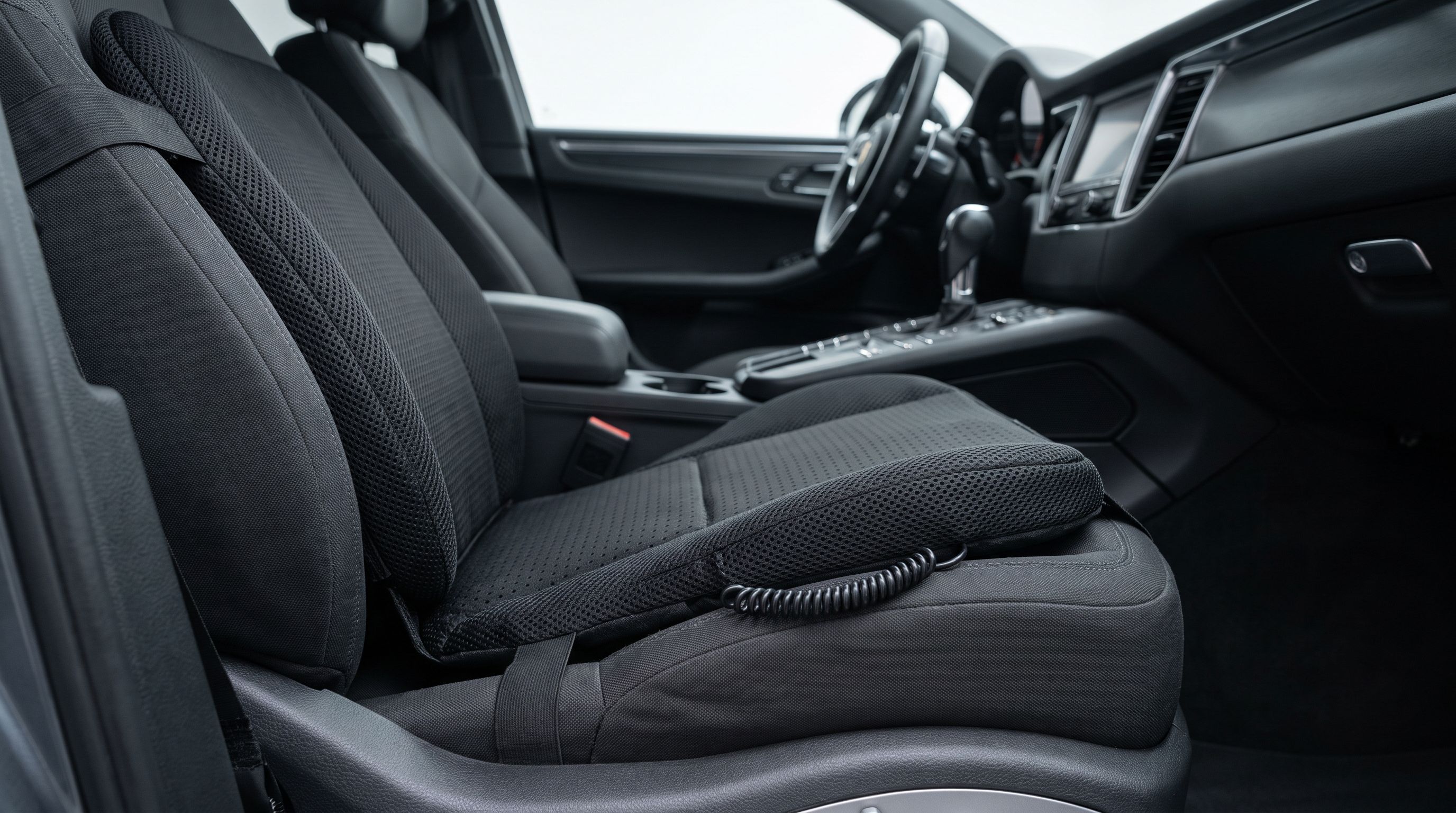
Cooling Car Seat Cushion 12V in 2026: Will It Fit Your Bucket?
A fitment-first guide to 12V cooling car seat cushions in 2026 — cushion dimensions, bolster clearance, fan noise and power draw compared for sedans, trucks and SUVs.
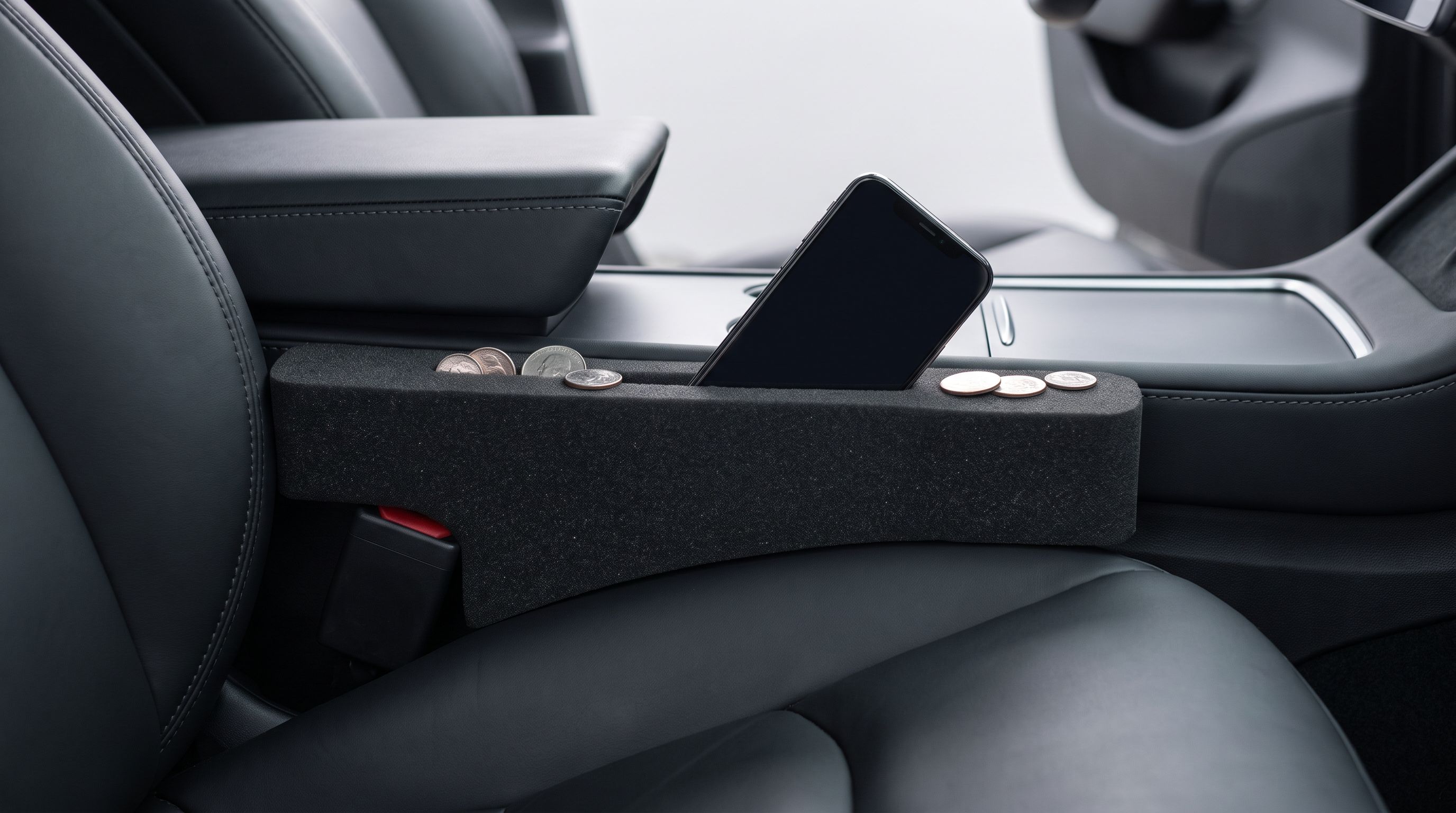
Car Seat Gap Filler Organizer 2026: Fit It First, Buy It Second
A car seat gap filler organizer only works if it fits your console and seat rails. Here's how to measure, avoid vented-seat conflicts, and which 2026 picks suit which seats.
Interior Detailer vs Protectant 2026: Stop Dash Cracking
Interior detailer or UV protectant? We compare the best interior car protectant options for 2026 by finish, greasiness and real UV-blocking claims.