Fuel Pressure Test Kit 2026: Match the Rail Fitting First
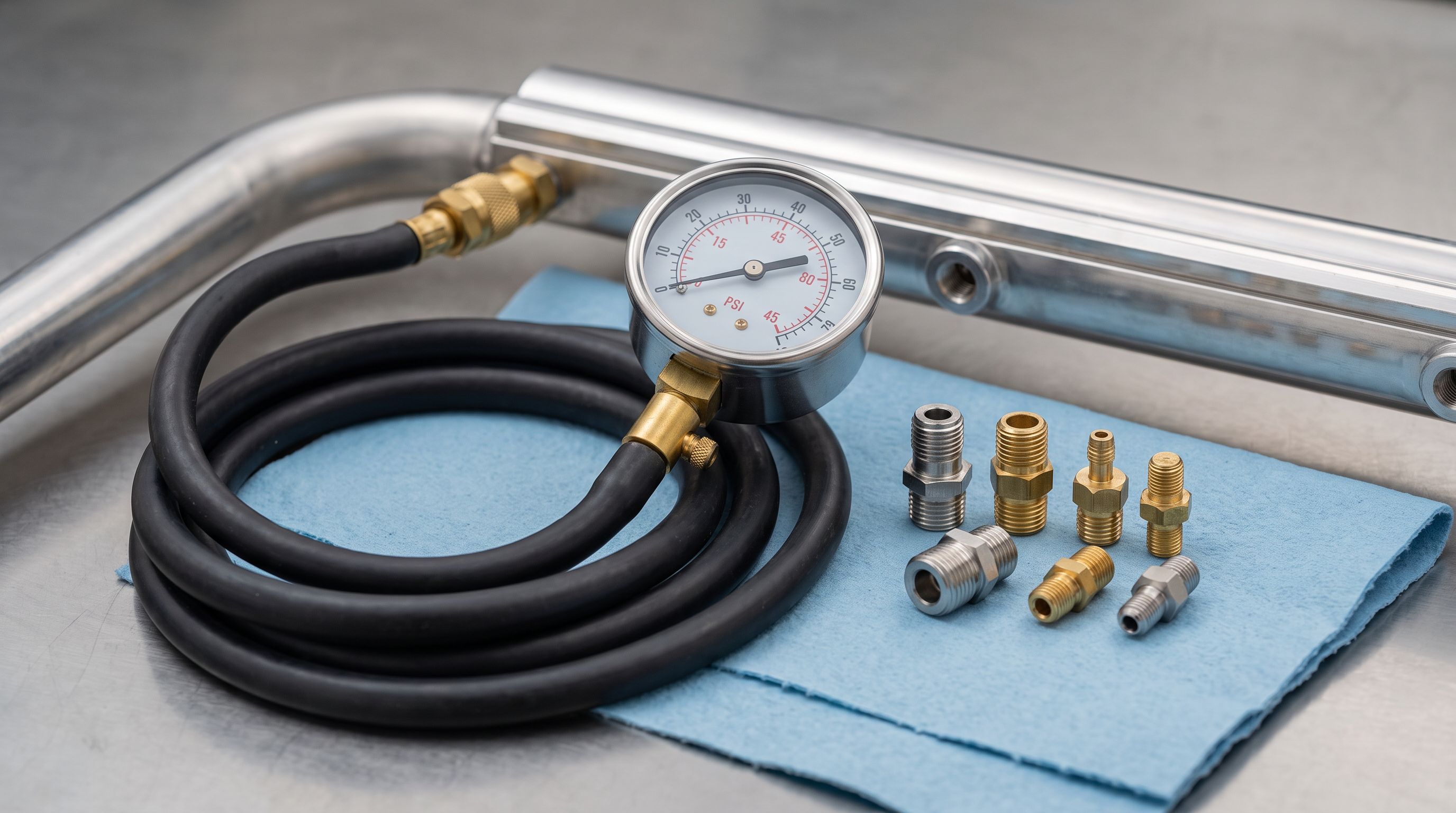
Fuel pressure test kit guide for 2026: how to identify your Schrader port, banjo or quick-connect test point, pick the right gauge range, and avoid useless adapters.
Reader-supported: we may earn a commission from links on this page, at no extra cost to you. It never affects our picks. Learn more.
The short version
- Best overall: OTC 5630 Fuel Injection Pressure Test Kit
- Best value: BETOOLL HW0130 Fuel Injection Pressure Tester Kit
- Budget pick: AUTOWN Fuel Pressure Tester Kit 0-140 PSI
- Best for returnless and banjo systems: Mityvac MV5545 Fuel Injection Pressure Test Kit
- Premium pick: Lang Tools TU-443 Master Fuel Injection Pressure Test Set
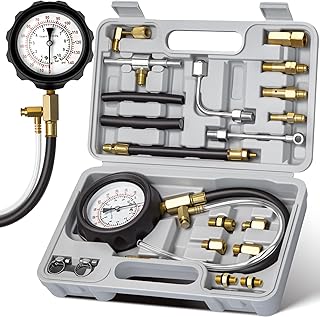 Budget pick · AUTOWN Fuel Pressure Tester Kit 0-140 PSI — Check price on Amazon →
 Best overall · OTC 5630 Fuel Injection Pressure Test Kit — Check price on Amazon →
GarageProof researches and compares tools using manufacturer specifications, independent reviews, and verified owner feedback. We don't physically test units — we rank them on documented adapter coverage, gauge specs, and what long-term owners consistently report.
Why the fitting matters more than the gauge
Here's the uncomfortable truth about buying a fuel pressure test kit: the gauge is the easy part. Almost any liquid-filled 0–100 psi gauge will tell you whether your fuel pump is making pressure. What separates a useful afternoon from a wasted one is whether the kit includes the specific fitting that mates to your engine's test point.
Three broad scenarios cover most vehicles on the road in 2026:
- Schrader valve on the fuel rail. The classic setup — a tire-valve-style port, usually capped, sitting on the rail or on a line near it. You thread or clamp the gauge hose onto it, depress the core, and read pressure. Most domestic vehicles from the late 1980s through the mid-2000s, plus plenty of imports, use this.
- Returnless systems with no test port. From roughly the mid-2000s onward, many manufacturers deleted the Schrader valve entirely. Pressure is regulated at the pump module and monitored by a fuel rail pressure sensor the ECU reads directly. To get a mechanical reading you must splice into the supply line with a quick-connect tee adapter, or pull a banjo bolt and substitute a hollow test bolt.
- Banjo-bolt feed fittings. Common on many European engines and some Japanese applications. The fuel line attaches to the rail with a banjo fitting and crush washers; you swap in a test banjo bolt with a gauge takeoff.
A kit full of Schrader adapters is useless on a returnless Ford EcoBoost or a late-model GM truck. A banjo-heavy euro kit won't help on a 1998 Silverado. Confirm your test point before you click buy.
How to confirm your test point in five minutes
- Pop the hood and trace the fuel supply line from the firewall to the rail. Look for a capped valve stem — that's a Schrader port.
- No cap? Check whether the line terminates in a plastic quick-connect (push-to-release collar) or a bolt through a loop fitting (banjo).
- Search a service manual, a model-specific forum, or your repair database for "fuel pressure test port" plus your year, make, engine. Owners of the same platform will have answered this.
- Note the specification too — a GM returnless truck may spec roughly 55–62 psi, a port-injected Honda something near 45–50 psi, and a GDI low-pressure supply circuit something in the 50–70 psi neighborhood. The actual numbers for your vehicle come from factory service data, not a generic chart.
Gasoline direct injection: an important limit
If your engine is GDI/GDFI (most turbo four-cylinders built in the last decade, plus many V6s and V8s), these kits only measure the low-pressure supply side feeding the high-pressure mechanical pump. The high-pressure rail runs in the thousands of psi and is read through the fuel rail pressure sensor with a scan tool — never with a mechanical gauge from a $40 kit. Attempting it is genuinely dangerous. Low-side testing is still valuable: it tells you whether the in-tank pump is delivering enough volume and pressure to keep the HPFP happy.
Comparison
| Kit | Gauge range | Primary strength | Returnless/banjo coverage | Best for |
|---|---|---|---|---|
| OTC 5630 | 0–100 psi, liquid-filled | Balanced domestic + import adapter set, replaceable parts | Good — includes common test fittings | Most DIY owners with a mixed fleet |
| BETOOLL HW0130 | 0–140 psi | Low cost, covers mainstream Schrader-port cars | Limited | Occasional use on one or two familiar vehicles |
| AUTOWN 0-140 PSI | 0–140 psi | Long hose for in-cabin monitoring, broad basic adapters | Limited | First-time buyers, no-start triage |
| Mityvac MV5545 | 0–100 psi | Banjo bolts, quick-connect splice tees, bleed valve | Strong | Returnless and European applications |
| Lang Tools TU-443 | 0–100 psi | Largest adapter library in this group | Strong | Shops and enthusiasts seeing many makes |
Ranges and included adapters vary by production revision — check the current listing's adapter photo against your fitting before ordering.
The picks
OTC 5630 — best overall
Prices last checked November 5, 2026. Amazon prices change frequently, so treat these as a guide and check the live price before you buy.
OTC 5630 Fuel Injection Pressure Test Kit
Broad domestic/import adapter coverage, 0–100 psi liquid-filled gauge, and OTC's long parts-support track record.
OTC's 5630 lands in the sweet spot for someone who owns a couple of vehicles and wants one kit that mostly just works. The liquid-filled 0–100 psi gauge dampens needle flutter from injector pulsing, which makes reading key-on-engine-off pressure and idle pressure far less of a guessing game than a dry gauge. The adapter spread covers common domestic Schrader ports plus a reasonable set of import fittings, and OTC's long presence in the professional channel means replacement hoses and seals are generally findable years later.
What it gives up: it isn't a master set. If you work on a steady diet of returnless European engines, you'll still be ordering application-specific banjo bolts separately.
BETOOLL HW0130 — best value
BETOOLL HW0130 Fuel Injection Pressure Tester Kit
Cheap, widely owned 0–140 psi kit that covers the common Schrader-port cars most DIYers actually own.
The BETOOLL HW0130 is one of the most widely owned budget fuel pressure testers in North America, and for good reason: it covers mainstream Schrader-port applications at a fraction of professional-kit cost. Owner feedback consistently reports accurate-enough readings for pass/fail diagnosis — confirming a dead pump, a leaking regulator, or a clogged filter — which is 90% of what a home mechanic needs. The 0–140 psi range comfortably covers gasoline port and low-side GDI testing.
Its compromises are real. The gauge is less damped than a liquid-filled unit, the plastic case is flimsy, and the adapter selection thins out fast once you move past common domestic and Japanese Schrader ports. Treat the included O-rings as consumables.
AUTOWN 0-140 PSI — budget pick
AUTOWN Fuel Pressure Tester Kit 0-140 PSI
Amazon best-seller with a usable adapter spread for cars, trucks and ATVs, plus a long hose for cabin monitoring.
AUTOWN's kit is a perennial Amazon best-seller and makes sense as a first fuel-pressure tool. It covers the familiar Schrader-port cars, trucks, and ATVs, and its notably long hose lets you route the gauge under the windshield wiper so you can watch pressure while driving — the single most useful trick for catching an intermittent pump that drops out under load or heat soak.
The tradeoffs follow the price. Fit and finish is basic, the gauge face is small, and some owners report needing to replace a seal early on. There's little here for returnless or banjo systems. Buy it for triage on vehicles you already know have a test port, not as a universal solution.
Mityvac MV5545 — best for returnless and banjo systems
Mityvac MV5545 Fuel Injection Pressure Test Kit
Pro-grade kit with banjo bolts, quick-connect splices and bleed valve for rails without a Schrader port.
If you've already discovered your rail has no Schrader valve, this is the category you need. The Mityvac MV5545 is built around that problem: it includes banjo-bolt test fittings, quick-connect splice adapters that tee into the supply line, and a bleed/relief valve so you can depressurize the system and drain the hose into a container instead of spraying fuel across a hot engine bay. That bleed valve alone justifies the step up in price for anyone doing this regularly.
What it gives up: cost and complexity. There are more small parts to lose, and you still need to verify the exact quick-connect size for your line — 5/16 in. and 3/8 in. are both common. Confirm against your vehicle's line diameter first.
Lang Tools TU-443 — premium pick
Lang Tools TU-443 Master Fuel Injection Pressure Test Set
Deep adapter library plus a 0–100 psi gauge for shops that see a different make every hour.
The Lang Tools TU-443 master set exists for people who can't predict what rolls into the bay next. It pairs a 0–100 psi gauge with the deepest adapter library of this group, spanning domestic Schrader ports, import threads, banjo applications, and splice fittings. For a mobile tech, an independent shop, or an enthusiast with a garage full of mismatched project cars, the per-use cost collapses quickly compared with buying three cheap kits and still lacking the one fitting you need.
It gives up portability and simplicity. The case is large, and most single-vehicle owners will never touch half the contents. If you own one truck, this is overkill.
How to choose
Identify the test point before anything else
This is the whole game. Schrader port, banjo fitting, or spliced quick-connect — determine which one your engine has, then buy the kit whose adapter photo visibly contains that fitting. Don't rely on "universal" in a product title; look at the pictured adapters and count. Vehicle-specific applications genuinely vary, and the only reliable confirmation is your own factory service data or a model-specific owner community.
Match gauge range to your system pressure
A 0–100 psi gauge gives better resolution on a 45–60 psi system than a 0–140 psi gauge, where your reading sits in the lower third of the dial. The 0–140 units buy headroom you likely won't use on gasoline engines. If you work on returnless GM trucks running near 60 psi, resolution matters more than headroom. Liquid-filled gauges are worth seeking out — they stabilize the needle against pulsation.
Look for a bleed valve and a long hose
A pressure relief/bleed valve lets you dump trapped fuel into a bottle rather than onto the exhaust manifold. It also lets you perform a leak-down test: run the pump, key off, and watch whether pressure holds. A rapid drop points to a leaking injector, failed check valve in the pump, or a weeping regulator. A long hose enables driveway-to-road monitoring for intermittent faults. Both features separate serious kits from toy ones.
Check seal and hose quality
Fuel-rated hose, Viton-compatible O-rings, and metal fittings are what keep this tool safe. Budget kits often ship with marginal seals; keep a spare O-ring assortment on hand. Never use a kit with a swollen, cracked, or weeping hose, and always have a Class B extinguisher within reach when you're working on a pressurized fuel system.
FAQ
Can I test fuel pressure without a test port? Yes, but you have to splice in. A quick-connect tee adapter inserts between the supply line and the rail, or you substitute a hollow banjo test bolt. Both require relieving system pressure first. Kits like the Mityvac MV5545 and Lang Tools TU-443 are built around these fittings.
What does low fuel pressure actually mean? It narrows the list: weak pump, restricted filter or sock, failing pump relay or wiring voltage drop, or a leaking regulator. High pressure usually points to a restricted return line or a stuck regulator. Pressure alone doesn't prove volume — a pump can make static pressure and still starve the engine under load.
Will a fuel pressure test kit work on diesel? Not for the high-pressure side. These gauges are for gasoline systems and diesel low-pressure lift-pump circuits at most. Common-rail diesel injection pressure requires dedicated equipment and a scan tool.
Is a scan tool a substitute? Partly. Reading the fuel rail pressure sensor PID is fast and requires no fittings, but it tells you what the sensor reports. A mechanical gauge is how you confirm the sensor itself is honest — the two together are the real diagnosis.
How do I relieve fuel pressure safely? Pull the fuel pump fuse or relay, start the engine and let it stall, then crank briefly. Wear eye protection, work cold, disconnect the battery before opening any fitting, and have rags and an extinguisher staged.
Get the best car care deals in your inbox
Join the GarageProof newsletter for hand-picked car care deals and new buying guides. No spam, unsubscribe anytime.
Related reads
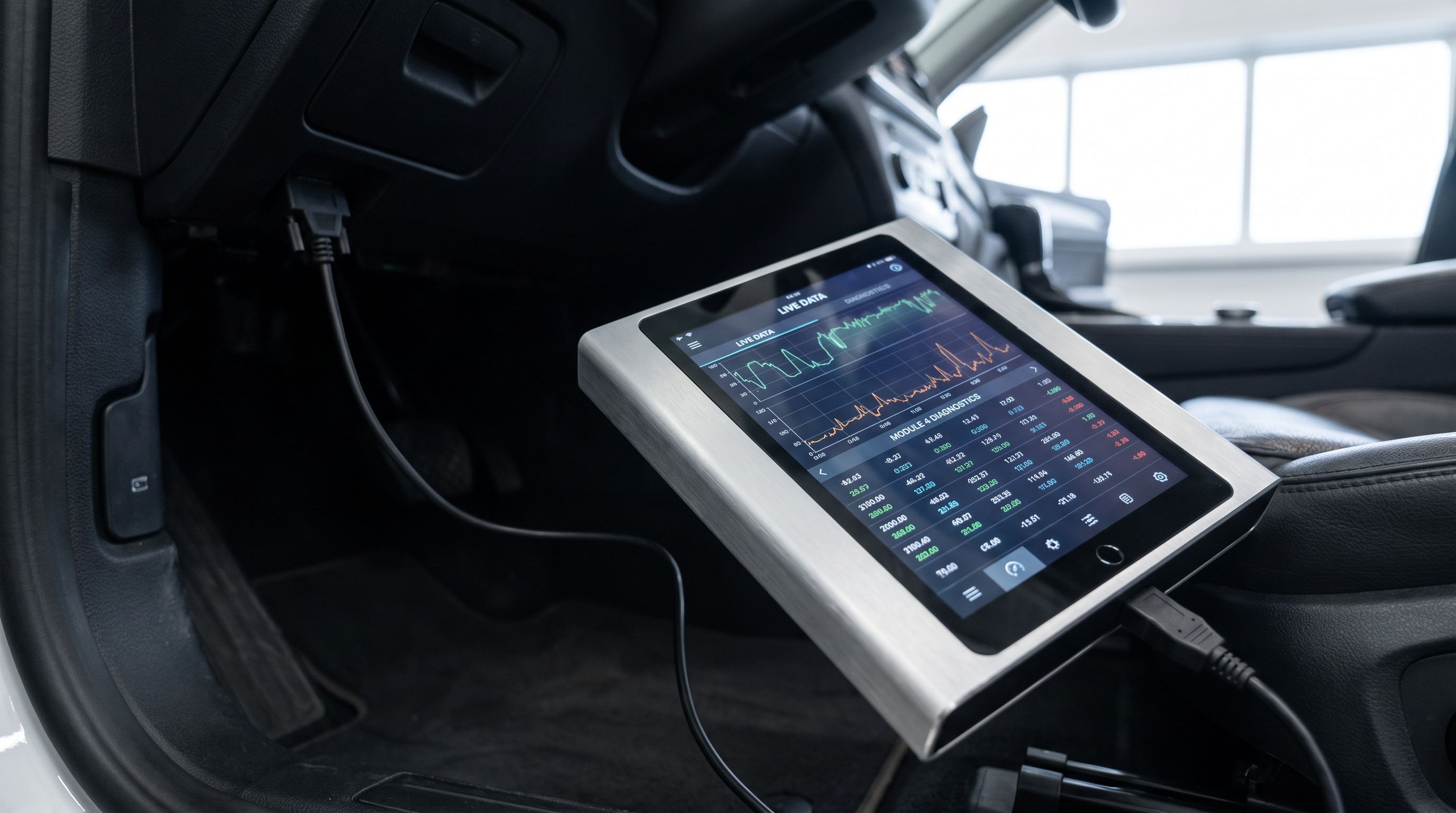
ECU Coding Scan Tool in 2026: Do You Actually Need One?
ECU coding scan tool vs mid-tier bidirectional in 2026: which tier you actually need, what coding really unlocks, and 5 tools ranked by module coverage.
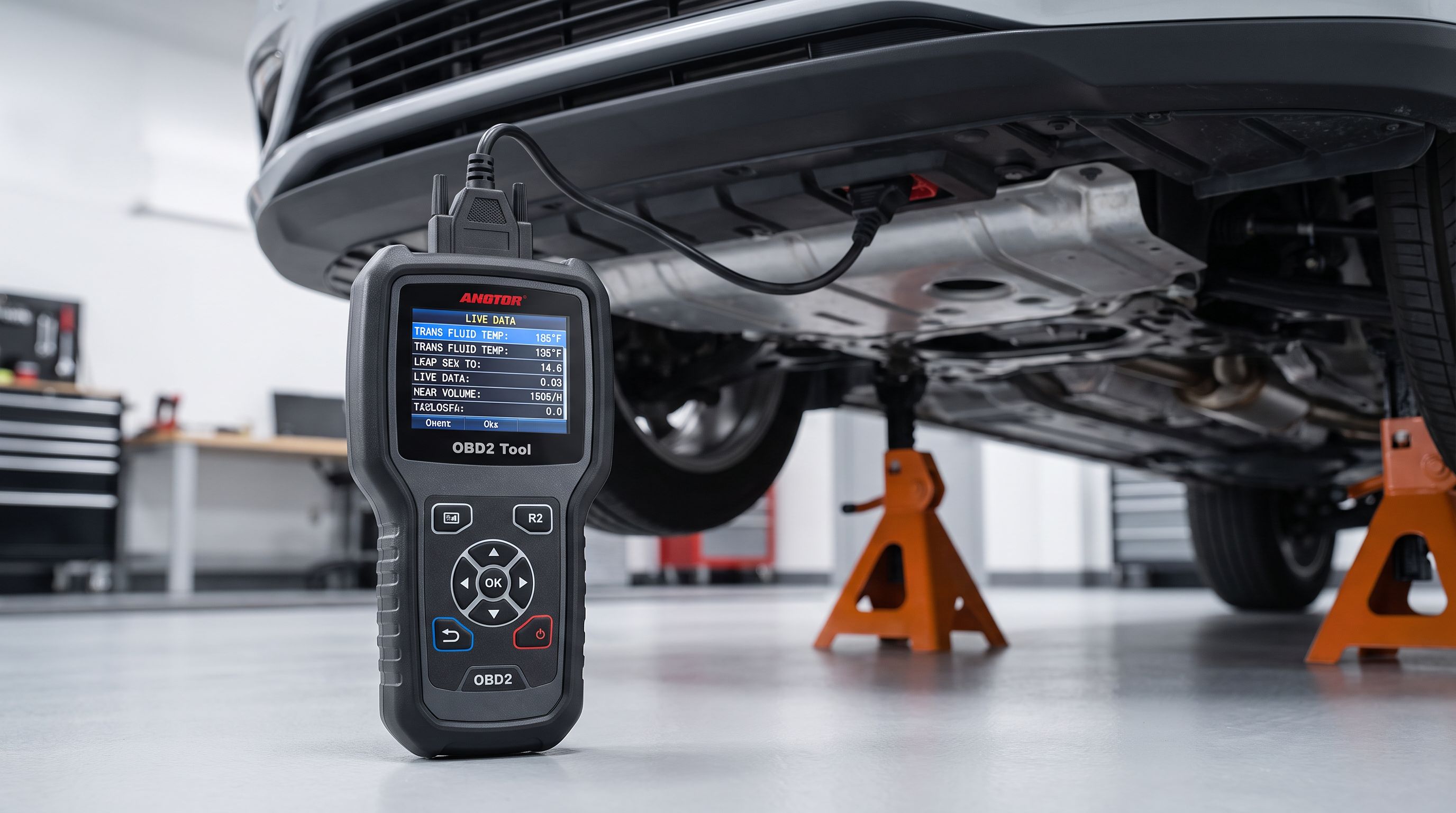
Scan Tools That Read Transmission Fluid Temp in 2026
Most modern automatics have no dipstick. We compare scan tools by whether they read live transmission fluid temperature PIDs for your make in 2026.
Car Battery Load Tester 2026: AGM and Mild-Hybrid Traps
A car battery load tester has to match your chemistry. Compare conductance analyzers for AGM, EFB, lithium and 48V mild-hybrid systems in 2026.