Fuel Injector Cleaning Kit 2026: Which Port Do You Have?
Port, direct or dual injection? Our 2026 fuel injector cleaning kit guide matches chemistry and hardware to your engine family, with real fitment cues.
Reader-supported: we may earn a commission from links on this page, at no extra cost to you. It never affects our picks. Learn more.
The short version
- Best overall in-tank cleaner (works on PFI, safe for GDI): Red Line SI-1 Complete Fuel System Cleaner
- Best for direct-injection deposits: Chevron Techron Concentrate Plus
- Best European / high-PEA alternative: Liqui Moly Jectron Fuel Injection Cleaner
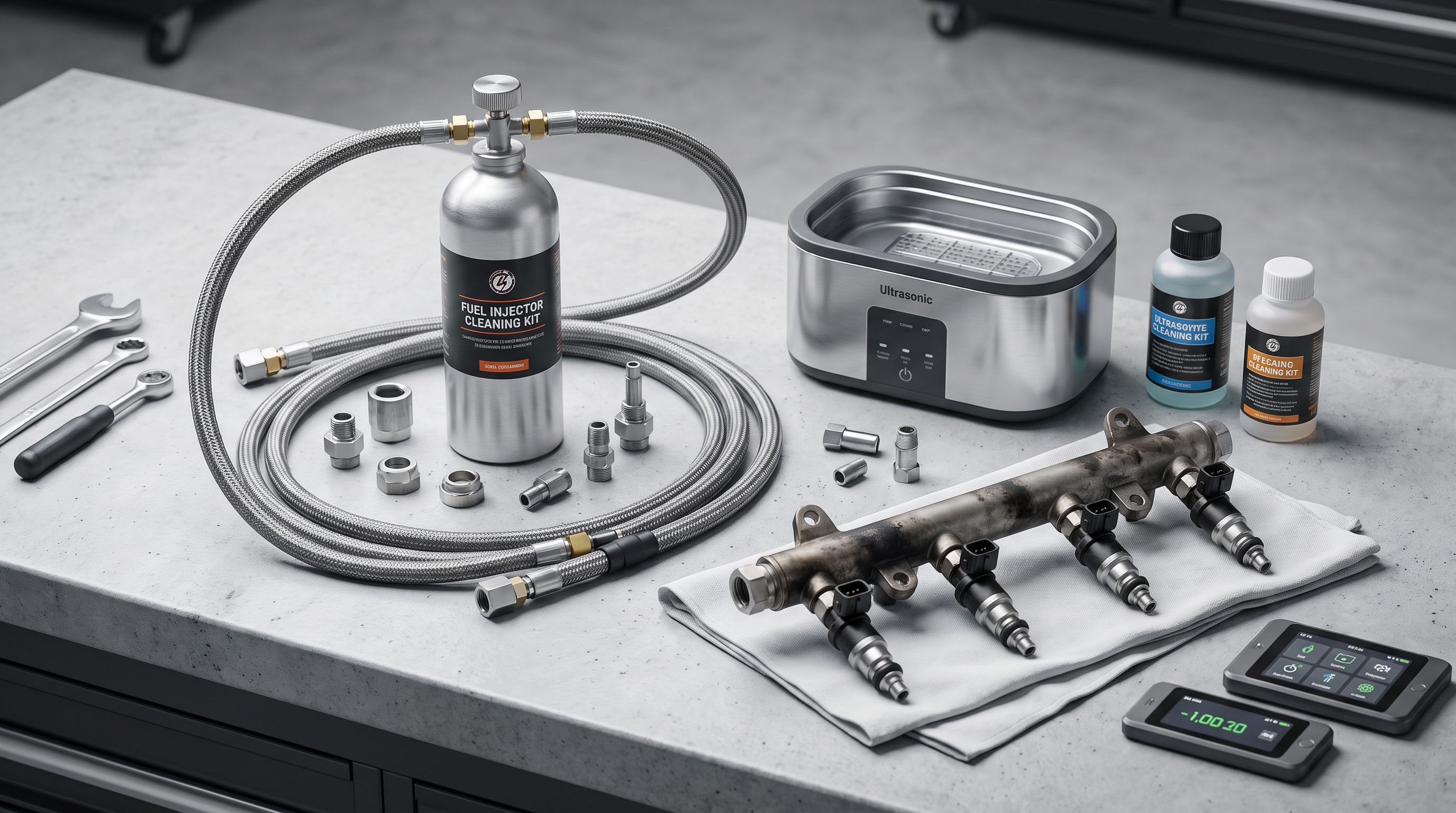
- Best pressurized induction/injector cleaning hardware: OTC 7448A Fuel Injection Cleaner Canister
- Best bench cleaning + testing kit for removed injectors: THIKPO Fuel Injector Tester and Cleaner Kit
 Best for direct-injection deposits · Chevron Techron Concentrate Plus — Check price on Amazon →
 Best overall in-tank cleaner · Red Line SI-1 Complete Fuel System Cleaner — Check price on Amazon →
"Fuel injector cleaning kit" means three completely different things depending on what's under your hood — and buying the wrong one is how people end up disappointed. A bottle poured into the tank cleans injector tips on a port-injected engine. On a direct-injection engine, that same bottle never touches the intake valves where the actual problem lives. And if your injectors are already clogged badly enough to cause a misfire, no bottle of anything is going to fix it — you need pressurized hardware or a bench tester.
So before you buy, answer one question: where do your injectors spray?
Port, direct, or both: identify your system first
Port fuel injection (PFI / MPFI)
Injectors sit in the intake manifold runners and spray onto the back of the intake valve. Fuel washes over the valve on every intake stroke, which is why port engines rarely build intake-valve carbon. Deposits here form on the injector pintle/nozzle tip, and they form from the fuel itself.
Good news: this is the one system where an in-tank detergent genuinely does the job. The cleaner flows through the injector and dissolves what's stuck to it.
Typical fitment cues: most naturally aspirated engines built before roughly 2008; Toyota 2AZ-FE and 1ZZ-FE, Honda K24 and R18, GM 3800 and LS-series (LS1–LS3), Ford Modular 4.6/5.4, most Subaru EJ engines, Chrysler 3.6 Pentastar (early non-GDI variants).
Gasoline direct injection (GDI / TSI / SIDI / SkyActiv-G / EcoBoost)
Injectors are threaded into the combustion chamber and spray at very high pressure — often 1,500–3,000 psi on the high side. Fuel never touches the back of the intake valve, so oil vapor from the PCV system bakes onto those valves and builds hard carbon. Meanwhile, the injector tips sit in the combustion chamber and cook.
The important part: an in-tank cleaner can reach the injector tip and the combustion chamber. It cannot reach the intake valves. Anyone promising otherwise is selling you something.
Typical fitment cues: VW/Audi EA888 and EA211 (TSI), BMW N54/N55/B58, Ford EcoBoost 1.5/2.0/2.3/3.5, GM Ecotec LTG/LT1/LT4, Hyundai/Kia Theta II GDI and Gamma GDI, Mazda SkyActiv-G, Subaru FA20/FA24 DIT.
Dual injection (GDI + PFI)
Some manufacturers added port injectors back in specifically to wash the intake valves. If you have this, you have the best of both worlds — and in-tank cleaners work on both halves of the system.
Typical fitment cues: Toyota D-4S (2GR-FKS, 2UR, the 86/BRZ FA20), Ford 5.0 Coyote (2018+), Audi 3.0T supercharged, some Lexus V6/V8s.
How to confirm: pull your VIN into a parts catalog and look at how many injectors the engine takes. Eight injectors on a V6? You have dual injection. Or simply search your engine code plus "D-4S" or "dual injection." Don't trust generic "fits most vehicles" claims on a listing page — check the engine code stamped on your block or listed on the underhood emissions label.
Comparison table
| Product | Type | Best for | Reaches intake valves? | Needs tools? |
|---|---|---|---|---|
| Red Line SI-1 | In-tank, high-PEA | PFI injector tips, whole fuel system | No | No |
| Chevron Techron Concentrate Plus | In-tank, PEA (Techron) | GDI injector tips + combustion chamber | No | No |
| Liqui Moly Jectron | In-tank, PEA | European PFI/GDI, pre-service prep | No | No |
| OTC 7448A Canister | Pressurized hardware | On-car injector rail flush, induction service | Partially (induction side) | Yes — adapters, pressure source |
| THIKPO Injector Tester & Cleaner | Bench ultrasonic + pulse tester | Removed injectors, diagnosing bad units | N/A | Yes — injector removal |
The picks
Red Line SI-1 — best overall in-tank cleaner
Prices last checked October 16, 2026. Amazon prices change frequently, so treat these as a guide and check the live price before you buy.
Red Line SI-1 Complete Fuel System Cleaner
One of the highest PEA concentrations available over the counter — the strongest no-tools option for PFI engines.
SI-1 is the one most enthusiasts land on because it carries one of the highest polyetheramine (PEA) concentrations you can buy over the counter, and PEA is the chemistry that actually dissolves hard, baked-on deposits rather than just preventing new ones. On a port-injected engine with a slightly rough idle or a lazy cold start, a full bottle in a near-empty tank followed by a highway run is the single most effective no-tools fix available.
What it gives up: it's not a miracle on direct injection. It cleans the injector tip and the chamber, but your intake valves stay carboned. It's also one of the pricier bottles per treatment, and it's a treatment product — not something you want to dose every tank.
Chevron Techron Concentrate Plus — best for direct-injection deposits
Chevron Techron Concentrate Plus
Proven PEA-family detergent that targets GDI injector tips and combustion chamber carbon; widely available.
Techron is Chevron's proprietary PEA-family detergent, and it's the one that keeps showing up in independent comparisons for direct-injection engines specifically. Its strength is combustion-chamber and injector-tip deposit removal, which is exactly where GDI engines suffer — coked nozzles that spray a dribble instead of a cone, causing lean misfires and that characteristic GDI cold-start clatter.
It's widely available, which matters when you want to run a maintenance dose every few oil changes rather than hunt down a specialty bottle. What it gives up: again, no intake-valve coverage, and the detergent load is more "strong maintenance" than "aggressive restoration." If your injectors are genuinely clogged, this is a supporting act, not the cure.
Liqui Moly Jectron — best European / high-PEA alternative

Liqui Moly Jectron Fuel Injection Cleaner
The VAG and BMW community favorite, and a sensible pre-service step before intake-valve work.
Jectron is the go-to in the VAG, BMW and Mercedes communities, partly because Liqui Moly products are specified alongside European service schedules and partly because the formulation is well-matched to the higher-detergent fuels and tighter injector tolerances common on those platforms. One bottle treats a full tank, and it's a sensible pre-service step before an intake-valve walnut blast — clean the chemically reachable parts first, then handle the mechanical part.
What it gives up: it's not dramatically different from the other two in chemistry class. If you drive a Camry, you're not missing anything by using Techron. Its edge is brand-matched confidence for European owners, not a magic ingredient.
OTC 7448A Canister — best pressurized cleaning hardware

OTC 7448A Fuel Injection Cleaner Canister
Stainless canister that feeds neat cleaner to the fuel rail — removes deposits a tank additive never reaches.
This is a real fuel injector cleaning kit in the traditional sense: a heavy-duty stainless steel canister you fill with cleaning solution, pressurize, and connect directly to the fuel rail's Schrader port while the fuel pump is bypassed. The engine runs on neat cleaner for 15–20 minutes. Because concentration is far higher than anything diluted in a 15-gallon tank, it removes deposits a bottle never will — and with the right adapter, the same canister doubles as an induction-cleaning delivery tool.
What it gives up: it demands competence. You're disabling a fuel pump, handling flammable solvent under pressure, and you need the correct rail adapter for your vehicle. Verify your engine has an accessible Schrader test port before buying — many late-model returnless GDI systems don't, and the technique differs.
THIKPO Injector Tester & Cleaner Kit — best bench kit for removed injectors
When an injector is dead rather than dirty, chemistry is irrelevant. This kit gives you an ultrasonic-style cleaning chamber plus a pulse driver with multiple duty-cycle modes and dual channels, so you can clean two injectors at a time and watch their spray pattern and flow in a graduated tube. That's how you separate "dirty and recoverable" from "replace it." For anyone running an older PFI engine with high-mileage injectors, it pays for itself versus a set of new units.
What it gives up: you have to pull the injectors, which on a direct-injection engine can mean seized units, special pullers and new sealing rings every time. Realistically this is a port-injection and small-engine tool. Build quality is budget-tier — treat it as a diagnostic aid, not shop equipment.
How to choose
Match the chemistry to the deposit location
PEA (polyetheramine) is the active ingredient that removes existing hard carbon. PIBA and other cheaper detergents mostly prevent new deposits. If a label won't tell you what's in it, assume it's the cheap stuff. For a port-injected engine with a drivability complaint, go high-PEA. For routine maintenance every 5,000–10,000 miles on any engine, a standard PEA dose is enough.
Decide whether you need chemistry or hardware
A bottle fixes gradual, mild deposit buildup. It will not fix a stuck injector, a failed coil, a vacuum leak, or carbon on GDI intake valves. If you have a stored misfire code on a specific cylinder, scan first and diagnose — a cleaner bottle is not a diagnostic step. Hardware (canister flush or bench cleaning) is for confirmed injector restriction.
Check Schrader-port and adapter fitment before buying hardware
Pressurized canister kits connect at the fuel rail test port. Confirm three things for your year/make/model: that a Schrader valve exists on the rail, which adapter fitting it takes, and how your fuel pump is disabled (relay, fuse, or software). Many 2015-and-newer direct-injection vehicles require a different procedure entirely. Ten minutes in a service manual saves a wasted purchase.
Be honest about GDI intake valves
If you own a TSI, EcoBoost, Theta GDI or SkyActiv-G with over 60,000 miles and you're chasing a rough cold idle and reduced power, the likely culprit is intake-valve carbon. The real fixes are walnut blasting or chemical soak with the manifold off. Buy the bottle for the injector tips, but budget for the valve service separately — and be skeptical of any product claiming to clean GDI intake valves from the fuel tank.
Consider a catch can as the actual prevention
For direct-injection owners, an oil catch can intercepts the PCV oil vapor that creates valve carbon in the first place. It's the only genuinely preventive measure. Fitment is strictly vehicle-specific — buy a kit made for your exact engine code, not a universal can with generic hose.
FAQ
How often should I use a fuel injector cleaner? A maintenance dose every 5,000–10,000 miles, or roughly every other oil change, is plenty for most drivers. Restoration-strength products like Red Line SI-1 are intended as occasional treatments, not every-tank additives.
Should I add it to a full or empty tank? Nearly empty, then fill up. That gives the highest detergent concentration while the fuel is still well mixed. Follow it with 30+ minutes of steady highway driving so the system stays hot and the cleaner stays in contact with deposits.
Will a fuel injector cleaner fix a P0301 misfire code? Sometimes, if the cause is genuinely a restricted injector. Far more often a single-cylinder misfire is a coil, plug, or injector electrical failure. Scan, swap the coil and plug to another cylinder, and see if the code follows before assuming it's deposits.
Does fuel injector cleaner work on diesel engines? Diesel systems need diesel-specific products — the chemistry, cetane requirements and lubricity additives are different. Don't use a gasoline injector cleaner in a diesel.
Can I clean direct injection injectors without removing them? A pressurized canister flush at the rail can help, but high-pressure GDI injectors sit in the combustion chamber and often need removal plus ultrasonic service for a real clean. Confirm your rail has a usable test port first; many GDI systems don't.
Are universal injector cleaning kits actually universal? No. Canister kits need the correct rail adapter, and bench kits need injector-specific connectors and seal kits. Check your engine code — stamped on the block or printed on the underhood emissions label — against the kit's listed applications before ordering.
Our picks
THIKPO Fuel Injector Tester and Cleaner Kit
Dual-channel pulse tester plus cleaning chamber so you can see spray pattern and flow before replacing injectors.
Get the best car care deals in your inbox
Join the GarageProof newsletter for hand-picked car care deals and new buying guides. No spam, unsubscribe anytime.
Related reads
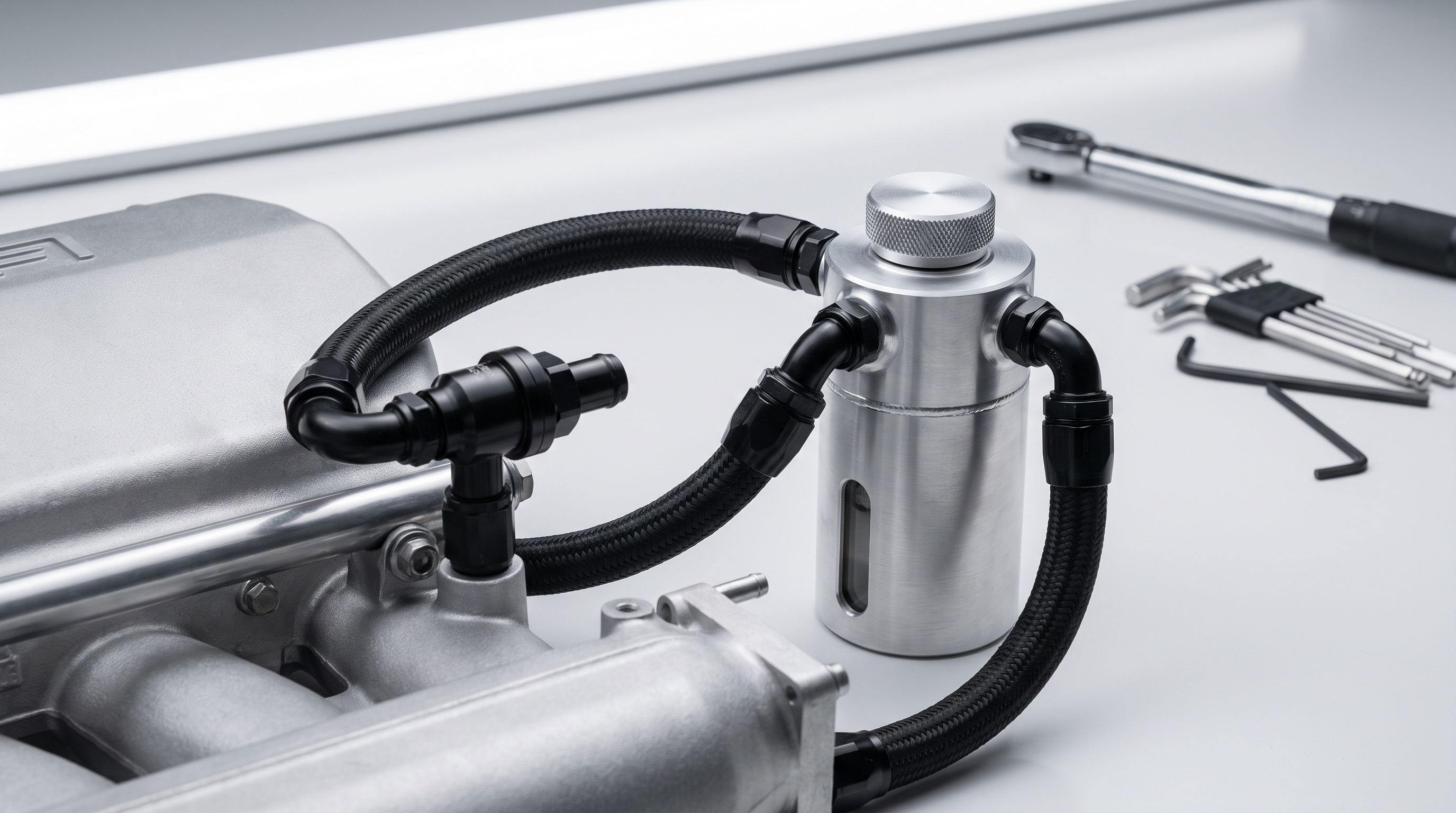
Oil Catch Can Buying Guide 2026: Match the Port to Your PCV
An oil catch can only works if it matches your PCV routing and hose size. Here's how to identify your setup in 2026, plus four separators worth buying.

ECU Coding Scan Tool in 2026: Do You Actually Need One?
ECU coding scan tool vs mid-tier bidirectional in 2026: which tier you actually need, what coding really unlocks, and 5 tools ranked by module coverage.
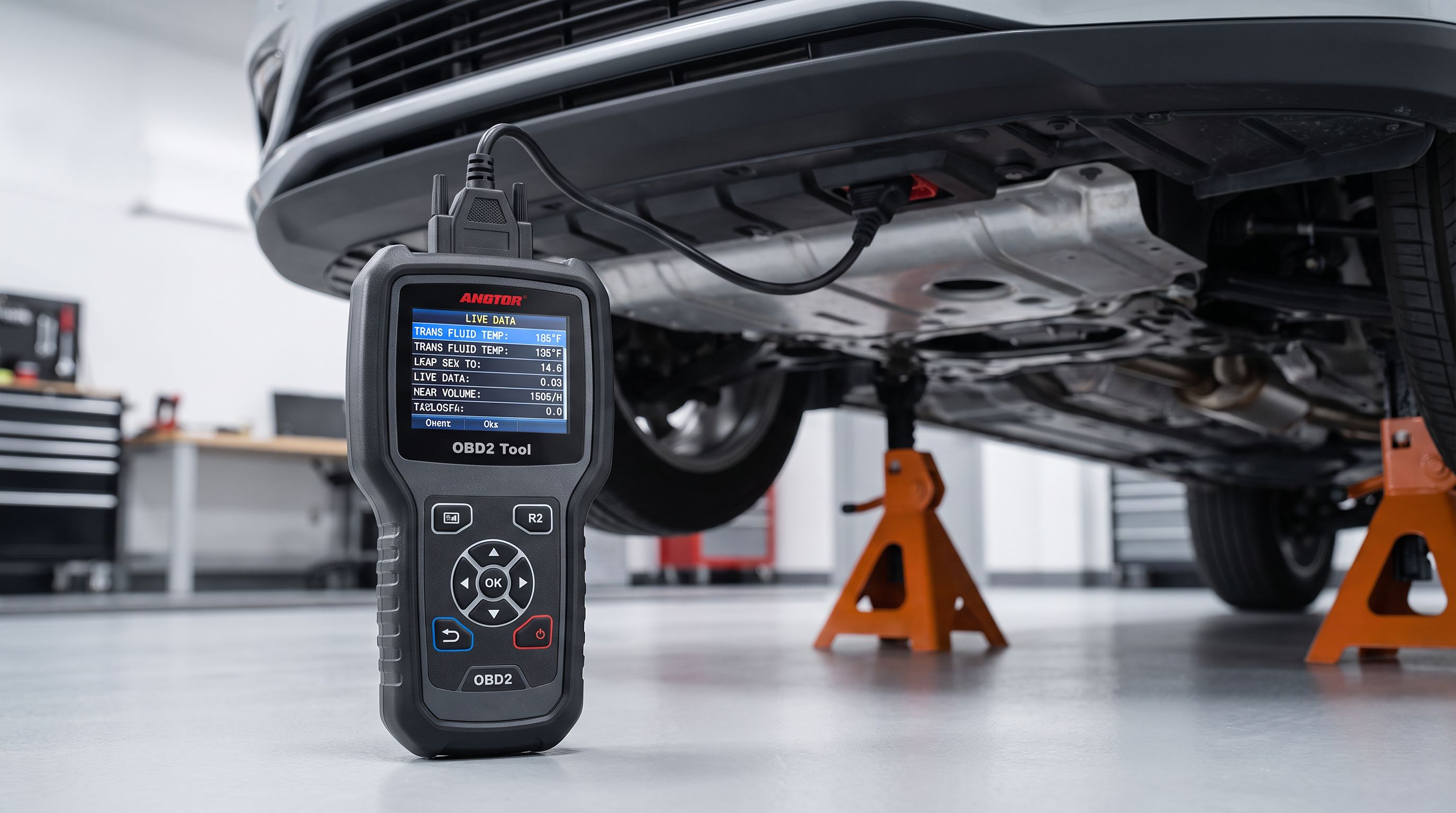
Scan Tools That Read Transmission Fluid Temp in 2026
Most modern automatics have no dipstick. We compare scan tools by whether they read live transmission fluid temperature PIDs for your make in 2026.