EVAP Smoke Machine Leak Tester 2026: Pressure & Port Fit
How to pick an EVAP smoke machine leak tester in 2026: safe output pressure, adapter cone sizing, gas cap vs. service port fit, and four picks for DIY garages.
Reader-supported: we may earn a commission from links on this page, at no extra cost to you. It never affects our picks. Learn more.
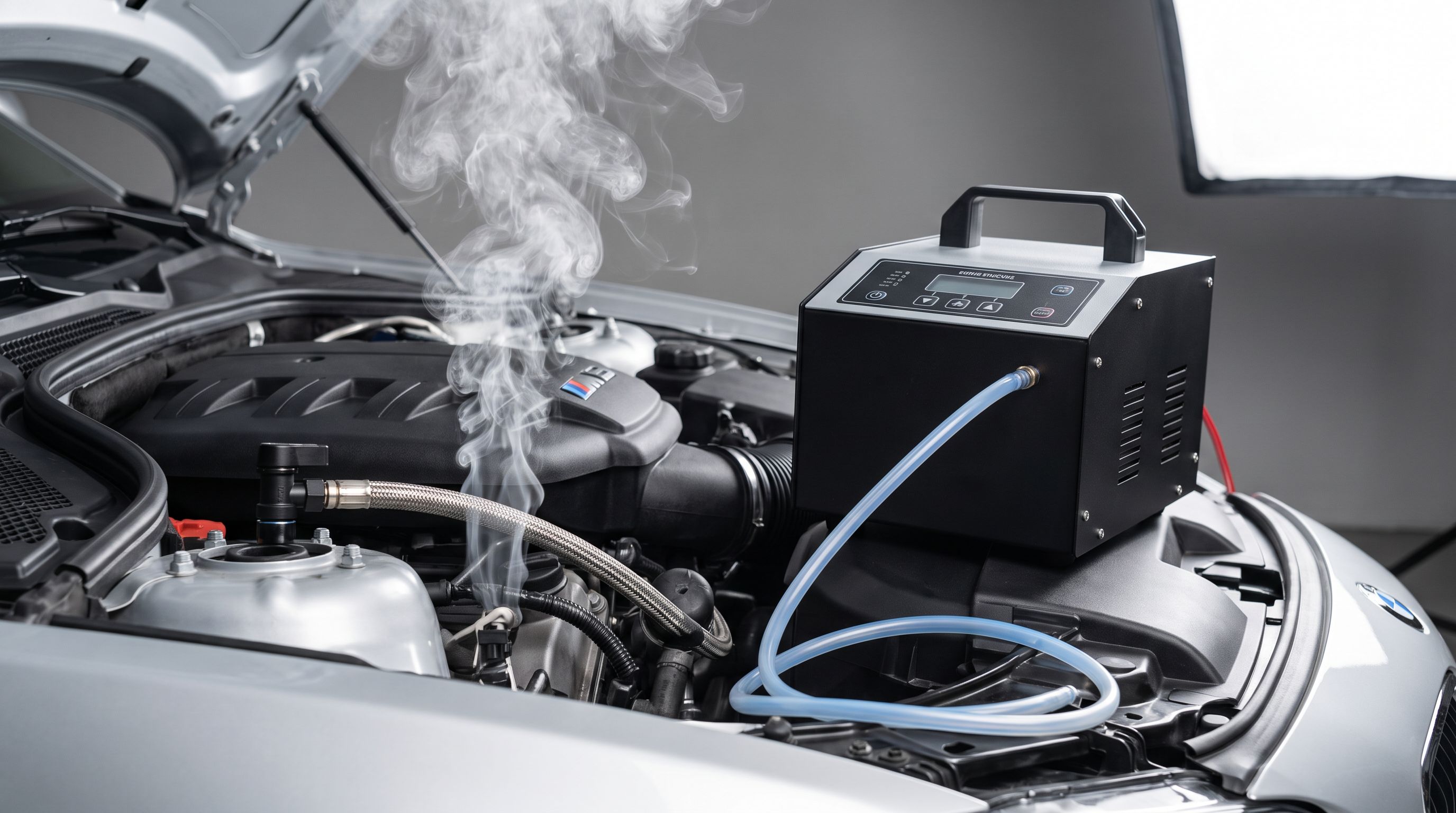
A P0442, P0455 or P0456 code tells you the evaporative emissions system is leaking. It does not tell you where. That's the entire reason smoke machines exist: pressurize the sealed fuel-vapor system with a dense, visible, low-pressure vapor and watch where it escapes — a cracked purge line, a brittle filler neck hose, a rodent-chewed vent tube, a failed gas cap seal.
The catch is that EVAP is a fragile, low-pressure system. Buy the wrong machine, hook it to the wrong port, or crank the regulator, and you can pop a plastic vapor line or distort a charcoal canister. This guide focuses on the two things that actually decide whether a machine works on your car: output pressure control and port/adapter fit.
GarageProof researches and compares tools using manufacturer specifications, independent reviews and verified owner feedback. We don't physically test units — what follows is a ranked comparison, not a lab report.
The short version
- Best overall: AutoLine Pro HyperSmoke Automotive Smoke Machine
- Best for small-leak sensitivity: ANCEL S300 Smoke Leak Detector
- Best feature set for the money: AUTOOL SDT-106
- Best compact 12V option: FOXWELL SD203
- Premium pick: Redline Detection 95-0003 Smoke Pro Total-Tech
 Premium pick · Redline Detection 95-0003 Smoke Pro Total-Tech — Check price on Amazon →
 Best for small-leak sensitivity · ANCEL S300 Smoke Leak Detector — Check price on Amazon →
 Best overall · AutoLine Pro HyperSmoke Automotive Smoke Machine — Check price on Amazon →
Why EVAP pressure is the number one spec
Most engine vacuum, intake and turbo-pipe leak testing is forgiving. EVAP is not. The system is designed to hold fuel vapor at a fraction of a PSI, and factory leak-detection routines operate in inches of water, not pounds per square inch.
The practical rule nearly every service manual converges on: keep EVAP test pressure at or below roughly 0.5 PSI (about 14 inches of water). Many OEM procedures call for even less. Good consumer machines either regulate down to that range or cap their maximum output there by design.
Things to look for:
- An adjustable regulator with a visible gauge. A machine that just says "low pressure" with no gauge gives you nothing to verify. The ANCEL S300, AUTOOL SDT-106 and AutoLine Pro HyperSmoke all expose a gauge or flow indicator you can watch.
- A flow meter. This is the single most useful feature for EVAP work. Smoke is how you find the leak; flow is how you confirm there is one. If the float or ball sits still with the system sealed, you're tight. If it keeps climbing, something's open. This is how you detect the small 0.020-inch class leaks that barely smoke at all.
- A pressure relief or built-in cap. Machines with no ceiling rely entirely on you not overdoing it. Prefer units that physically cannot exceed a safe EVAP pressure, or that include a relief valve.
- Separate smoke and air modes. Air-only mode lets you do a flow/decay check without filling the car with vapor, then switch to smoke to pinpoint. The AUTOOL SDT-106 and the Redline unit both work this way.
One more note: shop air supply. Some machines are shop-air driven (needs a compressor), some are self-contained on 12V, and some can do both. A 12V unit like the FOXWELL SD203 is genuinely appealing if your garage has no compressor — but shop-air machines generally produce denser, more sustained smoke.
Adapter cones and the port your car actually has
This is where most first-time buyers get burned. The machine works fine; they just can't connect it.
Where you introduce smoke
There are three realistic entry points on a modern vehicle:
- The EVAP service port. Many GM, Ford and Chrysler vehicles from the late 1990s through the 2010s have a green-capped Schrader-style service port on an EVAP line, usually near the engine bay or along the frame rail. This is the cleanest connection — you need the matching service port adapter, which not every kit includes.
- The filler neck / gas cap route. If there's no service port, you remove the fuel cap and seal the filler neck with a tapered adapter cone, then introduce smoke there while the vent valve is commanded closed (or the vent line is clamped). Many kits ship a dedicated gas cap EVAP adapter for this — the AutoLine Pro HyperSmoke is explicitly sold with one.
- A disconnected line. Pop the purge line at the canister or intake and smoke into it using a stepped cone or rubber plug set. Crude, but universal.
Cone sizing, honestly
Adapter cones are usually a rubber or silicone stepped tapered plug. The common range for filler necks and intake ducts is roughly 1 to 3 inches at the wide end, tapering to under an inch. Trucks with wide filler necks and some European diesels can exceed that, which is why the larger inflatable or oversized cone kits exist as separate accessories.
Before buying, do this: open your fuel door, remove the cap, and measure the inside diameter of the filler neck. Then look at the engine bay for a green or black service port cap on a small plastic EVAP line. Those two observations tell you exactly which adapter you need, and they take two minutes.
Fitment is vehicle-specific — check it
Smoke machines themselves are universal; adapters are not. Service port couplers, filler neck cones and tank-vent plugs vary by year, make and model. Confirm against the listing's included-accessories list and, ideally, your vehicle's EVAP service procedure before ordering. If you own a hybrid or a 2020s turbo gasoline vehicle with a sealed, pressurized fuel tank and a fuel tank isolation valve, read the factory procedure first — those systems often require a scan tool to command valves open or closed before smoke will go anywhere useful.
Comparison table
| Model | Power / supply | Pressure control | Flow meter | EVAP adapters included | Best for |
|---|---|---|---|---|---|
| AutoLine Pro HyperSmoke | 12V, self-contained | Adjustable, EVAP-safe range | Gauge | Cone + gas cap EVAP adapter | All-round DIY EVAP and vacuum work |
| ANCEL S300 | 12V | Adjustable with gauge | Yes | Cone and hose adapters | Confirming small leaks by flow, not just smoke |
| AUTOOL SDT-106 | 12V (shop air optional on some configs) | Regulator + gauge | Yes | Broad adapter/plug kit | Enthusiasts wanting dual smoke/air modes |
| FOXWELL SD203 | 12V, compact | Basic, low output by design | No | Basic cone/hose set | Occasional home use, no compressor |
| Redline 95-0003 Smoke Pro Total-Tech | Shop air + 12V | Dedicated low-pressure EVAP mode | Yes | Professional adapter range | Shops and serious home mechanics |
Features vary by production batch and seller bundle. Always confirm included adapters on the listing before you buy.
The picks
AutoLine Pro HyperSmoke — best overall
Prices last checked November 4, 2026. Amazon prices change frequently, so treat these as a guide and check the live price before you buy.
AutoLine Pro HyperSmoke Automotive Smoke Machine
Adjustable low pressure, solid build, and the cone plus gas cap EVAP adapters most DIYers actually need.
This is the machine most DIYers should land on. It runs off 12V, so no compressor required, and it ships with both a tapered cone and a gas cap EVAP adapter — covering the two connection routes most home mechanics will use. The adjustable pressure with a readable gauge is what earns it the top spot: you can dial output down into the EVAP-safe range rather than hoping the factory setting is appropriate. Owner feedback consistently praises smoke density and build quality relative to generic units.
What it gives up: it's not a shop-grade machine, so sustained all-day use isn't its strength, and the smoke fluid reservoir needs regular topping. There's also no diagnostic intelligence here — you still need to interpret what you see.
ANCEL S300 — best for small-leak sensitivity
ANCEL S300 Smoke Leak Detector
Built-in flow meter and pressure gauge make it easier to confirm a 0.020-inch class leak, not just see smoke.
The S300's useful trick is combining a pressure gauge with a flow indicator. For the frustrating small-leak codes (P0456 and friends), smoke alone often isn't conclusive — a 0.020-inch leak may take several minutes to show visible vapor. A flow meter tells you immediately whether the sealed system is holding or bleeding, which turns a guessing game into a measurement. Build quality is reasonable for the segment and it's straightforward to operate.
Trade-offs: it's firmly a hobbyist-tier machine, the included adapter set is adequate rather than comprehensive, and you may want to buy a larger filler-neck cone separately if you work on trucks.
AUTOOL SDT-106 — best feature set for the money
AUTOOL SDT-106
Dual-mode smoke and air flow with a regulator and gauge, plus a generous adapter kit for varied port sizes.
AUTOOL has become the default "serious enthusiast" brand in this category, and the SDT-106 is the sensible pick in the range. Dual smoke and air modes mean you can run a pressure-decay check first, then switch to smoke only when you need to pinpoint. The regulator and gauge make it usable on EVAP without anxiety, and the adapter and plug kit is generally more generous than cheaper competitors — useful when you're sealing off intake ducts or turbo piping as well.
Compromises: the interface is less intuitive than simpler units, documentation quality varies, and the larger case takes more shelf space than a basic 12V box.
FOXWELL SD203 — best compact 12V option
FOXWELL SD203
Light, simple, battery-powered unit that runs off the car and stores easily in a home garage.
If you expect to use a smoke machine twice a year, this is a rational buy. It's compact, runs off the vehicle battery, needs no compressor, and produces enough vapor to find the common failures — split filler neck hoses, cracked purge lines, a leaking canister vent. It's the kind of tool that fits on a shelf and doesn't demand a workflow around it.
What you give up is real: no flow meter, limited pressure adjustability, and a smaller adapter set. For diagnosing a stubborn borderline small leak, you'll wish you had a gauge. For an obvious leak, it'll find it fine.
Redline Detection 95-0003 Smoke Pro Total-Tech — premium pick
Redline Detection 95-0003 Smoke Pro Total-Tech
Shop-grade machine built to OEM leak-detection standards, with low-pressure EVAP mode and high-flow capability.
Redline builds the leak detection equipment many OEM dealer networks specify, and the Total-Tech reflects that: a dedicated low-pressure EVAP mode alongside high-flow capability for larger systems like intake, exhaust and boost piping. It runs on shop air with 12V power, produces dense, sustained smoke, and the adapter ecosystem is professional-grade.
The obvious catch is cost and requirements — you need a compressor, and the price only makes sense if you're diagnosing vehicles regularly or run a side business. For a one-car household, it's more machine than the job needs.
Using it safely: the 60-second version
- Work in a ventilated space; smoke fluid vapor is an irritant.
- Never exceed EVAP-safe pressure. If in doubt, less is better — slow smoke still finds leaks.
- Command the vent valve closed (scan tool) or clamp the vent line so smoke stays in the system. Otherwise it all escapes out the canister and you'll see nothing.
- A UV-dye-compatible fluid plus a UV light helps on hard-to-see leaks behind shields and under the tank.
- Re-check the gas cap first. It's the single most common EVAP leak and costs nothing to test.
FAQ
What pressure should an EVAP smoke test run at? Keep it low — around 0.5 PSI (roughly 14 inches of water) or less is the widely cited ceiling for EVAP work. Higher pressures risk damaging plastic lines, seals and the charcoal canister. Always check your vehicle's service procedure, which may specify lower.
Do I need a scan tool as well as a smoke machine? Often, yes. Many vehicles need the canister vent valve commanded closed to seal the system; otherwise the smoke simply vents to atmosphere. A bidirectional scan tool makes this trivial. Alternatively, you can clamp the vent line — carefully, and only on hose, never on hard plastic.
Will any smoke machine fit my car's EVAP service port? No. Service port adapters are vehicle-specific, and plenty of newer vehicles have no service port at all. Check your engine bay for a small capped Schrader-style fitting on an EVAP line, and measure your filler neck's inner diameter as a backup. Confirm the included adapters against your year, make and model before ordering.
Can I use baby oil or mineral oil instead of smoke fluid? Many home users do run mineral or baby oil in simple heating-element machines, and it works. But purpose-made automotive smoke fluid is formulated for the operating temperature and is less likely to leave residue or damage sensors. If your machine's manufacturer specifies a fluid, use it — warranty and canister contamination are both real concerns.
Can the same machine find vacuum and exhaust leaks too? Yes, that's the main reason to own one. Intake, turbo piping, vacuum lines and exhaust manifold leaks all show up with smoke. Those systems tolerate more pressure than EVAP, which is why adjustable-output machines like the AUTOOL SDT-106 and Redline Total-Tech are more versatile than fixed low-output units.
Get the best car care deals in your inbox
Join the GarageProof newsletter for hand-picked car care deals and new buying guides. No spam, unsubscribe anytime.
Related reads
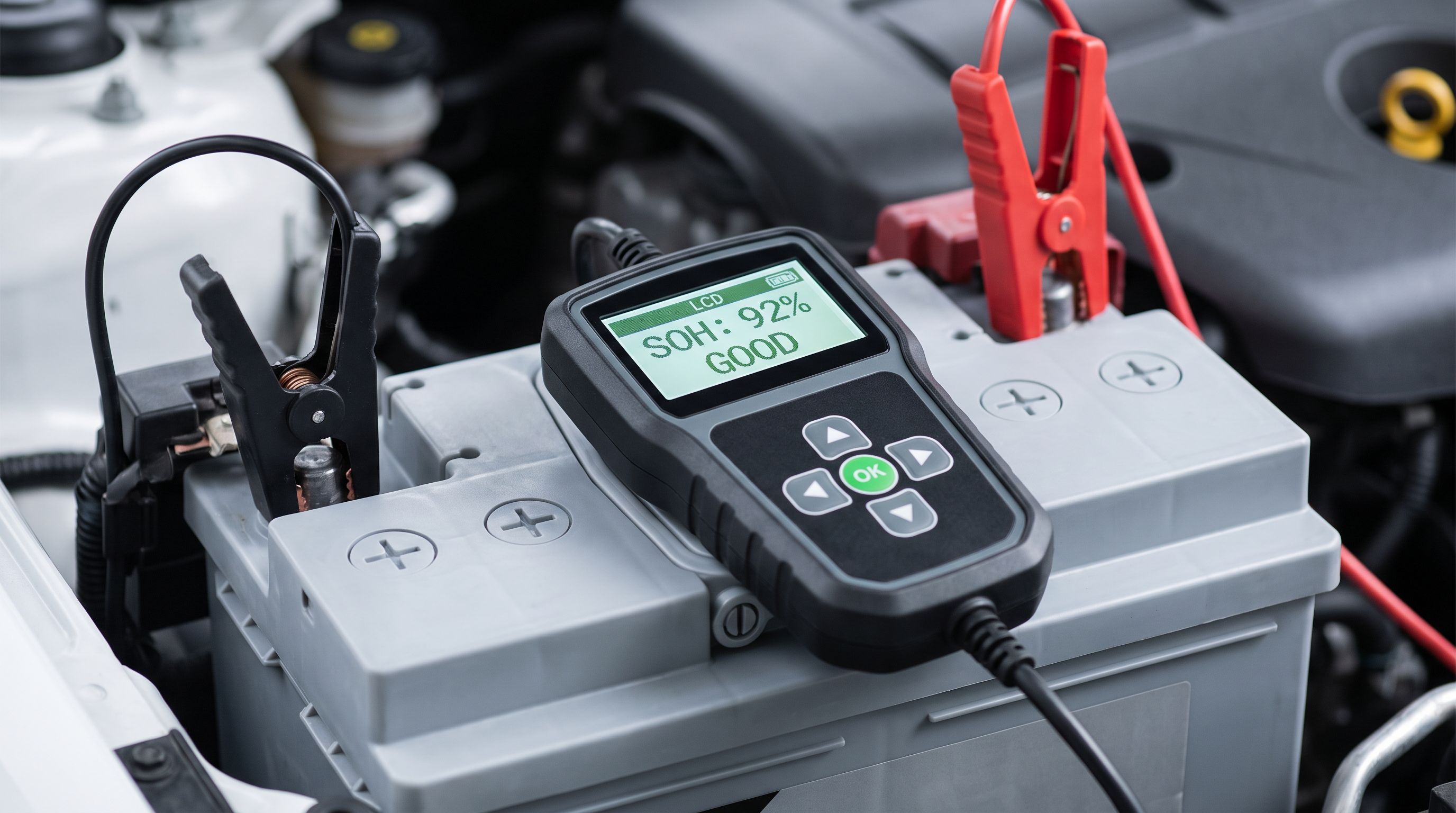
Car Battery Load Tester 2026: AGM and Mild-Hybrid Traps
A car battery load tester has to match your chemistry. Compare conductance analyzers for AGM, EFB, lithium and 48V mild-hybrid systems in 2026.
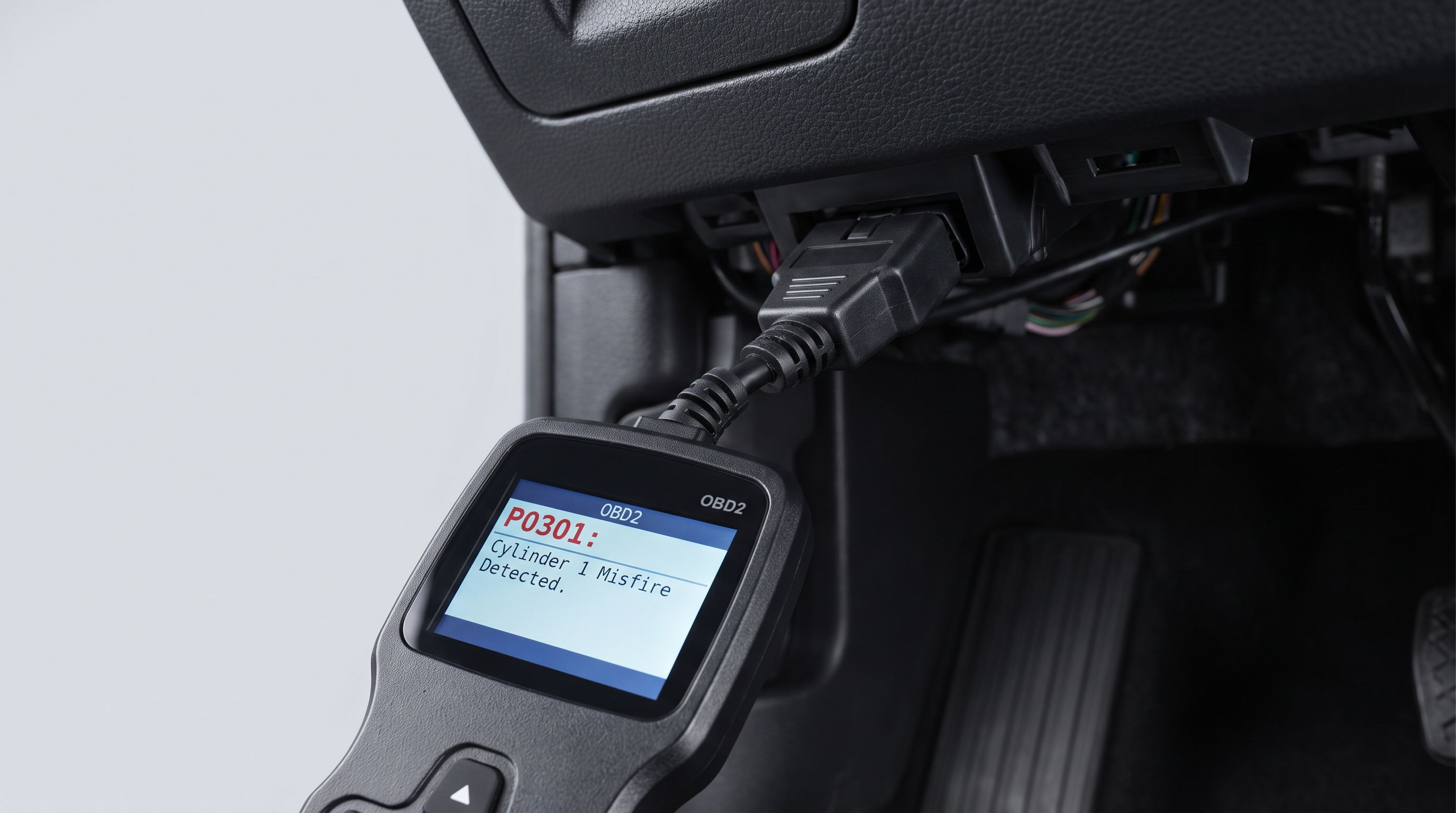
OBD2 Codes, Explained: Reading Them Without Guessing
What P0171, P0300 and P0420 actually tell you — and the live data that separates a real diagnosis from a parts-cannon guess. Plus when a scanner pays off.
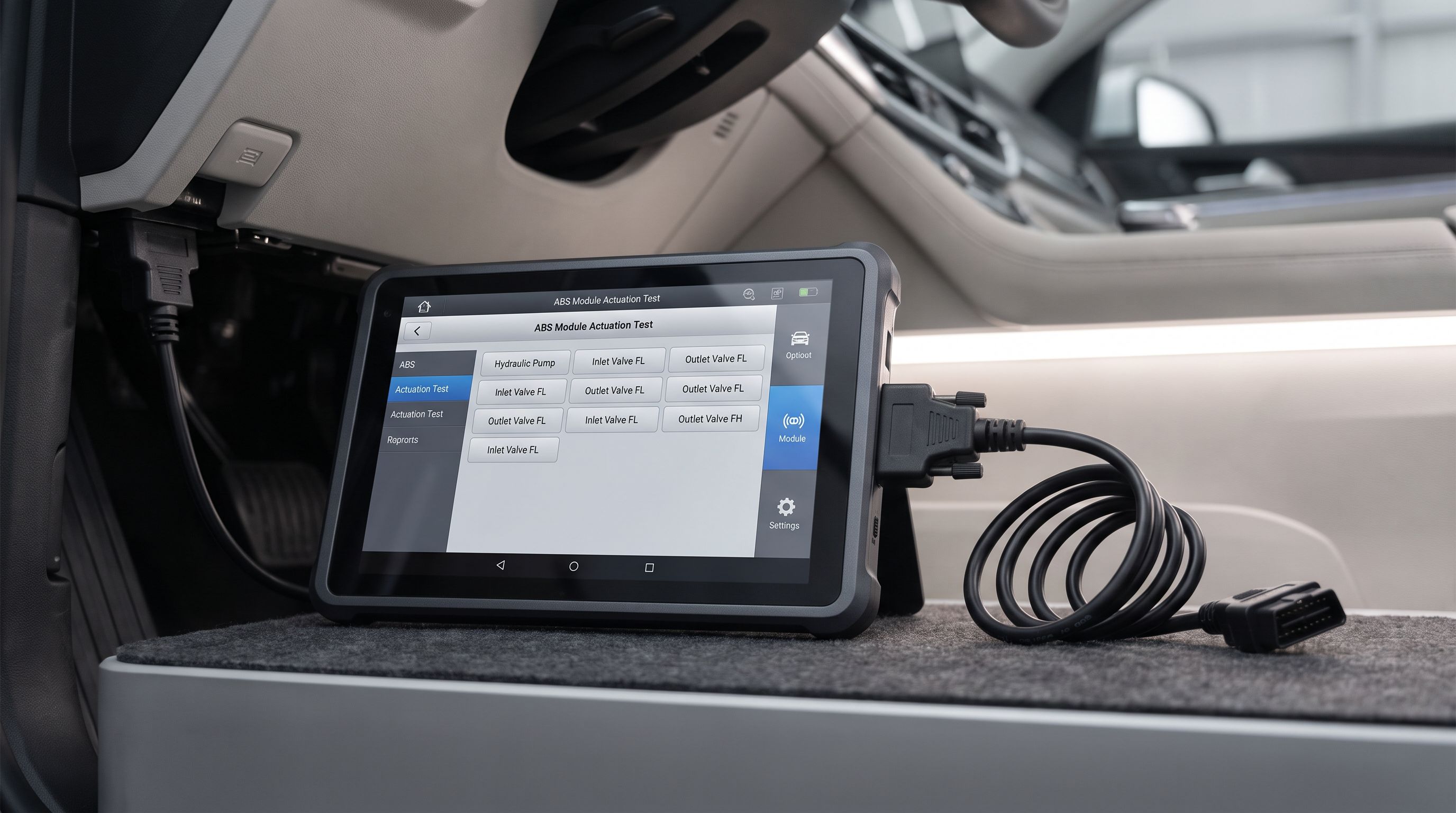
Bidirectional Scan Tools in 2026: 4 Picks That Actually Bleed ABS
Which bidirectional scan tool actually unlocks ABS bleeds, EPB retraction and DPF regens? We compare mid-tier 2026 scanners on actuations, resets and coverage.