EV Charging Cable Extension 2026: What's Actually Safe
Most EV charging cable extensions aren't code-compliant. Here's what NEC and automakers actually say, plus safer ways to add reach in 2026.
Reader-supported: we may earn a commission from links on this page, at no extra cost to you. It never affects our picks. Learn more.
If you've typed "ev charging cable extension" into a search bar, you've probably already discovered the awkward part: the products exist, they're sold by the thousands, and almost every automaker, charger manufacturer and electrical inspector tells you not to use them. That tension is worth understanding before you spend money, because the right answer for most people isn't an extension at all — it's a different charger, a different outlet location, or a different adapter.
Below is what the rules actually say, where extensions sit in the gray zone, and the hardware that solves a short-cable problem properly.
The short version
- Best J1772 extension if you must use one: Lectron J1772 Extension Cable 40A 20ft
- Best alternative to extending: Lectron Tesla to J1772 Adapter
- Best fix for short cable reach: Emporia Level 2 EV Charger (48A, 24 ft cable)
- Best long-cable home charger: Tesla Wall Connector (Gen 3)
- Best for Level 1 / 120V emergency reach: Camco PowerGrip 30 Amp RV Extension Cord 25 ft
 Best long-cable home charger · Tesla Wall Connector (Gen 3) — Check price on Amazon →
 Best alternative to extending · Lectron Tesla to J1772 Adapter — Check price on Amazon →
Why "most aren't legal" is mostly true
The phrase people repeat online — "EV extension cables are illegal" — is a simplification, but it comes from somewhere real.
SAE J1772 and the NACS spec assume one continuous cable
The J1772 standard (and Tesla's NACS connector, now published as SAE J3400) describes an EV Supply Equipment (EVSE) assembly: a control box, a cable of a defined maximum length, and a coupler. The pilot signal that negotiates current, the ground continuity check, and the cable's thermal behavior are all specified for that assembly as a whole. Insert a third-party extension and you've added two more connector interfaces, extra contact resistance and extra voltage drop into a circuit that was certified without them. Nothing in the standard contemplates that.
The National Electrical Code is blunt about it
NEC Article 625 governs electric vehicle charging. It limits EVSE cord length (generally 25 feet unless the equipment is part of a listed system designed for more) and it does not recognize field-added extensions to the output cable. Separately, NEC 400.8 prohibits using flexible cords as a substitute for fixed wiring. An inspector who sees an extension spliced into your charging run will flag it. Your insurer, if there's ever a fire, may take the same view.
Automakers say no in writing
Tesla, Ford, GM, Hyundai, Kia, Rivian and others explicitly advise against extension cords and extension cables in their owner's manuals for charging. Tesla famously does not sell one. That matters practically: if a charge port or onboard charger is damaged during a session on an extension, warranty conversations get difficult fast.
So why are they everywhere?
Because they're not actually prohibited to sell, and because they work most of the time. A well-built 40A extension with 6AWG conductors, proper contacts and real weather sealing is far safer than a hardware-store extension cord. The problem is "most of the time" — and that the failure mode is a melted connector or a fire, not an inconvenience.
The physics: amperage, gauge and voltage drop
This is the part that separates a defensible setup from a dangerous one.
Current is set by the charger, not the cable. Your EVSE advertises its maximum current over the pilot signal — say 40A — and the car draws up to that. The extension has no voice in that conversation. If the extension is undersized, nothing throttles. It just heats up.
Gauge has to match the current, over the whole run. For continuous EV charging, the circuit is sized at 125% of the load. A 40A charger lives on a 50A circuit and wants conductors rated accordingly. In practice that means 6AWG copper for 40–48A runs, 8AWG for 32A, 10AWG for 24A. An extension advertising "40A" on 10AWG wire is a red flag; check the printed gauge on the jacket, not the marketing copy.
Voltage drop compounds. A 25-foot EVSE cable plus a 20-foot extension is 45 feet of conductor beyond the wall, plus two extra contact pairs. Each connection adds resistance; resistance makes heat; heat degrades contacts; degraded contacts make more heat. That's the runaway loop that produces the melted-J1772-photo posts you see on r/evcharging.
Contacts are the real weak point. The pins in a J1772 or NACS coupler are rated for a limited number of mating cycles under load. Cheap extensions use thinner, softer contacts. If you're going to use one, leave it permanently connected to the EVSE and plug/unplug at the car end only.
What to buy instead (in priority order)
- A charger with a longer cable. Most 2026 Level 2 units ship with 23–25 foot cables. If your current unit has 18 feet, replacing it costs about what a quality extension costs and keeps everything listed and warrantied.
- Relocate the outlet or hardwire closer to the car. A licensed electrician adding a NEMA 14-50 or a junction box 10 feet further along the wall is the genuinely correct fix. Fixed wiring is cheap per foot; flexible cable is not.
- An adapter, not an extension. If your problem is connector type rather than distance — a Tesla Wall Connector and a J1772 car, or the reverse — an adapter solves it with one extra contact pair instead of two and a cable.
- Only then, an extension, used for a specific, supervised situation.
The picks
Lectron J1772 Extension Cable 40A 20ft — best J1772 extension if you must use one
Prices last checked October 25, 2026. Amazon prices change frequently, so treat these as a guide and check the live price before you buy.

Lectron J1772 Extension Cable 40A 20ft
Heavy 6AWG conductors, 40A rating and a weather-sealed shell — the least-bad way to add J1772 reach.
Lectron is one of the few EV accessory brands with a real support operation and a track record on adapters, which matters when you're deliberately operating outside manufacturer guidance. This extension uses heavy 6AWG conductors appropriate for its 40A rating, a weather-sealed shell and a TPU jacket that stays flexible in cold weather. Owner feedback is broadly positive on build quality and fit.
What it gives up: legitimacy. It doesn't make your setup NEC-compliant, and it still adds two contact interfaces. Treat it as a tool for occasional reach — a guest's car in the driveway, a second parking spot — not as permanent infrastructure. Check your charger's output current before buying; don't pair a 48A unit with a 40A cable.
Lectron Tesla to J1772 Adapter — best alternative to extending
Lectron Tesla to J1772 Adapter
Lets a Tesla Wall Connector or mobile charger feed a J1772 car instead of splicing in extra cable.
If your reach problem is really a compatibility problem, this is the cheaper, safer answer. It lets a Tesla Wall Connector or Tesla Mobile Connector charge a J1772-equipped EV, so households with a Tesla and, say, an Ioniq 5 can share one well-placed charger instead of running cable across a garage. It's compact, widely owned and holds up to repeated mating cycles better than most no-name units.
The limits are real: it's an adapter, not a cable, so it adds roughly an inch of reach. It also doesn't enable DC fast charging at Superchargers — that's a different, vehicle-specific adapter. Confirm your car's charge port type before ordering.
Emporia Level 2 EV Charger (48A, 24 ft cable) — best fix for short cable reach

Emporia Level 2 EV Charger (48A, 24 ft cable)
UL-listed 48A hardwired charger with a 24-foot cable — more reach than most extensions add.
Rather than extending a short cable, replace the charger. The Emporia Level 2 is UL-listed, supports up to 48A when hardwired, and ships with a 24-foot cable — more added reach than most extensions deliver, with none of the compliance problems. It includes energy monitoring and scheduling through the app, which is useful if you're on a time-of-use rate.
Trade-offs: 48A operation requires a 60A circuit and hardwiring, so if your panel is tight you'll be running it at a lower setting. The plug-in version uses a NEMA 14-50 and caps at 40A. The cable is also thick and stiff in deep cold compared with Tesla's.
Tesla Wall Connector (Gen 3) — best long-cable home charger
Tesla Wall Connector (Gen 3)
24-foot thin, flexible cable and NACS plug; pairs with an adapter for non-Tesla EVs.
Tesla's Wall Connector pairs a 24-foot cable with an unusually thin, flexible jacket — it coils and handles better than almost anything else at this length, which is exactly what you want when you're trying to reach a far-side charge port. It's UL-listed, supports up to 48A hardwired, does power sharing across multiple units, and uses the NACS connector that more 2026 non-Tesla models now ship with natively.
If your car still has J1772, you'll need the Lectron Tesla to J1772 Adapter alongside it. It's also hardwire-only and leans on the Tesla app ecosystem for configuration. Verify your vehicle's port type and your panel capacity before committing.
Camco PowerGrip 30 Amp RV Extension Cord 25 ft — best for Level 1 / 120V emergency reach

Camco PowerGrip 30 Amp RV Extension Cord 25 ft
Heavy 10AWG cord with grip handles for short, supervised 120V mobile-connector runs.
For 120V Level 1 charging from a mobile connector — campsite, borrowed outlet, temporary situation — a heavy RV cord is the sanest option. The Camco PowerGrip uses 10AWG conductors, molded ends and grip handles, and is built for continuous 30A duty, which is far beyond the 12–16A a Level 1 charger pulls. That margin is the entire point: it stays cool.
Caveats matter here. This is a 120V solution only; never use it for a 240V mobile connector unless the cord and plug configuration explicitly match. Uncoil it completely, keep connections dry and off the ground, and don't leave the setup unattended overnight.
Comparison
| Product | Role | Connector | Typical current | Added reach | Compliance status |
|---|---|---|---|---|---|
| Lectron J1772 Extension 40A 20ft | Extension cable | J1772 | Up to 40A | ~20 ft | Not NEC 625-recognized |
| Lectron Tesla to J1772 Adapter | Adapter | NACS → J1772 | AC, charger-limited | Negligible | Generally accepted |
| Emporia Level 2 (48A, 24 ft) | Replacement EVSE | J1772 | Up to 48A hardwired | ~24 ft total cable | UL-listed, compliant |
| Tesla Wall Connector Gen 3 | Replacement EVSE | NACS | Up to 48A hardwired | ~24 ft total cable | UL-listed, compliant |
| Camco PowerGrip 25 ft | 120V extension cord | NEMA 5-15/20 | 30A rated, 12–16A use | ~25 ft | Permitted for temporary use |
How to choose
Match gauge to the charger's actual output
Find your EVSE's maximum output current — it's on the label or in the app, not on the breaker. Then require conductors sized for it: 6AWG for 40–48A, 8AWG for 32A, 10AWG for 24A and below. If a listing claims 48A on anything thinner than 6AWG, walk away.
Count your contact interfaces
Every plug-unplug point is a heat source. An adapter adds one. An extension adds two. A longer-cabled charger adds zero. Fewer is always better, and it's the single clearest way to rank your options.
Check the weather rating honestly
Look for an explicit IP rating (IP55 or better) and a temperature range that covers your winter. Outdoor extensions sit on concrete, in puddles, under snow. A sealed shell with a gasket and strain relief is the minimum; connectors should never rest in standing water.
Confirm connector type for your exact vehicle
2026 is a transition year. Some models ship with native NACS ports, some with J1772, and adapters differ for AC versus DC. Check your specific year, make and model — and for leased or company vehicles, check whether the manual's charging guidance affects your warranty.
Decide whether the real fix is electrical work
If you need more than about 10 extra feet, or you need it permanently, get a quote for moving the circuit. Fixed wiring is the solution the code wants, it's usually cheaper than people assume, and it ends the problem instead of managing it.
FAQ
Are EV charging extension cables illegal to own? No. They're legal to buy and sell in the US. The issue is installation and use: NEC Article 625 doesn't recognize field-added extensions to EVSE output cable, so a permanent setup using one can fail inspection, and automakers advise against them in writing.
Can I just use a regular extension cord for Level 2 charging? No. A standard 240V extension cord is not rated for continuous EV load, lacks the ground-fault and thermal protections of a proper EVSE assembly, and is the most common cause of melted connectors. If you need 240V reach, change the charger or move the outlet.
Does an extension reduce my charging speed? Not directly — the car still draws whatever the charger advertises. But voltage drop across the extra length and contacts means slightly less power delivered and more heat generated. Some EVSEs with thermal sensors will throttle if the connector gets hot.
What about extending a Tesla Mobile Connector? Tesla doesn't sell or endorse an extension. For 120V emergency use, a heavy 10AWG RV cord like the Camco PowerGrip is the common workaround. For 240V, don't — use a properly installed outlet instead.
Is an adapter safer than an extension? Generally yes, because it adds one contact interface instead of two and no additional conductor length. A quality Tesla-to-J1772 adapter is a well-understood, widely used solution; a long extension is not.
Get the best car care deals in your inbox
Join the GarageProof newsletter for hand-picked car care deals and new buying guides. No spam, unsubscribe anytime.
Related reads
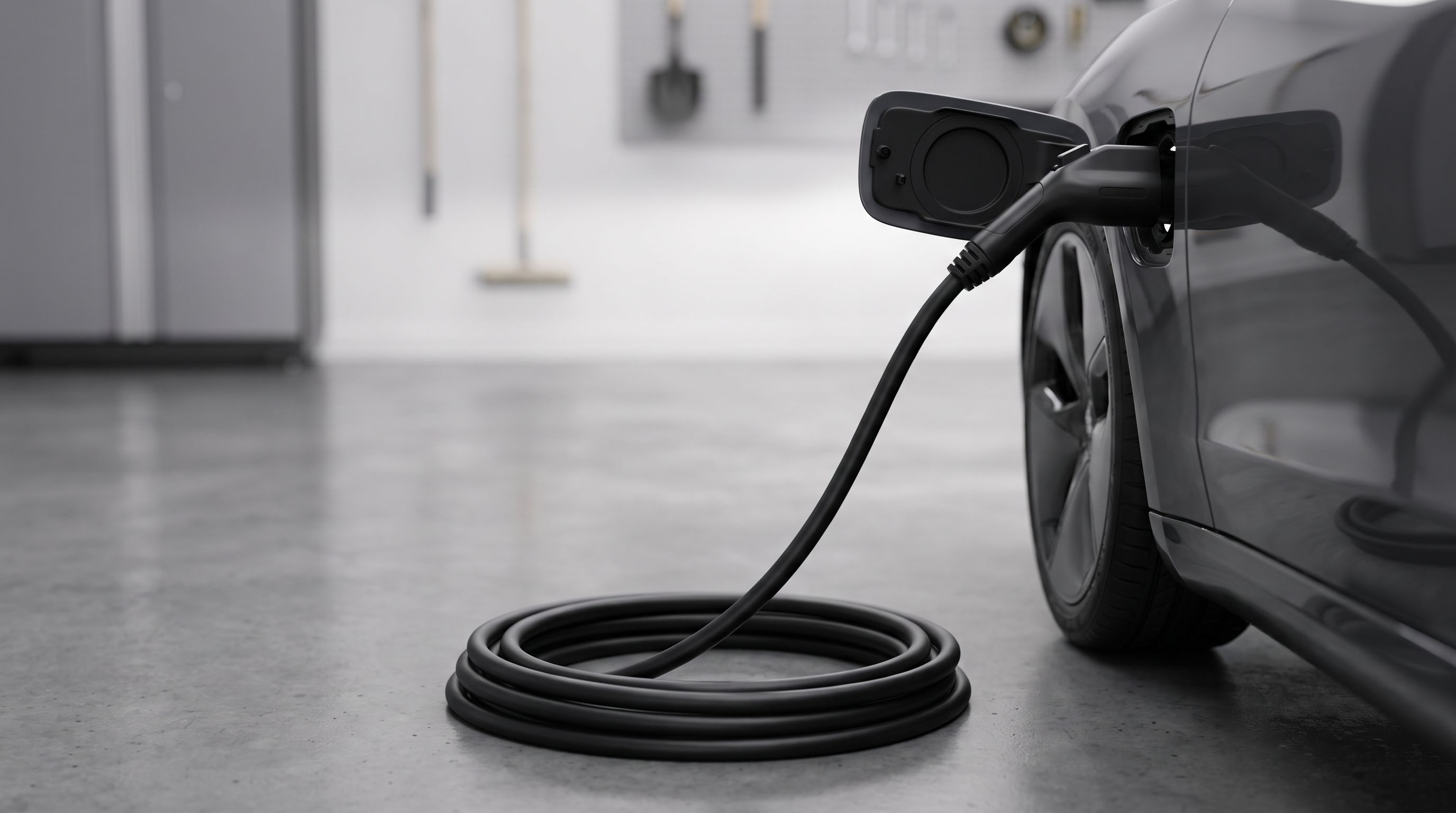
J1772 Charging Cable 40 Amp: Why Cheap Cords Run Hot in 2026
A J1772 charging cable rated 40 amp is only as good as its copper, jacket and contacts. Here's how gauge and connector quality prevent heat soak — plus 2026 picks.
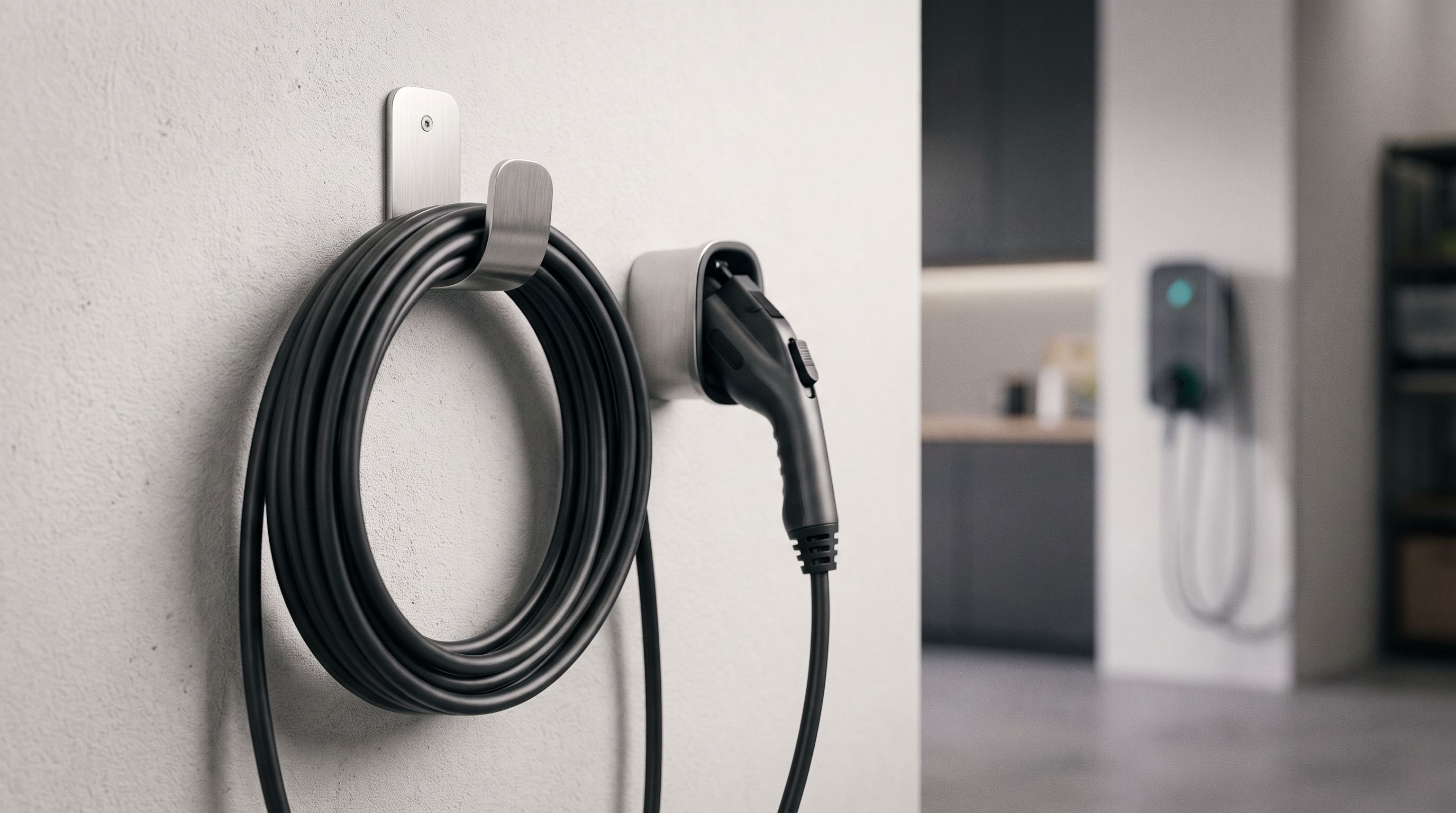
EV Charger Cable Holder 2026: NACS vs J1772 Wall Fit
Which EV charger cable holder fits your setup in 2026? We compare holsters, J-hooks and docks by connector type (NACS vs J1772) and garage wall material.
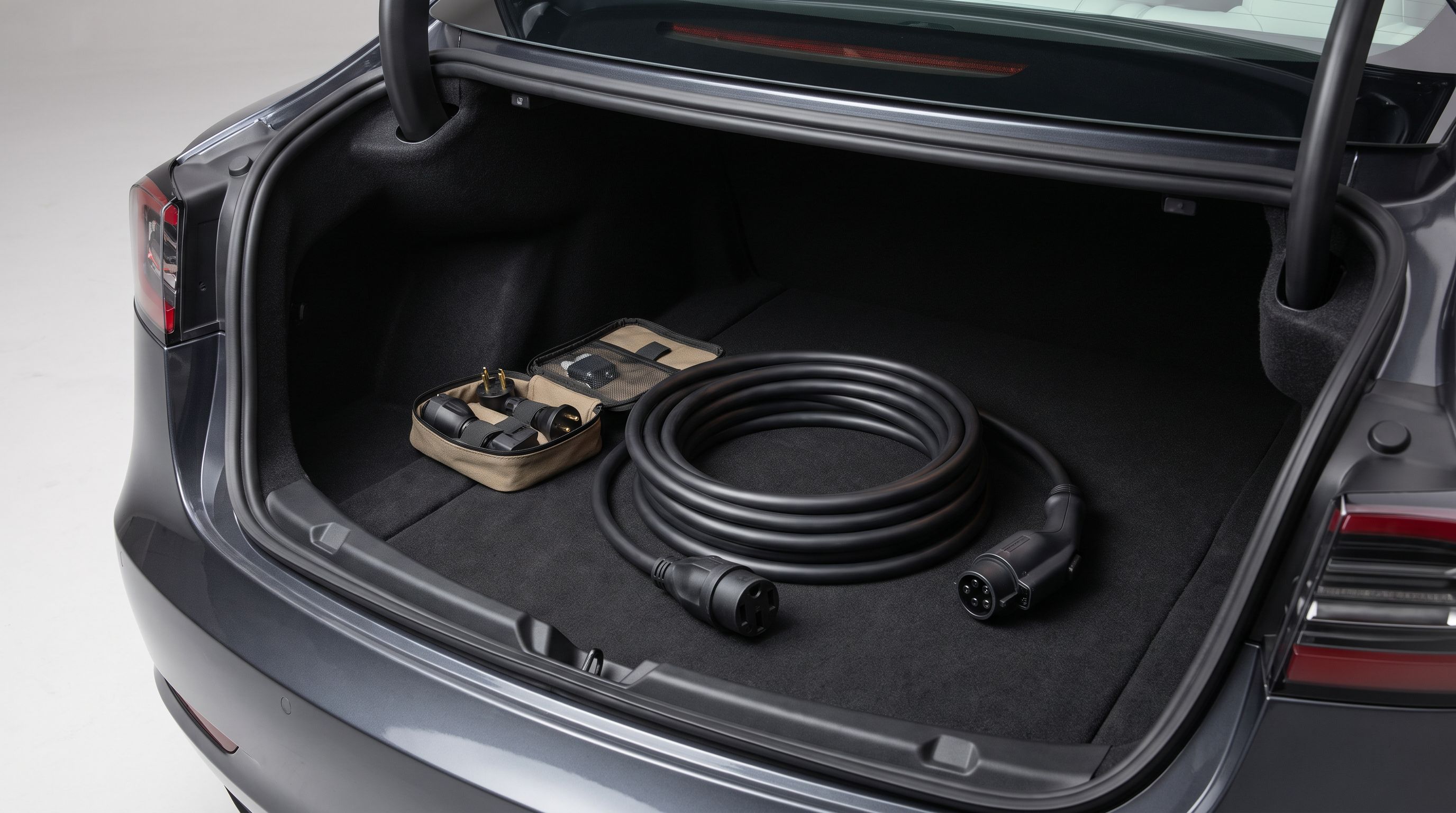
Portable Level 2 EV Charger 2026: NACS or J1772?
Picking a portable Level 2 EV charger in 2026? We compare 32–40A travel units, NACS vs J1772 plugs, and NEMA 14-50 vs 6-50 adapters so you buy the right one.