Dual-Action Polishers in 2026: 15mm vs 21mm Throw
Which dual-action polisher should a beginner buy in 2026? We compare 15mm vs 21mm throw, backing plate sizes and power on soft and hard clearcoats.
Reader-supported: we may earn a commission from links on this page, at no extra cost to you. It never affects our picks. Learn more.
Buying your first machine polisher is the single biggest jump in results you can make in home detailing — and also the point where most people freeze. The spec sheets throw around "throw," "OPM," "amps" and "backing plate size" without explaining which of those actually decides whether you fix your swirls or burn through an edge.
This guide compares dual-action (random orbital) polishers with beginners in mind, with a specific focus on the question that trips people up most: 15mm vs 21mm throw, and how that interacts with soft clearcoats (Honda, Mazda, most Japanese paint, many blacks) versus hard clearcoats (German ceramic-clear, some Ford and GM finishes). GarageProof researches and compares gear using manufacturer specs, independent reviews and verified owner feedback — we don't physically test units.
The short version
- Best overall — Griot's Garage G9 Random Orbital Polisher
- Premium pick — Rupes LHR 15 Mark III
- Best for big panels and hard clearcoat — Rupes LHR 21 Mark III
- Budget pick — Chemical Guys TORQX Random Orbital Polisher
- Best value step-up — Harbor Freight Hercules HC109B Forced Rotation Polisher
 Budget pick · Chemical Guys TORQX Random Orbital Polisher — Check price on Amazon →
 Best overall · Griot's Garage G9 Random Orbital Polisher — Check price on Amazon →
What "throw" actually means (and why beginners should care)
A dual-action polisher does two things at once: the backing plate spins on its own axis, and the whole assembly orbits around a central point. Throw (or orbit) is the diameter of that orbital path — 8mm, 15mm, 21mm and so on.
Bigger throw means each rotation covers more paint, so you correct faster over a given area. It also means more inertia: the machine wanders more, transmits more vibration through the handle, and is harder to keep flat on curved panels. Smaller throw is slower but far more controllable, and much better on mirrors, pillars, spoilers and bumper corners.
The other thing throw does is change how the machine behaves when you lean on it. A free-spinning DA stalls — the backing plate stops rotating and just vibrates — when you apply too much pressure or hit a curve. That stall is your safety net (it's why DAs are beginner-safe), but it's also why long-throw machines feel frustrating until you learn to let the tool do the work.
Short throw (8–12mm)
Forgiving, light, cheap. Good for learning, good for small or complex panels, good for spot repairs. Slower on a full car — expect more passes and more section time. This is where the Chemical Guys TORQX and most entry machines sit.
Long throw (15mm)
The sweet spot for most enthusiasts. Meaningfully faster than short throw, still manageable on doors and fenders with a 5-inch plate. The Rupes LHR 15 Mark III defined this class; the Griot's G9 sits just below it on paper but punches well above its weight because of its torque delivery.
Extra-long throw (21mm)
Built for hoods, roofs, van sides and hard clearcoats that need real work to cut. Fast — but genuinely clumsy on a compact car with lots of curves, and tiring to hold for a full day. Most people who own a 21mm machine also own a smaller one.
Soft vs hard clearcoat: pick the machine for your paint
This is the part most guides skip.
Soft clearcoat (many Japanese and Korean cars, most soft blacks, older domestic paint) marrs easily. It cuts quickly, so you rarely need aggressive tooling — but it also picks up new swirls from a pad that's too coarse or a machine that's too aggressive. A 15mm-or-smaller throw with a fine foam pad and a light polish will usually get you 90% of the way. Long-throw machines paired with microfiber cutting discs can leave hazing on soft paint that you then have to chase with a refining step.
Hard clearcoat (many modern German cars, some ceramic-clear finishes) resists defect removal. Here, short-throw machines feel like they're doing nothing — you'll make five passes and still see swirls under the sun. This is exactly where a 21mm throw or a forced-rotation machine earns its money, because you get sustained cutting without having to lean on the tool.
If you don't know which you have: do a small test spot. If a one-step polish on a light-cut pad clears swirls in one or two passes, your paint is on the softer side. If two passes barely move them, assume hard clear and step up the throw, the pad or the abrasive — in that order.
Backing plates: the upgrade nobody tells you to buy
Your polisher comes with one backing plate. Buying a second one is the cheapest real performance upgrade available.
- 6-inch plate + 6.5-inch pad — maximum coverage, best on hoods and roofs, worst on curves.
- 5-inch plate + 5.5-inch pad — the default for most detailing work. Better pad stability, less stalling, faster panel-to-panel.
- 3-inch plate + 3–4-inch pads — for mirrors, pillars, bumpers, motorcycle tanks and door handle areas. On a 21mm machine a small plate is a bad idea (too much orbit, too little pad); on a 15mm or short-throw machine it's excellent.
Crucially, the plate must match the throw. Running a small pad on a long-throw machine concentrates the orbit at the pad edge and can chatter or sling product. Manufacturers specify compatible plate sizes — check before you buy, especially for Rupes machines, which use brand-specific plate fitments.
Power ratings: read amps and torque, not just OPM
Advertised orbits per minute (OPM) tell you top speed with no load. What matters is whether the machine holds that speed when a pad is pressed against paint. Two specs hint at that:
- Amp draw / wattage — a rough proxy for how much work the motor can do before it bogs down.
- Torque delivery / electronic speed control — better machines maintain set speed under load. Cheap ones sag, which is why a budget polisher feels fine on a flat hood and useless on an A-pillar.
Forced-rotation machines (like the Hercules HC109B) sidestep the issue entirely: the plate is geared so it cannot stop rotating. You lose the stall safety net, so you have to be more careful on edges — but you gain consistent cut on hard paint and curved panels.
Comparison table
| Model | Throw class | Drive type | Typical plate sizes | Best paint type | Beginner friendliness |
|---|---|---|---|---|---|
| Griot's Garage G9 | Long-ish (9mm class) | Free-spinning DA | 3", 5", 6" | Soft and medium | Very high |
| Rupes LHR 15 Mark III | 15mm | Free-spinning DA | 5", 6" (Rupes-specific) | Soft to medium | High |
| Rupes LHR 21 Mark III | 21mm | Free-spinning DA | 6" (Rupes-specific) | Medium to hard | Moderate |
| Chemical Guys TORQX | Short (~8mm) | Free-spinning DA | 3", 5", 6" | Soft | Very high |
| Hercules HC109B | Long throw | Forced rotation | 5", 6" | Medium to hard | Moderate |
The picks
Griot's Garage G9 — best overall
Griot's Garage G9 Random Orbital Polisher
A 9mm-class long-throw DA with strong torque, smooth balance and a huge pad ecosystem — the safest all-rounder.
The G9 is the machine we'd hand to most first-time buyers. It's a free-spinning DA with a longer throw than entry-level tools but enough torque and electronic speed control that it doesn't collapse under normal working pressure. Balance is good, vibration is manageable for a full-car session, and it accepts common 3-, 5- and 6-inch plates, so pads are cheap and available everywhere. Griot's backs it with a strong warranty, which matters for a tool with bearings and brushes. What you give up: it won't correct hard German clearcoat as fast as a 21mm machine, and it's not the quietest tool in this group.
Rupes LHR 15 Mark III — premium pick
Rupes LHR 15 Mark III
15mm throw, superb balance and vibration control — the benchmark long-throw DA for soft European clearcoats.
The LHR 15 is the reference point for 15mm long-throw polishers, and the Mark III refines the formula with better ergonomics and vibration control. On soft to medium clearcoats it's close to ideal: enough throw to correct a whole car in a reasonable afternoon, enough control to work door edges and fender arches without constant stalling. The fit and finish justify the premium, and it's comfortable enough that fatigue stops being the limiting factor. The trade-off is cost — and Rupes backing plates and pads are a proprietary-ish ecosystem, so your consumables budget runs higher than with a generic-plate machine.
Rupes LHR 21 Mark III — best for big panels and hard clearcoat
Rupes LHR 21 Mark III
21mm throw covers ground fast and cuts harder paint with less dwell time on large flat panels.
If your project car is a wagon, truck or anything German with stubborn clear, the 21mm throw is the fastest legitimate route to a corrected finish without moving to a rotary. It covers a hood in far fewer passes and keeps cutting where short-throw machines just polish the surface. It's also the least beginner-friendly tool here: more inertia, more walking, more hand fatigue, and it's genuinely awkward on mirrors, bumpers and anything with tight radii. Buy it as a second machine or only if your vehicles are big and flat. Pair it with a 6-inch plate and leave small work to a mini polisher.
Chemical Guys TORQX — budget pick
Chemical Guys TORQX Random Orbital Polisher
Short-throw, forgiving and cheap to get started with — ideal if you're learning on a daily driver.
The TORQX is a short-throw random orbital built for people learning on a daily driver. Low throw means it's very hard to hurt paint with it, it's light, and kits usually bundle pads and polish so you can start the same weekend. On soft clearcoat with light swirls it does real work. What it gives up is speed and grunt: expect longer section times, more passes, and noticeable slowdown if you press too hard or work a curved panel. It's also not the tool for hard clear — you'll be there all day. Think of it as a low-risk entry point you may outgrow.
Hercules HC109B — best value step-up
Harbor Freight's forced-rotation DA has drawn attention from experienced detailers because it delivers gear-driven behaviour at a price well below the usual suspects. Because the plate is driven rather than free-spinning, it won't stall on curves or under pressure — which is exactly what makes it effective on hard clearcoats and vertical panels. The compromise is safety margin: forced rotation removes the "it just stops" failsafe, so keep the pad flat, stay off sharp edges and trim, and practise on a panel that isn't your hood. Build quality is good for the money rather than premium, and pad selection matters more than with a free-spinning machine.
Beginner mistakes worth avoiding
- Too much pressure. The machine's weight plus light guiding pressure is usually enough. Leaning in stalls a free-spinning DA and heats the paint on a forced-rotation one.
- Too much product. Four to five pea-sized drops on a 5.5-inch pad. More than that clogs the pad and causes hazing.
- Skipping the test spot. Always correct a 2x2-foot area first, wipe with IPA or a panel prep, and inspect under a bright light before committing to the whole car.
- Never cleaning the pad. Brush or blow out the pad after every panel. A saturated pad stops cutting and starts smearing.
- Polishing dirty paint. Wash, decontaminate and clay first. Polishing grit into your clearcoat is how beginners add defects.
FAQ
Is a dual-action polisher safe for a beginner? Yes — free-spinning DAs are the standard recommendation for first-timers precisely because the plate stalls before it can burn paint. Forced-rotation machines are still far safer than a rotary, but require more attention near edges and badges.
15mm or 21mm for my first machine? 15mm, in almost every case. It handles a full car in reasonable time while remaining controllable on curves. Go 21mm only if your vehicles are large and flat and your clearcoat is hard — and ideally as a second polisher.
Do I need a 3-inch backing plate? Not on day one, but you'll want one soon. Mirrors, pillars, bumper corners and the area around door handles are where full-size pads can't sit flat, and those are the spots that give a correction away.
Can one polisher do compounding and finishing? Yes. Pad and abrasive choice does most of the work — a cutting pad with compound, then a soft finishing pad with polish. The machine matters less than the combination on top of it.
How long does polishing a whole car take? For a first-timer on a mid-size sedan, budget a full day including wash, decontamination and taping. Correction itself typically runs three to six hours depending on throw, paint hardness and how many panels need two steps.
Will a polisher remove deep scratches? No. If you can catch a fingernail in it, it's through the clearcoat and machine polishing won't fix it — that's a paint repair job. Polishers remove swirls, haze, light oxidation and fine marring.
Our picks
Harbor Freight Hercules HC109B Forced Rotation Polisher
Forced-rotation drive that won't stall on curves, at a price that undercuts most name-brand gear-driven DAs.
Get the best car care deals in your inbox
Join the GarageProof newsletter for hand-picked car care deals and new buying guides. No spam, unsubscribe anytime.
Related reads
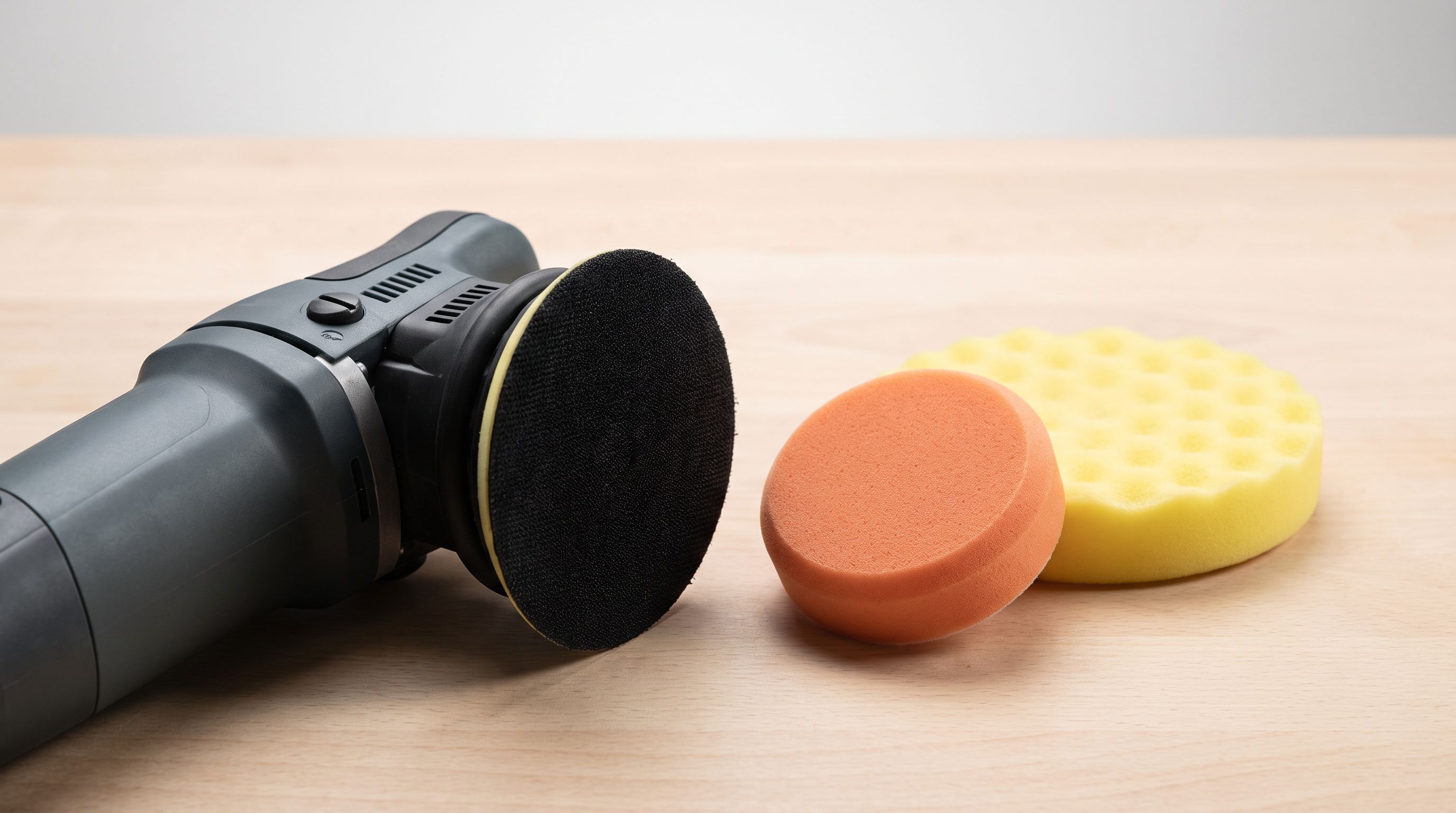
Polisher Backing Plate Size 2026: Stop Stalling on Curves
Polisher backing plate size guide for 2026: match plate diameter, thread spec, and pad overhang to your DA polisher so pads stop stalling on curves.
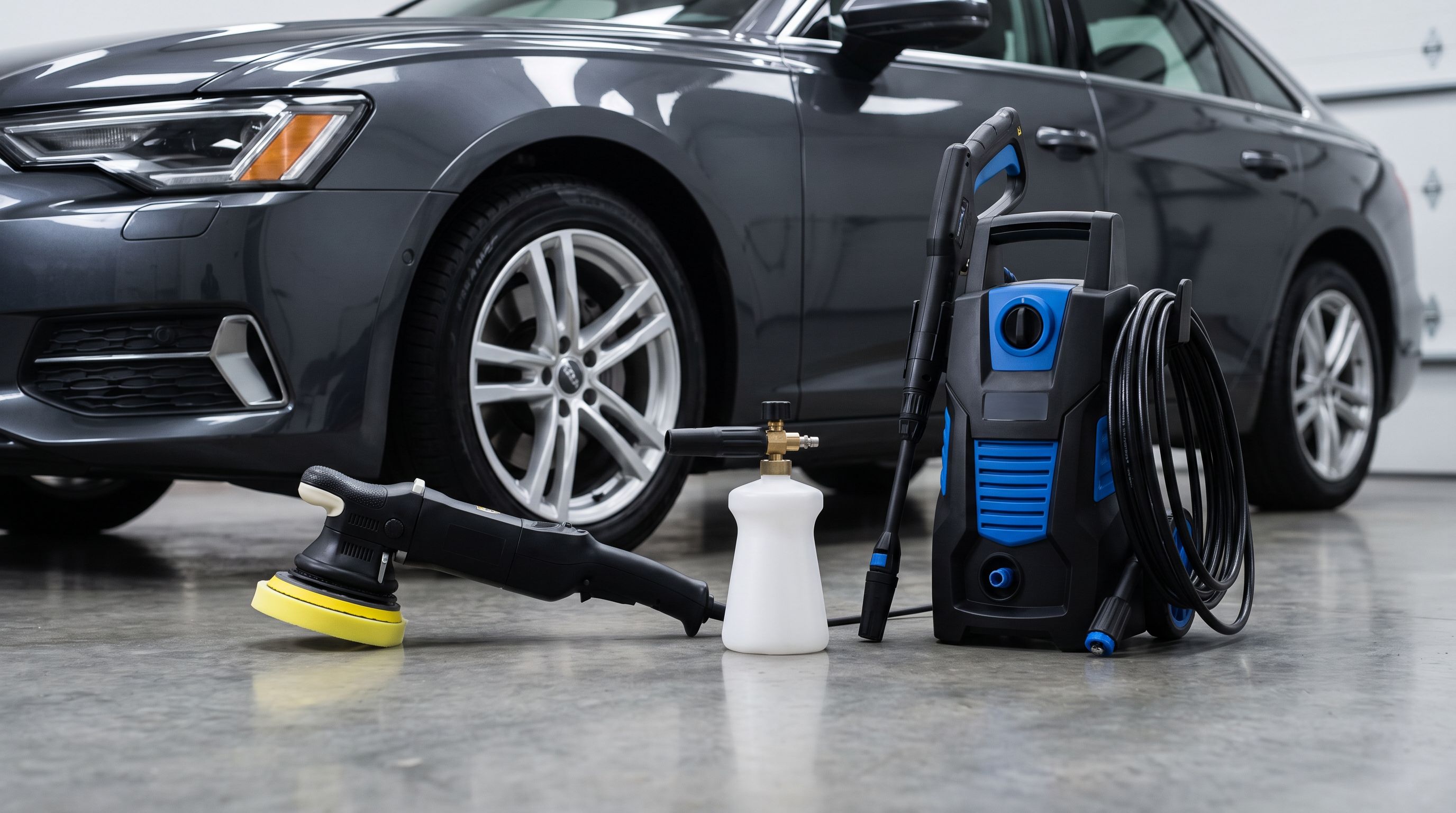
Prime Big Deal Days Detailing Gear: What Actually Matters
Prime Day car detailing deals, judged properly: which pressure washer, polisher and coating specs decide the purchase, and where a cheap tool will wreck your paint.
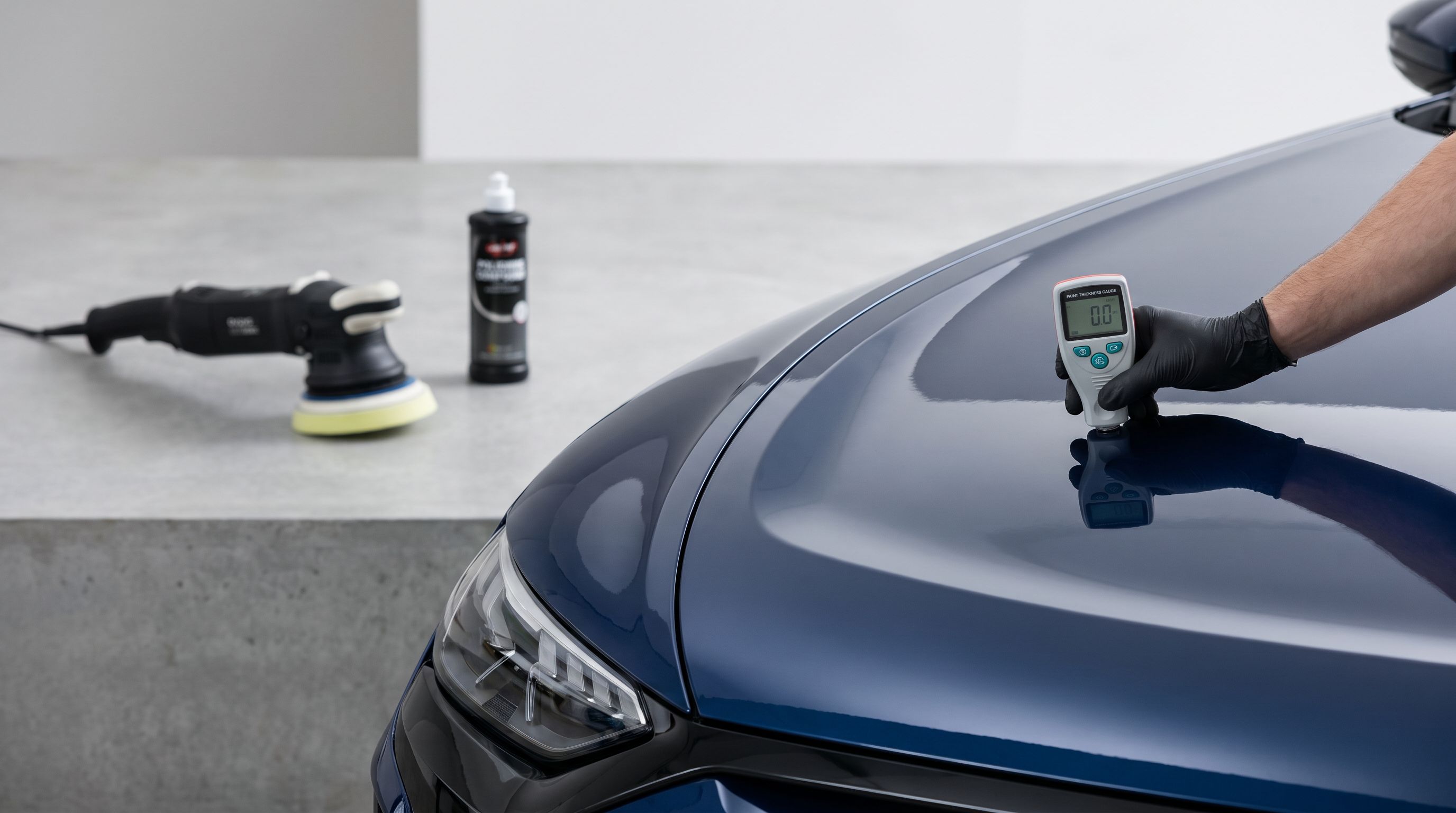
Paint Correction Clear Coat Thickness in 2026: When to Stop
How to read a paint depth gauge, budget clear coat microns, and know when to stop polishing — plus the best paint thickness gauges and compounds for 2026.