Dash Cam Mount for Sloped Windshield: 2026 Wedge Guide
Steeply raked glass ruins dash cam aim. Here's how wedge angle, adhesive vs suction mounts and ball-joint range decide what you should buy in 2026.
Reader-supported: we may earn a commission from links on this page, at no extra cost to you. It never affects our picks. Learn more.
Windshield rake is the single most overlooked spec in dash cam buying. A camera that aims perfectly in a 1990s pickup can end up filming sky — or hood — in a modern sedan with glass laid back past 60 degrees. The fix isn't a better sensor. It's matching the mount geometry to your glass.
This guide explains how wedge angle, bracket type and ball-joint travel interact, and which 2026-available cameras and mounts handle extremes at both ends of the rake scale. GarageProof researches and compares products using manufacturer specs, independent reviews and verified owner feedback; we don't physically test units.
The short version
- Best overall for raked glass: Viofo A229 Pro
- Best for near-vertical windshields: Garmin Dash Cam 67W
- Best suction swap-in: Viofo Suction Cup Mount for A229/A139
- Best quick-release magnetic mount: Nextbase 622GW
- Best three-channel option: Vantrue N4 Pro
 Best three-channel option · Vantrue N4 Pro — Check price on Amazon →
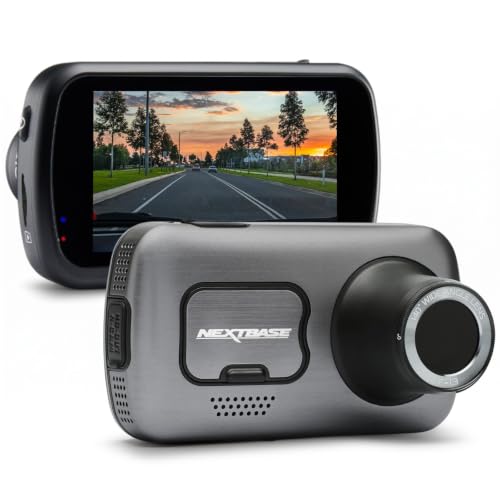 Best quick-release magnetic mount · Nextbase 622GW — Check price on Amazon →
 Best suction swap-in · Viofo Suction Cup Mount for A229/A139 — Check price on Amazon →
 Best for near-vertical windshields · Garmin Dash Cam 67W — Check price on Amazon →
 Best overall for raked glass · Viofo A229 Pro — Check price on Amazon →
Why windshield rake breaks dash cam aim
Rake is the angle of the windshield measured from vertical. A sports coupe or aerodynamic sedan can run roughly 60–65 degrees of rake — the glass is closer to horizontal than upright. A cargo van, box truck, older 4x4 or a Wrangler can sit near 15–25 degrees, almost straight up and down.
A dash cam mounted flat against that glass inherits its angle. Two failure modes follow:
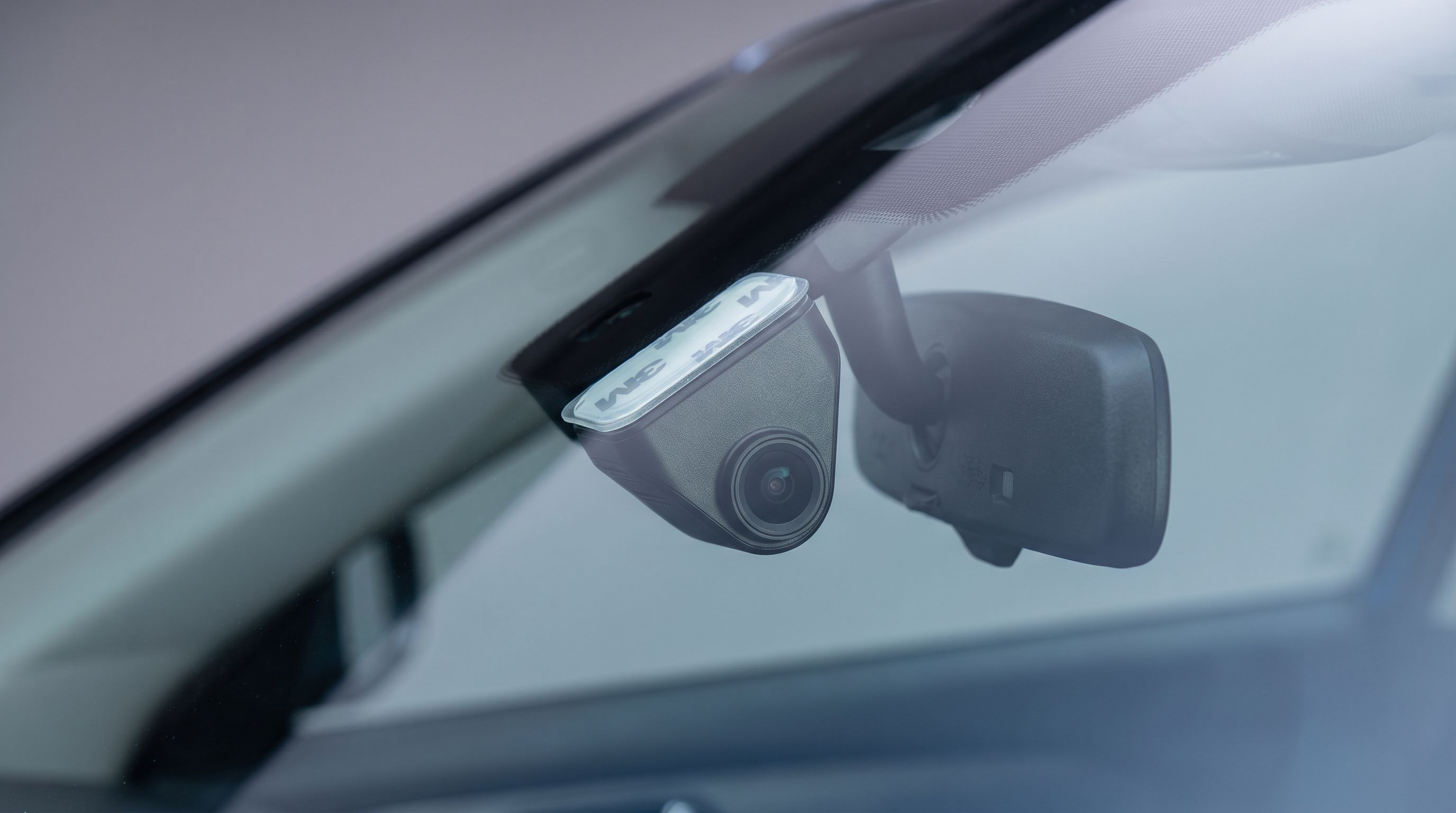
Too much rake (sloped glass). The camera points down at the hood and the near lane. You lose the signal lights, overhead signs and the car two ahead. Worse, the body of a thick camera can contact the glass at the top while the lens end hangs away from it, putting all the load on one edge of the adhesive pad.
Too little rake (vertical glass). This is the complaint in the Rove thread that keeps resurfacing: a flat-plate mount puts the camera body hard against the windshield with no room to pivot downward, so it stares at the sky and the ball joint is already at its stop.
Wedge-shaped cameras exist to solve the first problem. The housing itself is a triangle, so the lens end sits lower than the glass-contact end, pre-compensating for rake. Forum consensus — including the frequently cited point that wedge bodies like the Viofo A129 family and SG9663DC also work on near-vertical glass — is that a wedge plus a real ball joint covers the widest range of vehicles.
How to measure your rake in two minutes
Put a phone with a level app flat against the inside of the windshield, centred behind the mirror where the camera will live. Read the angle from vertical. Under about 30 degrees, you have upright glass and need downward tilt range. Over about 50 degrees, you have sloped glass and need a wedge or strong upward tilt range. Between those, almost anything works.
Also check for a shaded frit band, a rain-sensor housing, a heated-wiper zone and ADAS camera pods. Those decide where on the glass you can mount, which in turn changes how much tilt you need.
How to choose
1. Wedge angle vs flat plate
A flat adhesive plate transfers the glass angle straight into the camera. A wedge mount — either built into the camera body or supplied as a separate angled shim — subtracts a fixed number of degrees. Some brands sell 15, 25 or 30-degree wedge adapters separately.
If your rake measures 55–65 degrees and the camera's ball joint only offers around 30 degrees of travel, a wedge is not optional. If your glass is near vertical, you want the opposite: a flat or low-profile mount plus generous downward tilt, or a mount with a short stalk that holds the camera away from the glass so the body has room to rotate.
2. Adhesive vs suction
Adhesive (3M VHB-style) mounts sit flatter, lower and more rigidly. They vibrate less, hide better behind the mirror, and survive heat soak in summer. The trade-off: repositioning is a one-shot deal, and removal means fishing line, heat and a residue remover.
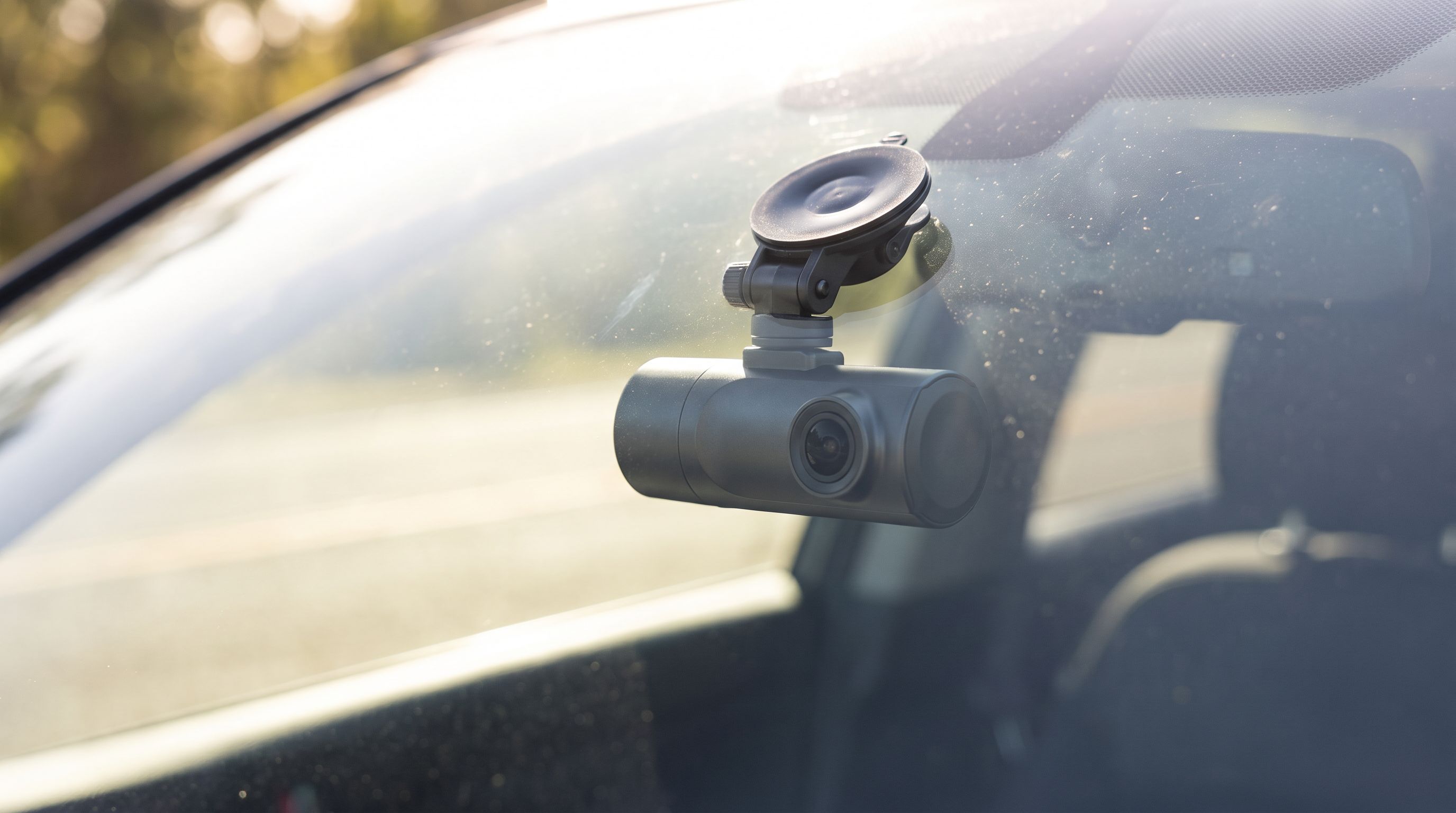
Suction cups are the versatile option — the most common style for a reason. They're the right call for leased vehicles, rentals, cars you swap cameras between, and situations where you genuinely don't know the correct angle yet. The downsides are real: taller stack height, more vibration-induced micro-shake in footage, and a tendency to let go after a cold night or a 140°F dashboard afternoon. Good suction mounts use a locking lever rather than a twist collar.
A practical strategy: buy suction, find the aim you like over a week, then move to adhesive at the same spot.
3. Ball-joint range and axis count
Read the spec sheet, then read owner photos. Marketing says "360° rotation," which usually refers only to the yaw axis — useless for rake. What matters is pitch range, the up-and-down travel, and whether the joint uses a true ball or a simple hinge.
A hinge gives tilt only, so you can't correct a camera that's also rolled sideways by a curved windshield. A ball joint corrects pitch, yaw and roll together. Look for a lockable collar; friction-only balls drift over speed bumps. Cameras with a tiny magnetic ball mount — Garmin's approach — tend to offer the widest practical pitch range because the camera is small and light enough to sit on a short stalk.
4. Lens vertical field of view and sensor crop
A wide vertical FOV forgives mounting error. A 140-degree diagonal lens with a tall sensor aspect lets you lose a few degrees of aim and still keep both plates and signal lights. Several 2026 cameras shoot in a wider 16:9 crop that trims vertical coverage — on heavily raked glass that crop is exactly where your traffic lights used to be.
Rule of thumb: aim so the horizon sits slightly above centre frame, with roughly a third sky and two-thirds road. That gives plate readability near and sign readability far.
5. Cable routing and stack height
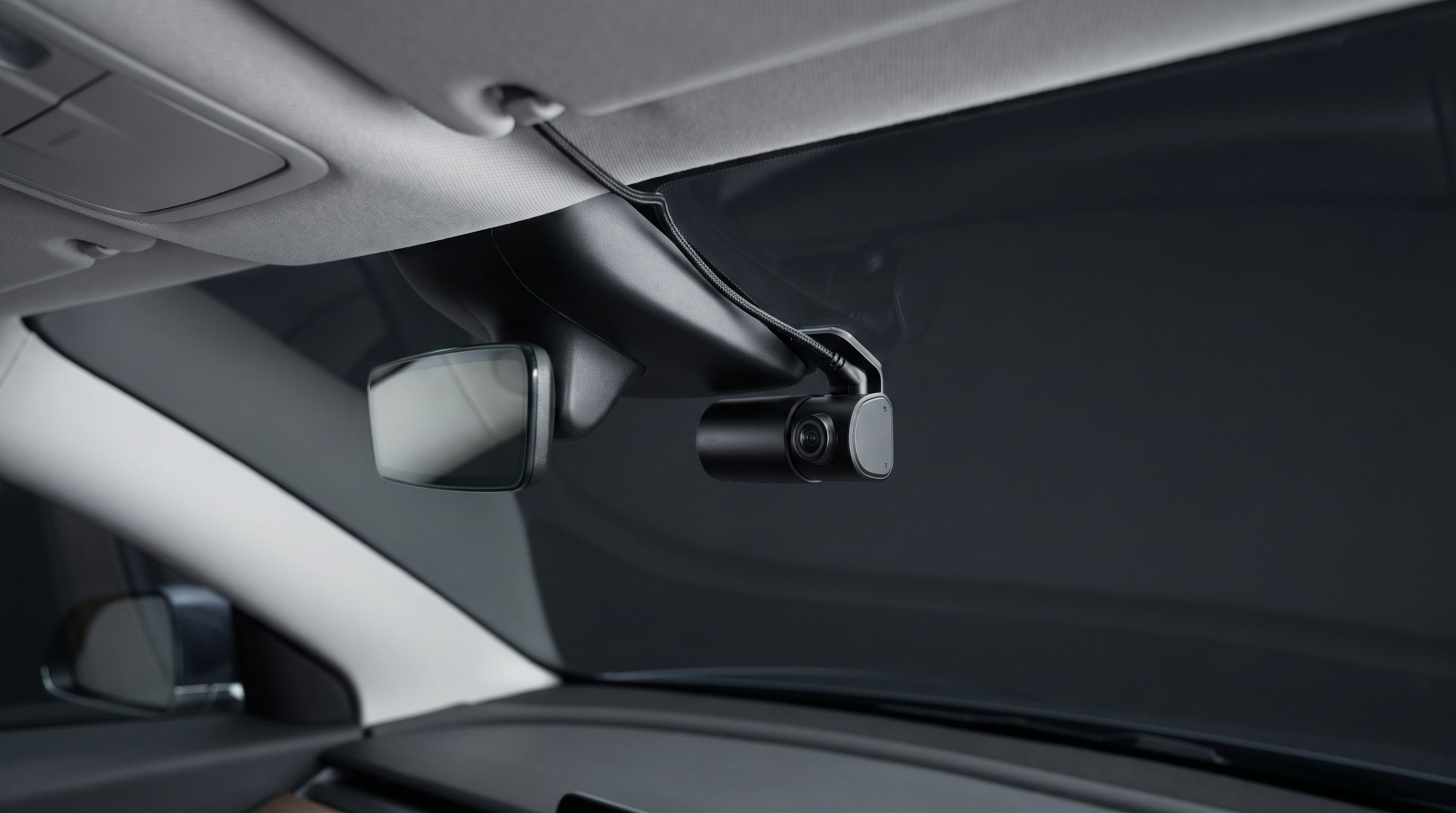
On raked glass, the camera ends up further from the headliner. Check that the USB-C or proprietary power port exits sideways rather than straight up, or the cable will bow out into view. Right-angle plugs help. Hardwire kits remove the problem entirely and free up the 12V socket.
Comparison table
| Model | Body/mount style | Best rake range | Mount included | Quick release | Notes |
|---|---|---|---|---|---|
| Viofo A229 Pro | Wedge body, adhesive bracket with swivel | Moderate to steep (~40–65°) | Adhesive; suction sold separately | Slide-off bracket, power stays in mount | Strong low-light front sensor; 2CH/3CH versions |
| Garmin Dash Cam 67W | Compact cube, magnetic ball mount | Near-vertical to moderate (~15–45°) | Adhesive disc + magnetic ball | Magnetic, instant | Smallest body here; voice control |
| Viofo Suction Cup Mount | Accessory suction arm | Any, adds tilt range | N/A (accessory) | Yes, via camera bracket | Locking lever; fits A229/A139 bracket pattern |
| Nextbase 622GW | Slab body, Click&Go Pro magnetic | Moderate (~35–55°) | Magnetic mount, adhesive and suction variants | Magnetic, powered | Polarising filter option; what3words |
| Vantrue N4 Pro | Thick wedge-ish body | Moderate to steep (~40–60°) | Both adhesive and suction in box | GPS mount slides off | Front + cabin + rear channels |
The picks
Viofo A229 Pro — best overall for raked glass
Prices last checked October 23, 2026. Amazon prices change frequently, so treat these as a guide and check the live price before you buy.
Viofo A229 Pro
Wedge body plus a swiveling adhesive bracket that still aims level on steeply sloped windshields.
The A229 Pro is the default recommendation for sloped windshields because the whole design assumes you're mounting under heavy rake. The body tapers, the bracket slides on and off horizontally rather than needing top clearance, and power lives in the mount so the camera itself pops free without unplugging anything. Viofo's bracket also swivels, which matters on curved glass where the camera wants to sit rolled.
Compromises: the adhesive pad is a commitment, the bracket pattern is Viofo-specific, and the camera is physically larger than a Garmin, so on very upright glass it can run out of downward tilt. Buy the matching suction mount if you're unsure.
Garmin Dash Cam 67W — best for near-vertical windshields
Garmin Dash Cam 67W
Tiny magnetic ball-joint mount gives huge tilt range, so vans and trucks aim easily.
If your problem is the opposite — a van, truck or older SUV with glass that's almost straight up — the 67W is the easiest answer. The camera is barely bigger than a key fob and rides on a magnetic ball that sits on a short stalk, so there's genuine room to pitch the lens downward instead of jamming the body into the glass. The 180-degree-ish wide view also forgives aim error.
What you give up: resolution tops out lower than the 4K crowd, storage and app ecosystem are Garmin-specific, and the magnetic connection, while convenient, is one more thing to knock loose when scraping ice.
Viofo Suction Cup Mount for A229/A139 — best suction swap-in
Viofo Suction Cup Mount for A229/A139
Official suction cup with a long arm and locking lever for renters and multi-car owners.
This is the accessory that saves a purchase. If you've bought a Viofo and discovered your rake is beyond what the adhesive bracket can correct, the official suction arm adds both height and several degrees of adjustable tilt, plus a locking lever that holds better than cheap twist cups. It's also the right buy for leased cars and anyone moving a camera between two vehicles.
Downsides are inherent to suction: more stack height means more shake on rough roads, and extreme heat or cold can loosen the seal. Clean the glass with isopropyl alcohol first and recheck monthly.
Nextbase 622GW — best quick-release magnetic mount
Nextbase 622GW
Click&Go Pro magnetic mount pops the camera off in a second and keeps power in the bracket.
Nextbase's Click&Go Pro mount is the slickest removal system in the category: the camera snaps off magnetically with power carried through the mount, so there's no cable fiddling when you park in a city centre. Nextbase sells both adhesive and suction versions of the mount, which is unusually flexible for a proprietary system.
The 622GW's slab-shaped body isn't a true wedge, so on the steepest raked glass you're relying on the mount's joint rather than the housing geometry. Factor in the optional polarising filter if dash reflections are your real complaint.
Vantrue N4 Pro — best three-channel option
Vantrue N4 Pro
Wedge-ish body with both adhesive and suction brackets included, plus front/cabin/rear coverage.
Pick the N4 Pro when you need front, cabin and rear in one unit — rideshare, delivery, family car with teen drivers. It ships with both adhesive and suction brackets in the box, which neatly sidesteps the rake-guessing problem, and the GPS mount slides off for quick removal.
The trade-off is bulk. A three-channel body is thick, so on severely raked glass it can sit noticeably away from the windshield and intrude into the mirror's shadow. Mock it up with the suction mount before committing adhesive, and plan a proper cable run for the rear camera.
Installation notes that actually change the footage
- Clean twice. Isopropyl alcohol, then a dry microfibre. Adhesive failures are almost always contamination failures.
- Warm the glass. VHB adhesive wants roughly 70°F or above to bond. Below 50°F, use a hairdryer on the glass and the pad.
- Mock it up first. Tape the camera in place, drive five minutes, review the clip on a phone. Aim is far easier to judge from footage than from the live preview.
- Mind the mirror. Centre the camera behind the rearview mirror so it's invisible from the driver's seat and legal in states that restrict windshield obstruction.
- Recheck after a heat cycle. Suction mounts especially. A camera on the floor at 3am records nothing useful.
FAQ
How do I know if I need a wedge mount? Measure the angle of your windshield from vertical with a phone level app. Over about 50 degrees, assume you need either a wedge-shaped camera body or an angled adapter, unless the camera's ball joint specifically advertises wide pitch travel.
My windshield is almost vertical and the camera points at the sky. What now? You need downward tilt, not a wedge. Look for a small camera on a short magnetic ball stalk, like the Garmin Dash Cam 67W, or add a suction arm that holds the camera off the glass so the body has room to rotate. Some brands sell reverse-angle shims too.
Adhesive or suction for a leased car? Suction. It leaves no residue and no risk of pulling the frit coating. Clean the glass properly and use a locking-lever cup rather than a twist collar.
Will a suction mount survive summer heat? Often, but not always. Heat softens the cup and expands trapped air. Reseat it every few weeks in hot climates, and never mount over a heated glass element.
Do wedge mounts work on rear windshields too? Yes, and rear glass is usually raked even harder than the front. Rear-specific mounts with 360-degree rotation plus vertical adjustment are now common for exactly this reason — check that the bracket matches your camera's shoe before buying.
Does mounting angle affect number plate readability? Significantly. Too steep a downward aim shortens how long a plate stays in frame; too high and you waste pixels on sky. Target horizon slightly above centre, roughly one-third sky.
Get the best car care deals in your inbox
Join the GarageProof newsletter for hand-picked car care deals and new buying guides. No spam, unsubscribe anytime.
Related reads
Supercapacitor Dash Cam vs Battery in 2026: Heat Survival
Supercapacitor dash cams vs lithium-battery models in 2026: how each survives hot parked cars, what parking mode really needs, and which cameras owners trust.
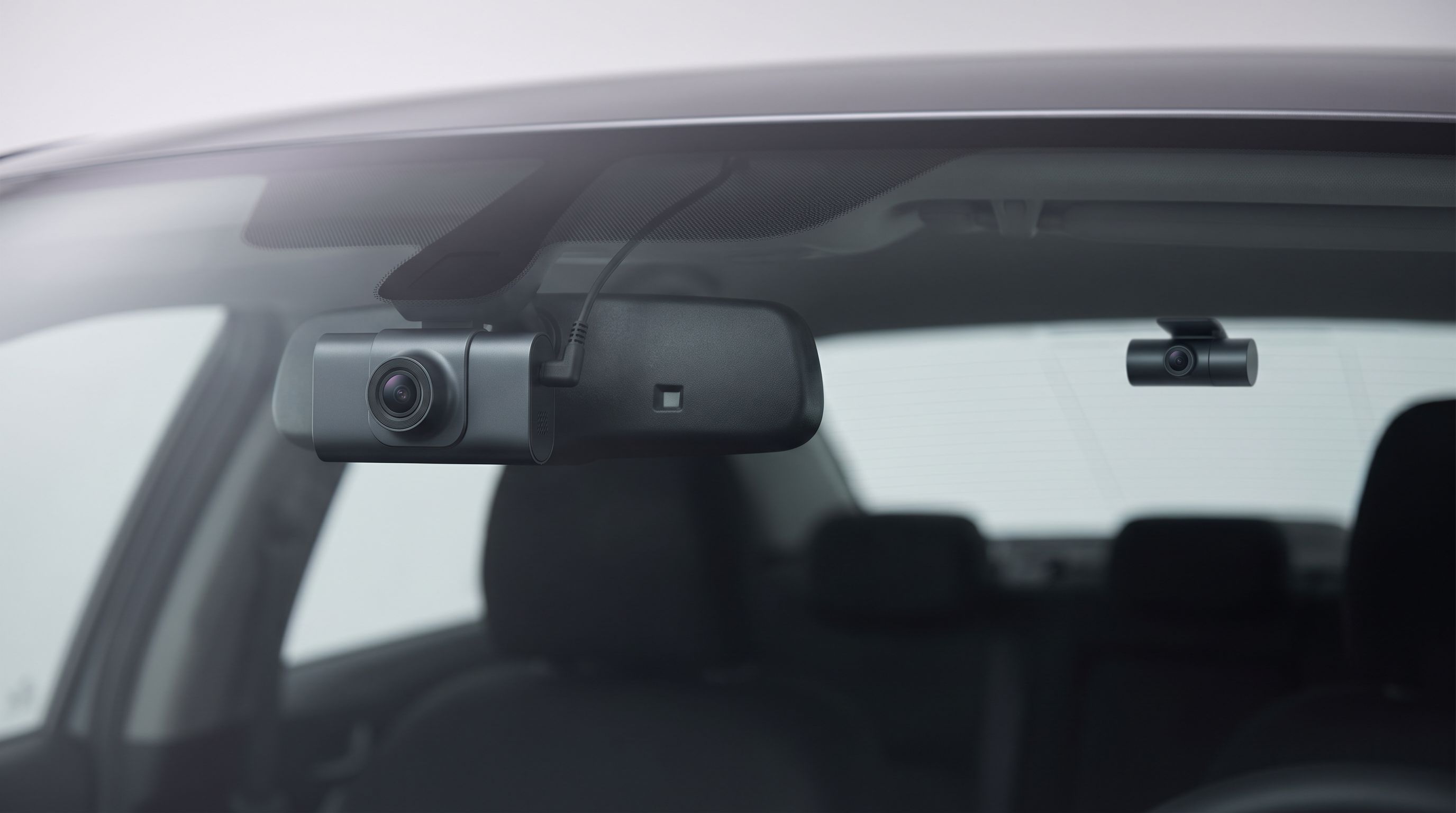
4K Dash Cams With Rear Camera: 5 Picks Worth Wiring In
We compared the best 4K dash cams with rear camera for 2026 — Viofo, Vantrue, 70mai and Rove — on rear resolution, night video, parking mode and plate legibility.
Dash Cam for a Leased Car in 2026: No-Drill Power Routes
The best no-drill dash cam setups for leased cars in 2026 — OBD and fuse-tap power, adhesive mounts, and how to route cables around A-pillar airbags safely.