Dash Cam Hardwire Voltage Cutoff 2026: Match It to Your Battery
How to set dash cam hardwire voltage cutoff for AGM, flooded, and stop-start batteries in 2026 — plus four hardwire kits with user-adjustable cutoff points.
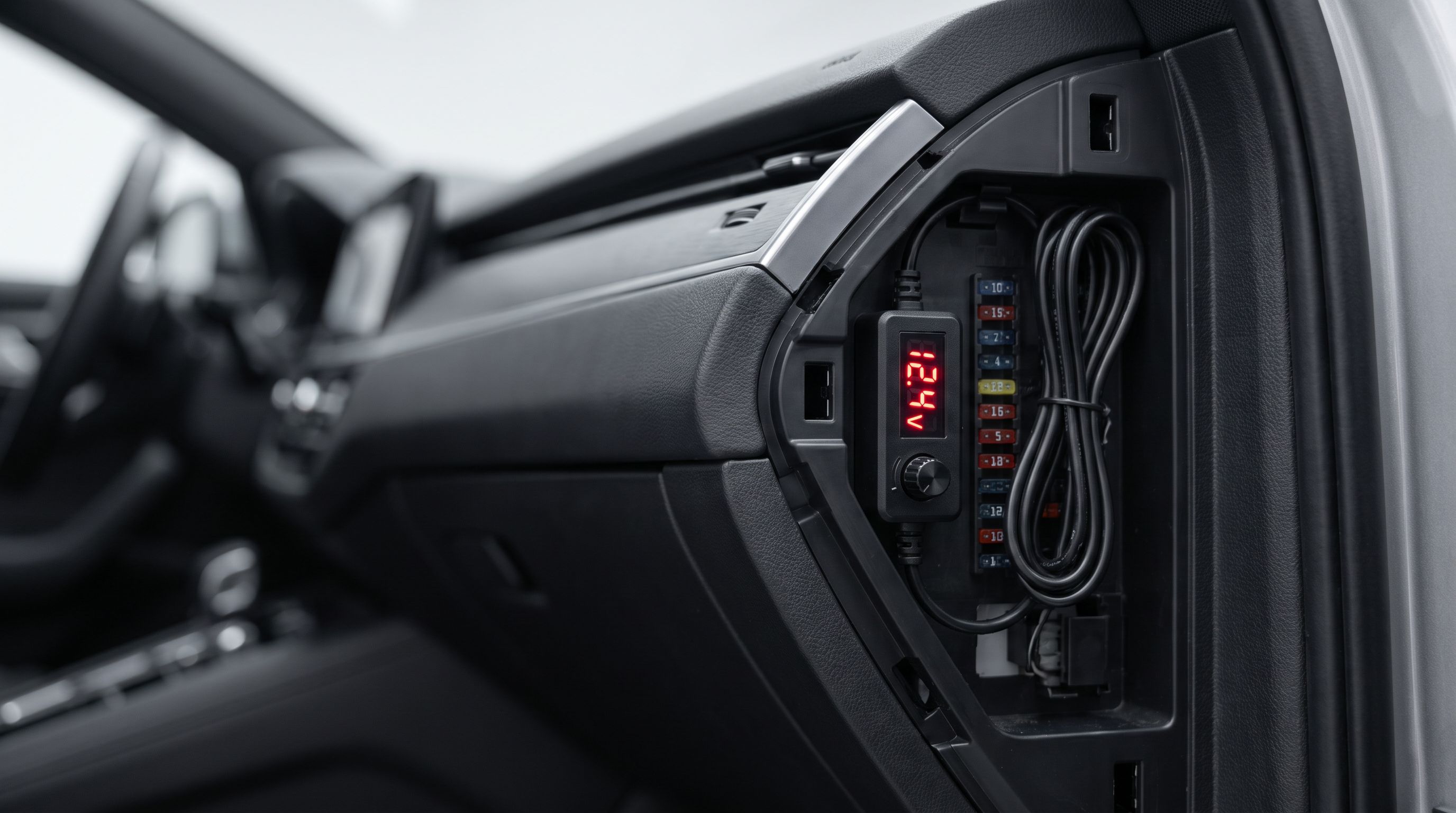
Reader-supported: we may earn a commission from links on this page, at no extra cost to you. It never affects our picks. Learn more.
Parking mode is the whole reason people hardwire a dash cam — and a low-voltage cutoff is the only thing standing between "I caught the hit-and-run" and "I need a jump start." The problem is that most hardwire kits ship with a default cutoff that was chosen for a generic flooded battery in a car that gets driven every day. If your vehicle has an AGM battery, a stop-start system, or just sits for a long weekend, that default is often wrong in a way you only discover on a cold Monday morning.
This guide explains what the dash cam hardwire voltage cutoff actually measures, what number to use for each battery type, and which kits let you change it. We compared manufacturer documentation, independent bench measurements posted by installers, and owner feedback across popular kits; GarageProof does not physically test units.
The short version
- Best overall: Viofo HK4 Hardwire Kit (ACC 3-wire, USB-C)
- Premium pick (zero battery drain): BlackVue Power Magic Ultra Battery Pack B-130X
- Best for fine-grained control: BlackVue Power Magic Pro
- Best for Thinkware owners: Thinkware Hardwiring Cable
- Simplest install: Garmin Constant Power Cable
 Best overall · Viofo HK4 Hardwire Kit (ACC 3-wire, USB-C) — Check price on Amazon →
What the cutoff voltage is really telling you
A hardwire kit taps constant 12V from the fuse box, watches the voltage at that tap, and kills power to the camera when it drops below a threshold. That threshold is a proxy for state of charge — not a direct measurement of it.
Two things make that proxy messy:
- Voltage sags under load. The camera itself draws a few hundred milliamps. Measured voltage at the fuse box is slightly lower than the battery's true resting voltage, and the gap widens as the battery ages.
- Surface charge lies. Right after you park, a freshly charged battery can read 12.8V or higher for 20–30 minutes before settling. A kit that samples too early reads optimistically.
Rough resting-voltage-to-charge guidance for a conventional 12V lead-acid battery: roughly 12.6–12.7V is full, around 12.4V is about 75%, around 12.2V is about 50%, and 12.0V is roughly 25%. Starting a cold engine from 50% is usually fine; doing it repeatedly from 25% is how batteries die early.
That's why the forum advice you'll see — "the kit I bought doesn't cut off until 11.6V, which is really low" — is correct. An 11.6V or 11.8V cutoff protects the car's ability to start tonight, not the battery's lifespan. If you care about the battery lasting its full service life, you want the cutoff higher.
Matching cutoff to battery type
Flooded lead-acid (standard, non-stop-start)
The classic case. These batteries tolerate shallow cycling reasonably well but hate being left deeply discharged. For a daily-driven car with a healthy flooded battery, 12.0V to 12.2V is a sensible range. If the car sits for several days at a time, go to 12.2V. If the battery is more than three years old, go to 12.2V or 12.4V — an older battery's voltage falls faster for the same amount of charge removed.
AGM
AGM batteries rest slightly higher than flooded ones — a full AGM often sits near 12.8–12.9V — so the same voltage number corresponds to a lower state of charge than it would on a flooded battery. Compensate by setting the cutoff one step higher than you would for flooded: 12.2V as a baseline, 12.4V if the car sits. AGM also handles cycling better, so you're not giving up much runtime in practice.
Stop-start vehicles (AGM or EFB)
Here's the trap. Stop-start cars have a battery sensor on the negative terminal that tracks state of charge and decides whether to allow engine auto-stop. Parasitic drain from a dash cam shifts that calculation, and the first symptom owners notice isn't a dead battery — it's stop-start silently refusing to engage. Set the cutoff at 12.4V and keep parking-mode sessions short (use a timer as well). Also: on many stop-start vehicles the battery is registered to the charging system, and repeated deep discharge can throw charging-system or electrical faults.
EVs and hybrids
The 12V accessory battery in an EV is small and is topped up by the DC-DC converter only when the car decides to wake up. Most guidance for EV installs lands at 12.2V minimum, often 12.4V, precisely because there's less reserve to play with. Some EVs also have manufacturer-specific accessory power provisions — check the owner's manual before tapping a fuse.
Lithium (LiFePO4) starter batteries
Skip voltage-based cutoff logic entirely where you can. LiFePO4 has an extremely flat discharge curve; by the time it reads 12.4V it may be nearly empty, and the internal BMS will disconnect abruptly. Use a kit with a timer as the primary limit, or use a separate buffer battery.
Comparison table
| Kit | Cutoff adjustment | Output / connector | Timer function | Best for |
|---|---|---|---|---|
| Viofo HK4 Hardwire Kit | 4 selectable steps (11.8 / 12.0 / 12.2 / 12.4V) | USB-C, 12V–24V input | Yes, selectable duration | Most 12V cars, AGM and flooded |
| BlackVue Power Magic Ultra B-130X | N/A — isolates car battery entirely | Powers BlackVue cams | Runtime limited by pack capacity | Stop-start, EVs, long parking |
| BlackVue Power Magic Pro | Multiple steps from 12.0V up to 12.8V | Hardwire to cam power port | Yes | Owners who want the highest thresholds |
| Thinkware Hardwiring Cable | Set in camera menu | Thinkware proprietary | Yes, in camera menu | Thinkware dash cam owners |
| Garmin Constant Power Cable | Handled in camera settings | Garmin proprietary | Camera-dependent | Simple, tidy Garmin installs |
Always confirm the exact cutoff steps and connector against the current product listing and your specific dash cam model — manufacturers revise these kits.
The picks
Viofo HK4 — best overall
Prices last checked November 2, 2026. Amazon prices change frequently, so treat these as a guide and check the live price before you buy.
Viofo HK4 Hardwire Kit (ACC 3-wire, USB-C)
Four selectable cutoff points (11.8/12.0/12.2/12.4V), USB-C output, and timer options for most 12V cars.
The HK4 is the kit most people should buy if they own a compatible 12V/24V vehicle and a USB-C dash cam. Its four cutoff steps — 11.8V, 12.0V, 12.2V, 12.4V — cover the full useful range, which means one kit works whether you're protecting a tired flooded battery or an AGM in a stop-start crossover. It also offers selectable parking timers, so you can cap a session at a few hours regardless of voltage. The buck converter is efficient and runs cool. What it gives up: it's a voltage-and-timer device, not a buffer, so parking mode still draws from the car battery, and USB-C output means you need a cam with a USB-C power input.
BlackVue Power Magic Ultra Battery B-130X — premium pick
BlackVue Power Magic Ultra Battery Pack B-130X
A lithium buffer battery that powers parking mode without touching the car battery at all.
If you want parking mode that genuinely cannot flatten your starter battery, the answer isn't a smarter cutoff — it's a separate lithium pack. The B-130X charges while you drive, then disconnects from the vehicle and runs the camera off its own cells. That makes it the cleanest solution for stop-start vehicles with battery sensors, EVs with small 12V batteries, and anyone who parks at an airport for a week. Trade-offs are real: it's the most expensive route, it needs physical space (often under a seat or in the trunk), and runtime is limited by capacity, so a power-hungry dual- or triple-channel cam will drain it faster than a single-channel one.
BlackVue Power Magic Pro — best for fine-grained control
BlackVue Power Magic Pro
Selectable cutoff from 12.0V to 12.8V plus a parking timer, long proven in hardwired installs.
The Power Magic Pro has been the default hardwire box for serious installers for years, and the reason is its range: selectable cutoff thresholds that go higher than most competitors, up to the 12.8V end of the scale, plus a parking timer. That top-end setting is genuinely useful for a weak battery you're nursing through a winter, or a vehicle where you want parking mode only in the first hour after you park. It's also 12V/24V capable. What it gives up: it's designed around BlackVue's power connector, so pairing it with a non-BlackVue camera can mean adapters, and it has no voltage display.
Thinkware Hardwiring Cable — best for Thinkware owners

Thinkware Hardwiring Cable (dash cam power kit)
Native kit that exposes cutoff voltage and parking timer inside the dash cam's own menu.
If you already run a Thinkware camera, the native hardwiring cable is the path of least resistance. Cutoff voltage and parking-mode timer are configured in the camera's own settings menu or app rather than via a DIP switch buried behind the kick panel, which makes seasonal adjustment trivial — raise the cutoff in December, lower it in June. Installation is the standard three-wire tap: constant, accessory/ignition, ground. It gives up universality; it's a proprietary cable that won't power another brand's camera, and the available cutoff options are whatever your specific Thinkware model exposes in firmware.
Garmin Constant Power Cable — simplest install

Garmin Constant Power Cable (Dash Cam Parking Mode Cable)
Minimal three-wire cable for Garmin cams with low-voltage protection handled in camera settings.
Garmin's constant power cable is the least fussy option on this list. It's a slim three-wire cable with no inline box to mount, which matters if you're trying to keep the fuse box area tidy or you're working in a vehicle with almost no space behind the trim. Low-voltage protection is handled by the camera's own settings rather than hardware switches. The compromise: you get fewer discrete threshold options than a dedicated kit like the HK4, and because protection lives in firmware, it only works as well as your camera's own voltage sensing. Best for owners of recent Garmin Dash Cam models who want parking mode without a project.
How to choose
Does it actually let you change the cutoff?
This is the first filter. Plenty of inexpensive kits have a fixed cutoff — often 11.6V or 11.8V — which is too low for AGM and far too low for stop-start. Look for a physical switch with labelled steps, or firmware control from the camera. If the listing doesn't state the cutoff voltages, assume it's fixed and low.
Is there a timer as well as a voltage threshold?
Voltage cutoff is a safety net; a timer is the actual budget. Capping parking mode at 6, 12, or 24 hours protects you from the scenario where the voltage stays just above threshold all week while the battery slowly sinks. For lithium starter batteries, a timer is the only reliable control.
Does it include a voltage display?
Kits with a digital voltage readout let you see what your battery actually does overnight, rather than guessing. That's how you learn whether 12.2V is leaving you with eight hours of parking mode or two — and whether your battery is on its way out.
Connector, input range, and current
Match the output connector to your camera (USB-C, mini-USB, or proprietary barrel). Check the input range if you drive a 24V truck. And check output current: dual-channel cams with heaters and radar modules draw more than a single-channel unit, and an undersized converter will brown out before the cutoff ever trips.
Install considerations
Use add-a-fuse taps on a constant circuit and an accessory circuit, ground to clean bare metal, and never tap airbag, ABS, or ECU circuits. If your vehicle has a battery monitoring sensor on the negative terminal, ground the kit to the chassis as directed — not directly to the battery post, or the sensor will undercount the drain. On any 2015-and-newer vehicle, confirm fuse box locations and spare circuits for your exact year, make, and model before you start.
FAQ
What's a safe default cutoff if I'm not sure what battery I have? 12.2V. It protects a flooded battery reasonably well, is only slightly conservative for AGM, and still gives you useful overnight parking-mode runtime on a healthy battery.
Will a higher cutoff damage my battery? No — higher cutoffs are gentler. The trade-off is runtime: at 12.4V, parking mode may only last a few hours instead of overnight.
How do I know what battery my car has? Look at the label on the battery case: AGM units usually say "AGM" or "Absorbent Glass Mat," and EFB units often say "EFB" or "Enhanced Flooded." Any vehicle with engine auto-stop almost certainly has AGM or EFB.
My dash cam shuts off too early. Should I lower the cutoff? Check the battery first. If a healthy battery is dropping below 12.2V within an hour or two of parking, that's a battery or parasitic-drain problem, not a settings problem. Lowering the cutoff hides the symptom.
Can I hardwire a dash cam in an EV? Usually yes, but set the cutoff at 12.2–12.4V and check the owner's manual — several EVs specify how accessory power should be tapped, and some have dedicated provisions.
Does a buffer battery remove the need for a cutoff entirely? For the car's starter battery, effectively yes. The pack isolates itself and runs the camera from its own cells, so the vehicle battery never sees the parking-mode load.
Get the best car care deals in your inbox
Join the GarageProof newsletter for hand-picked car care deals and new buying guides. No spam, unsubscribe anytime.
Related reads
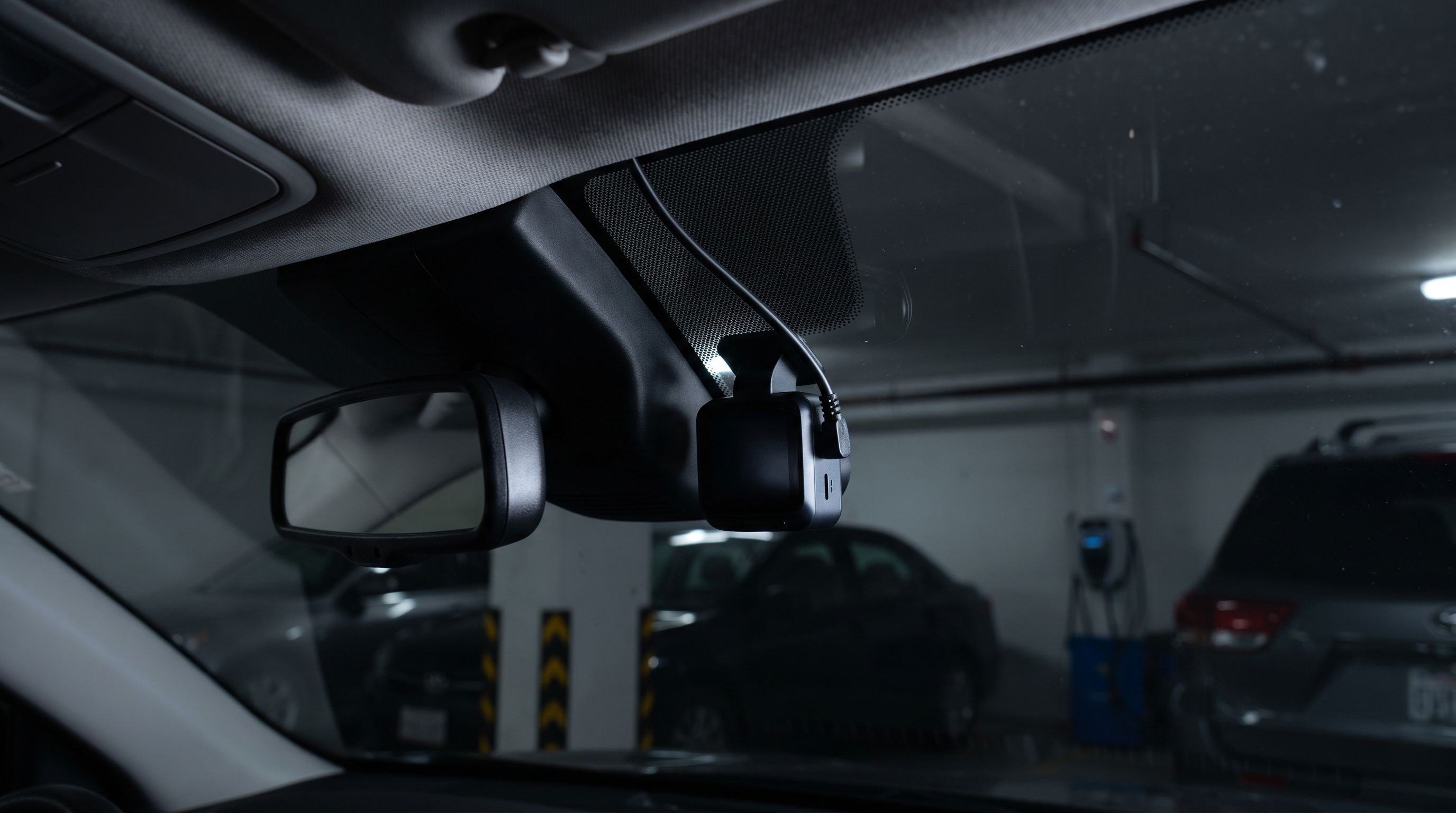
Parking Mode Drain, Explained: Why Dash Cams Kill Batteries
Parking mode is the number one cause of dash cam battery drain. Here's how hardwire kits, voltage cutoffs and battery packs actually compare in 2026.
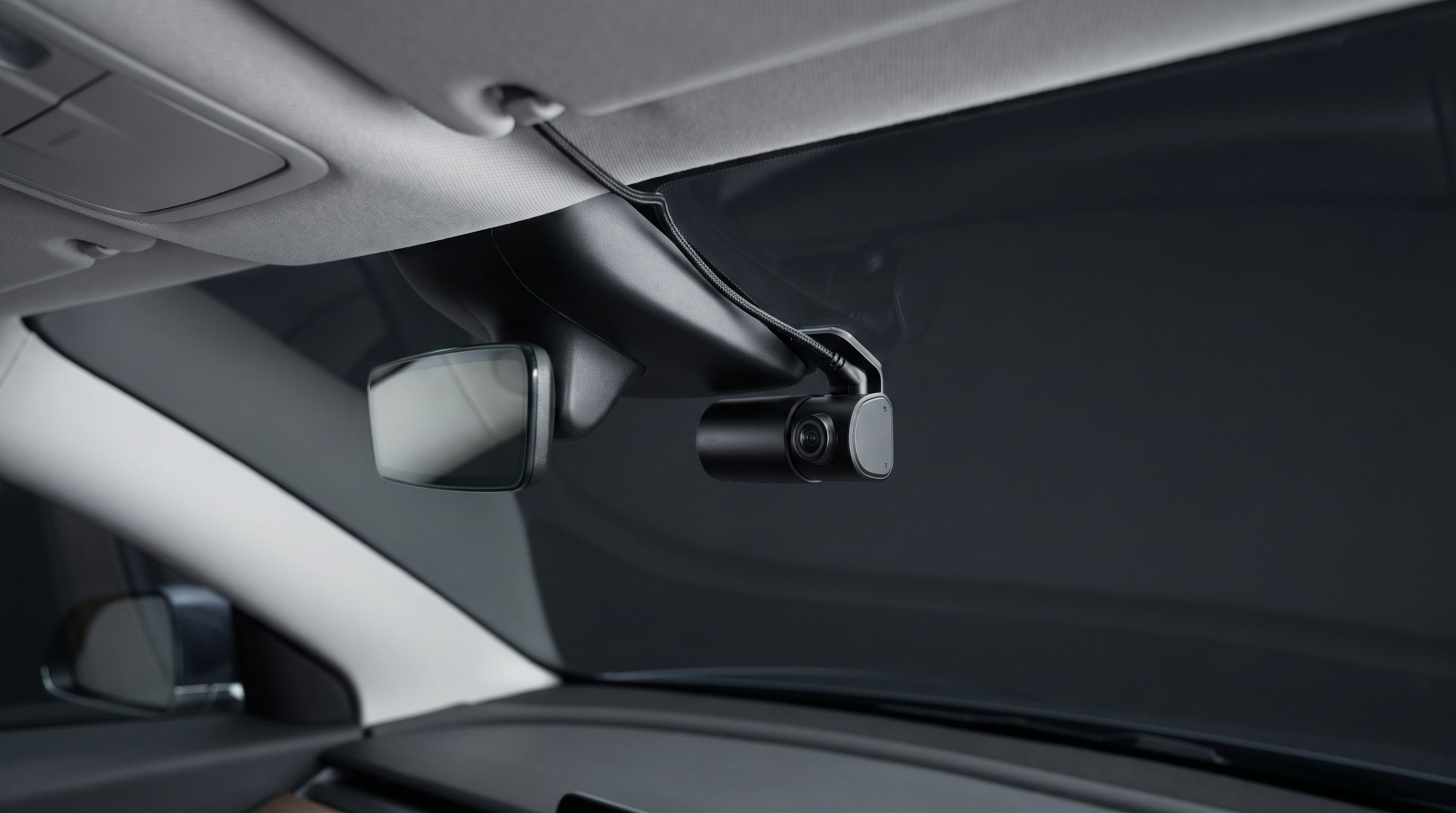
Dash Cam for a Leased Car in 2026: No-Drill Power Routes
The best no-drill dash cam setups for leased cars in 2026 — OBD and fuse-tap power, adhesive mounts, and how to route cables around A-pillar airbags safely.
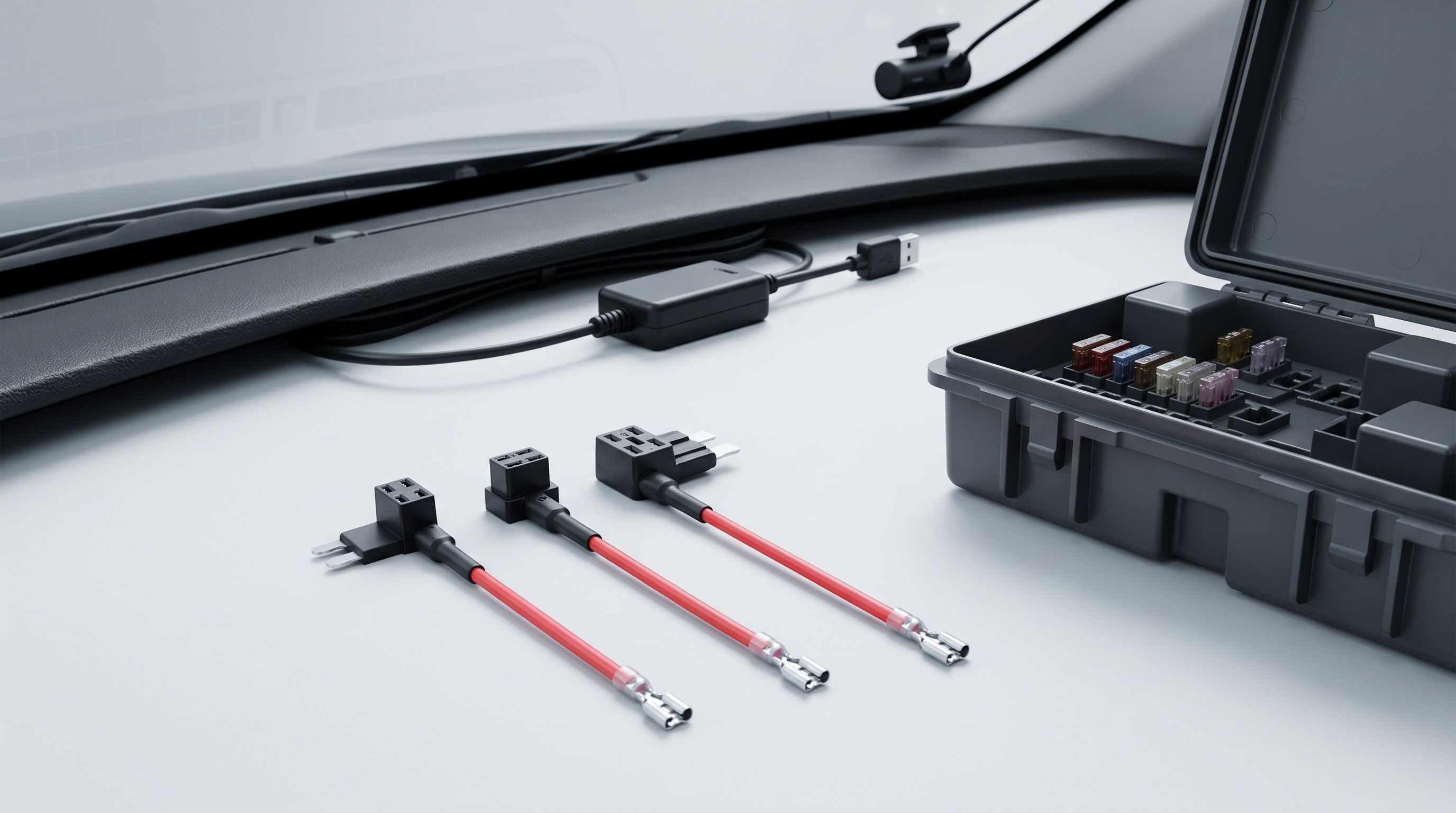
Dash Cam Hardwire Kit 2026: Match the Tap to Your Fuse Box
Pick the right dash cam hardwire kit in 2026: mini vs micro2 vs low-profile fuse taps, voltage cutoff settings, ACC vs constant circuits, and fitment checks before you order.