Dash Cam GPS & Parking Mode 2026: Which Tier Is Worth It?
GPS logging, radar parking mode, LTE cloud — which dash cam upgrades actually earn the price jump in 2026? We compare four picks and who each tier suits.
Reader-supported: we may earn a commission from links on this page, at no extra cost to you. It never affects our picks. Learn more.
Dash cam marketing in 2026 leans hard on three upgrades: GPS logging, radar-based parking detection, and cloud/LTE connectivity. Each one adds real money to the sticker — and each one solves a genuinely different problem. The trap is paying for a feature tier your parking situation and insurance claim risk don't justify.
We compared current models using manufacturer specs, independent review testing, and verified owner feedback to work out where the price jumps actually buy you something. Short answer: GPS is close to mandatory, buffered parking mode is worth hardwiring for, radar is a niche fix for a specific problem, and LTE cloud only pays off if you genuinely can't get to the car.
The short version
- Best overall: Viofo A229 Pro
- Best parking protection: Thinkware U3000
- Budget pick: Viofo A119 Mini 2
- Best cloud/LTE: BlackVue DR970X-2CH LTE
- Best image quality: Viofo A329S
 Best image quality · Viofo A329S — Check price on Amazon →
 Best cloud/LTE · BlackVue DR970X-2CH LTE — Check price on Amazon →
 Budget pick · Viofo A119 Mini 2 — Check price on Amazon →
 Best parking protection · Thinkware U3000 — Check price on Amazon →
 Best overall · Viofo A229 Pro — Check price on Amazon →
What each feature tier actually does
Tier 1: GPS logging
A GPS module stamps every clip with speed, coordinates and heading. It costs the manufacturer very little, which is why nearly every serious dash cam in 2026 includes it — some built in, some as a bundled mount.
Why it matters: in a disputed collision, "the other driver claims I was speeding" is one of the most common arguments, and a GPS track is the cheapest way to shut it down. It also makes footage searchable on a map in the desktop player, which saves real time when you're hunting for an incident from three weeks ago.
What it doesn't do: GPS doesn't improve video quality, and it won't help if you never pull the card. Treat it as insurance paperwork, not a performance feature. Avoid models where GPS is an extra-cost accessory unless you're certain you'll buy it.
Tier 2: Parking mode (and the three flavours)
"Parking mode" is a catch-all for recording while the engine is off. There are three mechanisms, and the differences matter more than the marketing suggests:
- Motion/impact detection: The camera stays powered and watches the frame, or waits for the G-sensor. Cheap and effective for hit-and-runs, but it misses the moments before impact unless the camera buffers.
- Buffered recording: The camera keeps a rolling few seconds in memory, so the saved clip includes what happened before the trigger. This is the feature that turns "a scrape appeared" into "here's the car that did it, with a plate." Several 2026 flagships run roughly a 10-second buffer.
- Time-lapse: Low frame-rate continuous capture. Modest power draw, but low evidentiary value for plates.
The catch: all of these need constant power. That means a hardwire kit tapped into a fuse box with low-voltage cutoff, or a dedicated battery pack. A dash cam on a cigarette-lighter socket that dies with the ignition has no parking mode at all, regardless of what the box says.
Tier 3: Radar parking detection
Thinkware is the one mainstream brand shipping radar-assisted parking mode, and it's the headline feature on the U3000 and U3000 Pro. Instead of keeping the image sensor awake and analysing pixels, a low-power radar module watches for approaching objects and wakes the camera only when something actually gets close.
Two real benefits: dramatically lower idle power draw (your 12V battery survives longer unattended), and far fewer false triggers from shadows, headlight sweeps, rain or snow. Anyone who has come back to 400 junk parking clips on a card knows why that second point is worth money.
Who should care: people who park outdoors on a street or in a busy lot for days at a time, people with a vehicle that has a small or ageing battery, and anyone who's already tried motion-based parking mode and given up on it. If you park in a locked garage every night, radar is a solution to a problem you don't have.
Tier 4: Cloud and LTE
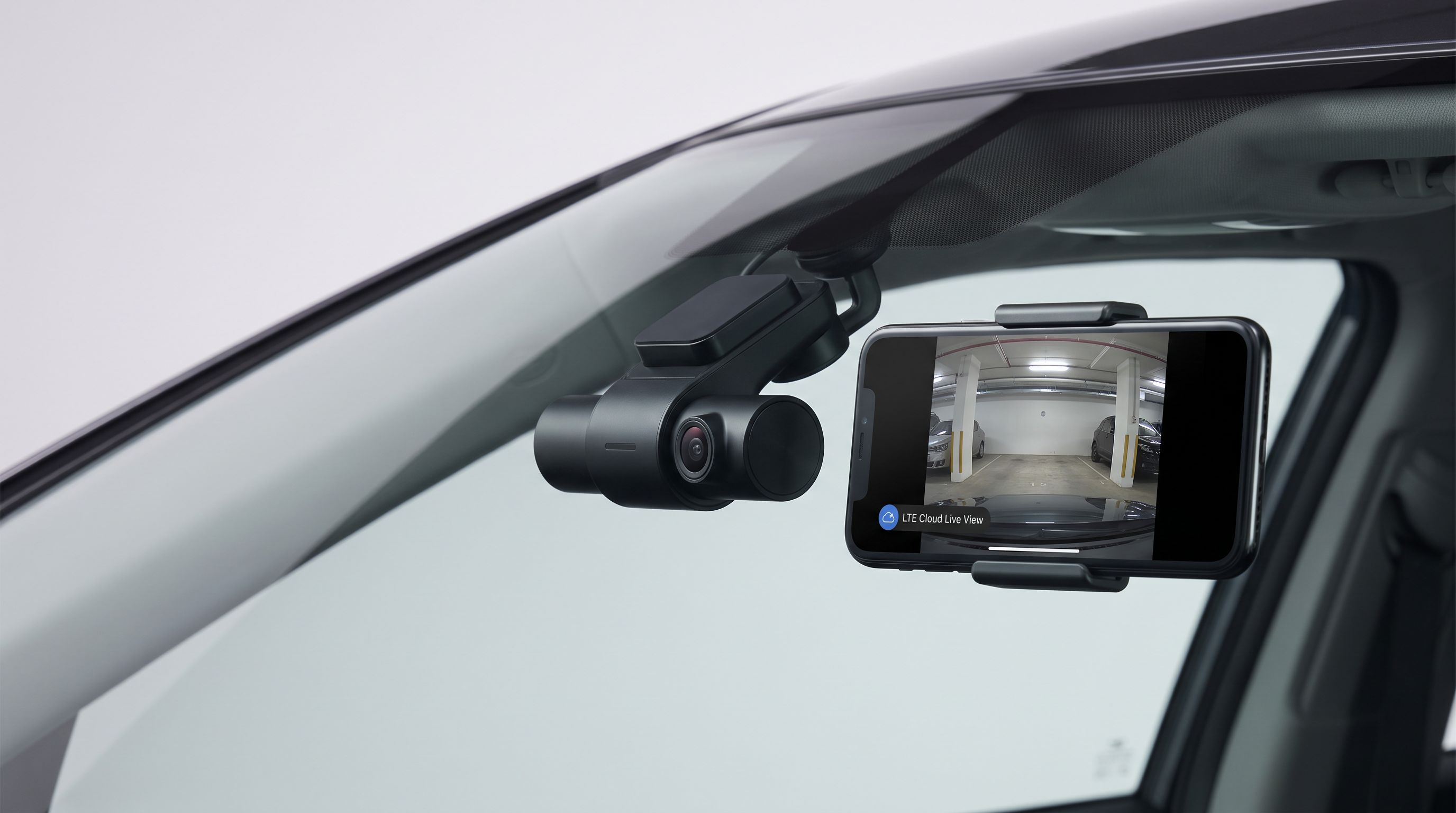
Cloud models — BlackVue has been doing this longest — upload event clips over Wi-Fi or an on-board LTE modem and push an alert to your phone the moment the car is hit. Some support live view and remote track-down.
This is the most expensive tier and the only one with ongoing cost: a data plan, a subscription, or both. It's genuinely valuable for fleet owners, people who park a car in a shared lot blocks away, parents monitoring a teen driver, or anyone whose main fear is theft rather than collision disputes. For a commuter who parks in their own driveway, it's hard to justify — you'll be standing next to the car before the notification is useful.
Comparison table
| Model | Resolution (front) | GPS | Parking mode type | Cloud/LTE | Best for |
|---|---|---|---|---|---|
| Viofo A229 Pro | 4K HDR | Built-in | Buffered, motion + impact (hardwire required) | Wi-Fi app only | Most drivers wanting flagship basics |
| Thinkware U3000 | 4K | Built-in | Radar-assisted, plus energy-saving and buffered modes | Optional connected features | Street parkers, false-trigger sufferers |
| Viofo A119 Mini 2 | 2K | Built-in | Motion/impact, time-lapse (hardwire required) | Wi-Fi app only | Budget builds, second vehicles |
| BlackVue DR970X-2CH LTE | 4K front + rear | Built-in | Buffered with cloud push alerts | Built-in LTE (subscription) | Remote monitoring, theft risk |
| Viofo A329S | 4K | Built-in | Buffered, motion + impact | Wi-Fi app only | Plate capture and low-light priority |
Specs vary by region and firmware revision — confirm the exact variant and what's in the box (hardwire kit, rear camera, CPL filter) before ordering.
The picks
Viofo A229 Pro — best overall
Prices last checked October 5, 2026. Amazon prices change frequently, so treat these as a guide and check the live price before you buy.
Viofo A229 Pro
4K HDR front with GPS and buffered parking mode — the sweet spot before prices climb steeply.
This is the model most buyers should land on. You get 4K HDR front capture, built-in GPS logging, and buffered parking mode once you add a hardwire kit — the three things that actually matter in a claim — without stepping into subscription territory. Wirecutter named the A229 Pro its overall pick, and owner feedback consistently praises the capacitor-based build (better heat tolerance than lithium cells) and a desktop player that plots footage on a map.
What it gives up: no radar, so parking detection relies on image motion and the G-sensor, and outdoor street parkers will still see some false triggers. No LTE either, so alerts only arrive when you're near the car. Rear camera and hardwire kit are often separate purchases — budget for both.
Thinkware U3000 — best parking protection
Thinkware U3000
The only mainstream brand offering true radar-based parking detection, plus energy-saving modes.
If parking incidents are your actual reason for buying, this is the one worth the jump. Thinkware remains the only mainstream brand offering radar-based parking detection, and it changes the experience: the camera sleeps at very low draw until radar senses something approaching, then wakes and records. Reviewers covering 2026 parking-mode options repeatedly single it out for having the deepest menu of parking options, including energy-saving and time-lapse variants alongside radar.
The trade-offs are real. It's a premium price, the feature set has a learning curve, and you'll want a proper hardwire install with voltage cutoff set conservatively. Image quality is very good but not categorically ahead of the Viofo flagships — you're paying for parking intelligence, not pixels.
Viofo A119 Mini 2 — budget pick
Viofo A119 Mini 2
Compact 2K single-channel with GPS and parking mode for a fraction of flagship money.
The compact single-channel option for people who want evidence, not a surveillance system. You still get 2K recording, built-in GPS, Wi-Fi and a parking mode — the feature floor that matters — in a body small enough to hide entirely behind the mirror. Reviewers consistently flag it as the best value entry in Viofo's line, and it's an easy recommendation for a second car, a teen's first vehicle, or a lease you don't want cluttered.
What you give up: 2K rather than 4K, so plate capture at distance or at night is noticeably weaker; no rear coverage; and parking mode is motion/impact rather than radar-assisted. Hardwiring is still required for anything to happen while parked.
BlackVue DR970X-2CH LTE — best cloud/LTE
BlackVue DR970X-2CH LTE
Live view and instant parking-impact push alerts over built-in LTE, if you'll pay the subscription.
Buy this one for a specific reason: you need to know now. With built-in LTE, an impact while parked triggers a push notification and an uploaded clip, and you can pull a live view of the car remotely. For anyone who parks in a shared or public lot, runs a small fleet, or is more worried about theft and vandalism than a highway collision, that's a genuinely different product category.
Costs beyond the camera are the honest downside: a data plan and cloud subscription, plus a hardwire install and ideally a supplementary battery if you leave the car for days. Image quality is strong front and rear, but you can match it for less if you don't need the connectivity.
Viofo A329S — best image quality
Viofo A329S
Newer Viofo flagship with a sharper sensor, GPS logging and strong low-light front capture.
The newer Viofo flagship, called out by reviewers in 2026 as a top overall choice after extensive testing. If your priority is reading plates — at night, in rain, from the lane over — this is where to spend. GPS logging, buffered parking mode and the same capacitor-based durability philosophy carry over from the A229 Pro line.
It's the enthusiast choice rather than the default one. There's no radar module, no LTE, and for a lot of everyday claims the A229 Pro's footage is already sufficient. Pick the A329S if you drive a lot at night, park on busy roads, or have already had one incident where the footage was almost good enough.
How to choose
Where does the car sleep?
This single question decides your tier. Locked private garage: skip radar and LTE, buy GPS plus basic parking mode. Driveway or quiet street: buffered parking mode is the upgrade worth having. Busy public lot or on-street in a dense area: radar (Thinkware U3000) or cloud alerts (BlackVue DR970X-2CH LTE) start to pay for themselves.
Budget for the install, not just the camera
A dash cam with parking mode is only as good as its power supply. Factor in a hardwire kit with low-voltage cutoff — or a dedicated dash cam battery pack if your car has a small battery or you leave it parked for long stretches. Many modern vehicles also use smart alternators and body control modules that make fuse-tap selection non-obvious; if you're unsure, a professional install is money well spent.
Match storage to recording mode
Parking mode eats card space and card lifespan. Use a high-endurance microSD card rated for continuous video, size it to your recording mode (buffered and 4K dual-channel burn through capacity fast), and format it in-camera on a schedule. Card failure is the single most common reason owners discover they have no footage when they need it.
Check fitment and local rules
Windshield mounting position, rain-sensor housings and heated windshield elements vary by vehicle — check that your chosen camera's body and mount clear your mirror housing on your specific year, make and model. Some regions also restrict windshield placement or require notice when recording audio; a quick check before install saves a redo.
FAQ
Do I need GPS on a dash cam? For most drivers, yes. It's inexpensive, it embeds speed and location into the file, and it directly counters the most common disputed claim in a collision. Prefer models with GPS built in rather than as a paid accessory.
Does parking mode drain my car battery? It can. Buffered and motion-based modes keep the camera powered and the sensor awake. Mitigate with a hardwire kit that has an adjustable low-voltage cutoff, a radar-assisted camera that idles at very low draw, or a separate dash cam battery pack that isolates the camera from the starter battery entirely.
Is radar parking mode worth the extra money? Only if you park outdoors in busy areas. The payoff is fewer false triggers and much lower idle power draw, not better video. Garage parkers won't see the benefit.
Can I run parking mode from the cigarette lighter? Usually not. Most vehicles cut power to that socket with the ignition. You need a hardwired constant-power source or a battery pack for anything to record while parked.
Do cloud dash cams require a subscription? Generally yes — an LTE data plan, a cloud service tier, or both. Budget for the ongoing cost before committing, and skip the tier if you mostly park where you can physically check the car.
Get the best car care deals in your inbox
Join the GarageProof newsletter for hand-picked car care deals and new buying guides. No spam, unsubscribe anytime.
Related reads
LTE Cloud Dash Cam in 2026: Is the Subscription Worth It?
We compared LTE cloud dash cams in 2026 on hardware cost, monthly plan fees, live-view limits and parking alerts — and when a plain SD card cam is smarter.
Dash Cam for Uber Drivers 2026: 3 Channels or 2?
The best dash cam for Uber drivers in 2026 depends on cabin IR, mounting room, and parking power. We compare 2- vs 3-channel picks from Vantrue, Viofo and more.
Dash Cam for a Leased Car in 2026: No-Drill Power Routes
The best no-drill dash cam setups for leased cars in 2026 — OBD and fuse-tap power, adhesive mounts, and how to route cables around A-pillar airbags safely.