Dash Cam for Uber Drivers 2026: 3 Channels or 2?
The best dash cam for Uber drivers in 2026 depends on cabin IR, mounting room, and parking power. We compare 2- vs 3-channel picks from Vantrue, Viofo and more.
Reader-supported: we may earn a commission from links on this page, at no extra cost to you. It never affects our picks. Learn more.
If you drive for Uber or Lyft, a dash cam isn't an accessory — it's the only neutral witness you have. Most rideshare disputes don't happen in front of the car. They happen behind you: an accusation about driving behavior, a damage claim, a passenger who turns aggressive, a cleaning-fee dispute that hinges on who spilled what. That's why the rideshare dash cam conversation has shifted from "how many megapixels" to "how many channels, and where do they point."
The real decision in 2026 is narrower than it looks. Three channels (front, cabin, rear) is the default recommendation, and for good reason. But a lot of drivers would be better served by a cleaner two-channel setup — especially if windshield real estate is tight, if the car has a sharply raked glass, or if parking-mode power is the priority. Below we compare the trade-offs and name the specific models worth your money.
The short version
- Best overall for rideshare: Vantrue N4 Pro
- Best cabin coverage: Vantrue N5
- Best 2-channel image quality: Viofo A229 Pro
- Best modular setup: Viofo A329S
- Budget rideshare pick: Cobra SC 220C
 Budget rideshare pick · Cobra SC 220C — Check price on Amazon →
 Best modular setup · Viofo A329S — Check price on Amazon →
 Best 2-channel image quality · Viofo A229 Pro — Check price on Amazon →
 Best cabin coverage · Vantrue N5 — Check price on Amazon →
 Best overall for rideshare · Vantrue N4 Pro — Check price on Amazon →
Three channels vs two: what you're actually trading
A three-channel system packs a front lens, an interior lens with infrared LEDs, and a separate rear camera on a cable. A two-channel system drops one of those — usually the cabin lens, though some drivers deliberately skip the rear instead and run front plus interior.
Here's the honest framing:
Go three-channel if your biggest exposure is passenger behavior and false claims. The interior IR channel is the one that resolves he-said-she-said disputes, and it's the footage Uber and Lyft support actually find persuasive when a rider claims you were unsafe or hostile. If you're driving at night in a busy market, this is the channel that earns its keep.
Go two-channel if your rear glass is heavily tinted or blocked, if your car has a tight mirror area, or if you simply want the sharpest possible front and rear plate capture for collision claims. Fewer channels means a smaller device, less heat, less wiring, lower bitrate demands on the card, and fewer things to fail. A dedicated 2K or 4K rear camera will almost always out-resolve the rear view you get through an interior lens shooting through a cabin.
One nuance that trips people up: on a three-channel cam, the "interior" lens often doubles as your rear view by looking out the back window. That works in a sedan with clear glass. It mostly fails in an SUV with cargo, headrests, passengers, or privacy tint. If you drive an SUV or minivan for UberXL, assume you need a separate rear camera on the tailgate glass — which means a true 3-channel (or the 4-lens N5), not a front-and-interior dual.
How to choose
Infrared cabin coverage, not just "night vision"
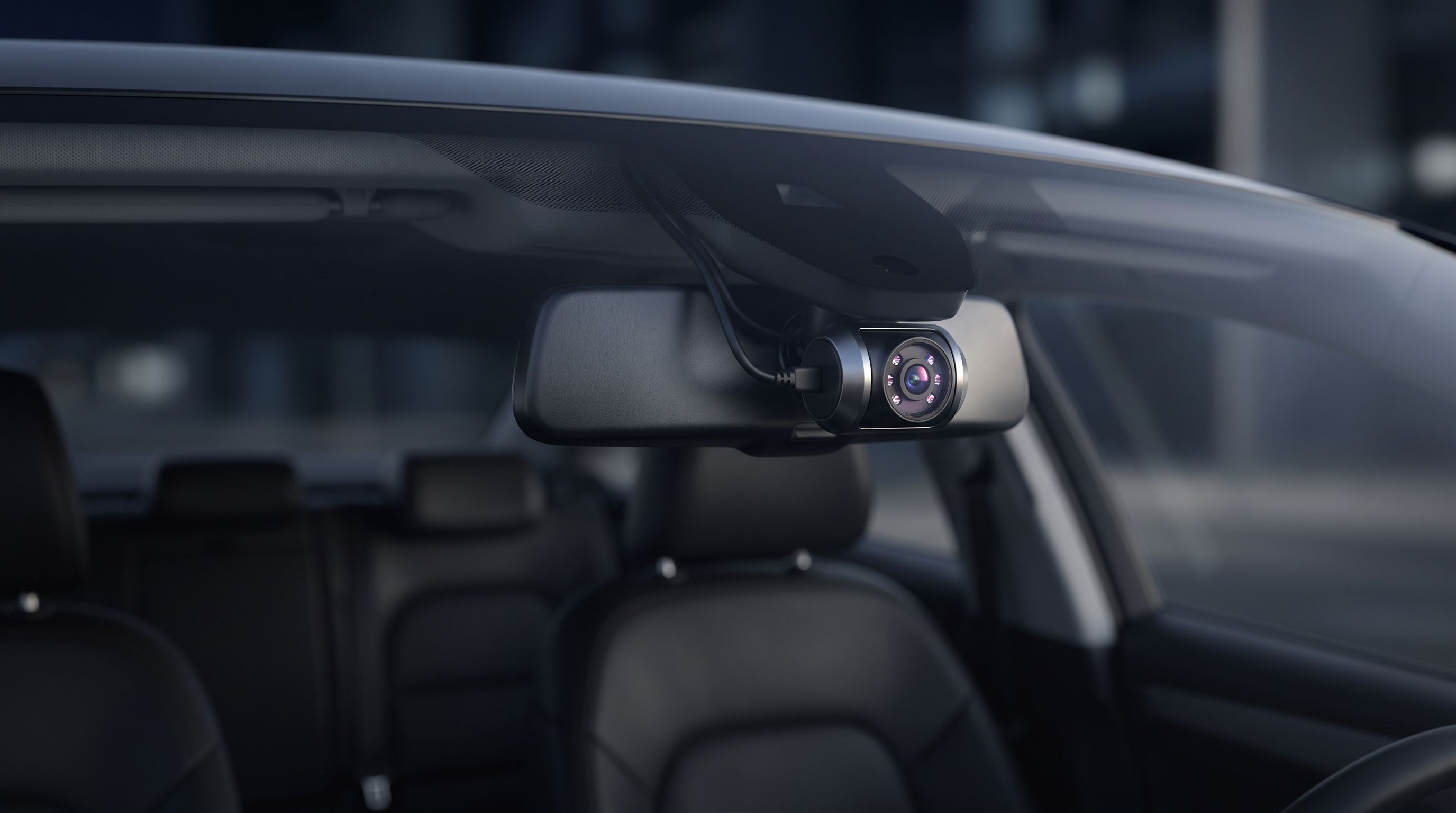
Interior footage is useless if the cabin is dark, and your cabin is dark most of the time you need it. What matters is the number and placement of IR LEDs, the interior lens field of view, and whether the IR is bright enough to reach the third row. Infrared also means the interior image is black-and-white — that's normal and expected, and it's still admissible evidence for identifying a person, a gesture, or a spill.
Check two things: does the interior camera cover the full width of the back seat (a narrow lens will miss a passenger sitting behind you), and does IR mode engage automatically rather than requiring you to toggle it? Also be aware that IR LEDs shining into windshield glass can create reflections; a properly angled interior lens and a clean glass surface matter more than the LED count.
Windshield mounting room
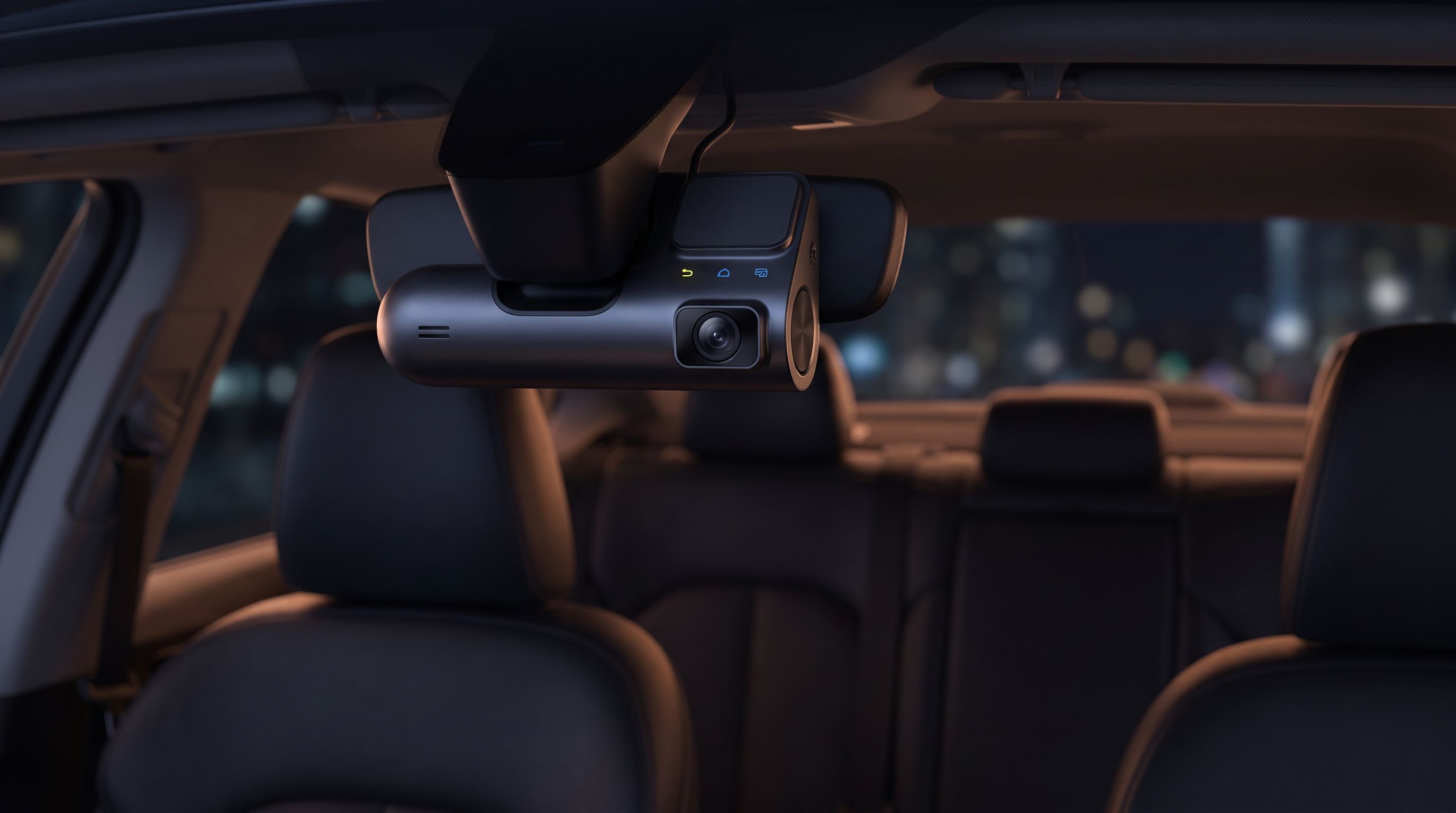
This is the quiet dealbreaker. All-in-one three-channel cams are physically larger than a slim two-channel unit, and the interior lens needs to sit roughly at mirror height, centered, with a clear line to the back seat. Cars with a large rain-sensor housing, a lane-departure camera module, a huge mirror stalk, or an aggressively sloped windshield can leave you with nowhere good to put a bulky body.
Before you buy, do this: sit in the driver's seat, look at the strip of glass behind and beside the rearview mirror, and measure the clear space in inches. Then check the dimensions on the product page. If the cam sits too low it blocks your view and may run afoul of local windshield-obstruction rules; too far to the passenger side and the interior lens frames the door instead of the seat. A compact two-channel front cam tucked beside the mirror is far easier to place — which is a legitimate reason to choose two channels over three.
All-day parking mode power
Rideshare cars sit in airport queues, grocery lots, and apartment parking for hours. Parking mode only works if you give it power, and the cigarette lighter socket almost certainly cuts out with the ignition.
You have three realistic options:
- Hardwire kit with low-voltage cutoff. Cheapest, cleanest, draws from the car battery with a programmable shutoff (typically around 11.8–12.0V on a 12V system). Good for several hours; not ideal for all-day coverage on an older battery.
- Dedicated dash cam battery pack. Charges while you drive, then runs the cam independently. This is what you want if you need genuinely long parking coverage without risking a no-start.
- OBD power adapter. Convenient and tool-free, but behavior varies by vehicle and some cars keep the port live or dead in ways that undermine parking mode.
Also look at which parking mode the cam offers: buffered motion/impact detection (saves a few seconds before the event — far more useful) versus simple time-lapse. Buffered is the one that catches the hit-and-run approach, not just the aftermath.
Storage, heat and reliability
Three channels at high bitrate chew through cards. Use a high-endurance microSD rated for continuous write, size it generously (256GB is a sensible floor for a 3-channel setup), and format it from the cam's own menu on a regular schedule. Heat is the other silent killer: a black cam baking on a windshield in summer is a hard environment, which is why many rideshare-focused models use supercapacitors instead of lithium batteries. Prefer supercapacitor designs if you park outdoors in a hot climate.
Evidence features that matter to a claims adjuster
GPS logging (speed and location stamped on the file), a reliable manual-lock button you can hit from the driver's seat, accurate date/time, and easy file retrieval via Wi-Fi app. If pulling footage is a 20-minute ordeal, you won't do it when it counts.
Comparison
| Model | Channels | Interior IR | Best suited to | Main trade-off |
|---|---|---|---|---|
| Vantrue N4 Pro | 3 (front / cabin / rear) | Yes | Full-time Uber & Lyft drivers in sedans and crossovers | Larger body needs real mounting room |
| Vantrue N5 | 4 lenses | Yes, wide | UberXL, vans, SUVs, third-row coverage | Most complex install; biggest storage appetite |
| Viofo A229 Pro | 2 (front / rear) | No | Drivers prioritizing plate capture and front/rear clarity | No cabin coverage for passenger disputes |
| Viofo A329S | 1–2, modular | Optional second channel | Drivers who want to start simple and expand | Interior coverage depends on how you configure it |
| Cobra SC 220C | 2 (front / cabin) | Yes | New drivers testing whether a cabin cam is worth it | Lower resolution ceiling; no dedicated rear camera |
The picks
Vantrue N4 Pro — best overall for rideshare
Prices last checked October 19, 2026. Amazon prices change frequently, so treat these as a guide and check the live price before you buy.
Vantrue N4 Pro
The default 3-channel rideshare cam: 4K front, IR cabin, rear coverage, and proper hardwire parking mode.
This is the model most rideshare drivers end up with, and the recommendation holds in 2026. You get a genuine three-channel layout: high-resolution front, an infrared interior lens for the cabin, and a separate rear camera you run to the back glass. That combination covers the three things that actually generate claims — the collision in front, the passenger behind you, and the car that rear-ends you in an airport queue. It supports hardwiring for parking mode with buffered recording, and the file management is straightforward.
What you give up: size. The all-in-one body is chunky, and on a steeply raked windshield it can be fiddly to position so the interior lens frames the back seat properly. Measure first.
Vantrue N5 — best cabin coverage
Vantrue N5
Four lenses in one compact body, with wide IR interior coverage for vans, SUVs and XL runs.
If you run UberXL, drive a minivan, or regularly carry a full load of passengers, a single interior lens pointed straight back often misses people sitting at the edges of the second row and sees nothing of the third. The N5 addresses that with a four-lens arrangement that covers a much wider slice of the cabin plus front and rear, all in a single head unit. For drivers whose main worry is passenger conduct in a large vehicle, it's the most complete answer available.
Trade-offs are real: it's the most demanding setup here for storage and power, and the install takes longer. It's overkill for a Corolla.
Viofo A229 Pro — best 2-channel image quality
Viofo A229 Pro
4K HDR front plus 2K rear with excellent plate capture and reliable buffered parking mode.
If you've decided the cabin lens isn't for you — maybe you mostly do daytime airport runs, maybe your market skews low-risk, maybe you just want the cleanest install possible — this is the two-channel to get. The 4K HDR front and high-resolution rear deliver the kind of plate legibility that matters when you're trying to identify the car that sideswiped you and left. It's compact, sits neatly beside the mirror, and its buffered parking mode with a hardwire kit is dependable.
The obvious omission is interior coverage. For a full-time rideshare driver, that's a meaningful gap — this is the right pick only if you've consciously chosen to accept it.
Viofo A329S — best modular setup
Viofo A329S
Sharp 4K front with the option to add an interior or rear second channel later as your needs change.
Not sure yet whether you need three channels? The A329S is a sharp 4K front camera that accepts a second channel, so you can start with front-only and add an interior or rear camera once you've driven enough to know where your exposure actually is. For a part-time driver who also uses the car personally, that flexibility is genuinely useful — and the front image quality is among the best available right now.
The catch is that "modular" means your cabin coverage depends entirely on how you configure it, and a two-channel A329S can't simultaneously do interior and rear. Decide which one matters more.
Cobra SC 220C — budget rideshare pick
Cobra SC 220C
Affordable dual-channel front plus IR cabin cam aimed squarely at rideshare drivers.
A dual-channel setup with a front camera and an infrared cabin camera, aimed specifically at rideshare and taxi work. If your goal is to get some interior evidence on the card without spending big, this does the job: the IR cabin view identifies who was in the car and what happened, which covers the most common dispute type.
Expect compromises. Resolution ceilings are lower than the Vantrue and Viofo models, and there's no dedicated rear camera, so you're unprotected for rear-end documentation. Think of it as a sensible first dash cam rather than a long-term setup for a full-time driver.
Fitment and install notes
Dash cams themselves are near-universal, but the hardware around them is not. Hardwire kits connect to your fuse box, and fuse layouts, fuse types (mini, micro2, low-profile) and always-on circuit choices vary by year, make and model. Before you order, check your owner's manual fuse diagram and confirm which fuse type your box uses, or buy a kit with assorted taps. If your vehicle has a start-stop system or a smart alternator, low-voltage cutoff thresholds may need adjusting.
Rear camera cable length also varies by need — a sedan run is far shorter than a long-wheelbase SUV run, and some kits ship with a cable that's too short for a van. Check the included cable length against your vehicle before install day.
Finally: audio recording and interior camera rules vary by state and country, and some jurisdictions require notice to passengers. A small visible sticker stating that audio and video recording is in progress is standard practice among rideshare drivers and is worth doing regardless.
FAQ
Do I really need three channels for Uber? If you drive nights or in a busy urban market, yes — the interior IR channel is the one that resolves passenger disputes, and that's the most common type of claim rideshare drivers face. If you drive daytime airport runs in a low-incident market, a high-quality two-channel like the Viofo A229 Pro is a defensible choice.
Will the interior camera work in the dark? Yes, via infrared LEDs. The image is black-and-white and lower contrast than daylight, but it's clear enough to identify people and actions. Keep the windshield clean and the lens angled to avoid IR glare bouncing off the glass.
Can a 3-channel cam's interior lens replace a rear camera? Only in a sedan with clear, untinted rear glass and no cargo. In SUVs, vans or tinted cars it won't give you usable rear footage. Plan on a separate rear camera.
How long will parking mode run? With a hardwire kit and low-voltage cutoff, typically a few hours before the cutoff protects your battery — exact runtime depends on your battery's age and health plus how many channels are recording. For genuinely all-day coverage, a dedicated dash cam battery pack is the better solution.
What size memory card should I use? Use a high-endurance microSD designed for continuous recording. For a three-channel setup, 256GB is a reasonable starting point; more if you want several days of history. Reformat from the camera's menu periodically — card failure is the single most common reason drivers discover they have no footage.
Does recording passengers cause problems with riders? Most riders are indifferent, and a visible recording notice usually ends the conversation. Check your local rules on audio recording specifically, since those are stricter than video rules in many places.
Get the best car care deals in your inbox
Join the GarageProof newsletter for hand-picked car care deals and new buying guides. No spam, unsubscribe anytime.
Related reads
Interior Dash Cams 2026: Cabin View Picks for Rideshare
The best interior dash cam for rideshare in 2026, compared on IR night clarity, three-channel coverage, parking-mode power draw and storage needs for Uber and Lyft drivers.
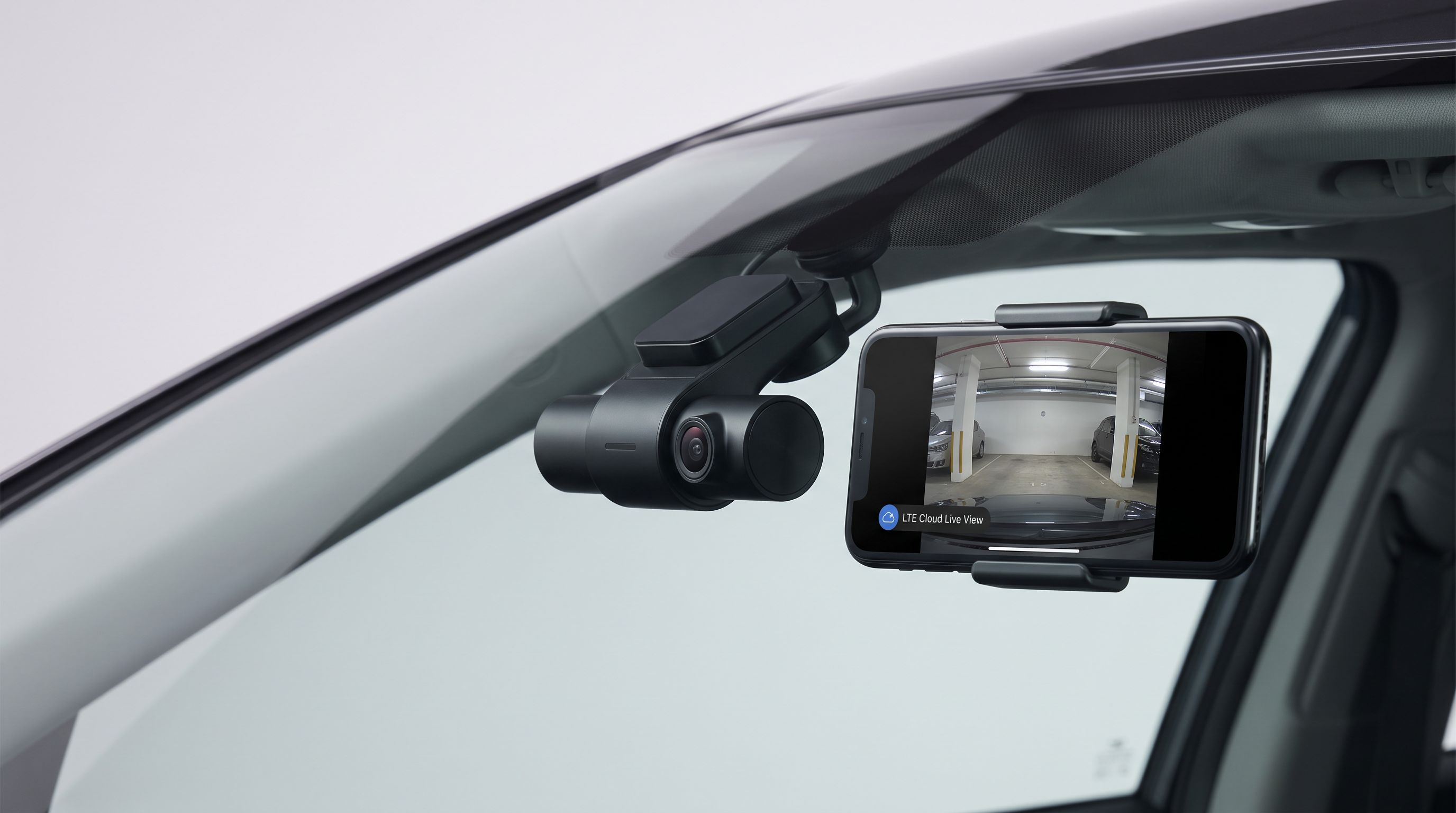
LTE Cloud Dash Cam in 2026: Is the Subscription Worth It?
We compared LTE cloud dash cams in 2026 on hardware cost, monthly plan fees, live-view limits and parking alerts — and when a plain SD card cam is smarter.
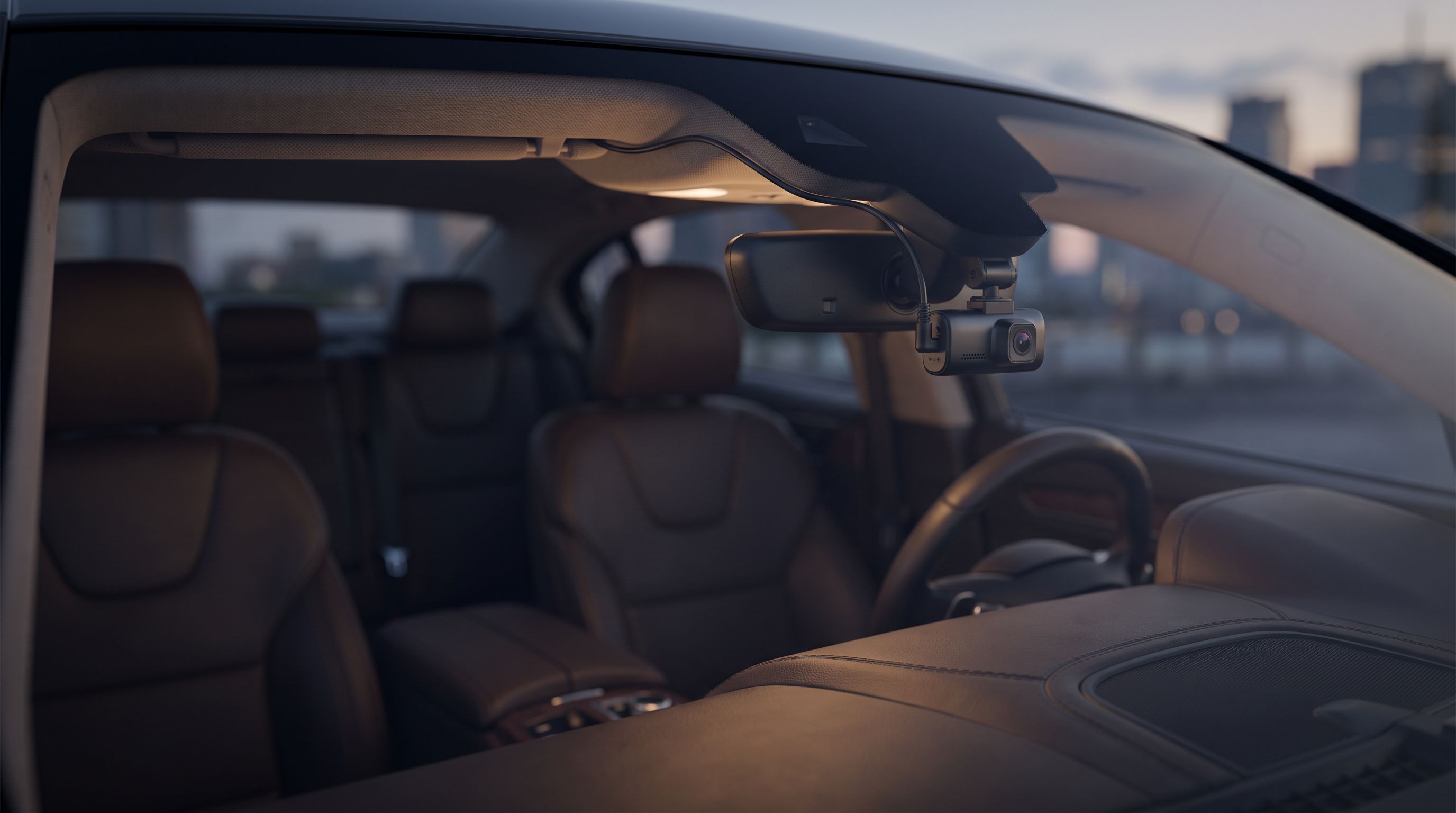
Dash Cam GPS & Parking Mode 2026: Which Tier Is Worth It?
GPS logging, radar parking mode, LTE cloud — which dash cam upgrades actually earn the price jump in 2026? We compare four picks and who each tier suits.