Dash Cam for a Leased Car in 2026: No-Drill Power Routes
The best no-drill dash cam setups for leased cars in 2026 — OBD and fuse-tap power, adhesive mounts, and how to route cables around A-pillar airbags safely.
Reader-supported: we may earn a commission from links on this page, at no extra cost to you. It never affects our picks. Learn more.
Leasing changes the dash cam question. You're not asking "which camera has the best night video" — you're asking "which camera and power setup can I pull out in three minutes at turn-in and leave zero evidence behind?" Drilled holes in an A-pillar, a hacked-up fuse box, or adhesive residue baked onto a headliner can all turn into excess wear-and-tear charges. Meanwhile, insurance-fraud claims and parking-lot hit-and-runs don't care what your lease says.
The good news: in 2026 you can get genuinely excellent footage and 24/7 parking surveillance without a single permanent modification. The install work is mostly about two things — what kind of fuse box your car has, and whether your A-pillar hides a curtain airbag. Get those right and the rest is cable-tucking.
The short version
- Best overall: Viofo A229 Pro
- Best one-handed install: Viofo A329S
- Smallest and least visible: Garmin Dash Cam Mini 3
- Best for connected parking alerts: Nextbase iQ 1K
- Best no-wiring parking power: BlackVue Power Magic Ultra Battery B-124X
 Best for connected parking alerts · Nextbase iQ 1K — Check price on Amazon →
 Smallest and least visible · Garmin Dash Cam Mini 3 — Check price on Amazon →
 Best one-handed install · Viofo A329S — Check price on Amazon →
 Best overall · Viofo A229 Pro — Check price on Amazon →
Why "no-drill" is easier than people think
Almost no modern dash cam install requires drilling. The myth persists because older installers used to run cables through firewall grommets or mount hardware to trim panels. Today a reversible install looks like this:
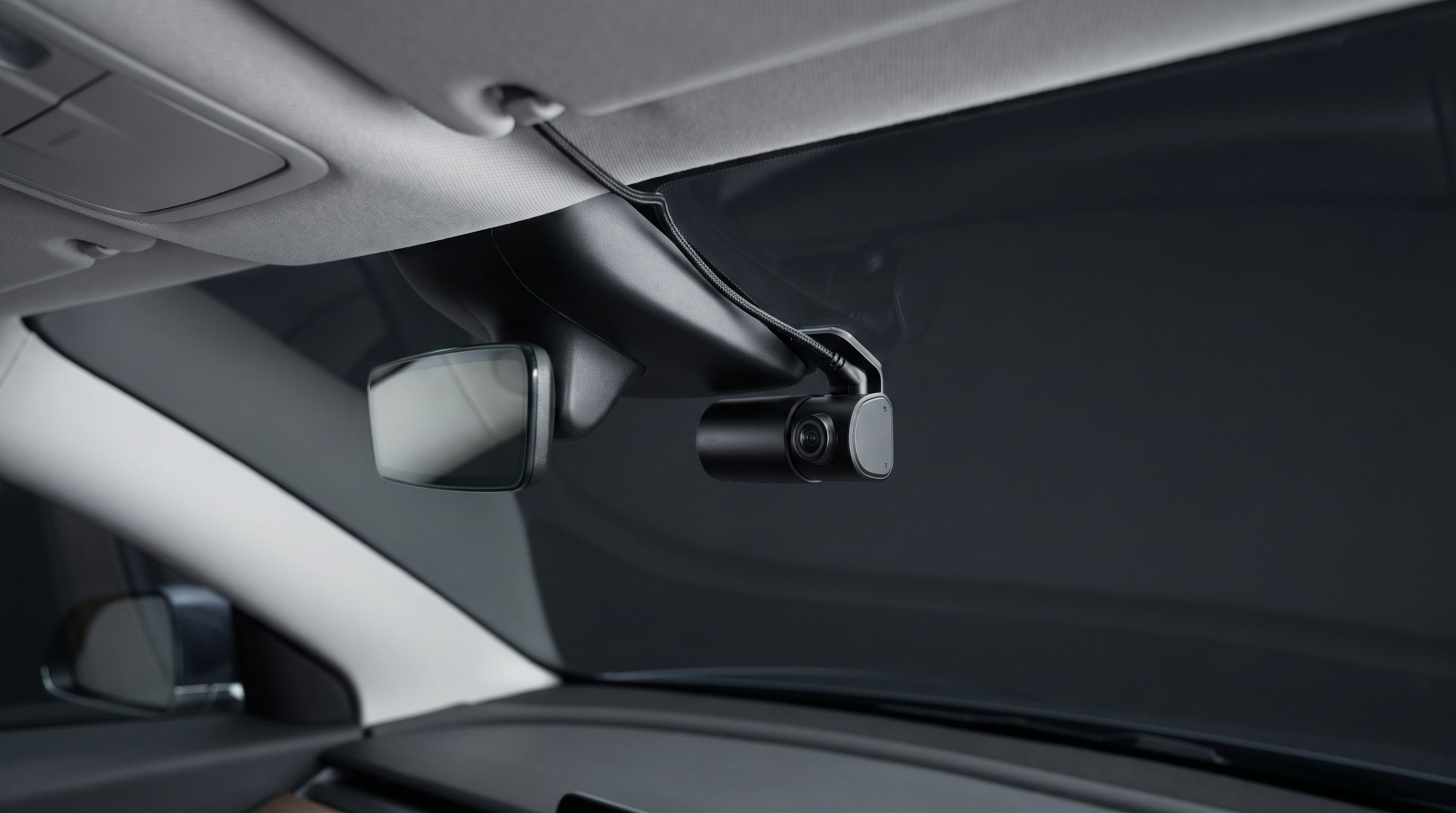
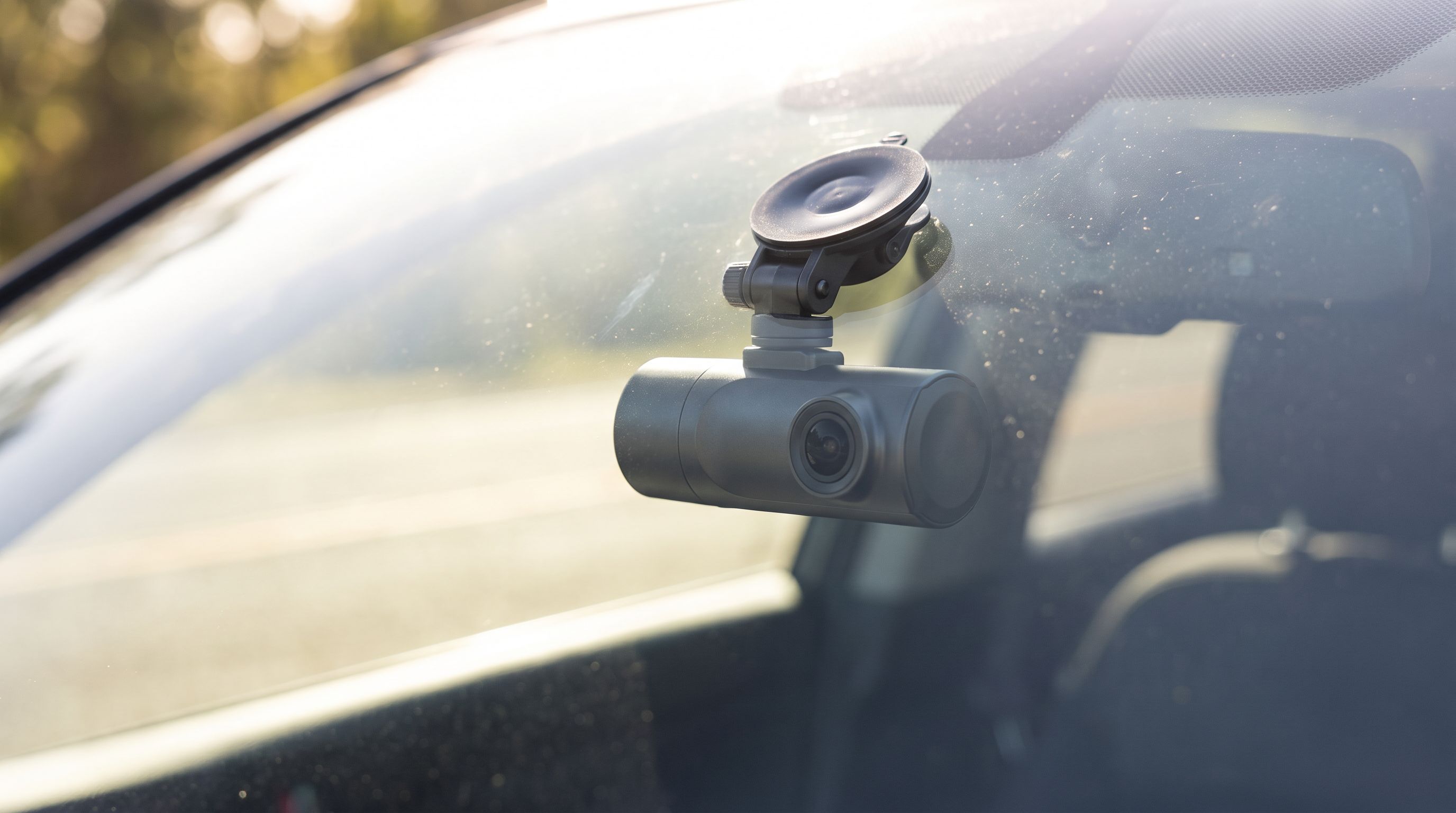
- Mount: 3M VHB adhesive pad or suction cup on the windshield, tucked behind the rearview mirror where it's out of your sight line and (in most jurisdictions) out of the legally restricted zone. Adhesive on glass is reversible — a hair dryer and some isopropyl alcohol remove it cleanly. Adhesive on plastic trim or headliner is what gets you in trouble.
- Cable route: Up to the headliner edge, across the top of the windshield, down the passenger A-pillar trim gap, under the weatherstrip, behind the kick panel, to the power source. Every step uses existing gaps. A plastic trim pry tool is the only "tool" required, and many dash cams ship with one.
- Power: This is where leases actually matter — and where you have three real options.
Your three power routes, ranked by reversibility
Option 1: 12V socket (the zero-risk route)
Plug the supplied adapter into the cigarette lighter / 12V socket. Nothing is touched, nothing is modified. The downsides: the socket in many cars cuts power with the ignition, so parking mode either doesn't work or relies on a tiny internal supercapacitor; and the cable has to run across the cabin to the center console, which looks messier.
This is still the right answer for a lot of leased cars, especially if you mostly want driving footage.
Option 2: OBD-II power cable
An OBD-II power cable plugs into the diagnostic port under the driver's dash — completely reversible, no tools. Some OBD cables provide constant power (enabling parking mode) with built-in low-voltage cutoff to protect the battery; others pass only switched power. Two cautions:
- Check whether your car's OBD port is constantly live or ignition-switched. Many are constant; some aren't.
- Some vehicles' modules stay awake when something is plugged into the OBD port, which can drain the battery or cause odd behavior. Many manufacturers' service bulletins discourage permanent OBD accessories. Worth a quick search for your specific year, make, and model before committing.
Option 3: Fuse-tap hardwire kit (reversible if done right)
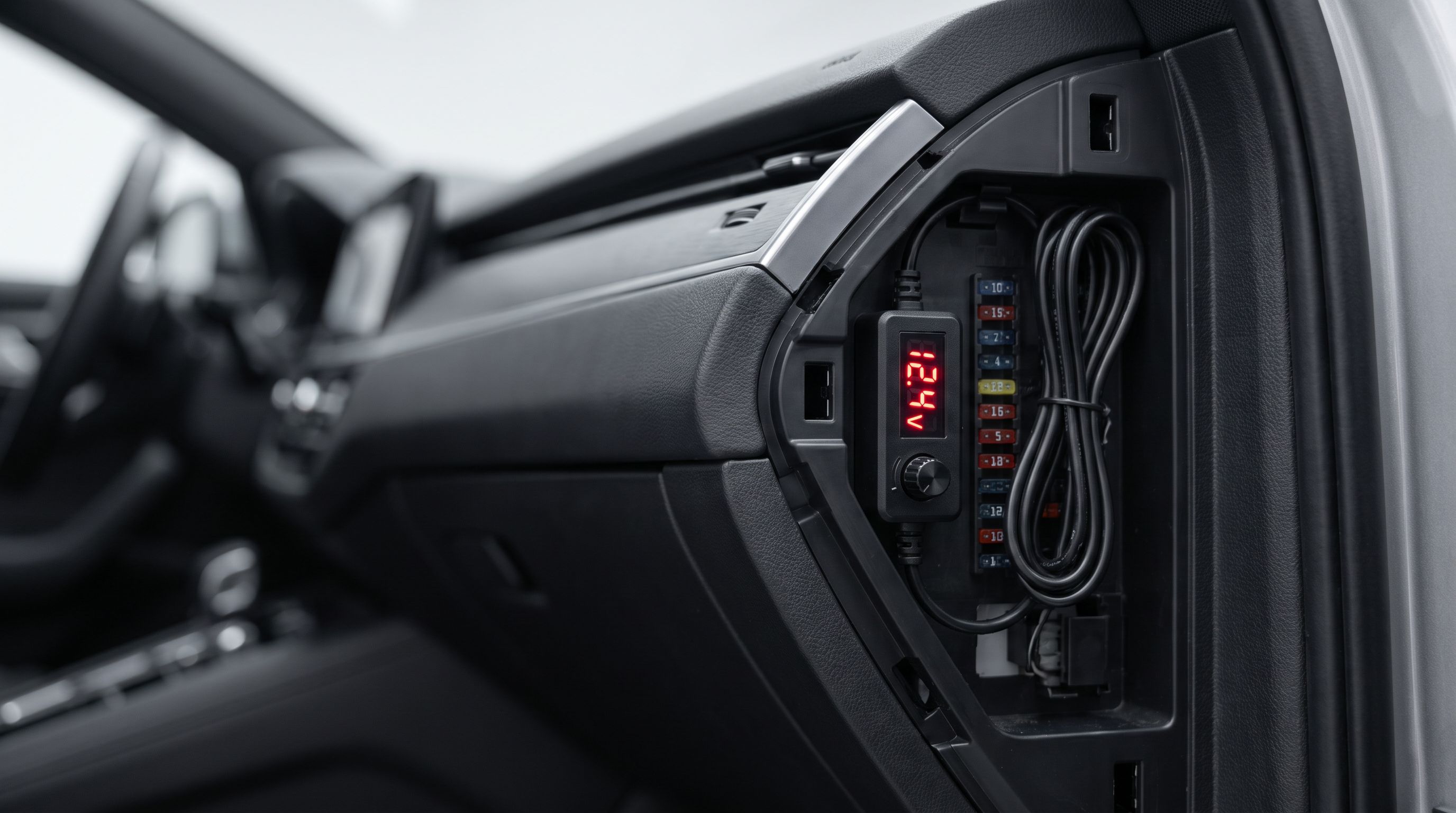
This gets the cleanest look and proper parking mode with voltage cutoff. The reversible part is the add-a-circuit fuse tap — a small adapter that sits in an existing fuse slot, carries the original fuse plus a new one, and adds no permanent change. Pull it out at turn-in, drop the original fuse back in, and the fuse box is untouched.
Three things decide whether this is a 20-minute job or a headache:
- Fuse size. You need the right add-a-circuit for your box: standard ATO/ATC, Mini, Low-Profile Mini (sometimes called Micro2 or LP-Mini), or Micro2. Open the fuse panel, pull one fuse, and compare it against a fuse-type chart before ordering. Buying the wrong physical size is the single most common first-attempt failure.
- Fuse box location. Driver's side kick panel is ideal. If your car's only accessible box is under the hood, the install gets much harder and a 12V or OBD route makes more sense.
- Ground point. You need a bolt or screw already present in the kick panel area. Use an existing one — do not drill a new one.
| Power route | Parking mode | Tools needed | Reversibility | Best for |
|---|---|---|---|---|
| 12V socket | Limited (usually none) | None | Perfect | Anyone nervous about the lease, driving footage only |
| OBD-II cable | Yes, on constant-power ports | None | Perfect | Fast parking mode, cars with a confirmed live OBD port |
| Fuse tap hardwire | Yes, with voltage cutoff | Trim tool, fuse puller, circuit tester | Full, if using an add-a-circuit | Cleanest look, best long-term parking protection |
| External battery pack | Yes, hours of it | Trim tool (routing only) | Perfect | Long parking sessions, no fuse box access |
How to choose
Check your A-pillar for a curtain airbag first
Nearly every car built in the last two decades has a side-curtain airbag hidden behind the A-pillar trim. Look for an "SRS" or "AIRBAG" stamp on the trim. Never route a cable behind that trim panel in a way that crosses the airbag deployment path, and never pry the pillar trim off unless you know how the clips release. The safe technique: tuck the cable into the outer seam between the pillar trim and the rubber weatherstrip, so it sits on the window side of the airbag, not on top of it. If the gap won't take the cable without force, run it across the headliner edge to the passenger side and down the same outer seam there — or just use the 12V socket. A thin cable is not worth compromising a restraint system.
Match the fuse tap to your fuse box type
Before ordering anything, open the interior fuse panel (usually driver's kick panel or behind a flap on the dash end cap), pull a fuse with the supplied puller, and identify the type by size. For hardwiring, pick an always-on circuit for the constant lead and an ignition-switched circuit for the accessory lead — a cheap circuit tester tells you which is which in about a minute. Avoid tapping anything safety-related: airbags, ABS, power steering, or anything labeled for the engine control module.
Decide how much parking protection you actually need
Buffered parking mode (the camera keeps a rolling pre-buffer and saves clips when motion or impact is detected) needs constant power. If your car sits in a secure garage overnight, you may not need it at all and can skip the hardwire entirely. If you street-park in a dense city, parking mode is the main reason to own a dash cam — budget for a hardwire kit or a battery pack and a high-endurance microSD card.
Think about turn-in day now
Favor adhesive mounts on glass over anything that clips to trim. Keep the original 12V adapter and the stock fuses in the glovebox. If you use a magnetic mount, you can leave the base in place during the lease and remove it in one step at the end. Also: remove any stickers, and clean the windshield with isopropyl alcohol so no adhesive haze remains.
The picks
Viofo A229 Pro — best overall
Prices last checked November 3, 2026. Amazon prices change frequently, so treat these as a guide and check the live price before you buy.
Viofo A229 Pro
Excellent night video, adhesive mount, and supports both hardwire and OBD-style power for reversible installs.
The A229 Pro is the camera most reviewers, including Wirecutter, land on as the all-round best choice, and it suits leased cars well. It uses a slim adhesive mount that sits tight against the glass behind the mirror, keeps the cable run short, and supports both a conventional hardwire kit and simple 12V power — so you can start with the zero-risk socket route and upgrade to a fuse tap later without buying a different camera. Night footage and plate legibility are its strong suits. What you give up: it's a two-channel system, so if you add the rear camera you're committing to a longer cable run down the headliner and along the trim to the tailgate, which is more install work to undo.
Viofo A329S — best one-handed install
Viofo A329S
Magnetic adhesive mount makes removal at lease turn-in trivial while keeping cabling minimal.
The A329S is the newer sibling and its headline feature for lessees is the magnetic adhesive mount: the camera snaps on and off with one hand, so you can pull it before a valet, a service visit, or turn-in without disturbing anything. Image quality is a step up from the older A129 generation and it's designed around the same reversible power options. The trade-off is price positioning — it generally sits above the A229 Pro, and magnetic mounts add a small amount of bulk behind the mirror. If one-step removal matters more to you than the last few dollars, it's the easier daily-living choice.
Garmin Dash Cam Mini 3 — smallest and least visible
Garmin Dash Cam Mini 3
Thumb-sized body hides behind the mirror, so the cable run is short and easy to tuck.
If your priority is a camera nobody notices — including a dealer inspector — the Mini 3 is the one. It's roughly the size of a car key fob, disappears behind the rearview mirror, and its tiny footprint means the cable run to the headliner is only a couple of inches. Garmin's app pairing is reliable and voice control saves you from reaching up to the camera. What you give up: it's a single-channel camera with no rear option in the same body, resolution tops out below the Viofo models, and there's no screen, so you're relying entirely on the phone app for framing and playback.
Nextbase iQ 1K — best for connected parking alerts
Nextbase iQ 1K
Built-in LTE sends live alerts and clips without a laptop or card reader.
The iQ line adds built-in LTE connectivity, so parking incidents can push alerts and clips to your phone rather than sitting on a card until you remember to check. For a leased car parked on a street or in a shared garage, that's meaningful — you learn about a door ding the day it happens, while the other driver might still be findable. It needs constant power to earn that advantage, so it pairs naturally with a fuse tap or a battery pack. Downsides: connected features depend on a subscription, and the always-connected design draws more power than a simple camera.
BlackVue Power Magic Ultra Battery B-124X — best no-wiring parking power
BlackVue Power Magic Ultra Battery B-124X
Standalone battery pack powers parking mode without ever touching the fuse box.
If you want parking mode but don't want to touch the fuse box at all — or your car's fuse panel is under the hood — this is the clean solution. It's a standalone lithium battery that charges while you drive and powers the camera when the car is off, so the vehicle's own battery is never drained and no circuit is tapped. It works with most dash cams, not just BlackVue. The catch: it's a physical box that has to live somewhere, typically under a seat or in the trunk, and it's the most expensive route of the three. For long parking sessions it's also the most capable.
FAQ
Will a dash cam void my lease or cause a turn-in charge?
A reversible install shouldn't. Lease agreements generally penalize permanent modification and damage — drilled holes, cut wiring, torn trim, adhesive residue on interior surfaces. A windshield-mounted camera powered from the 12V socket, an OBD port, or an add-a-circuit fuse tap leaves none of those. Keep original fuses and clean the glass before inspection. If you want certainty, ask your leasing company in writing.
Is an OBD power cable safe to leave plugged in?
On many vehicles, yes — but not all. Some control modules stay awake with a device in the port, which can drain the battery over days of sitting. Check owner forums and any service bulletins for your exact year, make, and model, and unplug it if you'll leave the car parked for a week or more.
How do I know which fuse tap size to buy?
Pull one fuse from your interior fuse panel and compare it to a fuse-size reference. The common types are standard ATO/ATC, Mini, Low-Profile Mini, and Micro2. Buying the wrong physical size is the most common mistake; sets that include multiple types remove the guesswork.
Can I run the cable behind the A-pillar trim?
Only along the outer seam, between the trim and the door weatherstrip, so the cable never sits across the curtain airbag. Don't pry the pillar trim off, and don't force cable into a tight gap. If it doesn't tuck easily, use the passenger side or skip the hardwire and use the 12V socket.
Do I need a special memory card?
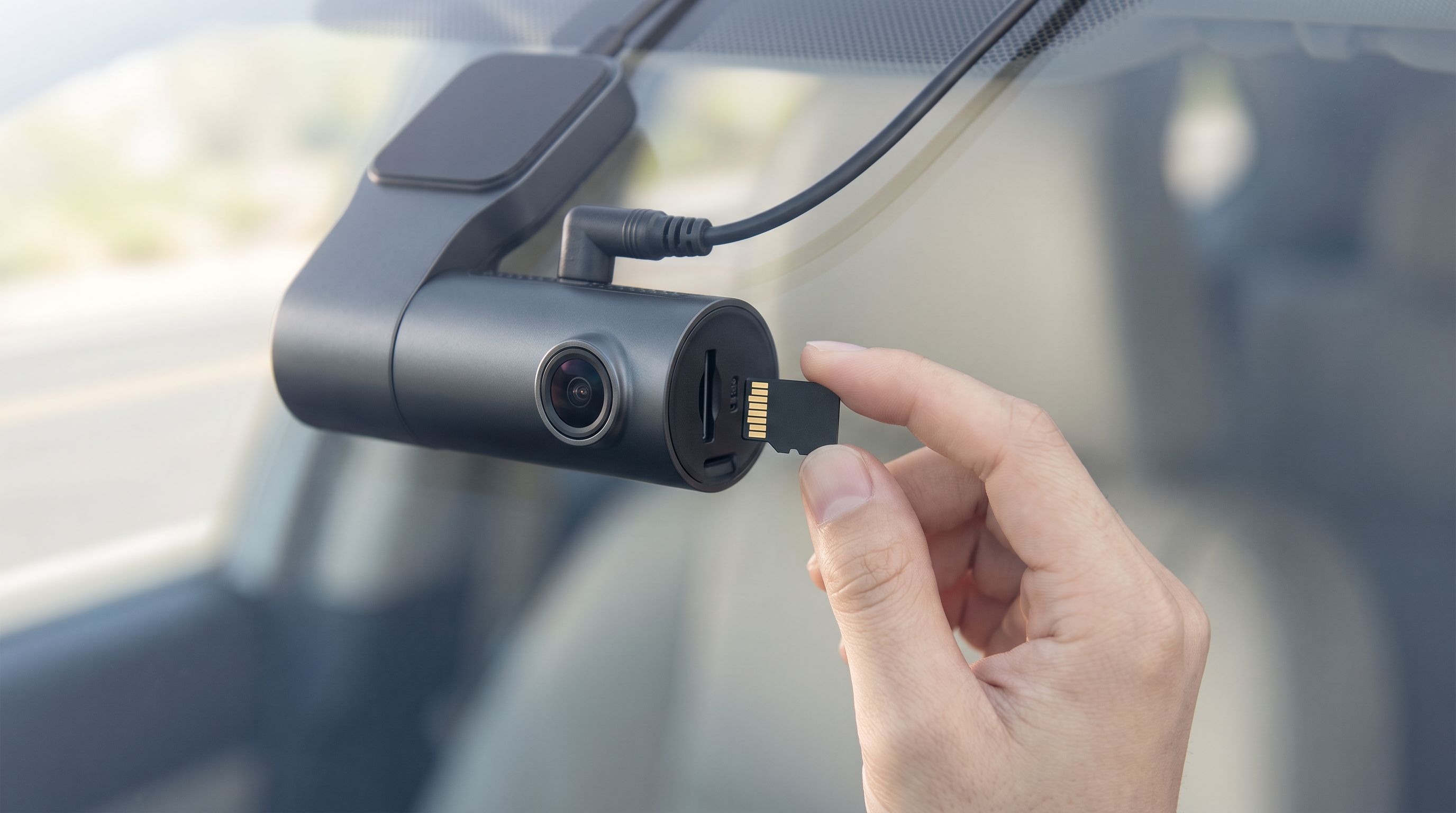
Yes — use a high-endurance microSD card rated for continuous video recording, and format it in the camera every month or two. Standard cards fail quickly under dash cam write cycles, and a failed card means no footage exactly when you need it.
Get the best car care deals in your inbox
Join the GarageProof newsletter for hand-picked car care deals and new buying guides. No spam, unsubscribe anytime.
Related reads
Dash Cam Hardwire Voltage Cutoff 2026: Match It to Your Battery
How to set dash cam hardwire voltage cutoff for AGM, flooded, and stop-start batteries in 2026 — plus four hardwire kits with user-adjustable cutoff points.
Supercapacitor Dash Cam vs Battery in 2026: Heat Survival
Supercapacitor dash cams vs lithium-battery models in 2026: how each survives hot parked cars, what parking mode really needs, and which cameras owners trust.
Dash Cam SD Cards in 2026: Why Normal microSD Dies
Standard microSD cards fail fast in dash cams. Here's how endurance-rated cards differ, what capacity your cam supports, and the best SD card for dash cam use in 2026.