Cordless Tire Inflator Valve Stem Fitment in 2026: 4 Picks
Match cordless tire inflator chucks and hose lengths to your valve stems — rubber, metal, TPMS or recessed alloys — with 2026 picks, specs and owner feedback.
Reader-supported: we may earn a commission from links on this page, at no extra cost to you. It never affects our picks. Learn more.
Most cordless tire inflator complaints have nothing to do with the pump. They're fitment problems: a chuck that won't seat on a short rubber stem, a hose too stiff to bend into a recessed alloy wheel pocket, or a 20-inch cord that can't reach a rear tire's stem when it's parked at the 10 o'clock position.
That's the part spec sheets gloss over. Below we break down how chuck types and hose lengths interact with the four valve stem situations you'll actually encounter, then rank four cordless inflators we compared on those criteria using manufacturer specs, independent reviews and verified owner feedback. GarageProof doesn't physically test units — we research, compare and rank.
The short version
- Best overall: DEWALT DCC020IB 20V MAX Cordless Tire Inflator
- Best for tight alloy wheels: Fanttik X8 APEX Cordless Tire Inflator
- Best for truck and trailer duty: Milwaukee M12 Compact Inflator 2475-20
- Budget pick: AstroAI CZK-3631 Cordless Tire Inflator
 Best for truck and trailer duty · Milwaukee M12 Compact Inflator 2475-20 — Check price on Amazon →
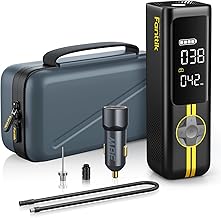 Best for tight alloy wheels · Fanttik X8 APEX Cordless Tire Inflator — Check price on Amazon →
Know your valve stem before you buy
There are four common setups, and each one changes which chuck and hose you want.
Standard rubber snap-in stems (TR413 / TR414)
The default on most passenger cars with steel or basic alloy wheels. They're flexible, which is forgiving — a stiff hose will bend the stem rather than break the seal. The catch is the opposite: a heavy inflator head hanging off a rubber stem can flex it enough to vent air while you pump. Short, light chucks win here, and a screw-on connection beats a lever clamp because it doesn't need side-loading force to stay sealed.
Metal clamp-in stems (common with TPMS sensors)
Most vehicles built in the last 15 years have direct TPMS sensors, and many use an aluminum or chrome clamp-in stem bolted through the rim. These don't flex. That's good for sealing but bad if your hose is rigid: all the leverage goes into the stem's rubber grommet or, worse, the sensor's stem joint. Aluminum TPMS stems are known for galvanic corrosion at the threads, and over-torquing a screw-on chuck onto a corroded stem can snap it. Thread gently, and replace the valve core and grommet at every tire change.
Recessed stems in deep-dish or aero alloy wheels
This is the one that ruins otherwise good inflators. Some wheels — especially aero covers on EVs and hybrids, plus aftermarket deep-dish rims — bury the valve stem inside a pocket an inch or more deep. A bulky inflator head simply won't fit over it. You need either a slim screw-on chuck on a flexible hose, or an extension. Check this before you buy: look at your wheel and see whether you can get two fingers around the stem.
Trucks, duals and tall sidewalls
Lifted trucks, trailers and dually rears put the stem farther from where the inflator can sit on the ground. Here, hose length is the single most important spec. Multiple 2026 inflator roundups flagged 20-inch hoses as "a tad short" on larger tires — livable only if you can roll the car forward to rotate the stem to a reachable clock position. On a dually inner wheel, that's not always possible at all.
Screw-on vs. lever chucks: what the difference actually means
Reviewers in 2026 consistently split inflator connections into two types, and the tradeoff is real.
Screw-on (threaded) chucks thread onto the valve stem like a tire cap. They're slower by a few seconds, but they create a positive mechanical seal that doesn't rely on grip strength or hose angle. For recessed stems and for anyone with arthritis or cold hands at the roadside, screw-on is the easier win. Nearly every cordless inflator ships with one.
Lever/quick-release chucks clamp over the stem and lock with a flip lever. Fast, and great when you're checking four tires in a driveway. But they're bulkier, they need clearance around the stem, and a worn rubber seal inside the chuck starts hissing — the classic "continuing hiss means the connection isn't sealed" symptom. If you add one, buy a quality brass lever chuck rather than the pot-metal unit that comes free in a kit.
A practical compromise: keep the screw-on chuck on the inflator for roadside work, and carry a short lever-chuck adapter for quick pressure top-ups on easy-access stems.
How to choose
Hose length vs. your worst-case tire
Measure from where the inflator can rest on the ground to the valve stem at its highest point (12 o'clock) on your tallest tire. If that distance exceeds your hose length, you'll be rolling the vehicle every time. For most sedans, 24 inches is comfortable. For crossovers and half-ton trucks, aim for 30-plus inches. For lifted trucks, trailers and duals, get the longest hose available or plan on a braided extension.
Chuck profile for recessed stems
Hold a tape measure to your wheel: how deep is the valve stem pocket, and how wide? A compact screw-on brass chuck typically needs under an inch of clearance. Big lever chucks can need two. If the pocket is tight, a flexible 6- to 12-inch extension hose with a straight screw-on end is the cheapest insurance you can buy, and it also saves your TPMS stems from side-load stress.
Auto-shutoff accuracy, not peak PSI
Nearly every cordless inflator claims 150 PSI. Few sustain it, and you don't need it — passenger car pressures live between 30 and 45 PSI. What matters is whether the preset shutoff lands within a couple of PSI of the target. Owner feedback across models consistently reports readings drifting when the pump is hot or the hose is long, because the gauge reads at the pump, not at the valve. Verify with a separate dial or digital gauge after inflating, especially the first few times with a new unit.
Battery platform and cold-weather reality
If you already own DEWALT 20V MAX, Milwaukee M12 or Ryobi ONE+ batteries, staying on-platform is cheaper and means you likely have a charged pack. Standalone units with built-in lithium cells are tidier for the glovebox but lose capacity in freezing weather and self-discharge over months of storage. Whichever you choose, check the battery in the fall — a dead inflator in a January breakdown is worse than no inflator, because you stopped carrying a 12V backup.
Comparison
| Model | Power source | Chuck type | Hose reach | Best valve stem scenario |
|---|---|---|---|---|
| DEWALT DCC020IB | 20V MAX battery or AC/12V DC | Screw-on, brass | Long (approx. 36 in.) | Trucks, SUVs, recessed stems, awkward clock positions |
| Fanttik X8 APEX | Built-in rechargeable pack | Screw-on, flexible hose | Short-to-medium | Deep-dish alloys, tight pockets, cars and bikes |
| Milwaukee M12 2475-20 | M12 battery | Locking screw-on chuck | Medium-long | Tall sidewalls, trailers, dual-wheel stems |
| AstroAI CZK-3631 | Built-in rechargeable pack | Screw-on, brass | Short | Standard rubber stems on sedans and crossovers |
The picks
DEWALT DCC020IB — best overall
Prices last checked October 31, 2026. Amazon prices change frequently, so treat these as a guide and check the live price before you buy.
DEWALT DCC020IB 20V MAX Cordless Tire Inflator
Long 36-in. hose with a screw-on chuck reaches recessed stems on trucks and SUVs without wheel repositioning.
The DCC020IB is the one we'd point most owners toward purely on fitment grounds. Its hose is notably longer than the 20-inch cords that reviewers keep flagging as too short, which means you can usually reach a rear valve stem without rolling the car forward. The threaded brass chuck seats cleanly on both rubber and metal TPMS stems, and the unit's three power options — 20V MAX pack, 12V DC and AC — mean a flat battery doesn't strand you. What it gives up: bulk. This is a two-hands-and-a-trunk-corner tool, not a glovebox item, and it's loud at full chat. If you want something you forget is there, look elsewhere.
Fanttik X8 APEX — best for tight alloy wheels
Fanttik X8 APEX Cordless Tire Inflator
Compact body plus a flexible screw-on hose that threads easily into deep-dish and recessed valve stem pockets.
The X8 APEX is the pick when your wheels hide the valve stem. It's small enough to hold one-handed against the tire, and the flexible screw-on hose threads into recessed pockets where a chunky inflator head simply won't reach. Owner feedback generally praises the digital preset and quiet-for-the-size operation, which matters if you're topping up in a garage. The compromises are predictable for a self-contained unit: hose reach is modest, so tall trucks will have you repositioning the wheel, and the internal battery is good for a few tires per charge rather than a full SUV set from flat. Keep it charged.
Milwaukee M12 2475-20 — best for truck and trailer duty
Milwaukee M12 Compact Inflator 2475-20
High-volume pump with a locking chuck and extended hose aimed at tall sidewalls and dual-wheel stems.
If you're dealing with tall sidewalls, trailer tires or dual rear wheels, the M12 inflator earns its place. It moves air at a rate suited to larger volumes, the chuck locks positively onto metal stems, and the hose has enough reach to get at awkward positions without crawling. It's also genuinely rugged, which matters in a truck toolbox. Downsides: you need to be on the M12 platform for it to make financial sense, and like most compact inflators it's happier topping up than filling a fully flat 35-inch tire — expect patience and a warm pump if you ask it to do that.
AstroAI CZK-3631 — budget pick
AstroAI CZK-3631 Cordless Tire Inflator
Inexpensive cordless option with screw-on brass chuck and usable hose length for passenger cars.
For a sedan or crossover with standard rubber stems and accessible wheels, the AstroAI cordless inflator covers the realistic emergency: topping a slow leak back to 35 PSI to reach a tire shop. The screw-on brass chuck is the right choice for the money, the display is readable in daylight, and it stores in a door pocket. What you give up is hose length and sustained output. It's not the tool for a lifted truck or a recessed-stem alloy, and the preset shutoff is worth double-checking against a separate gauge. Treat it as a compact backup rather than a shop-grade pump.
Small accessories that fix most fitment problems
- A flexible screw-on extension (6-12 in.) solves recessed stems, protects TPMS stems from side load, and costs very little.
- A brass lever chuck adapter gives you quick top-ups on easy stems without giving up the screw-on for hard ones.
- Spare valve cores and a core tool — a leaking core is a common cause of "my inflator won't hold pressure."
- A standalone dial gauge to confirm what the inflator's display is telling you.
FAQ
Will a cordless inflator damage my TPMS sensor?
Not through normal inflation. The risk is mechanical: forcing a stiff hose sideways onto an aluminum clamp-in stem, or over-tightening a screw-on chuck onto corroded threads. Use a flexible extension and thread gently by hand. If a stem looks white or crusty at the base, have it serviced — those are typically replaceable service kits.
How long does a hose need to be for an SUV or truck?
As a rule of thumb, 24 inches works for most sedans, 30-plus inches for crossovers and half-ton trucks, and longer still for lifted vehicles and trailers. Several 2026 inflator reviews specifically called out 20-inch hoses as too short on larger tires unless you can rotate the stem into reach.
Screw-on or lever chuck — which should I buy?
Screw-on for reliability, recessed stems and roadside use. Lever for speed when you're checking all four tires in a driveway with easy access. Many owners end up carrying both, since adapters are cheap.
Does a hose extension affect pressure accuracy?
It can, slightly. The gauge reads at the pump, not at the valve, so longer hoses tend to read a touch high while the pump is running. Let the pump pause, then read, and confirm with a separate gauge the first few times you use a new setup.
Do these inflators fit bike, motorcycle and Presta valves?
Schrader (car and motorcycle) stems fit directly. Presta bicycle valves need a small brass adapter, which most inflators include in the accessory kit. Check that your model ships with the needle and cone adapters if you also inflate sports balls or air mattresses.
Is a cordless inflator enough for a full flat?
For a passenger car, usually yes, though it'll take several minutes and the pump will get hot. For a large truck tire from zero, a compact cordless unit is slow and may need a cooldown cycle. Keep a 12V corded inflator or a plug kit alongside it for that scenario.
Our picks
Ryobi P747 ONE+ 18V Cordless Inflator
Slots into an existing ONE+ battery lineup; braided hose and screw chuck suit car and bike stems.
Get the best car care deals in your inbox
Join the GarageProof newsletter for hand-picked car care deals and new buying guides. No spam, unsubscribe anytime.
Related reads
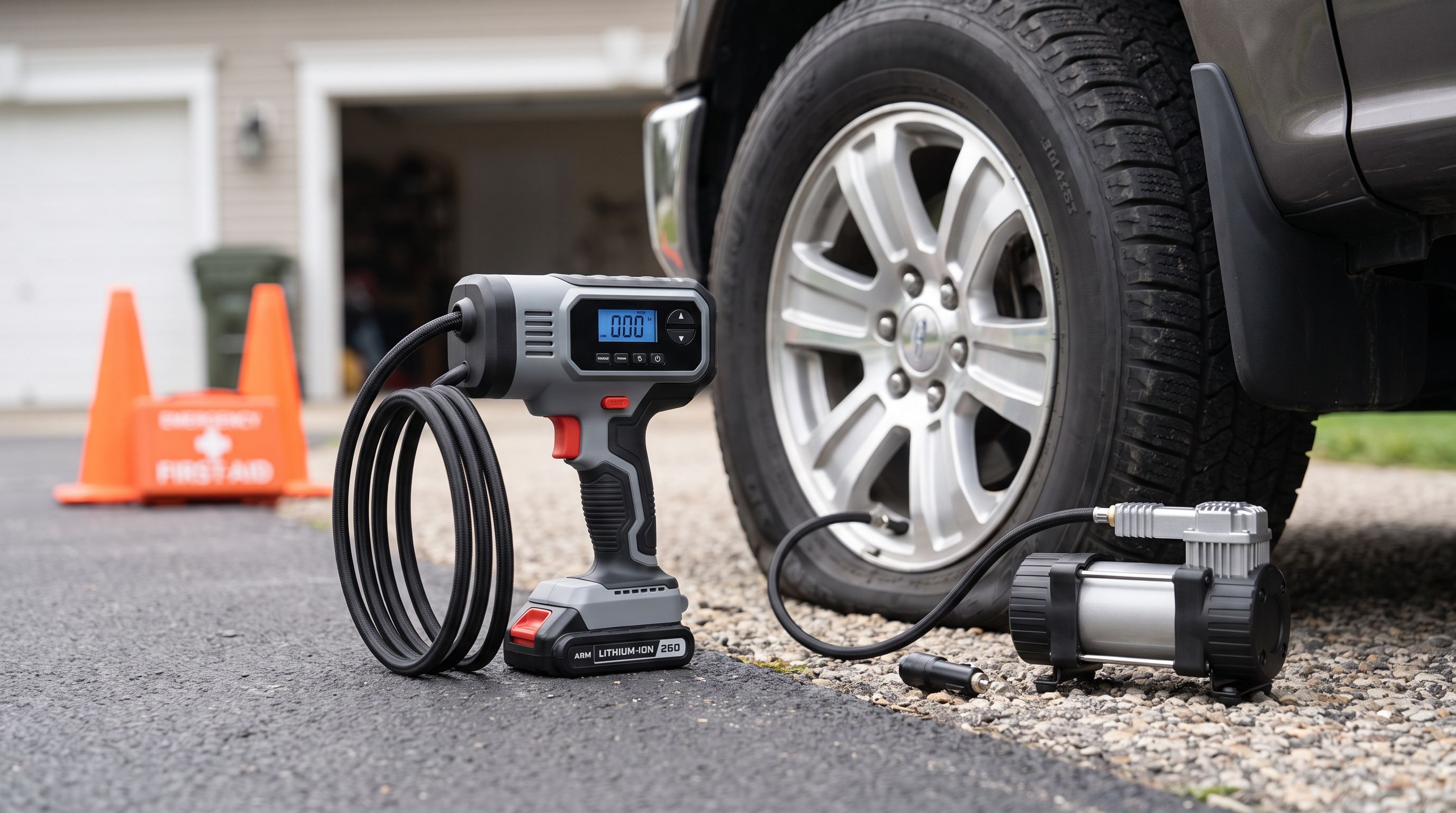
Portable Tire Inflators in 2026: Cordless vs 12V Socket
Cordless lithium or 12V socket? We compare the best portable tire inflator options for 2026 on duty cycle, real fill times for truck and car tires, and gauge accuracy.
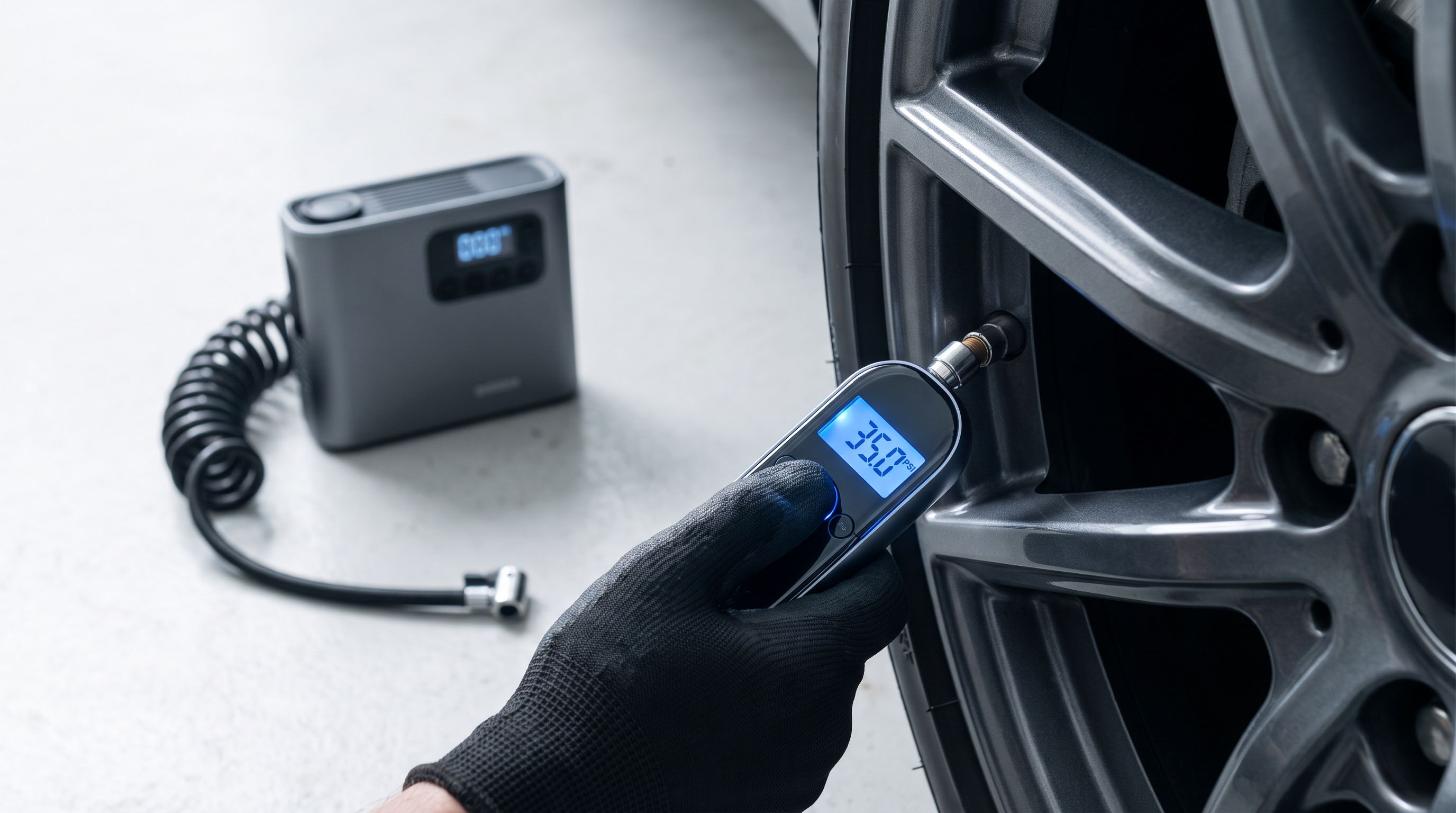
Digital Tire Pressure Gauge 2026: Why Inflator Dials Lie
Built-in inflator gauges drift by several PSI. Here's how digital tire pressure gauges compare in 2026 on stated accuracy, chuck type and alloy-wheel valve access.
TPMS Relearn Tools in 2026: Check Coverage Before You Buy
A 2026 buying guide to TPMS relearn and programming tools, focused on vehicle coverage lists, sensor cloning and OBD relearns — verify your make before you buy.