Cordless Impact Ratchet Kit 2026: 3/8" or 1/2" Anvil?
Cordless impact ratchet kit guide for 2026: how 3/8" vs 1/2" anvils match fastener torque, plus battery platform lock-in advice for home mechanics.
Reader-supported: we may earn a commission from links on this page, at no extra cost to you. It never affects our picks. Learn more.
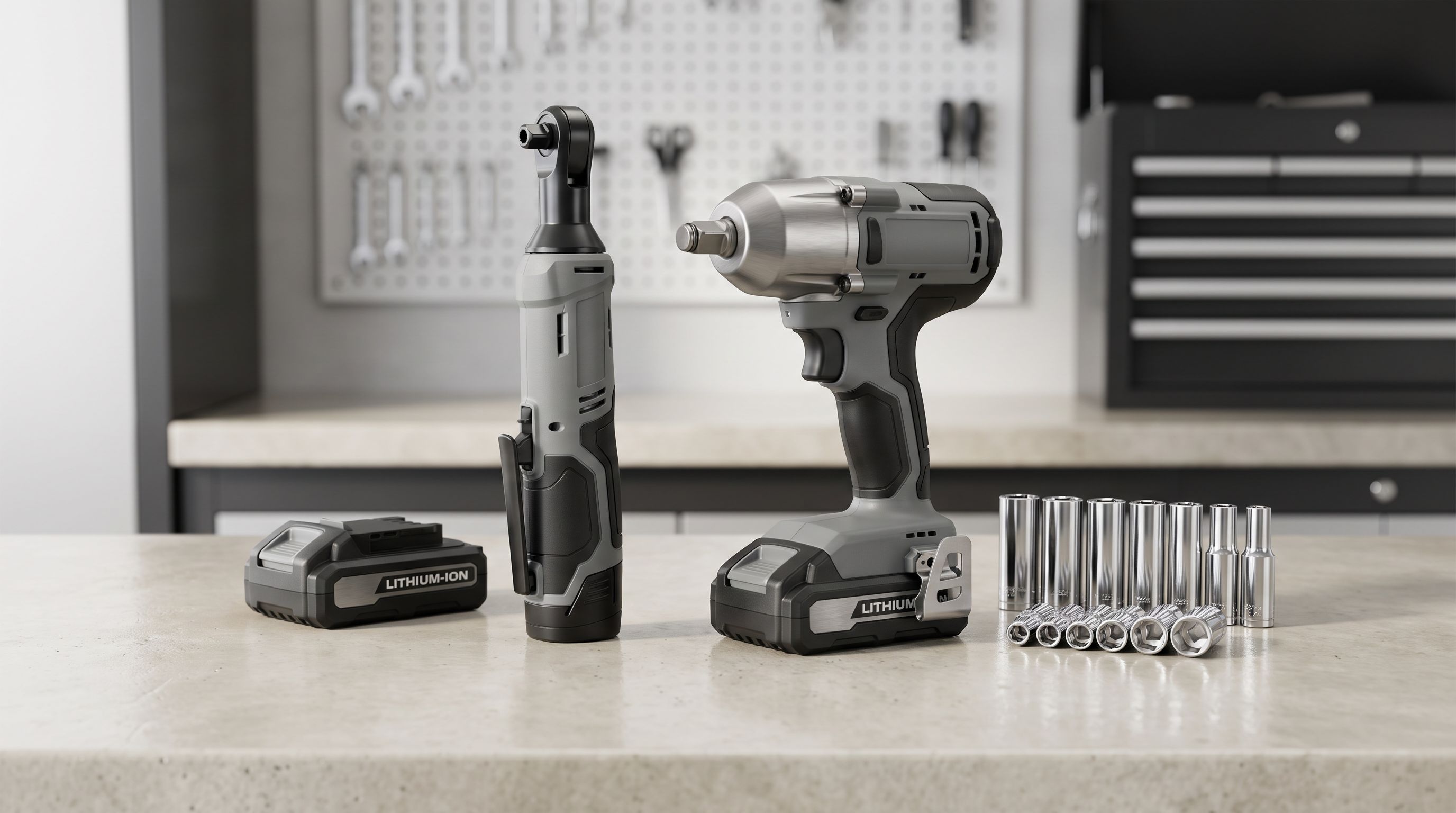
Cordless ratchets and impact wrenches look interchangeable on a shelf. They are not. A 3/8" ratchet and a 1/2" impact wrench solve opposite ends of the same job, and buying the wrong one means either stripped fasteners or an hour of knuckle-busting that a $150 tool should have erased.
This guide compares cordless impact ratchet kits by two things that actually determine whether you'll be happy in three years: the anvil size versus the fastener torque range you're working on, and the battery platform you're committing to. GarageProof researched manufacturer specifications, independent tool-media torque testing, and verified owner feedback to rank these — we don't physically test units.
The short version
- Best overall 3/8" ratchet: Milwaukee M12 FUEL 2557-20
- Best for 20V platform owners: DeWalt DCF513B
- Best 1/2" impact for lug nuts and suspension: Milwaukee M18 FUEL 2767-20
- Best mid-torque balance: Makita XWT17Z
- Best budget entry: Ryobi ONE+ HP PBLIR01B
 Best for 20V platform owners · DeWalt DCF513B 20V MAX 3/8 Ratchet — Check price on Amazon →
 Best overall 3/8" ratchet · Milwaukee M12 FUEL 2557-20 3/8 Ratchet — Check price on Amazon →
Anvil size is a torque-range decision, not a socket-fit decision
The adapter in your drawer will let any socket fit any anvil. That's the trap. Anvil size is really a shorthand for the torque band the tool was engineered to deliver.
1/4" hex and 3/8" square (ratchets): roughly 30–80 ft-lbs of output. This covers the overwhelming majority of fasteners you actually touch on a modern car — intake bolts, valve covers, alternator brackets, brake caliper bolts on many compact cars, oil pan bolts, interior trim, battery hold-downs, exhaust heat shields. Most of these spec between 15 and 60 ft-lbs. A cordless ratchet runs them out and spins them back in, then you finish by hand or with a torque wrench.
1/2" square (impact wrenches): 200 ft-lbs on the low end, 1,000+ ft-lbs nut-busting on high-torque models. This is lug nuts (typically 80–140 ft-lbs spec, but far higher to break loose after a shop over-torqued them), suspension through-bolts, control arm bolts, axle nuts, crank pulley bolts, seized exhaust hardware.
The gap between those bands is where people make mistakes. A 3/8" cordless ratchet will not remove a rusted sway bar end link. A 1/2" high-torque impact will snap a 10mm bolt before you've registered the trigger pull. Most home mechanics genuinely need one of each, which is why "impact ratchet kit" shopping so often ends with two tools rather than one.
The middle ground: 3/8" impact wrenches
There's a third category worth knowing: the compact 3/8" impact wrench (not ratchet), delivering roughly 200–450 ft-lbs. Milwaukee's M12 FUEL stubby and DeWalt's Atomic line live here. These are genuinely useful on tight suspension work and smaller lug nuts, and they're short enough to get into places a full 1/2" body won't. If you only buy one powered tool and your car is newer and relatively rust-free, this is the smartest single purchase. If you live where roads get salted, you'll still want the 1/2".
How to choose
Match the tool to your fastener torque range, not your ambition
Write down the three jobs you actually do most. If that list is "oil changes, brake pads, battery and alternator swaps," a 3/8" ratchet plus a breaker bar handles 90% of it and the ratchet is the tool you'll reach for weekly. If the list includes "wheels off every spring and fall, suspension refresh, exhaust work," the 1/2" impact is the primary purchase and the ratchet is the luxury.
One honest warning: a cordless ratchet is not a torque wrench. Nearly every automotive fastener with a published spec should get a final pass with a calibrated click or digital torque wrench. The ratchet's job is speed on the way out and on the way in, not final torque.
Battery platform lock-in is the real long-term cost
This is the factor buyers underweight most. The tool is a one-time purchase; the batteries are the ongoing one, and they don't cross brands. Commit to a platform and every future tool — the inflator, the work light, the polisher, the die grinder — gets cheaper. Buy a bare tool on a platform you don't own and you've just bought an orphan.
Practical framing for 2026:
- Already own cordless drills? Buy bare tools on that platform unless the gap in capability is enormous. A "good enough" ratchet you can power is better than a "best" one you can't.
- Starting fresh and automotive-focused? Milwaukee M12 has the deepest compact automotive lineup, and M12 packs are small enough to keep the tools genuinely slim.
- Starting fresh and budget-focused? Ryobi ONE+ has over 300 tools on a single 18V battery and sells kits at prices other brands charge for bare tools.
- Two-platform strategy: running M12 (or 12V equivalent) for ratchets and a full-size 18V/20V platform for impacts is common among serious home mechanics and is a legitimate choice, not a failure of planning.
Head height and access, not just torque numbers
For ratchets, head height is the spec that decides whether the tool gets used. A ratchet that won't fit between the intake manifold and the firewall is a paperweight. Brushless 12V ratchets generally have slimmer heads than 18V/20V versions, and that's a large part of why M12 dominates this category despite lower headline torque. Some owners specifically prefer smaller budget ratchets over premium ones for exactly this reason.
For impacts, the equivalent spec is head length — a compact or stubby 1/2" impact gets into inner tie rods and transmission bolts that a full-size high-torque body can't reach.
Anvil retention and drive mode control
On 1/2" impacts, choose between a friction ring (socket slides on, faster swaps, standard for automotive) and a detent pin (more secure, slower). Friction ring is the right default for wheel and suspension work.
Also look for multiple drive modes. A precision or assist mode that starts slow and prevents a socket from walking off a lug nut, or auto-shutoff in reverse once the fastener breaks free, genuinely reduces damaged fasteners. Modern high-torque tools put out enough force to snap studs outright — mode control is a safety feature, not a gimmick.
Comparison table
| Tool | Anvil | Class | Typical fastener band | Platform | Best for |
|---|---|---|---|---|---|
| Milwaukee M12 FUEL 2557-20 | 3/8" square | Ratchet | ~15–55 ft-lbs | Milwaukee M12 | Tight engine-bay access, all-round wrenching |
| DeWalt DCF513B | 3/8" square | Ratchet | ~15–60 ft-lbs | DeWalt 20V MAX | Existing 20V owners wanting one battery system |
| Milwaukee M18 FUEL 2767-20 | 1/2" square | High-torque impact | 80 ft-lbs to seized | Milwaukee M18 | Lug nuts, suspension, rust-belt work |
| Makita XWT17Z | 1/2" square | Mid-torque impact | 60–250 ft-lbs | Makita 18V LXT | Wheels and general bolts, lighter in hand |
| Ryobi ONE+ HP PBLIR01B | 3/8" square | Impact ratchet | ~15–50 ft-lbs | Ryobi ONE+ 18V | Occasional DIY on a cheap battery platform |
Torque bands above describe the practical working range these tool classes suit, not manufacturer peak ratings.
Milwaukee M12 FUEL 2557-20 — best overall 3/8" ratchet
Prices last checked October 25, 2026. Amazon prices change frequently, so treat these as a guide and check the live price before you buy.
Milwaukee M12 FUEL 2557-20 3/8" Ratchet
Compact brushless M12 head with strong real-world torque — the default pick for engine-bay work.
The M12 FUEL ratchet is the tool most home mechanics end up using more than any other cordless device in the garage. The brushless motor and compact head mean it reaches fasteners a full-size 18V ratchet can't, and the M12 battery stack stays out of the way in a crowded engine bay. It runs bolts out fast and drives them back to snug, leaving the final torque to a proper wrench.
What it gives up: it will not break loose anything seriously corroded, and it isn't a substitute for a breaker bar. It's also a bare-tool purchase in most listings, so budget for an M12 battery and charger if you're not already on the platform.
DeWalt DCF513B — best for 20V platform owners
DeWalt DCF513B 20V MAX 3/8" Ratchet
Runs on the same 20V MAX packs as your drill, with a high-torque mode for stubborn fasteners.
If your drill, driver and work light already run DeWalt 20V MAX packs, the DCF513B removes the "do I start a second platform?" question entirely. It's a 3/8" ratchet with a two-speed/high-torque arrangement that gives it more grunt than most 12V competitors, and it benefits from DeWalt's enormous battery availability — spares are easy to find and often bundled.
The trade-off is physical. A 20V pack on a ratchet makes the tool heavier and the balance more rearward than an M12, and the head isn't as slim. In genuinely tight spaces, that matters. If access is your main constraint rather than torque, a 12V ratchet is the better ergonomic fit.
Milwaukee M18 FUEL 2767-20 — best 1/2" impact for lug nuts and suspension

Milwaukee M18 FUEL 2767-20 1/2" High Torque Impact Wrench
Friction-ring 1/2" anvil with enough nut-busting torque for rusted suspension and axle work.
This is the tool for the jobs a ratchet can't touch: lug nuts torqued by an impatient tire shop, rusted control arm bolts, axle nuts. The friction ring 1/2" anvil takes standard impact sockets, and the drive-control modes let you dial output down so you're not shearing studs on a wheel change. For rust-belt owners, high-torque output is the difference between a Saturday project and a tow.
What it gives up is size and weight. It's a big, heavy tool and you'll notice it overhead or in confined spaces. It's also overkill for anyone whose heaviest regular job is a seasonal wheel swap — the mid-torque class covers that with less bulk.
Makita XWT17Z — best mid-torque balance

Makita XWT17Z 18V LXT 1/2" Mid-Torque Impact Wrench
Lighter 1/2" mid-torque body with assist modes — plenty for wheels without wrecking fasteners.
Mid-torque 1/2" impacts are the sweet spot for most home garages: enough to remove lug nuts and suspension hardware, light enough to use one-handed, short enough to fit where a high-torque body won't. The XWT17Z sits in that band with assist modes that start a fastener gently before ramping up, which cuts down on cross-threading and socket walk.
The compromise is at the extremes. On a truly seized exhaust stud or a rust-welded subframe bolt, mid-torque may stall where high-torque wins. If you mostly work on vehicles under ten years old or in a dry climate, you'll rarely hit that wall. If you don't, keep a breaker bar and penetrating oil nearby.
Ryobi ONE+ HP PBLIR01B — best budget entry
Ryobi ONE+ HP PBLIR01B 3/8" Impact Ratchet
Brushless 3/8" ratchet on the huge, inexpensive ONE+ battery platform for occasional wrenching.
For someone doing a handful of jobs a year, the maths on Ryobi is hard to argue with. The ONE+ HP 3/8" impact ratchet is brushless, delivers respectable output for the class, and sits on a battery platform with hundreds of other tools — including inflators and lights you'll actually use. If you already own a ONE+ drill, adding this is the cheapest route into cordless wrenching.
It gives up head slimness and the refinement of a premium brushless drivetrain, and the ONE+ 18V pack adds bulk to a tool that wants to be compact. Heavy daily use will expose the gap. Occasional weekend use likely won't.
FAQ
Can I use a 1/2" impact wrench for everything with an adapter? Technically yes, practically no. Stepping a 1/2" high-torque impact down to a 3/8" socket puts far more force into a small fastener than it's rated for, and snapped bolts and stripped threads are the common outcome. Adapters also absorb energy and add length. Use the anvil size the torque band calls for.
Do I still need a torque wrench if I have these? Yes. Cordless ratchets and impacts are speed tools. Anything with a published torque spec — lug nuts, caliper brackets, head-adjacent hardware — needs a final pass with a calibrated torque wrench. Use the impact to snug, never to set final torque.
Is a 12V ratchet enough, or should I get 18V/20V? For most engine-bay fasteners, 12V is enough and the slimmer head makes the tool usable in more places. Go 18V/20V if you're already invested in that platform and want to avoid a second battery system, accepting the extra bulk.
What's the difference between a cordless ratchet and a 3/8" impact wrench? A ratchet applies smooth rotational torque and works like a powered hand ratchet, with a low-profile head. A 3/8" impact wrench uses hammer blows to deliver several times more torque in a stubbier body. Ratchets are for access; impact wrenches are for stuck fasteners.
Does bare tool or kit make more sense? If you already own two or more batteries on the platform, buy bare. If you're starting the platform, buy the kit — standalone battery and charger purchases are usually poor value compared with a bundled kit.
Will a cordless impact remove lug nuts over-torqued by a tire shop? A high-torque 1/2" impact almost always will. A mid-torque usually will. A 3/8" ratchet never will. If you've had wheels fitted by a shop with an air gun and no torque stick, assume you need the 1/2".
Get the best car care deals in your inbox
Join the GarageProof newsletter for hand-picked car care deals and new buying guides. No spam, unsubscribe anytime.
Related reads
EVAP Smoke Machine Leak Tester 2026: Pressure & Port Fit
How to pick an EVAP smoke machine leak tester in 2026: safe output pressure, adapter cone sizing, gas cap vs. service port fit, and four picks for DIY garages.
Ratcheting Wrench Sets 2026: Flex-Head vs Fixed Clearance
Pick a ratcheting wrench set by swing arc, head profile and SAE/metric spread — not piece count. Flex-head vs fixed compared, with 4 picks for 2026.
Engine Hoist Buying Guide 2026: Will It Fit Your Bay?
Engine hoist buying guide 2026: compare 1–2 ton folding cranes on boom reach, leg span, lift height and folded storage footprint so your crane fits your garage.