Clay Bar vs Clay Mitt in 2026: Which Marrs Paint Less?
Clay bar vs clay mitt in 2026: how grade, lube and clearcoat hardness affect marring, plus four decontamination picks for soft and hard paint.
Reader-supported: we may earn a commission from links on this page, at no extra cost to you. It never affects our picks. Learn more.
The short version
- Best overall — Meguiar's Mirror Glaze Professional Detailing Clay (C2000 Mild): the reference mild-grade bar, thorough on bonded fallout and forgiving on softer clearcoats.
- Best clay mitt — Nanoskin AutoScrub Wash Mitt (Fine Grade): the fastest way to decontaminate a whole car without buying a new bar every time you drop it.
- Best clay lubricant — Chemical Guys Clay Luber Synthetic Lubricant: generous, slick coverage; the single biggest variable in whether you marr the paint.
- Best for large vehicles — Adam's Polishes Clay Towel: flat polymer face that eats up hoods, roofs and box sides in minutes.
- Premium pick — Griot's Garage Paint Cleaning Clay (Fine): stays pliable in cold garages and finishes exceptionally clean on delicate paint.
 Premium pick · Griot's Garage Paint Cleaning Clay (Fine) — Check price on Amazon →
 Best for large vehicles · Adam's Polishes Clay Towel — Check price on Amazon →
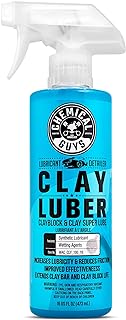 Best clay lubricant · Chemical Guys Clay Luber Synthetic Lubricant — Check price on Amazon →
 Best clay mitt · Nanoskin AutoScrub Wash Mitt (Fine Grade) — Check price on Amazon →
What "clay" actually does — and why the format matters
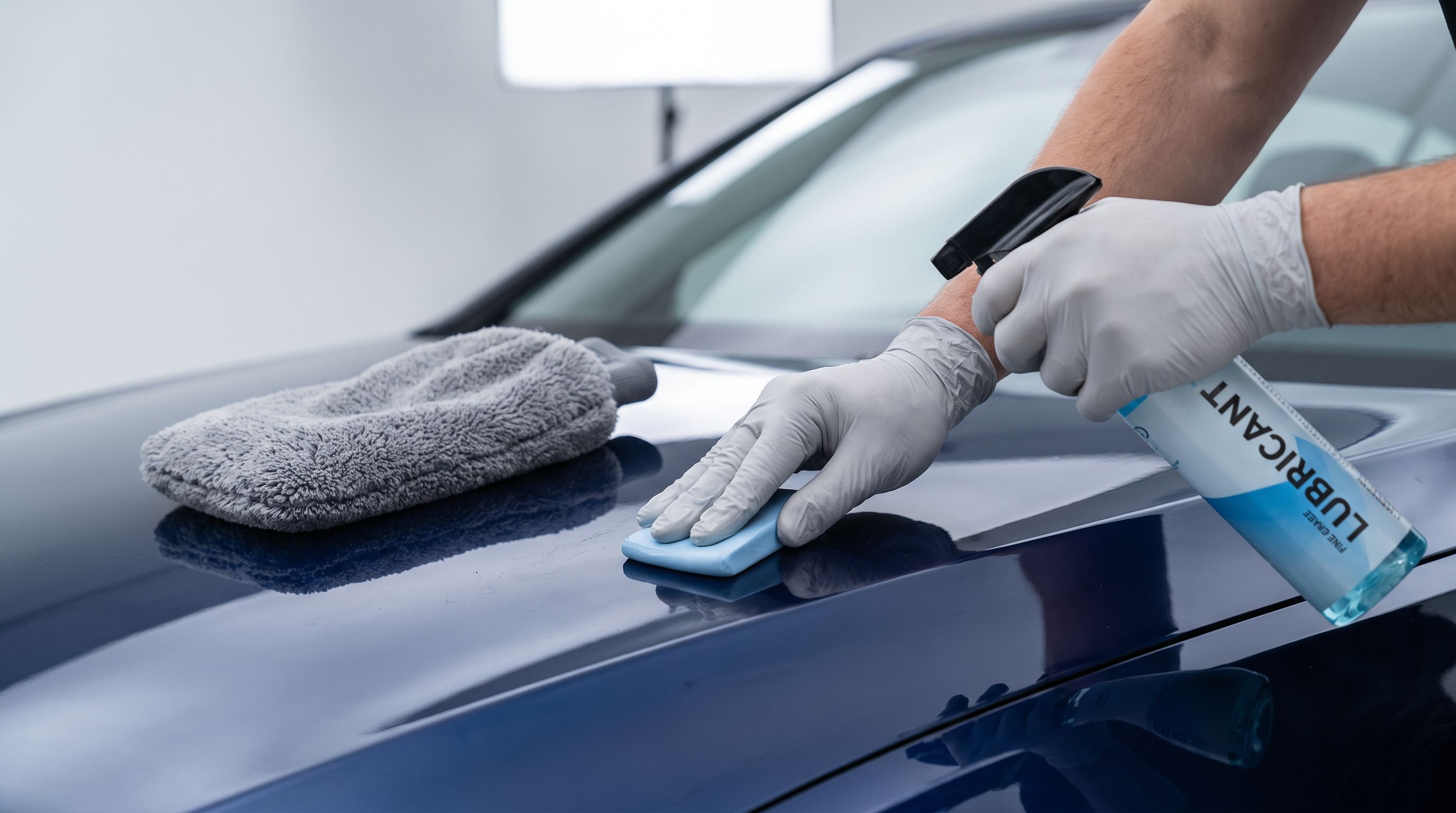
Every decontamination product here does the same job: it shears off bonded contamination sitting above the clearcoat — rail dust, industrial fallout, overspray, tree sap mist, brake dust that's embedded itself after a wash. Run your hand over a washed panel inside a thin sandwich bag and you'll feel it as grit. Clay removes that grit mechanically, by grabbing particles and pulling them into the media.
The difference between a bar, a mitt and a towel is how the abrasive face is presented, and that changes three things: speed, marring risk, and what happens when you drop it.
- Traditional clay bars are a pliable resin loaded with mild abrasives. You knead them, flatten them into a pad, and glide them across a lubricated panel. Because the clay deforms around contamination, it tends to be the most thorough option — it works into texture and orange peel and lifts heavier deposits that synthetic media skims over. The trade-offs: it's slow, it loads up quickly on dirty paint, and if you drop it on the ground, it's rubbish. Bin it.
- Clay mitts and towels use a polymer or rubberised face bonded to a microfibre or foam backing. They cover far more area per pass, they rinse clean under a hose, and a drop is a non-event. They're also less conformable, so on heavily contaminated paint they often need a second pass — and their stiffer face makes them slightly less forgiving on soft clearcoats if you skimp on lube.
Owner feedback across detailing forums is remarkably consistent on this: mitts and towels have largely replaced bars for routine maintenance decon, while bars survive because nothing matches them for a final, thorough pass before a correction or a ceramic coating. That's the honest state of clay bar vs clay mitt in 2026 — it isn't one or the other, it's which one for which job.
Clay bar vs clay mitt vs clay towel: the comparison
| Clay bar | Clay mitt | Clay towel | |
|---|---|---|---|
| Speed (full sedan) | Slowest — often 60–90 min | Fast | Fastest on large flat panels |
| Thoroughness on heavy fallout | Best | Good, may need two passes | Good on flats, weaker in tight areas |
| Marring risk on soft paint | Lowest with a mild grade + heavy lube | Moderate — depends on grade and lube | Moderate to higher; easy to apply uneven pressure |
| Survives being dropped | No — discard | Yes — rinse and continue | Yes — rinse and continue |
| Lubricant appetite | Moderate | High | Highest |
| Tight areas, emblems, mirrors | Excellent — shape it to fit | Poor to fair | Poor |
| Reusable life | A few cars if kept clean | Many uses if rinsed and stored clean | Many uses; face wears with grit |
| Best for | Pre-coating prep, precision work | Regular maintenance decon | Trucks, vans, RVs, big flat surfaces |
Grade matters more than format
Nearly every clay product is sold in grades — usually described as fine/mild, medium, and aggressive/heavy. This is where most paint damage comes from, not from choosing the "wrong" format.
Fine or mild grade is the correct default for almost every private owner. It removes normal bonded contamination with minimal surface haze. Meguiar's C2000 is the mild bar in that pro range (C2100 is medium, C2500 is aggressive), and the Nanoskin AutoScrub mitt is sold in fine and medium grades for the same reason.
Medium and aggressive grades are for overspray removal, neglected paint, or work you're going to machine-polish afterwards. They will leave marring. That's accepted in a professional workflow because a polishing stage follows.
If you don't own a polisher, buy fine grade and accept a slower job. A common thread in owner discussions is people using an aggressive mitt on a black soft-clearcoat car, then discovering they need a machine to fix what they just did.
Soft vs hard clearcoats: the part most guides skip
Clearcoat hardness varies enormously by manufacturer. Broadly — and with plenty of exceptions by model year and plant:
- Softer clears are common on many Japanese-market vehicles (Honda, Mazda, some Toyota and Subaru), and on some black and dark-blue finishes generally. They marr easily but also polish out easily.
- Harder clears are typical of German makes (BMW, Mercedes, Audi) and many ceramic-clear applications. They resist marring but fight back when you try to correct them.
On soft paint, a mild bar with a soaking-wet lube film is the lowest-risk approach; a stiff synthetic mitt with a thin lube film is the highest. On hard paint you have more latitude, and a mitt's speed advantage is basically free. If you don't know which you have, test on a lower door panel and inspect under an LED inspection light at a low angle before committing to the hood.
The other honest caveat: all clay marrs paint to some degree. Even done perfectly, you're dragging abrasive across a surface. On a maintained daily driver in decent shape, it's usually invisible. On a show finish, plan to follow with a light polish or an all-in-one — that's the standard workflow, and owners who skip it are the ones posting photos of hazing.
Lubrication is the real safety system
If you take one thing from this comparison: the lubricant does more to prevent marring than the choice of bar or mitt. Clay needs to hydroplane. The moment the film breaks, the media grabs.
Dedicated clay lubes like Chemical Guys Clay Luber are formulated to stay slick and sheet slowly rather than evaporating. Rinseless wash solutions at clay-lube dilution are a popular alternative among experienced detailers. A quick detailer works in a pinch. Plain water does not — it beads and breaks film immediately.
Mitts and towels need noticeably more lube than bars because their larger contact area drags more fluid off the panel. Expect to go through a bottle much faster with a mitt. Keep the panel visibly wet, work a two-foot-square section at a time, and re-spray rather than pushing harder.
The picks
Meguiar's Mirror Glaze Professional Detailing Clay (C2000 Mild) — best overall
Prices last checked September 29, 2026. Amazon prices change frequently, so treat these as a guide and check the live price before you buy.

Meguiar's Mirror Glaze Professional Detailing Clay (C2000 Mild)
The classic mild-grade bar: thorough on bonded contamination and the safest traditional clay for soft paint.
This is the bar most professional detailers cite when the question is "which clay actually removes the contamination." The mild formulation is pliable enough to flatten into a thin pad, conforms to texture, and is safe on the majority of clearcoats when used with plenty of lube. It's the right choice for pre-coating prep, for overspray-free but genuinely dirty paint, and for anyone who wants the most thorough possible decon.
What it gives up: time and convenience. Expect to fold and refresh the face constantly, and expect to throw it away if it hits the floor. It's also the least practical option for a large truck.
Nanoskin AutoScrub Wash Mitt (Fine Grade) — best clay mitt
Nanoskin AutoScrub Wash Mitt (Fine Grade)
Fine-grade rubberised mitt that decontaminates a whole car in a fraction of bar time and rinses clean when dropped.
The mitt that comes up repeatedly in owner recommendations. The rubberised polymer face decontaminates in a fraction of traditional clay time, and crucially it rinses clean under a hose, so the contamination you've removed doesn't stay on the working face grinding into your paint. Fine grade is the one to buy for maintenance decon on a car in reasonable condition.
Trade-offs: it needs a lot of lubricant, it's clumsy around mirrors, emblems and badges, and it doesn't conform to heavy texture the way a bar does. On badly neglected paint it may take two passes where a bar takes one.
Chemical Guys Clay Luber Synthetic Lubricant — best clay lubricant
Chemical Guys Clay Luber Synthetic Lubricant
Slick, high-flow lube that cuts marring risk on both bars and synthetic media — the cheapest insurance you can buy.
Not a decontamination tool, but the cheapest and most effective insurance against marring you can buy. It's slick, stays wet on vertical panels long enough to work a section, and wipes off without residue that fights your next step. Buy more than you think you need — running out mid-panel is where mistakes happen.
What it gives up: it's a single-purpose product, and some detailers prefer a rinseless wash solution diluted as a clay lube for the extra cleaning action and better value per litre. If you already use a rinseless, you may not need this.
Adam's Polishes Clay Towel — best for large vehicles
A flat polymer-faced towel is the fastest way to decontaminate a pickup bed side, a van roof or an RV flank. The flat format gives better tactile feedback than a mitt — you can feel the surface go from gritty to slick under your fingertips — and it rinses clean the same way. Independent comparisons consistently rate towels as the speed winner on big flat areas.
Trade-offs: it's the hungriest option for lubricant, it's poor in tight areas, and it's easy to apply uneven pressure with fingertips. Fold it over a foam applicator block if you want more consistent contact.
Griot's Garage Paint Cleaning Clay (Fine) — premium pick
A fine-grade bar aimed at people with delicate or dark paint. Its main practical advantage is pliability — it stays workable in a cool garage where stiffer bars need warming in hot water, which matters if you detail in spring or autumn. It finishes very cleanly, leaving minimal haze on soft clearcoats.
What it gives up: it's slower than any synthetic option, and on genuinely heavy contamination a fine grade will need multiple passes where a medium bar would clear it in one. Not the choice for overspray removal.
How to choose
Match the grade to the paint, not the mess
Start fine. Escalate only if fine grade genuinely isn't cutting the contamination after a thorough pass. Medium and aggressive grades belong in workflows that end with a machine polish. If you have no polisher, fine grade is not a compromise — it's the correct choice.
Decide whether a polish stage is realistic
Clay marrs. If you intend to follow with a dual-action polish or even a hand-applied all-in-one, you can be more aggressive and faster. If clay is your final mechanical step before wax or sealant, go mild, go slow, and go wet.
Factor in vehicle size and how often you'll do this
Decontaminating twice a year on a compact car? A bar is perfectly manageable and cheap. Decontaminating a crew-cab pickup, or doing multiple cars for family and friends? The time saving from a mitt or towel is enormous, and the reusability changes the economics.
Budget for lubricant, not just clay
Most people underbuy lube. A mitt or towel on a full-size vehicle can go through a surprising amount. Buying a gallon of concentrate or a rinseless wash works out far better than repeatedly grabbing small spray bottles.
Plan your recovery step
Whatever you use, paint is bare afterwards — clay strips whatever protection was there. Have a sealant, wax or coating ready for the same session. Leaving decontaminated paint unprotected is the most common mistake in this whole process.
FAQ
Is a clay mitt safer than a clay bar? Not inherently. A fine-grade bar with heavy lubrication is generally the gentlest option on soft clearcoats because it conforms to the surface. A mitt's real safety advantage is that it rinses clean and survives being dropped — a bar that picks up grit from the floor is far more dangerous than either.
How often should I clay my car? Once or twice a year for most daily drivers, or whenever the bag test reveals grit. Claying more often than needed just adds unnecessary marring. Garaged cars with a good coating may go much longer.
Do I have to polish after claying? Not always. With fine-grade media, heavy lube and light pressure on a car in decent condition, marring is usually negligible under normal light. On dark, soft paint or with medium/aggressive grades, a light polish or all-in-one is strongly recommended.
Can I use a clay mitt on glass, wheels and trim? Glass, yes — it works very well on windscreens. Wheels, yes, but use a dedicated mitt you never let near paint. Avoid matte finishes, vinyl wraps and unprotected soft plastics entirely.
What can I use instead of dedicated clay lube? A rinseless wash at clay-lube dilution is the most popular substitute among experienced detailers. A quick detailer works. Soapy wash water works in a pinch on a wet panel. Plain water does not — it breaks film and causes marring.
How do I know if my car has soft or hard paint? Test a small, low-visibility area first — a lower door or rear bumper — and inspect under a bright LED light at a low angle. Softer paint will show faint hazing sooner. Japanese makes and dark colours skew soft; German makes skew hard, but check your own car rather than assuming.
Our picks
Adam's Polishes Clay Towel
Flat polymer towel that covers trucks, vans and RVs fast, with better feedback than a mitt on panel edges.
Griot's Garage Paint Cleaning Clay (Fine)
Very pliable fine-grade bar that stays soft in cool weather and leaves minimal haze on delicate clearcoats.
Get the best car care deals in your inbox
Join the GarageProof newsletter for hand-picked car care deals and new buying guides. No spam, unsubscribe anytime.
Related reads
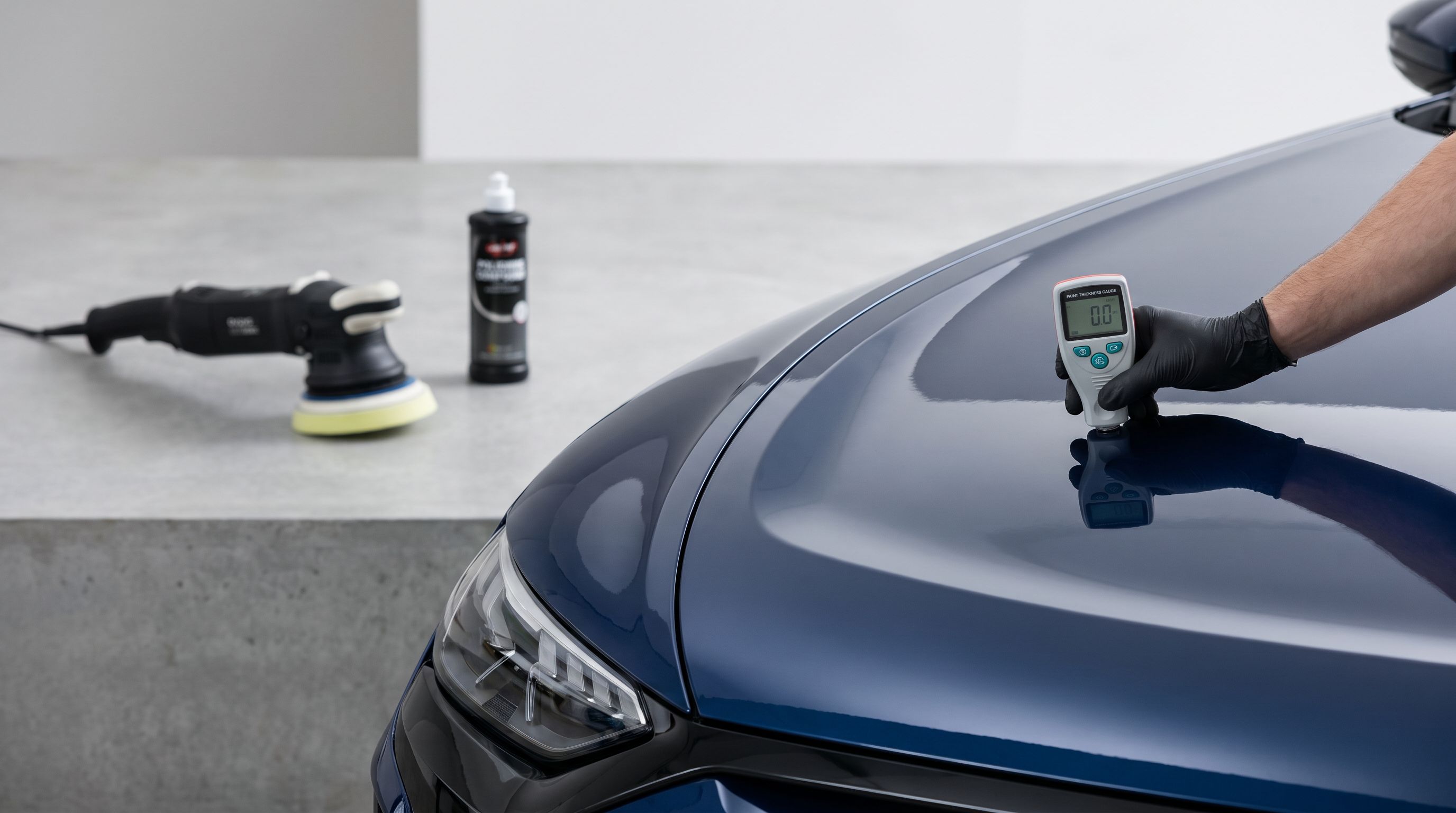
Paint Correction Clear Coat Thickness in 2026: When to Stop
How to read a paint depth gauge, budget clear coat microns, and know when to stop polishing — plus the best paint thickness gauges and compounds for 2026.
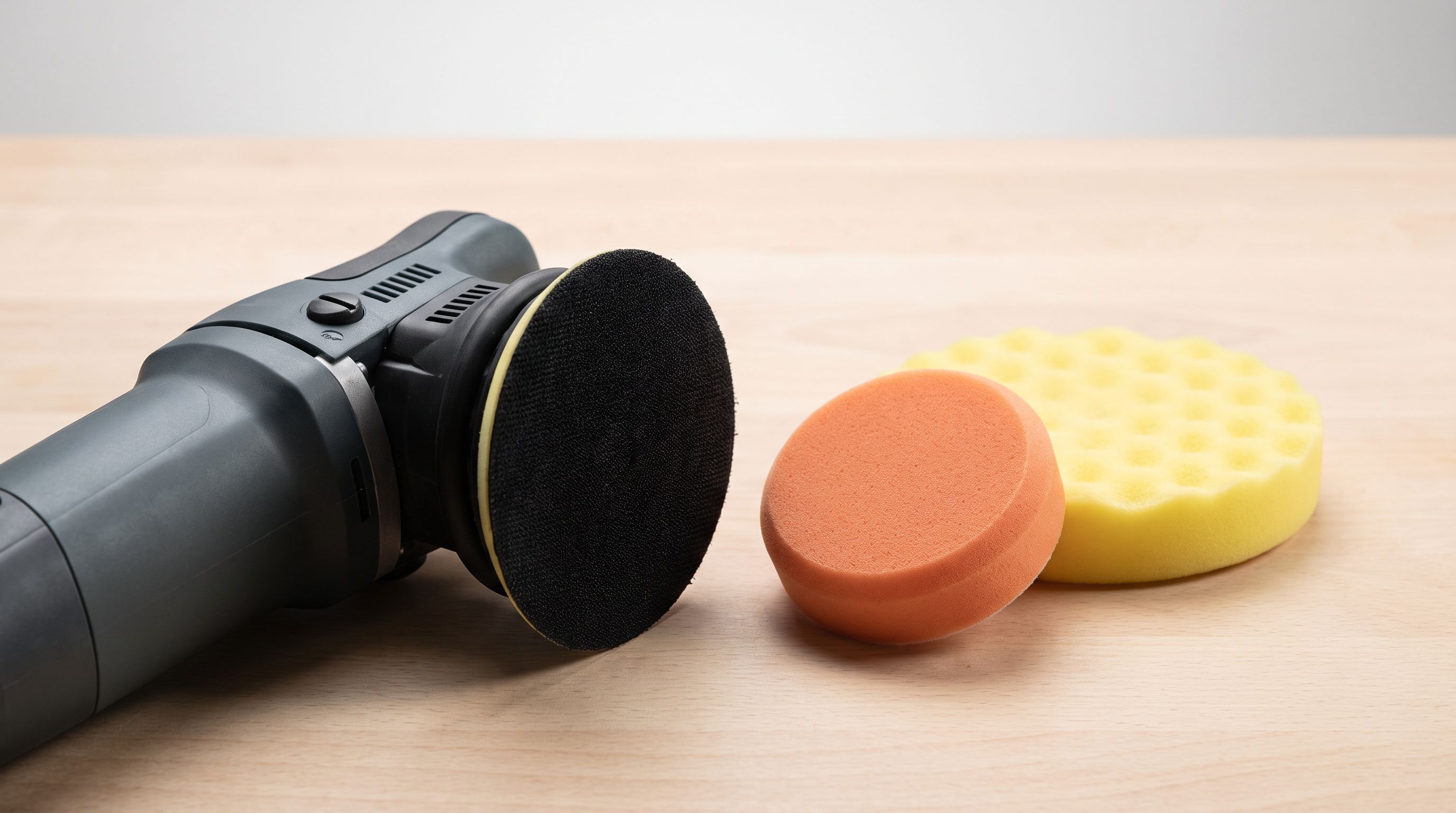
Polisher Backing Plate Size 2026: Stop Stalling on Curves
Polisher backing plate size guide for 2026: match plate diameter, thread spec, and pad overhang to your DA polisher so pads stop stalling on curves.
Ceramic Coating Prep Kit 2026: Why Coatings Fail at Step One
A ceramic coating prep kit decides whether your coating bonds or flakes. We compare iron removers, panel wipes and applicators for 2026, plus cure-time rules.