Ceramic Coating for Wheels in 2026: Heat Rating Matters
Which ceramic coating for wheels survives real brake heat? We compare temperature tolerance, cure time and durability for alloy, painted and powder-coated wheels.
Reader-supported: we may earn a commission from links on this page, at no extra cost to you. It never affects our picks. Learn more.
Wheels are the hardest surface on your car to protect. They sit inches from a brake rotor that can glow past 500°C on a spirited drive, they get blasted with hot iron particles that embed themselves in the finish, and then they get hit with harsh alkaline wheel cleaner every other weekend. A coating that's perfectly happy on your hood can fail on a wheel face in a season.
That's why "heat rating" keeps coming up in 2026 marketing copy — and why it deserves a sceptical eye. Manufacturer temperature claims are not measured to a common standard, so a "1000°F" number on one bottle isn't directly comparable to a "600°C" number on another. What actually matters is whether the coating was formulated for wheels, how it behaves on your wheel finish, and whether you can realistically give it the cure time it needs.
Here's how we'd choose, and the products we'd actually buy.
The short version
- Best overall: CarPro DLUX
- Best for high-heat track and performance use: Gyeon Q2 Rim EVO
- Best for painted and powder-coated wheels: Gtechniq C5 Wheel Armour
- Fastest application: Cerakote Ceramic Trim Coat Platinum
- Best budget maintenance option: Adam's Polishes Graphene Ceramic Spray Coating
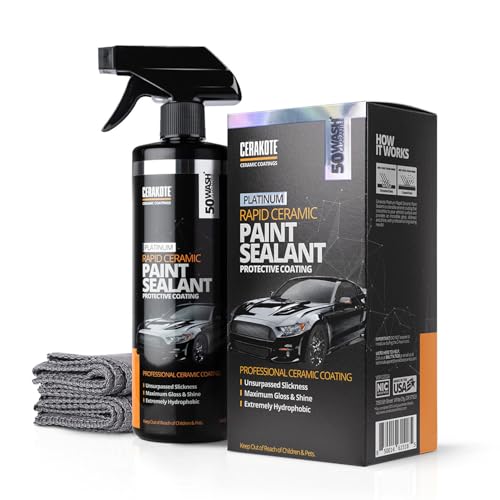 Fastest application · Cerakote Ceramic Trim Coat Platinum — Check price on Amazon →
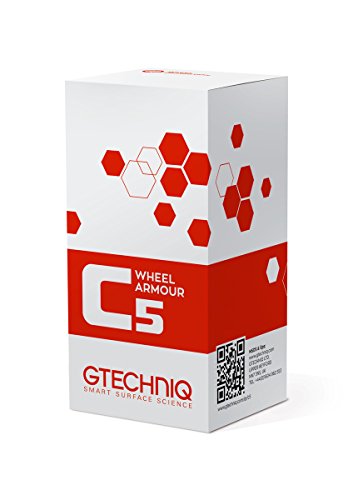 Best for painted and powder-coated wheels · Gtechniq C5 Wheel Armour — Check price on Amazon →
 Best for high-heat track and performance use · Gyeon Q2 Rim EVO — Check price on Amazon →
 Best overall · CarPro DLUX — Check price on Amazon →
GarageProof researches and compares products using manufacturer specifications, independent reviews and verified owner feedback. We don't physically test units — what follows is a comparison and ranking, not a lab report.
How to choose
Match the heat tolerance to your brakes, not the marketing number
Treat every quoted temperature as a ceiling under ideal conditions, not a working rating. The useful question is: how much heat actually reaches the wheel face? On a normal commuter car with organic or ceramic pads, the barrel near the hub sees the most, and the face rarely exceeds a couple of hundred degrees Celsius. Almost any wheel-specific coating handles that.
Where it matters is performance setups: semi-metallic or track pads, big rotors, heavy cars, and any car that does track days or sustained mountain descents. There, hot iron particles land on the coating while still incandescent and can etch straight through a thin layer. That's where dedicated rim coatings like Gyeon Q2 Rim EVO and CarPro DLUX earn their money — they lay down a thicker, more sacrificial film.
A useful rule: if your pads shed enough dust to turn the face grey in under a week, buy a wheel-specific coating. If you're running quiet, low-dust ceramic pads, a general-purpose coating or a strong spray will serve you fine.
Know your wheel finish before you open the bottle
This is the step most people skip.
- Clear-coated alloys (the vast majority of OEM wheels) behave like painted bodywork. Nearly every coating works here.
- Powder-coated wheels often have a slightly more textured, lower-gloss surface. Thin, easy-levelling coatings like Gtechniq C5 Wheel Armour reduce the risk of high spots and streaking.
- Painted and refinished wheels vary wildly in clear quality. Test on a small barrel area first.
- Bare polished, machined-face, or anodised wheels are a different problem — exposed aluminium oxidises, and a coating will lock in whatever condition it's applied over. Polish fully first.
- Chrome and PVD finishes are slick and low-energy; some coatings struggle to bond. Check the manufacturer's listed compatibility.
If you're not sure what your wheels are, look at the machined face: a crisp lathe-turned pattern under gloss usually means clear-coated alloy; a uniform satin texture with slightly soft edges often means powder coat.
Be honest about cure time and garage access
Coating chemistry needs time and dry conditions to cross-link. Most solvent-based wheel coatings want several hours before water contact and continue hardening for days. If your car lives outside and rain is forecast, that's a real constraint.
This is the single best argument for the Cerakote Ceramic Trim Coat Platinum approach: it goes on in minutes and asks for very little downtime, at the cost of longevity. The slower, more durable options reward people with a garage and a free evening.
Also factor in prep. The coating itself takes 20–40 minutes for a set; the decontamination — iron remover, tar remover, a light polish or chemical decon on the faces, and an IPA or panel-prep wipe — is where the real time goes. Realistically budget half a day to do all four wheels properly, more if you pull them off the car.
Decide whether you're removing the wheels
Coating wheels on the car protects the face and the visible lip. That's 80% of the appearance benefit and maybe 40% of the cleaning benefit, because brake dust accumulates heaviest on the inner barrel.
Pulling the wheels lets you coat the barrels, which is where the payoff really shows: a quick pressure-wash rinse removes dust that would otherwise need a long-reach brush and chemical. If you have jack stands and an impact wrench, do it. If not, coat what you can reach — it's still worth it.
Durability claims: read the asterisk
A "5-year" wheel coating is rarely 5 years of wheel performance. Those figures typically come from paint-panel testing. On wheels, with hot iron impingement and strong cleaners, expect meaningfully less. Realistic expectations:
- Spray ceramics / graphene sprays: a few months
- Mid-tier wheel coatings: roughly a year
- Thick, dedicated rim coatings: 1–2 years with gentle pH-neutral washing
The biggest variable isn't the bottle — it's whether you keep using aggressive acidic or high-alkaline wheel cleaner afterwards. Once coated, switch to a pH-neutral wheel shampoo and the coating lasts dramatically longer.
Comparison table
| Product | Best for | Format | Heat positioning | Realistic durability on wheels | Application difficulty |
|---|---|---|---|---|---|
| CarPro DLUX | All-round wheel + trim protection | Solvent coating, suede applicator | High — marketed specifically for wheels and exhaust-adjacent trim | ~1–2 years with neutral washing | Moderate; works fast, needs careful levelling |
| Gyeon Q2 Rim EVO | Track, performance pads, heavy brake dust | Thick solvent coating | Highest of the group; rim-specific formulation | ~1–2 years | Moderate; generous product, watch for high spots |
| Gtechniq C5 Wheel Armour | Painted and powder-coated wheels | Thin solvent coating | Good; designed for brake-dust temperatures | ~1 year+ | Easiest of the true coatings; thin and forgiving |
| Cerakote Trim Coat Platinum | Speed, daily drivers, no garage | Spray-and-wipe | Moderate | Months, not years | Very easy |
| Adam's Graphene Ceramic Spray | Budget protection and topping up | Spray-and-wipe | Moderate | Months | Very easy |
The picks
CarPro DLUX — best overall
Prices last checked October 23, 2026. Amazon prices change frequently, so treat these as a guide and check the live price before you buy.
CarPro DLUX
Purpose-built wheel and trim coating with a strong heat-tolerance reputation and genuine multi-year durability claims.
DLUX has been the default recommendation in detailing forums for years, and in 2026 it still is. It's a wheel-and-trim coating, which means it's formulated to tolerate heat and hot iron particles rather than just look glossy on a hood. It flashes quickly, builds a slick, genuinely hydrophobic layer, and owners consistently report that brake dust rinses off rather than needing agitation.
What it gives up: it's unforgiving of sloppy work. Apply too much, leave it too long, and you get high spots that need polishing out. It's also a small bottle — enough for a set of wheels, but not a product you spray around casually. And it won't fix oxidised or peeling clear coat; prep is on you.
Suits: anyone doing a proper decon-and-coat job who wants the best durability-per-effort ratio.
Gyeon Q2 Rim EVO — best for high-heat track and performance use
Gyeon Q2 Rim EVO
Thick, hydrophobic rim-specific coating designed to shrug off hot brake dust on aggressive pad setups.
If your car runs aggressive pads, does track days, or just produces brutal amounts of hot brake dust, Rim EVO is the one to reach for. Gyeon designed it specifically for rims rather than adapting a paint coating, and the film it lays down is noticeably thicker than general-purpose products. That thickness is the point: more sacrificial material between an incandescent iron particle and your clear coat.
The trade-off is that a thicker coating is a fussier coating. You need good lighting, a disciplined panel-by-panel approach, and patience during levelling. It also prefers wheels off the car so you can reach the barrels where the heaviest deposits land. For a daily commuter with low-dust pads, it's more product than you need.
Gtechniq C5 Wheel Armour — best for painted and powder-coated wheels
Gtechniq C5 Wheel Armour
Thin, easy-levelling coating that bonds to factory clear and powder coat without high streak risk.
C5 is deliberately thin, and on textured powder coat or refinished painted wheels that's a feature, not a limitation. It wets out easily, levels without fighting you, and dramatically reduces the risk of streaks and high spots on surfaces that aren't glass-smooth. Gtechniq pitches it squarely at brake-dust resistance rather than headline temperature numbers, which is a more honest framing for most road cars.
What you give up is the thick, sacrificial build of Rim EVO. On a track car with metallic pads, C5 will wear through sooner. It also doesn't produce the same dramatic candy gloss on dark wheels that heavier coatings can. Think of it as the sensible, repeatable choice for a well-maintained street car.
Cerakote Ceramic Trim Coat Platinum — fastest application
Cerakote Ceramic Trim Coat Platinum
Spray-and-wipe ceramic that coats a full set of wheels in minutes with almost no cure downtime.
This is the pragmatist's option. It's a spray-and-wipe ceramic that lets you do a full set of wheels in a fraction of the time a traditional coating takes, with minimal cure downtime — which matters enormously if your car lives on the street and the weather doesn't cooperate. Independent reviewers have repeatedly flagged it as the quick alternative to a full ceramic install, and that's exactly how to think about it.
The honest trade-off is longevity. You're getting months, not years, and it won't match a thick rim coating under heavy brake dust. But it's reapplied in fifteen minutes, which for a lot of people is a better real-world answer than a two-year coating they never get around to applying.
Adam's Polishes Graphene Ceramic Spray Coating — best budget maintenance option
Adam's graphene spray is one of the most widely recommended budget ceramic sprays around, and it has a useful second life as a wheel product. Use it two ways: as standalone protection on a car where a full coating isn't worth the effort, or — better — as a top-up over a real coating to refresh hydrophobics and extend the base layer's life.
It's extremely forgiving, works on wet or dry surfaces depending on method, and the bottle is large enough to use freely. What it isn't is a heat-rated rim coating. Under hot metallic brake dust it will deplete quickly. Treat it as maintenance, not armour.
Application notes that actually change the result
- Decontaminate properly. Iron remover until it stops bleeding purple, then tar remover, then a wash. Embedded iron under a coating is permanent.
- Polish or chemically prep the faces. Even a light polish improves bonding and gloss, especially on older wheels.
- Wipe down with panel prep or IPA. Residual oils kill adhesion.
- Work in sections, in good light. Rotate the wheel so you're always looking at the section you just coated, at an angle.
- Respect the cure window. No water, no rain, no cleaner. Then switch permanently to pH-neutral wheel shampoo.
Skip any of these and even the best coating in this list will underperform a cheap spray applied carefully.
FAQ
Does ceramic coating actually stop brake dust? No — nothing stops brake dust. What a coating does is prevent it from bonding and etching, so dust rinses off with low-pressure water instead of requiring chemical and agitation. That's a cleaning-time benefit, not an invisibility cloak.
Are the quoted temperature ratings comparable between brands? Not reliably. There's no shared industry test standard for wheel-coating heat resistance, so numbers from different manufacturers aren't apples-to-apples. Use them as a rough signal of intent — a brand quoting high temperatures has at least formulated with heat in mind — and weight wheel-specific formulation more heavily than the number itself.
Can I use a regular paint ceramic coating on my wheels? You can, and it'll work acceptably on a low-dust daily driver. But paint coatings are generally thinner and not optimised for hot iron impingement, so expect shorter life on the wheel face and barrels than a dedicated rim product like DLUX or Q2 Rim EVO.
How long do I have to wait before driving or washing? Follow the specific product's instructions — they vary. As a general pattern, solvent-based coatings want several hours before water exposure and keep hardening for days; spray ceramics are usually ready far sooner. Avoid rain and any wheel cleaner during the stated cure window.
Do I need to remove the wheels? Not strictly, but it's the difference between a cosmetic improvement and a genuine maintenance improvement. The inner barrels collect the most dust, and coating them is what turns wheel cleaning into a rinse. If you have the tools, do it.
Will a coating fix peeling clear coat or curb rash? No. Coatings are transparent and extremely thin — they lock in the surface condition underneath. Repair or refinish damaged wheels first, let any new paint or powder coat fully cure per the refinisher's guidance, then coat.
Is wheel coating worth paying a professional for? If the wheels come off and the car is new or freshly refinished, a professional install adds real value through prep quality. On a used daily driver, a careful DIY job with CarPro DLUX or Gtechniq C5 gets you most of the benefit for a fraction of the cost.
Our picks

Adam's Polishes Graphene Ceramic Spray Coating
Cheap, forgiving graphene spray that tops up a real coating or protects wheels for a season.
Get the best car care deals in your inbox
Join the GarageProof newsletter for hand-picked car care deals and new buying guides. No spam, unsubscribe anytime.
Related reads
Ceramic vs Graphene Coating for Cars in 2026: Which Wins?
Ceramic coating vs graphene coating for cars in 2026: real durability, prep effort and reapplication intervals compared, plus five DIY picks worth your weekend.
Ceramic Coating Maintenance Shampoo 2026: pH That Won't Strip
How to pick a coating-safe car shampoo in 2026: pH-neutral vs SiO2 toppers, gloss boosters, dilution ratios and the washing habits that actually kill ceramic coatings.
Ceramic Coating Prep Kit 2026: Why Coatings Fail at Step One
A ceramic coating prep kit decides whether your coating bonds or flakes. We compare iron removers, panel wipes and applicators for 2026, plus cure-time rules.