Car Interior Steam Cleaner 2026: Pressure vs Dry Time
Picking a car interior steam cleaner in 2026? We compare handheld and canister units by boiler pressure, heat-up time, dryness of steam and attachments.
Reader-supported: we may earn a commission from links on this page, at no extra cost to you. It never affects our picks. Learn more.
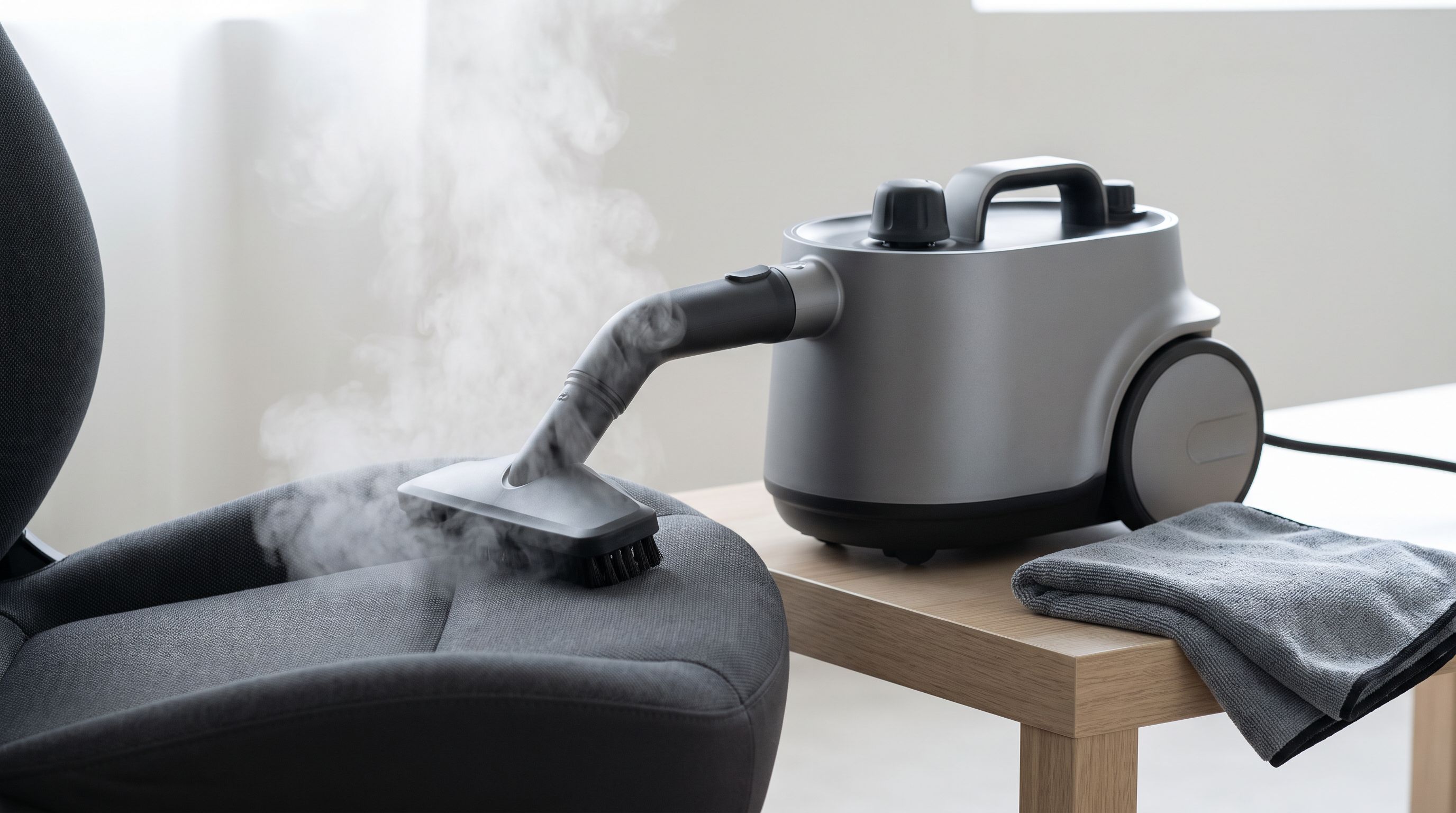
Steam is the cheapest consumable in detailing — it's water. What you're actually buying when you buy a car interior steam cleaner is pressure, heat retention and dryness, because those three things decide whether a seat is damp for ten minutes or damp for three hours.
That matters more in a car than anywhere else in the house. A cabin is a sealed box with foam seats, headliner adhesive and carpet backing that hates saturation. Too much moisture and you trade a coffee stain for a musty smell that lingers for weeks. We compared the leading handheld and canister units on published boiler specs, heat-up times, accessory sets and long-term owner feedback to sort out which ones actually dry fast enough for interior work.
The short version
- Best overall: Dupray Neat Steam Cleaner
- Best value canister: McCulloch MC1375 Canister Steam Cleaner
- Best handheld on a budget: Bissell Steam Shot 39N7V
- Best for long detailing sessions: Vapamore MR-100 Primo
- Best handheld with reach: Bissell Steam Shot OmniReach
 Best for long detailing sessions · Vapamore MR-100 Primo — Check price on Amazon →
 Best value canister · McCulloch MC1375 Canister Steam Cleaner — Check price on Amazon →
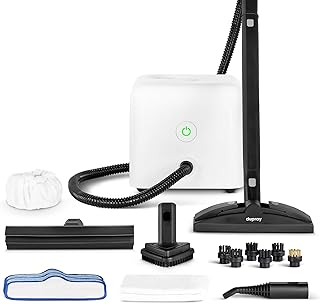 Best overall · Dupray Neat Steam Cleaner — Check price on Amazon →
Pressure vs dry time: what the numbers actually mean
Steam cleaner marketing throws around three figures, and they're easy to misread.
Boiler pressure (PSI or bar). Higher pressure means the steam exits faster and with more mechanical energy, which is what lifts soil out of fabric weave rather than just warming it. Handhelds typically sit in the low-pressure range — enough for vents, cupholders and door cards. Serious canister machines run meaningfully higher, and that gap is the single biggest performance difference between the two categories.
Boiler temperature. Most decent units heat water well past boiling under pressure. Once steam leaves the nozzle it drops fast, so the temperature at the surface depends on how close you hold the tool and how much pressure is behind it. Temperature claims on the box are boiler temperature, not contact temperature.
Dryness (steam quality). This is the one that determines dry time. "Dry steam" — often quoted at around 5% residual moisture — carries less liquid water per unit of heat. Higher pressure and a properly heated boiler produce drier steam; a cheap unit that spits condensation will leave a seat visibly wet. For car interiors, drier steam beats more steam every time.
Heat-up time. Handhelds are ready in well under a minute because the boiler is tiny. Canisters take several minutes to come up to pressure, and the big ones take longer still. The trade is runtime: a handheld's small tank gives you a handful of minutes of work, then you wait for it to cool before refilling. A canister runs for most of an hour.
The practical rule: if the job is under ten minutes, a handheld wins on convenience. If it's a full interior, the canister wins on everything.
Comparison table
| Model | Type | Heat-up | Best for | Main trade-off |
|---|---|---|---|---|
| Dupray Neat Steam Cleaner | Canister | Several minutes | Full interiors, upholstery, headliners | Premium price; no onboard detergent tank |
| McCulloch MC1375 | Canister | Several minutes | Value-focused full-interior work | Plastic accessories feel less durable long-term |
| Bissell Steam Shot 39N7V | Handheld | Roughly 30 seconds | Vents, trim, cupholders, spot work | Short runtime; low pressure for deep fabric work |
| Vapamore MR-100 Primo | Canister | Several minutes | Back-to-back details, long sessions | Bulky; a lot of machine for occasional use |
| Bissell Steam Shot OmniReach | Handheld + hose | Roughly 30 seconds | Footwells, under seats, awkward angles | Still handheld-class pressure and tank size |
The picks
Dupray Neat — best overall
Prices last checked October 15, 2026. Amazon prices change frequently, so treat these as a guide and check the live price before you buy.
Dupray Neat Steam Cleaner
High-pressure, genuinely dry steam from a stainless boiler — the canister most detailers end up buying.
The Neat is the machine most working detailers converge on, and the reasons are boring and sound: a stainless steel boiler, high operating pressure, and steam dry enough that fabric seats come back to touch-dry quickly rather than staying damp. Owner feedback over multi-year ownership consistently mentions the boiler not scaling or corroding the way aluminium units can, which is the usual failure point.
What it gives up: it's a premium-priced machine, and the stock accessory bundle is leaner than some rivals — many owners buy the extended accessory bag separately. There's no detergent injection, so stubborn protein stains still need a pre-spray and an extractor. For a sealed-boiler canister you'll still want to depressurise and cool it before refilling mid-job.
McCulloch MC1375 — best value canister
McCulloch MC1375 Canister Steam Cleaner
Full 20-piece accessory kit and a long hose for a fraction of pro-steamer money.
If you want canister-class pressure without canister-class spending, the MC1375 is the long-running answer. It ships with a large accessory set — triangle brush, jet nozzle, squeegee, extension wands, assorted small brushes — so you're not immediately shopping for add-ons. The hose and wand combination gives genuine reach into rear footwells and the back of a cargo area, which handhelds can't match.
What it gives up: the accessories are plastic and owner reviews over several years commonly report connector wear and the occasional cracked attachment before the machine itself fails. Steam quality is good but not as consistently dry as the pricier units, so work in shorter passes and follow with a towel.
Bissell Steam Shot 39N7V — best handheld on a budget
Bissell Steam Shot 39N7V
Heats in about 30 seconds and lives in the trunk — ideal for vents, trim and small spills.
The Steam Shot is the one to buy if "steam cleaner" means vents, air vent slats, cupholders, door pockets, seat rails and the sticky patch on the centre console. It heats in roughly half a minute, costs little, and is small enough to live in a trunk organiser. For breaking down grime on hard interior plastics and killing odour sources in crevices, it's genuinely effective.
What it gives up: almost everything to do with fabric. Low pressure and a small tank mean you'll run dry partway through a single seat, and the steam isn't dry enough to avoid leaving upholstery damp. Treat it as a detail tool, not an upholstery tool.
Vapamore MR-100 Primo — best for long detailing sessions
Vapamore MR-100 Primo
Big boiler, continuous-run design and a lifetime warranty for back-to-back interiors.
The Primo earns its place through endurance. A large boiler, a long run time on one fill, and a design intended for continuous commercial use mean you can do a full interior — carpets, seats, headliner edges, trim — without stopping. Vapamore's lifetime warranty on the unit is unusual in this category and shows up repeatedly in owner reviews as the reason people chose it over cheaper canisters.
What it gives up: size and weight. It's a lot of machine to store if you detail your own car four times a year, and the heat-up wait is real. The accessory kit is comprehensive but the hose is heavier than the Dupray's, which you notice during long overhead work.
Bissell Steam Shot OmniReach — best handheld with reach
Bissell Steam Shot OmniReach
Handheld convenience plus an extension hose that actually gets under seats and into footwells.
The OmniReach solves the single biggest handheld complaint: you can't get the nozzle where the dirt is. The extension hose and wand let you reach under seats, along seat rails and into deep footwells without contorting yourself or pointing a hot unit at your own forearm. Heat-up stays in handheld territory — around half a minute — so it suits quick clean-ups between proper details.
What it gives up: it's still a handheld. Pressure and tank capacity are in the same class as the standard Steam Shot, so it's a precision tool for hard surfaces and spot work rather than a seat-cleaning machine. Expect refill pauses on anything larger than a spill.
How to choose
Match pressure to the surface you'll clean most
Hard plastics, vinyl, vents, glass edges and trim respond well to modest pressure and heat. Fabric seats and carpet need the soil physically driven out of the fibre, and that takes the pressure a canister delivers. Be honest about the job: a lot of people buy a canister to clean vents and never use 80% of it, while others buy a handheld hoping to rescue a child-seat disaster and end up renting an extractor anyway.
Check heat-up time against runtime, not in isolation
Fast heat-up almost always means a small boiler, and a small boiler means frequent refills — plus a cooldown wait on pressurised models before you can open the cap. A canister that takes several minutes to reach pressure but then runs for most of an hour is faster across a whole interior than a 30-second handheld you refill six times.
Look at the attachments you'll actually use in a car
The useful car set is short: a small jet nozzle for vents and seams, a triangular brush with a microfibre bonnet for seats and carpet, a narrow detail brush with soft (preferably nylon, not brass) bristles for trim, and a squeegee for glass. Brass brushes will scuff interior plastics. Extension wands matter more than the number of pieces in the box — 20 accessories you never fit is worse than six you use daily.
Plan for water quality and boiler maintenance
Use distilled or demineralised water. Hard tap water scales a boiler and scale is the number one reason these machines die early or lose pressure over time. Stainless boilers tolerate neglect better than aluminium ones. If the manual specifies periodic descaling or a boiler flush, that interval is not optional — owner reviews of failed units are full of people who skipped it.
Decide whether you need a vacuum or extractor too
Steam loosens and sanitises; it doesn't remove bulk soil. A proper interior workflow is vacuum first, steam second, agitate with a brush, then wipe or extract. Steam alone on a heavily soiled seat just redistributes the grime into a bigger ring. If your seats are badly stained, pair any steamer here with a small wet/dry extractor rather than expecting the steamer to do both jobs.
Using a steamer in a car without creating problems
A few habits separate good results from damp, smelly ones.
- Keep the nozzle moving. Parking steam on one spot on a seat drives moisture into the foam. Short, overlapping passes.
- Use a microfibre bonnet on the triangle brush. It traps the soil you've just lifted so it doesn't dry back into the fabric.
- Work with the doors open. Ventilation is half the dry-time equation; so is warm weather. Steam cleaning a car in a cold closed garage in winter is how you end up with condensation on the glass for days.
- Stay off the headliner. The adhesive holding headliner fabric to its backing is heat-sensitive. Spot-treat at a distance with low pressure and a towel-wrapped tool if you must, and accept the risk.
- Be careful around screens, speaker grilles and airbag labels. Steam and electronics don't mix; cover or avoid.
- Test leather first. Steam can work on sealed leather at low pressure with a bonnet, but unsealed or aged leather can mark. Test an out-of-sight panel.
FAQ
Will a steam cleaner remove old stains from car seats? It will remove many of them, particularly anything greasy or sugar-based. Set-in dye stains, ink and some protein stains need a dedicated chemical plus extraction. Steam is best thought of as heat and agitation, not a solvent.
Is a handheld steam cleaner enough for a car interior? For vents, trim, consoles and small spills, yes — the Bissell Steam Shot 39N7V and OmniReach handle that well. For a full fabric interior, a handheld's low pressure and short runtime make it frustrating, and the wetter steam extends dry time considerably.
How long should a seat take to dry after steaming? With dry steam from a high-pressure canister, a correctly worked fabric seat should be touch-dry in well under an hour with the doors open on a warm day. If you're waiting hours, you used too much steam, moved too slowly, or the machine is producing wet steam.
Can I use tap water? You can, but don't. Distilled water prevents scale, which is the main thing that kills boilers and reduces pressure over time. It's a cheap insurance policy on an expensive machine.
Do steam cleaners sanitise the interior? Steam at boiler temperatures kills most common bacteria and dust mites on contact and neutralises many odour sources at the root. That's a genuine advantage over wiping with a damp cloth — but contact time matters, and a quick wave of the nozzle isn't a disinfection cycle.
Canister or handheld if I can only buy one? If you detail your own car properly a few times a year and the interior sees kids, pets or work gear, buy the canister — the Dupray Neat or McCulloch MC1375. If you mostly want crisp vents and clean plastics with zero storage footprint, the handheld is the smarter buy.
Get the best car care deals in your inbox
Join the GarageProof newsletter for hand-picked car care deals and new buying guides. No spam, unsubscribe anytime.
Related reads
Leather Seat Conditioner 2026: Coated vs Uncoated Hides
Most car seats are urethane-coated, not thirsty hide. Here's how to tell, plus the best leather seat conditioner for cars in 2026 for coated and uncoated leather.
Car Seat Covers in 2026: Universal or Custom-Fit?
The best car seat covers 2026 guide: how side-airbag seams, seat controls and headrest shapes decide universal vs custom-fit, plus five picks and a fitment checklist.
Cordless Car Vacuums in 2026: Suction vs Runtime
We compared the best cordless car vacuums of 2026 on air watts, real runtime, filter type and crevice reach — plus which ones fade before the footwells are clean.