Car Battery Load Tester 2026: AGM and Mild-Hybrid Traps
A car battery load tester has to match your chemistry. Compare conductance analyzers for AGM, EFB, lithium and 48V mild-hybrid systems in 2026.
Reader-supported: we may earn a commission from links on this page, at no extra cost to you. It never affects our picks. Learn more.
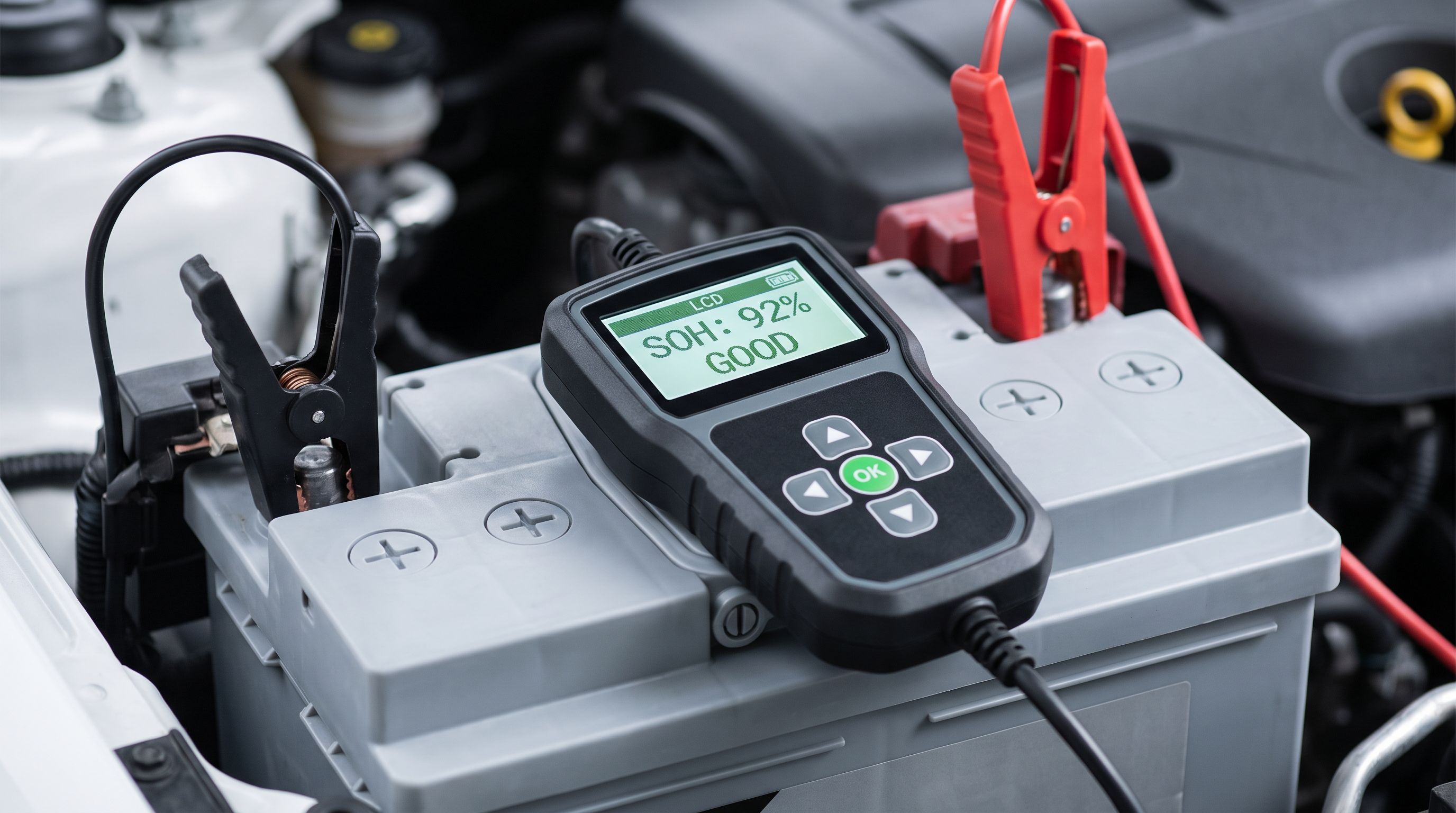
Battery diagnosis used to be simple: clamp on a carbon pile, pull half the cold-cranking amps for 15 seconds, watch the needle. That test still works — on a flooded lead-acid battery. It does not translate cleanly to an AGM start-stop battery, it tells you nothing useful about an EFB that is being cycled hard by regenerative braking, and it is flatly the wrong tool for the 48V lithium pack sitting in a mild-hybrid.
That mismatch is where most bad battery calls come from in 2026. A cheap tester reports "good" on a battery that strands the owner a week later, because the tester was built around a chemistry and a duty cycle the battery does not have.
This guide covers what a car battery load tester actually measures, where AGM and mild-hybrid systems break the assumptions, and which units are worth owning. We compared specifications, manufacturer documentation and owner feedback rather than physically testing units.
The short version
- Best overall: TOPDON BT100
- Best for cranking and charging-system checks: ANCEL BA101
- Budget pick: KONNWEI KW208
- Premium pick for 24V and mixed fleets: TOPDON BT300P
- Best true carbon-pile load tester: Schumacher BT-100 Carbon Pile Load Tester
 Premium pick for 24V and mixed fleets · TOPDON BT300P — Check price on Amazon →
 Budget pick · KONNWEI KW208 — Check price on Amazon →
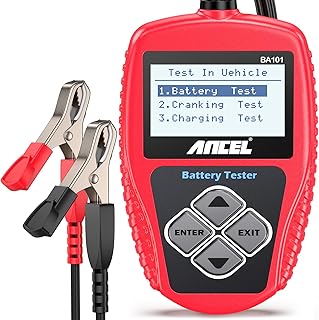 Best for cranking and charging-system checks · ANCEL BA101 — Check price on Amazon →
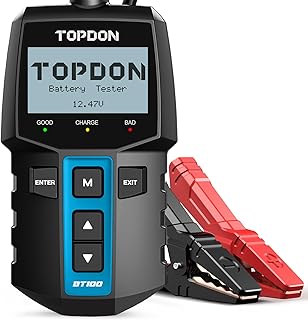 Best overall · TOPDON BT100 — Check price on Amazon →
Load test vs conductance test: they are not the same thing
Two completely different technologies get sold under the same "battery load tester" search term.
Carbon-pile (resistive) load testers apply a real electrical load — typically half the rated CCA — and watch how far voltage sags. It is a direct, physical test. It is also hot, heavy, hard on a marginal battery, and requires the battery to be at or near full charge before the result means anything.
Conductance analyzers inject a small AC signal, measure the battery's internal resistance, and infer CCA and state of health from it. They are small, safe, work at partial state of charge, and can test in-vehicle in seconds. Almost everything sold as a handheld "battery tester" today is this type.
Conductance is the practical choice for home and small-shop use. The catch is that the inference depends entirely on the tester knowing what kind of battery it is looking at.
Why AGM and EFB fool cheap testers
An AGM battery has substantially lower internal resistance than a flooded battery of the same CCA rating. If you tell a conductance tester "flooded" when it is actually looking at an AGM, the low resistance reads as enormous conductance and the unit happily reports a CCA number well above the label — a battery that is visibly tired can come back "good, 115%."
EFB (enhanced flooded) sits between the two and has its own curve. Gel is different again. Start-stop vehicles make this worse, because those batteries live in partial state of charge by design and get cycled hundreds of times a day. A battery that is still fine for cranking can be badly degraded in reserve capacity, which is what actually keeps the infotainment and ECUs alive during an auto-stop.
So the single most important feature in a modern tester is a proper battery type selector — flooded, AGM flat plate, AGM spiral, EFB, gel — and a rating standard selector (CCA/SAE, EN, DIN, IEC, JIS, CA/MCA). Pick the wrong standard and the number is wrong by 20% or more before you start.
Reserve capacity is the number nobody checks
CCA is a cold-start spec. Reserve capacity (RC, in minutes) describes how long the battery can carry a load with the engine off. Start-stop, camping, dash cam parking mode and modern parasitic draws all lean on RC, not CCA.
Most handheld conductance testers estimate CCA and state of health but do not directly measure RC. If RC matters to you, the realistic approach is: use the conductance tester for health trending, and confirm capacity with a controlled discharge — or simply replace on age and group-size spec rather than hoping a 3-second test caught it. Be skeptical of any inexpensive unit claiming a precise RC readout.
Where 48V mild hybrids change the rules
This is the part worth being blunt about. A 48V mild-hybrid lithium pack is not something you test with a consumer battery tester. On a typical mild-hybrid (many BMW, Mercedes, Audi, Ram, Jeep, Land Rover and Hyundai/Kia applications), there are two batteries:
- A conventional 12V AGM or EFB battery that still handles ignition, lighting and electronics. This one you can and should test normally.
- A 48V lithium-ion pack managed by a BMS, usually paired with a belt-driven starter-generator and a DC-DC converter.
The 48V pack is sealed, BMS-managed and diagnosed through the vehicle's own module over OBD-II — not by clamping a handheld tester across terminals. Some packs are in the cabin or under a seat, some are serviceable only with specific procedures, and the voltages involved are high enough to warrant respect even though 48V sits below the "high-voltage orange cable" threshold of a full hybrid or EV.
Practical guidance:
- Test the 12V battery with a conductance analyzer as usual, and select AGM or EFB correctly — mild hybrids almost never run plain flooded.
- Diagnose the 48V side with an OBD-II scan tool that reads your manufacturer's hybrid/BSG modules, not with a load tester.
- Be careful what you charge. Many mild-hybrid 12V batteries require AGM-aware charging, and some require registration/coding after replacement so the charging strategy matches the new battery's age.
- Ignore marketing that implies a $40 handheld "supports 48V systems." What that usually means is the input range tolerates up to 30V or so for testing 24V truck systems — not that it diagnoses a mild-hybrid pack.
If your car is a mild hybrid, check the owner's manual for battery type and location before buying anything, and confirm whether replacement requires battery registration for your specific year, make and model.
Comparison table
| Model | Type | Voltage range | Battery types | Standout feature | Best for |
|---|---|---|---|---|---|
| TOPDON BT100 | Conductance | 12V | Flooded, AGM, EFB, gel | Clear SOH/SOC readout with multiple rating standards | Most DIY owners, AGM start-stop cars |
| ANCEL BA101 | Conductance | 6V/12V | Flooded, AGM, EFB, gel | Cranking + charging/ripple tests in one unit | Diagnosing "is it the battery or the alternator?" |
| KONNWEI KW208 | Conductance | 12V | Flooded, AGM, EFB, gel | Wide CCA range at a low price | Occasional checks, second cars, motorcycles |
| TOPDON BT300P | Conductance | 6V/12V/24V | Lead-acid family plus lithium modes | Built-in printer, 24V series systems | Trucks, vans, small fleets, mobile techs |
| Schumacher BT-100 Carbon Pile | Resistive load | 6V/12V | Flooded primarily | Applies a genuine amp load | Shops testing flooded batteries the classic way |
The picks
TOPDON BT100 — best overall
Prices last checked October 11, 2026. Amazon prices change frequently, so treat these as a guide and check the live price before you buy.
TOPDON BT100
Clean 12V conductance tester that handles flooded, AGM, EFB and gel with proper CCA standard selection.
The BT100 is the one most DIY owners should buy. It is a straightforward 12V conductance analyzer that asks for battery type and rating standard up front, then returns measured CCA, state of health and state of charge without burying it in menus. Because it forces the type selection, it avoids the main AGM failure mode of cheap testers. It is also small enough to live in a glovebox and draws no power from a separate supply.
What it gives up: it is 12V only, so no 24V truck systems, and it is a tester rather than a full charging-system analyzer — you get battery health first and foremost. There is no printer and no app ecosystem. For a single-car household with an AGM start-stop battery, none of that matters.
ANCEL BA101 — best for cranking and charging-system checks
ANCEL BA101
6V/12V analyzer that adds starter draw and alternator ripple testing alongside state-of-health.
The BA101 covers 6V and 12V batteries and adds the two tests that actually solve arguments: a cranking test that captures the voltage dip and crank time, and a charging-system test that looks at alternator output and ripple. That combination is what tells you whether a no-start is a tired battery, a failing starter drawing excessive current, or a diode pack letting AC through.
It handles flooded, AGM, EFB and gel, and the 6V support is useful for classic cars, tractors and some powersports batteries. What it gives up: it is still a 12V-class tool, so no 24V series systems, and the display is functional rather than fancy. If you only ever want a yes/no on the battery, it is more tester than you need.
KONNWEI KW208 — budget pick
KONNWEI KW208
Inexpensive 12V conductance tester with AGM/EFB modes and a 100–2000 CCA range for most cars.
The KW208 is the sensible answer to the "good tester under a small budget" question that comes up constantly. It is a 12V conductance tester with a 100–2000 CCA range, AGM and EFB modes, and multiple rating standards — the important features, without the extras. Owner feedback is broadly consistent that readings track well against shop testers when the battery type is selected correctly.
What it gives up: build quality and lead length are what you would expect at the price, the interface is basic, and it offers less in the way of charging-system diagnostics. It is a check-and-trend tool, not a workshop instrument. For a second car, a project car or a motorcycle, that is a fair trade.
TOPDON BT300P — premium pick for 24V and mixed fleets
TOPDON BT300P
6V/12V/24V analyzer with printer output, lithium support and wider CCA range for trucks and vans.
If you maintain diesel trucks, RVs, boats or anything with two batteries in series, you need 24V support, and the BT300P provides it alongside 6V and 12V. It covers a wider CCA range than the handheld units above, includes lithium modes for LiFePO4 auxiliary banks, and has an integrated printer — genuinely useful if you are documenting results for customers or for a fleet log.
What it gives up: size, cost and simplicity. It is more tool than a one-car owner will ever use, and the printer paper is another consumable to keep around. But for anyone testing a dozen batteries a month, the printed record and the 24V capability earn their keep.
Schumacher BT-100 Carbon Pile Load Tester — best true carbon-pile load tester

Schumacher BT-100 Carbon Pile Load Tester
Old-school resistive load test for flooded batteries when you want a real amp draw, not an estimate.
Sometimes you want a real load, not an inferred one. The Schumacher carbon-pile unit applies an actual resistive draw and shows voltage under load on an analog meter, which is still the most direct way to judge a flooded battery and to load-test a 6V or 12V system the traditional way. Shops that have used one for twenty years rarely want to give it up.
What it gives up: a lot. It is heavy, it gets hot, it requires the battery to be near full charge to be meaningful, it is awkward to use on in-vehicle AGM batteries, and it is poorly suited to start-stop and mild-hybrid applications. Treat it as a complement to a conductance tester, not a replacement.
How to choose
Match the chemistry, not just the voltage
Before you buy, confirm what is actually in your car: flooded, EFB, AGM or lithium. Start-stop vehicles from roughly the last decade are AGM or EFB, and the label on the battery case usually says so. Buy a tester that lets you select that type explicitly. If the product listing never mentions AGM or EFB modes, assume it does not have them.
Check the rating standard, not just the CCA range
A tester that only offers SAE/CCA will misread a European battery rated in EN, and the error is not trivial. Look for CCA, EN, DIN, IEC, JIS and CA/MCA selection. Then make sure the CCA range comfortably exceeds your battery's rating — most passenger cars sit well inside 100–2000 CCA, but large diesels and dual-battery setups can exceed that.
Decide whether you need charging-system tests
If your actual question is "why does my car keep going flat," a battery-only tester answers half of it. Cranking and alternator/ripple tests — as on the ANCEL BA101 — narrow the fault quickly. If you already own a good multimeter or scan tool, a simpler unit like the TOPDON BT100 or KONNWEI KW208 is enough.
Think about 24V and auxiliary banks now, not later
Trucks, RVs, boats and tractors push you toward a 6/12/24V unit like the TOPDON BT300P. Adding a second tester later costs more than buying the right one once.
Do not buy a handheld tester to diagnose a 48V pack
Budget for an OBD-II scan tool with manufacturer coverage instead. Battery testers and hybrid-system diagnostics are separate purchases with separate jobs.
How to get an accurate reading
- Charge first if you can. Conductance testers tolerate partial charge better than carbon piles, but a deeply discharged battery will still read low on health.
- Let surface charge dissipate. After driving or charging, turn the headlights on for about a minute, then wait a few minutes before testing.
- Clean the contact points. Corroded posts or a thin oxide film change the reading. Test on lead, not on painted clamp bolts where possible.
- Select the type and standard every time. It is the step people skip, and it is the step that creates false "good" results on AGM.
- Trend it. One reading is a data point; three readings over a year tell you when the battery is actually going. Write the date and CCA on the case with a marker.
FAQ
Can I test a 48V mild-hybrid battery with a load tester? No. The 48V lithium pack is BMS-managed and sealed; it is diagnosed through the vehicle's modules with a capable scan tool. Use your load tester on the 12V AGM or EFB battery that lives alongside it.
Will a conductance tester damage my battery? No. It applies a tiny signal rather than a heavy load, which is one reason it has largely replaced carbon piles for in-vehicle testing.
My battery reads 12.7V at rest. Is it fine? Resting voltage only tells you state of charge, not health. A battery can sit at 12.7V and still collapse under cranking load. That gap is exactly what conductance testing and load testing exist to close.
Do I have to disconnect the battery to test it? Most handheld conductance testers work in-vehicle on connected batteries. For a carbon-pile load test, follow the manufacturer's instructions — many recommend disconnecting to protect vehicle electronics from the voltage sag.
Does my new battery need to be registered to the car? On many start-stop and mild-hybrid vehicles, yes — the charging strategy adapts to battery age, and skipping registration can shorten the new battery's life. Check your owner's manual or a model-specific service resource for your exact year, make and model.
Is a $20 tester worth it? A basic conductance unit with AGM/EFB modes is genuinely useful for spotting a dying battery before it strands you. Just do not expect reserve-capacity accuracy or charging-system diagnostics at that level.
Get the best car care deals in your inbox
Join the GarageProof newsletter for hand-picked car care deals and new buying guides. No spam, unsubscribe anytime.
Related reads
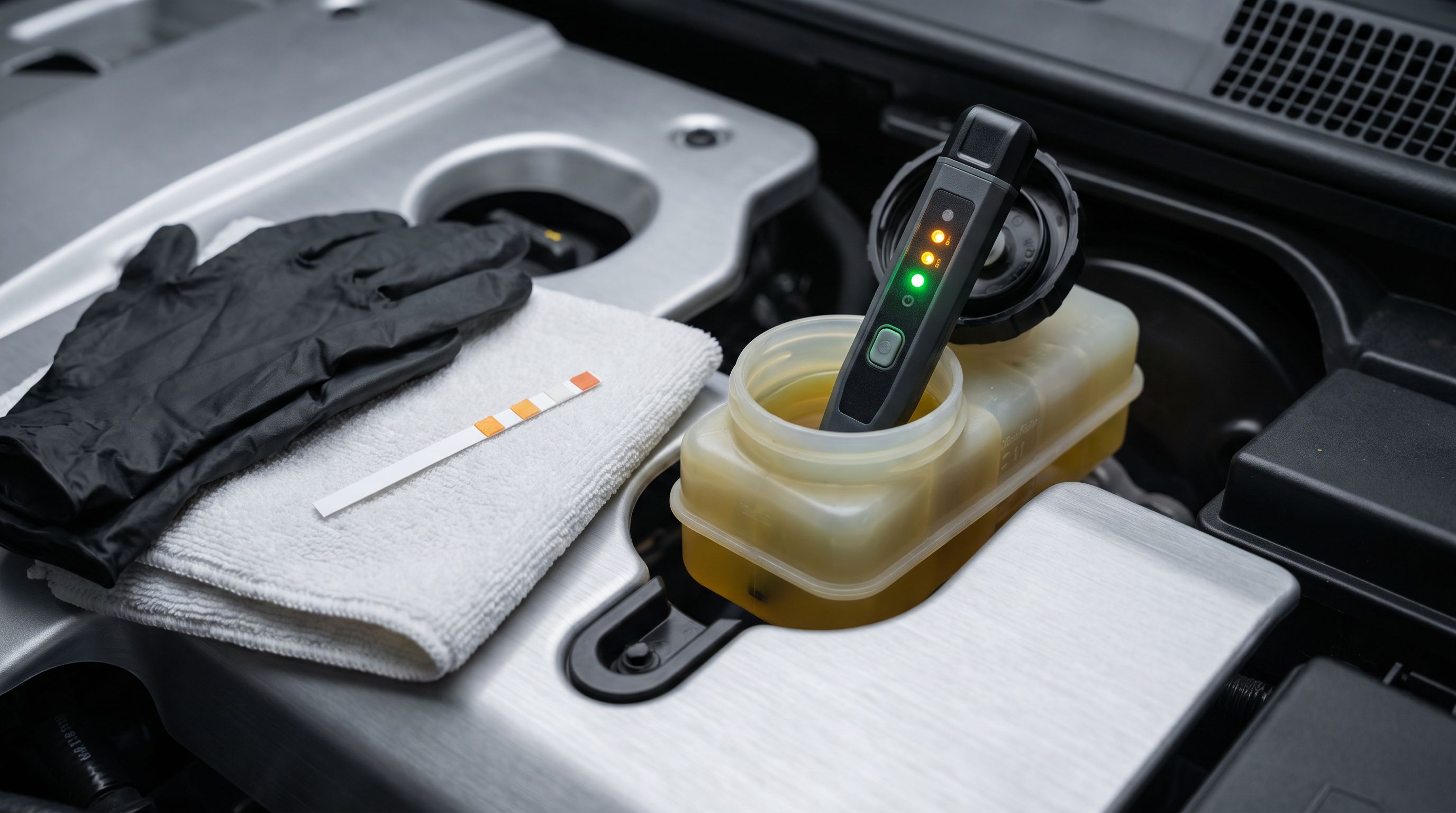
Brake Fluid Tester 2026: Pens vs Strips, Honestly
Brake fluid tester guide for 2026: how electronic moisture pens and chemical test strips differ on DOT 3/4/5.1 fluid, plus five picks and how to read results.
ABS SRS Code Reader 2026: Check Coverage Before You Buy
An ABS SRS code reader is only as good as its vehicle list. Here are the mid-tier scan tools worth buying in 2026 — and how to verify coverage for your car first.
TPMS Relearn Tools in 2026: Check Coverage Before You Buy
A 2026 buying guide to TPMS relearn and programming tools, focused on vehicle coverage lists, sensor cloning and OBD relearns — verify your make before you buy.